Beijing Yonghegong Hutong Cuisine Exploration Guide: The Popular ‘Qi Xun Ba Zhao’ Restaurant
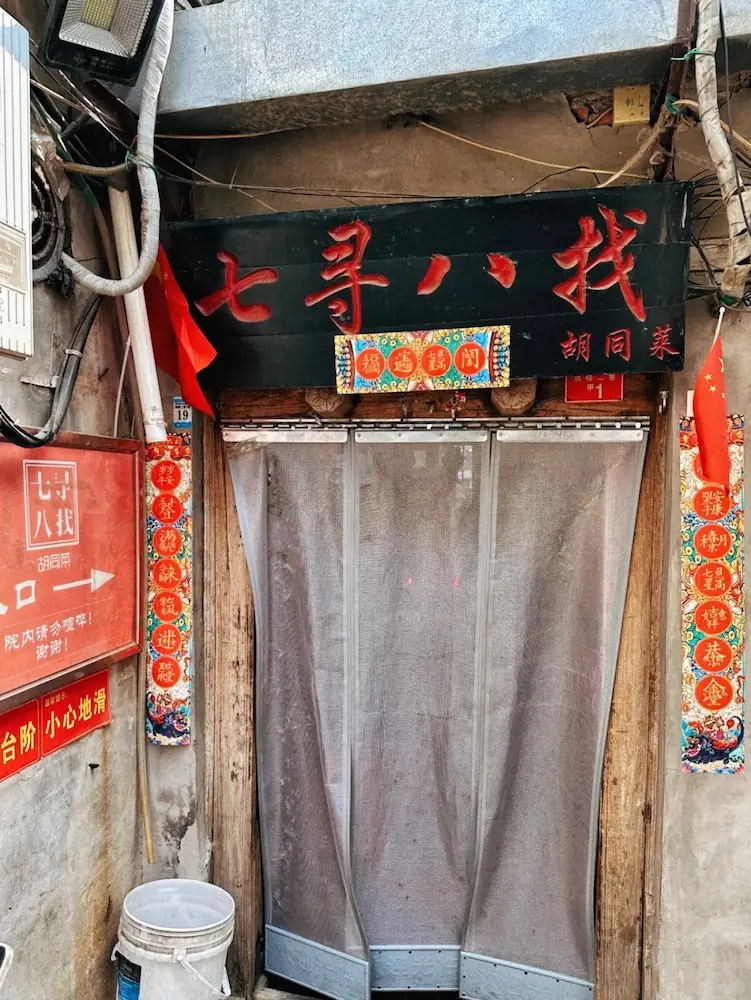
Tucked away in the hutongs near the Yonghegong Lama Temple subway station in Beijing’s Dongcheng District is a small restaurant even navigation apps struggle to locate.
Pushing the door open feels like stepping into an old Beijing neighbor’s home from decades past, with aged wooden beams, yellowed newspaper clippings on the walls, and enamel mugs on the tables.
This restaurant, named “Qi Xun Ba Zhao·Hutong Cuisine” (which translates roughly to “Searching High and Low”), tells the story of Beijing’s hutong food culture in the most unpretentious way.
Hidden Culinary Gem
The restaurant’s location truly lives up to its “searching high and low” name. Even with GPS, getting lost in the maze of hutongs is part of the experience. Interestingly, you’ll often encounter helpful local uncles at alley intersections who proactively give directions; they seem accustomed to guiding puzzled diners to this elusive spot.
The entrance is inconspicuous, but the moment you enter, time seems to rewind. There’s no lavish decoration, only a genuine nostalgic atmosphere. All seating is upstairs, reached by a long staircase, with simple, sturdy traditional wooden tables and chairs.
It’s a classic, no-frills hutong eatery and an excellent place to experience old Beijing culture.
Nostalgic Ambiance
The interior preserves many traces of old Beijing life. The aged wood of the beams seems to hold the scent of time, the old newspaper clippings on the walls record days gone by, and the enamel mugs evoke memories of a simpler era.
This decor isn’t about deliberately creating a retro vibe but authentically preserving fragments of real hutong life. Many locals love coming here not just for the food, but to soak in the familiar hutong atmosphere.
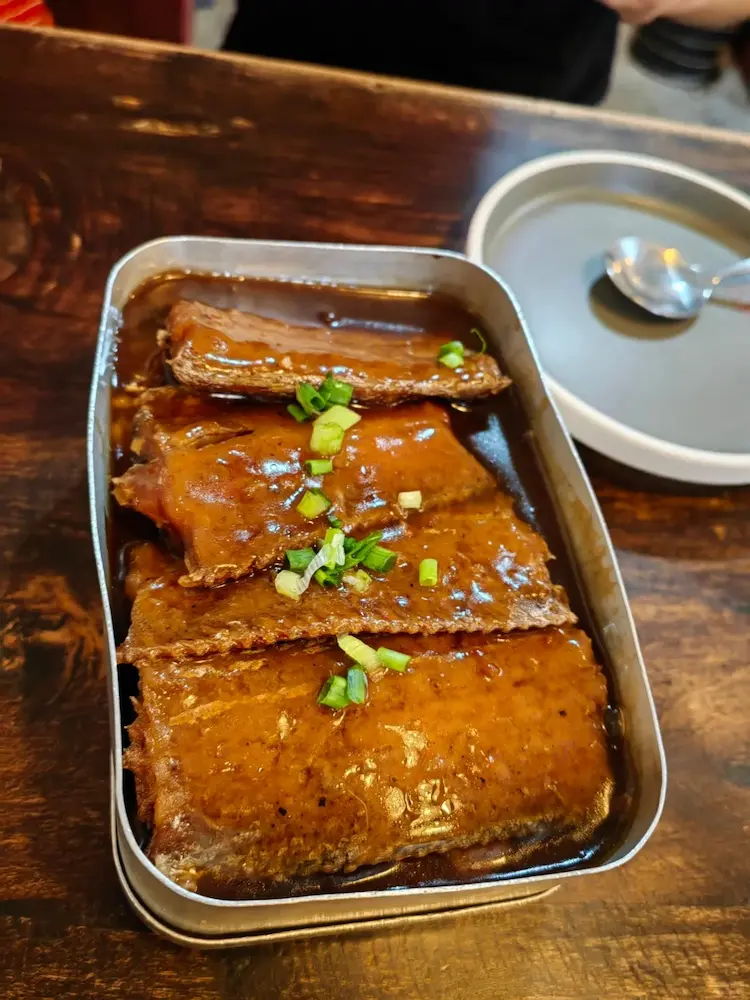
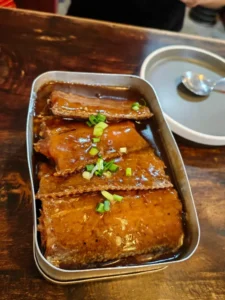
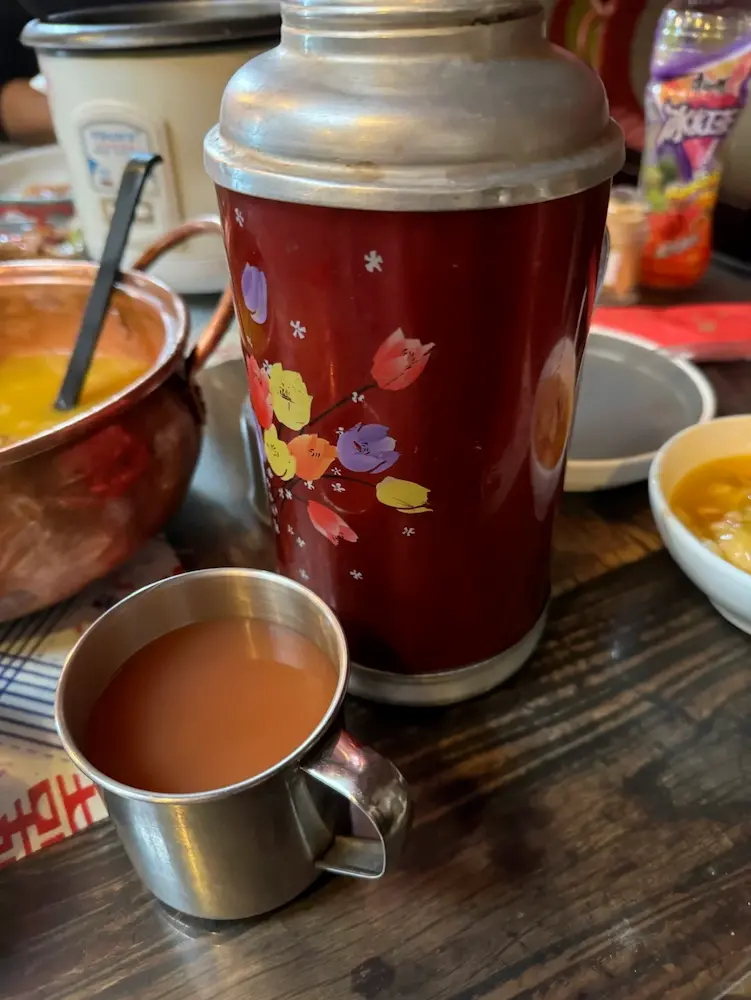
Even the tableware is thoughtfully chosen: braised hairtail served in old-fashioned aluminum lunchboxes, pear soup in a thermos flask—every detail tells a story of the past.
Signature Dishes
The restaurant offers a diverse menu, featuring both traditional Beijing flavors and creative combinations. Portions are generally large, and prices are reasonable at about 50-70 RMB per person, offering great value.
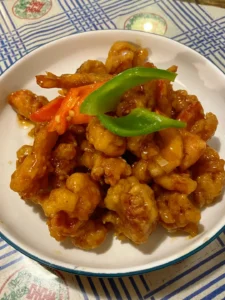
“Little Chicken Bouncing in the Hall” (49 RMB) is the must-order signature dish on every table. This clever creation combines sweet and sour chicken with sweet and sour shrimp. The fried coating has perfect crispiness—not too thick, not too thin—and is evenly coated in a sweet and sour sauce that’s tangy and delicious. The texture is wonderfully crispy.
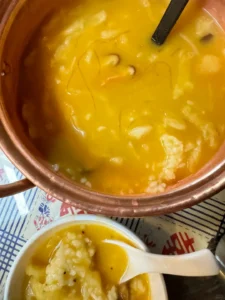
“Rich Broth with Rice” (69 RMB), playfully called the “people’s version of shark fin soup with rice” by diners, features a rich and flavorful broth that’s particularly comforting in winter. Served with quinoa rice, it’s tasty, filling, and comes in a large bowl perfect for sharing.
“Lunchbox Hairtail” (49 RMB) is served in a nostalgic aluminum lunchbox. A base of rice is topped with a layer of braised hairtail fish and a rich sauce. The fish is tender and slightly sweet, and the leftover sauce mixed with rice is exceptionally fragrant.
Creative Specialties
Beyond traditional dishes, the restaurant offers some bold and creative pairings. Combinations like “Andrographis paniculata Salad with Strawberries” sound novel and are surprisingly popular, showcasing the chef’s daring imagination.
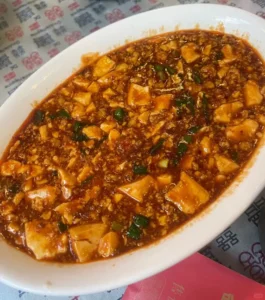
“Fish Roe with Tofu” (42 RMB) perfectly marries the soft smoothness of tofu with the savory freshness of fish roe. Each piece of tofu is richly coated in the flavorful sauce, making it a perfect dish to eat with rice.
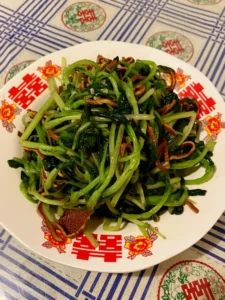
“Shredded Black Bean Dry Tofu with Shepherd’s Purse” (29 RMB) is a refreshing vegetarian dish. The aroma of the dried tofu and the mild sweetness of the greens complement each other well, with simple seasoning that evokes a homestyle taste.
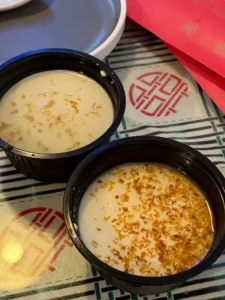
“Osmanthus Almond Tofu” (16 RMB) comes in a smaller portion than expected, but the almond flavor is well-balanced, and the texture is delightfully soft. Many diners recommend simply ordering the almond tofu to better appreciate the quality of the core ingredient.
Comforting Flavors
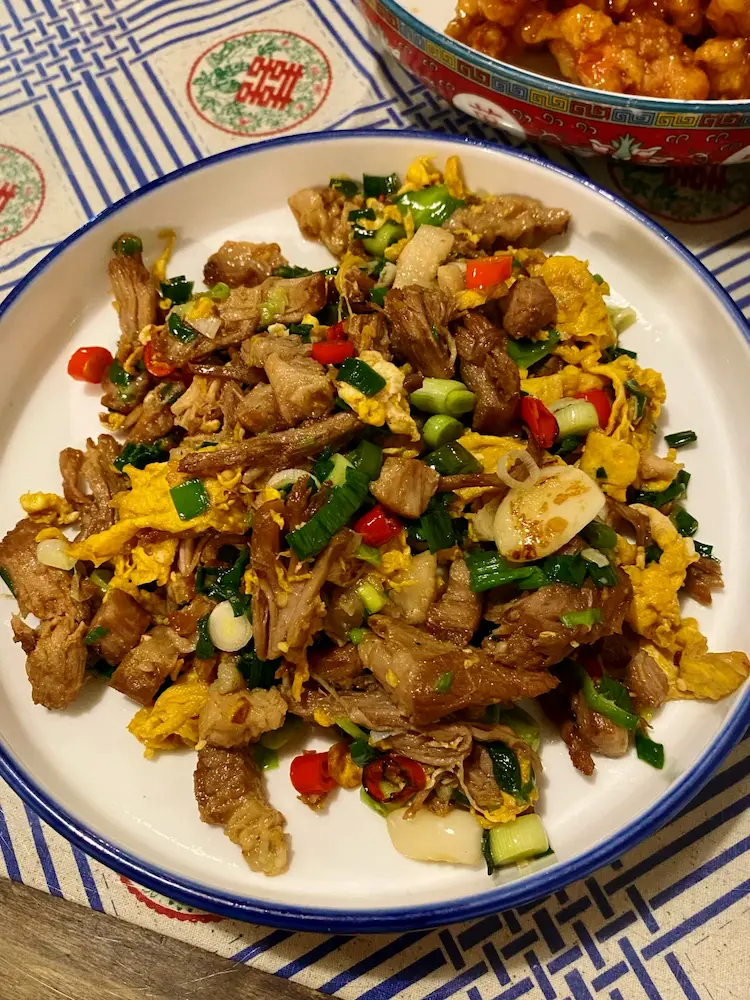
“Flavorful Shredded Meat from Bones with Fried Egg” (49 RMB) is full of “wok hei” (the coveted breath of the wok). The meaty fragrance from the shredded pork and the aroma from the fried eggs don’t clash but instead meld together harmoniously, creating an enticing smell.
“Thermos Pear Soup” (28 RMB), served in an old-style thermos, is a unique specialty. The sweetness is just right, providing a warm and comforting drink that’s the perfect companion for cold weather.
Although this spot has been recommended by actress Guan Xiaotong and gained popularity, it has maintained the unassuming essence of a true hutong eatery. On weekday afternoons, it’s common to see Beijing locals who have made the trip specifically for that familiar taste of home.
Walking further along the mottled walls of the hutong, the wooden door of the hard-to-find little restaurant stands slightly ajar. The moment you push it open, the sounds of crispy fried chicken, bubbling hot soup, and the chatter of diners blend.
A window seat on the second floor offers a view of laundry drying in the hutongs and residents strolling past. Steam rises from the hairtail in the aluminum lunchbox, while tea in an enamel mug gently swirls.
There’s no elaborate plating like in upscale restaurants, but there is the most genuine flavor of everyday life. When you leave, the setting sun casts a golden glow on the bluish-grey brick walls of the hutong. The thermos in your hand still holds half a portion of warm pear soup, enough to warm you all the way home.