Beijing Liulichang Cultural Street Travel Guide: Exploring China’s Traditional Stationery Treasures and Antique Market
| The Ultimate 2026 Guide to Beijing’s Liulichang Cultural Street, Tailored for International Visitors: Covering the Four Treasures of the Study, time-honored brands, seal carving, rubbing, bargaining, transportation, payment methods, tips to avoid pitfalls, and in-depth itineraries. |
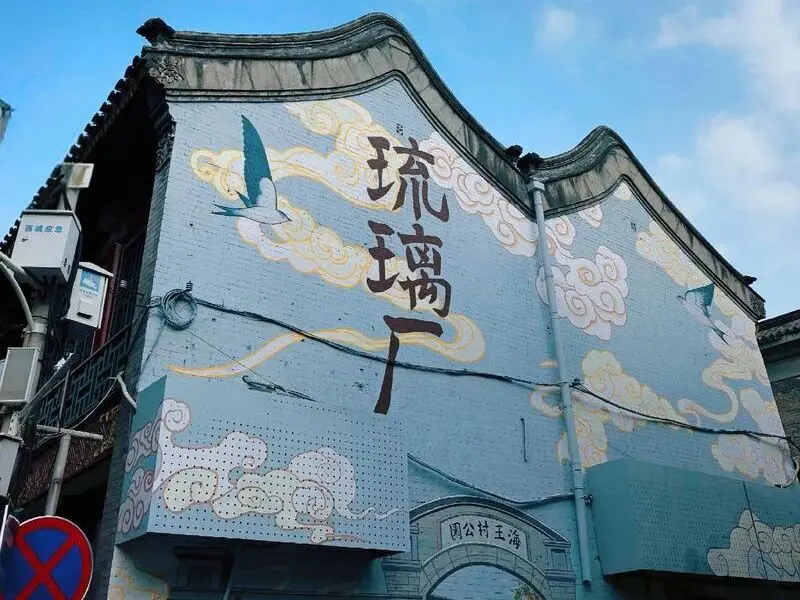
Exiting the west end of Beijing’s Yangmeizhu Xiejie, you arrive at Liulichang Cultural Street. This street takes its name from the imperial kilns established here during the Yuan Dynasty to produce glazed tiles.
After the kilns relocated, guild halls from various regions gradually established themselves here, becoming gathering spots for officials and imperial examination candidates.
Initially a book market, it gradually evolved into a hub for antiques, calligraphy, paintings, and the Four Treasures of the Study. Today, nearly a hundred shops line the street, offering ancient and modern calligraphy, paintings, stationery, stone inscriptions, and ceramics.
Table of Contents
Quick Facts
- Ideal for: Art enthusiasts, history buffs, and souvenir shoppers
- Recommended visit duration: 2–3 hours
- Admission: Free entry; shops are open to the public
- Budget: 5–50,000+ RMB (prices for antiques and calligraphy/paintings vary widely)
- Hours: Most shops are open from 9:30 AM to 6:00 PM
- Best time to visit: After 10:00 AM, when all shops are open
01 Street Layout and Key Areas
Bordered by Xinhua Street to the south, Liulichang Cultural Street is divided into East and West sections, connected by an overhead pedestrian bridge. Shops lining both sides maintain traditional architectural styles, creating a rich cultural atmosphere.
The first shop at the entrance of Liulichang East Street is the earliest state-owned bookstore—China Bookstore. A towering tree stands at its entrance, its sturdy branches reaching skyward. Under the winter afternoon sun, this spot becomes a warm, tranquil corner for nearby residents, where several elderly men play chess or gather to watch in the sunlight by the wall.
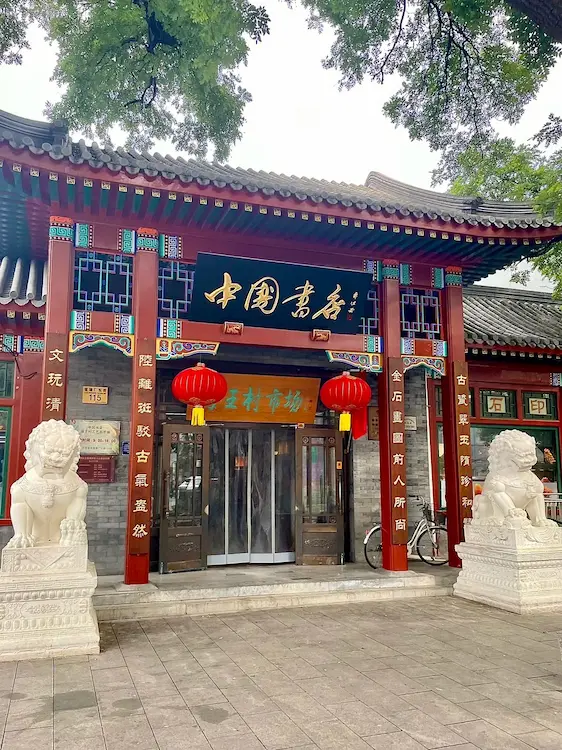
The bookstore features a secluded courtyard. The front hall houses books and traditional writing implements, while the rear courtyard hosts calligraphy and painting exhibitions. Inside, an impressive array of calligraphy manuals awaits, making it a treasure trove for enthusiasts. A large section also sells various seals and offers on-site engraving services.
02 Yidege Intangible Cultural Heritage Museum
Located on East Street, Yidege Intangible Cultural Heritage Museum showcases the history and craftsmanship of this century-old establishment. Its name derives from the first characters of the phrase: “One art suffices for the world’s needs; true methods are often found in ancient texts.
”The first floor displays the ink-making process and vintage copper vats. The ink is crafted from Sichuan high-pigment carbon black, bone glue, borneol, musk, and phenol.
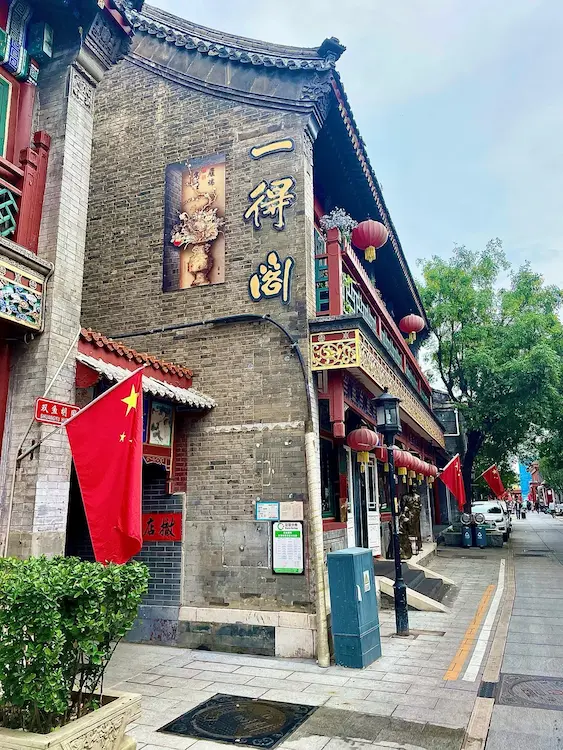
The ink boasts a glossy finish and water resistance without fading. Founder Xie Songdai, frustrated by the inconvenience of grinding ink, underwent numerous trials and failures before finally developing an ink liquid comparable to solid ink sticks.
03 Rongbaozhai: A Temple of Traditional Arts
Crossing the overpass leads to Liulichang West Street, where Rongbaozhai stands as the most renowned establishment. Rongbaozhai is the oldest established brand on this cultural street. Originally founded as the Songzhuzhai Stationery Shop during the Kangxi era, it was renamed Rongbaozhai in 1894, embodying the meaning “ to gather friends through culture, honoring reputation as treasure.”
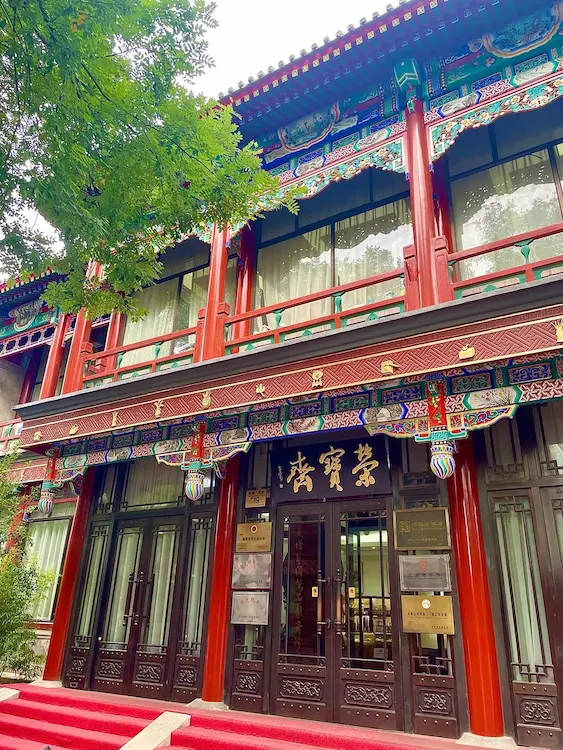
At that time, the renowned calligrapher Lu Runxiang was invited to inscribe the large plaque bearing the name “Rongbaozhai.” Today, its main operations include trading in calligraphy and paintings, selling the Four Treasures of the Study, providing mounting and restoration services, conducting auctions and pawnbroking, woodblock printing, and hosting art exhibitions.
Upon entering Rongbaozhai’s main hall, visitors encounter a massive inkstone. Both sides display and sell a variety of writing materials, fan surfaces, brushes, ink sticks, inkstones, seal paste, paperweights, brush holders, and other scholars’ tools. The second floor frequently hosts diverse art exhibitions.
Beyond the main building, a larger Rongbaozhai Art Museum and Gallery occupies the basement level to the west, reportedly housing a significant collection of renowned calligraphy and paintings alongside exquisite writing implements.
Woodblock watermark printing is Rongbaozhai’s signature technique, producing Chinese paintings that closely resemble the originals. It’s said that even Qi Baishi himself struggled to distinguish his own works from Rongbaozhai’s reproductions. Among the many pieces reproduced here, the highest caliber is widely recognized as the pinnacle of woodblock watermark printing: the “Night Banquet of Han Xizai.”
04 Modern Charm of Cultural Street & Visiting Tips
Though shops along Liulichang Cultural Street primarily sell similar goods
—brushes, ink, paper, inkstones, antiques, calligraphy, paintings, and some art studios—each possesses its own unique character and story.
For foreign tourists visiting Beijing, allocate 2-3 hours to explore Liulichang Cultural Street. The optimal visiting time is after 10 a.m., when most shops are open for business. If calligraphy and painting interest you, allow extra time at the China Bookstore and Rongbaozhai.
Don’t hesitate to engage with shop owners —they’re usually delighted to introduce these traditional cultural items to foreign visitors. If intrigued, consider purchasing some of the Four Treasures of the Study as souvenirs or experiencing on-site seal carving services.
The winter sunlight slanting across the front of the China Bookstore invites visitors to pause. The exhibition space in the bookstore’s rear courtyard features soft lighting and walls adorned with calligraphy and paintings, where visitors quietly appreciate these artworks.
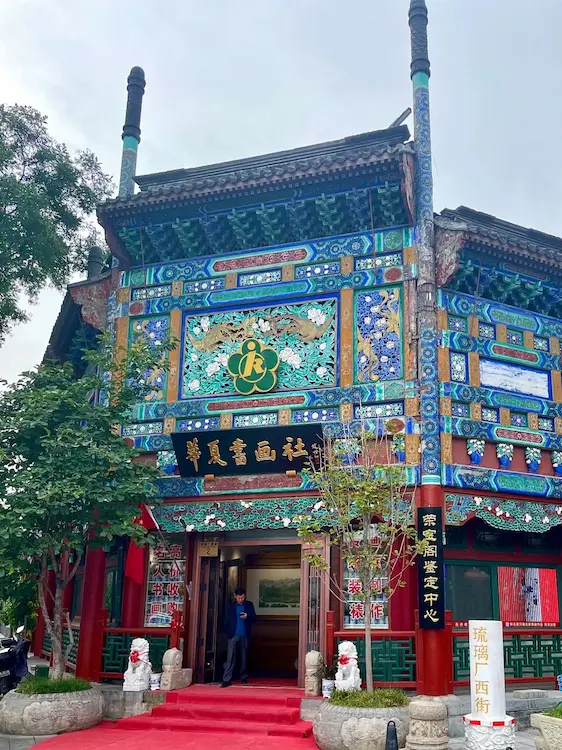
Stepping out of Rongbaozhai and glancing back at this culturally rich street, one almost hears the dialogue between history and the present. This street has witnessed the inheritance and evolution of Chinese culture, becoming a cultural bridge connecting the past and the present.
Liulichang Cultural Street is not merely a commercial thoroughfare but a living cultural museum, awaiting discovery and exploration by every visitor. Whether you are an art enthusiast, history buff, or traveler fascinated by traditional Chinese culture, this place promises a uniquely enriching experience.