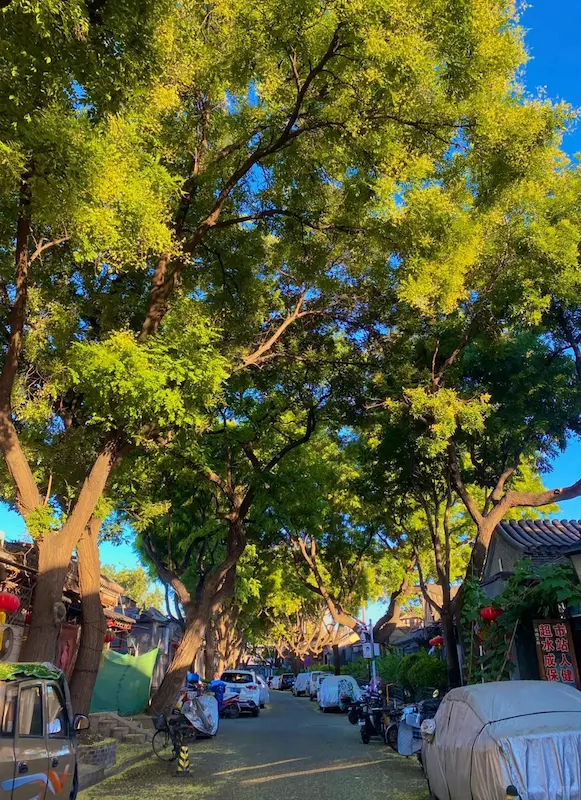
A Travel Guide to Beijing’s Yindingqiao Hutong: Exploring the History and Scenery of “Viewing the Western Hills from Yindingqiao” in Shichahai
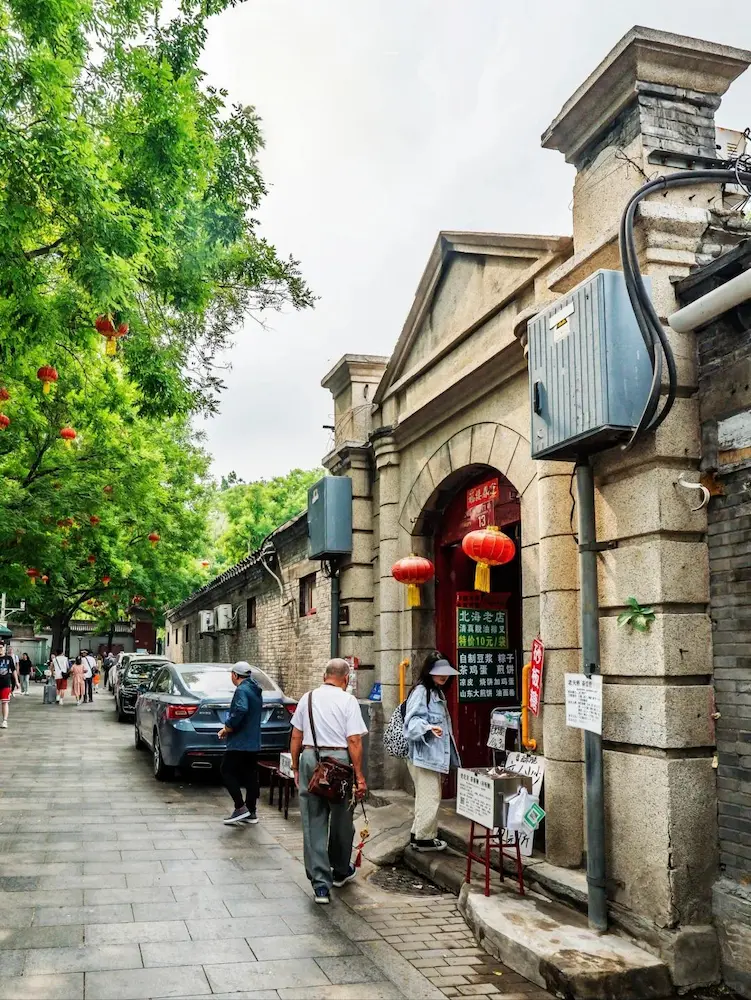
In Beijing’s Shichahai Scenic Area, Yindingqiao Hutong is a unique, poetic little lane, named after the Yindingqiao Bridge that stands directly to its north. Winding south from the bridgehead of Yindingqiao Bridge all the way to Nanguanfang Hutong, it stretches a mere 94 meters in length. Though the hutong itself has no prominent signboard, you can easily find its entrance as long as you locate that iconic little bridge.
Yindingqiao Bridge: A Scenic Wonder Named for Its Shape
Yindingqiao Bridge is the soul of this hutong and a landmark of the Shichahai area. First built during the Zhengtong Reign of the Ming Dynasty, it was reconstructed in 1990 and 2010. This is a single-arch stone bridge running north to south; the bridge itself is short, but flanked by long octagonal wing walls on both sides. Viewed from above, it resembles an inverted silver ingot—ancient Chinese currency—hence the name Yindingqiao (Silver Ingot Bridge).
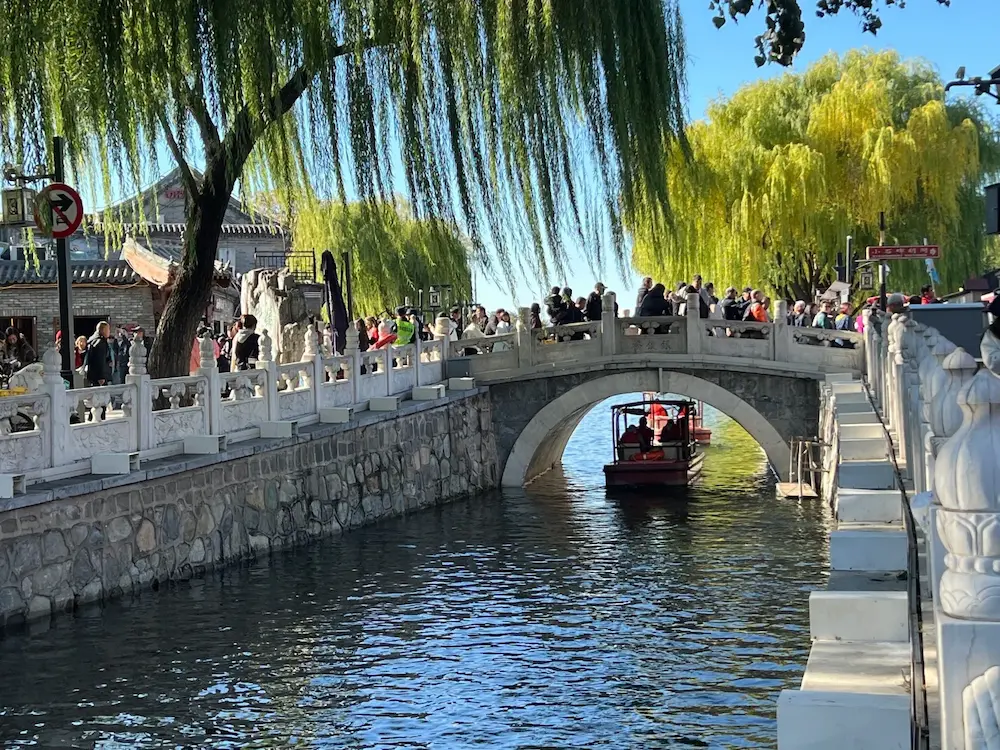
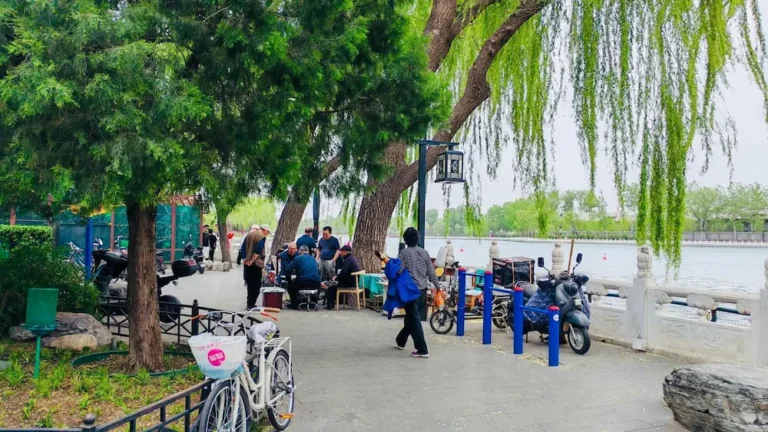
Historically, the Yindingqiao Bridge was a renowned scenic spot in downtown Beijing. Records of Yan Du’s Scenic Tours, a Ming Dynasty document, notes that it is “the finest spot in the city’s waterfront to view the Western Hills”. Standing on the bridge, one is greeted by open waters on the east and west, teeming with aquatic plants and boasting exquisite scenery.
To the south lie the palaces of the imperial city, to the north the blue-tiled roofs of Taoist temples, and to the west, the rolling mountain ranges of Beijing’s western suburbs come into full view. This unique landscape was named “Viewing the Western Hills from Yindingqiao” and became one of the famous Eight Great Sights of Yanjing.
Li Dongyang, a Grand Secretary of the Ming Dynasty, once composed a poem here: “The finest mountains and waters in the city, how many leisurely years in the world.” Even today, though the Western Hills can be seen from many places in Beijing, for old Beijingers, the experience of viewing the scenery from Yindingqiao Bridge remains irreplaceable.
Nowadays, you can find a stone stele engraved with “Viewing the Western Hills from Yindingqiao” by the water on the southwest side of the bridge. The three Chinese characters “Yindingqiao” on the central balustrade of the bridge were inscribed by Shan Shiyuan, the former Vice President of the Palace Museum.
Historical Events Beneath the Bridge and Life in the Hutong
Yindingqiao Bridge is famous not only for its scenery but also for being entangled in a historical vortex. The well-known Yindingqiao Incident took place in March 1910. Wang Jingwei, Huang Shuzhong, and Luo Shixun plotted to assassinate Zaifeng, the Regent of the Qing Dynasty (father of the last emperor Puyi), and planted a bomb under Yindingqiao Bridge.
However, the plot was exposed, and the three were arrested. This political incident further cemented the bridge’s fame in modern Chinese history.
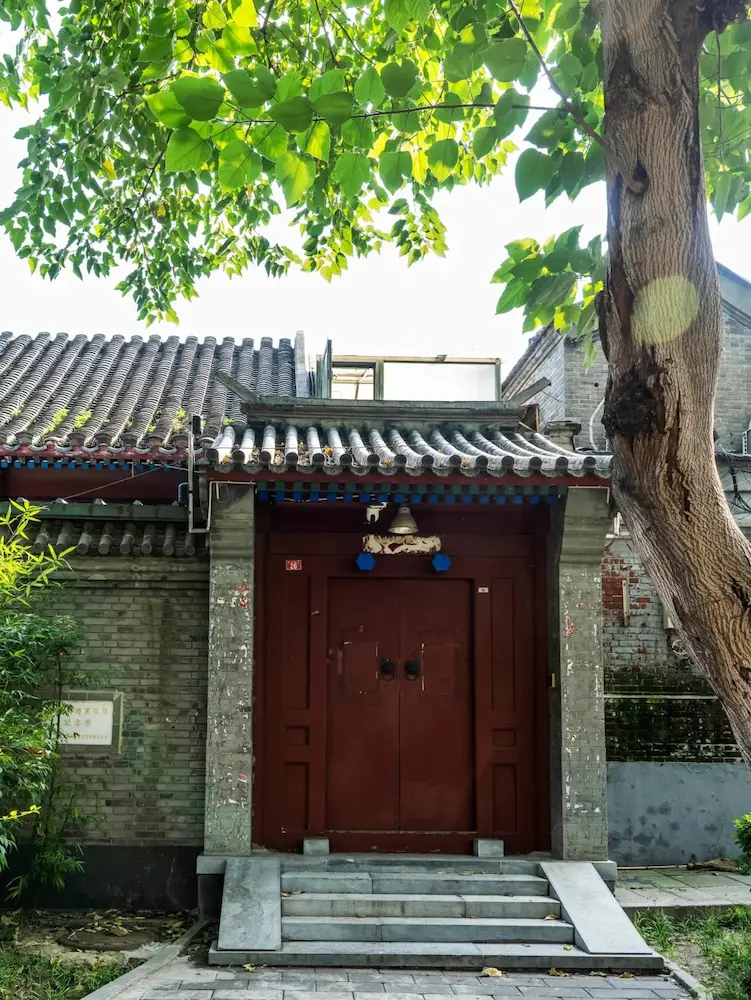
Back in Yindingqiao Hutong, traces of history are hidden away. Courtyard No.9 is the former site of Haichao Nunnery, a Ming Dynasty temple. First built during the Jiajing Reign, it was originally named Guanyin Nunnery. As it stands close to Houhai, and the sound of waves could be heard here, it was later renamed Haichao Guanyin Nunnery, commonly known as Haichao Nunnery.
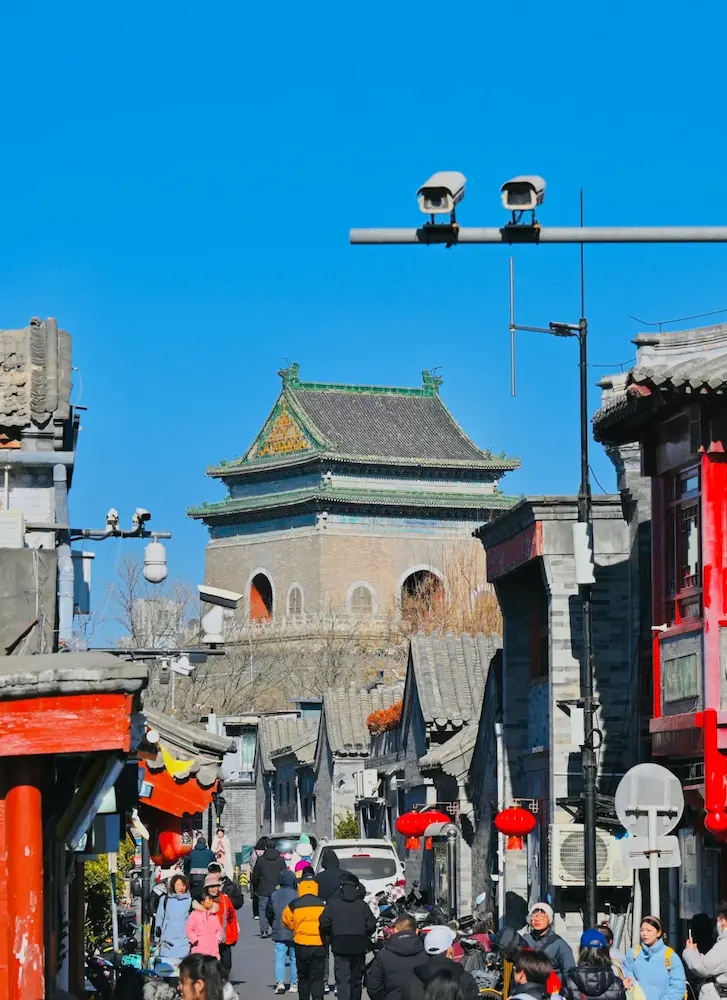
Today, it has become a large multi-family courtyard housing around 30 households. It takes about three minutes to walk from the front gate (facing Yindingqiao Bridge) to the back gate (opening onto Nanguanfang Hutong). Its narrow, winding internal passages are lined with makeshift small rooms, imbued with a strong sense of daily life.
In addition, Courtyard No.14 in the hutong is said to have been named one of “Beijing’s Most Beautiful Courtyards”, boasting an elegant appearance.
Epilogue: Mountains, Waters, and Mortal Life in a Tiny Lane
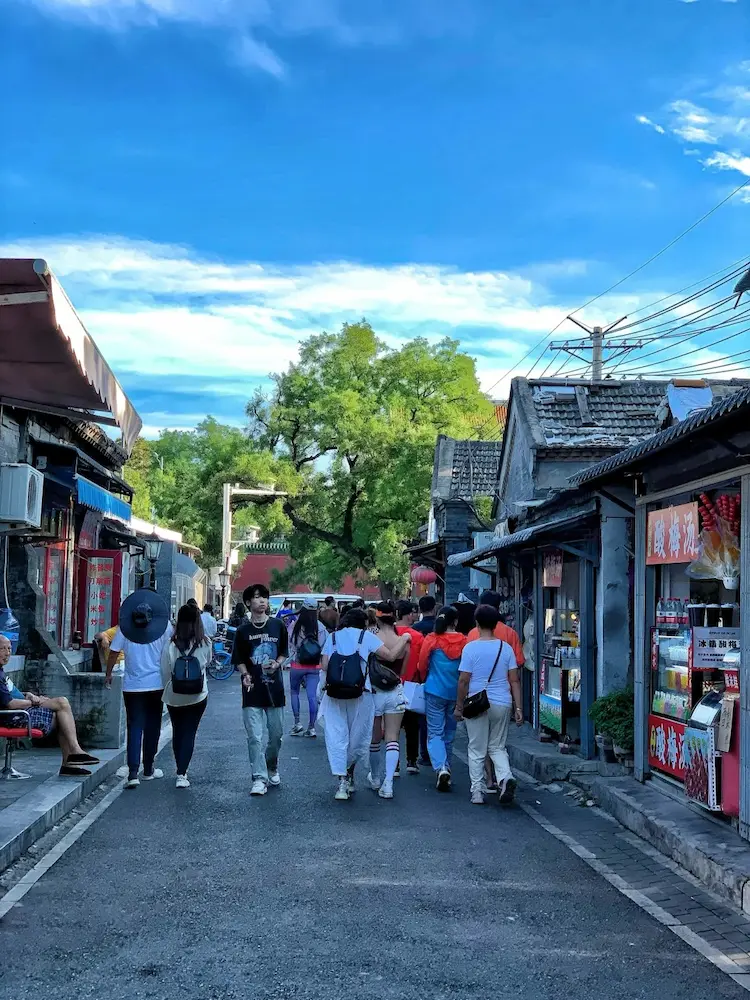
Though Yindingqiao Hutong is short, it is flanked by water at both ends and occupies a pivotal location. It is like a starting point, connecting numerous hutongs in the Jinsitao area of Shichahai and guiding people to experience the mundane life of Beijing in depth.
It is also like an endpoint: after wandering through the labyrinth of hutongs, people stop by the bridge here, gaze into the distance at the Western Hills, and feel the allure of poetry and the distant world.
This little hutong perfectly epitomizes the charm of Beijing: it blends profound history and picturesque scenery with vibrant ordinary life, all coexisting in harmony. It is well worth slowing down your pace to savor it carefully.