A Travel Guide to Beijing’s Zhanzi Hutong: Exploring the Historical Stories of Prince Gong’s Mansion and Alxa Mansion(2026 In-Depth Hutong Tour)
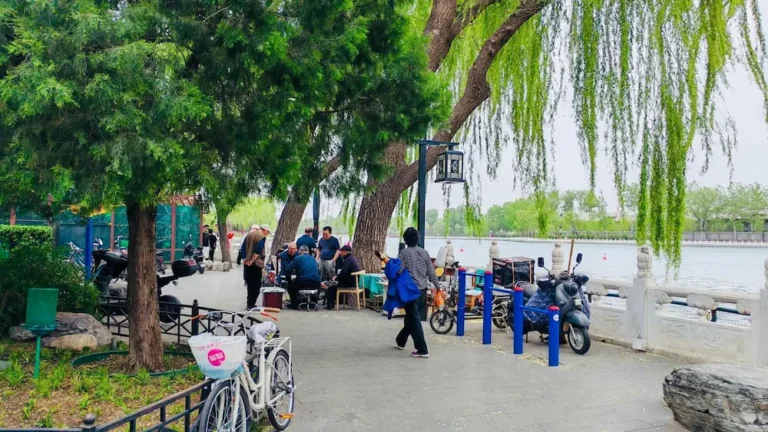
Nestled near Beijing’s Shichahai Lake lies Zhanzi Hutong, a lane adjacent to the renowned scenic spot of Prince Gong’s Mansion.
Winding north to south, this hutong was known as “Zhanzifang” (Felt Storage House) in the early Qing Dynasty, for it was once a place where felt—a thick woolen fabric that served as an essential warm-keeping item for the imperial palace in winter, when no heating facilities were available—was stored.
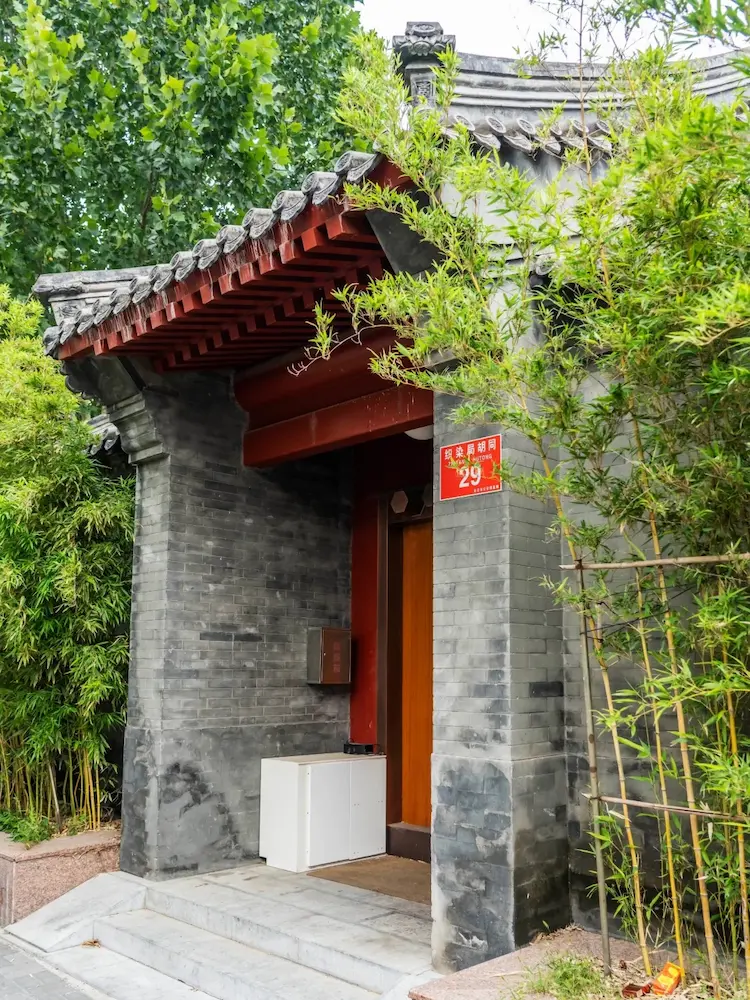
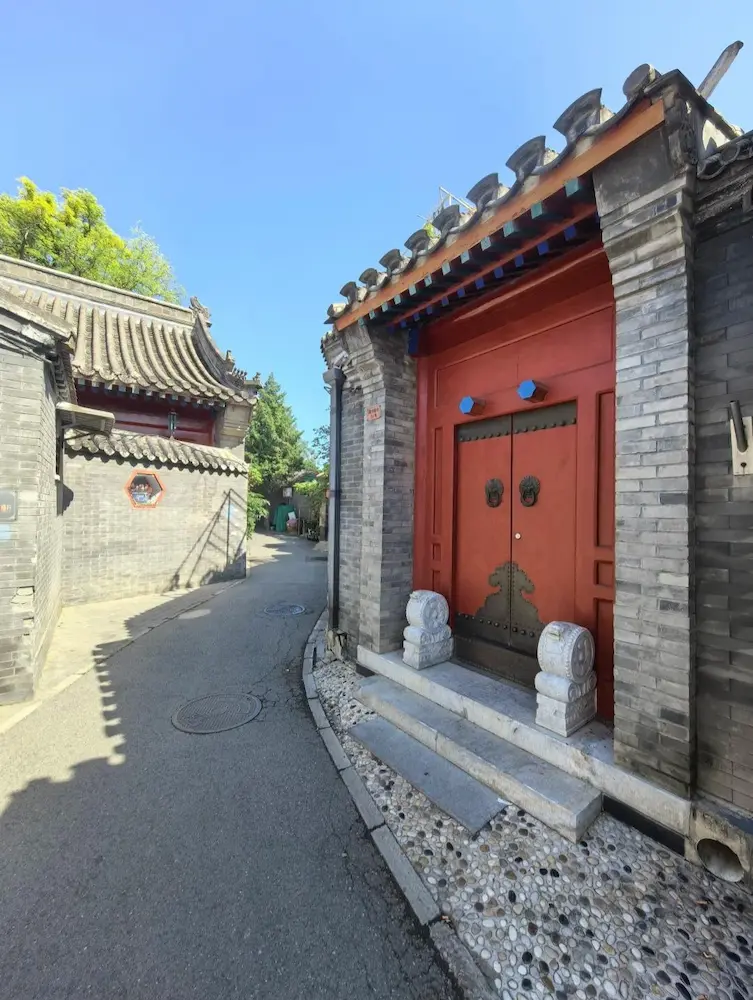
It was officially named Zhanzi Hutong in 1965. Today, the tall old walls of the former Alxa Mansion line the west side of the hutong, while siheyuan courtyards, both old and new, stand in a row on the east side, quietly telling tales of the passing years.
Table of Contents
Quick Guide
- Key Highlights: The former site of a Qing Dynasty felt workshop, the high walls of the Alashan Prince’s Mansion (Luo Prince’s Mansion), Gate No. 3 of the Prince Gong’s Mansion, and the fishbone-shaped, authentic hutong
- Location: West of Shichahai, connecting Qianhai West Street and Liuyin Street
- Recommended Visit Duration: 10 minutes (a walking shortcut—well worth a stop along the way)
- Keywords: Vanishing traditional crafts, high walls of princely mansions, bustling local life, a quiet oasis in the city
- Transportation: 5-minute walk from Beihai North Station (Subway Line 6) or Shichahai Station (Subway Line 8)
Best Way to Explore | Walking Shortcut (Direct Route)
Zhanzi Hutong is a natural way to avoid crowds, seamlessly connecting popular attractions:
Guo Moruo’s Former Residence (Qianhai West Street) → Zhanzi Hutong → Liuyin Street → Sanzuoqiao Hutong
The entire route is uncrowded, shaded, and direct—a peaceful way to explore the old hutongs.
Quick Tips
- The alleys are very narrow; walking is best. Parking is prohibited, and it’s difficult to pass other vehicles.
- There are no shops, so bring your own water and snacks.
- Ideal for those who enjoy tranquility, capturing local life, and learning about history.
A Royal Mansion Legend in the Hutong: The Story of Courtyard No.7
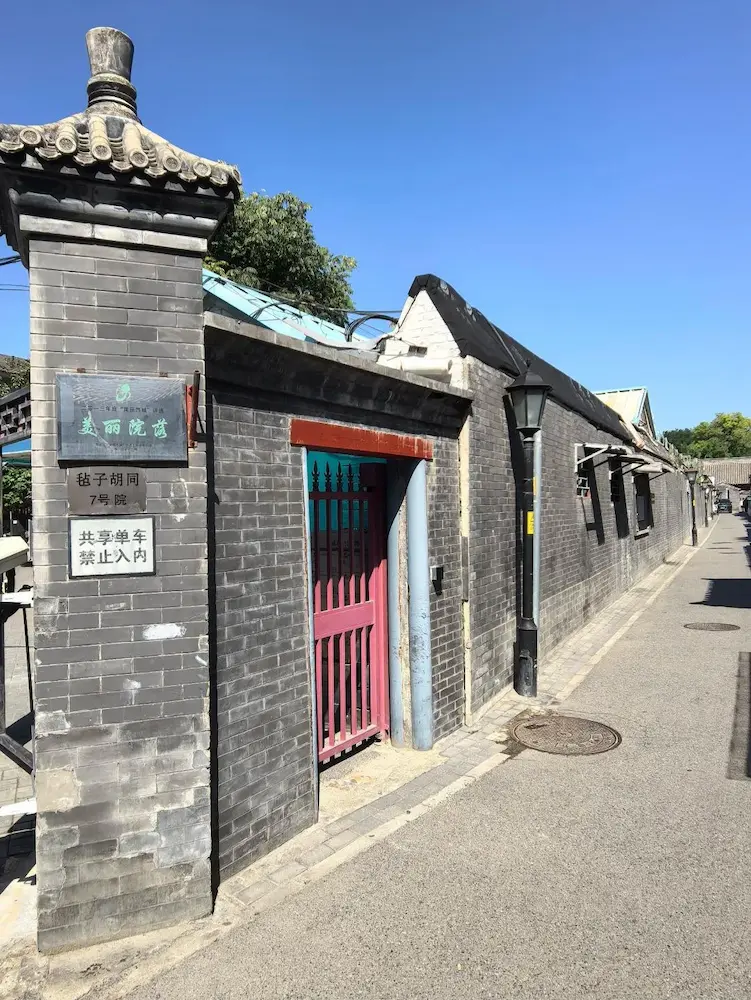
Step into Zhanzi Hutong, and Courtyard No.7 is a place with a distinguished past. It was once the site of the Alxa Mansion of the Qing Dynasty.
According to historical records and research by scholars such as Zhou Ruchang, a renowned expert on A Dream of Red Mansions, the story of this mansion began in the 43rd year of the Kangxi Reign (1704).
Back then, A’bao, a noble from Alxa Banner (verified to be a descendant of Habutu Hasar, the younger brother of Genghis Khan), married an imperial princess of the county rank and was bestowed the title of “Prince Consort Heshuo”.
The Kangxi Emperor then granted him a mansion in the capital, which later became Courtyard No.7. For his meritorious military service, A’bao was promoted to Prince of the Second Rank in the 2nd year of the Yongzheng Reign (1724), and the mansion was thus elevated to a Prince’s Mansion.
In the 15th year of the Qianlong Reign (1750), Lobsang Dorji, A’bao’s second son, also married an imperial princess and was promoted to the rank of Prince of the Second Rank, after which the mansion became known as “Prince Luo’s Mansion”.
The princely title was passed down through generations; in the 2nd year of the Xuantong Reign, Tawang Bulukezhale inherited the title, and the mansion gained another nickname, “Prince Ta’s Mansion”.
Adjacent to the famous Prince Gong’s Mansion, the two grand mansions were separated only by a narrow north-south lane, once known as “Mansion Alley”.
Hence, Alxa Mansion was commonly called the “East Mansion”, and Prince Gong’s Mansion the “West Mansion”.
Due to their proximity, some scholars believe they may be the prototypes of Rongguo Mansion and Ningguo Mansion in A Dream of Red Mansions, a great classic of Chinese literature, and the back garden of Prince Gong’s Mansion is associated with the “Grand View Garden” in the novel.
Such conjectures between fiction and reality add great cultural interest to this hutong.
Today, the former royal Courtyard No.7 has become a staff dormitory for a government department, yet its former glory still lives on in people’s research and legends.
On Both Sides of the High Wall: A Silent Contrast of History
The east and west sides of Zhanzi Hutong present a thought-provoking contrast.
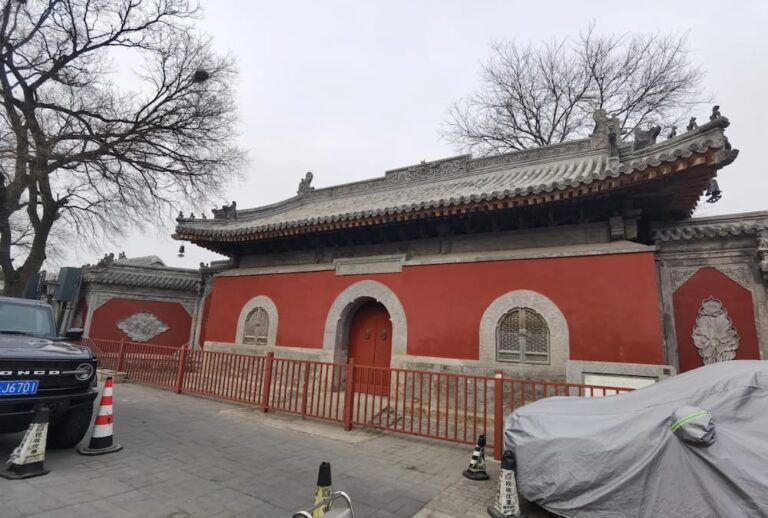
The west side is lined with the long, tall brick walls of the former Alxa Mansion. Like a temporal barrier, this wall separates the former royal territory from the mundane civilian life outside, standing in silent opposition to the other side of the hutong forever.
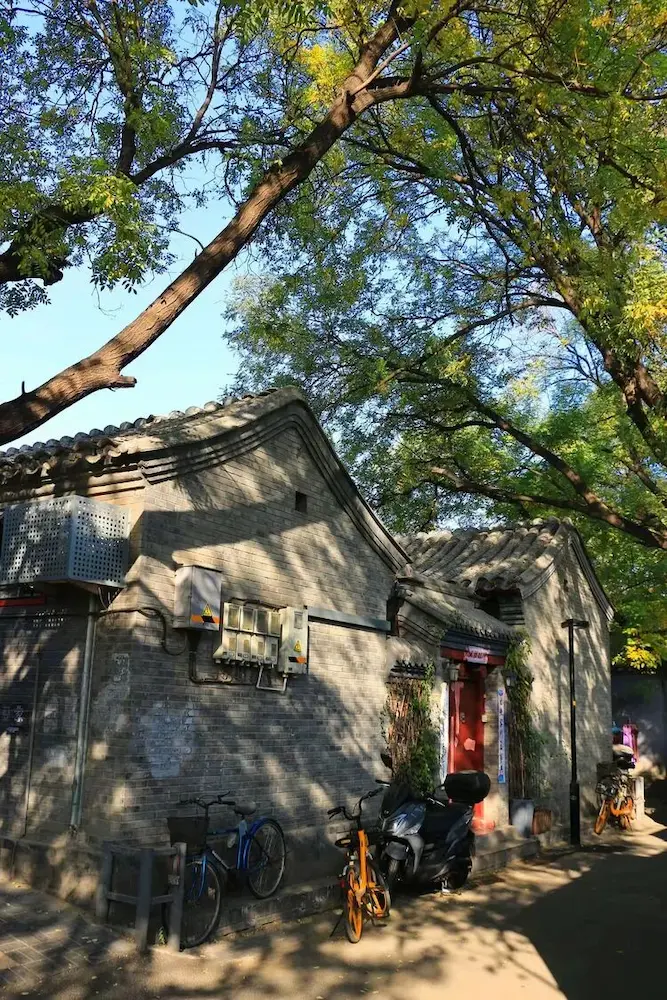
The east side bears the traces of ordinary people’s lives. Here, old and new buildings intermingle, including shabby small courtyards and newly renovated siheyuan.
Among them, Courtyard No.14 was once the living quarters for the servants of Prince Gong’s Mansion, commonly known as the “Eunuch Quarters”.
Today, the courtyard is in a messy state and has become a temporary accommodation for migrant workers.
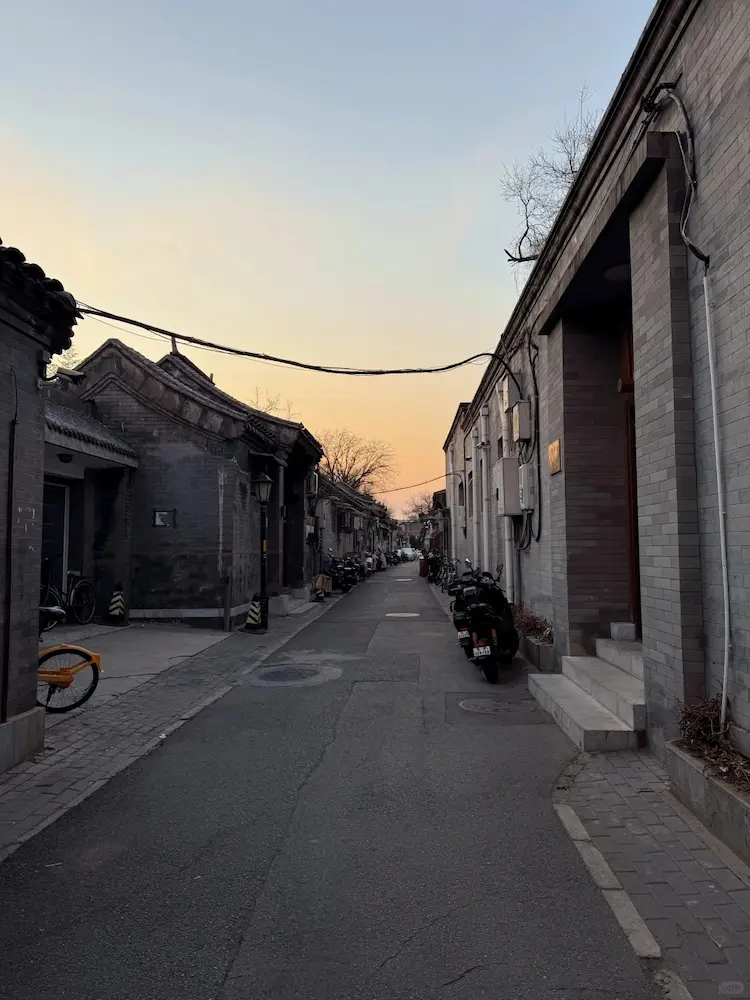
This contrast—the imposing old mansion walls on one side, and the ever-changing civilian life on the other—is precisely the charm of the hutong. Time seems to have carved two distinct growth rings into the gray bricks and tiles: one belonging to frozen history, and the other to the ever-flowing daily life.
An Older Memory: The Lost Ancient Temple
In the earlier Ming Dynasty, the area of Zhanzi Hutong had a very different look. It is said that there once stood a large-scale Cien Temple here.
However, the fate of this temple came to an abrupt end in March of the 22nd year of the Jiajing Reign (1543). The Jiajing Emperor issued an imperial edict ordering the relevant departments to demolish the temple and expel the Tibetan monks inside to other places.
The ancient temple thus vanished from the earth, surviving only in scattered historical records.
Today’s Zhanzi Hutong is peaceful and serene. If you walk from the northern end of the hutong to the exit near Qianhai West Street, you can still see the Third Gate of Prince Gong’s Mansion. Standing there quietly, it connects the bustling scenic spot with the historic old hutong behind it.
In short, Zhanzi Hutong is like a three-dimensional history book. Though named after felt, a common daily commodity, it weaves together the legends of royal mansion nobles, conjectures about a literary masterpiece, the dust of an ancient temple’s rise and fall, and the mortal life of ordinary people. Walking through it, you can feel the layered and accumulated profound memories of Beijing.