Beijing’s Beihai Park: A Spring Visitor’s Guide (Including Admission, Best Times to Visit, and Photo Spots)
Beihai Park is one of the most beautiful places to visit in Beijing during spring, especially from mid-March to early April, when the park is ablaze with spring colors and exudes the unique charm of an imperial garden.
Having lived in Beijing for over a decade and visited Beihai Park numerous times, I can personally attest that spring is the best season to experience this millennium-old imperial garden.
This guide will provide detailed information on the park’s must-see spring attractions, the best time to visit, transportation options, ticket details, and super-useful travel tips to help you easily plan a perfect spring trip to Beihai Park.
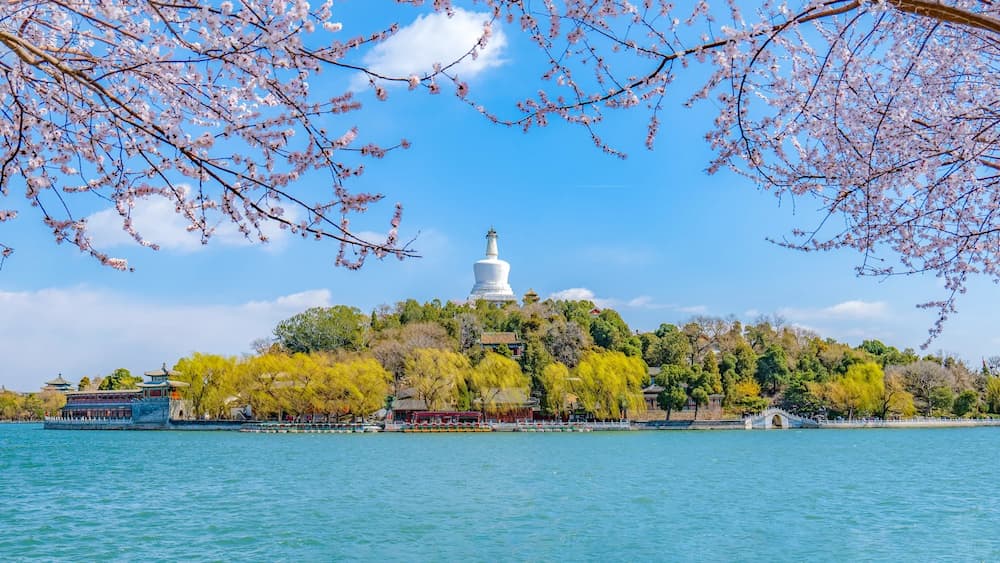
Table of Contents
Is Beihai Park worth visiting?
The answer is a resounding yes. Beihai Park is an excellent choice for experiencing classical Chinese imperial gardens in Beijing. In spring, flowers bloom alongside ancient architecture, the White Pagoda reflects in the spring waters, and red walls contrast beautifully with the blossoms.
Every step reveals a new scene, blending the aesthetics of southern and northern gardens—a romance unique to Beijing in the spring.
Must-See Spring Scenery at Beihai Park
Willow-Lined Lakeside
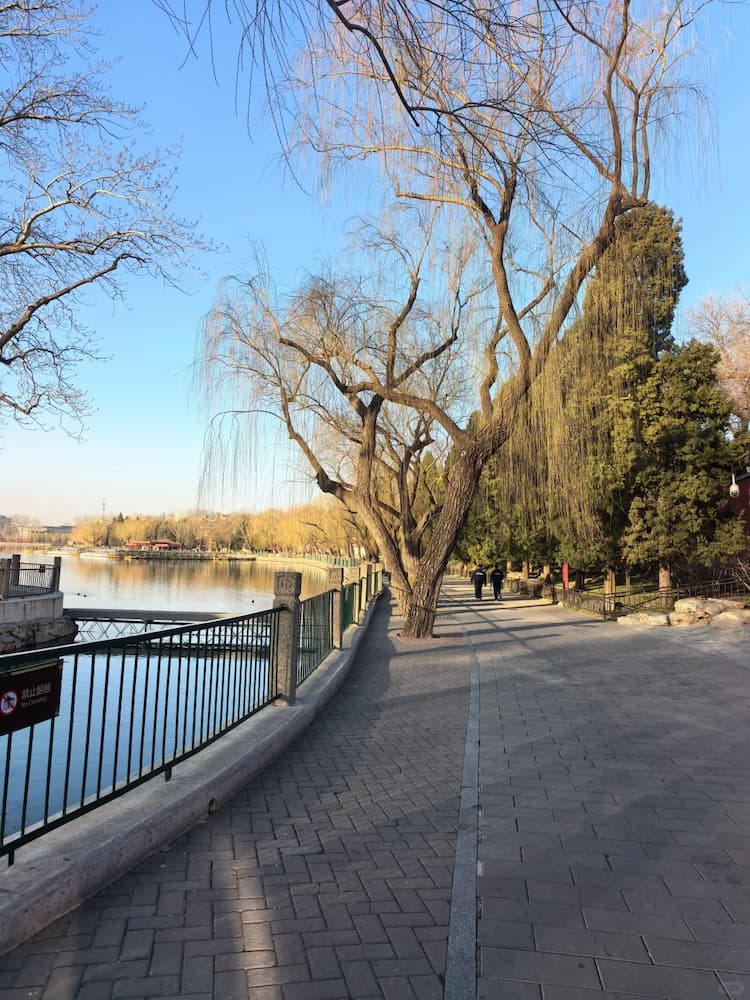
The willow trees along the park’s lakeshore and around Qionghua Island are among the first to come alive in spring. Tender yellow buds adorn the slender branches; as a gentle breeze blows, countless willow branches sway lightly over the water.
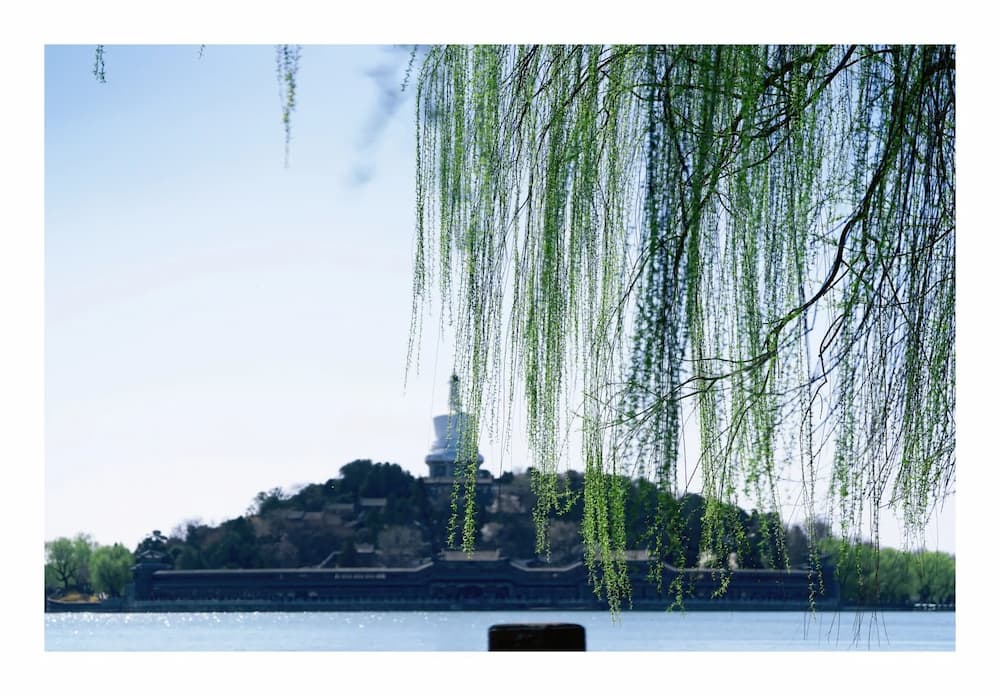
From a distance, they appear as a hazy patch of pale green, banishing the gloom of winter and fully revealing the gentle beauty of spring. This is Beihai Park’s most iconic spring scene.
We recommend walking along the lake from the east shore to the north shore to experience the poetic beauty of the willow branches skimming the water up close.
Magnolias and Cornelian Cherries at Chanfu Temple
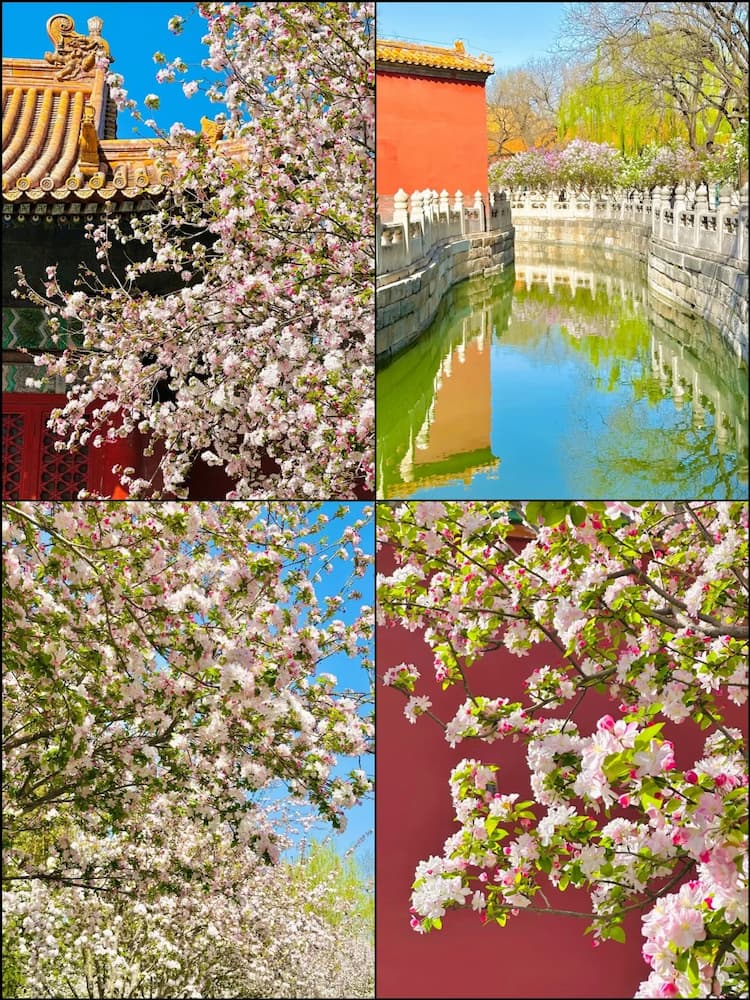
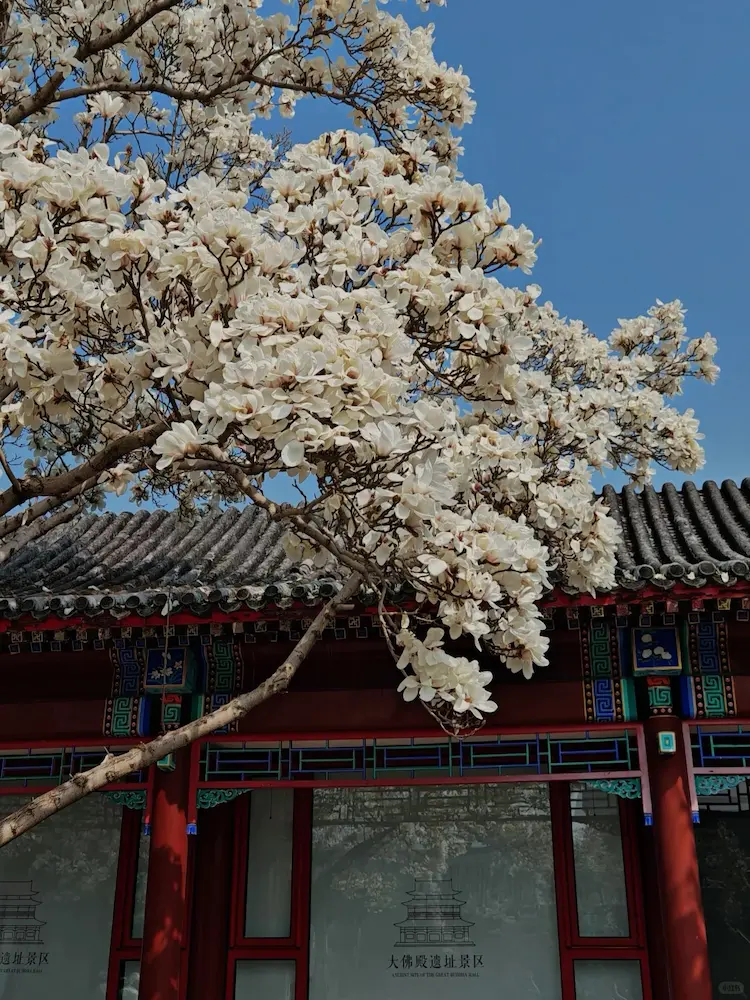
Chanfu Temple is a classic ancient architectural complex within the park. In spring, the white magnolias bloom as expected here. Their pure white petals contrast beautifully with the red walls and gray tiles, creating an elegant and photogenic scene—one of the best spots for spring photography in Beihai Park.
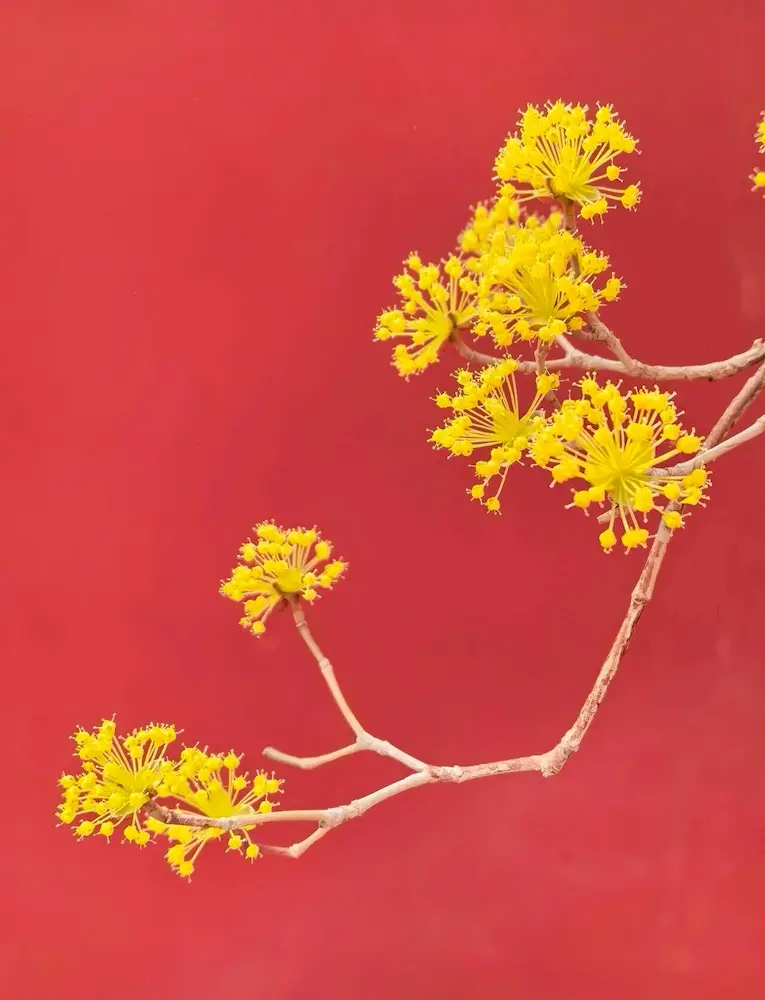
Beneath the red walls, the Chinese cornelian cherry trees bloom with delicate, golden flowers, their branches heavy with blossoms. According to legend, this is the very plant mentioned by the Tang Dynasty poet Wang Wei in his verse: “I know from afar that my brothers have climbed high, all wearing cornelian cherry wreaths—but one is missing.”
View of the Five-Dragon Pavilions and the White Pagoda
Not far south of Chuanfu Temple lies the Five-Dragon Pavilions. These five pavilions are built right by the water. Standing inside one of them and looking across to the opposite shore, you can take in the entire Beihai White Pagoda on Qionghua Island—this is the classic vantage point for photographing the pagoda.
If you wish to capture the pagoda’s reflection on the lake, we recommend choosing a windless early morning, when the lake’s surface is as calm as a mirror, and the pagoda’s reflection is as clear as a painting.
Spring Magnolias at Wenjin Academy
Continuing south toward Wenjin Academy, several spring magnolias bloom quietly in the spring. Their delicate pink petals complement the academy’s antique architecture perfectly.
The combination of ancient buildings and blooming flowers creates a truly atmospheric scene, making this a hidden gem for spring photography.
How to Get to Beihai Park
Subway
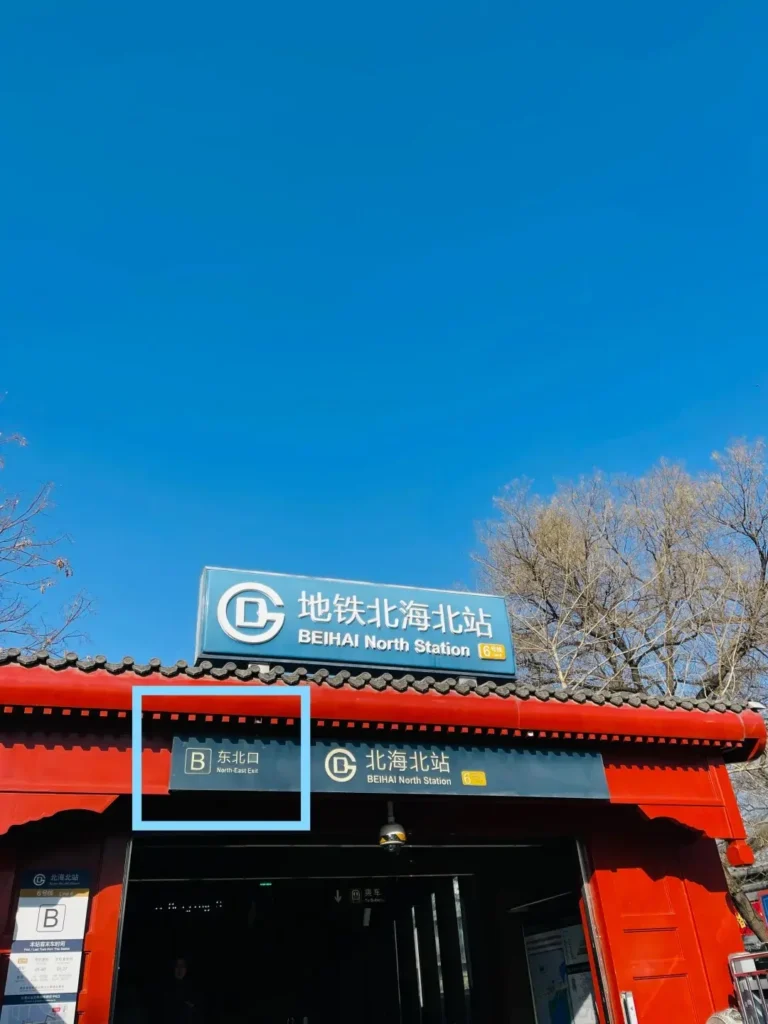
Take Subway Line 6 to Beihai North Station. Exit at Exit B (Northeast Exit) and walk about 400 meters (5 minutes) to reach the park’s North Gate.
Bus
Take bus routes 5, 101, 103, 109, 124, or 128 and get off at Beihai Station or Beihai North Gate Station. From there, it’s a short walk to the corresponding park entrance.
The North Gate of Beihai Park is the best choice for first-time visitors. It is closest to the subway station, and upon entering, you’ll immediately find key spring attractions such as Chanfu Temple and the Five-Dragon Pavilion, saving you the trouble of detours.
Ticket Information and Opening Hours
Beihai Park offers affordable admission prices, making it a highly cost-effective destination in Beijing. Ticket prices vary between peak and off-peak seasons, and opening hours are adjusted slightly depending on the season:
- Ticket Prices: Peak Season (April 1–October 31) – Standard ticket: 10 RMB/person; Combined ticket (includes core attractions such as Qionghua Island and Yong’an Temple): 20 RMB/person; Off-season (November 1–March 31 of the following year) – Standard ticket: 5 RMB/person; Combined ticket: 15 RMB/person.
- Booking Method: Reservations can be made via the official platform “Changyou Park.” The website’s interface can be switched to English in the top-right corner. The WeChat mini-program “Changyou Park” also supports ticket purchases, with English assistance available for some processes. The booking link can be viewed and used via browser translation.
- Opening Hours: Peak Season 6:30 AM–9:00 PM (last entry at 8:00 PM); Off-Season 7:00 AM–8:00 PM (last entry at 7:00 PM).
Best Times to Visit Beihai Park
Early Morning (Best Time for Photography)
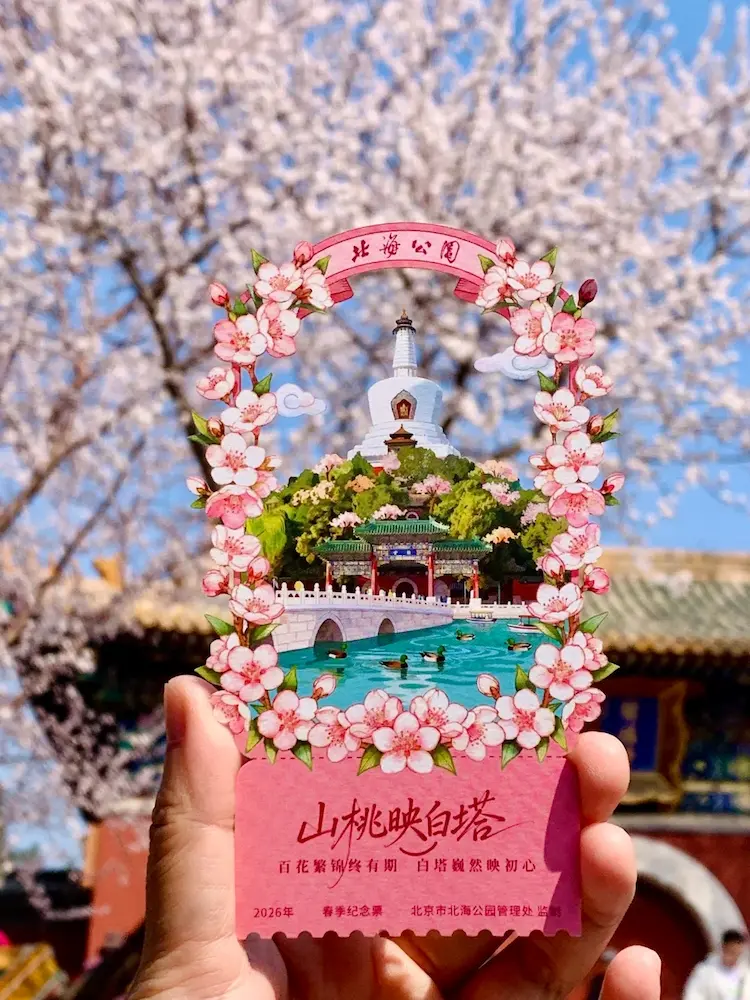
From 8:00 to 9:30 a.m. is the best time to visit and take photos in Beihai Park during spring. The light is soft and balanced at this hour, creating a perfect atmosphere for capturing the combination of blooming flowers and ancient architecture.
You may also chance upon locals doing morning exercises at the Five-Dragon Pavilion or walking their birds by the lake, allowing you to experience the most authentic Beijing morning scenery.
Afternoon (Warm Light for Sightseeing)
If you enter the park after 3:00 PM, the sunlight takes on a warm hue as it cascades over the lake and the White Pagoda, creating stunning light and shadow effects. This is the perfect time to capture the White Pagoda and the lake in the same frame. Note that some areas near the lake may be backlit, so it’s best to choose your shooting spot in advance.
Visiting early in the morning is the best way to avoid crowds. Before 9:00 AM on weekdays and before 8:00 AM on weekends, the park is relatively empty, allowing you to enjoy the flowers and take photos in peace for a more immersive experience.
Estimated Budget (Per Person)
Beihai Park is a highly cost-effective Beijing attraction. There are no mandatory purchases during the tour, and optional expenses such as boat rides and nearby dining are entirely up to you. The following is a per-person budget guide, with exchange rates estimated in real time:
| Item | RMB | USD (approx.) | EUR (approx.) |
| Peak Season Combo Ticket | 20 RMB | 2.8 USD | 2.6 EUR |
| Park Boat Ride (Optional, charged by the hour) | 80–120 RMB/hour | 11–17 USD | 10–16 EUR |
| Simple lunch near the park | 30–60 CNY | $4–8 | €4–7.5 |
Overall, Beihai Park is an excellent budget-friendly destination in Beijing; the admission fee alone allows you to experience the spring beauty of this imperial garden.
Practical Travel Tips (Important)
✅ Try to arrive at the park early to avoid the crowds after 9:30 a.m., especially on weekends, when visitor numbers increase significantly after 10:00 a.m.
✅ The park is primarily designed for walking, and the entire tour takes about 2–3 hours. Be sure to bring your own drinking water, as there are few places to buy it inside the park.
✅ If you want to photograph the red walls of Chuanfu Temple with the cornelian cherry trees without crowds, arrive before 9:00 AM, when visitor numbers in this area are at their lowest.
✅ There are no large dining areas within the park; you can head to nearby restaurants after your visit. There are various snack stands and restaurants near the North Gate.
Personal Tips from Over a Decade of Living in Beijing
If I had to give just one tip for visiting Beihai Park in the spring, it would be this: enter through the North Gate early in the morning. This allows you to avoid the crowds and catch the best light for photos. Once inside, head straight to Chuanfu Temple to experience the stunning scenery of red walls and blooming flowers.
Additionally, after exploring Beihai Park, take a stroll through the Shichahai area just outside the North Gate. This neighborhood offers authentic Beijing hutong charm, along with plenty of Western restaurants, cafes, and local snacks. By combining a visit to the imperial garden with the laid-back hutong lifestyle, you can experience two distinct sides of Beijing in a single trip.