Beijing Transportation Guide: Traveling as a Foreign Visitor | Subway, Bus, Taxis, Bicycles, and Getting from the Airport to the City
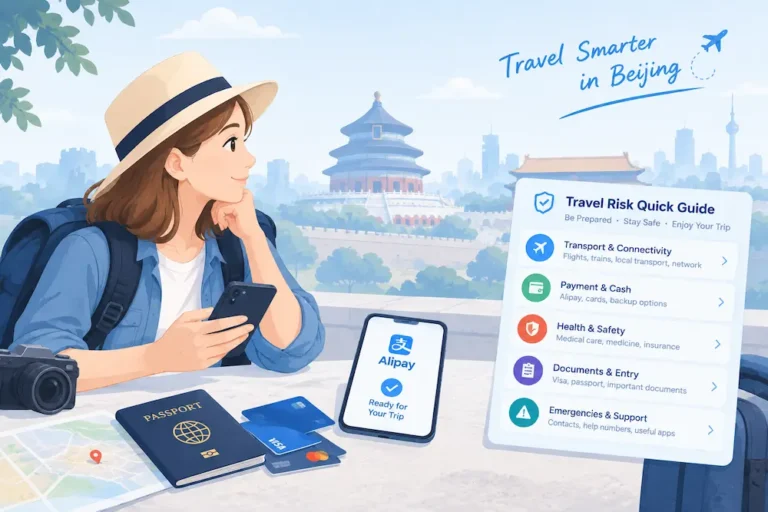
When traveling in Beijing, choosing the right mode of transportation can greatly enhance your travel experience. This guide is designed for foreign visitors to China to help you decide which transportation options to choose, how to use them smoothly, and how to handle issues with payment or navigation.
Table of Contents
Essential Travel Apps and Payment Preparations
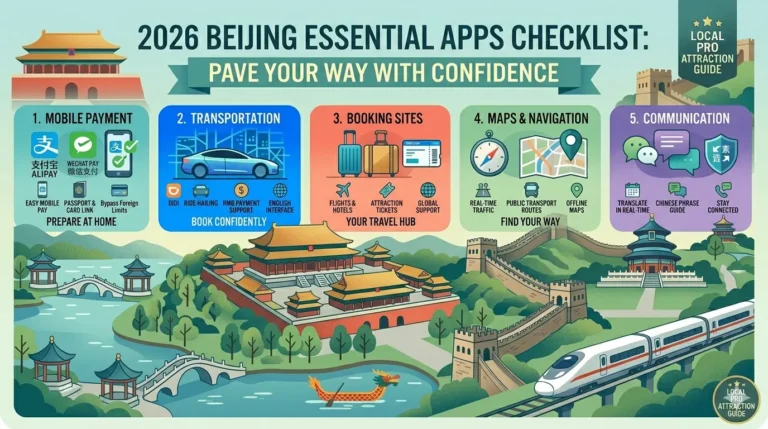
Before you travel, make sure you have navigation apps, ride-hailing apps, and payment methods ready. You don’t need to install them all—just prepare one primary option and a backup.
Didi Chuxing: Can be used as an alternative ride-hailing option.
Note: There are uncertainties regarding registration with an international phone number, identity verification, and payments made with foreign credit cards. We recommend completing registration and testing payments before departure; do not wait until you arrive at your destination to try it for the first time.
Mapping and Navigation Apps: Map services outside mainland China may experience location inaccuracies. We recommend having a navigation tool that works reliably within China; do not rely solely on any single map app. Be sure to save screenshots of the Chinese names and addresses of important locations as a backup.
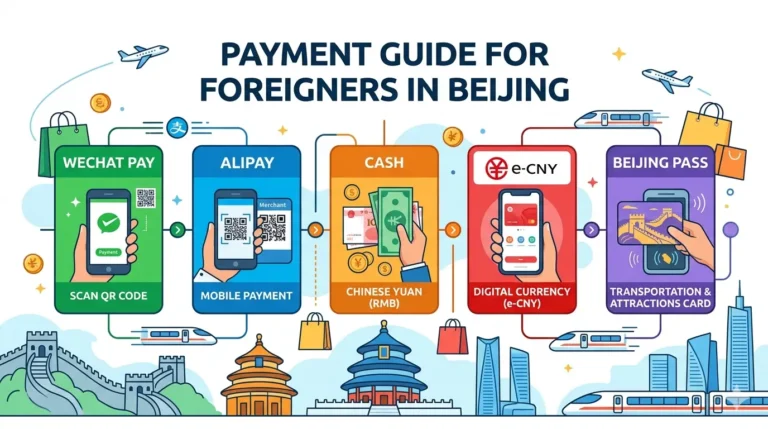
Payment Methods: You don’t have to rely entirely on mobile apps for transportation. The subway accepts foreign bank cards and also allows you to purchase single-ride paper tickets; see [The Complete Guide to Using Alipay for Foreigners.]
Common modes of transportation
Subway: Extensive Coverage, Multiple Payment Options
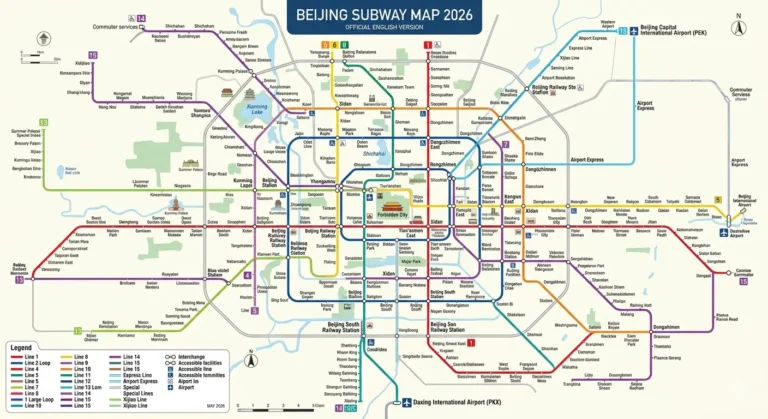
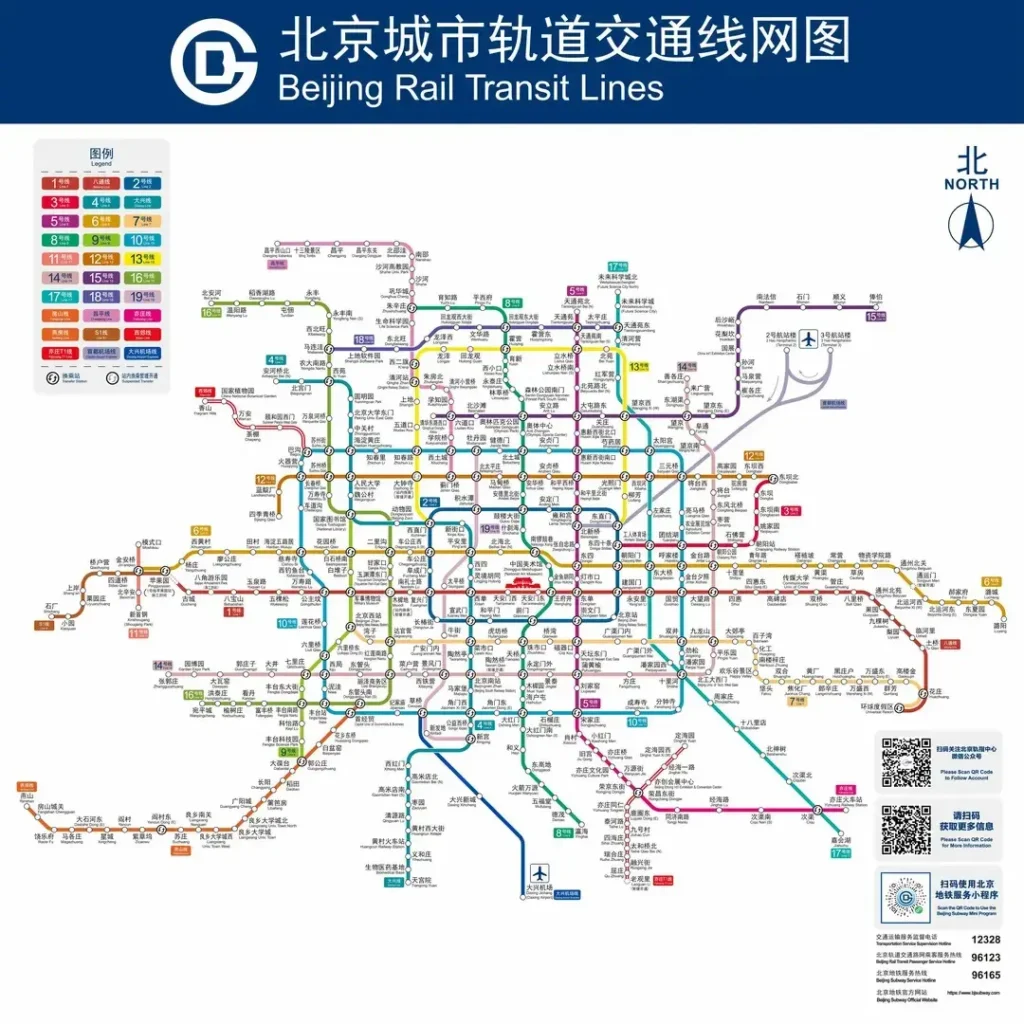
Beijing’s subway network is well-developed and covers the vast majority of popular attractions in the city. Its advantages include punctuality and minimal traffic congestion, making it the preferred choice for most tourists.
You can choose from the following payment methods:
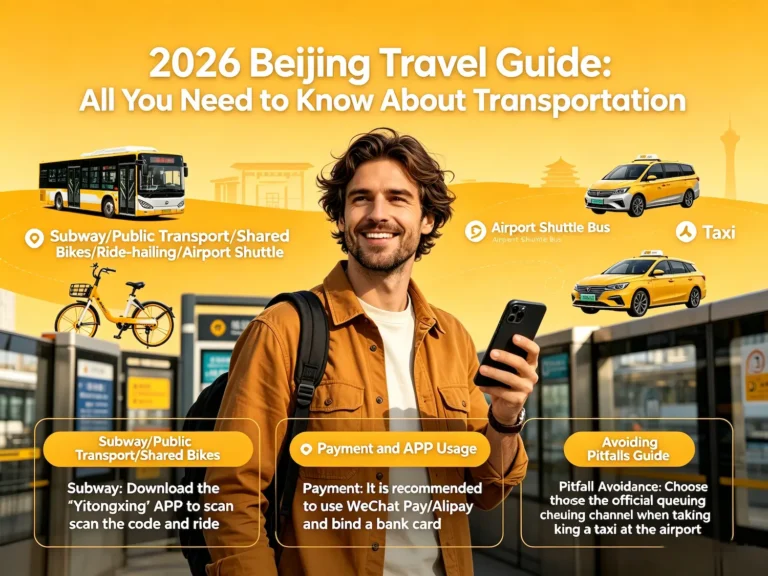
- Scan a QR code with your phone: Use the Yitongxing or Beijing IC Card apps, or activate a ride code via the Alipay mini-program.
- Swipe an international bank card to enter the station: Contactless payment is supported for UnionPay, Visa, Mastercard, JCB, and American Express cards. Actual card compatibility is subject to the turnstile’s on-site recognition. You must also swipe your card upon exiting to complete the payment.
- Single-trip paper tickets: Available at self-service kiosks (some with English interfaces) or at staffed ticket windows at metro stations.
Fares: Calculated by distance, with a base fare of 3 yuan (for trips up to 6 kilometers).
The Capital Airport Line and Daxing Airport Line are airport-specific lines with separate fare structures; please check the latest fares published by the official metro authority before traveling.
Tips for Avoiding Peak Hours: Passenger volume is extremely high during morning and evening rush hours (7:00–9:00 and 17:00–19:00). If possible, try to travel during off-peak hours.
Quick Tip: Some lines operate shuttle services. If passengers are asked to disembark mid-route, please wait for the next train. If you have any questions, feel free to ask station staff for assistance.
Bus: Affordable and Flexible
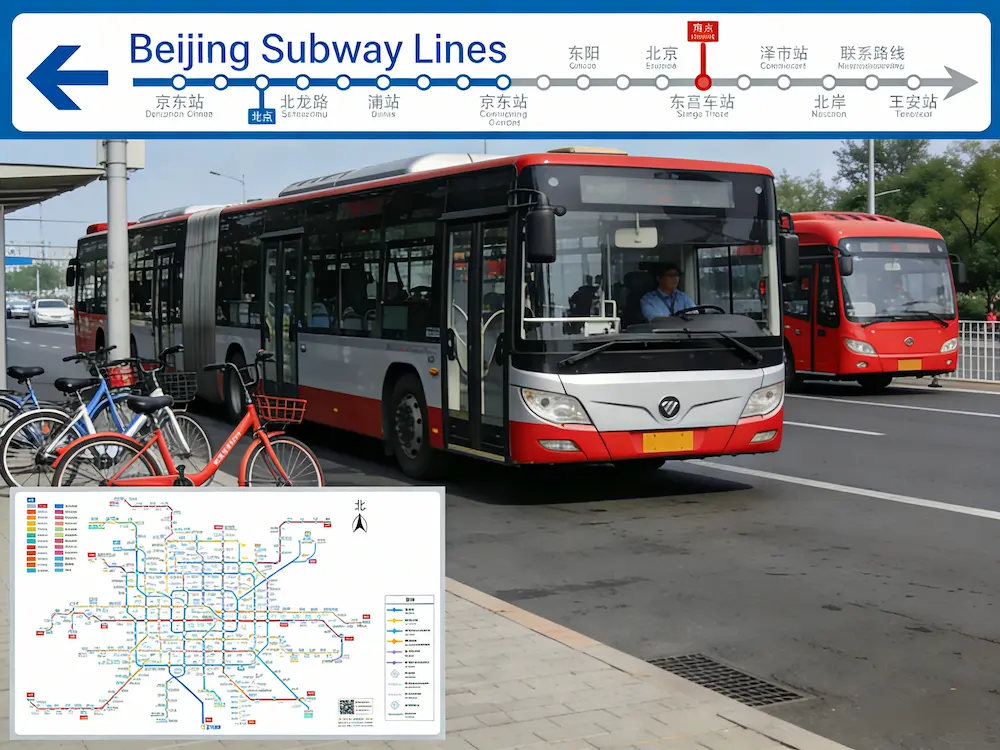
Bus routes offer extensive coverage and low fares, but some routes lack English announcements, are prone to traffic congestion, and have a complex stop layout.
Best for: Those who want to experience the city’s local atmosphere, or when the subway doesn’t offer a direct route to your destination.
Not recommended for: First-time visitors with tight schedules or limited time; they should prioritize the subway or ride-hailing services.
How to ride:
- Scan to ride: Beijing IC Card, Yitongxing app, or Alipay e-ticket code.
- Pay with cash: Some routes accept cash fares (please have exact change ready).
Most routes use a zone-based fare system. You must tap your card or scan the code when boarding and alighting; failing to do so may result in unexpected charges. Please follow the on-board announcements.
A typical one-way fare for a regular city bus is approximately 2 yuan; discounts are available with a standard transit card.
BEIJING PASS Tourist Pass
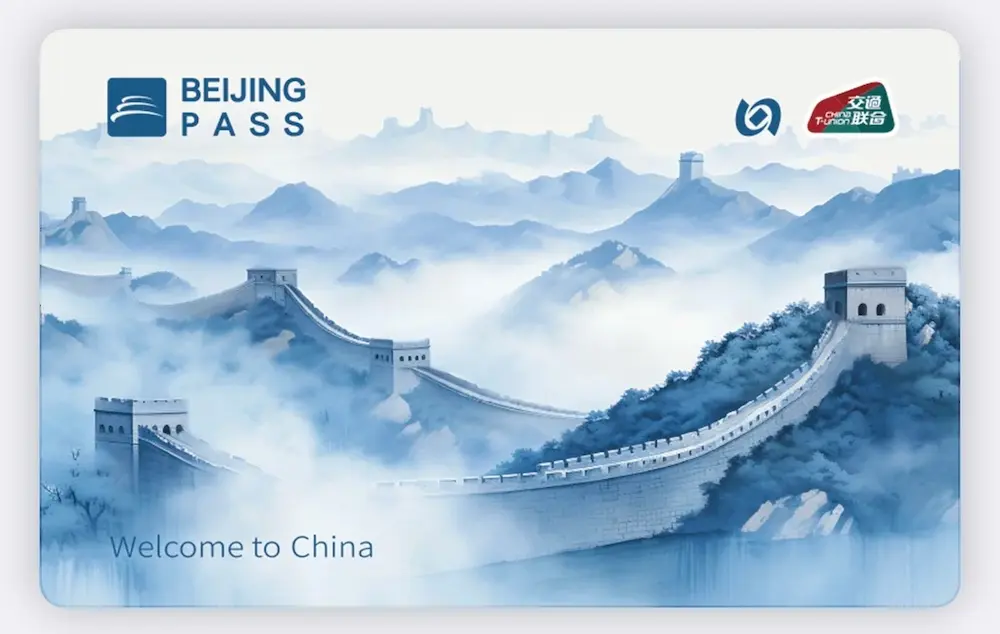
The BEIJING PASS is a multi-purpose prepaid card designed for international visitors. It does not directly include admission to a large number of attractions; it can be used for public transportation and at select participating merchants.
- Purchase Channels: Official partner websites, select hotels, and airport tourist information desks. Real-name activation is required.
⚠️ Important Reminder:
Before purchasing, be sure to review the official, up-to-date scope of coverage and verify transportation and merchant benefits. Consider your itinerary to determine whether it’s worth purchasing—do not assume that it includes unlimited subway rides or admission to attractions.
Cycling: Short Trips Through Streets and Alleys
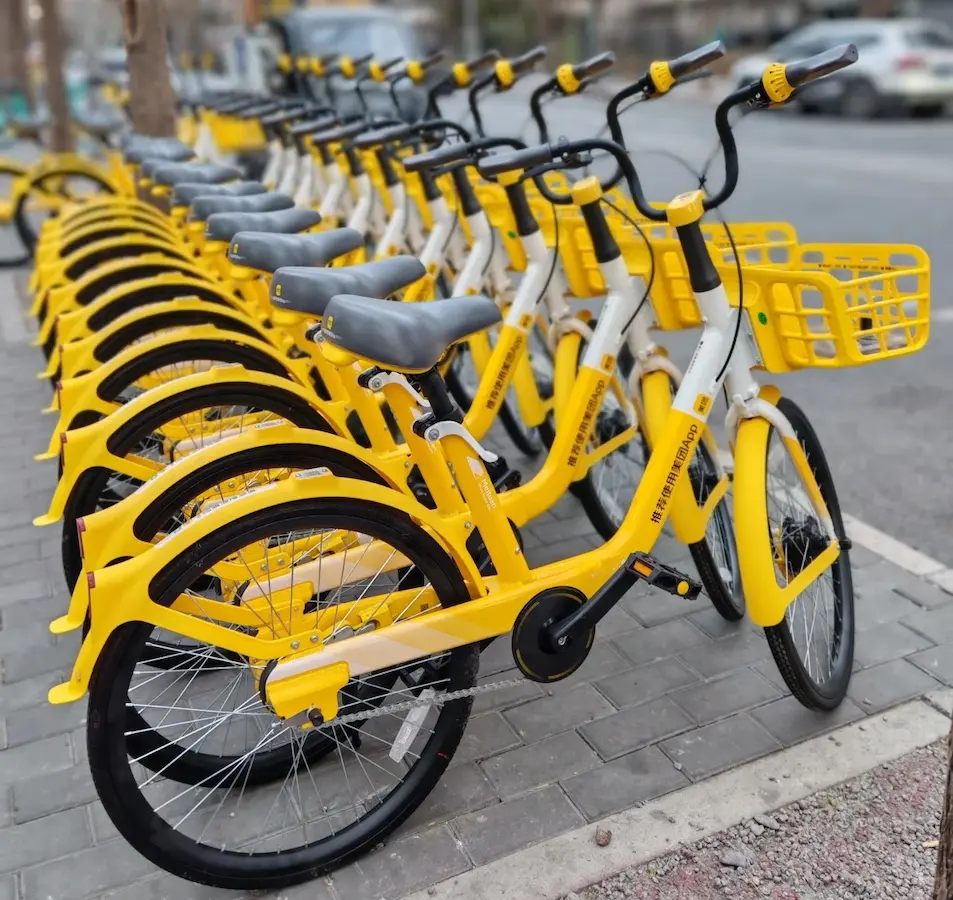
- Major bike-sharing brands: Qingju Bikes, Meituan Bikes, Hello Bikes.
- How to use: Unlock via the corresponding app or by scanning a QR code with WeChat or Alipay.
- Estimated Cost: 1.5 yuan per 30 minutes; ride passes are available for purchase.
⚠️ Important Note:
Registration and payment depend on your account and payment eligibility; you must also comply with local parking regulations. Estimated prices are subject to change based on promotions.
Tip: Traffic flow restrictions may be in place on certain sections of Chang’an Avenue during holidays; please pay attention to on-site signs when traveling.
Unique Transportation Experiences
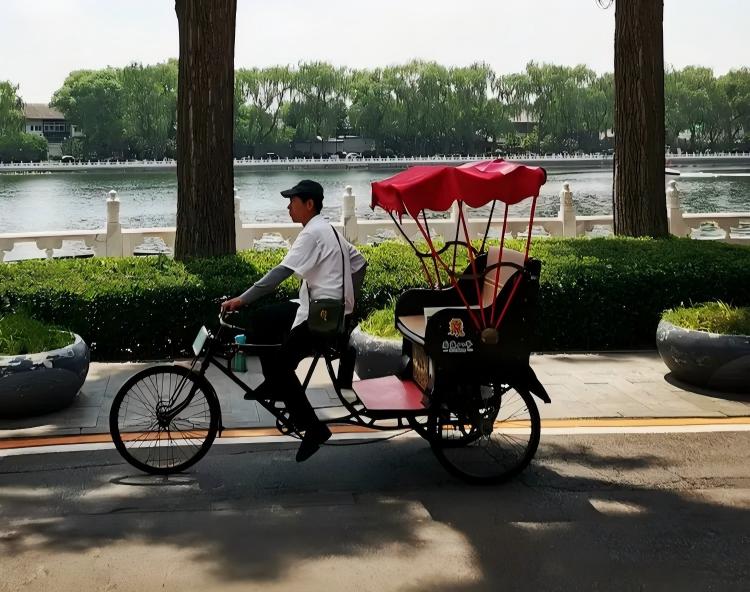
For a more authentic Old Beijing travel experience, try:
- Hutong rickshaws (in areas like Houhai). Check the price and services included before boarding.
- Themed sightseeing buses (e.g., food tours, city night views)
- Bicycle rides in Qianmen and the hutong districts.
Taxis & Navigation
Didi is the leading ride-hailing app in China; traditional metered taxis are also a viable option at night or in areas not accessible by subway.
The starting fare for metered taxis is approximately 13 yuan, and fares are calculated using a standard meter; however, the overall quality of service varies widely.
Three key steps for hailing a taxi:
1. Save screenshots of the full Chinese names and addresses of your hotel and attractions in advance—do not save only the English versions.
2. After booking a ride, confirm the pickup location; large stations and attractions often have multiple entrances and exits, so verify the exact location of your destination.
3. Check the vehicle information upon boarding; screenshots of Chinese addresses can only reduce communication barriers, but they cannot eliminate misunderstandings.
Do not assume that drivers can communicate in English; prepare Chinese screenshots as a means of communication.
⚠️ Avoid pitfalls:
Choose only legitimate ride-hailing services or metered taxis; avoid unlicensed “black cars” to prevent overcharging.
Navigation tips: Gaode Maps and Baidu Maps can be used to look up bus, subway, and walking routes; since overseas maps may have location discrepancies when used in China, be sure to save Chinese addresses as a backup.
Getting from the Airport to the City Center
There are three options:
- 1. Taxi / Ride-Hailing Service: Takes you directly to your hotel without having to carry your luggage; prices vary depending on the airport, distance, and time of day.
- 2. Airport Express Metro Line: Good value for money and avoids traffic jams.
- 3. Airport Shuttle Bus: Fixed stops and affordable fares.
Decision-Making Guidelines: Choose based on the airport you’re arriving at (Capital / Daxing), your arrival time, how much luggage you have, how far your hotel is from the subway station, and the current status of public transportation.
Personal Experience: If arriving late at night, prioritize ride-hailing services or taxis; during the day or with light luggage, prioritize the subway. Do not treat this as a rigid, unchanging rule.
Common Travel Mistakes (Must-Read to Avoid Pitfalls)
1. Relying entirely on foreign maps, which can lead to incorrect routes due to location discrepancies.
Solution: Save a screenshot of the Chinese address as a backup.
2. Only having an English address, which drivers and passersby cannot understand.
Solution: Prepare a screenshot of the full Chinese address in advance.
3. Cramming onto the subway during morning and evening rush hours, resulting in a poor experience.
Travel during off-peak hours if possible.
Pre-Departure Transportation Checklist (Feel free to take a screenshot and save it)
□ Save a screenshot of the full Chinese names and addresses of your hotel and major attractions
□ Prepare a set of navigation routes, and be aware of the risk of location inaccuracies on maps
□ Confirm your payment method for public transit (credit card/transit QR code / single-ride ticket), and have a backup payment method ready
□ Complete registration for ride-hailing apps and test payment functions before departure
□ Traveling from the airport to the city: Plan alternative transportation options for after your arrival
□ Familiarize yourself with the basic rules for tapping your card when boarding and exiting shuttle trains and buses
Final Advice from Someone Who Has Lived in Beijing for Many Years
Most residents in Beijing are happy to offer whatever help they can.
A smile and patience are very useful tools for cross-cultural communication. Even if you don’t speak the language, you can handle most everyday travel situations by using screenshots, pictures, gestures, and translation apps.
If you encounter a difficult situation, prioritize asking staff at tourist attractions or hotels for help.
Author’s Note: This article is based on years of on-the-ground research; subway fares, accepted payment methods, and app registration rules are subject to change. Please check the latest official announcements before traveling.