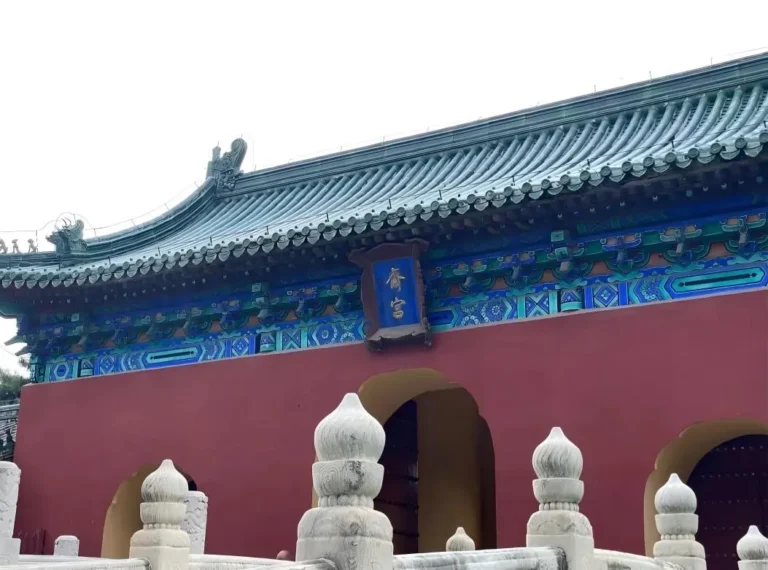
Guide to the Hidden Gems of Beijing’s Beihai Park: Two Time-Limited “Secret Spots”(2026)
If you’ve already explored the famous Beihai Park in Beijing, admired its white dagoba and vast lake waters, you can keep an eye out for two little-known special gems in the park that are only open at specific times.
They are like hidden treasures in the park, offering a glimpse of what ancient Chinese emperors and art lovers once cherished the most.
Table of Contents
Quick Facts: Beihai’s Two Hidden Gems—A Concise Guide
| Attraction | Opening Hours | Location | Highlights |
| Guketing | 09:00–10:00 (Closed Mondays) | Beihai Park, within Huafangzhai Courtyard | 1,200-year-old Tang Dynasty locust tree, Emperor Qianlong’s private study |
| Yuegulou | 09:00–16:00 (Closed Mondays) | West Slope of Qionghua Island·Near the Long Corridor | 495 stone carvings of calligraphy from the Sanxitang Collection, the Imperial Hall of Calligraphy |
The Most Reliable Way to Get There | A Route That Ensures You Don’t Miss a Thing
- Subway: Exit at Exit B or D of Beihai North Station on Line 6. The North Bank is right at the entrance; heading straight to Huafangzhai is the most efficient route.
- Entry Tip: Enter as soon as the gates open. Arrive at Guke Courtyard sharp at 9:00 a.m. to perfectly catch the “golden hour.”
- Admission: 10 yuan during peak season, 5 yuan during off-season. No additional fees for the Secret Garden.
First Secret Spot: The Emperor’s Study by the Ancient Pagoda Tree–Guketing Courtyard
This first spot is Guketing Courtyard, which can be translated as “the courtyard beside the ancient tree trunk”. It is quite exclusive, open for just one hour each day from 9:00 to 10:00 a.m. (closed every Monday).
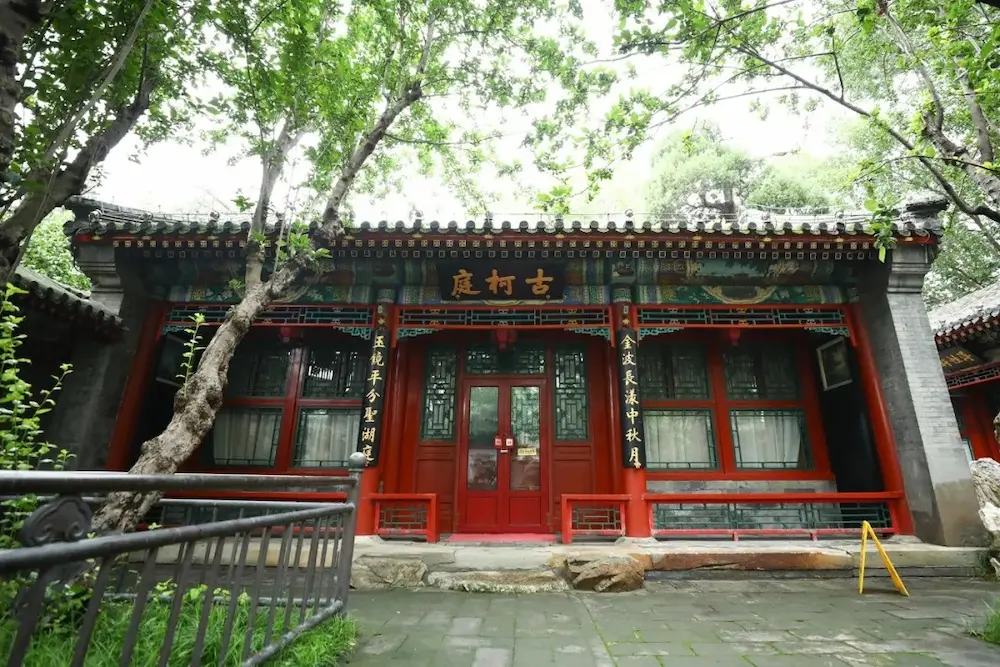
Guketing Courtyard is nestled within Huafang Zhai, a small courtyard in the park. What makes it so special? A giant ancient pagoda tree grows in the courtyard. This is no ordinary tree: it is said to have been planted in the late Tang Dynasty, making it around 1,200 years old today!
Just imagine, when it was a tiny sapling, Beijing was still called Youzhou – a time far removed from the present.
Emperor Qianlong of the Qing Dynasty was extremely fond of this time-worn ancient tree and even wrote four poems dedicated to it. Later, in 1767, he had a private study built for himself right beside the tree, which is the Guketing Courtyard we see today.
To enhance the scenic beauty, he also placed many uniquely shaped Taihu stones under the tree. Picture this: hundreds of years ago, an emperor sat in this courtyard, sipping tea, reading books, and composing poems while gazing at this ancient tree that had witnessed countless chapters of history. Now you too have the chance to experience this tranquility in the very same spot.
Important Reminder:
9:00–10:00. If you miss this one-hour window, you won’t have another chance that day.
To protect the ancient trees and historic buildings, visitor numbers are limited, visiting hours are restricted, and quiet is required.
Second Secret Spot: A Calligraphy Treasure Trove Hidden in a Building–The Second Floor of Yuegu Tower
The second secret spot is the second floor of Yuegu Tower. A beautiful semicircular building built along a hillside, Yuegu Tower stands on the northwest side of Qionghua Island in the park.
The first floor is open for most of the year, but the true essence lies on the second floor, which is only open from 10:00 a.m. to 11:00 a.m. and from 2:00 p.m. to 3:00 p.m. every Tuesday, with volunteer commentators on site to offer explanations.
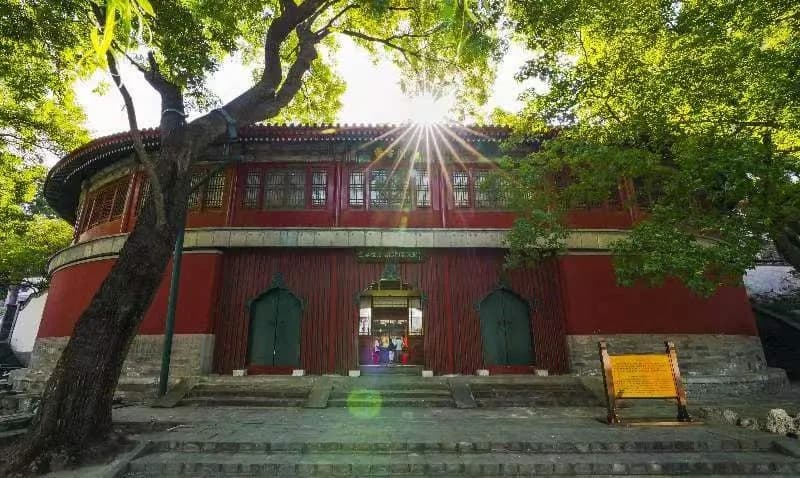
Why is the second floor so mysterious? Because it houses a top-tier treasure trove of Chinese calligraphy art–495 stone inscriptions of Sanxitang Shiqu Baoji Calligraphy Model Scrolls. The name may sound complex, but simply put, it is a collection of masterpieces by great Chinese calligraphers carved into stone slabs.
The creation of these stone inscriptions was tied to another treasure close to Emperor Qianlong’s heart. In the Yangxin Hall of the Palace Museum, he specially set up a small room named Sanxitang (Hall of Three Rarities) to house three calligraphy works he regarded as peerless treasures: Clearing After Snow by Wang Xizhi, Mid-Autumn by his son Wang Xianzhi, and Letter to Boyuan by Wang Xun. These three works are all calligraphic masterpieces dating back more than 1,600 years.
Later, Emperor Qianlong thought the three treasures were not enough. He wanted to compile all 340 works by 135 top calligraphers from the Wei, Jin and Tang dynasties collected in the imperial palace, so that future generations could also appreciate and learn from them.
Thus, in 1747, he ordered these fine calligraphy works to be carefully carved onto stone slabs – 495 in total. To preserve these precious stone inscriptions properly, he had Yuegu Tower specially built in Beihai Park.
Now, when you climb to the second floor of Yuegu Tower, you can see these well-preserved stone inscriptions with your own eyes through temperature- and humidity-controlled glass cases. They are like a three-dimensional, never-fading history book of calligraphy, recording the evolution of Chinese calligraphy over nearly 1,500 years.
Rubbings made from these stone inscriptions are also on display on the first floor (except Mondays), allowing you to see the details of each character more clearly.
My Secret Itinerary | Visit Two Hidden Gems in One Trip, No Detours
Enter through the North Gate of Beihai Park → Head straight to Huafang Zhai
09:00 Enter Guke Courtyard right on time and spend a full hour in quiet contemplation
Exit Huafang Zhai and walk along the lakeside to the west side of Qionghua Island
Explore Yuegu Tower and examine the stone carvings of the Sanxi Hall calligraphy collection
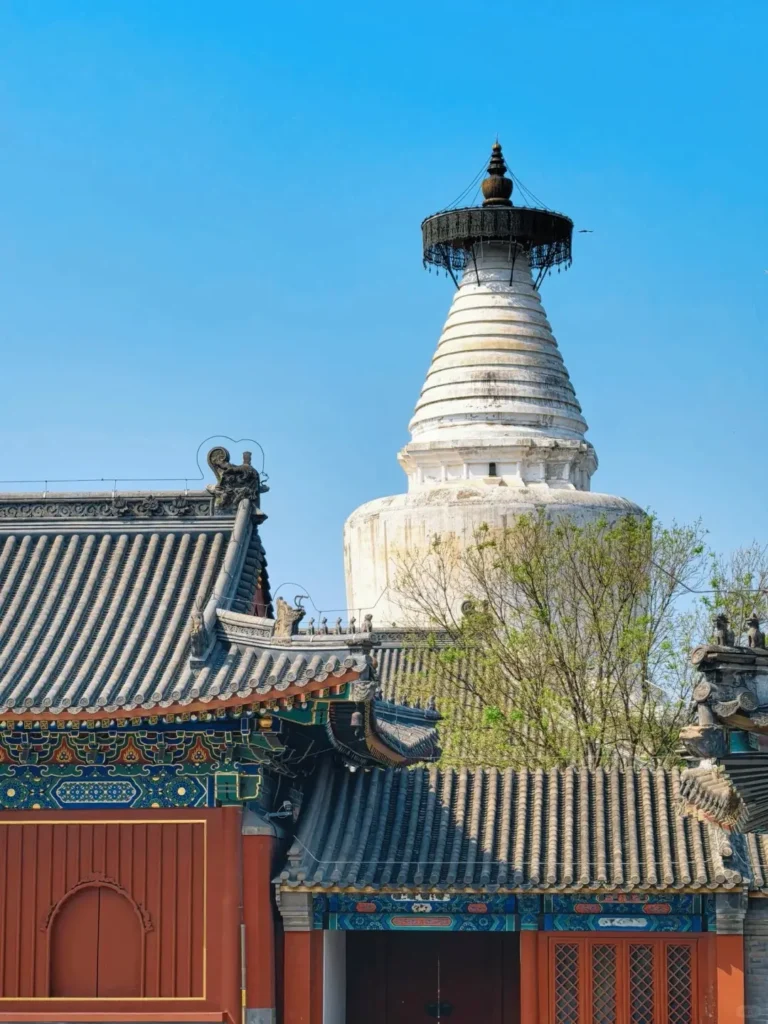
Snap photos of the White Pagoda and enjoy the lake views along the way—a perfect finale
The entire route is uncrowded, serene, and rich in cultural depth—
It’s the most worthwhile itinerary in Beihai Park, in my opinion.
A Few Heartfelt Tips from the Blogger
Make sure to time your visit to Guke Courtyard perfectly—arrive at 9:00 AM, as they clear the area at 10:00 AM. Don’t make the trip for nothing.
Turn off your flash when taking photos inside Yuegu Tower to protect the stone carvings.
Both sites are cultural heritage sites, so speak softly, walk slowly, and be a responsible traveler.
Avoid weekend afternoons; mornings have the fewest visitors and offer the best experience.
If you are interested in Chinese history, imperial life, or ancient calligraphy, why not time your visit to coincide with these two time-limited “secret spots” in Beihai Park? They will bring you a completely different travel experience.