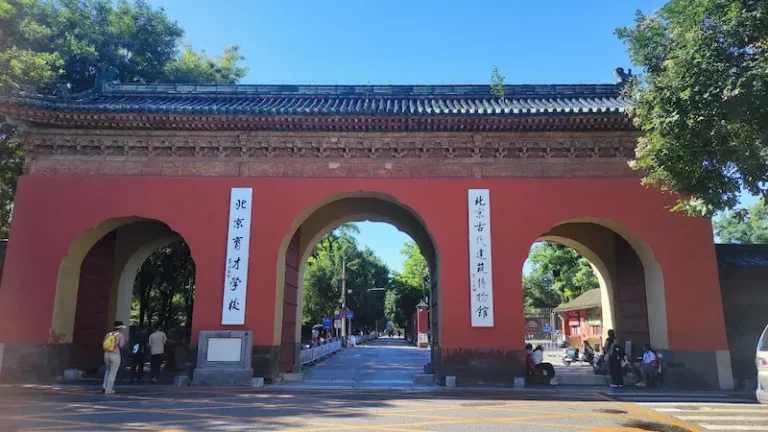
Beijing Shichahai Fire God Temple Guide: History, Must-See Structures, Admission, and Tour Routes(2026)
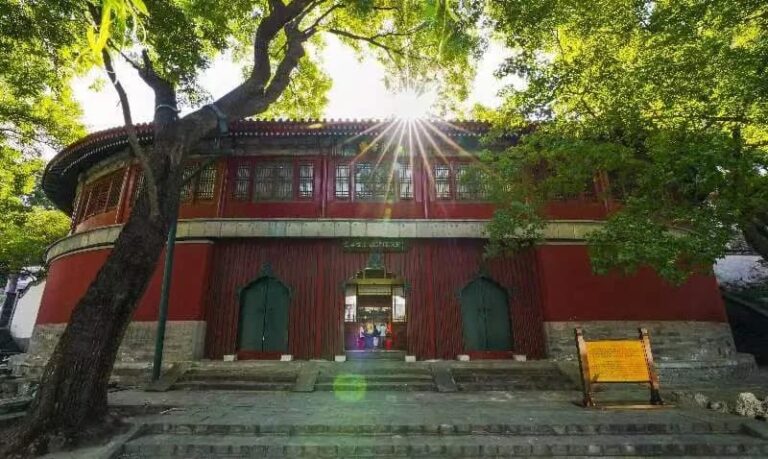
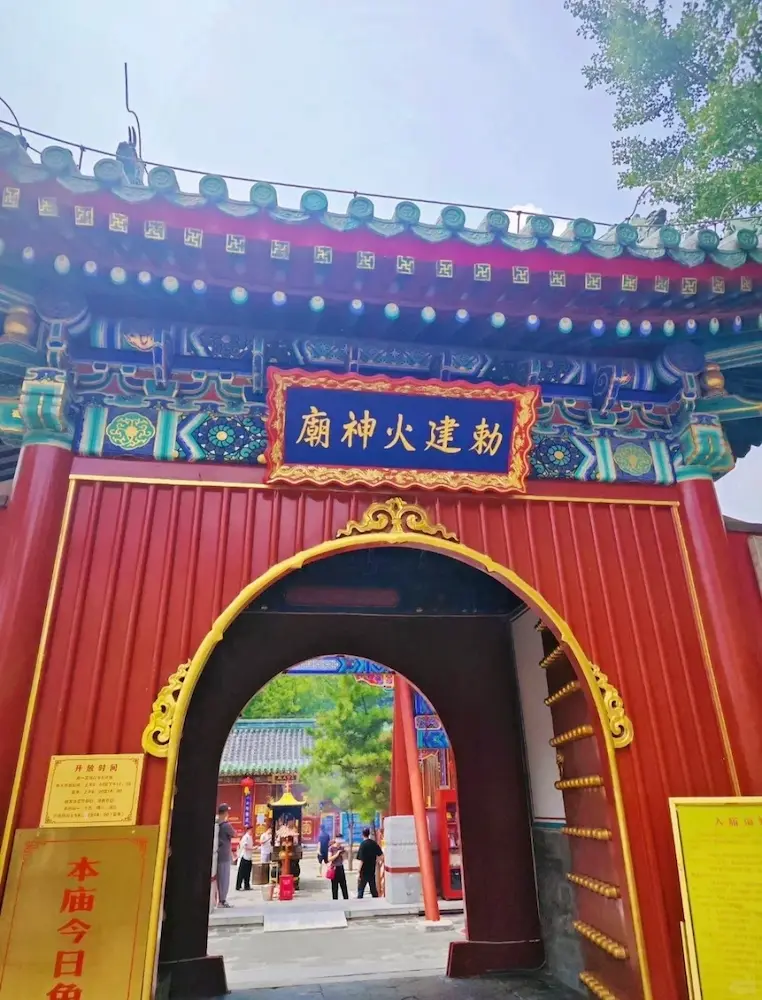
On the shores of Shichahai Lake in Beijing stands the Temple of the True Lord of Fire, built by imperial decree—commonly known as the Shichahai Fire God Temple. This Taoist temple boasts a long and rich history and is located right next to the Shichahai Scenic Area.
This article will help you understand the highlights of the Fire God Temple, whether it’s worth visiting, what to see there, and how to incorporate it into your walking tour around Shichahai. It’s a great way to learn about ancient architecture and Daoist culture, and it makes for a perfect stop on your Shichahai tour.
Table of Contents
Historical Development of the Temple of the Fire God
Different historical records offer varying accounts of when this Daoist temple was first built; there are records of imperial-led renovations and reconstructions during both the Ming and Qing dynasties.
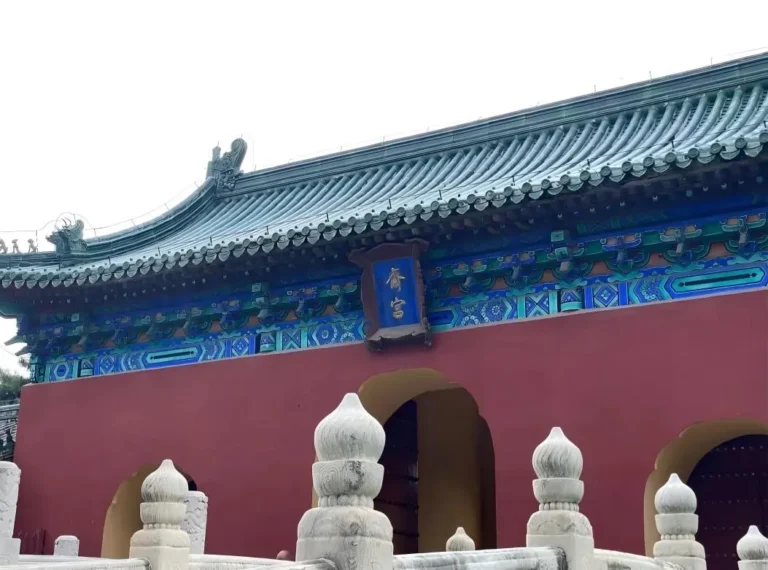
During the Wanli reign of the Ming Dynasty, fires broke out repeatedly in the imperial palace, prompting the court to undertake a large-scale renovation of the Temple of the Fire God, during which blue glazed tiles were installed.
Cultural Interpretation Note: According to traditional Five Elements theory, blue represents water. It is commonly believed in folk tradition that water subdues fire; however, this is a common interpretation in later periods and does not correspond to direct, original documentary records from the time of its construction.
Repairs continued during the Shunzhi and Qianlong periods of the Qing Dynasty, and some structures were authorized to use imperial-grade yellow glazed tiles. Historical records indicate that following fires within the Qing imperial palace, the imperial court would dispatch officials here to conduct rituals in honor of the Fire God.
In modern times, the site was repurposed for other uses, resulting in damage to the structures. Restoration began in 2002, adhering to the principle of “restoring the old as it was,” and the site reopened to the public in 2010.
Key Historical Milestones of the Temple of the Fire God (Based on publicly available local annals)
| Period | Reference Information on Development |
| Foundation Phase | Various historical records offer differing accounts of the exact year of construction; no completely unified conclusion has been reached |
| Ming Dynasty | Underwent large-scale reconstruction during the Wanli era; blue glazed tiles were installed |
| Qing Dynasty | Underwent multiple rounds of imperial restoration; yellow glazed tiles were used on some structures; after a fire in the palace, the imperial court dispatched officials to perform sacrificial rites |
| Modern Era | The building was repurposed for other uses and fell into disrepair; restoration began in 2002 |
| Reopening | Restoration was completed in 2010, and the temple was reopened to the public |
When Visiting the Fire God Temple at Shichahai, Be Sure to Check Out These Highlights First
The Fire God Temple consists of three courtyards arranged along a north-south central axis, though the main gate faces east—a distinctive architectural layout worth noting.
| Location | What to See | Why It’s Worth Seeing | On-Site Visiting Tips |
| Main Gate and Lingguan Hall | Arched gateways inside and outside the main gate; Lingguan Hall enshrines the divine general Wang Lingguan | Observe the layout of the Taoist temple’s entrance and the details of the stone carvings on the arched gateways; Lingguan is a Taoist guardian general who protects the temple’s main gate; ⚠Follow on-site signage—photography may be restricted in certain areas inside the hall |
| Hall of the Fire Ancestor (Yinghuo Baodian) | The temple’s main hall, dedicated to the Fire Virtue True Lord; the plaque inscribed with “Hall of the Planet Mars” was written by Emperor Qianlong; octagonal coffered ceiling with coiled dragons | The central hall of the entire temple complex; “Yinghuo” is the ancient Chinese name for Mars, reflecting the integration of celestial phenomena and religious belief; be sure to look up to observe the gilded wooden carvings of coiled dragons on the coffered ceiling; observe proper visiting etiquette inside the hall |
| Jade Emperor Pavilion (Rear Pavilion) | A two-story pavilion; the lower level enshrines the Great Emperor of True Martial, while the upper level enshrines the Jade Emperor; it features a plaque inscribed with “Pavilion of Ten Thousand Years of Life and Auspicious Destiny” | The final courtyard of the Taoist temple and its highest-ranking pavilion-style structure; note the pavilion’s overall architectural style; subject to on-site availability |
If it’s your first visit, don’t just focus on praying for blessings
Even if you don’t practice Taoism, there are three key things to observe during your visit:
1. Architecture: Pay attention to the glazed roof tiles, plaques, and the overall spatial layout of the courtyards;
2. Explore the culture of faith: Understand the roles of various deities—such as the Spirit Official, the Fire God, and the Jade Emperor—within the Taoist pantheon;
3. Experience the surroundings: Observe how this active Taoist temple is integrated between the Shichahai Old Town residential area and the tourist district.
Which deities are enshrined at the Temple of the Fire God? What are the folk traditions for seeking blessings?
In addition to the Fire Virtue True Lord in the main hall, the temple also features side halls such as the Hall of the Matchmaker God, the Hall of the God of Wealth, the Hall of Compassionate Navigation, and the Hall of the Fox Spirit.
1. Fire Virtue True Lord: The principal deity of the Fire God, historically worshipped primarily to ward off fires and pray for peace and safety; he is the central figure of worship at this temple.
2. Academic Success and Career Advancement (Praying to the Fire God to Become the Top Scholar in the Imperial Examinations): ⚠️ This is a folk belief that has been passed down through the ages and is considered a legend of popular faith, not a historical fact recorded in ancient official documents. Many people visit here to pray for success in their studies and careers.
3. Hall of the Matchmaker: In folk belief, the Matchmaker governs fate and relationships, including marriage, romantic partnerships, encounters with benefactors, and friendships—a widely held folk tradition.
4. The remaining side halls correspond to folk aspirations for wealth, safety, and health.
Note: The above represents folk belief and cultural practices; it does not guarantee specific outcomes. Visitors are encouraged to view the temple from the perspective of observing folk culture.
When is the best time to visit the Temple of the Fire God?
If your main goal is to tour the ancient architecture and learn about the history of the Daoist temple, there’s no need to choose a specific season—just check that it’s open and go.
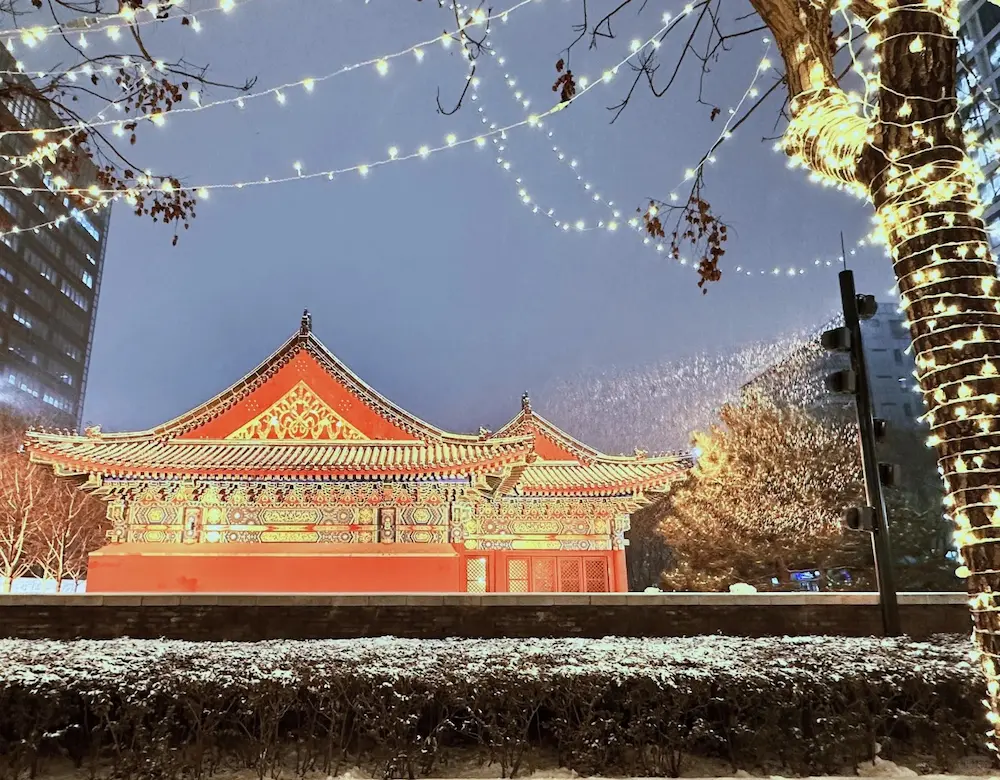
Photography tip: The scene of red walls and glazed tiles covered in snow creates a very atmospheric image, but this is a rare sight—it’s best to let it happen naturally. We do not recommend making a special trip just for the snowy scenery. In spring, summer, and fall, you can combine your visit with a walking tour along the shores of Shichahai.
Basic Visitor Information
| Item | Reference Information |
| Address | 77 Dianmenwai Street, Xicheng District, Beijing |
| Transportation | Take Metro Line 8 to “Shichahai Station”; it’s a few minutes’walk from the station |
| Ticket Reservations | Note: Free admission; no reservation required;⚠Be sure to check the opening policies for the day of your visit |
| Estimated Visit Duration | 30–60 minutes, depending on the depth of your exploration |
| Visitor Etiquette | As this is an active place of worship, please remain quiet, respect ongoing religious activities, and follow all on-site guidelines (e.g., no photography inside the halls) |
Planning Your First Visit to the Temple of the Fire God
- ⏱ 30-Minute Quick Tour: Focus on the main gate, the Hall of the Fire Ancestor, and the courtyard layout, with a brief look at the side halls; ideal if you’re passing through Shichahai.
- ⏱ 1-hour comprehensive tour: Take a closer look at the plaques, coffered ceilings, and various halls; read the related information to learn about folk beliefs.
Tip: The Fire God Temple is best suited as a stop along the Shichahai walking route; there’s no need to set aside half a day specifically for this visit.
After visiting the Temple of the Fire God, where should you go next?
Route 1 | Temple of Fire God + Wanning Bridge + Shichahai Lakeside
✅Best for: Visitors interested in the remnants of Beijing’s Central Axis and the old city’s lakeside scenery, who can walk from the ancient bridge to the lake area.
Route 2 | Temple of Fire God + Yandai Xiejie + Houhai
✅Best for: First-time visitors to Beijing who want to experience historic architecture, hutong alleys, and lakeside relaxation all in one go.
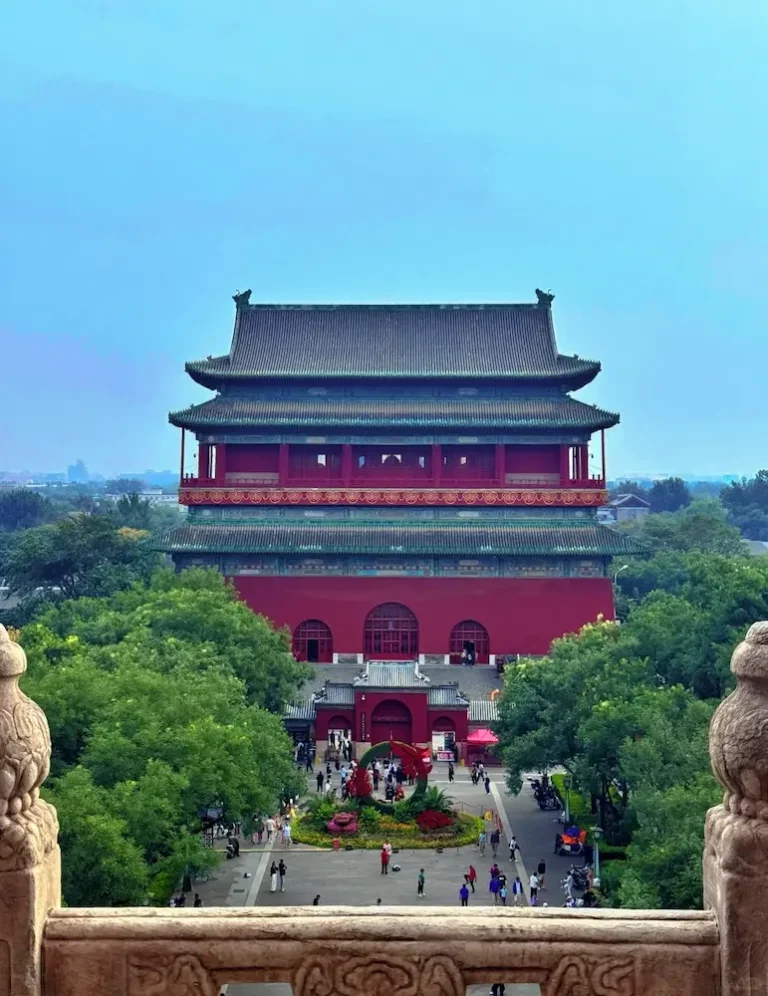
Route 3 | Temple of Fire God + Area Around the Bell and Drum Towers
✅Best for: Visitors who wish to learn about the layout of Old Beijing and its historic architecture.
Tip: You’ll need to walk between each location. Feel free to adjust your itinerary based on your energy level and the opening hours of each site—there’s no need to force yourself to complete the entire route.
Is the Fire God Temple at Shichahai worth a special trip?
✅Best for
- Those interested in ancient Taoist architecture, the history of Old Beijing, and folk culture;
- Those who have already planned a visit to Shichahai and want to add a cultural site to their itinerary;
- Those who enjoy observing the details of ancient architecture, plaque inscriptions, and traditional courtyard layouts.
⚠May Not Be Worth a Special Trip
- If you have a tight schedule and prioritize visiting only Beijing’s top major imperial attractions;
- If you’re specifically looking for grand scale and large architectural complexes;
- If large sections of the temple are closed to the public, it’s better to focus on exploring the surrounding Shichahai area instead.
Personal on-site recommendation: It’s best suited as a unique stop along a walking route through the Shichahai area—there’s no need to make it a must-see destination requiring a separate trip.
5 Things to Note When Visiting the Temple of the Fire God (Feel free to take a screenshot)
□ Observe the unique orientation: The mountain gate faces east, and the courtyard features a distinctive north-south central axis layout
□ Focus on the Hall of the Fire Ancestor to understand the religious background associated with the Fire Virtue True Lord
□ Pay attention to architectural details such as the plaque above the entrance and the coiled-dragon ceiling in the hall, and respect the no-photography policy
□ Distinguish between authentic historical records, later folk legends, and folk beliefs
□ Appreciate how this ancient Taoist temple is integrated into the urban landscape of Shichahai’s Old Town
FAQ
After visiting the Temple of Fire God, continue exploring the area around Shichahai
- To explore Old Beijing’s hutongs: Yandai Xiejie and the hutongs around Shichahai (City-Walk)
- To learn about the history of Beijing’s Central Axis: Wanning Bridge and the Bell and Drum Towers (Special Feature)
- Practical Travel Preparation: Beijing navigation and payment guides for daily life
Author’s Note: This article is based on on-site visits and publicly available local historical records; temple opening hours and ticket policies are subject to change, so please verify the actual conditions on-site before your visit.