Beijing Mutianyu Great Wall Guide: Admission, Transportation, Cable Car, Routes, and Recommended Visit Duration(2026)
The Mutianyu Great Wall is the most scenic and versatile section of the Great Wall in Beijing. This article provides a detailed overview of its history, architectural wonders (the Main Watchtower and double-sided crenellations), options for cable cars, ropeways, and toboggans, the best hiking routes, prime photography spots, and tips to avoid common pitfalls.
Whether you’re traveling with family or are a photography enthusiast, you’ll find the perfect Mutianyu travel guide tailored to your needs.
Table of Contents
Visiting the Mutianyu Great Wall for the First Time: Decide on These 3 Things First (Save This Screenshot)
①Your Travel Goals
| Your Goal | Recommended Route |
| First-time visit—prioritize the highlights | Watchtower 14→Watchtowers 18–20 |
| Traveling with the elderly or children | Take the enclosed cable car up, walk along Watchtowers 14–18, and turn back when you’re tired |
| Want to see the Zhengguan Tai and Dajiaolou historic sites | Watchtower 6→Watchtower 1 (East Route) |
| Want to fully experience both the eastern and western sections of the Great Wall | West Route (Watchtowers 14–20) + East Route (Watchtowers 6–1) |
| Hardcore mountain hiking enthusiasts | Hiking trails + Hike the entire route |
| Want to experience the toboggan run downhill | Take the cable car up (Watchtower 6) + Descend via the toboggan run |
| Capture panoramic views of the Great Wall ridge | West Route (Watchtowers 14–20) |
②Allocate Time for Sightseeing
- 2 hours | Trail 14 → Trails 18–20, then return to Trail 14 and take the cable car down (Quick Highlights Tour)
- 3 hours | Stations 14 → 20, return via the same route to Station 14
- About 4 hours | West Line (Stations 14–20), plus East Line (Stations 6–1)
- Half a day or more | In-depth tour of the entire East and West Lines
③Fitness Advisory
ℹA visit to Mutianyu isn’t all smooth sailing just because you take the cable car. Even after reaching Watchtower 14 by cable car, there are still continuous uphill steps between Watchtowers 14 and 20; the eastern route from Watchtower 6 to Watchtower 1 also has quite a few steep steps that require considerable physical exertion. Please turn back promptly if you feel unwell—don’t push yourself too hard.
What Kind of Visitors Is Mutianyu Suited For?
✅Ideal for:
- Visitors who want to experience the Great Wall surrounded by mountains and forests, rather than just seeing the fortress structures;
- Families who can take the cable car to make the hike less strenuous;
- Those who want to see historical sites while also enjoying diverse activities like hiking and tobogganing;
- Visitors with ample time who can set aside 2–4 hours for the tour.
❌Expectations that may need adjustment:
- Those with an extremely tight schedule who only want to quickly “check it off” their list;
- Those who are completely unable to climb stairs or walk at all;
- Those seeking a completely flat, barrier-free route throughout the entire visit.
Why Is Mutianyu Considered the “Face” of the Great Wall?
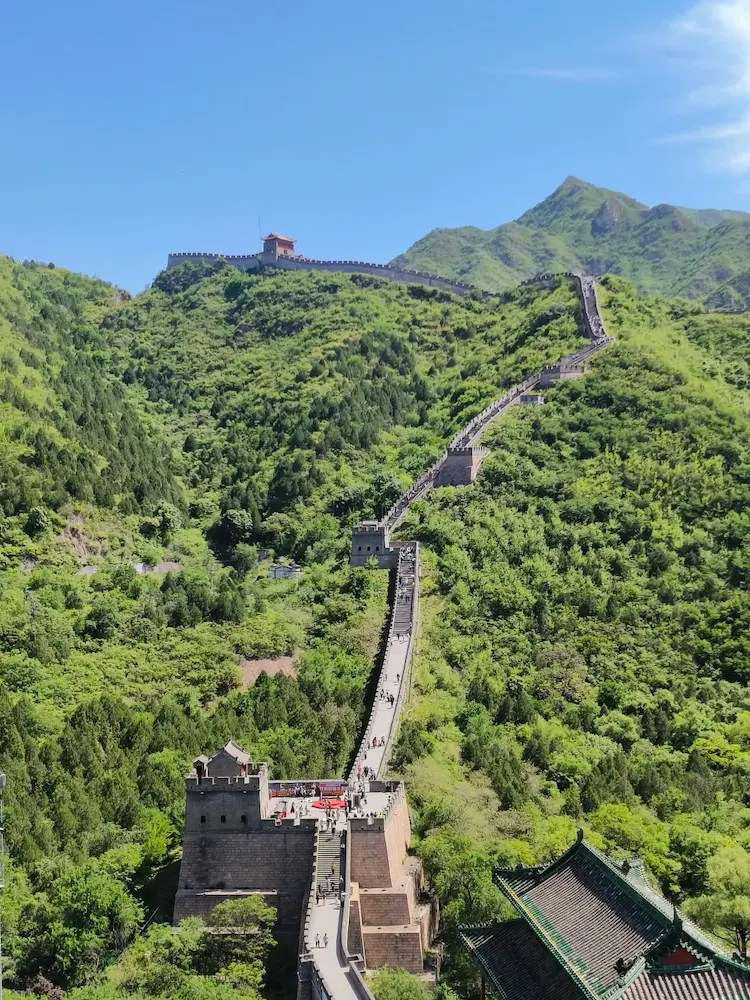
The section of the Mutianyu Great Wall open to visitors is approximately 5.4 kilometers long. The scenic area numbers its main watchtowers from “Mu No. 1” to “Mu No. 20,” and along the route there are various ancient military structures, including watchtowers, wall towers, and guardhouses.
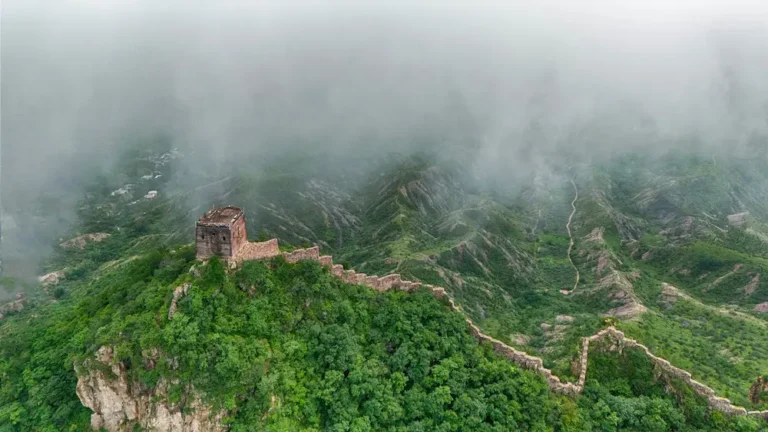
With dense vegetation, the Great Wall winds along the ridgeline through the mountains and forests. Built to a very high standard during the Ming Dynasty to protect the imperial tombs, the site preserves representative Great Wall relics such as the Zhengguan Watchtower and double-faced crenellations. It also offers a variety of ways to ascend and descend the mountain—including cable cars, ropeways, and toboggans—to accommodate visitors of varying fitness levels.
Comparison Guide:
| Comparison Items | Mutianyu | Badaling Great Wall |
| Scenic Features | High proportion of mountains and forests, winding ridges, and dense vegetation | Grand fortress system, strong architectural character, and higher visitor density |
| Ways to Explore | Cable cars, chairlifts, toboggan runs, and multi-stage hikes | Primarily cable cars and hiking |
| Physical Demand | Steep staircases in some sections require walking | Also features numerous staircases, with multiple routes of varying difficulty |
| Architectural Highlights | Main Gate Tower, double-sided crenellations, and densely spaced watchtowers | Complete system of fortress gates, watchtowers, and city walls |
| Ideal for | Those who prefer the mountainous Great Wall and seek a diverse experience | First-time visitors hoping to experience the classic fortress-style Great Wall |
| Recommended Visit Duration | 2–4 hours | 2–4 hours |
History: A Single Brick, Seven Centuries of Vigilance
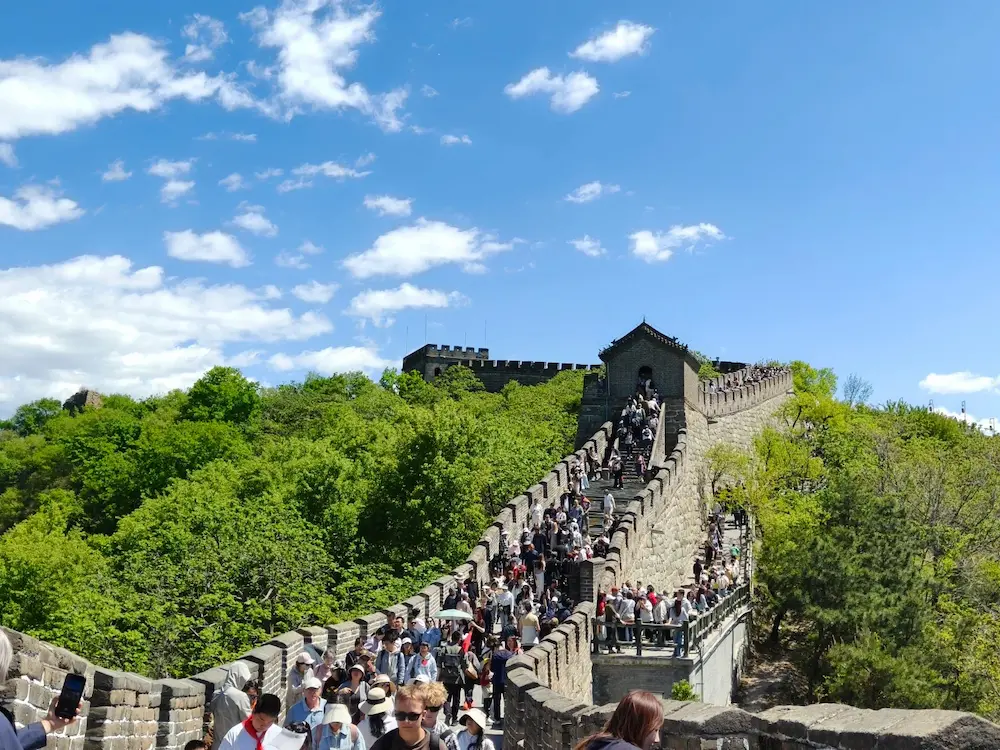
The origins of the Mutianyu Great Wall can be traced back to the Northern Qi Dynasty (6th century AD), though its current main structure took shape during the Ming Dynasty.
In the first year of the Hongwu era of the Ming Dynasty (1368), Xu Da oversaw the construction of the Great Wall along the northern frontier, and Mutianyu was incorporated into the defensive line.
On-site Observation: Many of the bricks and stones visible on the wall today are remnants of repairs carried out in the late Ming Dynasty.
In the third year of the Longqing era (1569), Qi Jiguang was transferred to the north, where he oversaw the renovation of the Great Wall in the Ji-Chang region, leading a large-scale expansion of hollow watchtowers.
On-site Observation: Climbing up to the watchtower reveals a hollow interior space that was once used to house soldiers and store weapons and supplies; the walls still retain observation slits and arrow slits.
Situated at the junction of the Chang and Ji garrisons and adjacent to the Thirteen Tombs of the Ming Dynasty, Mutianyu served as a crucial defensive line protecting the imperial tombs and was constructed to a very high standard. The wall features a granite base with the upper section built of blue bricks.
On-site Observation: The massive granite ashlars forming the wall’s base are tangible evidence of this high-grade fortification.
Inscriptions, weapons, and architectural components from the Ming Dynasty have been unearthed here, reflecting the history of the garrison.
In modern times, the Mutianyu Wall had fallen into disrepair. Restoration work began in 1983, and the site officially opened to the public in 1988. It was subsequently designated a National 5A-Level Scenic Area, and numerous foreign dignitaries have visited the site.
When Visiting Mutianyu, We Recommend Actively Looking for These 5 Architectural Details
①Zhengguan Tower
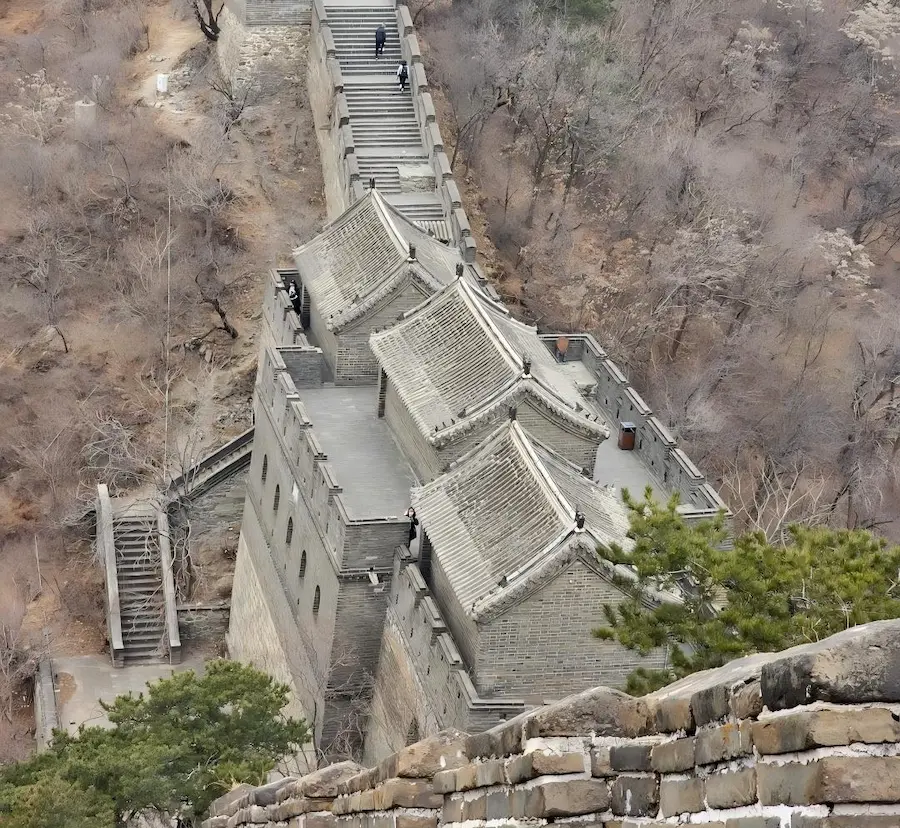
This iconic complex on the eastern section of Mutianyu consists of three hollow watchtowers connected as a single structure, with gates located on both sides rather than in the center. Its unique layout stems from its position at the junction of the Changzhen and Jizhen defense zones.
On-site Tip: Walk between Watchtowers 3 and 4 on the East Route to observe the overall layout of the three interconnected watchtowers.
②Double-Sided Crenellations
Most Great Wall crenellations are built only on the outward-facing side; however, in certain sections of Mutianyu, crenellations are constructed on both the inner and outer sides of the wall, allowing for simultaneous defense against threats from different directions—a testament to the site’s strategic importance.
On-site observation: Stand atop the wall and observe the crenellation structures on both the inner and outer sides of the wall simultaneously.
③High-Density Watchtower Layout
The watchtowers at Mutianyu are densely distributed, with multiple watchtowers set up in quick succession over short distances to achieve saturation defense—a typical feature of Ming Dynasty border fortresses.
On-site observation: Walk along the city wall to get a firsthand sense of the density of the watchtowers.
④The Steep Ridge on the Western Route Between Watchtowers 14 and 20
As you walk from Watchtower 14 toward Watchtower 20, the Great Wall stretches along a ridge with dramatic undulations—a landscape commonly known as “Ox Horns.” The slope becomes noticeably steeper the closer you get to Watchtower 20.
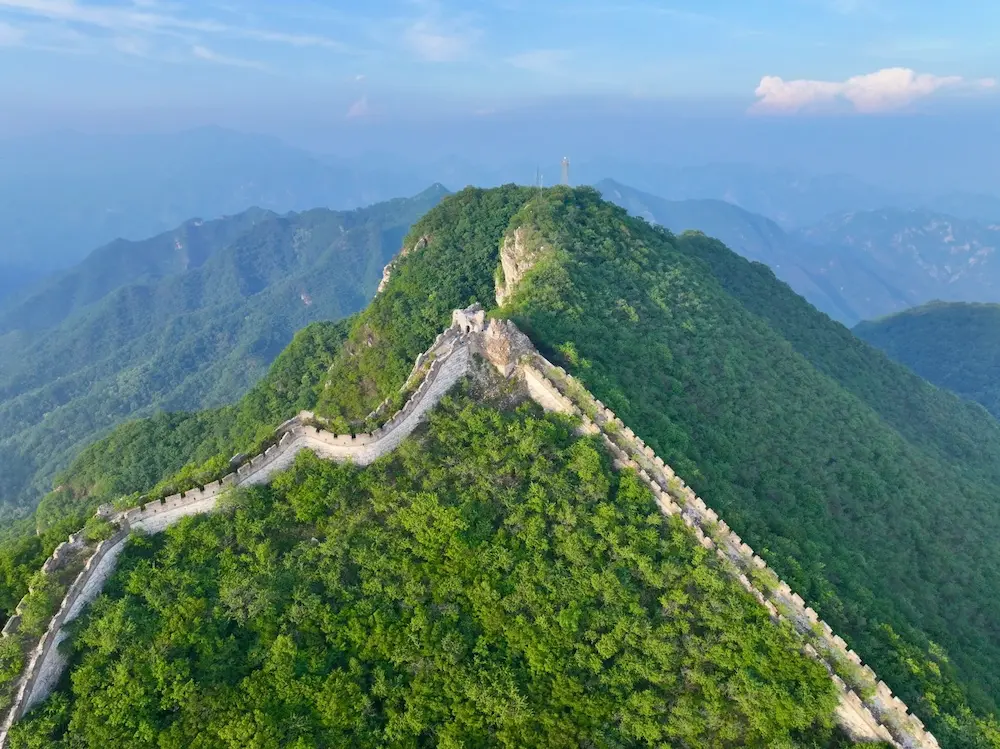
On-site Tip: Pay attention to the ridge’s contours as you walk. If you’re running low on energy, don’t push yourself all the way to Watchtower 20—you can turn back partway.
⚠The section of the Great Wall extending westward from Watchtower 20 is an unopened “wild Great Wall”and is off-limits to general tourists.
⑤Defense Layout of the Outer and Inner Branch Walls
In addition to the main wall, branch walls extend outward (the outer branch wall and the inner branch wall, also known as the “Bald Tail Edge”), working with the main wall to form a multi-layered defensive network.
On-site observation: Near the Large Corner Tower, you can observe the outlines of the remaining branch wall structures.
ℹThe “Eagle Flying Backward” and “Iron Beam Bridge” sections are part of the unopened wild Great Wall to the west; general visitors may only view them from a distance and are not permitted to enter.
Unique Experiences: Cable Cars, Aerial Trams, Slides, and Hiking
How to Choose Between the Mutianyu Cable Car, Aerial Tram, and Slide
| Mode | Destination | Suitable For | Advantages | Notes |
| Enclosed Cable Car | North Ticket Gate, direct to Watchtower No. 14 | Elderly, families, and those who are sensitive to wind or afraid of heights | Smooth ride in enclosed cabins with panoramic views | The cable car and chairlift are operated by different companies; tickets are not interchangeable. Upon arrival, you’ll still need to climb stairs to reach Watchtowers 14–20 |
| Open-Air Chairlift | South Ticket Gate, direct access to Watchtower 6 | Young visitors who want to experience a bird’s-eye view of the East Route | Direct access to the core area of the East Route | Seats are suspended in the air; there are still many stairs on the mountain |
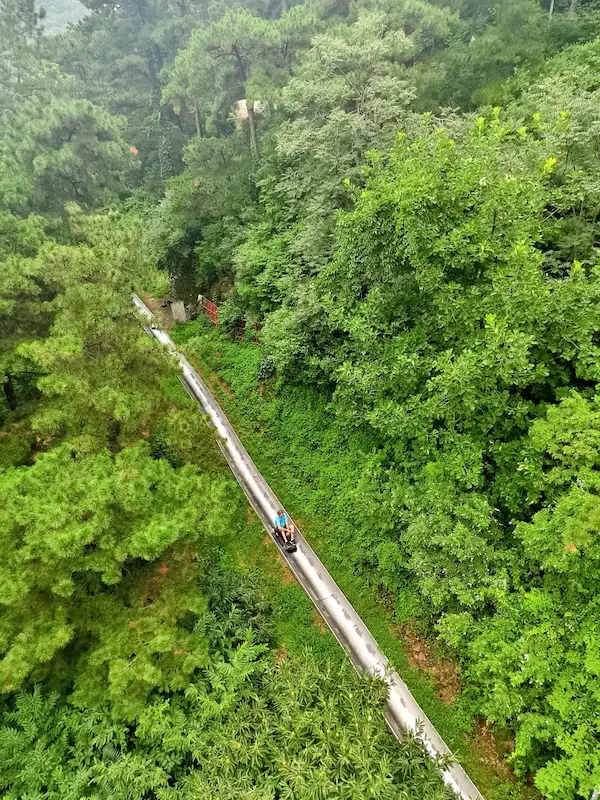
| Gravity Slide | Available only from Watchtower No. 6 down to the base of the mountain | For those wanting to experience the downhill attraction | Sliding down saves energy and is highly entertaining | No uphill service; availability is subject to weather and maintenance conditions; children must follow on-site regulations |
| Hiking Trail to the City Wall | Accessible from both the North and South Ticket Gates | For hiking enthusiasts | Without relying on transportation | The North Line has approximately 800 steps, is physically demanding, and offers few scenic views along the trail |
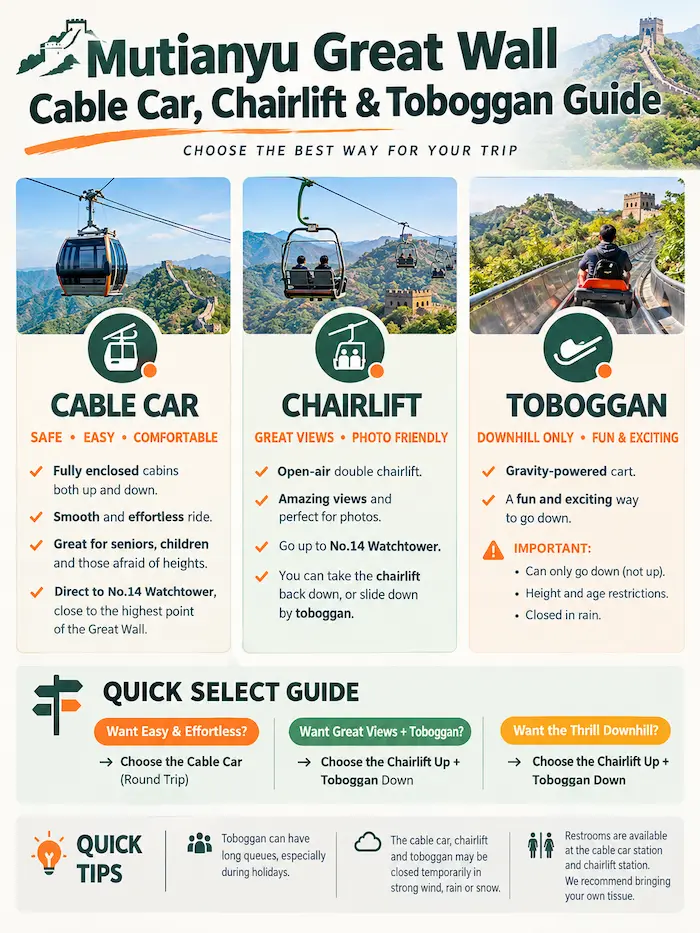
Recommended Option: Take the ropeway up and the toboggan run down (South Ticket Gate). This is the quintessential way to experience Mutianyu, allowing you to enjoy the expansive views from the chairlift as you ascend the wall and the thrill of the 1,580-meter toboggan run as you descend.
If you are traveling with seniors or children, we recommend taking the ropeway both up and down (North Ticket Gate) for a smoother and safer experience.
Important Notice
The Cable Car and Ropeway are operated by two different companies, and tickets are not interchangeable! If you purchase the wrong ticket, it cannot be used for the other service, and many visitors have ended up paying extra unnecessarily. Confirm whether you will use the South or North Ticket Gate before purchasing your ticket.
Ticket Price Guide (2026 Public Reference; subject to on-site confirmation at the scenic area)
- Great Wall Basic Admission Ticket: 40 RMB/adult, 20 RMB/student, free for seniors aged 65 and over (still requires a reservation for the free ticket)
- Shuttle Bus (Mandatory! From the ticket office to the base of the Great Wall): 15 RMB one-way, 25 RMB round-trip
- Cable car/slide ticket prices: 100 RMB one-way (any option), 140 RMB round-trip per option
Important Reminder
The cable car and zip line operate on two separate systems; tickets are not interchangeable. Please confirm whether you will be entering via the South Gate or North Gate before purchasing tickets. The zip line is for descending only and cannot be used to ascend the mountain.
Booking Tips:
While tickets can be reserved through the official WeChat account, the system is primarily in Chinese and sometimes requires identity verification through local methods. If you prefer a full English interface with instant email voucher confirmation, you can check real-time availability and book your Mutianyu Great Wall Entrance & Cable Car Tickets Here.
Hiking and Mountain Climbing
The southern trail is relatively gentle and takes about 20 minutes to reach Watchtower No. 6; the northern trail has many steps—800 in total—and is physically demanding.
I do not recommend that the elderly or children hike the entire way up the mountain, as it is very physically demanding and will leave them with less energy to explore the Great Wall.
Three Itineraries You Can Follow Step-by-Step
Itinerary 1 | Family Leisure Route (approx. 3 hours)
Take the enclosed cable car from the North Ticket Gate to Watchtower 14→Stroll west along the West Trail to the section between Watchtowers 18 and 20; turn back at any time depending on your stamina→Return to Watchtower 14 and take the cable car down the mountain
Tip: There’s no need to push yourself all the way to Watchtower 20—the views near Watchtower 18 are already excellent. Seniors and children should turn back when they feel tired.
Route 2 | Advanced East-West Loop (5+ hours, suitable for those with basic hiking experience)
Take the cable car to Watchtower 14→Walk east to Watchtower 6 (East Route—less crowded, with steep and narrow steps)→Turn west and continue all the way to Watchtower 20→Return to Watchtower 14 and take the cable car down
The steps on the East Route are narrow and steep; in some sections, you’ll need to use both hands and feet to climb. Do not attempt this route if you lack physical stamina.
Route 3 | Photography Route (approx. 4 hours)
Take the cable car to Watchtower 14→Head to Watchtower 19’s “S-curve” vantage point to capture panoramic shots→Walk to the vantage point at Watchtower 20, then take your time walking and photographing on the way back.
Camera Positions
| Spot | Location | Best Time to Shoot | Quick Review |
| Bend at Watchtower 19 | West Line Watchtower 19 / S-Curve | Within 1 hour after sunrise, within 1 hour before sunset | Aerial view of the classic S-curve, where the Great Wall plunges steeply downward—the most striking panoramic shot |
| West side of Watchtower 15 | West Line Watchtower 15 | 3:00–4:30 PM in autumn | When the autumn foliage on both sides of the mountains is at its peak, the Great Wall looks like it’s emerging from a painting |
| Battlements of Watchtower No. 17 | West Line No. 17 | Low-angle light at dawn or dusk | Frame the distant ridgeline with the battlements for a sophisticated, unconventional composition |
| Zhengguan Gate + Grand Corner Tower | Around East Line No. 4 | Before 10:00 AM | The unique formation of three gates standing side by side is so vast that even without a wide-angle lens, you won’t be able to “fit it all in.” |
Tips for mobile photography: Use wide-angle mode to capture the sense of depth in city walls, and use 1x zoom to capture the texture of the bricks and signs of weathering; shoot from a low angle to frame the ridgeline within the battlements—and be careful not to step on loose bricks.
Transportation: How do I get from Beijing to Mutianyu?
Option 1: Direct Coach (Highly Recommended)
- Dedicated coach services run directly to the scenic area from multiple pickup points in the city (such as Dongzhimen and Qianmen), with no transfers along the way.
- One-way fare is approximately 30 yuan, and the journey takes about 2 hours.
- Schedules are reliable (departures from the city center are early, around 7:00–8:00 a.m.). The coach drops you off right at the scenic area parking lot, so there’s no hassle. We recommend purchasing round-trip tickets one day in advance via the official WeChat account or travel platforms.
Option 2: Public Transportation (Most Affordable but Involves Multiple Transfers)
- Take the 916 Express bus from the Dongzhimenwai bus stop to Huairou City (approx. 1.5 hours)
- After getting off in Huairou, take a taxi or transfer to Bus H24 (Huairou–Mutianyu Express) to the scenic area entrance
- Pros: Total cost does not exceed 25 yuan; Cons: Transferring takes a long time, so this option is not suitable for visitors with children or a lot of luggage.
Option 3: Self-Drive/Ride-Hailing/Chartered Vehicle (Most flexible, suitable for families and groups)
- Use your navigation app to search directly for “Mutianyu Great Wall Parking Lot.”
- The drive from the city center takes about 1.5–2 hours (depending on traffic; try to leave early on weekends)
- Parking fees at the scenic area are reasonable, but you’ll still need to purchase a ticket for the shuttle bus (15 yuan one-way or 25 yuan round-trip) to reach the base of the Great Wall after parking.
Ride-Hailing & Charter Advice: While ride-hailing apps (like DiDi) work well within central Beijing, getting a driver for the 1.5–2-hour return trip from Mutianyu back to the city can be tricky due to limited driver availability. For a smooth, hassle-free day with fixed pricing and hotel pick-up, many travelers opt to pre-book a Private Great Wall Transfer & Charter Service in advance.
Important note regarding transportation: Regardless of how you arrive at the ticket office, the shuttle bus is a must—the walk from the ticket office to the trailhead is quite a distance and entirely uphill; you’ll be at a significant disadvantage if you don’t take the shuttle.
Practical Information
Opening Hours and Best Times to Visit
- High Season (April–October): 7:30 AM–6:00 PM; ticket sales close one hour before closing.
- Low Season (November–March): Hours vary depending on the year’s policies, but the park generally closes around 5:00 PM.
- Currently, there is a tradition of extended hours during the National Day Golden Week (October 1–7), with the park opening earlier and remaining illuminated until 9:00 PM. Night tours are not available year-round; please refer to official announcements for details.
Best times to visit: Late April–late May (when wildflowers bloom across the mountains) and mid-September–late October (when the leaves turn red), as these periods offer the best lighting and most comfortable temperatures in the scenic area.
Special Tips for Visiting with Children
Taking the enclosed cable car can reduce physical exertion during the ascent, but once you reach the Great Wall, there are still numerous uneven steps, so you’ll need to keep a close eye on your children throughout the entire journey.
The slide is a recreational attraction; eligibility and age restrictions for children are subject to the scenic area’s on-site regulations on the day of your visit.
- What to Bring: Be sure to bring plenty of drinking water, wet wipes, a windbreaker, and non-slip sneakers.
Supply Tips: There is a small snack stand near Watchtower No. 14; there are almost no shops east of Watchtower No. 6 on the East Route, so stock up on water in advance.
Plan your evacuation route in advance. If you run out of energy, use the nearest cable car or toboggan run to descend—there are no other exits from the Great Wall.
Mutianyu Great Wall Pre-Trip Checklist (Take a screenshot to save, and share with your travel companions)
☐ Confirm your travel dates and book tickets / discounted tickets in advance
☐ Confirm your transportation; during holidays, check the reservation status of the Tourist Shuttle Bus No. 31
☐ Include shuttle bus fees in your budget; decide whether to purchase cable car / gondola / toboggan ride tickets
☐ Wear non-slip, durable athletic shoes—the Great Wall’s steps are uneven
☐ Bring drinking water, sunscreen, and a windbreaker—temperatures fluctuate significantly on the mountain
☐ Check the weather forecast before your trip
☐ Confirm the operational status of the cable car, ropeway, and toboggan run on the day of your visit
☐ Do not climb over barriers to enter closed, unmarked sections of the Great Wall
3 Things You’re Most Likely to Underestimate When Visiting Mutianyu
1. The Great Wall looks gentle in photos, but in person, the steps are uneven and the slopes are steeper than you might expect. Even if you take the cable car up the mountain, it will still take a lot out of you.
2. Don’t spend all your time taking photos—set aside enough time to walk back and avoid having to rush down just before closing time.
3. Be sure to plan your return trip. During holidays, public buses and shuttle buses tend to fill up quickly, so don’t wait until the last minute to catch the last bus.
“7 Ultimate Tips to Avoid Pitfalls at Mutianyu”
If you’re short on time, we don’t recommend spending a lot of energy on the trail leading up to the fortress; instead, save your energy for the Great Wall itself.
1. You must take the shuttle bus; it’s not optional. Skipping it means walking over an hour uphill both ways.
2. The cable car and ropeway are operated by different companies, and tickets are not interchangeable—confirm whether you’re entering via the South or North Gate before purchasing.
3. The toboggan run does not operate uphill—don’t count on riding it up the mountain.
4. East Route: Watchtowers 6–1. The further east you go, the fewer people there are, but the steps become steeper and narrower. This route is not suitable for those with a fear of heights, and there are no rest stops along the way.
5. West Route: Watchtowers 14–20 offer prime spots for full-frame photography, but be sure to bring plenty of water (especially in summer).
6. Since time is limited, we do not recommend expending a lot of energy on the trails leading up to the fortress; instead, save your energy for the Great Wall itself.
7. The farmhouse-style restaurants near the main gate offer filling meals for 40–60 yuan per person: rainbow trout (a Huairou specialty), wild chicken stewed with mushrooms, and flatbread with simmered small fish are all excellent choices, and cost nearly half as much as the prices charged on the mountain.
This article is based on on-site visits and a compilation of publicly available official information from the scenic area. Admission fees, transportation, cable cars, and opening hours are subject to change depending on the season, weather, and operational conditions. The routes described in this article are based on personal travel experiences and are for reference only; they do not represent the official routes of the scenic area. Please check the official announcements from the Mutianyu Great Wall before your visit.
> If you’d like to compare this section with other sections of the Great Wall in Beijing, you can click here to read “A Comprehensive Overview and Exploration Guide to Beijing’s 520-Kilometer Great Wall.”