Beijing Juyongguan Great Wall Guide: How to Get to Yuntai, East Mountain, and West Mountain? Admission, Transportation, and Visiting Hours
Many foreign friends visiting Beijing for the first time specifically ask to go to Badaling. That’s fine—Badaling is indeed spectacular. But the Juyongguan section of the Great Wall also has its own unique historical significance and scenic beauty.
Table of Contents
⭐Visiting Juyongguan for the First Time: 6 Things You Should Know
| Your Most Pressing Questions | Simple Answers |
| What is Juyongguan? | It’s not just a single section of the Great Wall, but a complete fortified pass nestled in a valley. |
| What are the must-see highlights? | Yuntai, the barbican, the fort’s architecture, and the Great Wall sections on the east and west sides. |
| What’s its most distinctive feature? | You can explore the entire defensive system—comprising the fort, the Great Wall, and the surrounding valley—all at once. |
| Are there a lot of stairs to climb? | Yes. The physical demands of the East Mountain and West Mountain routes vary significantly |
| Are there any cable cars or chairlifts? | No cable cars or chairlifts—the entire journey involves hiking on foot |
| How long does the tour take? | About 1.5 hours without climbing the Great Wall; allow 2–3 hours to half a day if you plan to climb the Great Wall |
Why Juyong Pass Is Worth Visiting
Badaling serves as the “outpost” of Juyongguan. In ancient times, the garrison would first engage the enemy at Badaling, then dispatch messengers on horseback to alert the garrison at Juyongguan—located more than ten miles behind—to go on full alert. Without Juyongguan as the “brain,” Badaling is nothing more than an isolated wall.
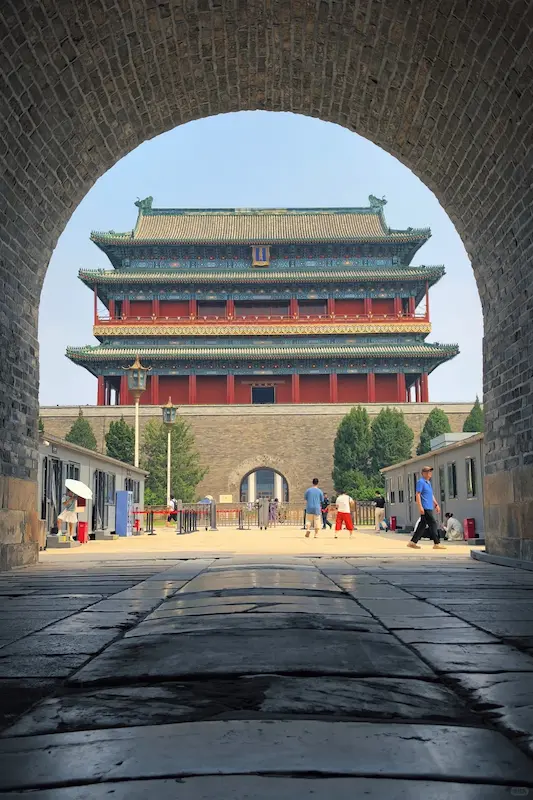
Juyongguan is located in Changping District, just a 50-minute drive from downtown Beijing. It is not just a section of the Great Wall, but a complete fortified city—complete with a barbican, watchtowers, government offices, granaries, temples, and even an ancient “highway” checkpoint.
It is the largest Great Wall pass in the country, guarding “Jundu Pass,” one of the Eight Passes of the Taihang Mountains. For nomadic tribes from the north seeking to ride their horses into Beijing, there was virtually no other route available.
In this article, I won’t just take you “up the steps”; I’ll guide you into this living ancient military fortress. You’ll see the imperial stone carvings left behind by the Yuan Dynasty, experience firsthand what it means to “hold the pass with a single man” on the steep steps, and discover why the people of the Jin Dynasty, 800 years ago, listed this place as one of the “Eight Scenic Views of Yanjing.”
Note: The terms “command headquarters, outpost, and flank” used below are analogies intended to aid understanding; actual ancient military systems were far more complex than this model suggests.
“Two Mountains Flanking a Gorge”: The 40-Li Guanggou—The Sole Chokepoint
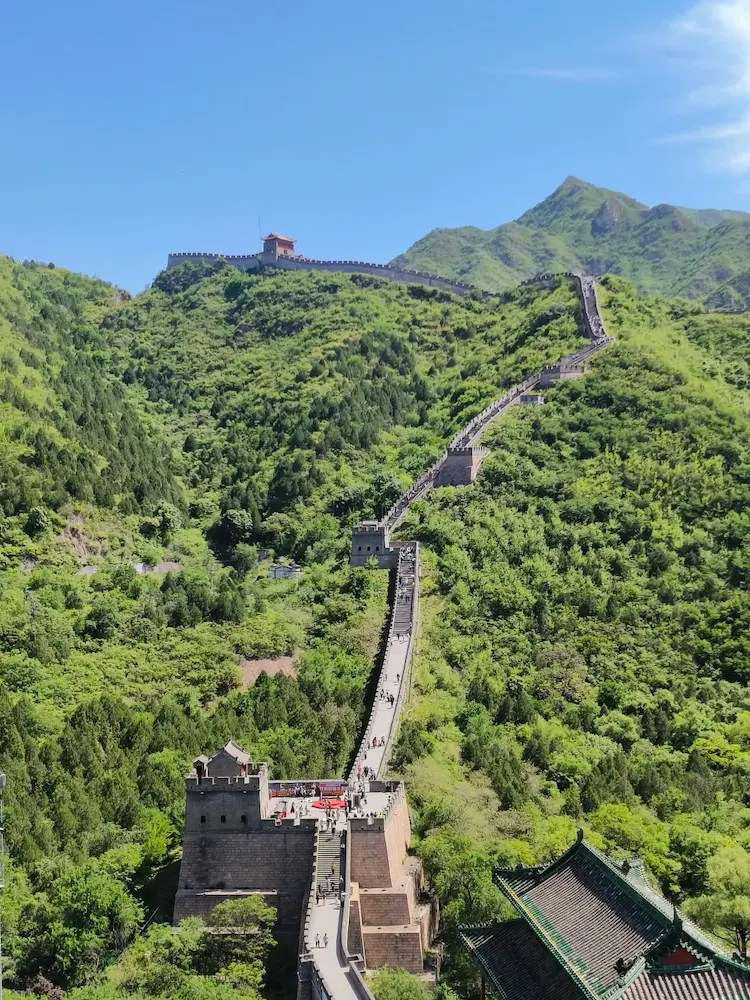
Open a map and look toward the northwest of Beijing. The Yanshan and Taihang Mountains converge here, with a narrow, elongated gorge between them known as Guanggou. Stretching approximately 40 li in length, it is flanked by towering cliffs on both sides, with only a river and a road running through the center.
For northern nomadic tribes—whether the Xiongnu, the Turks, or the Mongols—this was the fastest and most viable route to ride directly toward Beijing.
Juyong Pass is situated precisely at the narrowest and most perilous point of this gorge. The ancient saying that “extreme danger is a product of nature” is no exaggeration.
The Synergy of the Iron Triangle: Juyong Pass is the Brain, Badaling is the Tentacle
Explanatory Analogy: To help general tourists understand, these three locations are colloquially likened to a “outpost—fortress—flank” relationship; however, the actual Ming Dynasty border defense structure was far more complex than this simplified model.
Juyongguan served as the headquarters, Badaling as the forward outpost, and Mutianyu as the flank.
Suppose you are a cavalryman coming from the north; your first task is to breach Badaling. The moment a beacon is lit at Badaling, the smoke can be seen from Juyongguan, more than ten miles away.
The commander at Juyongguan immediately orders the entire city to be on high alert: the gates of the barbican are shut, archers take their positions on the ramparts, and rolling stones and wooden logs are positioned at the crenellations.
By the time you charge from Badaling to the foot of Juyongguan, you’re no longer facing a mere wall, but a fully fortified military stronghold.
As the old saying goes: “The peril of Juyong lies not in the pass itself, but in Badaling.” This means that the real battle had already begun at Badaling; Juyong Pass relied on an integrated defensive system, not merely a single wall.
108 Passes: A Three-Dimensional Defense Network
According to historical records, the area under the jurisdiction of Juyong Pass contained numerous mountain passes, with a large number of watchtowers, sentry posts, and horse-barrier walls distributed along both sides of the Guan Gou mountain ridge, forming a multi-layered defensive network.
During the Ming Dynasty, a sizable military force was stationed here year-round, undertaking important border defense and control functions.
Key Landmarks and“National Treasures”: Focus on the Essence, Not Just the Spectacle
If you simply climb the city walls to snap a photo, you might miss out on Juyongguan’s most precious treasures. Here are the three things I believe are absolutely worth seeing.
1. Yuntai—Yuan Dynasty Stone Carvings, the Undisputed Star of the Show
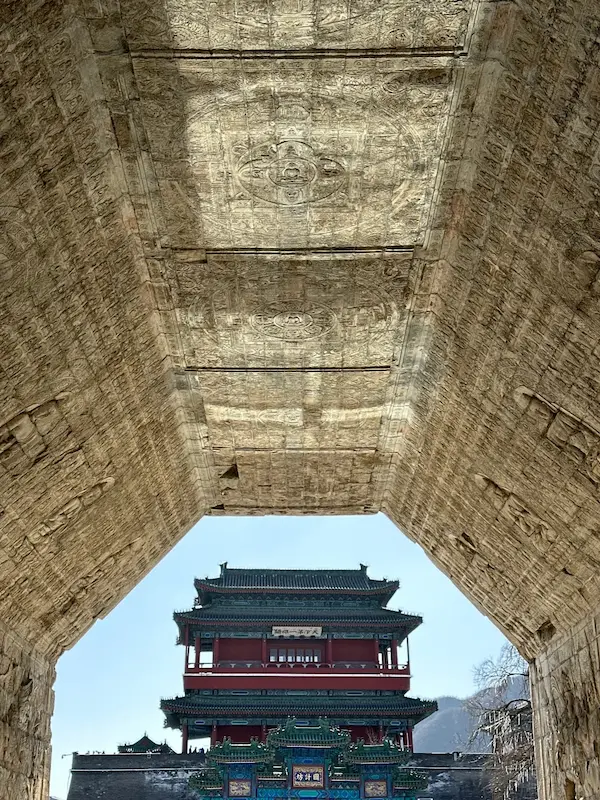
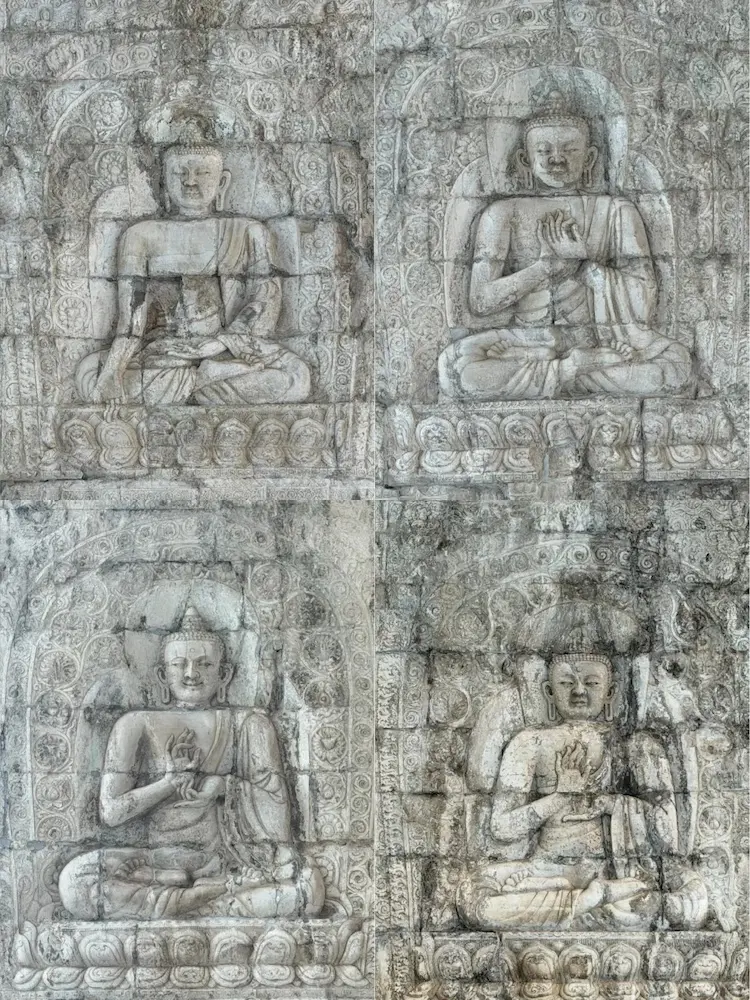
Once you enter the South Gate of Juyongguan, you’ll soon come across a massive stone platform. Originally, it was topped by three Tibetan-style pagodas known in the Yuan Dynasty as the “Crossing-the-Street Pagodas.” The pagodas were later destroyed, leaving only the base—what is now known as Yuntai.
What’s most awe-inspiring about Yuntai isn’t its exterior, but the carvings on the inner walls of the stone cave.
Statues of the Four Heavenly Kings:
Each stands several meters tall, eyes wide and glaring, with evil spirits crushed beneath their feet. Though carved from stone, the lines of their sashes, armor, and muscles are incredibly lifelike. Standing beneath them and looking up, I couldn’t bear to leave even as my neck grew stiff.
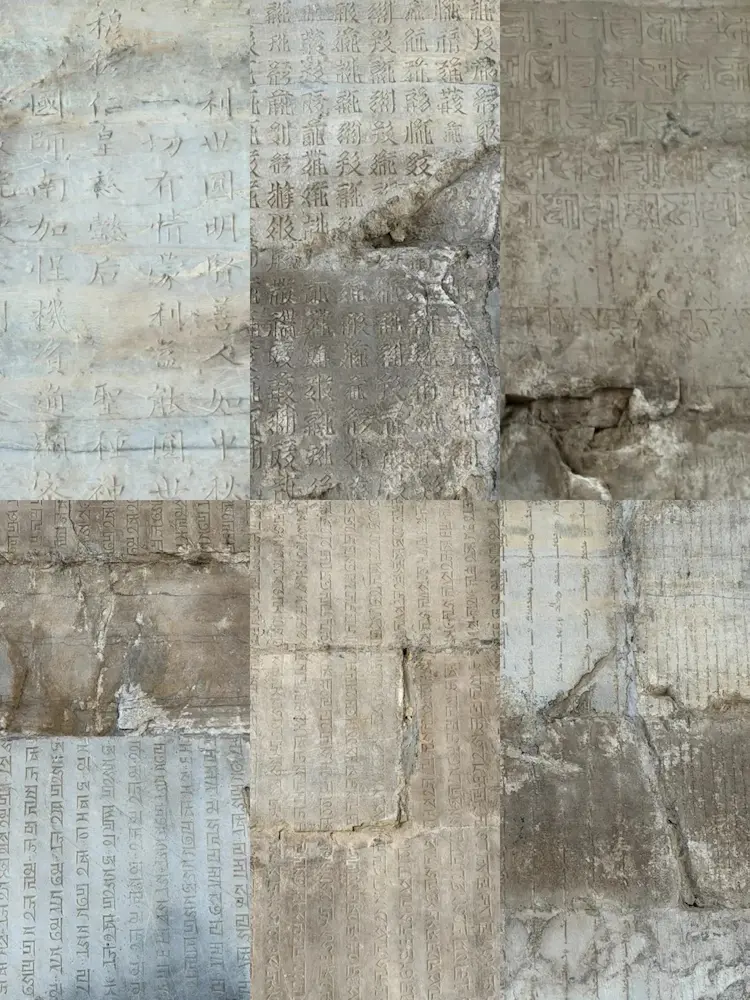
Six Scripts:
The walls of the cave are inscribed with the Dharani Sutra Mantra in six scripts: Sanskrit, Tibetan, Phagspa, Uyghur, Western Xia, and Chinese.
The Phagspa script is a Mongolian script created during the reign of Kublai Khan, while the Western Xia script is a language that has long since been lost.
The juxtaposition of these scripts demonstrates that during the Yuan Dynasty, Juyong Pass was not only a crucial military passage but also a cultural crossroads along the Silk Road.
Yuntai On-Site Observation Checklist (Follow along while on-site)
① First, examine the arched gateway and understand its historical role as a “street-crossing pagoda” situated at a major transportation hub.
② Next, look up at the relief carvings of the Four Heavenly Kings, paying close attention to their postures and the details of their armor and robes.
③ Look for the six types of scripts inside the cave; try to identify the Han Chinese script used in the inscribed sutras and compare it with the other ancient scripts.
④ Take a step back to view the Yuntai base as a whole and appreciate that it is a national treasure that stands as a tangible testament to the cultural exchange among diverse ethnic groups during the Yuan Dynasty.
Tips for On-Site Interaction: As you pass through the arched gateway of Yuntai, take a moment to look up and examine the relief carvings and ancient inscriptions on the inner walls. Bringing a small flashlight will help you see the details of the stone carvings more clearly. Yuntai is a National Key Cultural Relic Protection Unit.
2. The Bastion: Why Is It Harder for the Enemy to Retreat Once They’ve Entered?
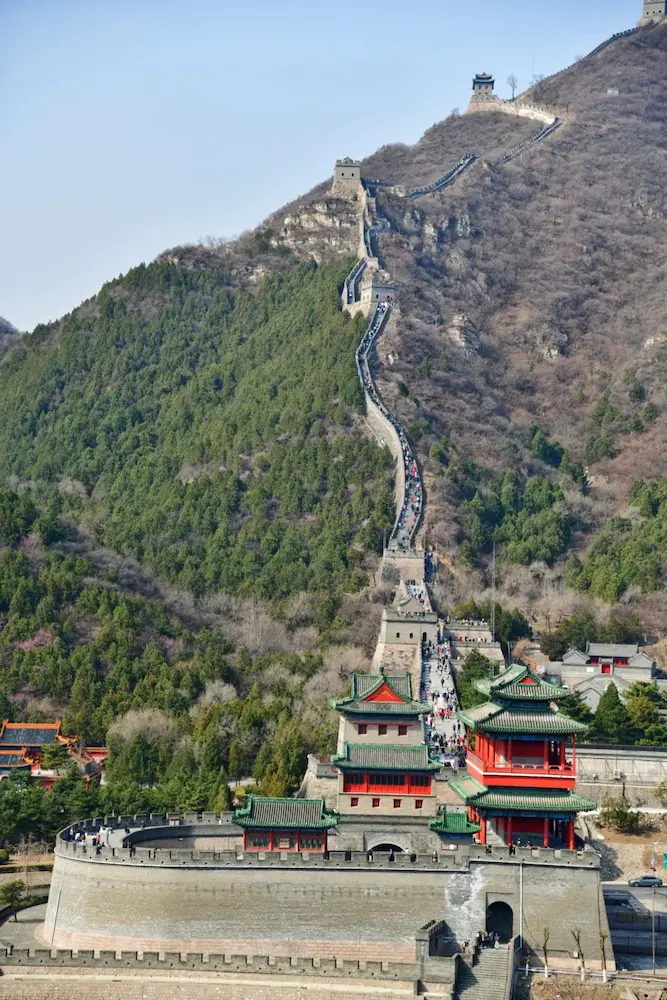
Juyong Pass has two barbicans: the South Gate and the North Gate. What is a Barbican? It is a semicircular or square wall built outside the actual city gate, with a side entrance.
When enemies breached the first gate and charged in, they found themselves surrounded by high walls. The defenders on the walls rained down arrows, hurled stones, and poured boiling oil—a tactic known as “catching a turtle in a jar.”
Walk inside yourself, and you’ll feel the oppressive atmosphere: high walls all around, with only a small patch of sky overhead. If the gate were shut, there would be no escape route. The military designs of ancient times were cruel but effective.
3. The “Everyday Life” Within the Pass: A Miniature Military City
Juyong Pass was not merely a battlefield. Inside, it contained:
- The Command Headquarters: Where the commander worked and lived.
- The City God Temple: A place where soldiers prayed for divine protection.
- The Temple of Guan Yu: Dedicated to Guan Yu, the Martial Saint and spiritual totem of soldiers.
- Warehouses: Where grain, weapons, and fodder were stored.
When Visiting a Pass, Don’t Just Look at the City Walls
- On-site, pay close attention to: the design of the city gates, the structure of the barbican, the remains of temples, the layout of streets and alleys within the pass, and the relationship between the city walls and the surrounding valley terrain.
- Focus on understanding that a Great Wall pass served multiple functions simultaneously, including military defense, transportation, religious rituals, and daily garrison duties.
Walking through the fortress today, you can still see the ruins or reconstructions of these buildings. Imagine, hundreds of years ago, soldiers drilling, the mess hall preparing meals, and messengers galloping to deliver news—the entire fortress shifting from daily life to a state of readiness for battle.
Romance Across Time and Space: “Juyong’s Lush Greenery” and the Train to Spring
Juyong Pass is not just a place of military history; it is also deeply poetic.
Juyong Diecui: One of the Eight Scenic Views of Yanjing from 800 Years Ago
As far back as 800 years ago, during the Jin Dynasty, Beijing (then known as Zhongdu) was home to the “Eight Scenic Views of Yanjing,” and Juyong Pass was one of them—Juyong Diecui.
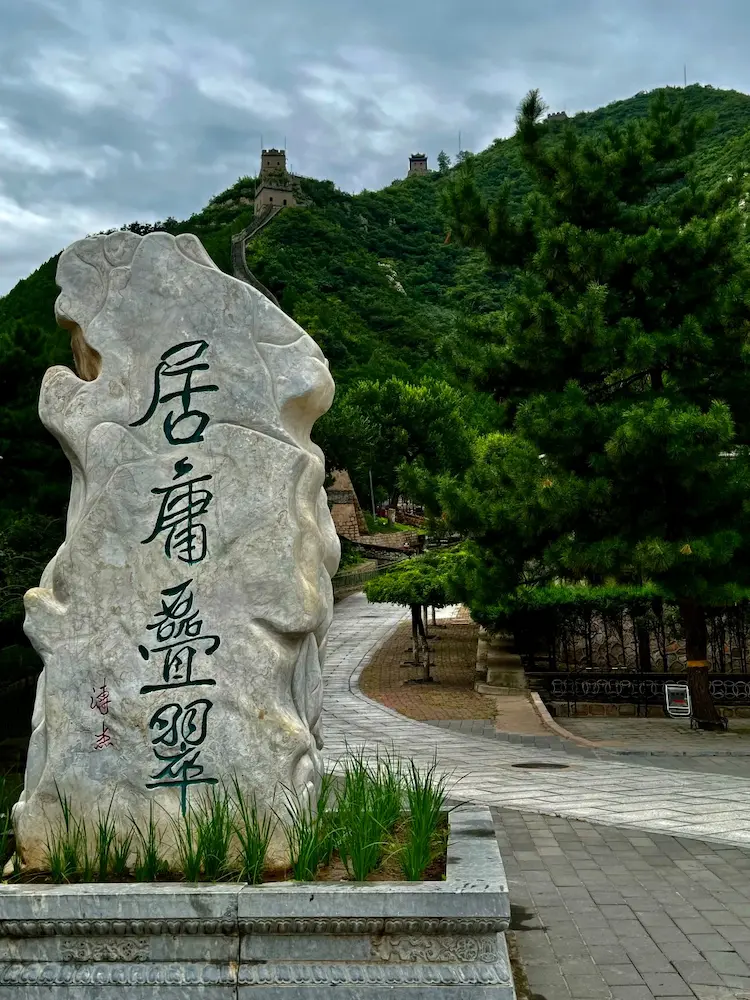
Flanked by two mountains, with layers of emerald waves, this describes the layered peaks on either side of the pass, which are covered in lush greenery during spring and summer.
Standing at the highest point of the fortress and looking down, the winding road in the gorge is the ancient path trodden by iron hooves—and today’s highway and railway.
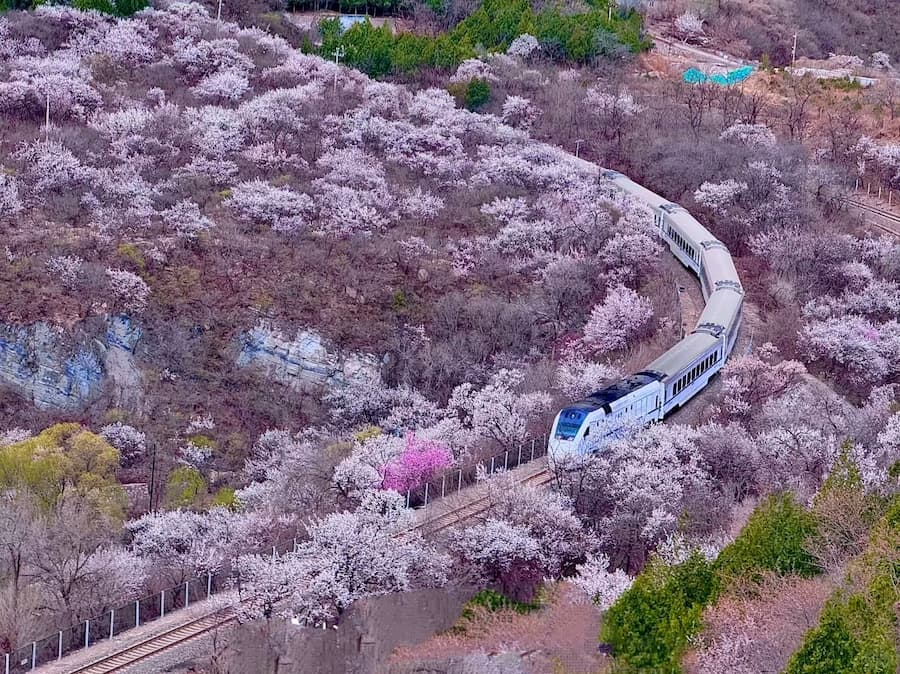
The Train to Spring: A Limited-Time Spectacle Lasting Less Than a Month
If you visit Juyongguan between late March and early April, you’ll have the chance to see the S2 line trains passing through a sea of flowers.
⚠Important Seasonal Note:
This is not a year-round attraction. The blooming season, train schedules, and viewing areas vary each year. Be sure to confirm three things before you go: the blooming season for mountain peach and apricot blossoms, the S2 line’s schedule for that day, and which viewing areas are open within the scenic area.
The best spots for taking photos are along the Xishan Great Wall section within the Juyongguan Scenic Area or at the viewing platforms on both sides of Guanggou. The ideal time is around 9–11 a.m., when the light is slanting and the petals appear translucent.
Practical Travel Guide
Important Warning from the Blogger
- Juyongguan is a purely circular section of the Great Wall—there are no cable cars, no chairlifts, and no toboggan runs along the entire route!
- Some of the bluestone steps are severely worn, and some sections have a gradient approaching 70 degrees. The path is extremely slippery in rain or snow, so be sure to wear hiking boots with high traction.
- Your knees will definitely remember this day.
- If you’re used to the slide paths at Mutianyu or the cable cars at Badaling, adjust your expectations—at Juyongguan, you’ll be climbing on foot.
Two Routes: East Mountain (Challenger) vs. West Mountain
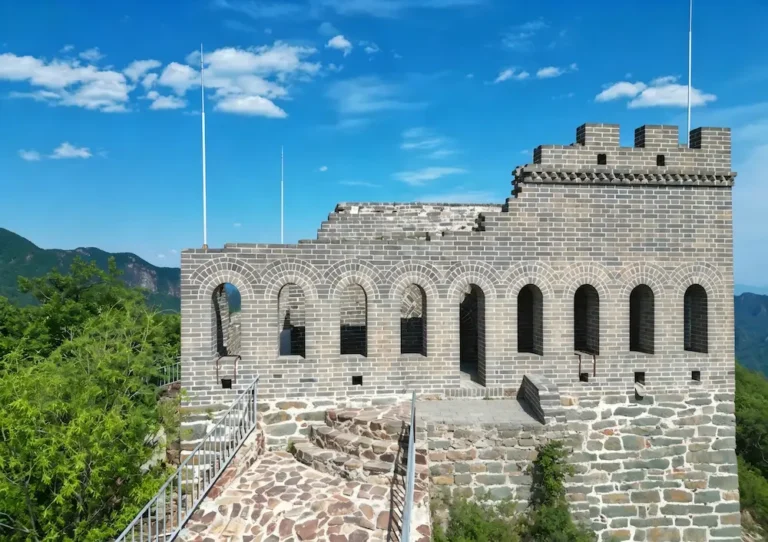
The circular Great Wall at Juyongguan is divided into two routes: East Mountain and West Mountain, both starting at the center of the pass.
| Route | Features | Gradient | Suitable For |
| East Mountain Route | Relatively gentle, with fewer watchtowers, but it offers panoramic views of the entire pass and Yuntai | Moderate | Those seeking a more relaxed hike, wanting to take panoramic photos, or traveling with elderly family members or children (though some physical fitness is still required) |
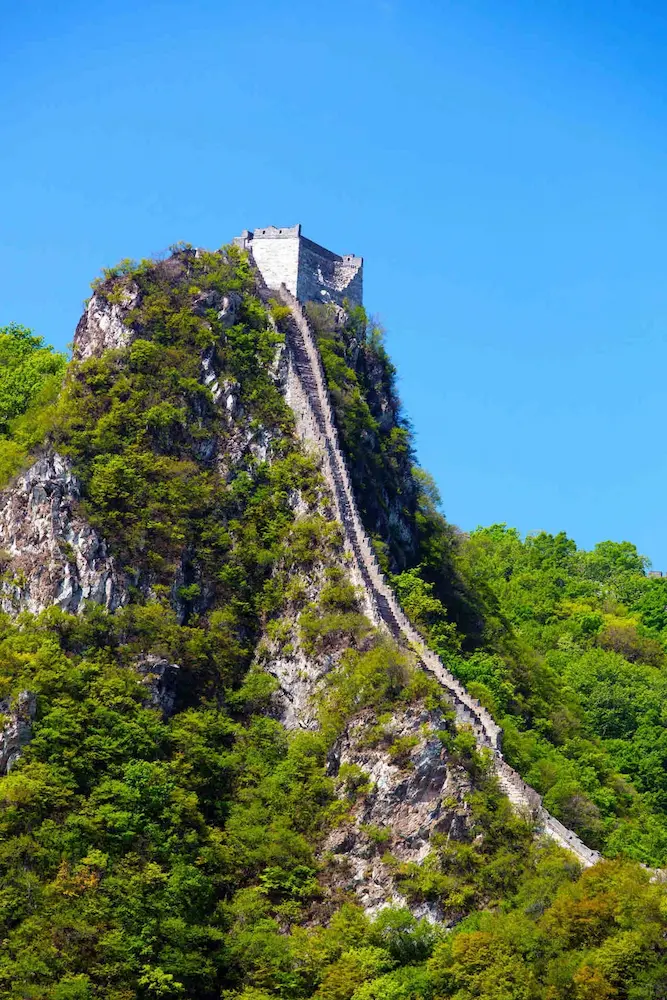
| West Mountain Route | Extremely steep steps leading directly to the highest watchtower, offering a taste of the perilous “ one man guards the pass ”experience | Very Steep | Young people in good physical condition, hiking enthusiasts, and those seeking a challenge |
My recommendation: If you’re not particularly fit, stick to the East Mountain loop (about 1.5 hours), then explore Yuntai and the temples inside the fortress. If you want to “be a true hero” and tackle the West Mountain route, be sure to wear non-slip hiking boots, bring plenty of water, and be mentally prepared for your legs to shake.
Quick Reference Guide
- If you just want a brief overview of Juyongguan: Fortifications + Yuntai + the short Dongshan route
- If you want to photograph the panoramic view of the fortifications: Prioritize the Dongshan route
- If you want to experience the steep and rugged scenery of the Great Wall: Take the Xishan route
- If you’re traveling with the elderly or children: Don’t aim to complete the entire loop
- If you’re in average physical condition: Don’t push yourself to walk the entire route just to “check it off”
⏱Three Ready-to-Follow Itineraries for Juyong Pass
①90 Minutes | Light Version
Pass Fortress→Yuntai→Wengcheng→Short Route on Dongshan→Return to Pass Fortress to conclude
②2–3 Hours | Standard Version
Gate Fortress→Yuntai→Wengcheng→Full East Mountain Route→Leisurely stroll through the temple complex inside the Gate Fortress
③Half Day | In-Depth Version
Gate Fortress→Yuntai→Wengcheng→Choose either East Mountain or West Mountain→View the Guanggou Valley, then continue exploring nearby attractions
If the sight of these steep steps makes your knees ache and you’d prefer an easier section with cable cars and toboggans, check out my post next door: “Mutianyu Great Wall Guide: How to Choose Between Cable Cars, Ropeways, and Toboggans? Family Hiking Routes and Tips to Avoid Pitfalls (2026) ”; or return to my overview page, “Beijing’s 9 Great Wall Sections: Badaling, Mutianyu, and More (2026)”, to filter your destination using the comparison chart.
How to Choose Between Juyongguan, Badaling, and Mutianyu?
| If what you want most is… | Then this option is a better choice |
| Visiting a classic, popular section of the Great Wall for the first time | Badaling |
| To explore the fortress and the entire valley’s military defense system | Juyongguan |
| For mountain and forest scenery, with multiple options including cable cars | Mutianyu |
| If you want to see both the fortress architecture and the Great Wall itself | Juyongguan |
| If you want to minimize the physical strain of hiking | Prioritize the other two sections if cable cars are available |
| If you’ve already been to Badaling and want to experience a different side of the Great Wall | Compare Juyongguan and Mutianyu to choose |
Transportation Options: The Closest to the City Center, the S2 Line Offers a Nostalgic Ride
By Car/Ride-Hailing Service: Set your GPS to “Juyongguan Great Wall”; the drive from the city center takes about 50 minutes. Parking is available near the fortress entrance at a reasonable rate.
Suburban Railway S2 Line: Board at Huangtudian Station (near Huoying Subway Station), ride to “Badaling” Station, then transfer to a bus or take a taxi to Juyongguan (about 10 minutes).
Travel Tip: S2 line train schedules are subject to change. Do not rely on the S2 line as your primary mode of transportation; prioritize the reliability of your round-trip journey. Be sure to check the current day’s schedule before departure.
Bus: Take Bus 919 from Deshengmen to the “Juyongguan” stop, but service is infrequent, so this option is not recommended.
Reservations and Ticket Purchases
Juyongguan implements a real-name reservation system. Ticket and reservation policies at Juyongguan may differ from those at other Great Wall attractions; please refer to the latest official information from Juyongguan before your visit.
- Search for “Juyongguan Great Wall” or “Changyou Great Wall” in the WeChat Mini Program, then select a date and time slot.
- Foreign visitors can make reservations using their passport number; present your reservation code and passport upon entry.
- Admission prices: 40 RMB per adult; half price for students; free for seniors aged 65 and over (a 0 RMB ticket reservation is still required).
- During peak season (April–October), we recommend booking 1–3 days in advance; book even earlier for weekends and holidays.
If you want to avoid the hassle of transferring between modes of transportation, hiring a private car is a much more convenient option.
Whether it’s your first time in Beijing, you’re traveling with elderly family members or children, or you plan to visit multiple attractions in a single day, hiring a private car is a great choice. Juyongguan is quite far from the city center, and transferring via public transportation can be time-consuming. With a private car, you’ll enjoy door-to-door pickup and drop-off from your hotel, and you’ll be in full control of your itinerary.
If you’d like to compare vehicle types, pickup/drop-off areas, and prices in advance, check out the private car rental services for Beijing on the KKday platform. They offer pre-planned itineraries that include the Juyongguan Great Wall, as well as customizable itineraries tailored to your needs. View KKday’s Beijing Car Rental Services
My recommendation: If you’re only visiting Juyongguan and are willing to figure out the public transportation on your own, public transit is perfectly feasible; if you’re looking to save time and effort or are traveling with a group, a private car rental will provide a better experience.
Recommended Gear
- Shoes: Hiking boots with good traction. Do not wear canvas, leather, or flat casual shoes. The blue stone steps at Juyongguan are very slippery.
- Clothing: Windproof in winter, sun-protective in summer. It is windy on the mountain, and temperatures are 3–5 degrees lower than in the city.
- Water and Food: There are only a few vendors inside the fortress. We recommend bringing 1–2 bottles of water and energy bars.
- Rainy or Snowy Weather: If it is raining or there is snow on the ground, we strongly advise against hiking the West Mountain Trail, as it is extremely dangerous. You may limit your visit to Yuntai and the fortress.
Before visiting Juyongguan, do a quick self-assessment of your physical fitness
- If you can usually walk continuously for 1–2 hours with ease and can handle a sustained uphill climb on stairs, you’re well-suited for hiking the Great Wall.
- If your group includes elderly people, young children, or those with knee problems—or if you rarely climb hills—don’t set out to complete the entire loop; focus instead on the fortress and Yuntai, and decide on the spot whether to climb the Great Wall.
Tips to Avoid Pitfalls
1. Don’t try to complete both the East and West Loops in one go—unless you’re a marathon runner. Most people are already exhausted after finishing the West Loop, and attempting the East Loop afterward will leave you completely wiped out.
2. Take 20 minutes to explore Yuntai Cave: Many people rush through it, missing the details of the six scripts and the statue of the Heavenly King. Bring a flashlight—it’s quite dark inside.
3. The “Journey to Spring” along the S2 trail lasts only 3–4 weeks: Mountain peach blossoms have a very short blooming season, peaking from late March to early April. Don’t expect to see this scenery during other seasons.
4. Don’t spend too much money at the “costume photo” booths inside the Fortress: The prices are steep, the results are mediocre, and you’re better off taking your own photos.
5. If you’re bringing children: We recommend walking only the first half of the East Mountain Trail (turn back at the first watchtower) or sticking to the flat areas inside the Fortress. The steep steps on West Mountain are unsafe for children.
6. Don’t equate “visiting Juyongguan” with “having to complete the entire loop from east to west”; turning back when you’ve reached your limit is the safest choice.
7. If you’re making a special trip to photograph the sea of flowers, be sure to check the blooming season, transportation, and weather in advance to avoid a wasted trip.
Next Stop: A Forgotten Ming-Dynasty Military Fortress at the Foot of the Great Wall
If you want more than to climb the Great Wall for photos—if you also want to understand the logic behind the fort’s location and the ancient defense system formed by the pass and the valley—Juyong Pass offers a unique experience. Before you go, check the opening hours, make any necessary reservations, and plan your transportation. Once you arrive, choose either the East Mountain or West Mountain route based on your fitness level.
After Visiting Juyongguan, Here’s How You Can Continue Your Itinerary
- First-time visit to Beijing: Check out the “Beijing Great Wall: A Guide to 9 Sections” to compare other Great Wall sites
- Looking for an easier Great Wall route: Jump to the Mutianyu Great Wall guide
- If you’ve already been to Badaling: Compare the different Great Wall experiences at Juyongguan and Mutianyu
- First-time visitors to Beijing: Check out practical guides on navigation and payment options in Beijing