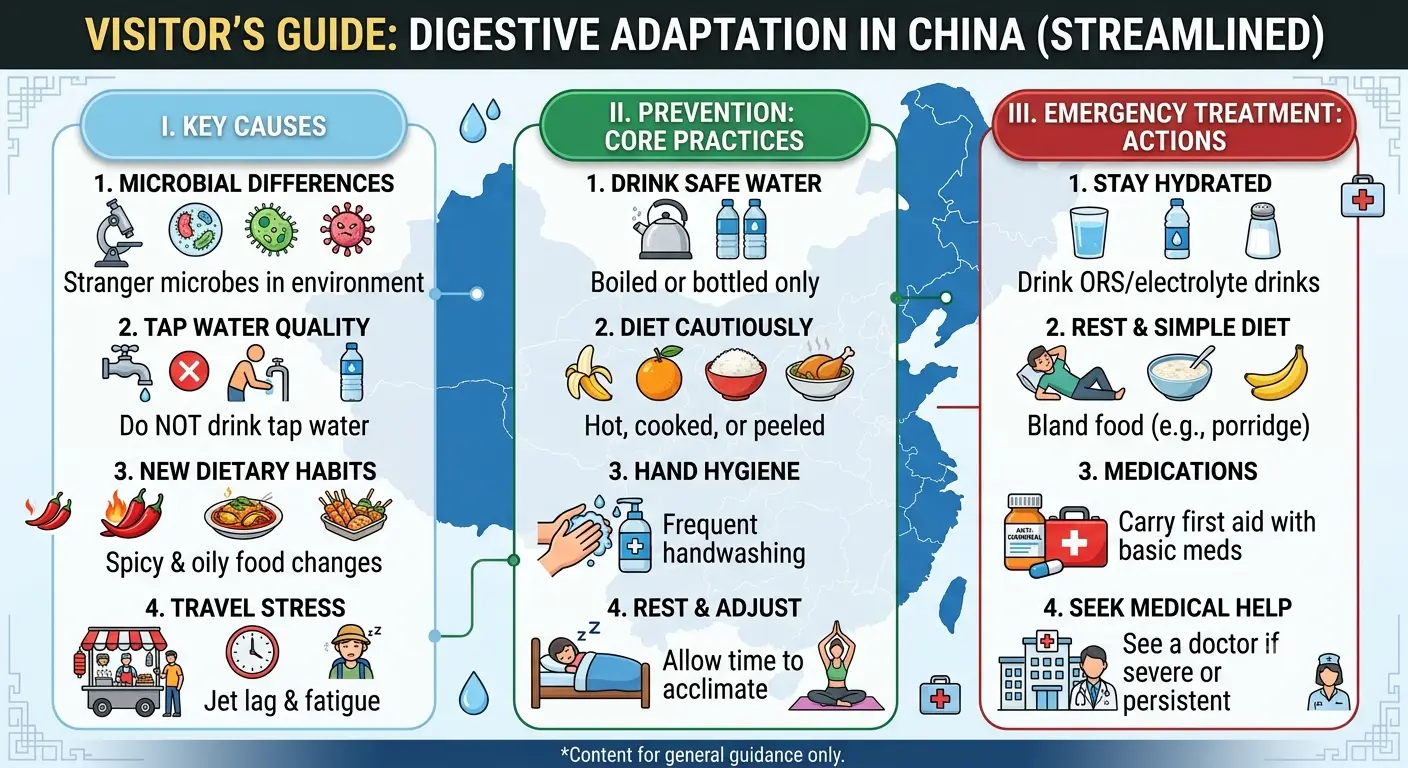
Why Do Foreigners Get Diarrhea in China? A Complete Guide to Helping Tourists Adjust Their Digestive Systems (2026)
Almost all foreign tourists who have just arrived in China encounter a perplexing and uncomfortable problem: Even though they’re eating the same food that locals eat every day, why are they the only ones getting diarrhea?
On travel forums (such as Reddit), similar posts pop up all the time. Some ask, “Why do I get diarrhea from eating street-side breakfast in China, but locals are fine after eating the same thing?”
Others are puzzled: “I’m very careful with lunch and dinner—I only eat hot, freshly prepared food—so why do I have even more problems?” Behind all these questions lies the same issue: traveler’s diarrhea, commonly known as “traveler’s belly.”
On Reddit, it’s also jokingly referred to as “Bali Belly,” “Delhi Belly,” or “China Belly.”
This article will explain why this happens, what you can do to prevent it, and what to do if it does happen.
If you’re planning a trip to China or have just arrived, this article is for you.
Table of Contents
Already Have Diarrhea? Read This First
Travelers currently experiencing diarrhea don’t need to read the entire article—skip to this section for a step-by-step plan.
1. Top Priority: Prevent Dehydration and Replenish Electrolytes
Prioritize using over-the-counter oral rehydration salts (ORS). Prepare and drink them strictly according to the instructions on the package; they are available at major pharmacies throughout China.
Don’t just drink plain water—water alone cannot replenish the electrolytes your body has lost.
2. Adjust Your Diet
There’s no need to strictly follow the outdated BRAT diet; simply choose light foods that your stomach can tolerate. Easily available options in China include plain rice porridge, clear noodle soup, toasted steamed bun slices, and bananas. Eat small, frequent meals; avoid spicy, raw, cold, and greasy foods; and make sure to get plenty of rest.
3. Reference Guide to Common Over-the-Counter Medications
- Montmorillonite Powder: Absorbs intestinal toxins; you can purchase it at pharmacies by showing the English name “Smecta.”
- Loperamide (Imodium): Used to reduce the frequency of diarrhea
⚠Important Reminder: If you have a fever or blood in your stool, do not take anti-diarrheal medications on your own; seek medical attention immediately.
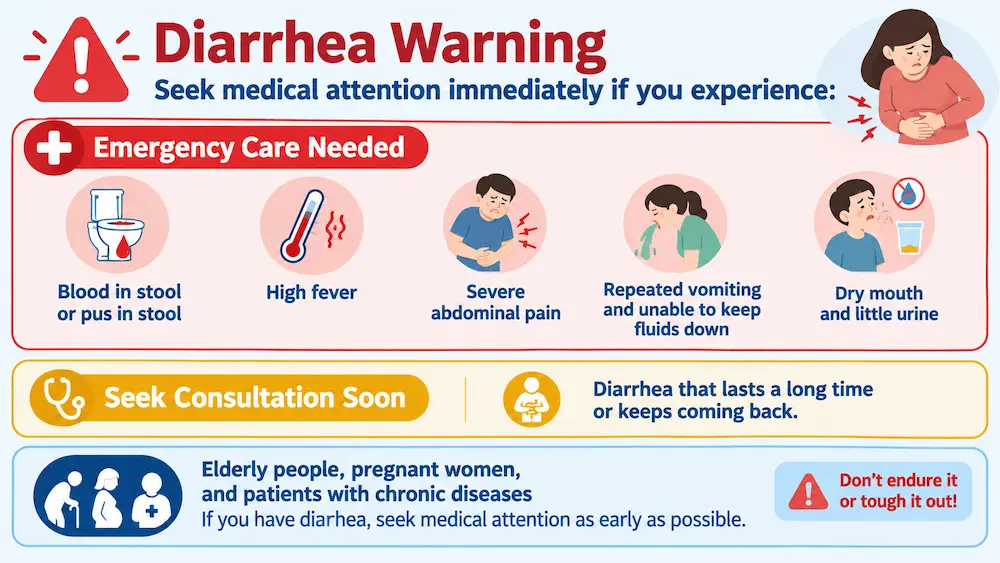
⚠Seek medical help immediately if any of the following occur
✅ Seek emergency medical care: blood or pus in the stool, high fever, severe abdominal pain, repeated vomiting with an inability to drink water, or signs of severe dehydration such as noticeable dry mouth and reduced urine output.
✅ Contact a doctor promptly: If diarrhea symptoms do not improve over time, or if they recur after initially improving.
Elderly individuals, pregnant women, and people with chronic illnesses should seek professional evaluation as early as possible if they experience diarrhea; do not try to tough it out or wait.
4 Common Questions Foreign Tourists Ask About Digestive Issues
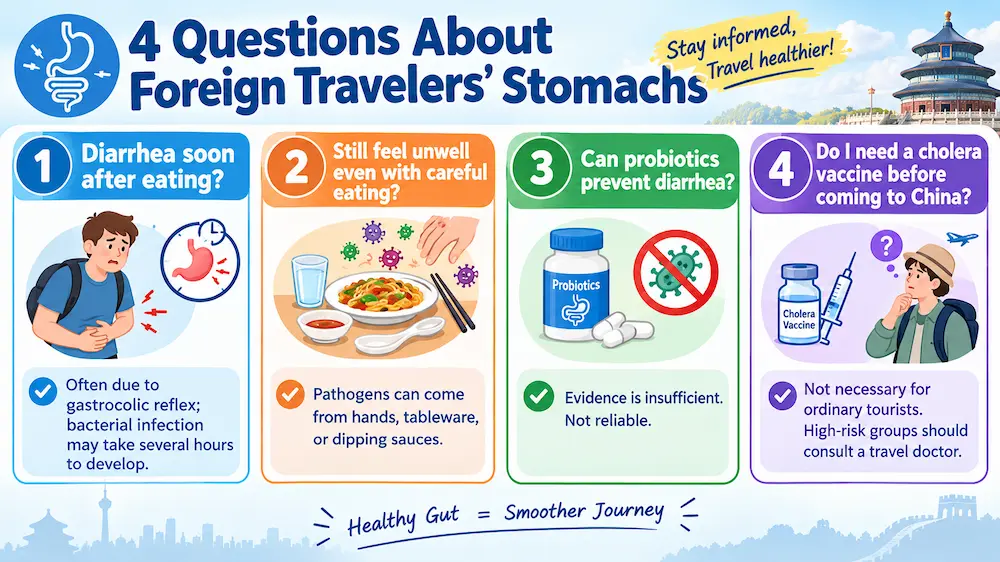
1.“I had diarrhea 15 minutes after eating a baozi. Do locals also go home with diarrhea?”
No. The urge to have a bowel movement shortly after eating does not necessarily mean the food you just ate caused a bacterial infection. Bacterial infections typically take several hours or even days to manifest.
After eating, the stomach expands, triggering the body’s “gastrocolic reflex,” which accelerates intestinal peristalsis. This reaction is more pronounced in people with sensitive digestive systems. Locals, having long adapted to the local diet’s combination of fats and spices, experience a relatively milder physical reaction.
Tip: The timing of symptoms alone cannot 100% determine the true cause of diarrhea.
2. I’ve been extremely careful about what I eat, so why do I still have stomach discomfort?
No single set of dietary precautions can eliminate the risk of traveler’s diarrhea.
Even if you choose only hot foods, it’s still possible to come into contact with unfamiliar pathogens through utensils, condiments, or hand contact.
3. Can taking probiotics intermittently help prevent diarrhea?
Some probiotic products on the market have been studied for the prevention of traveler’s diarrhea, but the current medical evidence is insufficient. Probiotics should not be relied upon as a reliable preventive measure for travelers.
4. Do I need to get a specific cholera vaccine when traveling to China?
The vast majority of ordinary tourists visiting China do not need to receive this specific vaccine. If you are on a long trip or have specific health risks, it is recommended that you consult a travel medicine specialist before departure to assess whether you are a suitable candidate for relevant vaccinations.
Why Does Traveler’s Diarrhea Occur?
What Is Traveler’s Diarrhea?
Traveler’s diarrhea refers to an acute intestinal disorder that occurs during or after travel. It is typically characterized by three or more episodes of loose or watery stools per 24 hours, often accompanied by symptoms such as abdominal pain, nausea, vomiting, or fever.
According to research statistics, approximately 10% to 40% of travelers have experienced traveler’s diarrhea, with most cases occurring during the first week of travel. In most cases, symptoms resolve on their own within 3 to 5 days.
Why Do Locals Eat the Same Food Without Issues, But I Get Sick?
Just because locals eat the same food without any problems doesn’t mean the food is completely risk-free.
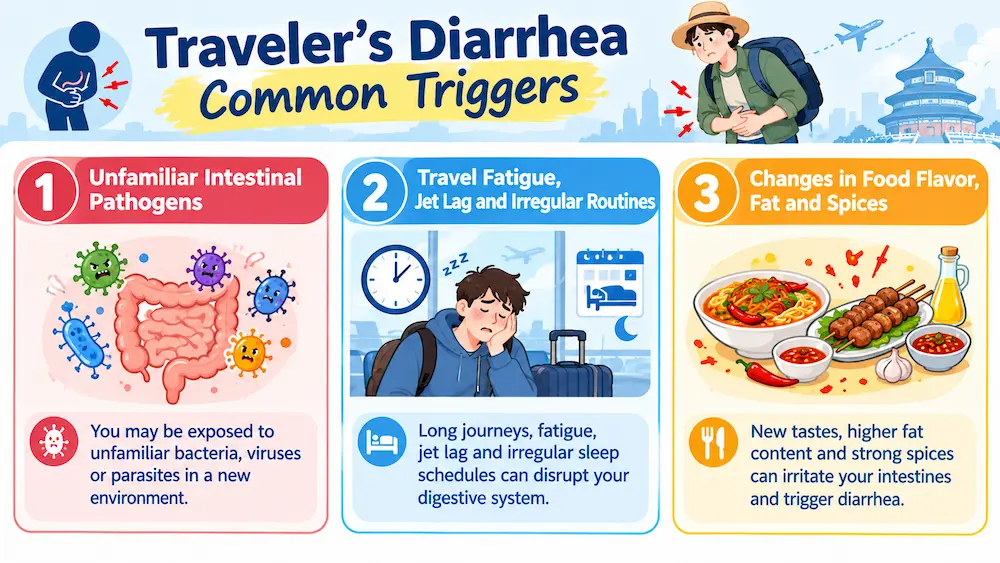
Traveler’s diarrhea is mostly caused by various pathogens found in food and water sources. While locals have long been adapted to the local dietary environment, this does not mean they possess special “immune tolerance” to local bacteria; locals can also experience food poisoning and gastrointestinal infections.
When tourists arrive in a completely new environment and are exposed to microorganisms they’ve rarely encountered before—combined with jet lag, travel fatigue, and sudden changes in diet—they are more prone to gastrointestinal reactions.
Key Point: Traveler’s diarrhea≠Chinese food is unclean, nor does it mean your digestive system is inherently weak.
Other Factors That Increase the Risk of Gastrointestinal Discomfort
In addition to infections caused by pathogens, travel fatigue, disrupted sleep patterns, and the stress of adjusting to a new time zone can all weaken the body’s immune system.
Furthermore, significant differences in the flavors, fat content, and spices of local cuisine compared to what you’re accustomed to can cause gastrointestinal discomfort simply due to the change in diet.
✅What Preparations Should You Make Before Traveling?
1. Assess Your Health
If you plan to stay in China for more than two weeks, or if you have a sensitive stomach, you may want to consult a travel medicine specialist before departure to learn about potential gastrointestinal risks during your trip.
2. Pack a Basic Travel First-Aid Kit for Digestive Issues
For longer stays (two weeks or more), it’s recommended to pack a basic first-aid kit for digestive issues; for shorter trips, you can pack one as needed.
| Item | English/Brand Name | Description |
| Oral Rehydration Salts (ORS) | Oral Rehydration Salts (ORS) | Prevent dehydration—this is the most important thing. Available for purchase directly at Chinese pharmacies |
| Smecta / Montmorillonite Powder | Smecta / Montmorillonite Powder | Over-the-counter anti-diarrheal adsorbent, similar to Pepto-Bismol in the West |
| Loperamide (Imodium) | Loperamide (Imodium) | Anti-diarrheal medication that reduces the frequency of diarrhea. Can be purchased at Chinese pharmacies by providing the English name |
⚠Important Reminder:
Do not take antibiotics in advance as a preventive measure.
The misuse of antibiotics indiscriminately destroys beneficial gut bacteria and contributes to bacterial resistance, making treatment more difficult should a genuine infection occur in the future.
A Simple Guide to Eating and Drinking in China (Perfect for Screenshotting and Saving)
| Safer Choices | Require Extra Caution |
| Hot dishes and soups that are thoroughly cooked and served piping hot | Cooked foods left at room temperature for long periods |
| Fresh fruits you peel yourself (bananas, oranges) | Pre-cut fruit in boxes sold on the street, or berries that can’t be peeled |
| Unopened bottled water from reputable brands | Raw water from unknown sources; ice made from tap water |
| Reputable restaurants with high foot traffic and quick table turnover | Raw, cold, or cold-tossed dishes from open-air street vendors |
| Wash your hands thoroughly before eating | Handling food directly without washing your hands |
Tip: These are general guidelines for travel and do not constitute an absolute guarantee of safety; there is no 100% foolproof way to avoid stomach issues.
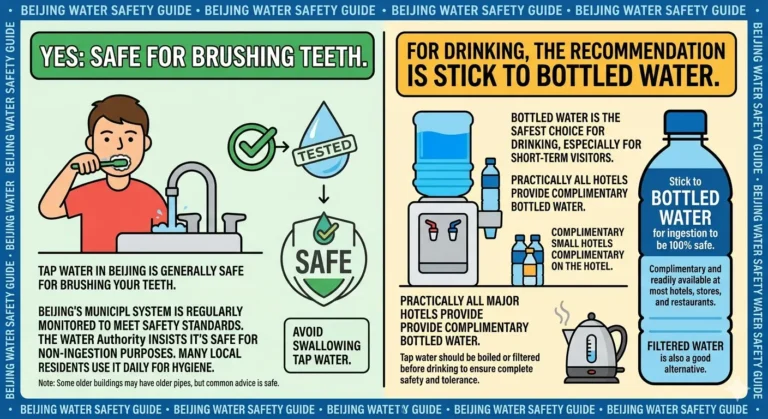
For an explanation of why tap water is safe to use for brushing your teeth but not for drinking, please read this article [Can You Use Beijing Tap Water to Brush Your Teeth? A Practical Guide for Foreign Visitors (Tested in 2026)].
A Few Real-Life Details That Can Easily Lead to Missteps When Eating Out in China
5 Small Details That Often Puzzle Foreigners Dining in China
1. Free Tea at Restaurants
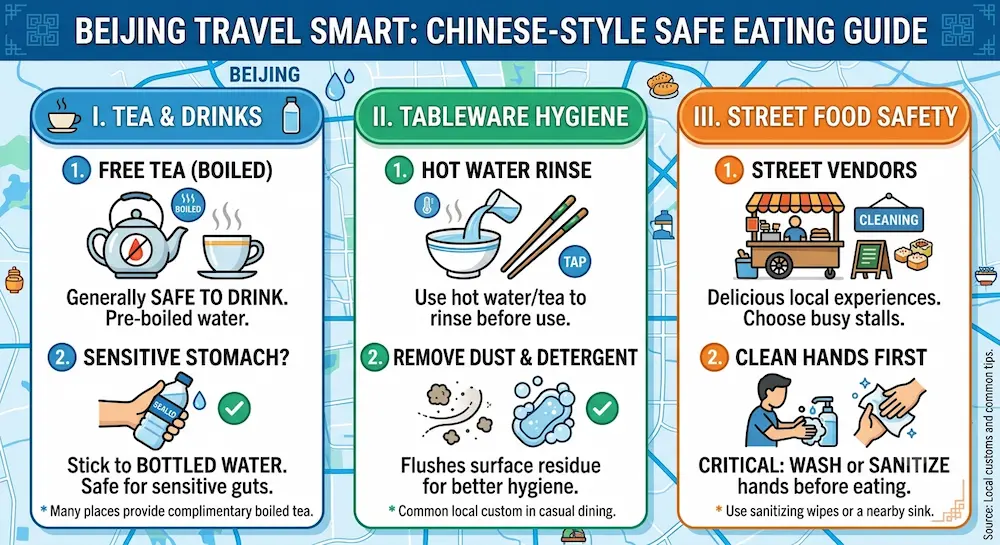
Most Chinese restaurants serve hot tea brewed with boiled water, which is relatively safe. However, if you have an extremely sensitive stomach, it’s best to ask for unopened bottled water instead.
2. Scalding Cutlery with Boiling Water—A Unique Chinese“Ritual”
Before eating at a street-side eatery, you might see locals rinsing their bowls and chopsticks with boiling water. The actual sterilizing effect of this practice is limited—the hot water provided by restaurants is usually less than 60°C, and rinsing for a few seconds isn’t enough to effectively kill bacteria.
However, it does rinse away surface dust and residual detergent. You can follow local customs and do the same, but don’t expect it to replace proper food safety measures.
3. Hand Hygiene—The Most Overlooked Step
When eating street food (such as steamed buns or pancakes), it’s often not the food itself that causes diarrhea, but rather handling it with unwashed hands.
Carry alcohol wipes or hand sanitizer with you, and wipe your hands before eating—this small habit can help you avoid a lot of trouble.
4. Sharing a Meal at the Same Table
At group meals in China, it is common to use communal chopsticks and share dishes from a single serving plate. Try to avoid using your own utensils to directly touch communal dishes.
5. Ice and Cold Dishes
Many street-side eateries use tap water to make ice, so people with sensitive stomachs should avoid ordering drinks with ice whenever possible. You should also be cautious with cold dishes that have been left at room temperature for a long time.
Pre-trip & Basic Checklist for Traveling to China (Feel free to take a screenshot and share with your travel companions)
☑ Make sure to pack oral rehydration salts first; don’t rely solely on anti-diarrhea medication
☑ If you’re unsure about the water source, opt for sealed bottled water
☑ Prioritize foods that are thoroughly cooked and eaten while hot
☑ When choosing fruit, opt for varieties you can peel yourself
☑ Wash your hands thoroughly before meals, and carry disinfectant wipes with you
☑ If you experience blood in your stool, a high fever, or severe dehydration, seek medical attention immediately—don’t try to tough it out
☑ Do not rely on probiotics or dietary supplements as a reliable means of protecting your digestive system
Author’s Personal Experience (Long-term Resident in Beijing)
If I were traveling to China for the first time, here’s how I’d protect my stomach:
1. For the first 1–2 days after arrival, don’t try a dozen or more completely unfamiliar foods all at once; let your stomach adjust gradually.
2. If you’re unsure about the water source, choose sealed bottled water.
3. When dining, prioritize hot, freshly cooked meals; exercise caution with street food.
4. Always practice good hand hygiene before eating.
5. In case of diarrhea: Your top priority is to replenish electrolytes; if you experience dangerous symptoms, don’t try to tough it out—seek medical help immediately.
FAQ
We hope your trip to China goes smoothly—from your stomach to your spirits.
It is actually a great and helpful piece of info.
I’m happy that you just shared this useful info with us. Please stay us informed like this.
Thank you for sharing.
Thanks so much for your kind feedback! I’m really glad this travel‑related guide is helpful to you. I will keep putting together practical travel tips for visitors coming to China. Wish you a smooth and pleasant trip!