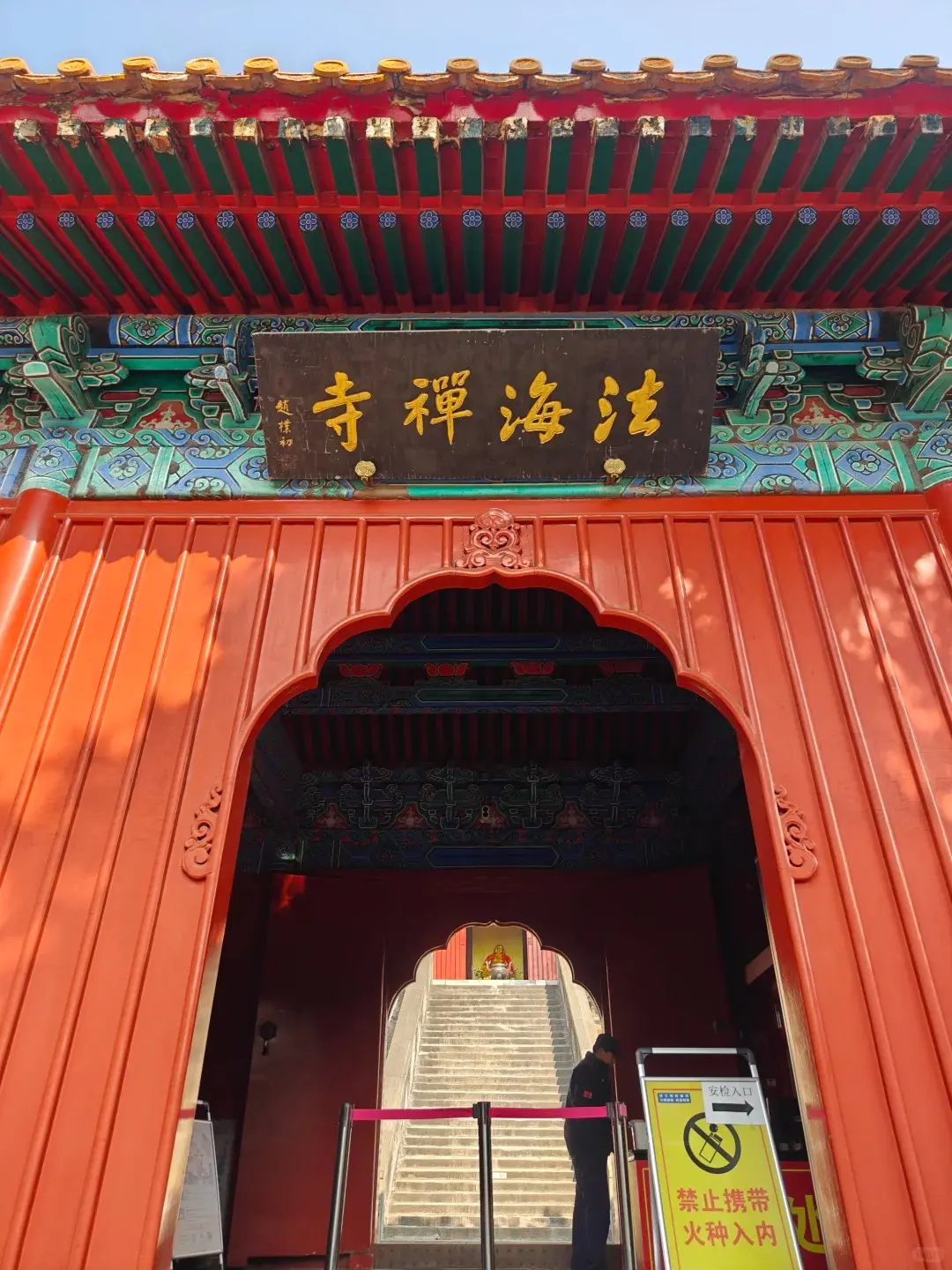
Beijing Fahai Temple Guide: Authentic Ming Dynasty Murals, Admission Tickets, and a Complete Guide to Visiting the Site (2026)
Last Updated: Sep 2026
If you’re interested in ancient Chinese art, Buddhist paintings, and historic architecture, you might want to check out Fahai Temple.
This guide to Fahai Temple will help you understand the temple’s “Five Masterpieces” and its historical anecdotes, making it easy for international visitors to plan their itinerary.
Visiting Beijing for the first time—is it worth making a special trip to Fahai Temple?
If you’re interested in ancient paintings, Buddhist art, and Ming Dynasty architecture, Fahai Temple is worth setting aside half a day to explore. The main attraction here isn’t the typical temple courtyard, but the authentic Ming Dynasty murals preserved in the Great Hall of the Buddha.
However, the experience here differs significantly from tourist attractions like the Forbidden City and the Temple of Heaven: you’ll need to purchase a separate ticket to view the original murals, the viewing area is dimly lit and quiet, and photography is prohibited inside the hall. If your main goal is taking photos for social media, this place might not be for you.
We recommend combining a visit to the “original murals + the temple’s Five Masterpieces + Moshikou District” into a single itinerary.
Table of Contents
Must-Read Before Your Visit | 3 Mandatory Requirements
1. You must check your belongings to view the original murals: Cell phones, cameras, and backpacks can all be stored for free. Photography is strictly prohibited inside the hall; violators will be asked to leave.
2. No reservations required; tickets sold on-site: Starting in February 2026, individual reservations will be discontinued. Tickets for the original murals are available on a first-come, first-served basis, with a limit of 25 people per session.
3. Dress Code: The site is located on a hillside with numerous steps and stone pathways; you must wear comfortable, non-slip athletic shoes.
Key Information at a Glance
| Item | Key Information |
| General Admission | 20 yuan (temple tour only; does not include access to the original artworks) |
| Original Artwork Viewing Ticket | 100 yuan (includes general admission; highly recommended) |
| Combined Ticket | 130 yuan (original artworks + full access to the Mural Art Gallery) |
| Opening Hours | 9:00–16:30 (last admission at 16:00), closed on Mondays |
| Original Artwork Viewing Times | 9:30/10:30/11:30/12:30/13:30/14:30/15:30 |
| Transportation | Exit A of Moshikou Station on Metro Line 11, 15–20-minute walk |
| Recommended duration | Half a day (Fahai Temple + Moshikou neighborhood) |
⭐First-Time Visitors to Fahai Temple: Don’t Miss These 5 Highlights (Take a Screenshot to Save)
| Highlight | Why It’s Worth Seeing | Recommended Visit Time |
| Authentic Ming Dynasty Murals | Fahai Temple’s most treasured national treasure—remnants of Ming Dynasty court painting | 20 minutes |
| Mandala Caisson (Zaojing) | Located atop the Great Buddha Hall, a work of ancient architectural art often overlooked by visitors | 5 minutes |
| Two Thousand-Year-Old White-Bark Pines | The temple’s iconic ancient trees | 5 minutes |
| The “Four Cypresses and One Arch” Bridge | An ancient landmark in front of the Mountain Gate, visible as soon as you enter the temple | 5 minutes |
| Large Ming Dynasty Bronze Bell Inscribed with Sanskrit | A tangible example of Ming Dynasty bronze craftsmanship | 3–5 minutes |
Introduction to Fahai Temple: Origin of the Name and History
Fahai Temple is located on the southern slopes of Cuiwei Mountain in Moshikou, Shijingshan District, Beijing. It was first built in the fourth year of the Zhengtong reign (1439) of the Ming Dynasty, funded by the eunuch Li Tong and constructed by the Ministry of Works. Emperor Yingzong of the Ming Dynasty bestowed upon it the name “Fahai Chan Temple,” endowing it with imperial lineage.
⚠️ Special Note: This “Fahai” has no connection to the Legend of the White Snake; it signifies that the Dharma is as vast as the ocean.
The temple faces south and consists of four courtyards built on a raised platform. It is one of Beijing’s best-preserved official Ming Dynasty temples, featuring a unique architectural style that blends Han and Tibetan characteristics.
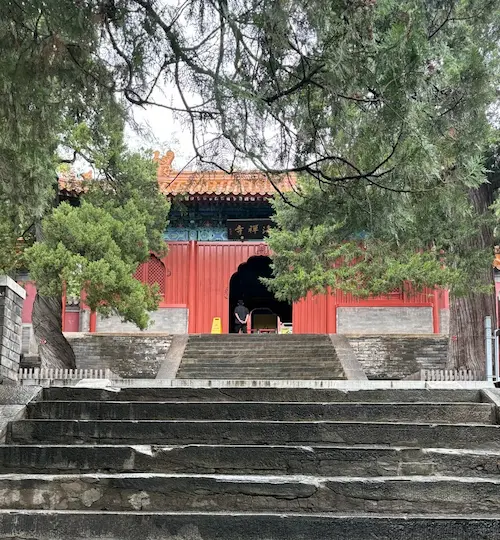
A Detailed Look at the “Five Masterpieces” of Fahai Temple
First Masterpiece: Ming Dynasty Murals (The Temple’s Treasure)
The Great Buddha Hall houses Ming Dynasty murals covering an area of approximately 236.7 square meters. The murals depict a total of 77 figures, and despite having endured more than 500 years, their colors remain vivid. Different historical records indicate either 9 panels or 10 scrolls.
The murals were created using techniques such as raised gold leaf and layered shading, featuring delicate lines and a strong three-dimensional visual effect.
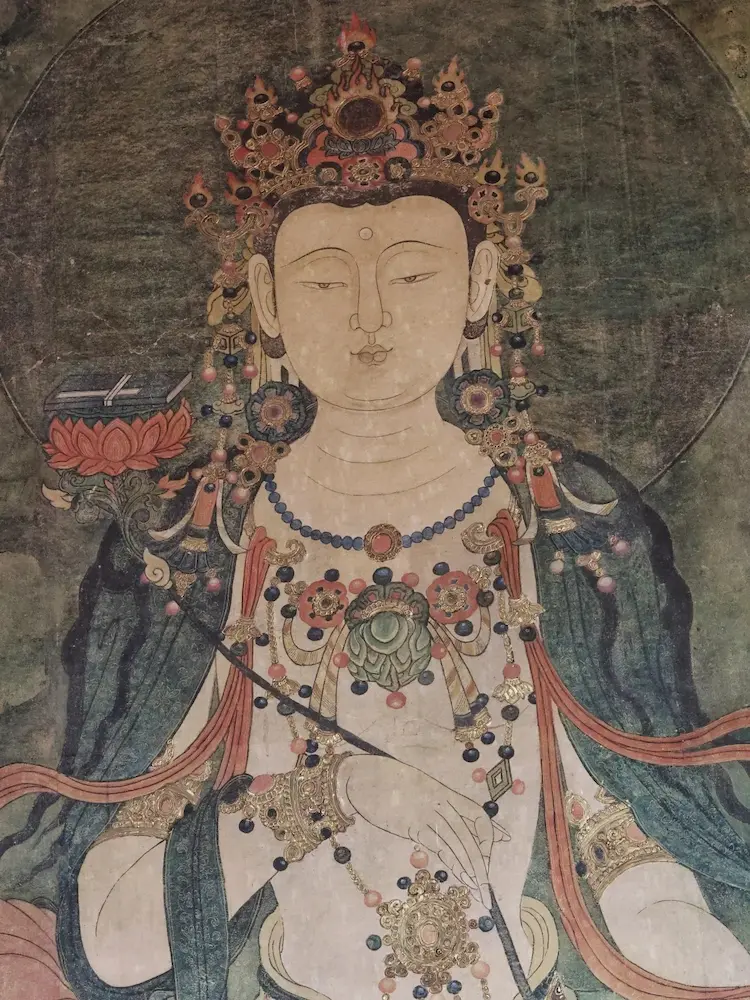
- Water-Moon Guanyin: Standing 3 meters tall, she is draped in a white veil rendered with 48 gold threads, as thin as a cicada’s wing, representing the pinnacle of meticulous, richly colored painting.
- Artist Credits: The names of 15 artists are engraved on the Lengyan Sutra Stupa, a practice extremely rare in ancient times.
Cultural Trivia: The Water Moon Guanyin is depicted reclining in a relaxed posture, symbolizing compassion for all beings. This is a classic pose in Ming Dynasty Buddhist sculpture.
First-Time Guide to Viewing the Murals at Fahai Temple | A 20-Minute On-Site Viewing Guide
When you enter the Great Buddha Hall, don’t just admire the overall scene from a distance—follow this order to observe the murals:
1. Start with the Water-Moon Guanyin: Focus on the gold threads on her veil and the details of her robe’s folds; when illuminated by a cool-light flashlight, the gilded lines created with the “li fen” technique will reveal a three-dimensional texture. There’s no need to dwell on the identities of the Buddhist figures—the costumes, jewelry, and patterns themselves are highly worth admiring.
2. Observe the figures’ attire and expressions: Even if you’re unfamiliar with Buddhist stories, you can still appreciate the hairstyles, accessories, and fabric patterns of Ming Dynasty figures.
3. Pay attention to the details of the gilded relief technique: Notice the gold threadwork on the gauze robes and accessories—this is a major feature of Fahai Temple’s murals.
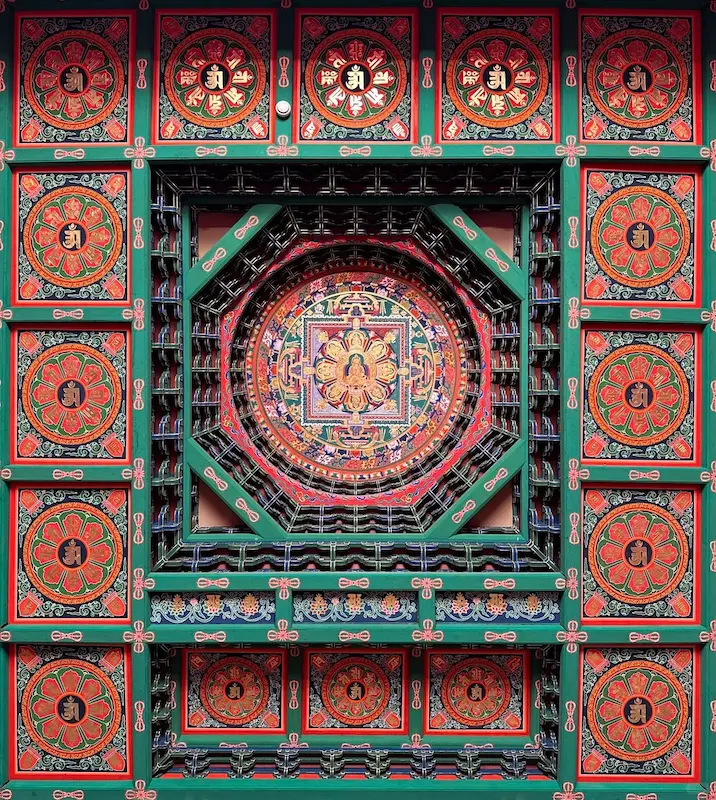
4. After viewing the murals, be sure to look up: Don’t leave after just viewing the walls; look up to admire the mandala-patterned coffered ceiling.
5. Finally, take in the whole scene: Take one last look at the entire mural to appreciate the grand composition of the entire series.
Tip: The lighting inside the hall is dim; visitors with nearsightedness should be sure to wear their glasses to see the fine details clearly.
Second Masterpiece: The Mandala Caisson (Zaojing)
The Great Buddha Hall features three Ming Dynasty coffered ceilings, each depicting a mandala of the Buddha of the Great Sun, the Immovable Buddha, and the Buddha of Infinite Life. Symbolizing the cosmic realm of the Buddha, these intricate and exquisite works represent the pinnacle of ancient architectural ceiling art.
The Third Wonder: The Millennium Whitebark Pines
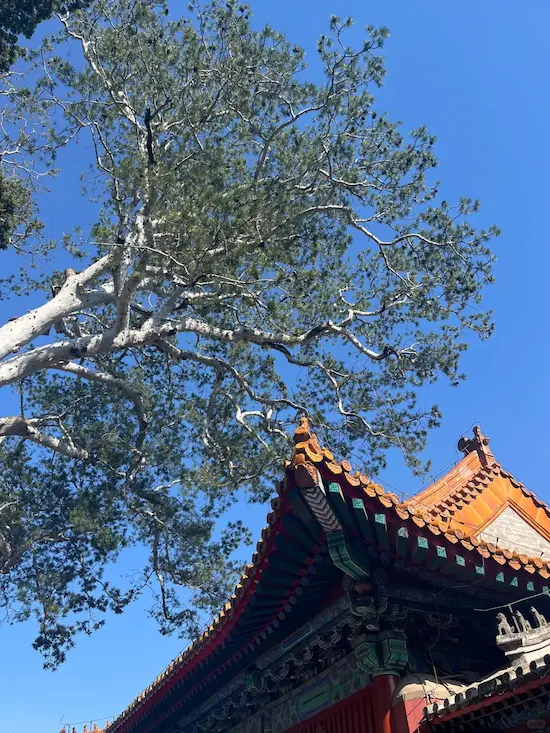
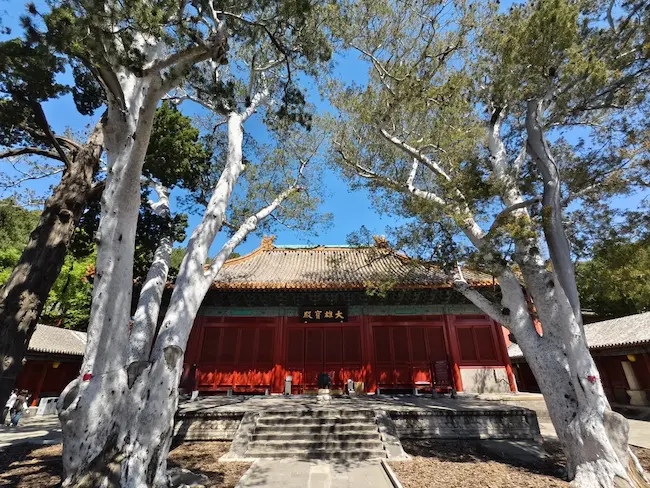
The two millennium-old whitebark pines in front of the temple are known as the “Kings of Beijing’s Whitebark Pines.” The trees predate the temple itself, and their white trunks contrast beautifully with the vermilion halls, creating a signature scene at Fahai Temple.
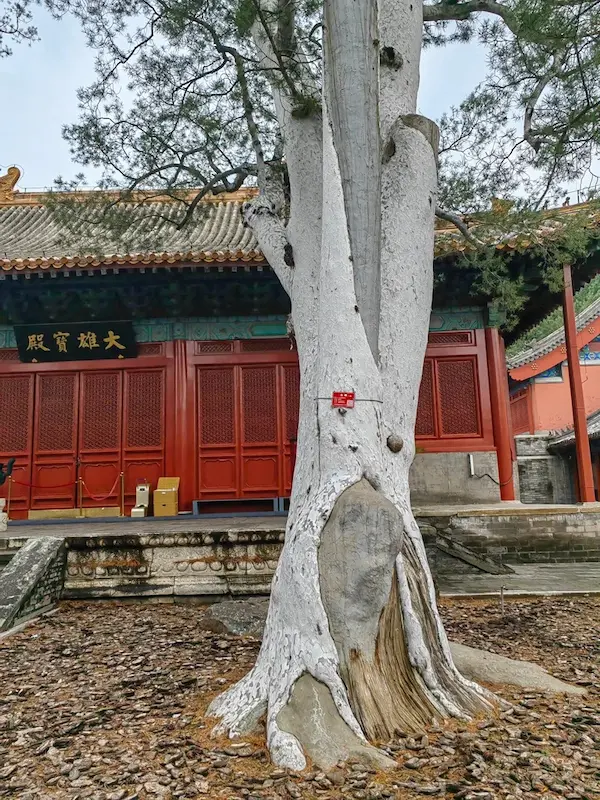
The Fourth Wonder: The Bridge with Four Cypress Trees
In front of the mountain gate stands a small bridge flanked on both sides by four ancient cypress trees standing symmetrically, like sentinels guarding the temple. Commonly known as “Luo Guo’er Bridge, ”it is small yet steeped in history.
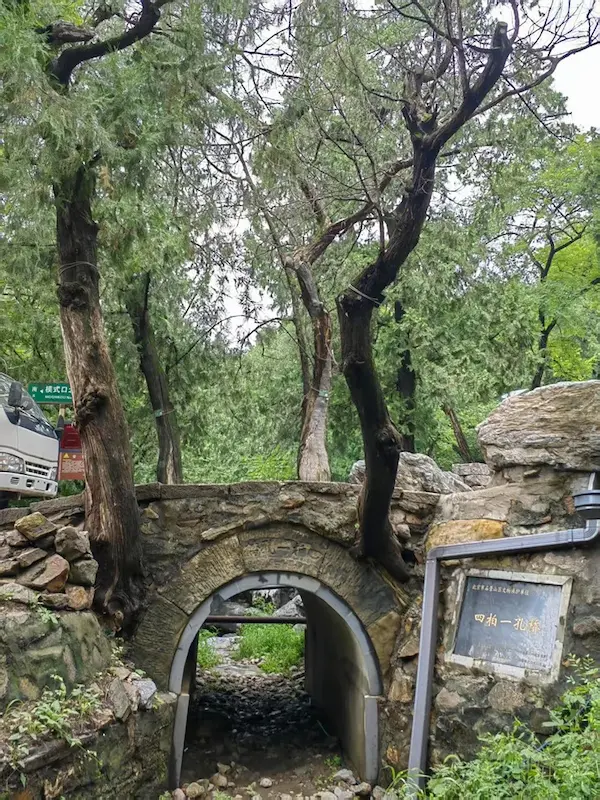
The Fifth Masterpiece: The Large Bronze Bell Inscribed with Sanskrit
Cast during the Ming Dynasty and entirely inscribed with Sanskrit sutras and mantras, this bell represents the pinnacle of bronze craftsmanship of its time. Its resonant toll echoes through six centuries.
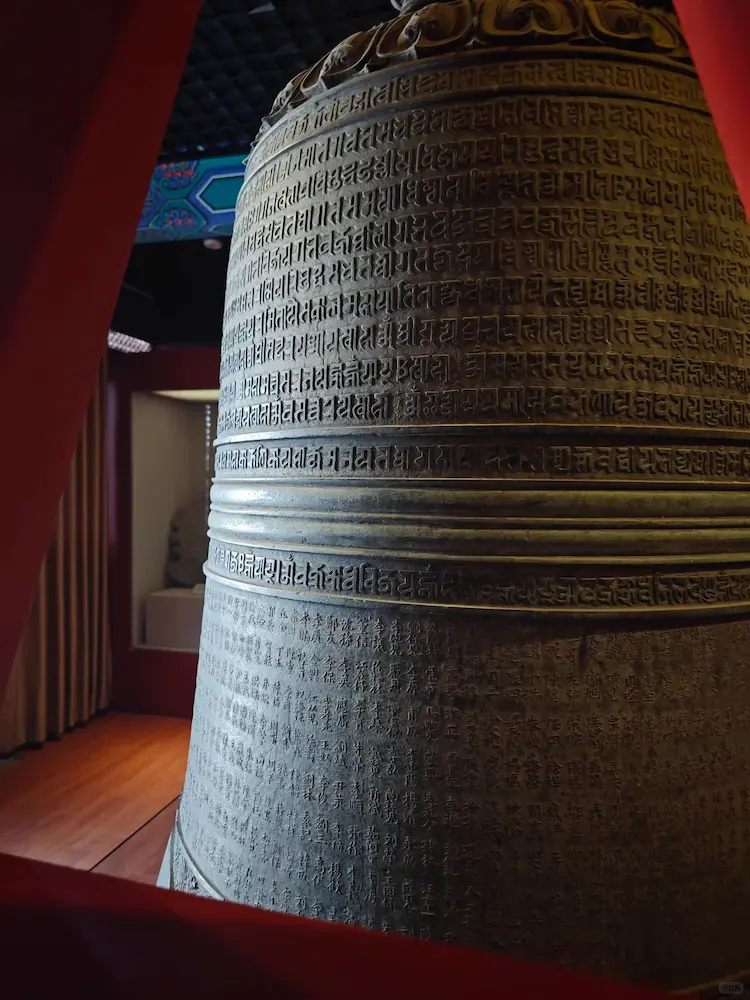
Fahai Temple: Is the 100-yuan ticket for the original murals worth buying?
I won’t give a definitive answer—decide for yourself based on your travel goals:
✅Consider buying the original mural ticket if:
- You’re interested in Ming Dynasty paintings and Buddhist art;
- You’re willing to focus on viewing the murals for about 20 minutes in a dim, quiet environment;
- You’re okay with a complete ban on photography inside the hall;
- Your primary goal for this visit is to view the original national treasure murals.
⚠You can opt for just the standard ticket (20 yuan) + the Mural Art Gallery if:
- Your main goal is to explore the temple and take photos;
- You’re traveling with young children who may have trouble staying quiet for long periods;
- You only want to learn about the murals through reproductions and the digital exhibition hall.
Practical Guide: Transportation, Tickets, and Visitor Rules
Tickets and Reservations (Updated for 2026)
- Standard Ticket: 20 yuan; grants access to the temple grounds only.
- Original Artwork Ticket: 100 yuan (includes standard ticket); grants access to the main hall to view the murals.
- Combo Ticket: 130 yuan (Original Artwork + full access to the Mural Art Gallery).
- Reservation Policy: No reservation required for individuals. Tickets are sold on-site on a first-come, first-served basis, with a limit of 25 people per session.
- Closed: Closed on Mondays (except for national holidays).
ℹNote: Policies are subject to change; please check official announcements before traveling.
Original Murals at Fahai Temple | Complete On-Site Visit Guide
Step 1|Upon arrival, first check the daily schedule for viewings of the original murals.
Step 2|Try to arrive early—spots are limited during peak times and are available on a first-come, first-served basis.
Step 3|Purchase a 100-yuan ticket to view the original murals at the ticket window.
Step 4|Check all cell phones, cameras, and backpacks at the storage area; they are not allowed inside the main hall
Step 5|Pick up shoe covers and put on a mask; visitors who wear glasses must keep them on
Step 6|Follow the tour guide and use a cold-light flashlight to view the murals
Step 7|The tour lasts about 20 minutes; then exit the Great Hall of the Buddha
Transportation
- Best option: Take Metro Line 11 to Moshikou Station (Exit A), then walk west along Moshikou Street for 15–20 minutes.
- Bus: Get off at Shougang Residential Area Station → Walk to Moshikou Street.
- By Car: Moshikou Street is a pedestrian street from 10:00 AM to 8:00 PM. Park at the Moshikou East Entrance Parking Lot and walk up the mountain for about 30 minutes.
When is the best time to visit Fahai Temple?
Your top priority should be to check the schedule for viewing the original murals, then plan your arrival time accordingly—don’t just focus on the best lighting for photos.
1. First, find the mural viewing session you want to attend, then work backward to determine your arrival time to avoid arriving only to find that the session is already full.
2. On weekends and holidays, we recommend catching the earliest 9:30 session, as spots are relatively plentiful and there are fewer visitors.
3. After 4:00 PM, the light is soft, making the temple courtyards look great in photos. However, please note: the last original mural viewing session of the day is at 3:30 PM, and the murals are not open for viewing in the evening.
Tour Itineraries
Choose from two itineraries based on your needs
①2-Hour Condensed Version (Fahai Temple Only)
Moshikou Station→Camel Bell Ancient Trail→Sibai Yikong Bridge→Mountain Gate→Hall of the Heavenly Kings→Great Hall of the Buddha (authentic murals + coffered ceiling)→White-barked Pine→Mural Art Museum
②Half-Day Full Tour (Fahai Temple + Moshikou Historical and Cultural Block)
Moshikou Station→Full tour of Fahai Temple→Moshikou Camel Bell Ancient Trail (can be combined with visits to Cheng’en Temple, Gudao Sicun, the Glacial Remains Exhibition Hall, and Tian Yi’s Tomb)
Nearby Activities: One-Day Tour of the Moshikou Historical and Cultural District
Moshikou, where Fahai Temple is located, is the core area of the Ancient Western Beijing Trail, featuring 26 contiguous historical sites, making it ideal for a day trip in Shijingshan:
Cheng’en Temple → Ancient Trail Site → Fahai Temple → Mural Art Museum → Glacial Remnants Exhibition Hall → Tomb of Tian Yi
Food Recommendations
- Fried pastries from Fahai Temple, “Donkey Roll” sweets, and candied hawthorn on a stick
- Traditional-style courtyard cafes—the perfect place to rest and beat the heat
Sample Budget for a Day Trip (Per Person)
| Item | RMB | USD (approx.) |
| Admission to authentic artworks | 100 | 14 |
| Art museum (optional) | 60 | 8.3 |
| Round-trip subway fare | 10–15 | 1.4–2.1 |
| Lunch + snacks | 30–50 | 4–7 |
| Total | 155–175 | 21–24 |
Important Reminders
- There are many steps, so please wear non-slip sneakers.
- The Hall of Original Artworks is dark and quiet; please keep an eye on your children and maintain order.
- Photography is permitted in the Replica Gallery and the Art Museum, which can enhance your experience of the originals.
- Download a translation app in advance; most staff members speak Chinese.
Special Notes for International Visitors
1. Tickets can be purchased at the ticket window with your passport; subject to on-site requirements. Cash, WeChat Pay, and Alipay are accepted.
2. Photography and video recording are strictly prohibited in the area housing the original murals of the Great Buddha Hall.
3. Viewing time for the original murals is limited; if you do not understand the Chinese commentary, you can focus on observing the characters’ attire, gold thread details, and composition.
4. If you find it difficult to understand the background of the Buddhist figures, the reproductions in the Mural Art Gallery and the digital exhibition hall are better suited for taking your time to learn more.
5. We recommend preparing a translation app in advance, as on-site staff primarily communicate in Chinese.
✅Fahai Temple Pre-Visit Checklist (Save as a screenshot)
☐ Check the opening dates and confirm the day’s policy regarding viewing times for the original murals
☐ Budget: 100 yuan for the original mural ticket (optional)
☐ Do not bring cameras or large backpacks into the main hall
☐ Wear comfortable, non-slip hiking or athletic shoes—there are many steps on the mountain trails
☐ If you wear glasses, remember to bring them—the main hall is dimly lit
☐ Allow at least 1.5–2 hours if visiting only Fahai Temple
☐ If you plan to visit Moshikou, set aside a full half-day
Official Phone: 010‑88713968
Beijing Municipal Government Hotline (English): +86 10 12345
Ticket Platform: “Shijingshan Culture and Tourism” WeChat Official Account
FAQ
Personal Impressions from a Visit:
Once inside the Great Buddha Hall, the atmosphere is very quiet, and I used a flashlight to illuminate sections of the murals. Since photography isn’t allowed, you’re compelled to focus on observing the patterns on the garments and the details of the gold thread—an experience that’s completely different from the typical photo-op tourist spots.
We recommend setting aside at least half a day to combine a visit to the authentic artifacts at Fahai Temple with a stroll down Moshikou Old Street and some downtime at a café, for a quiet yet enriching off-the-beaten-path cultural tour of Beijing.