Wangfujing Guide: A Complete Guide to Transportation, Food, and Shopping (Including Budget Tips and Practical Advice 2026)
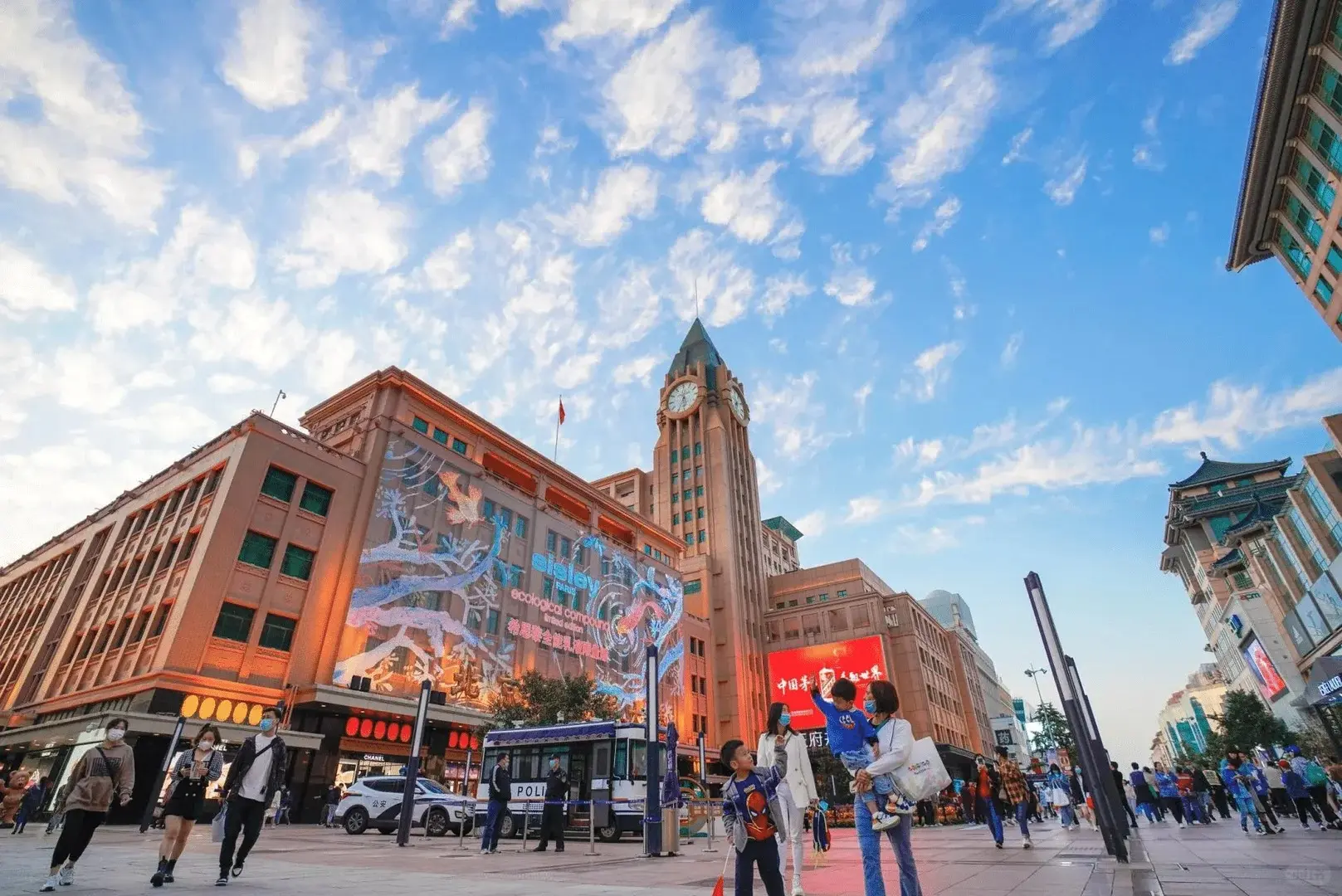
Wangfujing Street is Beijing’s most famous shopping street, with a history spanning over 700 years; it’s commonly known as “Golden Street.” The street is home to long-established department stores and century-old shops, as well as trendy new malls and delicious restaurants.
Whether you’re visiting Beijing for the first time or just looking for a place to spend the day, you can easily keep yourself entertained here from morning until night.
This guide will tell you: how to get there by subway, which spots are worth visiting, what delicious foods you shouldn’t miss, how much it will cost (in RMB, USD, or EUR), and explain some cultural nuances you might not understand.
Table of Contents
How to Get to Wangfujing? (Transportation Options)
Address: Wangfujing Street, Dongcheng District, Beijing
Subway (Highly Recommended)
- Line 1 or Line 8: Get off at “Wangfujing Station,” exit through Exit B1, and walk for 5 minutes to reach the south entrance of the pedestrian street.
- Line 8: You can also get off at “Jinyu Hutong Station.” Exit through Exit B (East Exit) to arrive at the Beijing APM shopping mall, where you can start shopping right away.
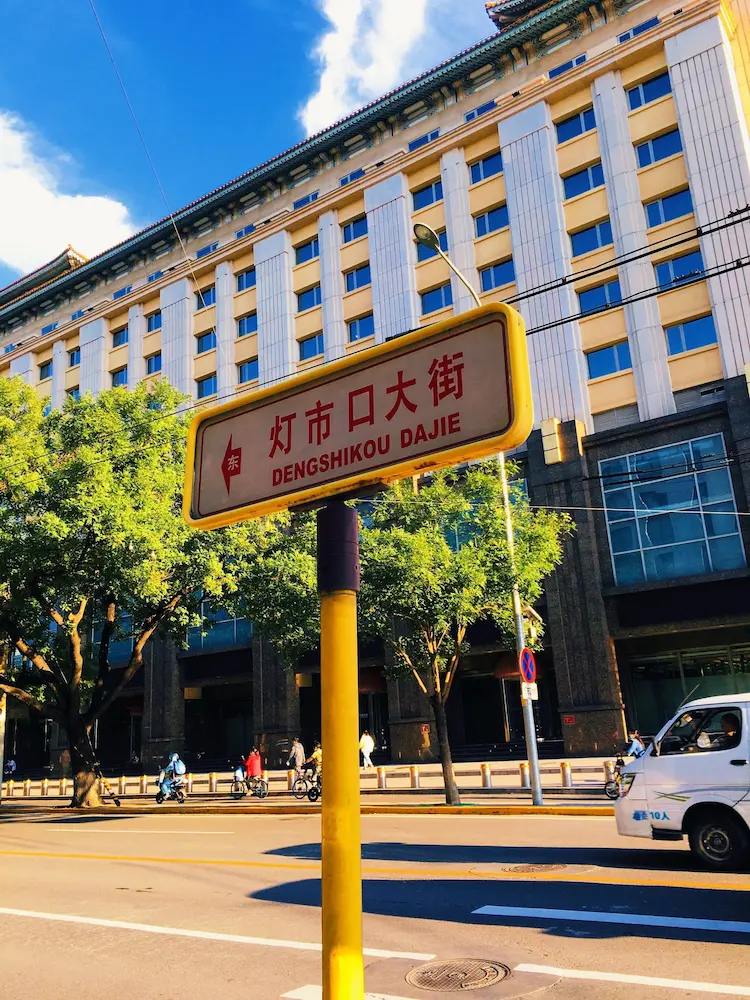
- Line 5: Get off at “Dengshikou Station.” It’s within walking distance and is closer to the northern section of the street.
Tip: You can use your phone to pay for the Beijing subway (via the “Ride Code” in Alipay or WeChat) or purchase a single-ride ticket. Subway stations have English signage.
Bus
Take Buses 1, 52, 103, 141, etc., and get off at “Wangfujing Station.” The bus will announce stop names in both Chinese and English.
Driving or Taking a Taxi
If you must drive, you can park at the parking lots of Oriental New World, Wangfujing Central, or In88 Yintai. However, Wangfujing is in the city center, so traffic jams are common during the day, and parking fees are not cheap (about 10–15 yuan/hour, approximately $1.40–$2). We strongly recommend taking the subway.
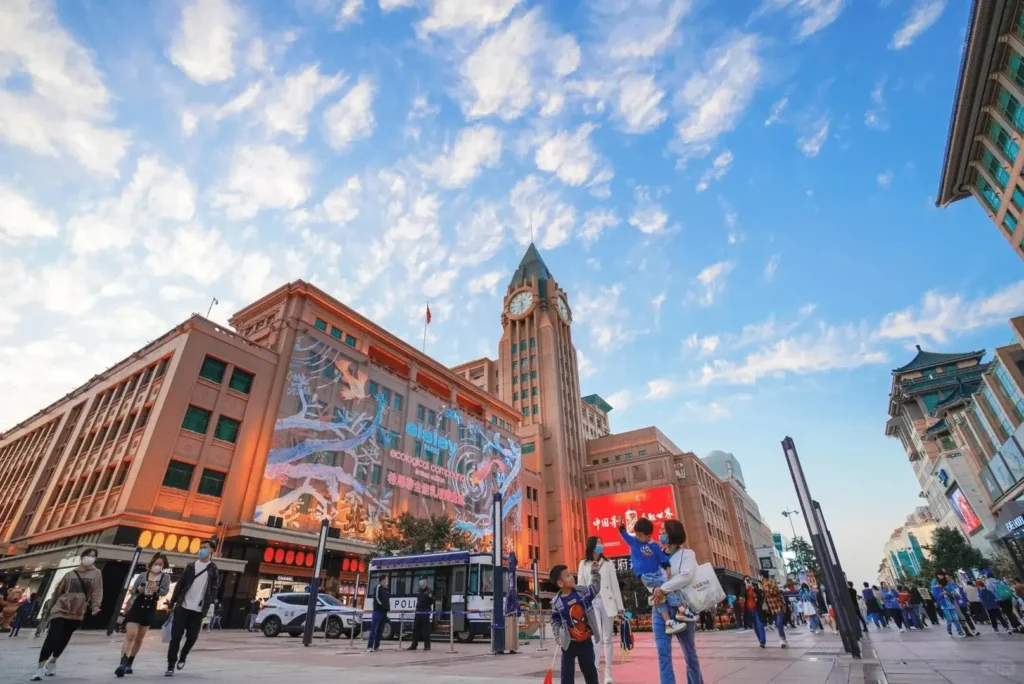
When is the best time to visit?
- Avoid weekends and holidays: It gets extremely crowded. It’s best to arrive between 9:30 and 10:00 a.m. on a weekday, when the streets are less crowded, and you won’t have to wait in line to take photos.
- Seasons: Spring (April–May) and fall (September–October) offer the most pleasant weather. It’s hot in summer, but there’s air conditioning indoors; it’s cold in winter, but you can enjoy hot pot.
- How long to spend: At least half a day to a full day. If you’re just visiting the main shopping malls and grabbing a bite to eat, 4–5 hours should be enough.
Where Is the “Well” in Wangfujing?
The name “Wangfujing” comes from two elements: “Wangfu” (princely mansions) and “jing”(well).
- During the Ming Dynasty (about 600 years ago), the emperor built many residences for princes here, so the street was called “Wangfu Street.”
- Later, a well was dug on the street, and its water was exceptionally sweet (much of Beijing’s well water is bitter). In 1905, the street was officially renamed “Wangfujing.”
- The well later disappeared, but it was rediscovered during road construction in 1998. Today, you can see a manhole cover surrounded by a chain on the street—that marks the location of the ancient well.
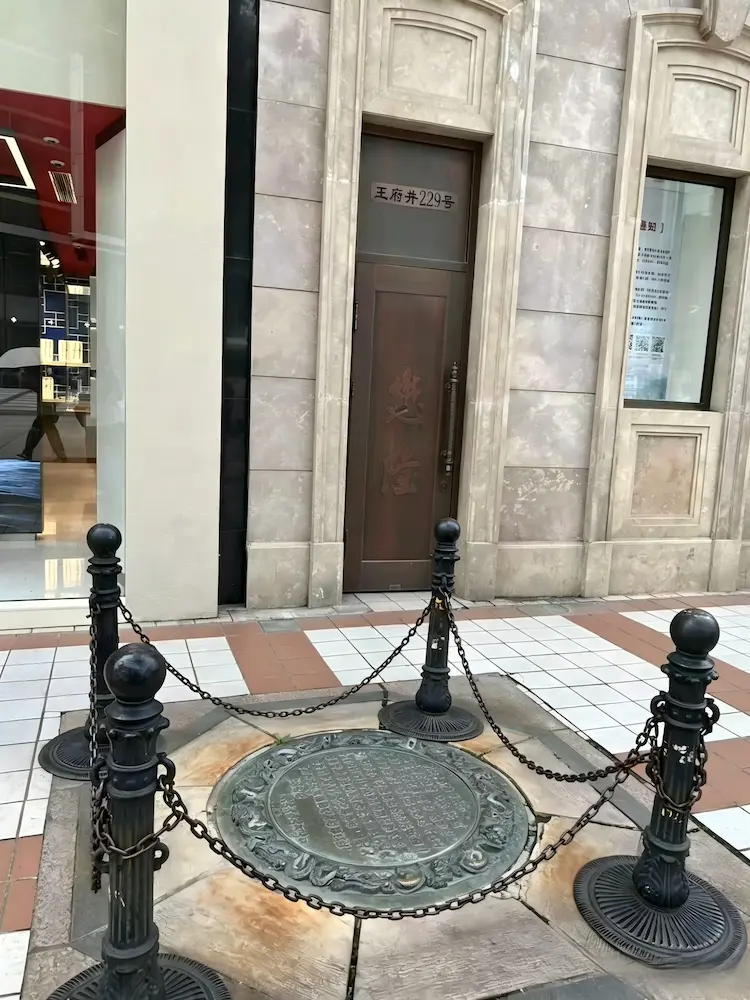
Cultural Tip: For the Chinese, a“well” represents the source of life. In the past, Beijingers relied on wells for their drinking water, and a well with sweet water was a precious resource.
Must-Visit Places
1. Time-Honored Shops (Century-Old Establishments)—Experience Old Beijing’s Business Wisdom
These shops have been in business for at least several decades to over a century and sell very traditional goods.
| Store Name | What They Sell | Highlights | Address |
| Rui Fu Xiang | Silk, cheongsams | Old ledgers dating back to 1905; custom-made cheongsams available | South Section of Pedestrian Street |
| Neilian Sheng | Handmade cloth shoes | Try on the “Puyi style” (the same style worn by the last emperor of the Qing Dynasty). The soles are very soft | On the pedestrian street |
| Sheng Xifu | Hats | Cashmere hats for winter, straw hats for summer | On the pedestrian street |
| Wu Yutai | Tea, tea-flavored ice cream | Must-buy: Matcha/Jasmine tea ice cream (10–20 yuan, approx. $1.40–$2.80); the line is long but worth it | No. 186 Wangfujing Street |
| Tong Ren Tang | Traditional Chinese Medicine | The second floor features a plaque inscribed by Sun Yat-sen (1912) | On the pedestrian street |
Cultural Insight: These time-honored brands have endured for so long because Chinese people value “genuine quality ”and“ honesty toward all, young and old.” The “Centuries of Tradition” signs you see hanging in these shops reflect exactly that.
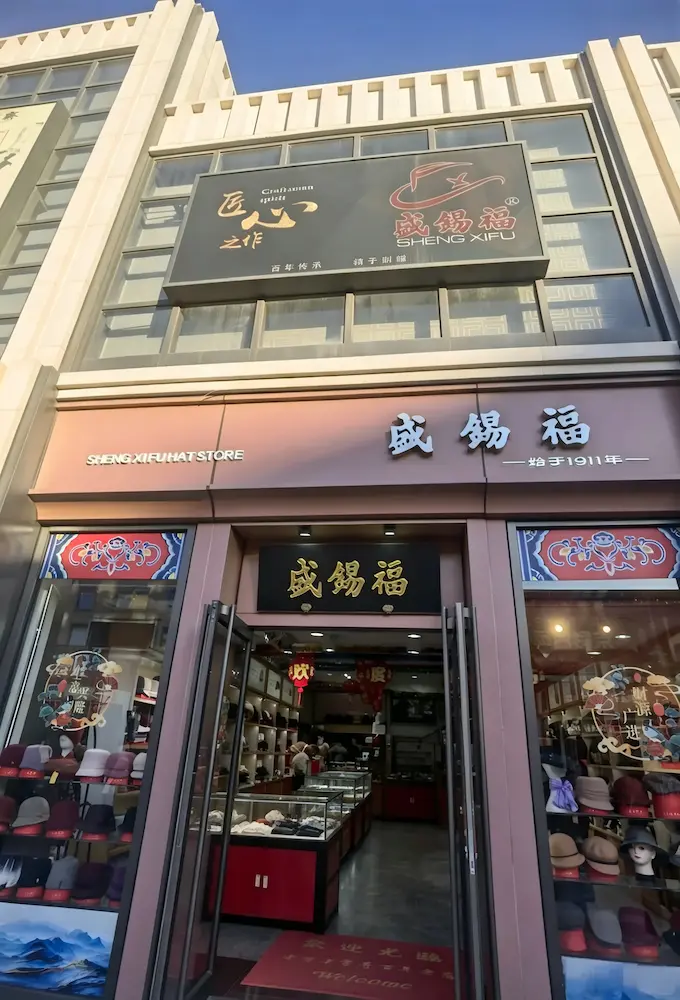
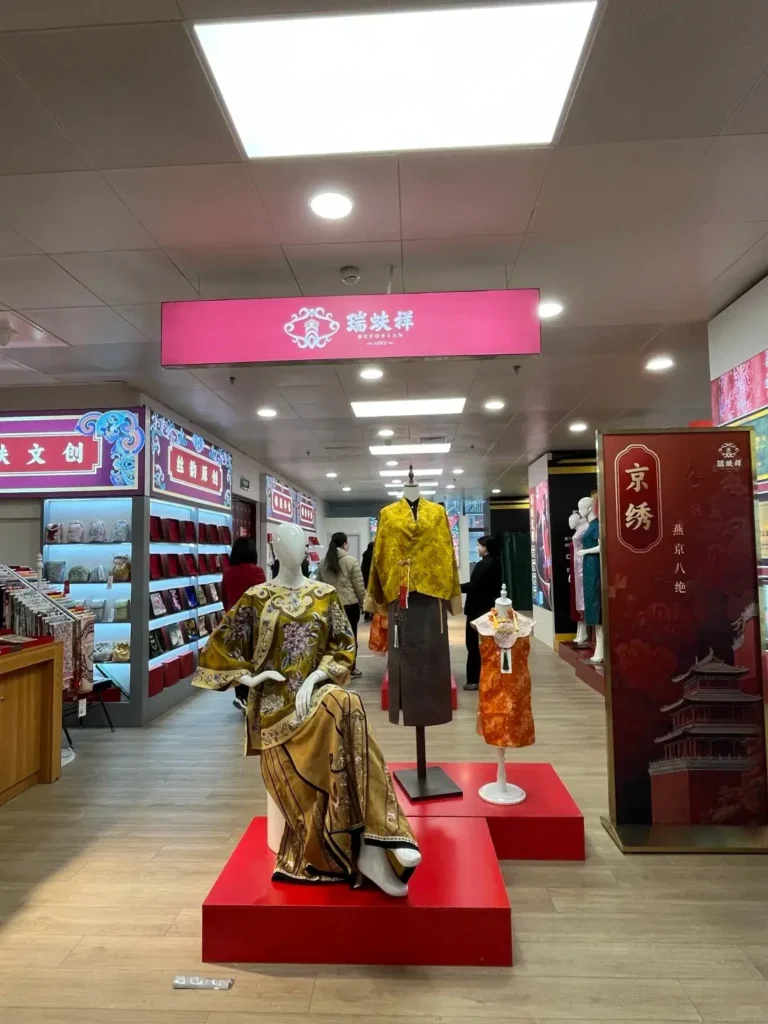
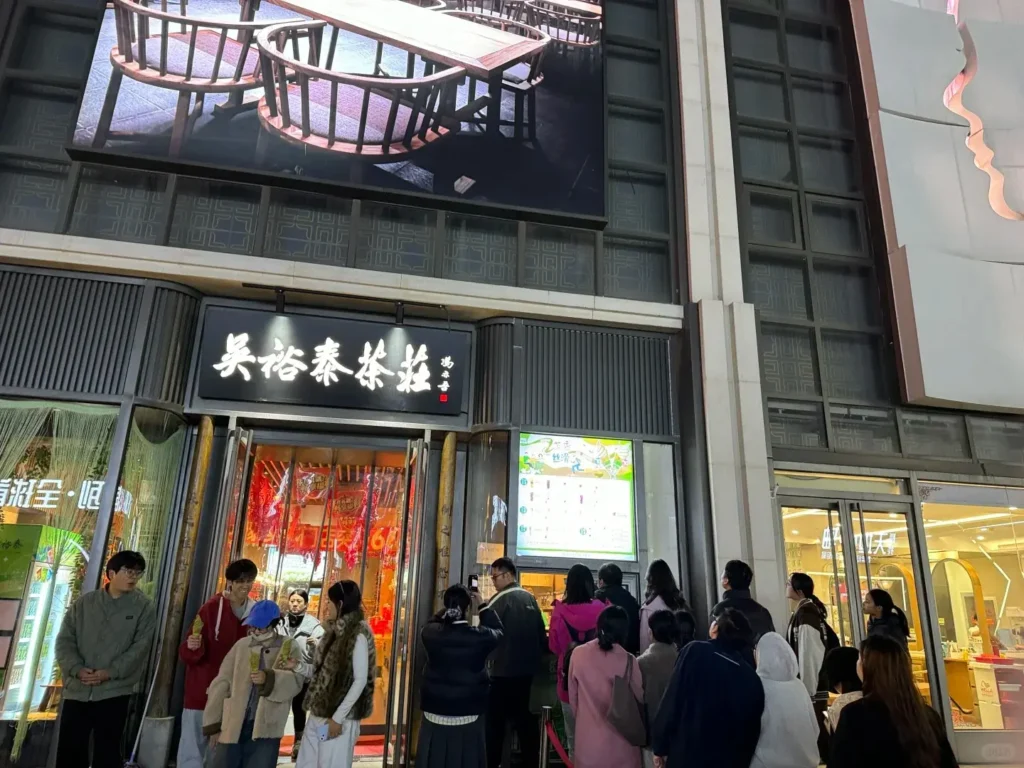
Itinerary Tip: Although Wangfujing is home to historic brands like Rui Fu Xiang and Nei Lian Sheng, their most historic flagship stores are actually in Qianmen’s Dashilan, where magnificent old Baroque-style buildings still stand. For a deeper look, check out my [In-Depth Guide to Dashilan’s 500-Year-Old Commercial Street].
2. Major Shopping Malls
| Mall | Features | Ideal for | Subway Exit |
| Wangfujing Central | High-end, featuring luxury brands like Gucci and Prada | Those looking to buy designer brands | Line 8, Wangfujing Station |
| Beijing APM | Young, trendy brands (ZARA, UNIQLO) open late | Young people aged 18–35 | Exit B, Jinyu Hutong Station (Line 8) |
| Oriental Plaza | Large mall with a long corridor connecting the subway and the pedestrian street | A place to escape the heat in summer and stay warm in winter | Wangfujing Station (Line 1) |
| Wangfujing Department Store | China’s first department store (opened in 1955), with a nostalgic vibe | For those looking to take photos or experience old-school Beijing | In the middle of the pedestrian street |
| Joy City | Newly opened in 2023, featuring “Chinese-inspired trends ” and anime/manga culture. A new hotspot for young people: You’ll spot local cosplayers here, and the shops are packed with Pop Mart blind boxes and anime merchandise | Young people, anime fans, subculture enthusiasts | Exit E1 of Wangfujing Station on Line 8 |
| In88 Yintai | Home to Beijing’s largest LEGO flagship store and an ACG (Anime, Comics, Games) paradise, with countless anime-themed shops | LEGO fans, anime fans | Northern section of the pedestrian street |
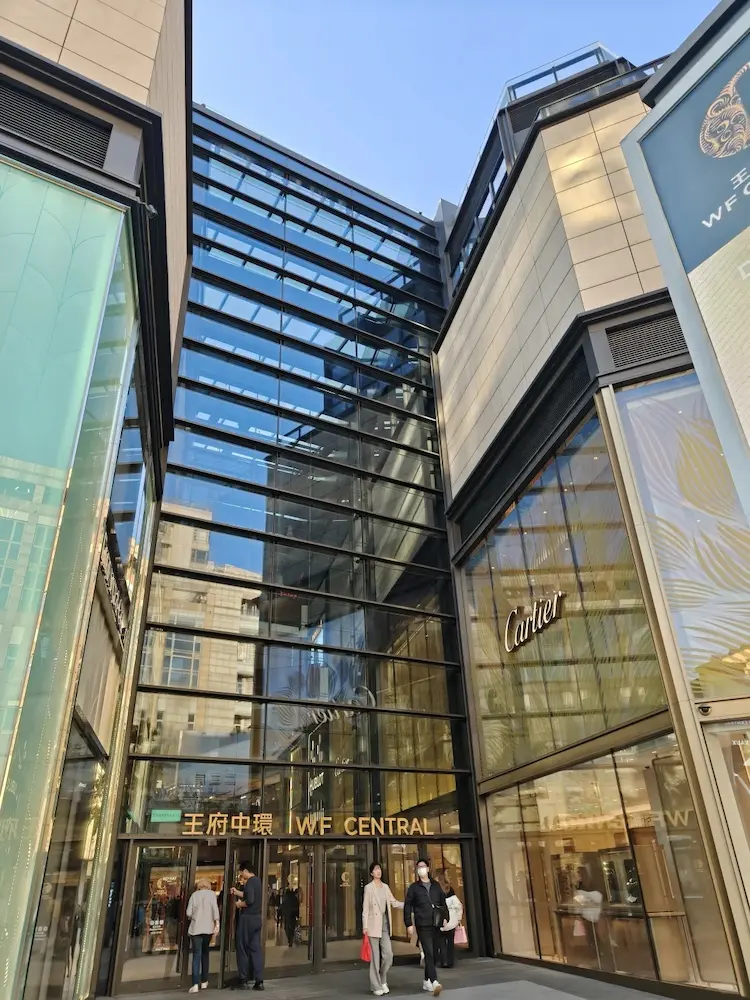
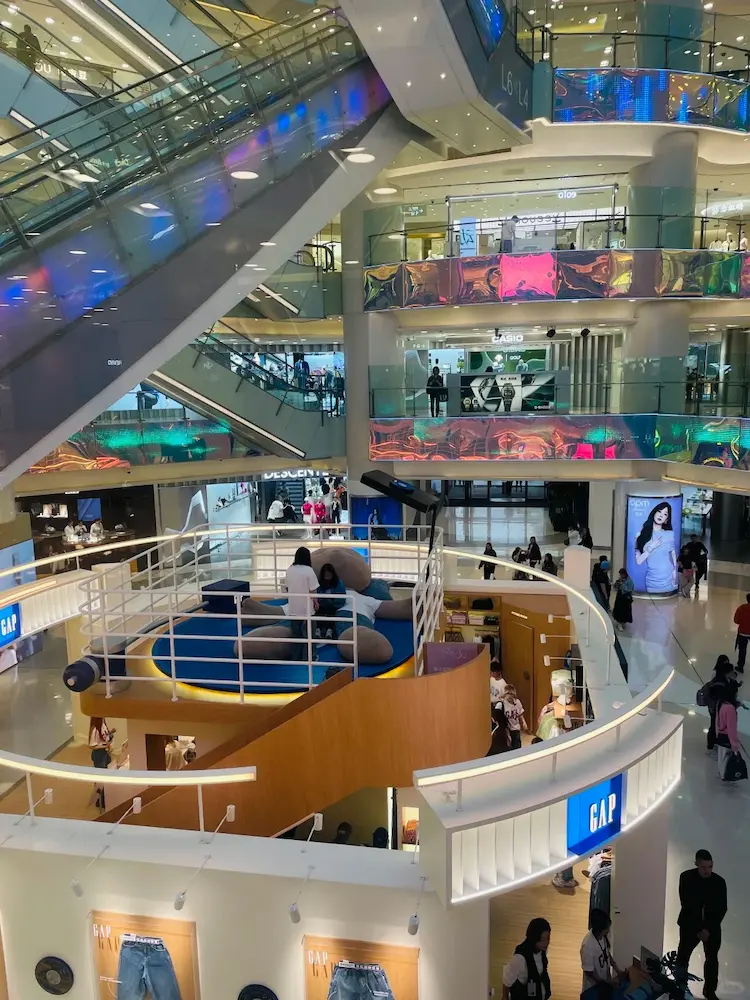
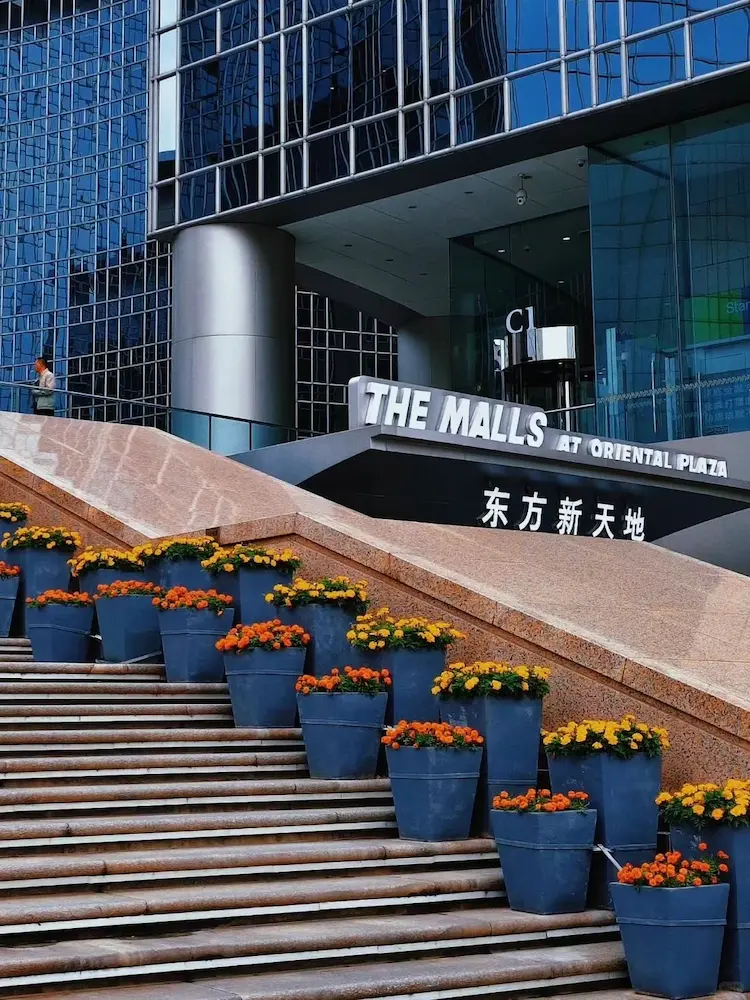
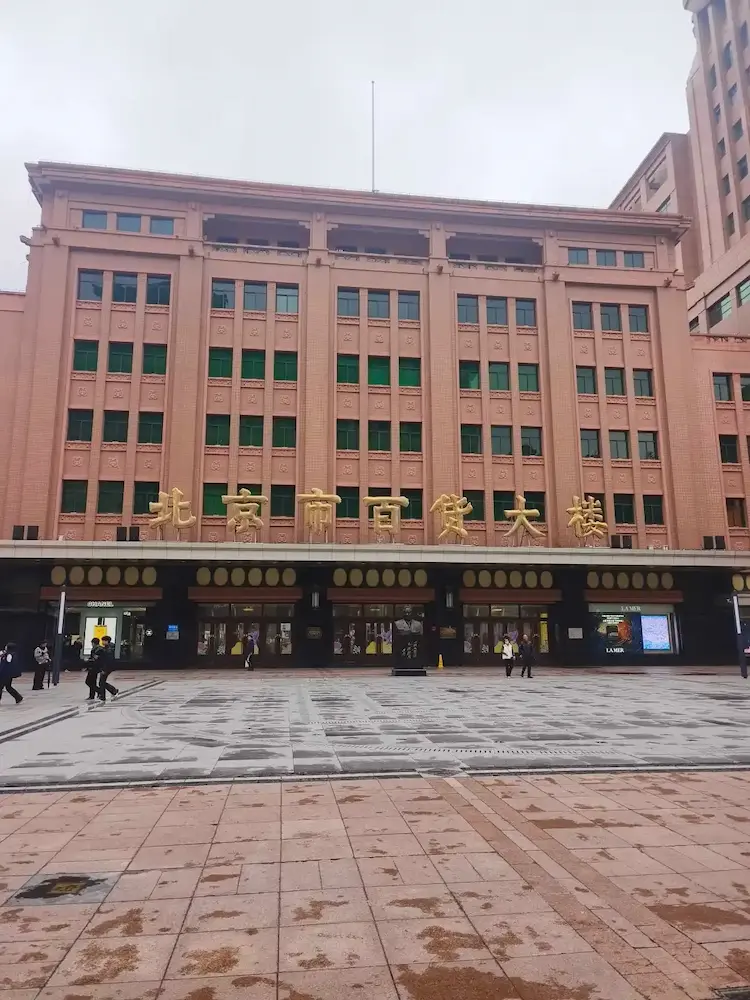
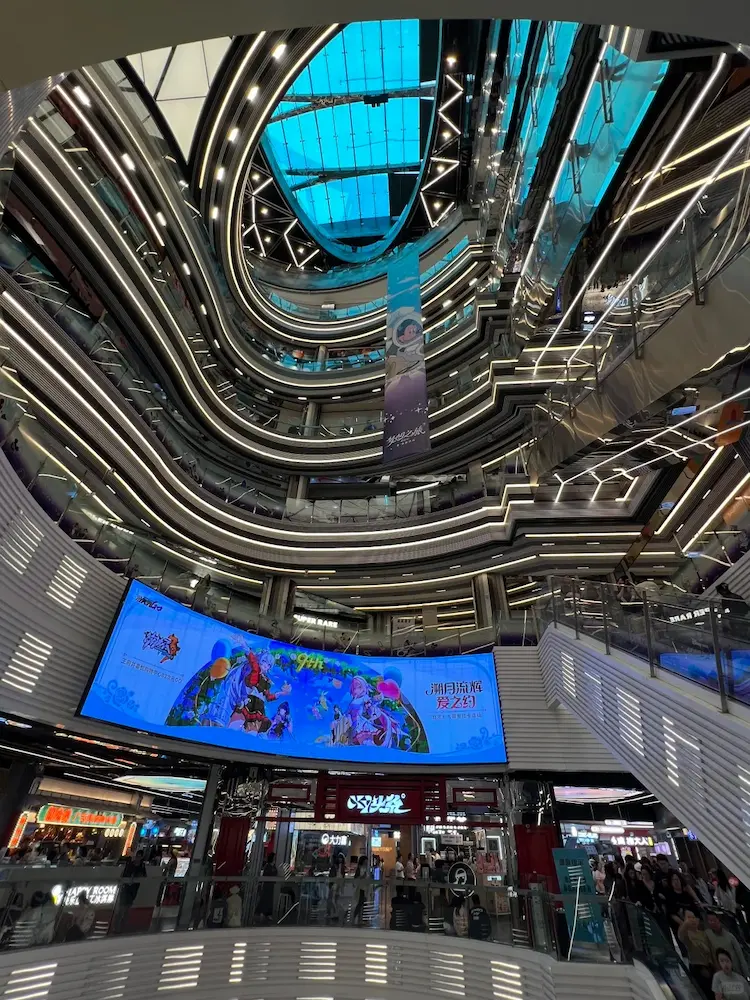
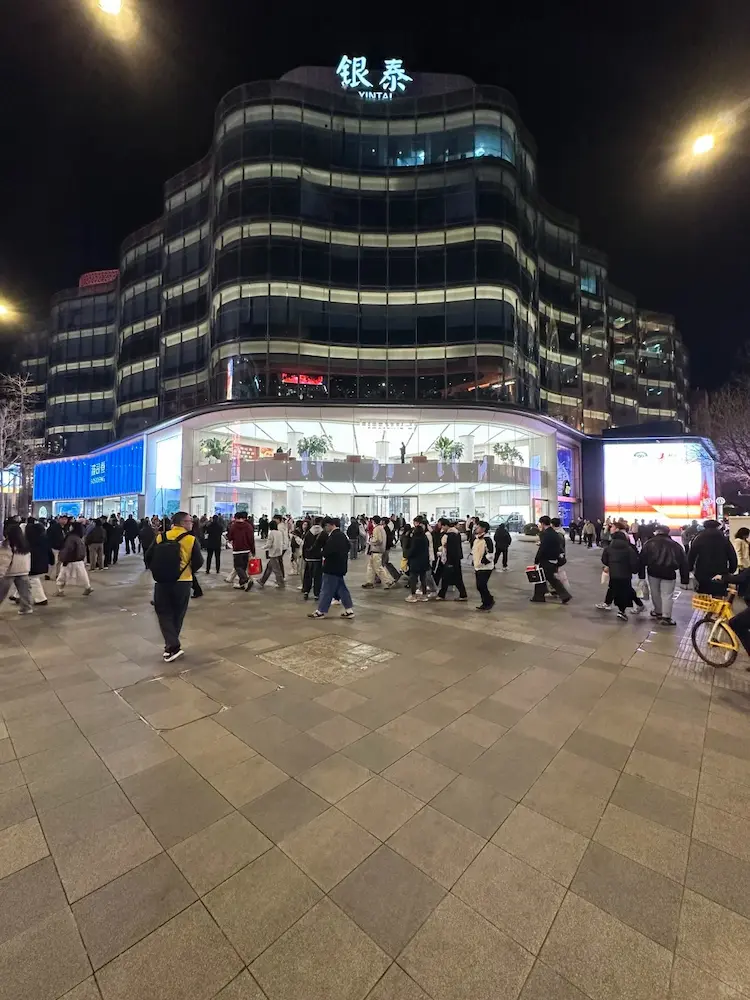
Trend Alert: Wangfujing is no longer just home to century-old shops. Xiyue and in88 have become hotspots for Beijing’s young anime and manga enthusiasts. If you’re an anime fan, you’re sure to love it here.
3. Two Must-Visit “Immersive Experiences.”
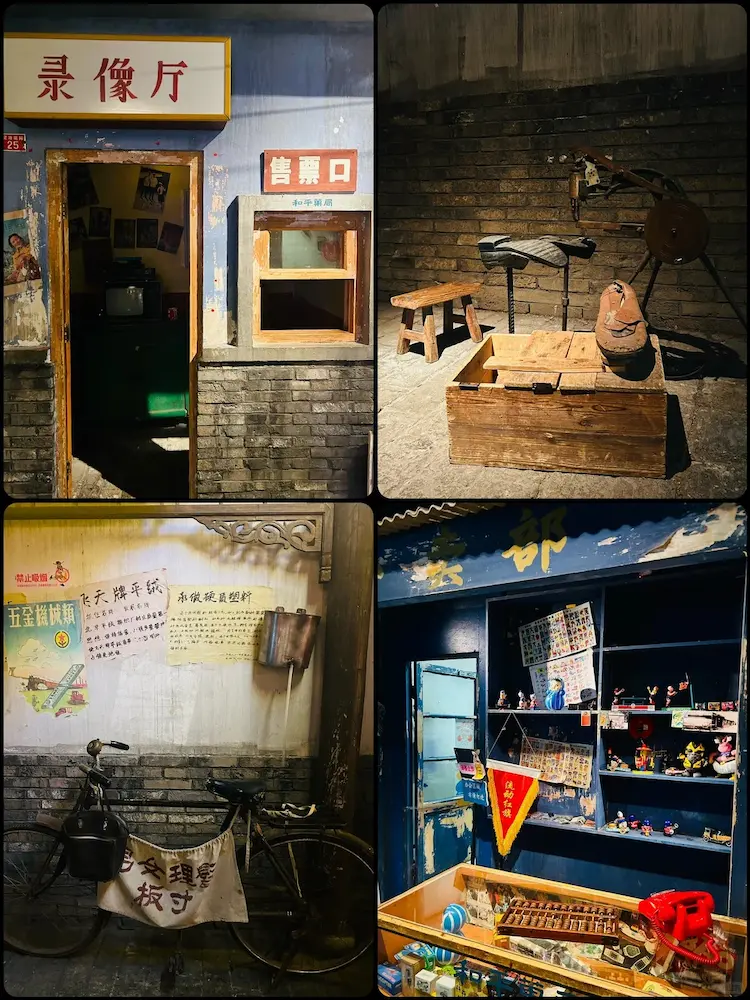
Heping Guoju (B2 level of the Department Store)
- What it is: A 2,400-square-meter space that perfectly recreates 1980s Old Beijing, featuring hutongs, neighborhood stores, green-painted trains, and old public bathhouses.
- What to do: Take photos, check out vintage bicycles, birdcages, and honeycomb coal briquettes. You can step inside a “Dongfeng 1957” train car to sit and relax.
- Admission: 30 yuan (approx. $4.20) for adults; 15 yuan (approx. $2.10) for children and seniors (half price). Tickets can be purchased on-site; no reservation required.
- Cultural context: These scenes evoke childhood memories for many Chinese people. For example, “honeycomb coal” was used for heating in the winter, and the “28-inch bicycle” was the vehicle fathers used to take their children to and from school.
Hamleys Toy Store (1st to 3rd floors of the department store)
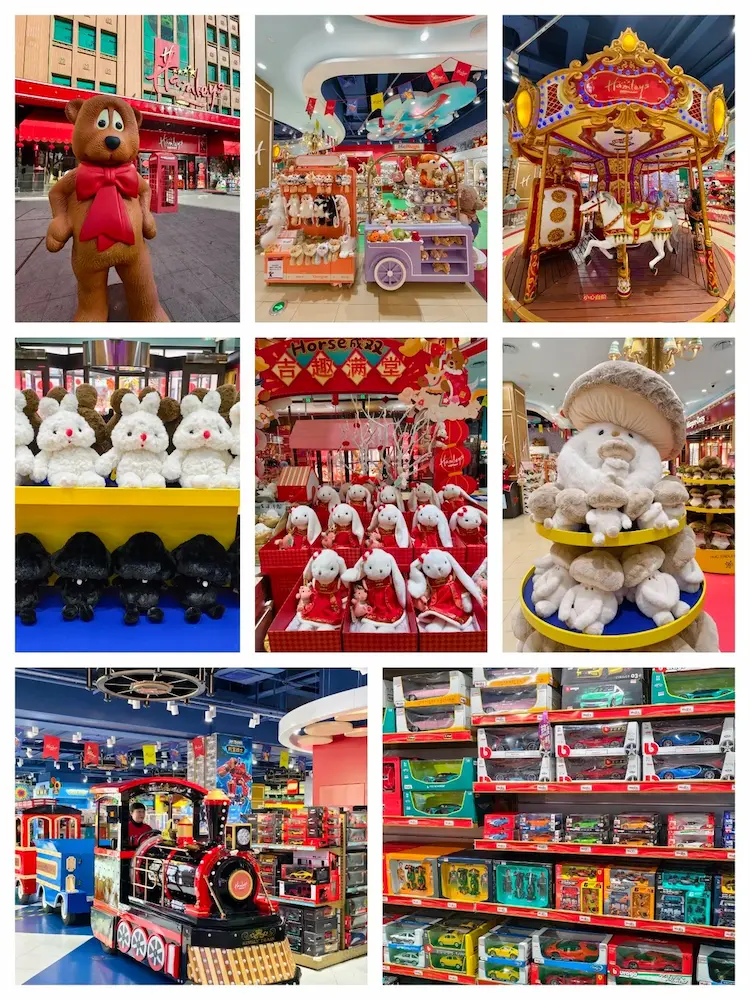
- What it is: A British toy store with a 260-year history; the world’s largest branch is located here.
- Highlights: Feel free to play with LEGO sets; the 1st floor features plush toys, the 2nd floor has toys for boys, and the 3rd floor offers toys for toddlers.
- Admission: Free entry. Toy prices range from tens to hundreds of yuan.
- Best for: Families with children (be prepared for your kids not to want to leave).
4. Cultural Attractions (Free and Worth Seeing)
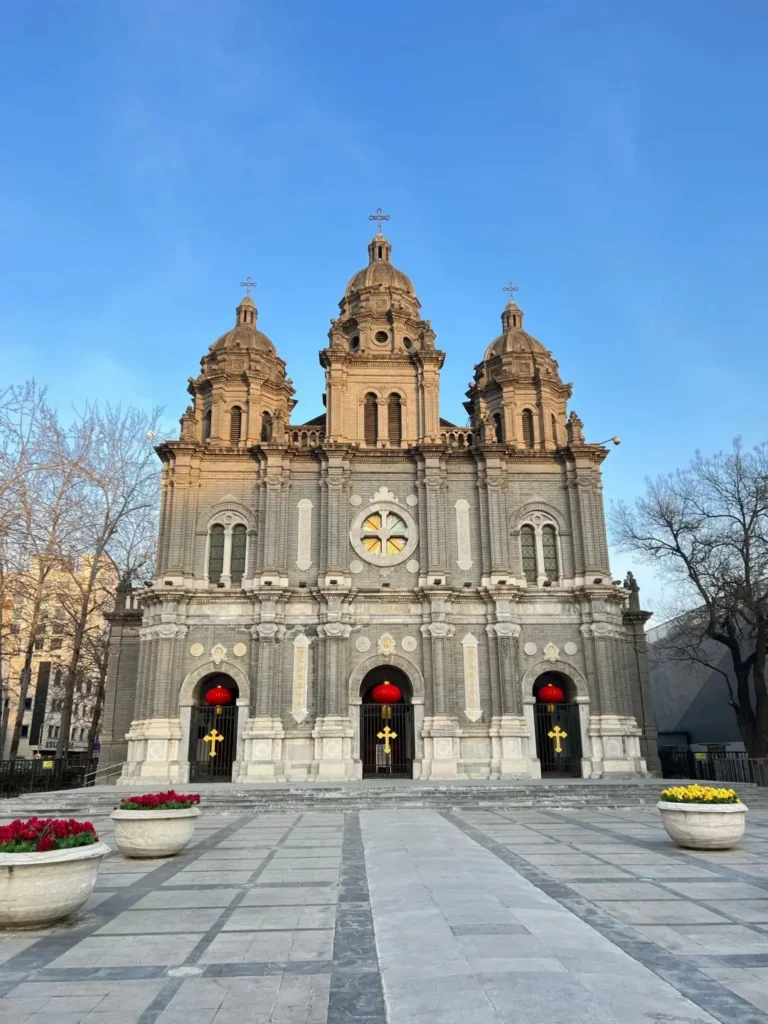
- Wangfujing Church (St. Joseph’s Church, also known as Dongtang): A Romanesque-style building rebuilt in 1904, featuring gray brick and stained glass. It’s especially beautiful when lit up at night. Free admission. Photography is allowed.
- Capital Theatre: Home to the Beijing People’s Art Theatre. The first floor houses a theater, a bookstore, and the Cao Yu Memorial Hall (Cao Yu is China’s most famous playwright). Admission is free, but tickets are required for performances.
- China Guardian Art Center: An auction house and museum. The rooftop terrace offers a view of the northeast corner tower of the Forbidden City. It occasionally hosts exhibitions of authentic ancient calligraphy and paintings. Admission varies, typically between 50–150 yuan (approx. $7–$21).
- National Art Museum of China: Free admission (exchange your passport for a ticket). The museum’s crown jewel is Jiang Zhaohua’s The Displaced People. English-speaking volunteer guides are available on weekends.
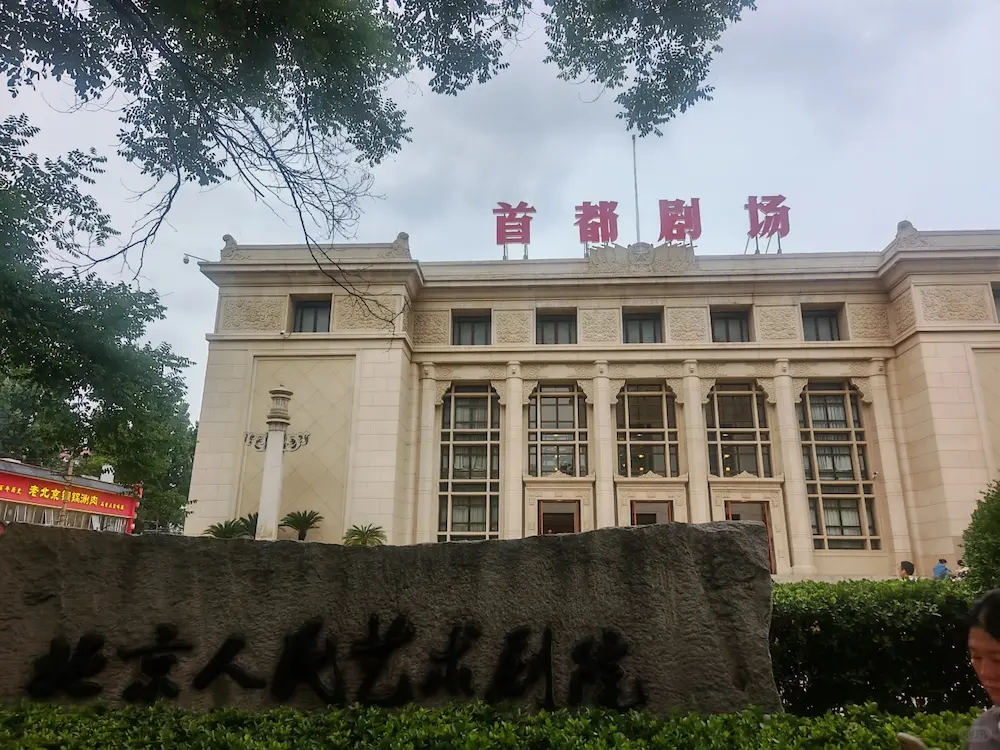
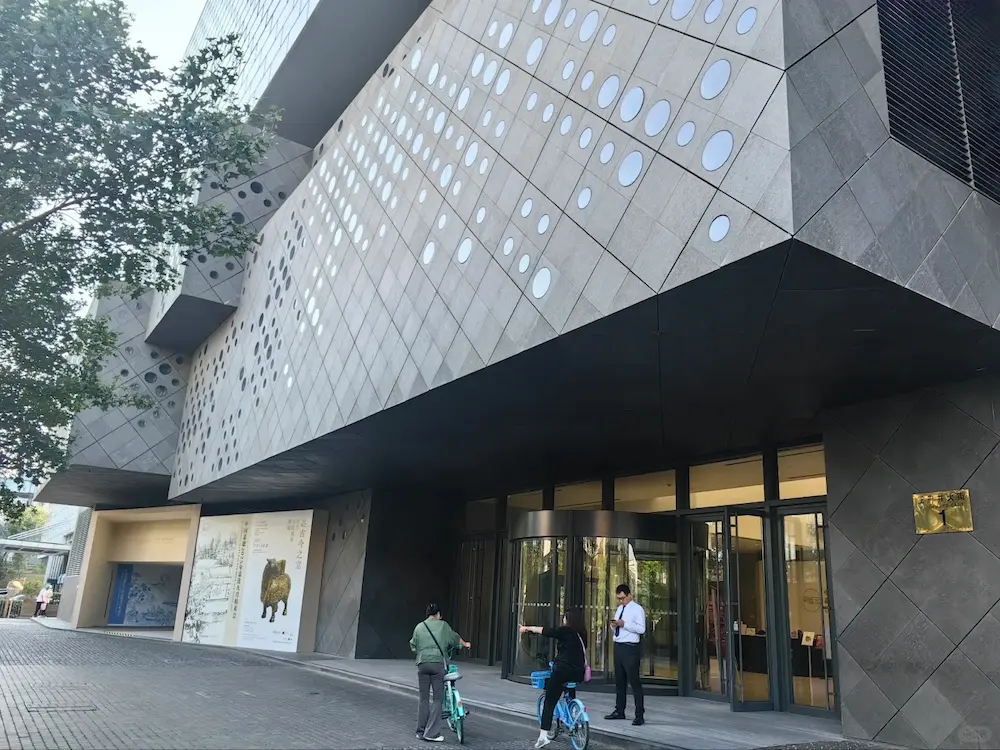
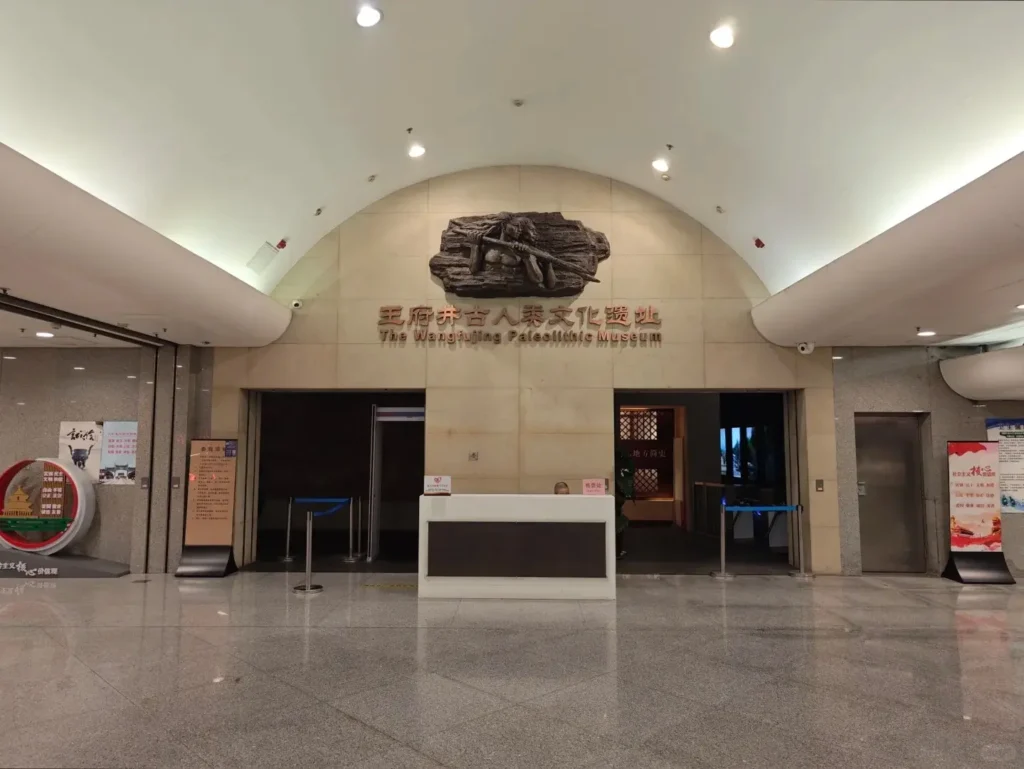
Hidden Gem: Beijing Wangfujing Paleoanthropological Site Museum
- Location: Right on the third basement level of Oriental Plaza! You read that right—hidden beneath this luxury shopping mall lies a 25,000-year-old archaeological site showcasing human life from the past.
- Highlights: Through the glass floor, you can see primitive hearths and stone tools. Look up, and you’ll see luxury boutiques; look down, and you’re in the Paleolithic era—this sense of temporal dissonance is unique in all of Beijing.
- Admission: 10 yuan (about $1.40). It’s tiny, but incredibly authentic. Many locals don’t even know it exists.
- How to get there: Enter Oriental Plaza, find the elevator to the basement, and follow the signs for “Paleolithic Site.”
What to Eat in Wangfujing
Peking Duck (A must-try when visiting Beijing)
| Restaurant Name | Features | Price per Person | Address | Tips for Waiting in Line |
| Siji Minfu (Dengshikou Branch) | The duck skin is as crispy as glass; eat it dipped in granulated sugar. Free duck bone soup. Note: There was a previous online rumor claiming the price is 53 yuan—that is absolutely impossible | 150–180 yuan (approx. $21–$25) | 32 Dengshikou West Street | Pro-tip: If you want to eat lunch, start queuing at 10:30 AM; otherwise, expect a 2-hour wait |
| Quanjude | The original pioneer of oven-roasted duck, with over 150 years of history | 150–200 RMB (approx. $21–$28) | On Wangfujing Street | Crowded with tourists, but offers a strong sense of tradition |
| Xiao Diao Li Tang (Yintai in88 Branch) | Traditional Chinese decor; free traditional costume rentals for photos. The signature pear soup is simmered for 6 hours, and the jasmine-scented roast duck is fragrant | 100–120 RMB (US$14–17) | Inside Yintai in88 Mall | Relatively quiet, perfect for photos |
Old Beijing Shabu-Shabu (Copper Pot Hot Pot)
- Donglaishun: A century-old establishment known for its paper-thin slices of lamb, served with sesame paste. Price per person: 100–150 yuan ($14–21).
- Qingzhen Tianyishun: Established in 1931. Price per person: 80–120 yuan ($11–17).
Snacks and Fast Food
- Old Beijing-style Zha Jiang Mian: Noodles topped with Zha Jiang sauce and shredded cucumber. 25–40 yuan ($3.50–$5.60).
- Candied Haws on a Stick: Haws coated in sugar. 10–15 yuan ($1.40–$2.10).
- Wu Yutai Ice Cream: Tea flavors (matcha/jasmine/hojicha). 10–20 yuan (US$1.4–2.8).
Netizen review: “This is literally the best $2 tea ice cream you’ll ever have in China. Get the Jasmine tea flavor—it’s an absolute game-changer.”
- Ziguangyuan Milk Skin Yogurt: A rich blend of cheese and yogurt. 8–15 yuan (US$1.1–2.1).
- Wangfujing Snack Street: Over 2,000 square meters, selling lamb skewers, braised tripe, fried scorpions, and more.
⚠Important Warning:
Items like “fried scorpions” and “fried seahorses” on the snack street are purely tourist curiosities—they are absolutely not part of the daily diet for local Beijingers!
It’s fine to try one or two for a photo to post on social media, but never treat them as a proper meal.
Daily Budget Guide (per person)
- Snacks only + visiting free attractions: 100–150 yuan (US$14–21)
- One meal of Peking duck + shopping for small items at malls: 300–500 yuan (US$42–70)
- Two full meals + buying LEGO/anime merchandise: 800 yuan or more (US$112 or more)
Half-Day Itinerary (No detours; south to north)
1. 9:30 AM: Exit B1 at Wangfujing Station on Metro Line 1 → Head to Wu Yutai to buy matcha ice cream, then stroll around while enjoying it.
2. 10:00 AM: Visit historic shops: Rui Fu Xiang → Nei Lian Sheng → Sheng Xi Fu → Tong Ren Tang.
3. 11:00 AM: Enter the Department Store: First, go to the B2 level at Heping Guoju to take vintage-style photos (about 40 minutes), then browse Hamleys toy store.
4. 12:30 PM Lunch: Head to the food court on Level B1 of Beijing APM—plenty of options, fast and affordable. Or go straight to Siji Minfu (remember to line up by 10:30 AM).
5. 1:30 PM: Walk north to see the Wangfujing Church (you can go inside and sit for a while).
6. 2:00 PM: Explore Yintai in 88: the LEGO flagship store (the storefront features the Forbidden City’s roofline built from 2.2 million LEGO bricks) + anime and manga merchandise shops.
7. 3:30 PM: If you still have energy, head to the China Guardian Art Center or the National Art Museum of China (a 15-minute walk). Alternatively, go to the basement of Oriental Plaza to visit the Museum of Ancient Human Remains.
8. 5:00 PM: Return to the pedestrian street, wait for nightfall to enjoy the night view, grab some late-night snacks at the food street (just try one fried scorpion), then take the subway home.
Practical Tips
- Footwear: The streets are cobblestoned, so be sure to wear flat shoes. Avoid high heels.
- Payment Methods: Almost all stores accept WeChat Pay and Alipay. Foreign visitors can link their credit cards in advance or bring a small amount of cash (50–100 yuan as a backup). Some street vendors do not accept foreign credit cards.
- English-language services: Large shopping malls and major restaurants like Quanjude and Siji Minfu offer English menus or have English-speaking staff. Street stalls may not be available, so consider using a translation app on your phone.
- Restrooms: Every shopping mall has clean, free restrooms. There are also public restrooms along the streets, but they tend to be older.
- Reservation Links: No reservations are required for places like Heping Guoju, churches, or museums.
If you plan to visit the Forbidden City (a 20-minute walk west from the south exit of Wangfujing), you must book in advance on the official website: https://en.dpm.org.cn (an English interface is available). Admission is 60 yuan (US$8.40).
Nearby places to visit:
- Tiananmen Square and the Forbidden City: Walk west from the south exit of Wangfujing for one stop (about 15–20 minutes).
- Dongjiaomin Alley: A 5-minute walk west from the South Exit. This former embassy district features many historic Western-style buildings.
- Lao’s Former Residence: A 10–15-minute walk north from APM. A quiet courtyard house. Free admission; on-site registration required.
Wangfujing is more than just a shopping street. Above ground, you’ll find centuries-old manhole covers; underground, there’s an ancient human site dating back over 20,000 years (admission is 10 yuan—the best value time-travel experience in all of Beijing).
At the Peace Fruit Bureau, you can get a glimpse of the hutong life Chinese people experienced as children, and for less than $2, you can enjoy a jasmine tea ice cream that everyone will remember forever.
Stroll down this 1,818-meter-long street, with cobblestones beneath your feet and neon lights and vintage shop signs overhead—this is the most authentic side of Beijing: ancient yet youthful, traditional yet trendy.
Enjoy your visit!
Hi, thank you for your post! I have 2 questions:
1. May I know which mall has VR game experience for teenagers?
2. Is it possible to book Siji Mingfu ahead of time? We intend to go on a Monday for dinner
Appreciate it!
Thank you for your message! In response to your two questions, I’ve compiled the following information, which I hope will be helpful:
VR Experiences: I recommend visiting the Yiyun Digital Art Center on the 4th and 5th floors of the Beijing Department Store (which offers highly interactive tech experiences), as well as the Wangfujing Xiyue Shopping Center (which features immersive attractions like “Journey Through China” and “The Great Qin Dynasty”), both of which are well-suited for teenagers.
Siji Minfu Reservations: You can make reservations by phone up to 7 days in advance—
Dengshikou Branch: 010-65135141
Dong’anmen Branch: 010-65238571
We recommend booking as early as possible, as Monday evenings tend to be quite busy.