Forbidden City Visitor Guide: Tickets · Hours · Route Planning · Insider Tips (Updated 2026)
> Last Updated: July, 2026
The Forbidden City has more than 9,000 rooms. If you stayed in one room per night, it would take you 24 years to stay in them all.
But you don’t need to see them all. There are probably fewer than 100 rooms that are truly worth seeing.
As a local blogger who’s lived in Beijing for ten years, I’ve accompanied out-of-town friends to the Forbidden City at least twenty times.
The first few times, I’d just follow the central axis—the Hall of Supreme Harmony, the Palace of Heavenly Purity, the Imperial Garden, and out through the Shenwu Gate—thinking, “The Forbidden City is just that.”
It wasn’t until one day, when I spent an entire day immersed in the Treasure Hall, admiring the empresses’ phoenix crowns and Emperor Qianlong’s gardens, that I realized: half of the Forbidden City’s true treasures are hidden in areas that require an additional ticket.
This article won’t wear you out. I’ll tell you which sights are must-sees, which ones you can skip, and which details other guides don’t mention. One article to plan your entire Forbidden City trip.
Table of Contents
Part 1: Understanding the Forbidden City for a More Enriching Visit
Before stepping into the Forbidden City, taking 10 minutes to understand its “soul” will make your visit ten times more meaningful.
What exactly is the Forbidden City?
The Forbidden City, also known as the Imperial Palace, was the residence and administrative center of the emperors of the Ming and Qing dynasties.
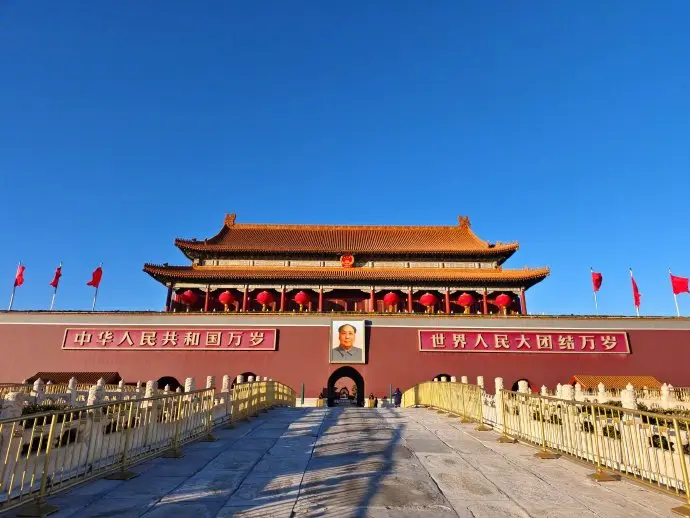
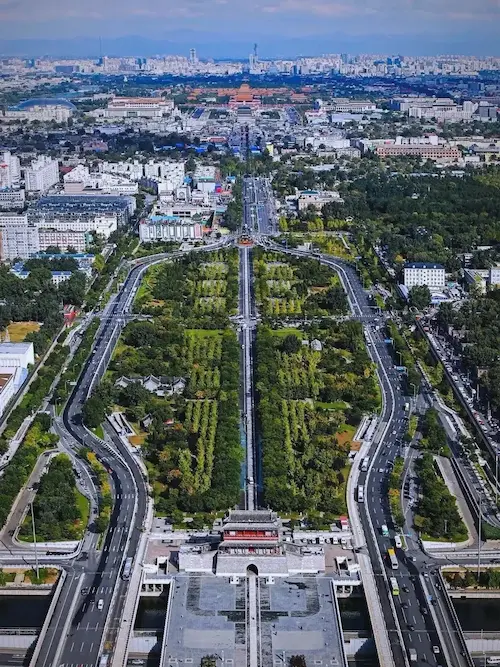
It is located in the heart of Beijing, adjacent to Jingshan Park to the north and Tiananmen Square and the Tiananmen Gate Tower to the south.
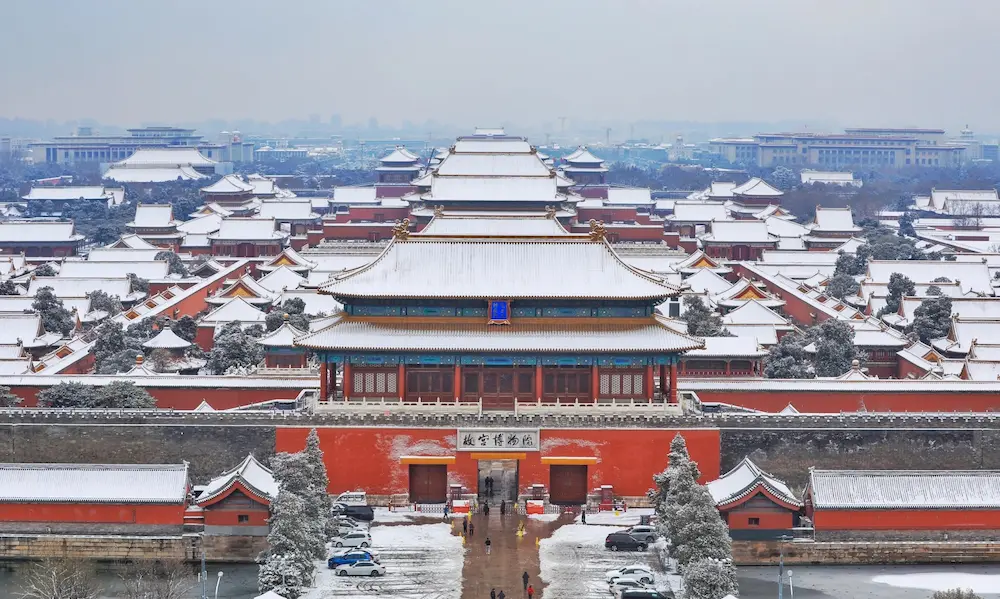
A Little-Known Fact That Even Tour Guides Might Not Know
The Forbidden City covers an area of 720,000 square meters and contains more than 70 palaces of various sizes, with over 9,000 rooms.
But you may not know this: the largest palace in the Forbidden City, the Hall of Supreme Harmony, was not actually where the emperor held his daily court—it was reserved only for the most solemn ceremonies, such as the emperor’s coronation, wedding, and birthday celebrations.
The emperor primarily handled state affairs in the Yangxin Hall. So if you just visit the Hall of Supreme Harmony and leave, it’s like seeing only the“surface” of the Forbidden City and missing its“substance.”
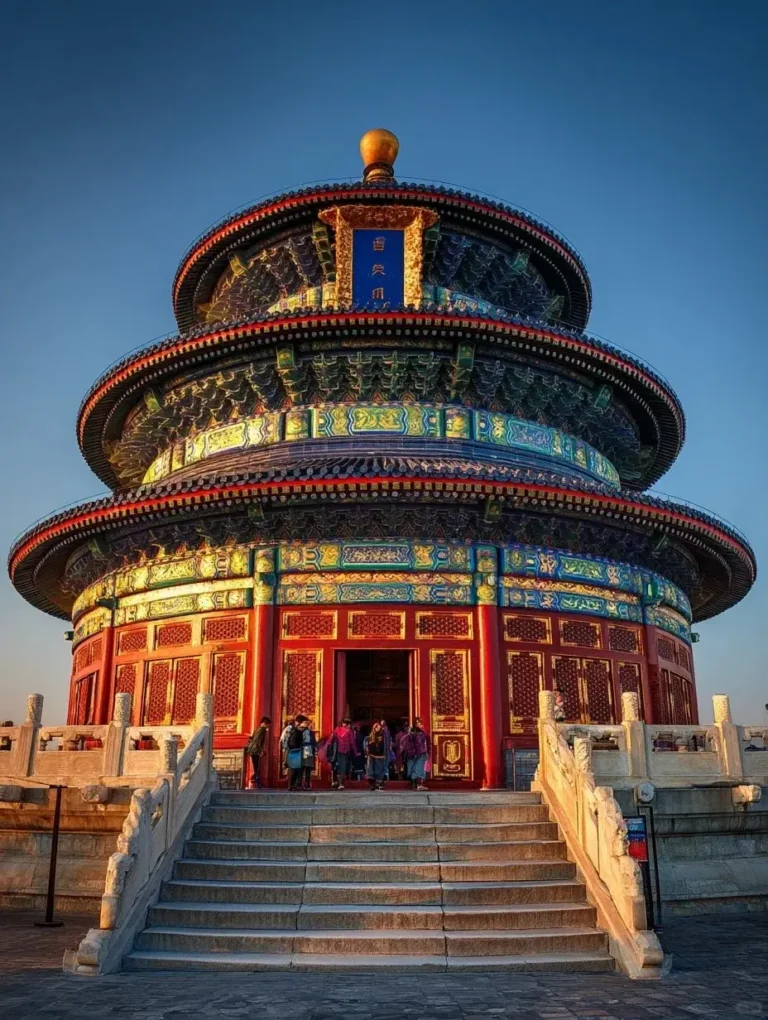
What’s the difference between the Forbidden City and the Temple of Heaven?
Many tourists plan to visit both the Forbidden City and the Temple of Heaven on the same day. Their atmospheres are completely different:
| Forbidden City | Temple of Heaven | |
| Function | The emperor’s residence and office | An altar for the emperor to communicate with Heaven |
| Atmosphere | Majestic, solemn, the center of power | Solemn yet infused with the vibrancy of everyday life |
| Layout | Central axis symmetry, square and orderly | “Heaven is round, Earth is square” |
| Surroundings | Adjacent to Tiananmen Gate and Jingshan Hill | Surrounded by old Beijing residential neighborhoods |
The Architectural “Code” of the Forbidden City
If you look closely, you’ll notice various glazed ceramic animal figurines on the roofs of the Forbidden City’s buildings.
There are 10 on the roof of the Hall of Supreme Harmony—the largest number among all ancient buildings in China—because ten is considered the“ultimate number,” symbolizing the supremacy of imperial power.
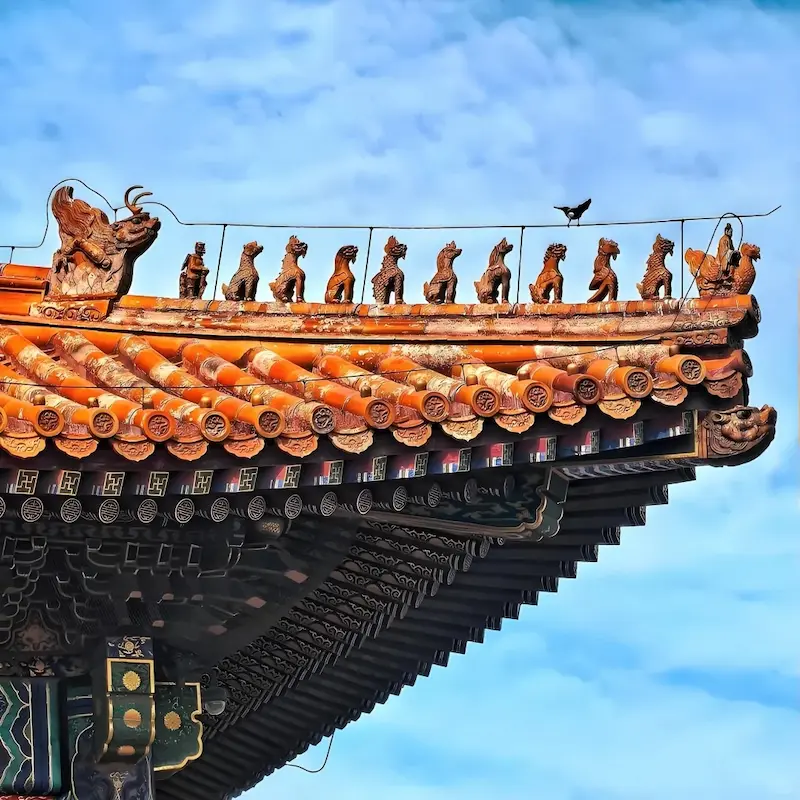
The number of ridge-top figurines on other palaces decreases in order of importance; the lower the rank of the building, the fewer there are.
Part 2: What to Know Before You Go (Tickets, Hours, Transportation)
Now that you have some background information, let’s look at how to plan your itinerary and choose the best way to explore the Forbidden City.
How to Choose a Ticket?
| Ticket Type | Price | What’s Included | Recommendations |
| General Admission | 60 yuan (peak season)/40 yuan (off-season) | Main areas of the Forbidden City (Central Axis + East and West Six Palaces) | Required for all visitors |
| Treasure Gallery | 10 yuan | Ninghu Palace Area (including the Qianlong Garden and Treasure Exhibition) | Highly recommended —half of the Forbidden City’s highlights are here |
| Clock and Watch Gallery | 10 yuan | Fengxian Hall (Clock and Watch Exhibition) | Worth a visit if interested, but not as good value as the Treasure Hall |
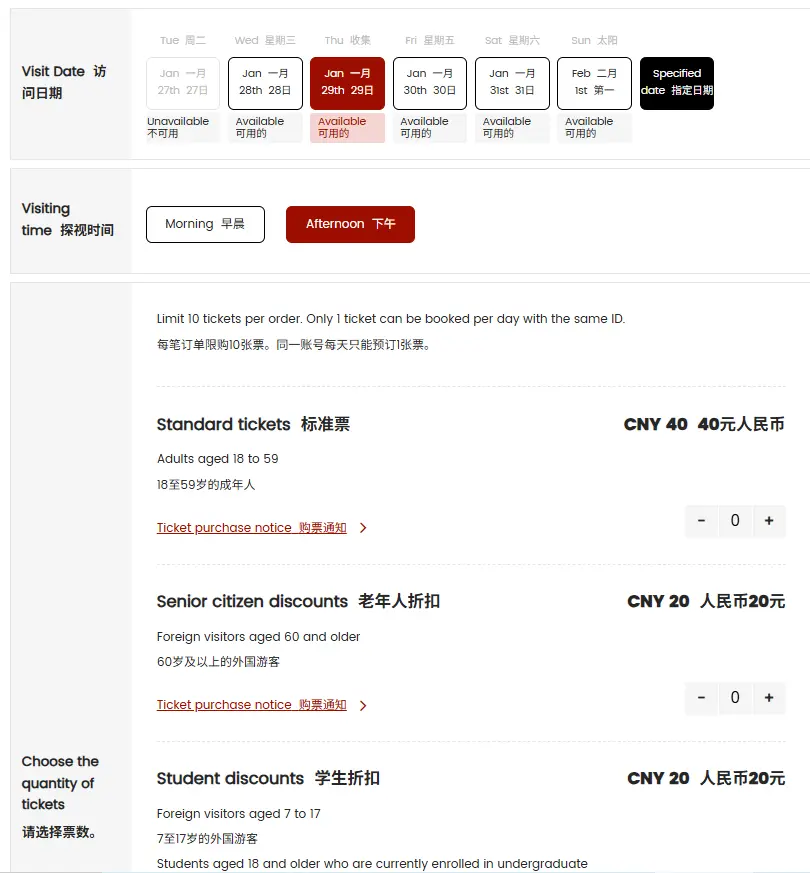
⚠️ Important Reminder: Admission to the Treasure Hall and Clock and Watch Hall is not included in the general admission ticket and must be purchased separately. Many visitors are unaware of this; they buy only the general admission ticket, only to find they cannot enter the Treasure Hall and are unable to purchase a supplementary ticket (online tickets are often sold out), which is very disappointing.
Free or Discounted Admission: Seniors aged 60 and older, minors under 18, and others may qualify for discounted or free admission with valid identification (but reservations are still required).
How to Buy Tickets?
The Palace Museum operates a real-name, time-slot reservation system. There are no on-site ticket windows; all visitors must purchase tickets online in advance.
Official Reservation Channels (The Only Ones!):
- WeChat Mini Program “Palace Museum”: Official direct channel
- The Palace Museum official website (https://www.dpm.org.cn)
- Alternative for International Travelers: Tickets sell out within seconds at 8:00 PM (GMT+8). If you struggle with language barriers on local apps or fail to secure a standalone entry ticket during peak season, you can reserve an English-Guided Tour with Guaranteed Forbidden City Entry to ensure hassle-free admission.
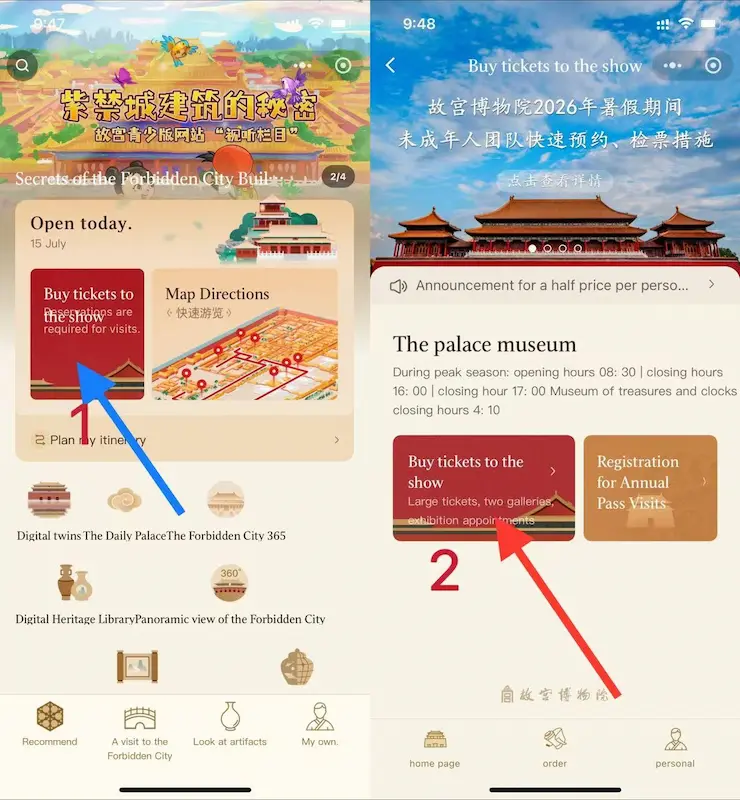
WeChat Mini Program Booking Steps (Recommended)
| Step | Action | Special Note for Foreign Visitors |
| ① | Search for the “The Palace Museum” mini program on WeChat→Click [Buy Tickets & Book Exhibitions] | — |
| ② | Select a visit date (tickets go on sale at 8:00 PM, 7 days in advance) | Avoid Mondays |
| ③ | Select a morning or afternoon session | For the morning session, you must enter the park by 12:00 PM at the latest; late arrivals will result in the ticket being voided. For the afternoon session, entry is permitted as early as 11:00 AM |
| ④ | Fill in visitor information | Select “Passport” as the ID type; the name must be spelled exactly as it appears on the original passport (including spaces and hyphens) |
| ⑤ | Select ticket options (General Admission + Treasure Hall/Clock and Watch Hall) | You must select both General Admission and Treasure Hall/Clock and Watch Hall tickets; these cannot be added after entry |
| ⑥ | Pay via WeChat Pay→Take a screenshot to save your reservation code | Present your original passport upon entry |
⚠️ Beware of scalpers! The Forbidden City does not partner with any third-party platforms (Ctrip, Meituan, Fliggy, etc.) for ticket sales. Scalpers likely purchased tickets on these platforms on your behalf, and there is a risk you will not be able to enter the park.
Reservation Time: Tickets become available for reservation 7 days in advance, with tickets released promptly at 8:00 PM every night. It is recommended to make a reservation at least 3–5 days in advance; during peak season, you’ll need to be ready to book the moment tickets go on sale.
Proof of Purchase: Foreigners can complete real-name reservations using their passport. A single account can purchase up to 5 adult tickets.
When is the best time to visit?
The Forbidden City’s opening hours are divided into peak and off-peak seasons:
Opening Time: Ticket checking and admission begin at 8:30 a.m. daily.
Closing Time:
- Peak Season (April 1 – October 31): Last admission at 4:00 p.m.; closes at 5:00 p.m.
- Off-season (November 1 – March 31 of the following year): Last admission at 3:30 PM; closes at 4:30 PM
⚠️ A hard-learned lesson: The Forbidden City is closed every Monday (except on national holidays). If you go on a Monday, you won’t even be able to get through the main gate—don’t ask me how I know.
Must-do before your visit: Check the “Palace Museum” official website or mini-program to confirm if there are any temporary closure notices.
When is the Forbidden City least crowded during the day?
- Rush in immediately when it opens at 8:30 AM: Fewer visitors, the softest light, and the best photo opportunities
- One hour before closing in the afternoon: The number of visitors along the Central Axis drops sharply, allowing you to capture “the Hall of Supreme Harmony without a soul”
- 12:00 PM–2:00 PM: Peak time for tour groups; the Hall of Supreme Harmony plaza is packed with people—during this time, it’s best to head to the exhibition halls (Treasure Hall, Clock and Watch Hall) or the East and West Six Palaces
Best Season: The off-season runs from November to March, when visitor numbers drop significantly, allowing for a leisurely visit. April through October is the peak season, when the museum is packed with tourists; in summer, the heat and intense sun make for a less enjoyable experience.
What’s the Most Convenient Way to Get to the Forbidden City?
Traffic restrictions are in place around the Forbidden City, making parking difficult and expensive; taking the subway is highly recommended.
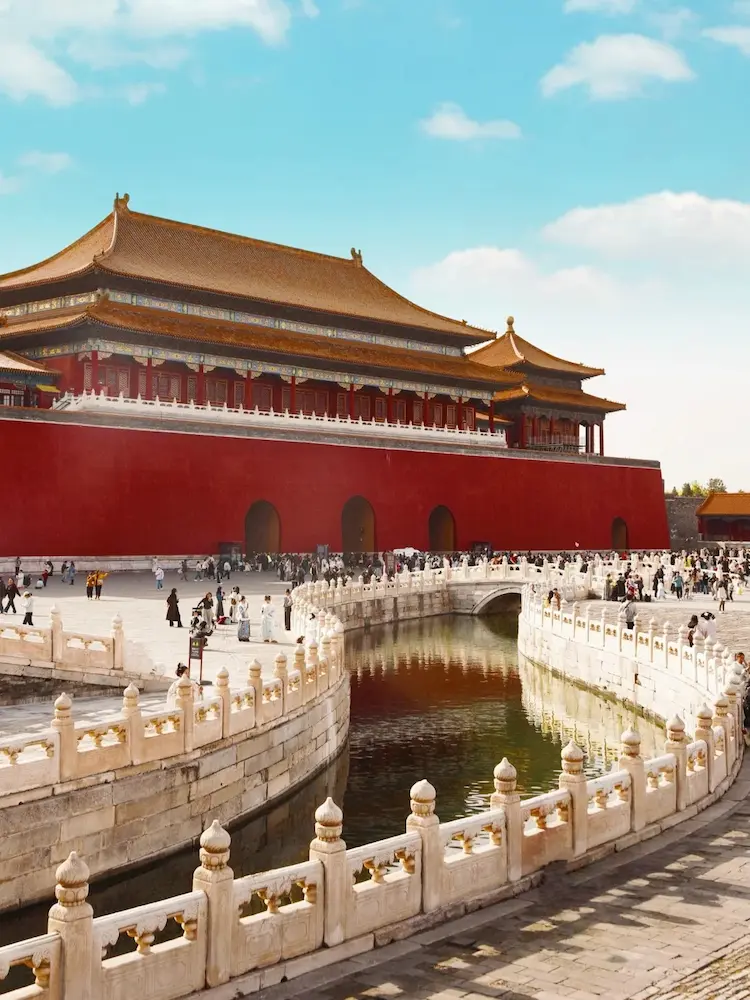
Important rules to know: You can only enter the Forbidden City through the Wumen Gate on the south side and must exit through the Shenwu Gate on the north side or the Donghua Gate on the east side; you cannot retrace your steps.
Subway (Highly Recommended)
| Route | Exit | Walking Directions | Total Time | Notes |
| Line 8, “Jinyu Hutong” Station | Exit C | Turn right toward Donghuamen →Walk along the moat to Wumen | About 25 minutes | Fastest route |
| Line 1“Tiananmen East” Station | Exit B | Head north along Nanchi Street →Donghuamen →Walk along the moat to Wumen | About 30 minutes | Allows you to avoid the strict security checks at Tiananmen Square |
⚠Special Note for Tiananmen East Station: If you exit at“Tiananmen East” Station on Line 1, you must first pass through security checks at Tiananmen Square before heading to Wumen Gate. The wait in line for these security checks can be 15–30 minutes. If you want to save time, taking Line 8 to“Jinyu Hutong” Station is a more reliable option.
Bus
Take Bus No. 2, No. 82, or similar routes to the“Donghuamen” stop. It’s a 5-minute walk to the Meridian Gate from there—this is the closest bus stop.
Taxi/Ride-Hailing
Set your destination to“Donghuamen.”After getting out, walk along the moat to the Meridian Gate. Do not set your destination directly to“The Forbidden City” or “Meridian Gate”—the driver will tell you that traffic restrictions prevent direct access.
Biking
You can ride a shared bike to the area near Donghuamen, park it at a designated spot, and then walk to the gate.
What Shoes Should You Wear?
Visiting the Forbidden City involves mostly walking. Even a quick tour of the highlights requires more than 10,000 steps; an in-depth tour requires more than 20,000 steps. Under no circumstances should you wear high heels or flip-flops—otherwise, you’ll be in tears by the time you leave.
What Should You Bring?
- ID card or passport (original! Digital photos are not accepted)
- Power bank (it’s hard to find shared power banks inside the Forbidden City)
- Drinking water (there are vendors inside the park, but prices are high and locations are unevenly distributed)
- Snacks (lines at the restaurants inside the park are very long; we recommend bringing some cookies or energy bars)
- Tissue paper/wet wipes (restrooms inside the park do not provide tissue paper!)
Part 3: Classic In-Depth Tour Routes (No Backtracking)
Route 1: Quick Highlights Tour (approx. 1.5 hours)
If you’re short on time and only want to see the core highlights, follow this central axis route:
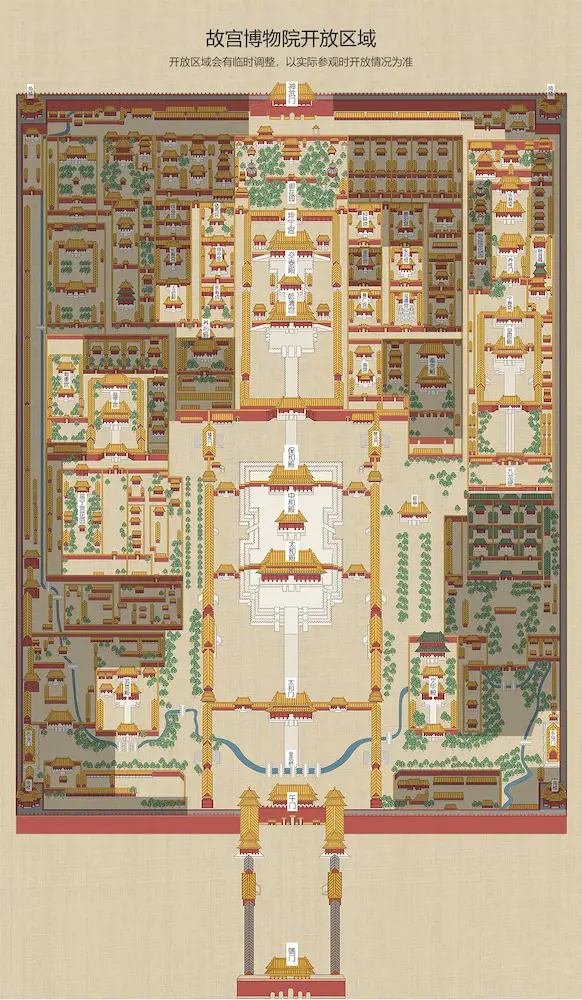
Meridian Gate → Hall of Supreme Harmony (where imperial ceremonies were held) → Hall of Central Harmony → Hall of Preserving Harmony → Palace of Heavenly Purity → Hall of Union and Harmony → Palace of Earthly Tranquility → Imperial Garden → Gate of Divine Might
This northbound route avoids detours, allowing you to swiftly experience the Forbidden City’s majestic grandeur.
Route 2: Moderate Experience Tour (approx. 3 hours)
Building on the central axis, add some fascinating palaces:
Meridian Gate → Hall of Literary Glory (often hosts great exhibitions) → Hall of Supreme Harmony → Qianqing Palace → Hall of Mental Cultivation (popular spot; where emperors later primarily resided and worked) → Western Six Palaces (visit Palace of Preserved Beauty to learn about Empress Dowager Cixi’s life) → Imperial Garden → Shenwu Gate
This route balances core architecture with palace life, offering richer historical narratives.
Route Three: In-Depth Exploration (approx. 6-8 hours)
Ideal for history enthusiasts and visitors seeking comprehensive coverage. This itinerary encompasses the central axis, East and West Six Palaces, and special exhibitions:
Meridian Gate → Hall of Military Valor (view porcelain) → Hall of Supreme Harmony → Hall of Divine Sacrifice (View the Clock Gallery) → Qianqing Palace → Yangxin Hall → West Six Palaces → Imperial Garden → East Six Palaces → Ningshou Palace Area (Visit the Treasure Gallery and Qianlong Garden) → Shenwu Gate
Note: Completing this route requires approximately 20,000 steps—be sure to wear comfortable shoes!
Route 4: Themed Tours
You can also choose specialized themes based on your interests:
- Artifact Enthusiast Route: Focus on thematic exhibition halls showcasing porcelain, clocks, and treasures.
- Architecture Enthusiast Route: Examine structural designs, roof styles, and decorative details.
- Imperial Story Enthusiast Route: Explore the living quarters of emperors and consorts, such as the Hall of Mental Cultivation and the Six Eastern and Western Palaces.
Part Four: Exploring as You Go—An In-Depth Look at the Core Attractions
First Stop: the Hall of Supreme Harmony (Jinluan Hall)
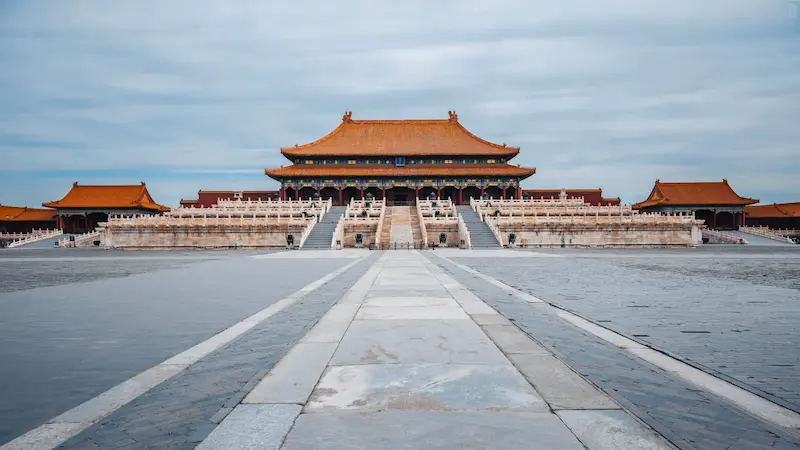
This is the most important and highest-ranking building in the Forbidden City. The most significant ceremonies, such as the emperor’s accession to the throne and royal weddings, were held here.
What to See:
- Roof ridge animals: The roof of the Hall of Supreme Harmony features 10 glazed ceramic animals—including dragons, phoenixes, lions, celestial horses, and sea horses—the largest number in any ancient Chinese building, symbolizing the supreme authority of the emperor.
- The sundial and standard measure in front of the hall: The sundial is a timekeeping device, and the standard measure is a unit of measurement, symbolizing the emperor’s control over time and space.
- The gilded throne inside the hall: Although the details are obscured by the railing, the throne’s overall grandeur remains evident.
Exclusive Detail: The ground of the Hall of Supreme Harmony Square is paved with fifteen layers of bricks laid in a crisscross pattern, known as the“Golden Brick Pavement.”These bricks are not made of gold, but their manufacturing process is extremely complex—it takes two years from soil selection to firing, and when struck, they produce a sound like that of gold or stone. Hence, they are called“Golden Bricks.”
Second Stop: Zhonghe Hall and Baohe Hall
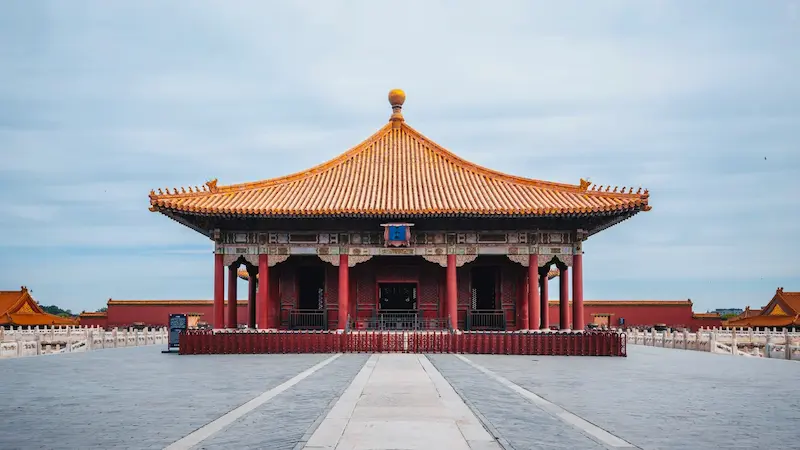
Zhonghe Hall was where the emperor rested and received the obeisances of officials before proceeding to the Hall of Supreme Harmony. Baohe Hall was where the emperor held the palace examination (the highest level of the imperial examination system) and hosted banquets for ethnic minority leaders.
What to See:
Behind Baohe Hall stands a massive stone carving of a dragon amidst clouds, weighing 250 metric tons
—it was transported from Fangshan, Beijing, by hand, with water poured onto the road to create ice during the winter so it could be pulled along.
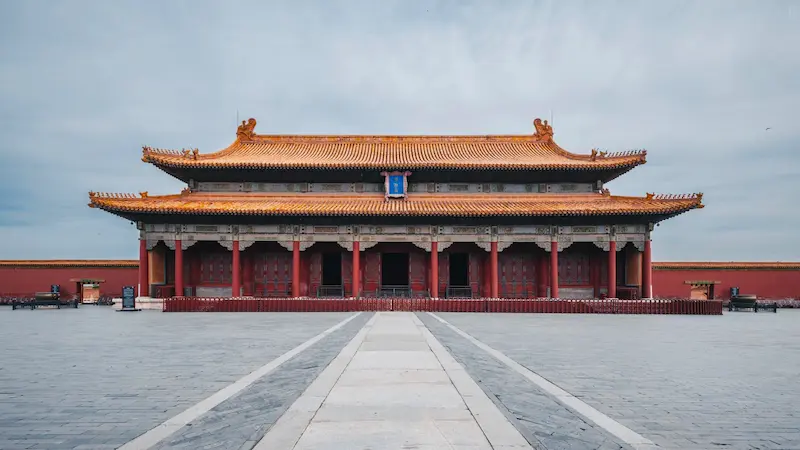
Third Stop: Qianqing Palace→Jiaotai Hall→Kunning Palace
This is the core area of the emperor’s and the imperial harem’s quarters.
- Qianqing Palace: Emperors of the Ming Dynasty and the early Qing Dynasty lived and conducted official business here.
- Jiaotai Hall: The imperial seal (stamp) was kept here.
- Kunning Palace: The empress’s bedchamber during the Ming Dynasty; in the early Qing Dynasty, it was converted into a Shamanist ritual site.
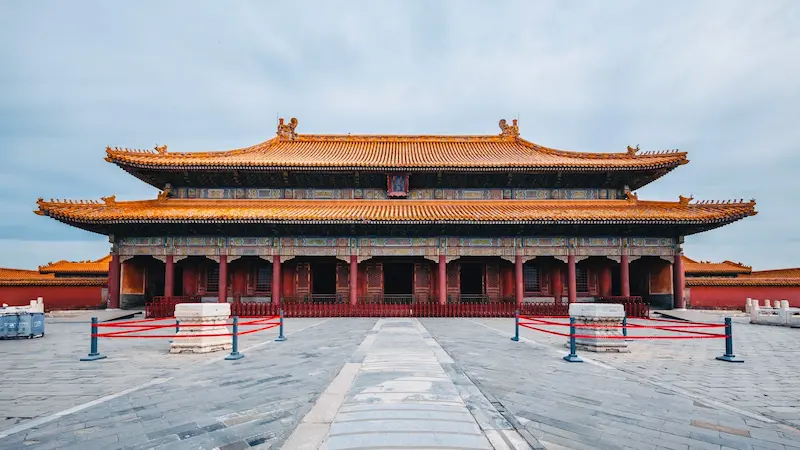
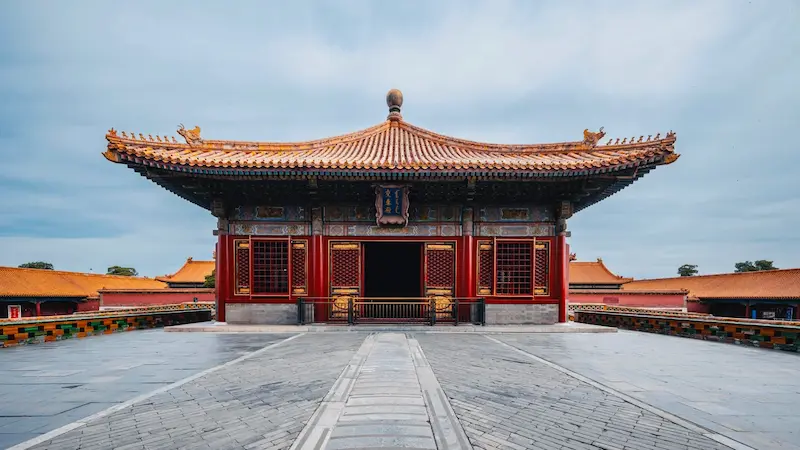
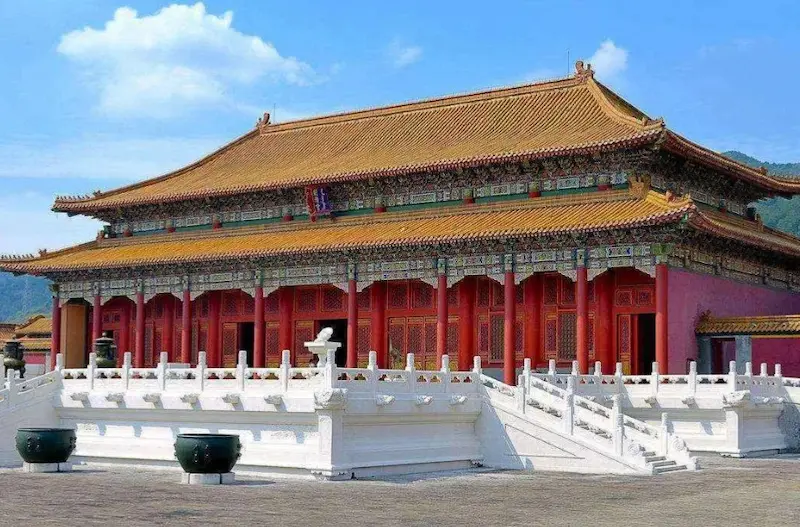
Exclusive Detail: Kunning Palace still preserves the ritual furnishings used in Manchu Shamanism during the Qing Dynasty—two large cauldrons, a cutting board, and ritual implements.
Many people pass by Kunning Palace, take a quick photo of the exterior, and leave, completely missing this unique glimpse into Manchu culture.
Once inside the hall, look to your right, and you’ll see something entirely different from what you’d find in ordinary palaces.
Stop 4: Yangxin Hall (The Emperor’s True“Office”)
This is the most underrated spot in the Forbidden City. Starting with Emperor Yongzheng of the Qing Dynasty, emperors no longer resided in Qianqing Palace but moved to Yangxin Hall instead. This was the true center of power.
What to See:
- West Warm Chamber: This is where Empress Dowager Cixi “ruled from behind a curtain”
- Sanxi Hall: Emperor Qianlong’s study, measuring just 8 square meters—it’s hard to believe an emperor’s study could be so small! It housed his three most treasured calligraphy masterpieces
Exclusive Detail: In the East Warm Chamber of Yangxin Hall, there is a secret hidden door. If the emperor needed to meet with ministers in private or handle confidential matters, he would use this door. The door is still there today—see if you can find it.
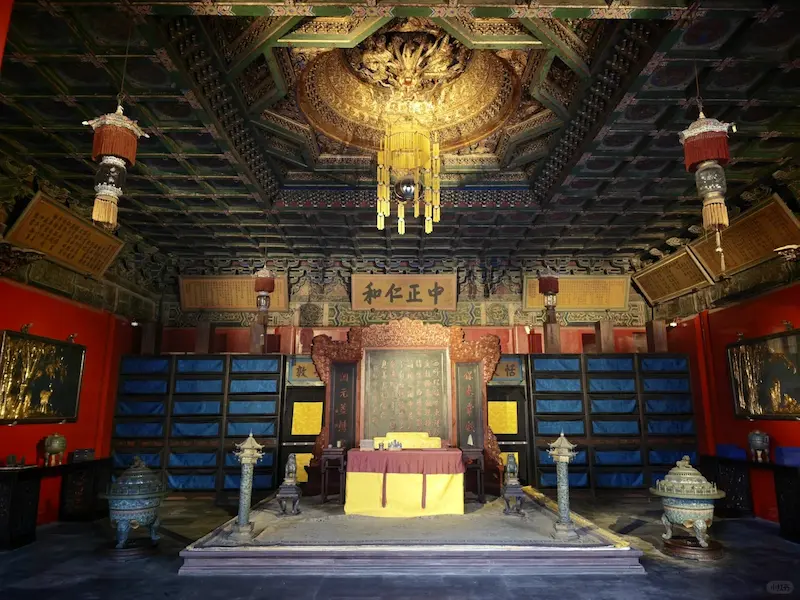
Stop 5: The Western Six Palaces (Living Quarters of the Consorts)
Be sure to visit Chuxiu Palace—Empress Dowager Cixi once lived here. Its interior is exquisitely luxurious and epitomizes the aesthetic sensibilities of the late Qing imperial court.
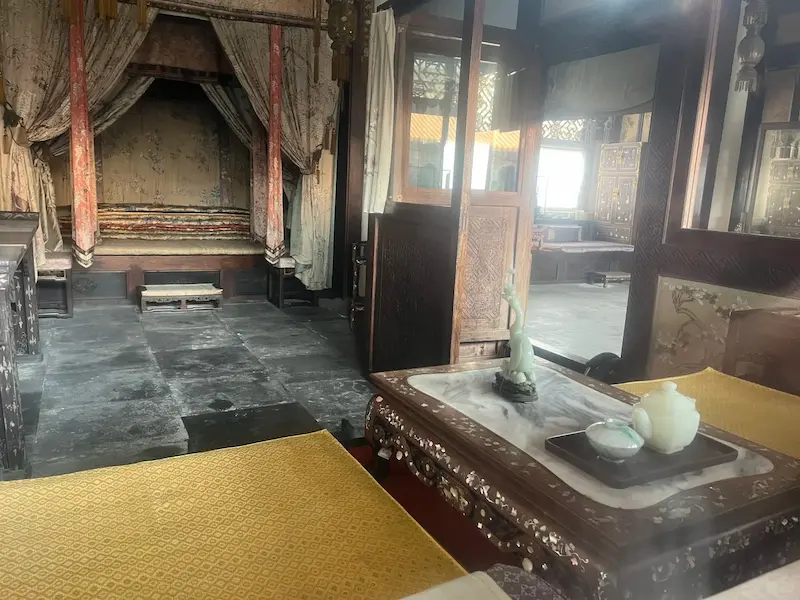
Exclusive Detail: Beneath the south window of Chuxiu Palace is a small fish tank—where Empress Dowager Cixi kept her fish. She felt very lonely in her later years and often sat alone watching the fish.
You can pause here for a moment to imagine this woman, who once held the fate of the entire empire in her hands, lost in thought here during her twilight years.
Stop 6: Ninghu Palace Area (Treasure Hall)—Highly Recommended
This is the place in the Forbidden City where it’s most worth spending extra money. Many people don’t realize that half of the Forbidden City’s“treasures” are housed here.
What’s included:
- Treasure Hall: Displays the Empress’s phoenix crown, massive jade carvings, gold artifacts, and jewelry—these are the truly valuable items in the Forbidden City
- Qianlong Garden: An exquisite garden built by Emperor Qianlong for his retirement, featuring rockeries, pavilions, and winding paths leading to secluded spots—a stark contrast to the solemn atmosphere of the rest of the Forbidden City
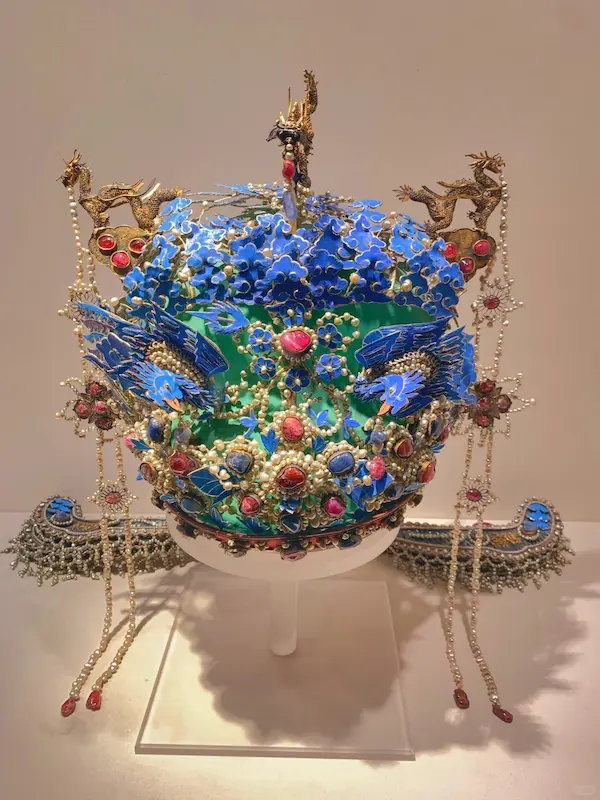
Exclusive Detail: Inside the Treasure Hall, there is an empress’s phoenix crown inlaid with hundreds of pearls and gemstones. Only when you stand before it can you truly understand what “priceless” means.
Moreover—most tour groups won’t bring you here (since it requires an additional ticket and there isn’t enough time), so the number of visitors here is far lower than along the Central Axis.
⚠️ Important Note: The entrance to the Treasure Hall is at the southern end of the Ninghu Palace area (near the east side of Qianqing Gate). Be sure to purchase tickets online in advance; you cannot enter without them on-site.
Part 5: Exclusive Tips Only Locals Know (You Won’t Find These in Any Other Guides)
Here are some details you’ll never find in other guides—all practical advice distilled from real-life experiences.
Restrooms and Toilet Paper—The Most Important Tip!
Restrooms are fairly densely distributed throughout the Forbidden City grounds, with facilities along the Central Axis and in the Six Eastern and Western Palaces.
However—the restrooms do not provide toilet paper! Be sure to bring your own toilet paper or wet wipes. If you’re traveling with elderly people or children, pack a few extra packs in your bag.
Also, during peak season, the lines for women’s restrooms can be very long. Before heading to the next attraction, it’s best to take care of nature’s call first.
Backpack Strategy
Try to carry as little as possible. Just bring your passport, cell phone, power bank, drinking water, and a few snacks. Carrying a large bag will:
1. Increase security check time
2. Force you to carry the weight the entire time, making you increasingly tired
3. Make it difficult to even turn around in crowded areas like the Hall of Precious Treasures
What to Do If Your Phone Has No Signal Inside the Forbidden City?
This is the most easily overlooked issue: when the Forbidden City is crowded, 4G/5G signals are very weak (especially in open areas like the Hall of Supreme Harmony Plaza and the Hall of Pure Clarity Plaza).
If you plan to use an audio guide or look up information—be sure to download an offline map in advance!
The WeChat mini-program“The Palace Museum” also offers a guided tour feature, but it loads very slowly when there are large crowds.
Sun Protection and Water
- There is almost no shade along the Central Axis! Visiting the Hall of Supreme Harmony Plaza in the summer is like standing under the blazing sun. A hat, sunglasses, and sunscreen are all essential.
- There are water stations within the park, but they are unevenly distributed, and there are long lines during peak season. We recommend bringing 1–2 bottles of water with you.
Best Times for Taking Photos
| Scene | Best Time | Shooting Spot |
| Hall of Supreme Harmony without crowds | Rush in immediately when it opens at 8:30 | Center of the Hall of Supreme Harmony Plaza |
| Qianqing Palace with few visitors | 1 hour before closing in the afternoon | Qianqing Palace Plaza |
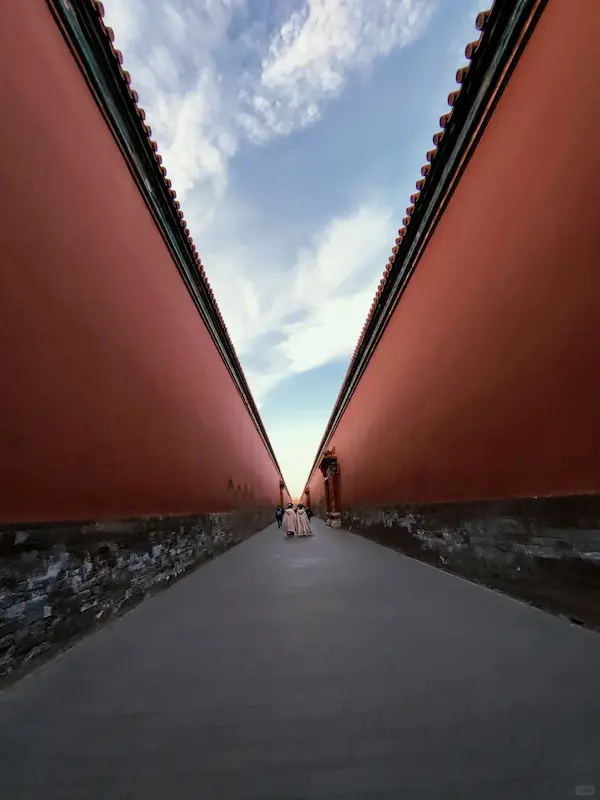
| Stunning silhouettes against the red walls | 3–4 p.m. | The alleyway between the East and West Six Palaces |
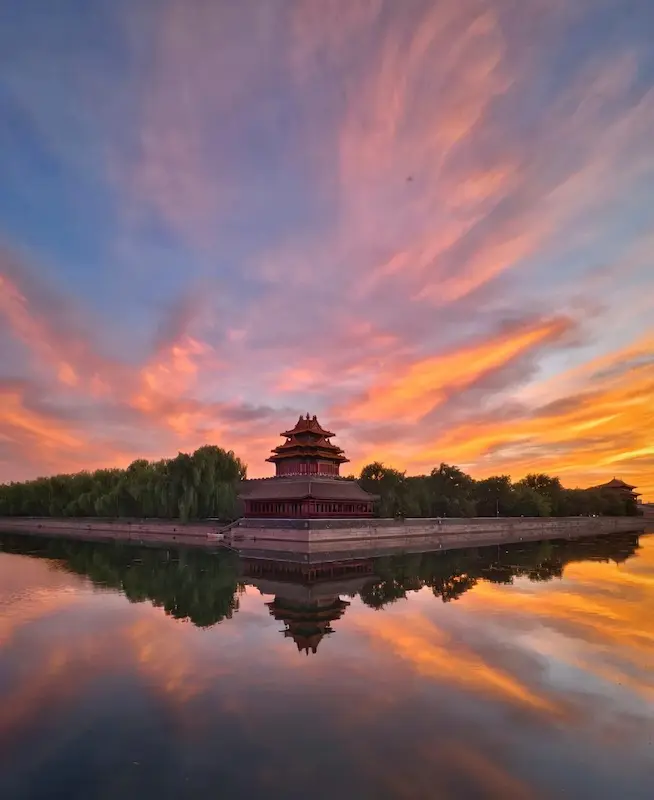
| Classic photos of the corner towers | Dusk (after exiting Shenwu Gate) | Northeast or northwest corner outside Shenwu Gate |
You’ll Encounter “Weird Tour Groups”
Here’s something you won’t find in other travel guides: There are many“weird tour groups” inside the Forbidden City—waving flags, wearing headsets, moving in large groups, and walking at a breakneck pace.
They’re usually“educational study tours” or“corporate team-building events.”If you’re walking along the Central Axis, you’ll get swept along with them and won’t be able to stop and take a proper look at all.
How to avoid them:
1. The Central Axis is relatively less crowded before 10:00 a.m., so try to finish that section as early as possible.
2. After 10:00 a.m., “tour groups” take over the Central Axis; at this point, head to the East and West Six Palaces or the Treasure Hall.
3. Don’t crowd the area directly in front of the Hall of Supreme Harmony—go around to the side, where there are half as many people.
Special Reminders for Visiting the Forbidden City in Winter
During the off-season (November–March), the Forbidden City has fewer visitors and offers a better experience, but there’s one major drawback: there’s no heating inside the palaces (to protect the historic buildings). Plus, since the Forbidden City is an outdoor attraction, the wind chill in winter feels even colder than outside.
Solutions:
- Dress in full gear: down jacket, hat, gloves, and scarf
- Use heat patches
- Bring a thermos filled with hot water—while hot drinks are available inside the park, the lines are long, and prices are high
- Enter a hall with an open door every 30 minutes to “warm up”
Luggage Storage at the Meridian Gate—A Must-Know
If you’re visiting the Forbidden City with large luggage (such as a suitcase), you can store it for free at the luggage storage area on Meridian Gate Square.
When you leave, pick it up at the Shenwu Gate or Donghua Gate—meaning you won’t have to retrace your steps. This is a truly thoughtful service, but many visitors aren’t aware of it.
Information for Families with Children or Seniors
- Strollers are allowed in most areas (some steps have accessible ramps)
- Wheelchairs and strollers are available for rent (at the Meridian Gate entrance; deposit + rental fee)
- There are restaurants inside the park (but they’re expensive and have long lines); it’s recommended to bring your own snacks and water for children
Part 6: Photography Tips and Hidden Gems
Best Photo Spots
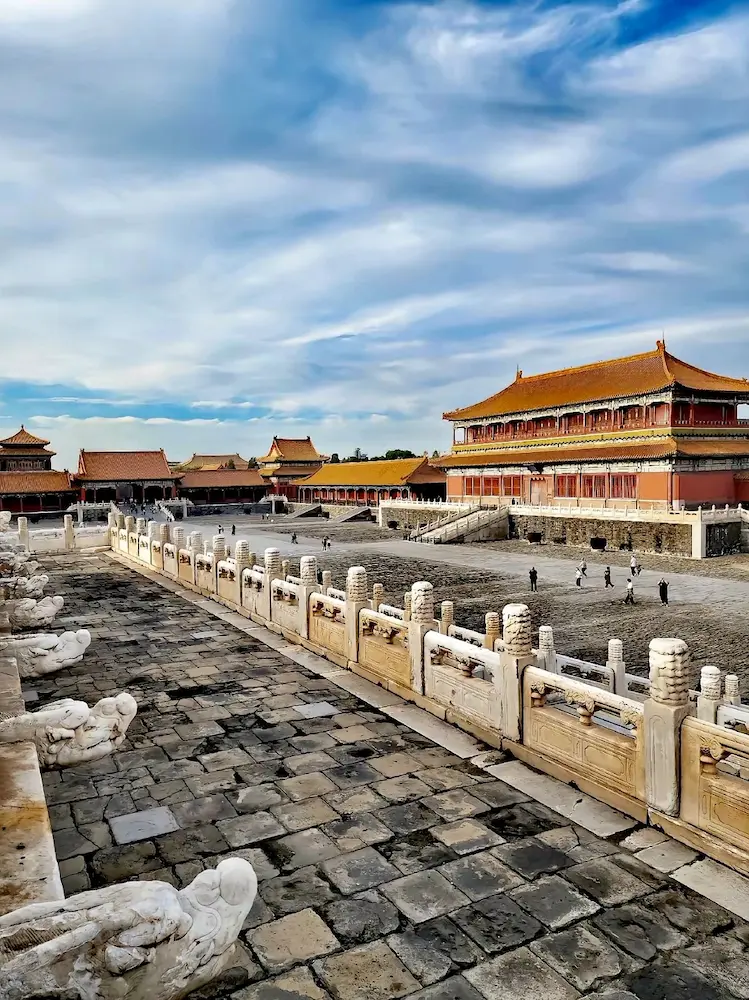
– Spot 1 (Side of the Hall of Supreme Harmony): Don’t get stuck trying to shoot the massive crowds head-on. Take shots at an angle from the east or west side of the Hall of Supreme Harmony plaza, using the white marble railing as the foreground—it creates a clean, grand composition.
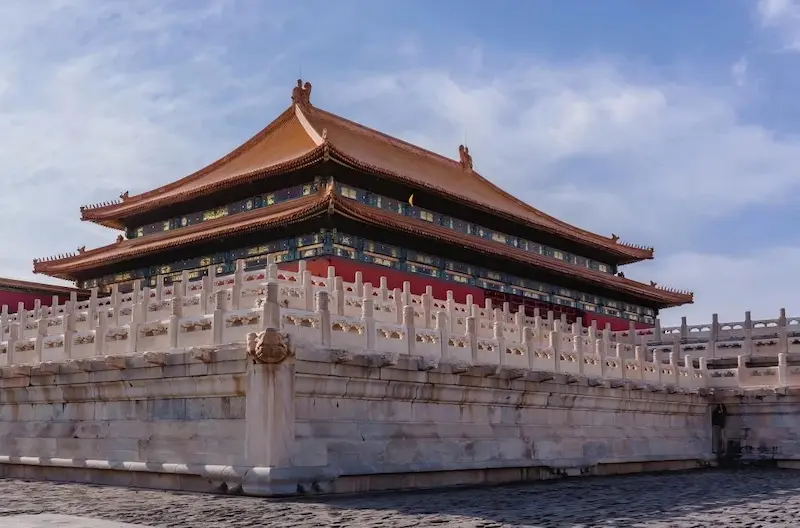
– Spot 2 (The alley between the East and West Six Palaces): Red walls and narrow alleys make this an excellent spot for portraits. The light is best between 3:00 and 4:00 p.m.
– Spot 3(The corner tower outside Shenwu Gate): A classic spot—go in the evening to capture the reflections.
Hidden Gems
- Cining Palace Garden: Located on the western side of the Forbidden City, it’s relatively less crowded but just as exquisite as the Imperial Garden.
- The Forbidden City’s Cats: There are several “court cats” within the palace grounds, often seen near the Treasure Hall and the Eastern Six Palaces.
- Digital Experience Hall: Located at Duanmen Gate, it features dynamic displays of works such as *Along the River During the Qingming Festival* (separate reservation required).

Part 7: A Perfect Finale—Extending the“Vibrant Local Atmosphere” Around the Forbidden City
Once you exit through Shenwu Gate, your Forbidden City tour isn’t over yet:
Jingshan Park (across the street from Shenwu Gate): Climb up to the Wanchun Pavilion to take in a panoramic view of the Forbidden City—this is the best spot for photos. Admission is 2 yuan, which is an incredible deal.
Beihai Park: Just outside the West Gate of Jingshan Park, you can go boating and see the White Pagoda.
Nanluoguxiang: Take the subway or bus for two stops to experience the charm of old Beijing’s hutongs (but it gets extremely crowded; if you don’t like crowds, we recommend visiting the nearby Beiluoguxiang, which is much quieter).
FAQ
The Forbidden City is more than just a tourist attraction. It was home to 24 emperors of the Ming and Qing dynasties, a repository of 600 years of Chinese history, and a place with more than 9,000 silent rooms. Slow down and don’t rush—you’ll find that special moment just for you.