
How to Register Accommodations in China: A Must-Read Guide for Foreign Visitors
If you’re planning a trip to China, one question that confuses almost everyone is: Do you need to register your accommodation with the police?
After living in Beijing for over a decade, I’ve seen many tourists make mistakes regarding this—especially when staying in apartments or Airbnb listings.
Under Chinese law, all foreign passport holders staying in China are required to register their accommodation. This regulation is designed to facilitate management and ensure the safety of everyone in the country.
In this guide, I’ll explain China’s accommodation registration policies in detail, when you need to register, and the potential consequences of failing to do so.
Table of Contents
Who needs to register?
All foreign nationals (including naturalized Chinese citizens) staying in China must register.
When to Register?
Complete registration within 24 hours of check-in.
How to Register?
Registration methods vary by accommodation type:
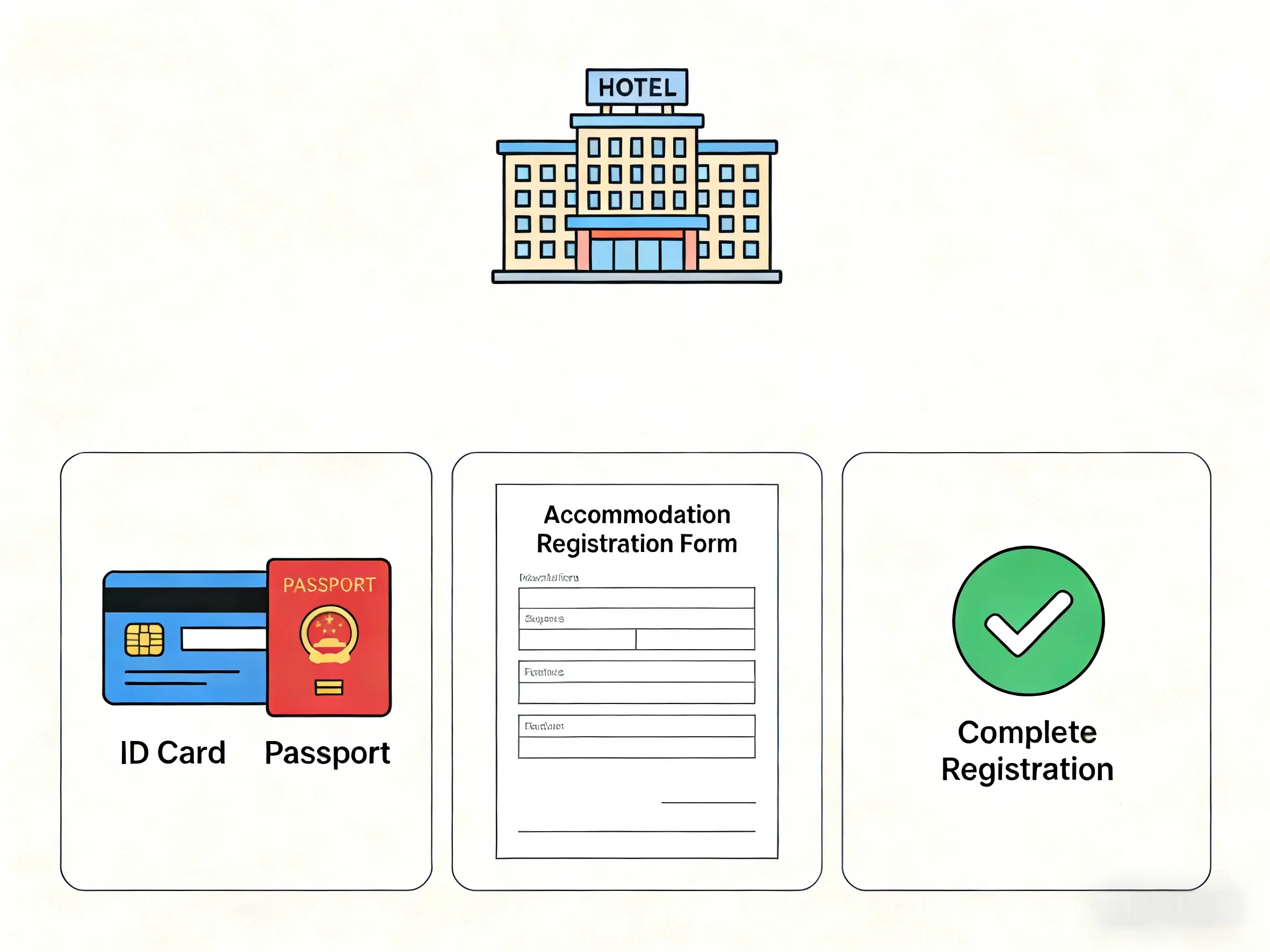
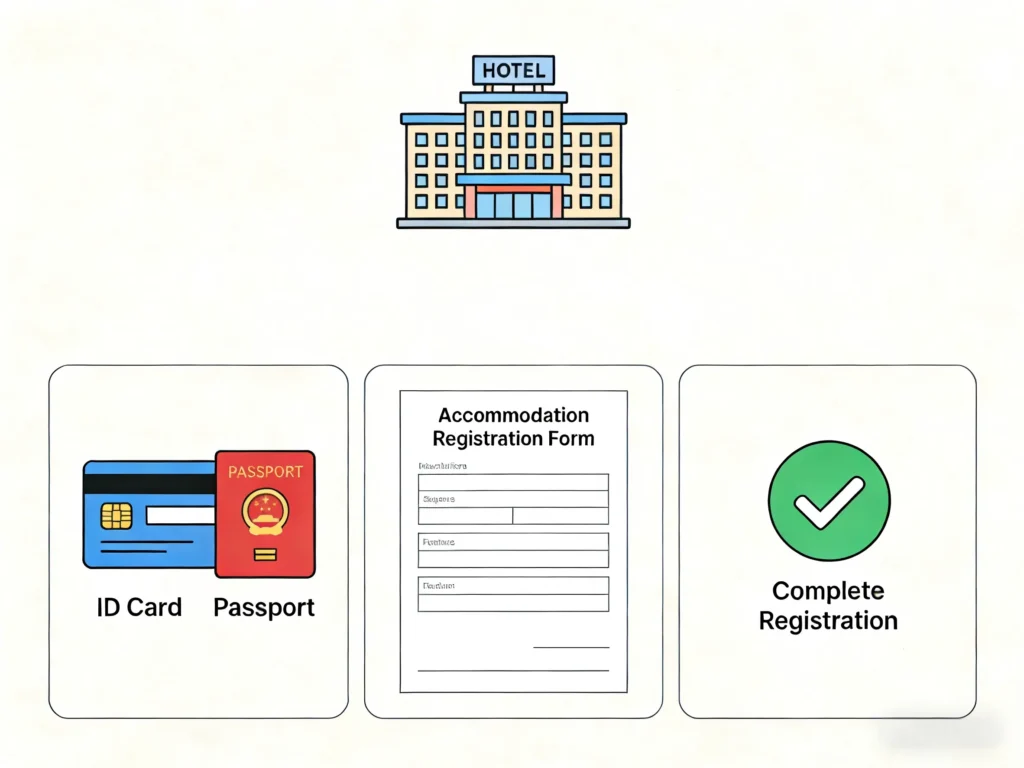
1. Staying at a Hotel or Licensed Foreign-Friendly Homestay
- Present your passport during check-in; the hotel will complete registration for you.
- We recommend verifying the hotel’s qualifications for foreign guests before booking.
2. Staying at a relative/friend’s residence or rented property
- In-person registration: Please bring the required documents to the local police station or immigration office in your area of residence.
- Online registration: Some major cities (e.g., Beijing, Shanghai, Shenzhen) offer online reporting via local public security bureau immigration websites or WeChat official accounts. Check local regulations beforehand.
Required Documents
- Original passport (including copies of the personal information page, valid visa pages, and most recent entry stamp page)
- Accommodation proof:
Rental property: Original and copy of the lease agreement
Staying with relatives/friends: Host’s ID and property ownership proof, or a written accommodation statement from the property owner
- One 2-inch blue-background ID photo (may be required at some locations)
Consequences of Non-Registration
Failure to register as required may result in warnings, fines (amount determined by circumstances), and may affect future visa applications, extensions, or entry/exit records. Please complete registration on time to avoid unnecessary complications.
Important Reminders
- Registration is free of charge.
- Update your registration details within 10 days if your accommodation address or contact information changes.
- Safely store the“Temporary Accommodation Registration Form for Foreign Nationals” received upon completion alongside your passport for verification purposes.
- If facing language barriers, utilize translation software or request assistance from staff.
Common Mistakes Made by Tourists
Assuming All Hotels Can Accommodate Foreigners
Many tourists assume that any hotel can accommodate them, but in reality, some small domestic hotels, guesthouses, and certain homestays lack the necessary qualifications to host foreigners and cannot process accommodation registration. You may be refused entry upon arrival, so it is essential to confirm this in advance.
Believing Airbnb Does Not Require Registration (Misconception)
Staying at an Airbnb, apartment, homestay, or a friend’s home still requires registration. This is not optional but a legal requirement; do not take any chances.
Thinking It’s Okay If No One Checks
Many people think, “If no one checks, there’s no need to register,” but accommodation registration is a legal obligation for foreigners in China.
If you are randomly selected for an inspection and found to be unregistered, you may face fines, warnings, or even complications with future visa applications and travel plans.
If it’s your first time, check my Beijing travel checklist.
I wish you a pleasant journey in China, and thank you for complying with local regulations.