Beijing Houhai Nanyan Hutong Travel Guide (2026)
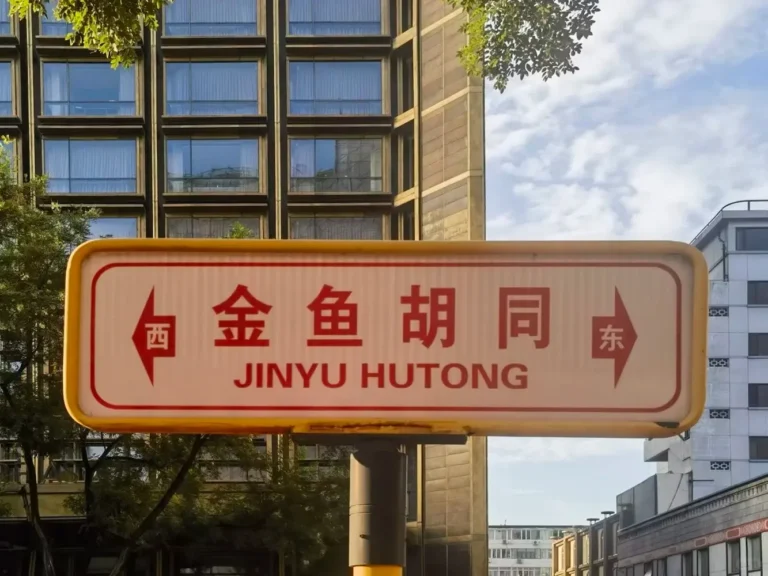
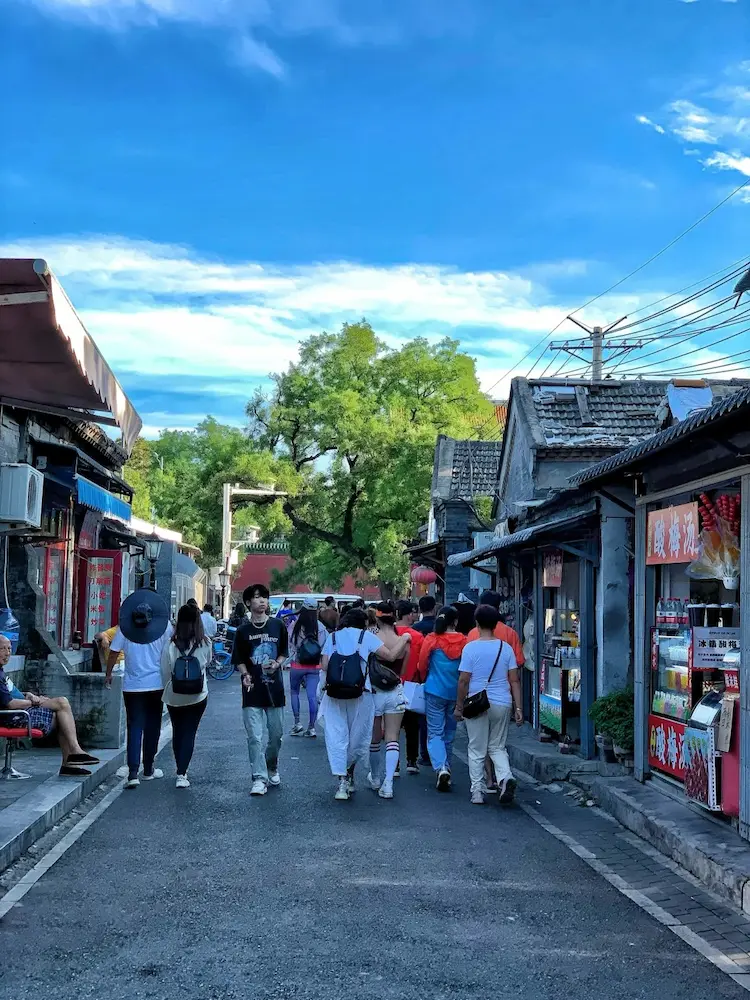
In Beijing’s Shichahai area, Houhai Nanyan is a very special short walking route through the hutongs. It stretches from Yindingqiao Hutong in the east to Liuyin Street in the west, with a total length of approximately 230 meters, and runs right alongside Houhai Lake on its northern side.
Unlike typical tours along the shores of Houhai Lake, this area offers not only lakeside scenery and bustling bar districts but also historical sites such as the former residence of Zhang Boju and Pan Su and the former site of Fengtai Temple.
It’s ideal for a short stroll if you’re already exploring Shichahai; please note that the memorial museum at the former residence is currently closed to the public—visitors cannot enter the building but may take photos from the outside.
Historical Name Changes: During the Qing Dynasty, this area was adjacent to Houhai and was known as “Heyan”; after 1911, it was renamed “Houhai Nan Heyuan”; in 1965, Li Guangqiao East Street and Sihe Alley were incorporated into the area, and it was officially named “Houhai Nanyan.”
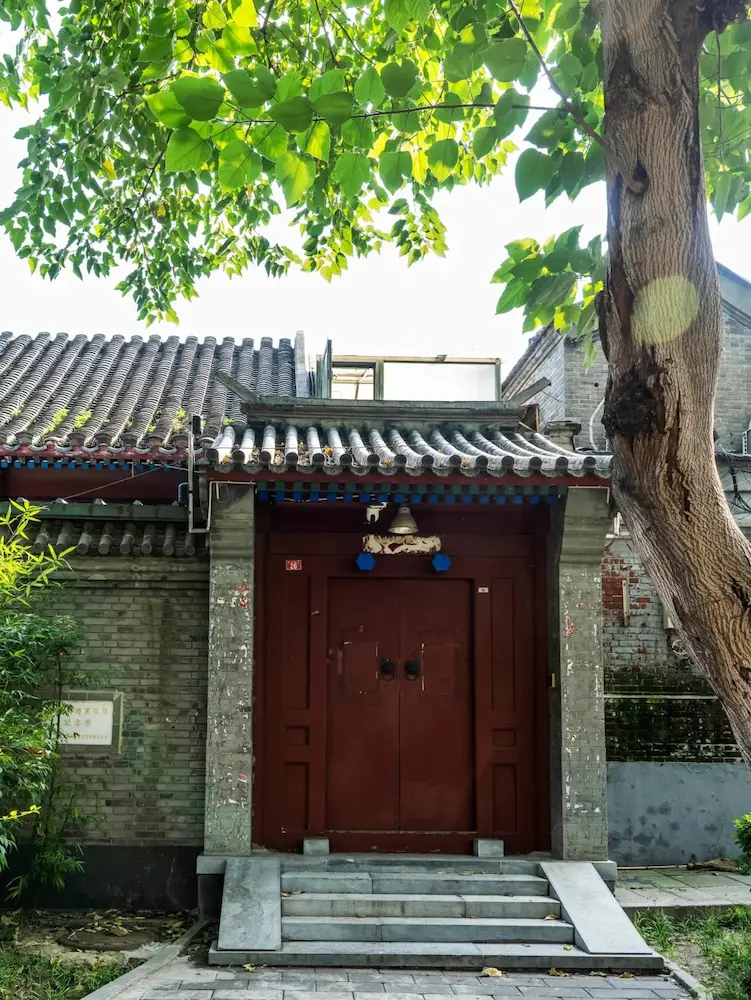
Table of Contents
Quick Guide
- Highlights: Zhang Boju and Pan Su’s Former Residence, Fengtai An Temple Ruins, Houhai Lakeside Walkway, Day and Night Atmospheres
- Location: South bank of Houhai, Shichahai; bordered by Yindin Bridge to the east and Liuyin Street to the west
- Recommended visit duration: 20–30 minutes is the Houhai Nanyan estimated duration for a short walk and an exterior tour of Houhai Nanyan; if you stop to take photos, read historical background information, or stroll along the lake, the time required will increase accordingly.
- Keywords: Waterfront Old Street, Stories of National Treasures, Blending Past and Present, Tranquility Amidst the Bustle
- Best Experiences: Early mornings are generally quieter, making them ideal for a walk; in the evening, enjoy the lake views and the sunset; at night, soak up the atmosphere of the bar district with its twinkling lights; Houhai Nanyan. Please note that weather conditions and crowd levels may affect your on-site experience, so we cannot guarantee that you will see light mist or a perfect sunset. Houhai Nanyan
The Smoothest Way to Explore | Copy This Route
- Subway: Exit A2 at Shichahai Station (Line 8) → Yinding Bridge → South Bank of Houhai (head west)
- Recommended Route: Yinding Bridge → Houhai Nanyan → Zhang Boju’s Former Residence → Fengtai Temple → Liuyin Street
Route Tips: Enter via Yinding Bridge and head west along the alley; both sites can only be viewed from the outside—visitors cannot enter. This section of the walk ends at Liuyin Street; you can continue on to the Shichahai and surrounding alley walking routes, so there’s no need to set aside half a day specifically for this segment.
Tip: The area has many bars and is brightly lit at night; it’s quietest and best for photography before 8 a.m.
A Legend Deep in the Bamboo Grove: The Former Residence of Zhang Boju and Pan Su(No. 26, Houhai Nanyan)
⚠Important Notice: The Zhang Boju and Pan Su Former Residence Memorial Hall is currently closed. Houhai NanyanIt is not open to the public for tours; visitors may only view the bamboo grove and the red-painted gate from outside the compound walls.Houhai Nanyan
When visiting, please respect the daily lives of the surrounding residents; do not attempt to enter the compound, and do not take photos of private residential areas without permission.
After passing through a row of closely packed bars, a tranquil bamboo grove suddenly comes into view.
Hidden within the grove is a red-lacquered gate bearing a sign that reads “Zhang Boju and Pan Su Former Residence Memorial Hall”—this is No. 26, South Houguan Road.
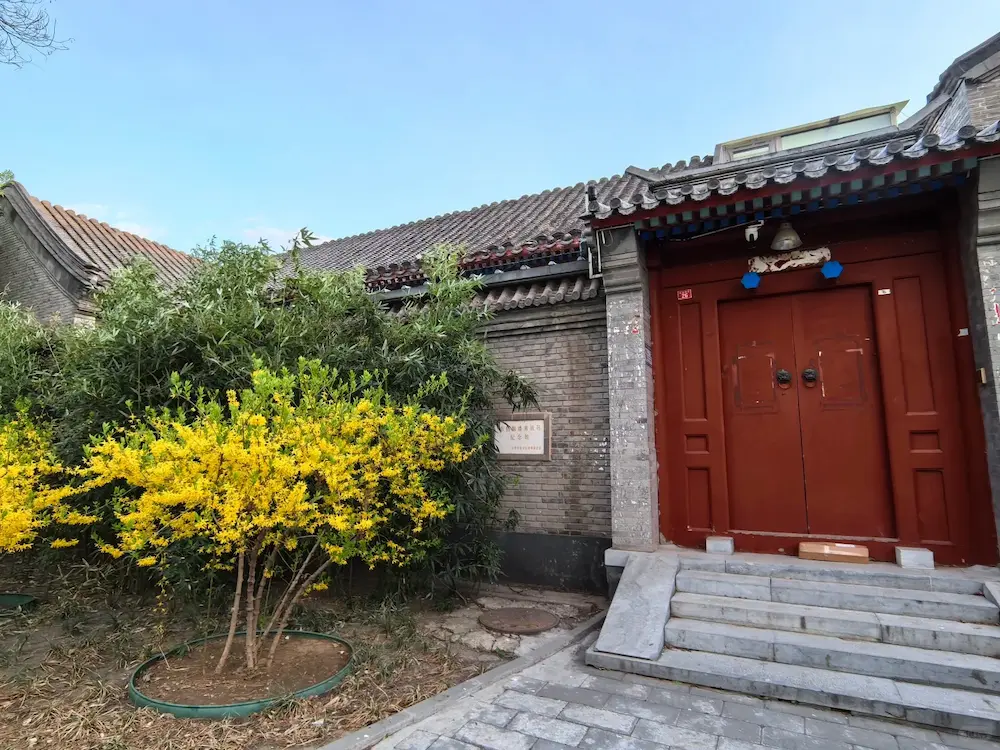
Unfortunately, the memorial hall is currently closed to the public, but judging by the size of the grounds, the courtyard still conveys a sense of its former grandeur and scale.
One of the“Four Gentlemen of the Republic”: A Guardian of National Treasures Who Sacrificed His Entire Fortune
Zhang Boju was a renowned modern-era collector, calligrapher, painter, and poet. His father, Zhang Zhenfang, was a prominent figure in modern military, political, and industrial circles who helped found the Salt Industry Bank.
The term “The Four Gentlemen of the Republic of China” has been widely circulated among the public; however, the list of individuals included varies across different historical records. It is a designation passed down through later generations and is not an officially recognized title. Zhang Boju, along with Zhang Xueliang and others, has been included in this designation by later generations; he achieved great mastery in traditional art forms such as poetry, calligraphy, and the guqin.
His wife, Pan Su, was a renowned landscape painter who initially studied flower-and-bird painting before specializing in landscape painting; the couple shared a common passion for art collecting.
Spending a Fortune to Save National Treasures: The Rescue of the Pingfu Scroll and the Spring Outing
Throughout his life, Zhang Boju devoted a significant portion of his personal wealth to rescuing numerous batches of rare ancient calligraphy and paintings that were at risk of being lost overseas. He subsequently ensured that these national treasures were incorporated into the collections of state cultural and museum institutions through donations and transfers, with many becoming important holdings of the Palace Museum.
The *Pingfu Post* (by Lu Ji) is one of the earliest surviving calligraphic works by a renowned master. Zhang Boju raised funds from various sources to acquire it. Houhai Nanyan. In 1956, Zhang Boju and Pan Su donated several precious calligraphic works, including the *Pingfu Post*, to the state without compensation. Houhai Nanyan
The process by which the *Spring Outing* was acquired and entered the collection differed from that of the *Pingfu Post*: Zhang Boju purchased it by selling his personal property and subsequently transferred it to the National Cultural Heritage Administration, which then handed it over to the Palace Museum for preservation.
In addition, works such as Du Mu’s *Poem Dedicated to Zhang Haohao* and Huang Tingjian’s *Letter to the Venerable Masters* also entered public museums through their efforts to preserve them; in 1965, Zhang Boju donated more than thirty pieces of calligraphy and painting, including *The Hundred Flowers*, to the Jilin Provincial Museum.
Historical Site: The Ruins of Fengtai An and Its Literary Imagery
Continuing further along the alley, No. 36 on the southern bank of Houhai is the site of “Fengtai An.”
Historical Fact: Fengtai An was one of the “Nine Hermitages and One Temple” in the Shichahai area in ancient times. Built in the ninth year of the Qianlong reign of the Qing Dynasty (1744), the original structure faced north and consisted of nineteen rooms.
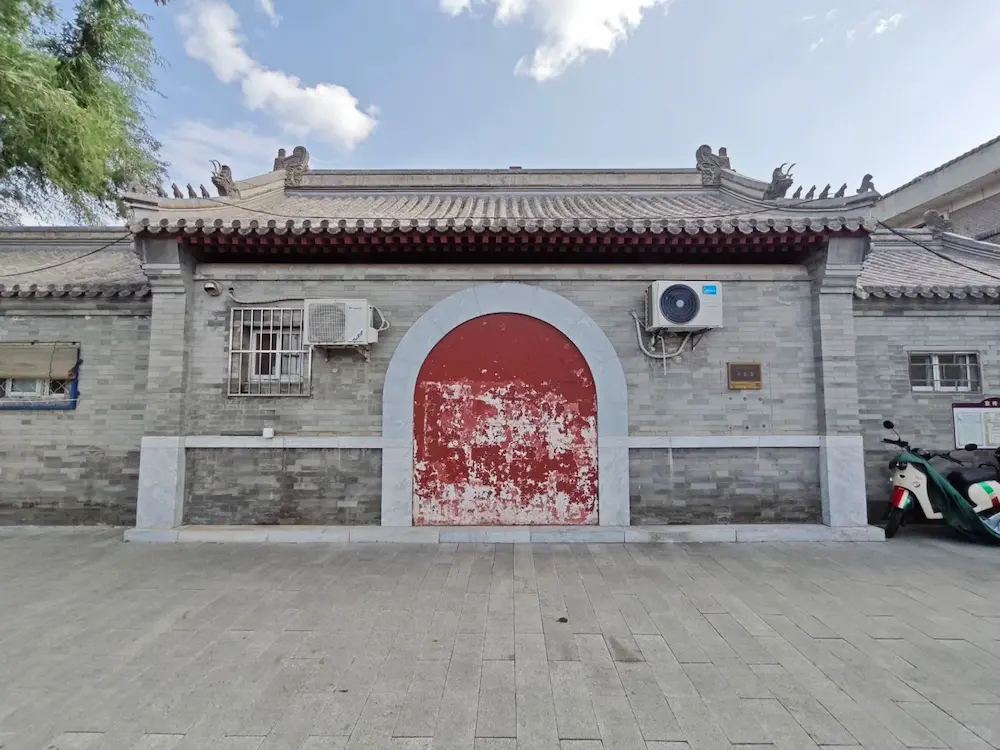
Current Status: Today, the site has been converted into residential housing, with numerous buildings added to the courtyard at a later date. Only partial remnants outside the courtyard wall still faintly reveal traces of the former hermitage; This site is adjacent to the rear courtyard of the former Prince Gong’s villa.
⚠Distinguishing Historical Facts from Literary Fiction: The novel *Fengtai An* by author Wang Bin is narrated from the perspective of Princess Changping; Houhai Nanyanthis is a work of literary fiction and not a true historical account verified by historical records.Houhai Nanyan
A Blend of Past and Present in Daily Life: From the Bustle of Everyday Life to the Neon-Lit Nights
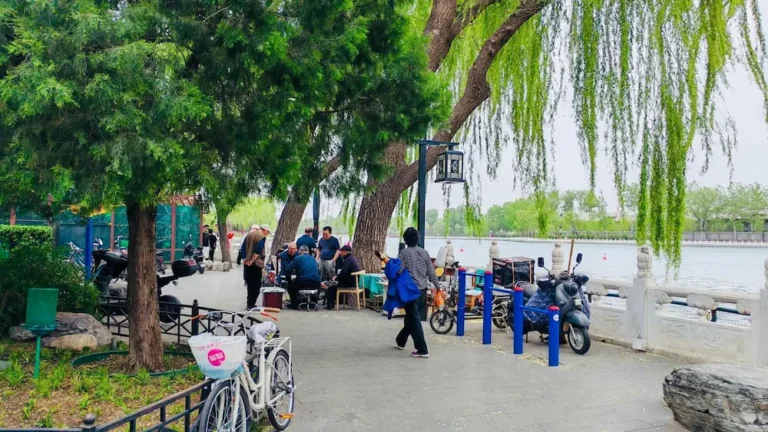
Today, the southern shore of Houhai has been completely transformed after years of planning and development. A large area near Houhai has been turned into a spacious green park, where “water meets hills, and weeping willows gently brush the shore,” making it a wonderful place to relax and unwind.
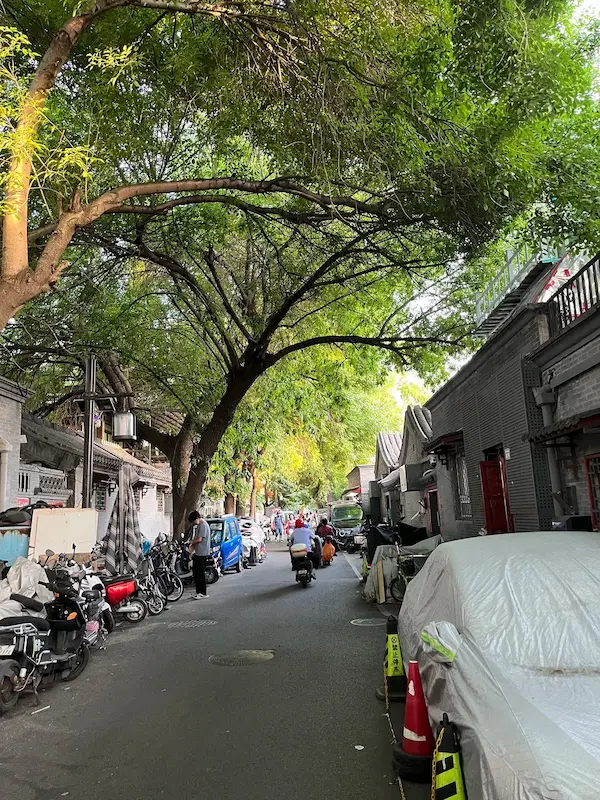
Ancient residential courtyards, historic princely mansions, and the former homes of famous figures collectively create the area’s unique Beijing charm and historical ambiance. Along the shore, charming dessert shops have sprung up, complete with lounge chairs for visitors to rest.
During the day, you can listen to birdsong, watch wild ducks frolicking on the water, and hear the occasional sounds of elderly residents playing chess or chatting in the distance…
Morning Street Life:
At dawn, the shadows of weeping willows gently sway among the blue-brick and gray-tile courtyards, while dew glistens on the stone railings along the riverbank. The bars, bustling during the day, now appear quiet and serene.
At this hour, wisps of cooking smoke rise from the courtyards in the hutongs, marking the beginning of a day filled with the rhythms of daily life.
A Neon Dreamscape at Night:
As night falls, the bars’ LED lights flicker across the glass like a river, and neon lights cast a reddish glow on the water’s surface. Meanwhile, the courtyard houses hidden behind the bars, sheltered by towering ancient trees, quietly slip into slumber.
Houwai South Lane is a hutong that perfectly blends the ancient with the modern. It possesses both a quiet, leisurely side and a lively, vibrant one, quietly narrating the ever-changing story of Beijing.
Visitor Tip: Early morning is ideal for visitors who prefer a quiet stroll; evening is perfect for taking photos of the lake views; and nighttime is great for soaking up the atmosphere of the bar district. If you’re primarily interested in historical sites, we recommend visiting during the day so you can better appreciate the details of the historic sites.
This alley has a unique character: the hustle and bustle of the bars and the tranquility of the historic residences are often separated by nothing more than a bamboo grove or a courtyard wall—two completely different atmospheres just a step apart.
FAQ
Travel Tips
1. Both the Zhang Boju Former Residence and Fengtai An are private residences or closed historic sites. Visitors may only view the exterior of public areas. Please respect residents by not entering courtyards or photographing private living spaces.
2. When visiting the bar district at night, be mindful of crowds and watch your step.
3. This route is a short walking tour that can be combined with visits to Yinding Bridge, Shichahai, and Liuyin Street; there’s no need to set aside a full half-day just for this.
After exploring the southern shore of Hainan Lake, where should you go next?
Author’s Note: This article is based on on-site visits and publicly available historical and cultural materials. The opening status of former residences and historic sites is subject to change; please check the latest official announcements before visiting.