Da Xiangfeng and Xiao Xiangfeng Hutongs in Beijing: History and Former Residences of Famous Figures Next to the Prince Gong’s Mansion
Many tourists leave immediately after visiting the Prince Gong’s Mansion. The Da Xiangfeng and Xiao Xiangfeng hutongs, which run right alongside the northern wall of the Prince Gong’s Mansion, offer a great walking route in the Shichahai area.
⚠Important Note: The highlights of this route primarily consist of the charm of the streets and alleys, as well as the exterior views of historically significant courtyards; Most of the historic residences of famous figures mentioned in this article are either private homes or cultural heritage sites; they are not open to the public and can only be viewed from public roads. Please do not trespass onto the premises or photograph residents’private spaces.
Today, let us step into these two hutongs and explore the dramatic stories behind them.
Table of Contents
Quick Guide
- Highlights: The hidden gem outside the northern wall of the Prince Gong’s Mansion; the wedding site of Wenxiu, the last imperial consort; Jianyuan, the former residence of Marshal Ye Jianying; legends surrounding Cao Xueqin and Dream of the Red Chamber; and the former haunts of Mei Lanfang
- Location: West of Shichahai, adjacent to the northern wall of the Prince Gong’s Mansion
- Recommended visit duration: About 20–30 minutes on foot; this includes stopping to admire the architecture and learn about the history, so we recommend setting aside 40–50 minutes.
- Keywords: Phoenix Emerging from a Wall Crack, Imperial Secrets, Historic Residences of Celebrities, Tranquility Amidst the Hustle
- Best Itinerary: Prince Gong’s Mansion → Daxiangfeng → Xiaoxiangfeng → Ximeichang Hutong—a quiet, All courtyards may only be viewed from the outside; indoor tours are not permitted.
Easiest Way to Get There | Walking Route (Copy and Go)
- Subway: Exit A2 at Shichahai Station (Line 8) / Exit B at Beihai North Station (Line 6), 6-minute walk
- Recommended Route: Back gate of the Prince Gong’s Mansion → Daxiangfeng Hutong → Xiaoxiangfeng Hutong → Ximeichang → Yinding Bridge
Tip: Use a map to locate the entrance to “Daxiangfeng Hutong” first; the on-site signage for the “Rear Gate of the Prince Gong’s Mansion” mentioned in the text is not very prominent, so do not rely solely on verbal directions to find the rear gate.
Highlights: Completely bypass the crowds on the main streets and immerse yourself in the historic hutongs of old Beijing’s elite
Quick Tips
- Most former residences of famous figures are private homes / not open to the public; you can only admire them from the outside
- The hutongs are quiet; please walk slowly and speak softly so as not to disturb the residents
The Origin of the Hutongs’ Names
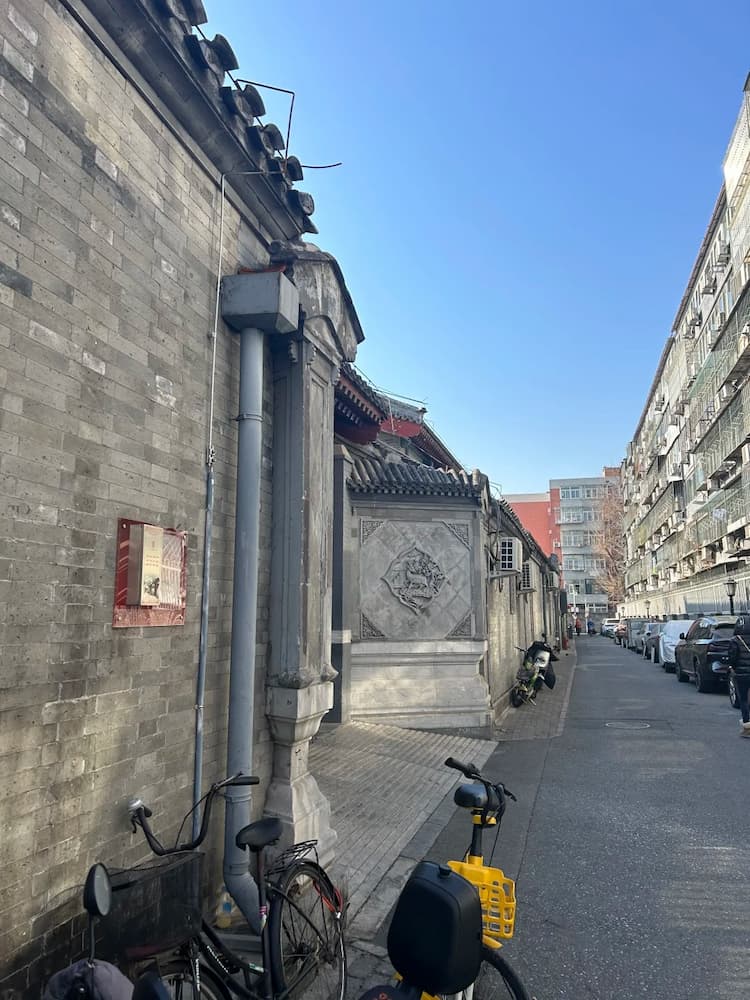
Standing in the alley, the tall blue-brick wall on one side is the outer boundary wall of the Prince Gong’s Mansion.
During the Qing Dynasty, this alley was sandwiched between the high walls of the prince’s mansion and residential homes, forming a long, narrow space.
Locals colloquially referred to it as “Qiangfeng Hutong” (Wall-Crack Alley); later, the name was refined to “Xiangfeng” for its elegant-sounding homophone, and the alley was divided into two sections: Da Xiangfeng and Xiao Xiangfeng.
The notion of “a phoenix flying out of a crack in the wall” is a literary imagination of later generations and was not the original basis for the place name.
Daxiangfeng Hutong: Streets, Alleys, and the Courtyards of Notable Figures
Courtyard No.3: From a Writer’s Home to a Literary Institution
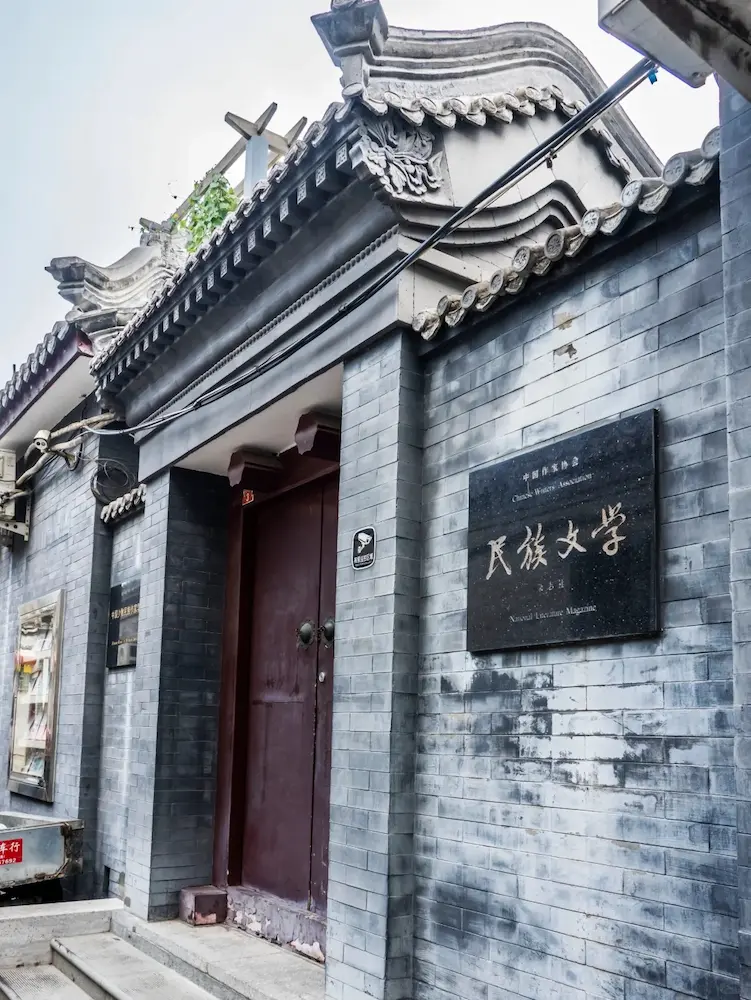
Compound No. 3 on Daxiangfeng Hutong is historically documented as having ties to the writers Ma Feng and Ding Ling; it now serves as the office of the *National Literature* magazine. Public records offer differing accounts as to whether Ding Ling resided here long-term.
As an office building, the compound is not open to the public; visitors may only view the gatehouse and remnants of the painted eaves from the outside.
Courtyard No.6: A Legend Linked to A Dream of Red Mansions
Compound No. 6, Daxiangfeng Hutong. According to folklore, this is said to be the place where Cao Xueqin once lived; however, this is merely a folk legend and cannot be verified by any authoritative historical records. The connection between the Prince Gong’s Mansion area and the real-life inspiration for the Grand View Garden is also merely a topic of discussion among some scholars and has not yet been conclusively established.
Today, it is an ordinary residential compound with no historical markers; visitors can only experience the atmosphere of the hutong from the outside.
Courtyard No. 24: Former Site of “Mei Fu Family Banquet” (Not Mei Lanfang’s Former Residence)
This location once housed a themed restaurant called “Mei Fu Family Banquet,” which centered on the culinary culture associated with Mr. Mei Lanfang; however, this is not the residence where Mei Lanfang himself lived. It has since been converted into school administrative offices, and the red-door courtyard remains well-preserved; visitors can view the courtyard gate from the outside.
Courtyard No.41: The Starting Point of the Last Imperial Concubine
The area around No. 41, Daxiangfeng Hutong. Historical records indicate that in 1921, Puyi issued an edict to purchase a residence and bestow it upon Wen Xiu’s family as her home before she entered the palace.
Today, the original house number is barely recognizable, and since many of the old courtyards in the area share the characteristic features of Qing Dynasty residences—such as high thresholds and decorative door pins—it is impossible to pinpoint the exact residence based solely on its exterior appearance. The site is now a private residence, and one can only learn about this history from the outside of the alley.
Xiaoxiangfeng Hutong: A Prince’s Villa and a Quiet Life
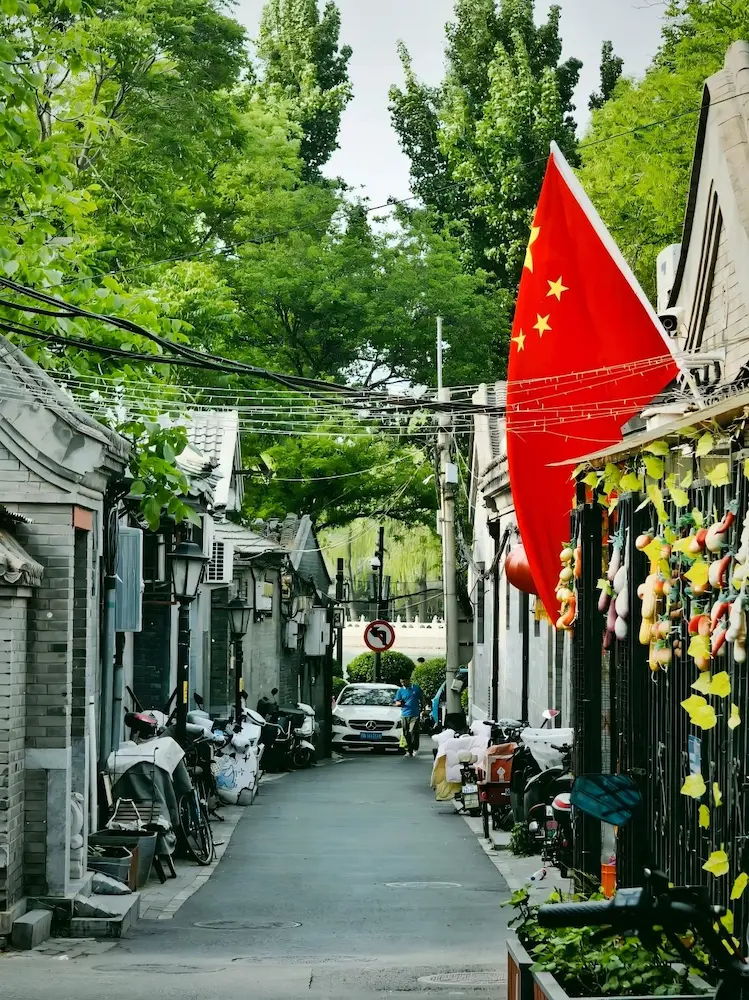
Xiaoxiangfeng Hutong is shaped like a “T”, connecting several alleys, and is overall more winding and tranquil than Daxiangfeng Hutong.
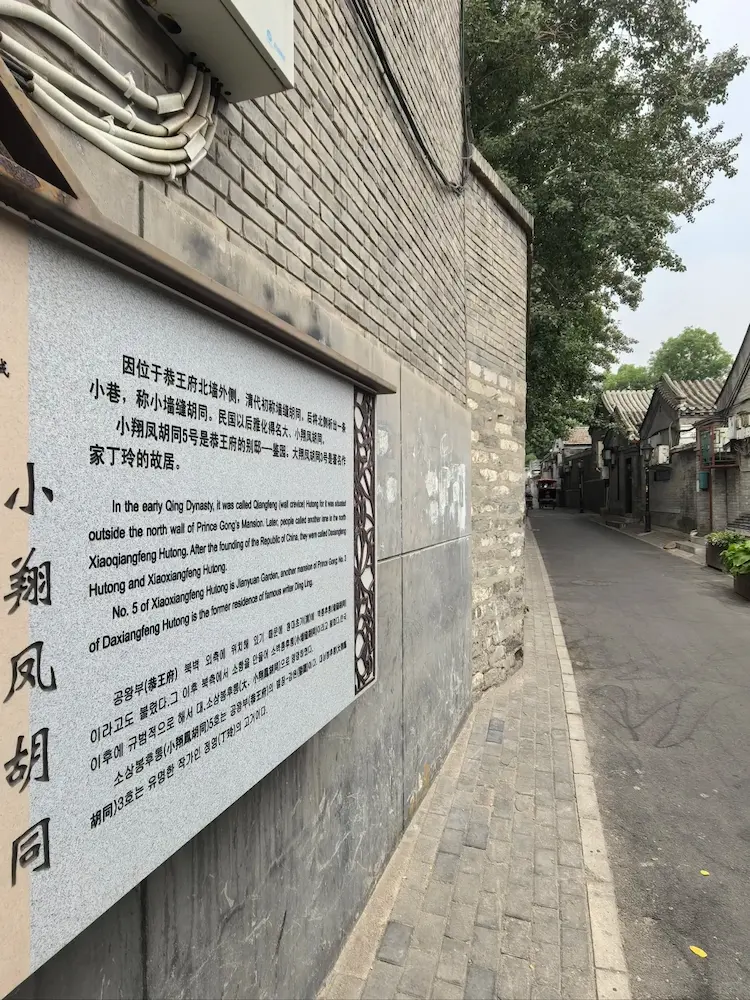
Compound No. 5·Jian Garden: Former Site of the Prince Gong’s Mansion
Jian Garden is a cultural heritage site in Xicheng District. Historical records indicate it was once the country estate of Prince Gong, Yixin; it changed hands several times during the Republic of China era; and after the founding of the People’s Republic of China, Marshal Ye Jianying resided here. The compound overlooks Houhai.
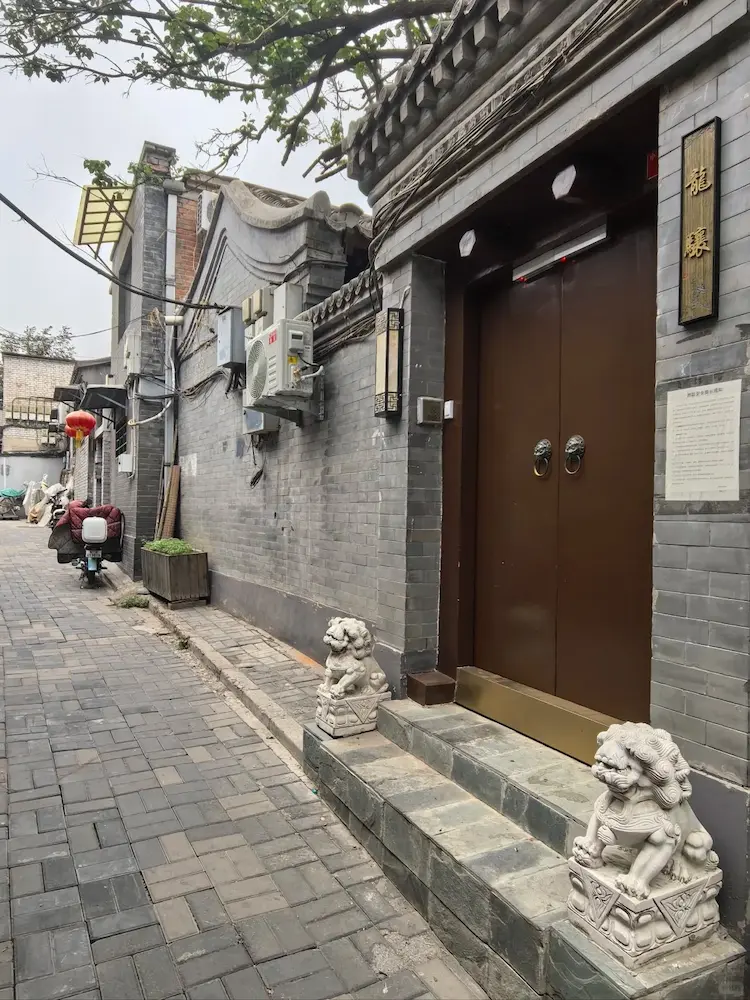
⚠Current Status: This is a managed cultural heritage site and is not open to the public. Visitors are only permitted to view the ancient trees and courtyard walls from the public road outside the entrance; entry into the courtyard is strictly prohibited, and visitors should not gather for extended periods at the courtyard entrance to take photos or linger.
Details to Observe On-Site
- In the eastern section of Daxiangfeng Hutong, you can get a close-up view of the towering northern wall of the Prince Gong’s Mansion and experience the stark contrast between the mansion’s high walls and the narrow alleys of the residential area;
- Along the streets and alleys, you can see well-preserved old door sills and door pins, though many residential facades have been renovated in recent years;
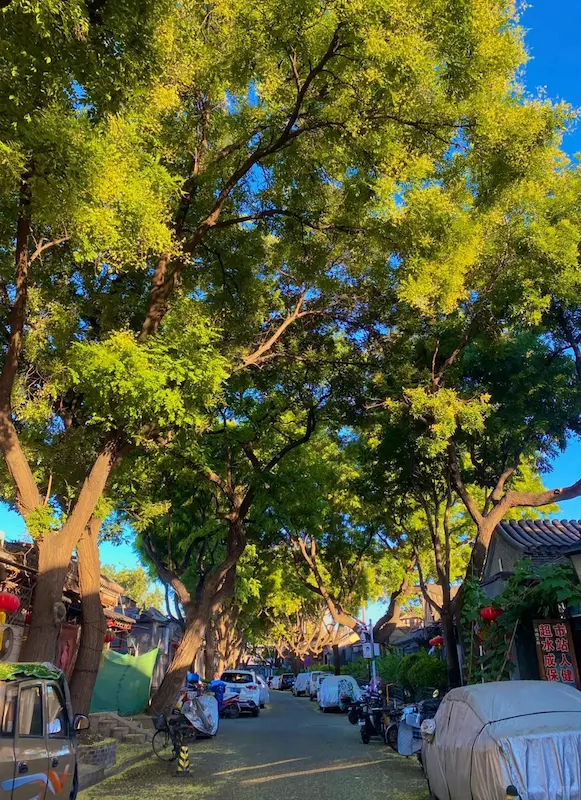
- There are very few commercial establishments along the entire length of the hutong; the area is primarily characterized by scenes of residents’ daily life;
Important Reminder:
This is a residential area. Please do not take photos directly at residents’ doors or windows, and do not linger for extended periods at the entrances of private homes. While the atmosphere in the alleys is particularly charming when the lighting is good, please do not treat this area as a dedicated photography hotspot.
FAQ
There are no designated, enclosed attractions in Da and Xiao Xiangfeng Hutongs. As you walk through these alleys, you’ll see remnants of the Prince Gong’s Mansion’s outer walls and traces of courtyards from the Qing Dynasty and the Republic of China era, all intertwined with the daily lives of today’s residents.
The value of this route lies primarily in the atmosphere of the old city’s streets and alleys and the stories of the historical figures associated with them. Since most of the historic sites can only be viewed from the outside, it’s advisable to adjust your expectations before setting out.
After exploring Da and Xiao Xiangfeng Hutongs, where should you go next?
- Guide to the Prince Gong’s Mansion
- Walking Tour Guide to Shichahai and Yinding Bridge
- Beijing’s Old City Hutongs: City-Walk Special Feature
Author’s Note: This article is based on on-site visits and a compilation of publicly available historical and cultural materials from Xicheng District. The accessibility of residential homes and heritage-protected courtyards is subject to change; only public areas within the alleys and lanes are accessible. Please check on-site conditions before visiting.