Exploring Beijing’s Hutong Culture: The History and Artistic Stories of Beiguanfang Hutong
Across from the bustling bar street in Beijing’s Shichahai area lies a quiet, story-filled place—Beiguanfang Hutong.
Nestled next to Houhai and the famous Yinding Bridge, this hutong offers a world entirely different from the noise opposite the street. As soon as you step inside, you’re immediately enveloped in a sense of tranquility and peace.
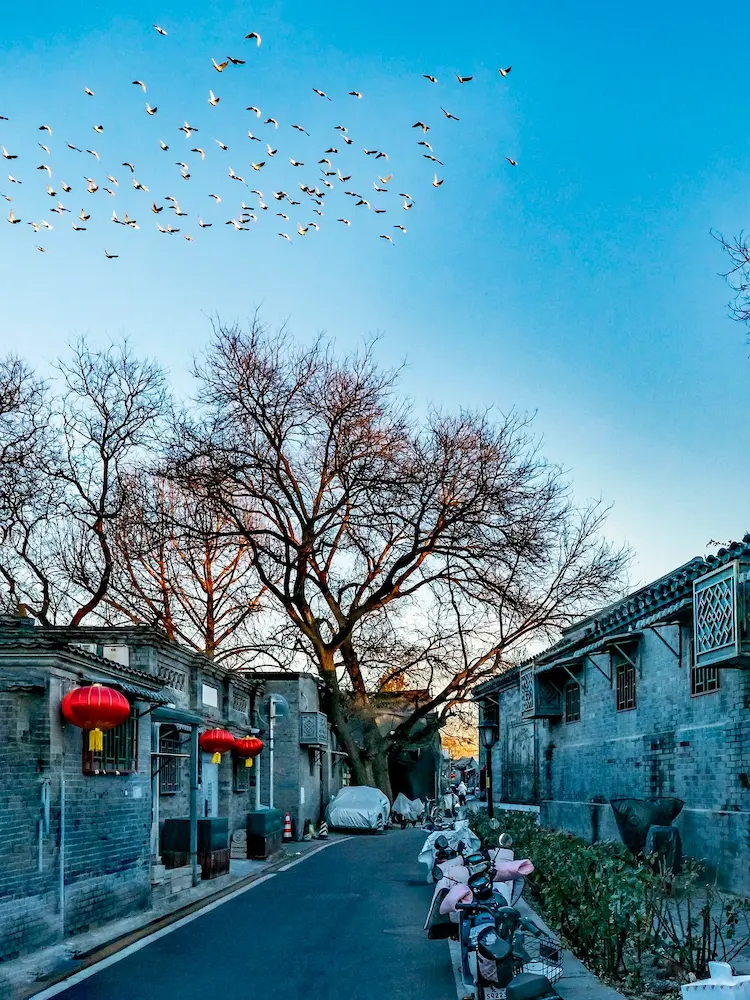
Table of Contents
Quick Guide
- Highlights: Guan Guangzhi’s Former Residence, Zhang Boying’s Former Residence, Residences of Famous Xihe Drum Artists, Old Locust Tree Photo Spot, No. 18 Art Courtyard
- Location: Core area of Jinsitiao, Shichahai; next to Yinding Bridge, across from Houhai Bar Street
- Recommended visit duration: 20–30 minutes
- Keywords: Tranquility Amidst the Hustle, Artsy Hutong, Historic Residences, Authentic Local Housing
- Best Itinerary: Yinding Bridge → Beiguanfang → Nanguanfang → Jinsihutong—step from the bustle into serenity
Easiest Way to Get There | Walking Route (Follow Along)
- Subway: Exit A2 at Shichahai Station (Line 8), walk 5 minutes to Yinding Bridge; Beiguanfang Hutong is directly across the street
- Recommended Route: Yinding Bridge → Beiguanfang Hutong → Nanguanfang Hutong → Da and Xiao Jinsi Hutongs
- Biggest Advantage: Escape the hustle and bustle of Houhai in an instant and step straight into the quiet, old-world Beijing
Quick Tips
- Most are residential homes; please visit quietly—no knocking on doors or loud talking
- There aren’t many shops, so bring water before you go
The Origin of the Hutong and the “Jinsitao” Area
How did “Beiguanfang Hutong” get its name? We must go back to the mid-Qing Dynasty. At that time, to address accommodation needs for officials coming to Beijing from other provinces, the Qing government built many “official houses” (官房 guānfáng) in the Houhai area.
These houses formed the South, North, and East Guanfang Hutongs, including Beiguanfang Hutong.
This hutong is located within an even more interesting district called “Jinsitao” (Gold and Silk Set). This area refers to the space between Qianhai North Shore, Houhai South Shore, and Liuyin Street, covering about 20 hectares.
It contains seventeen winding yet interconnected hutongs, resembling an exquisite piece of weaving. As early as the Qing Dynasty’s Beijing maps, this area was marked as “Jinyin Sitao Hutong” (Gold and Silk Braid Hutong), which is the origin of today’s name “Jinsitao.”
Architectural Features and Serene Atmosphere
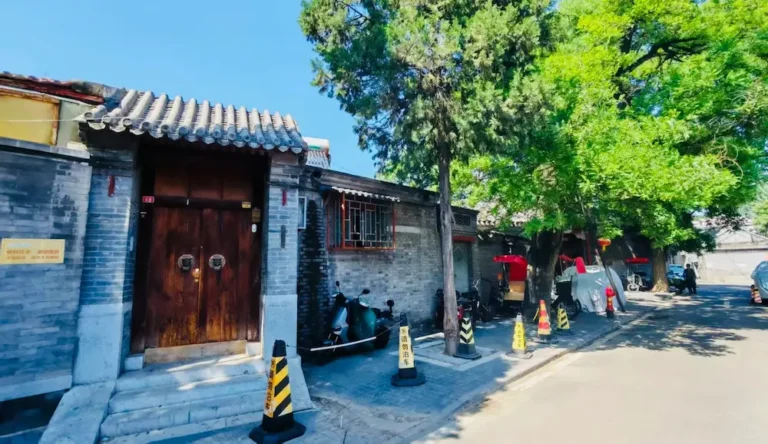
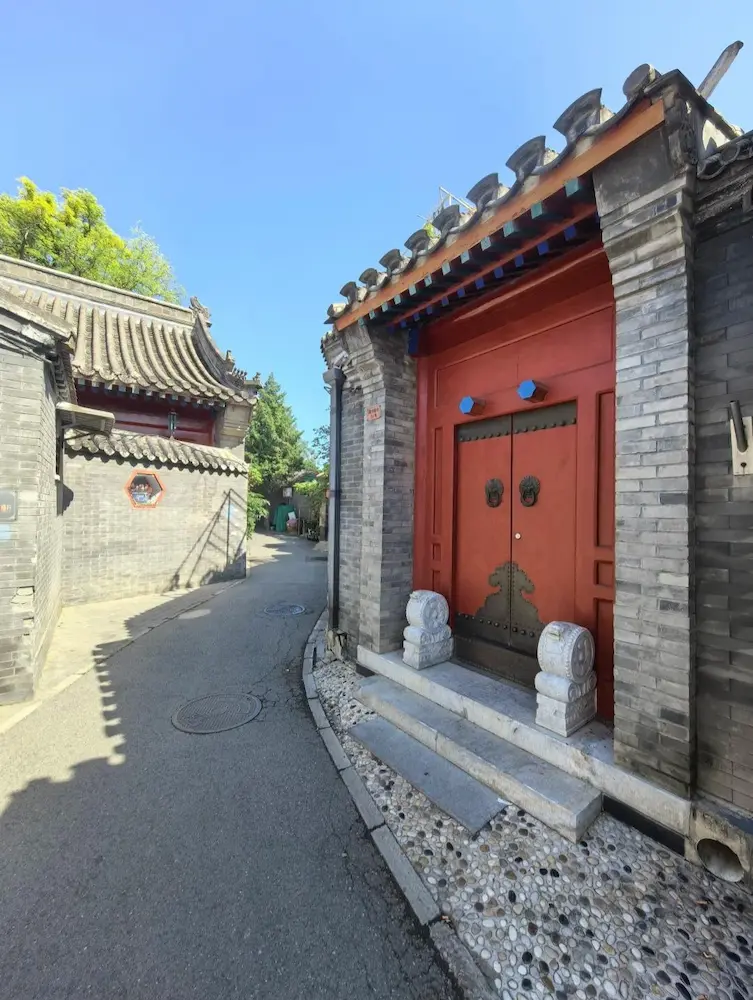
Compared to some of the narrower surrounding hutongs, Beiguanfang Hutong is relatively wide. Here, you’ll find many traditional Chinese-style large gateways (宅门 zháimén) with exquisite brick carvings on the walls.
The architectural style is that of standard Chinese official residences, featuring warm colors, uniform specifications, and medium scale.
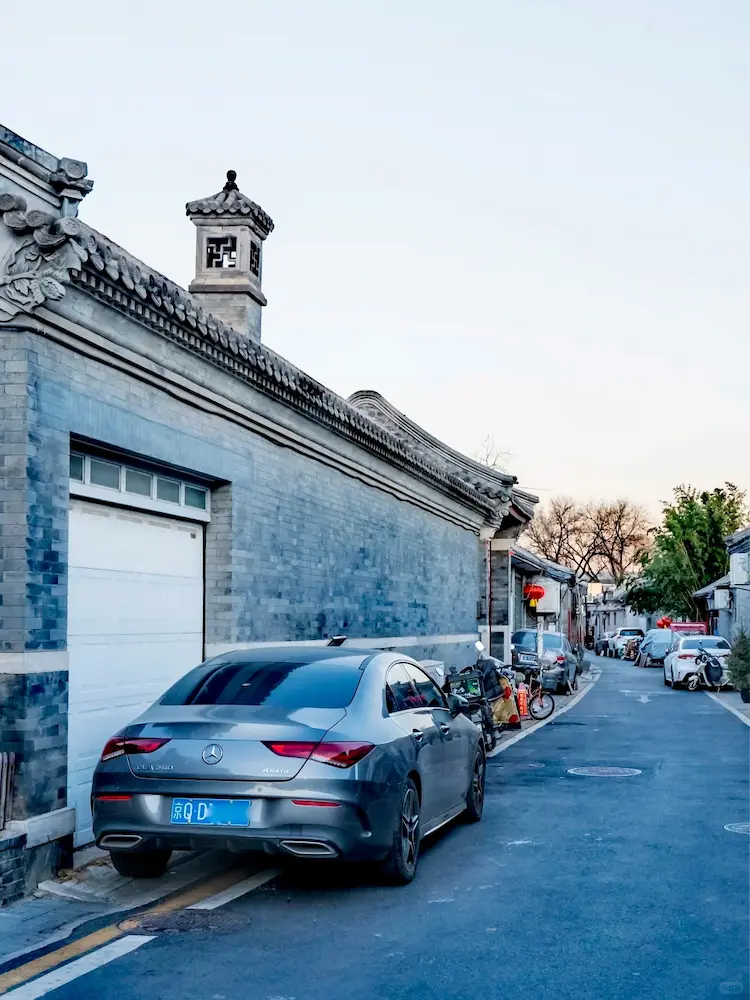
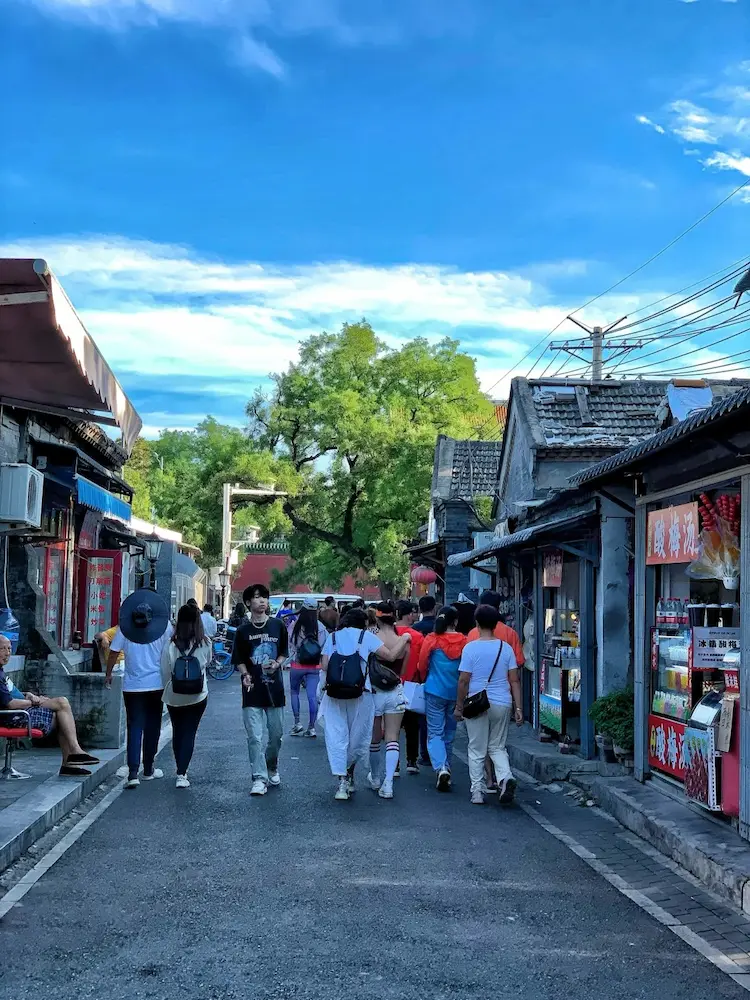
Although it’s very close to the noisy Yinding Bridge, the world becomes quiet once you enter the hutong. Few tourist pedicabs are shuttling through; instead, the atmosphere is more of residents’ daily life.
This characteristic of finding peace within excitement makes it a favored spot for those who genuinely want to understand Beijing’s hutong culture in depth.
Footsteps of Literary and Artistic Figures
The most captivating aspect of Beiguanfang Hutong is its strong tradition of culture and art. In the past, many renowned artists and cultural figures lived here.
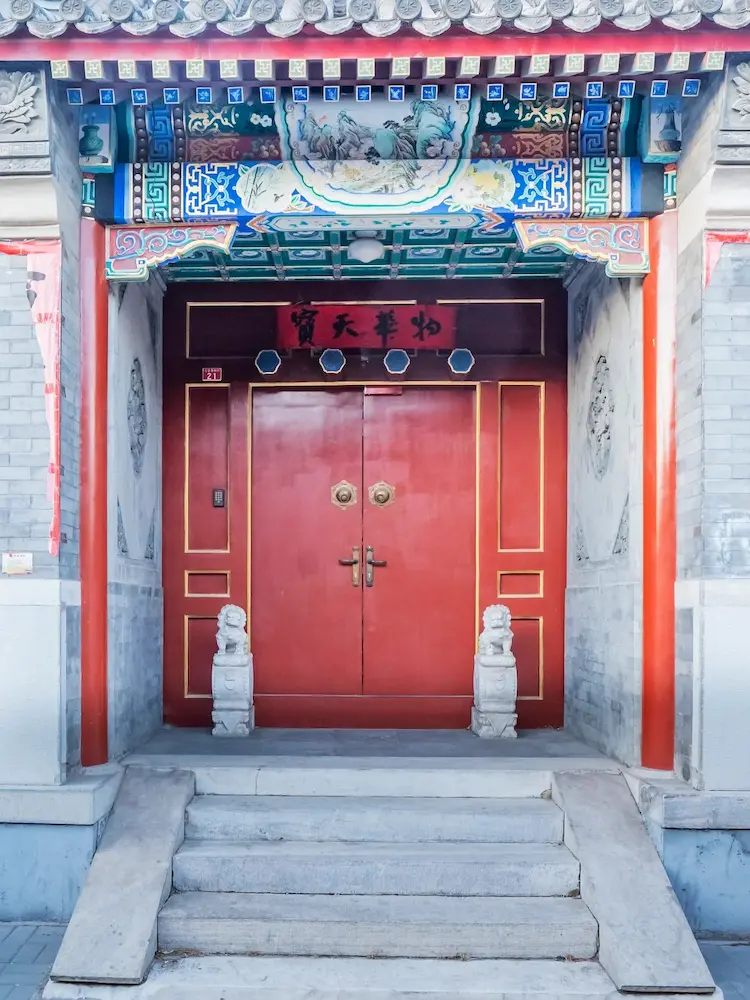
No. 21 Courtyard:
This was once home to the famous Xīhé Dàgǔ (a traditional Chinese narrative singing art form) performer, Ma Zengfen. The current No. 21 courtyard features a vermilion gate with golden-colored painted pillars, and the walls on both sides of the gate pillars are adorned with blue-green brick carvings.
The same courtyard was also once home to the renowned Peking Opera amateur performer Nan Tiesheng. He excelled in playing female “Qingyi” roles and was praised as the “Mei Lanfang of Hankou” for his exquisite performances.
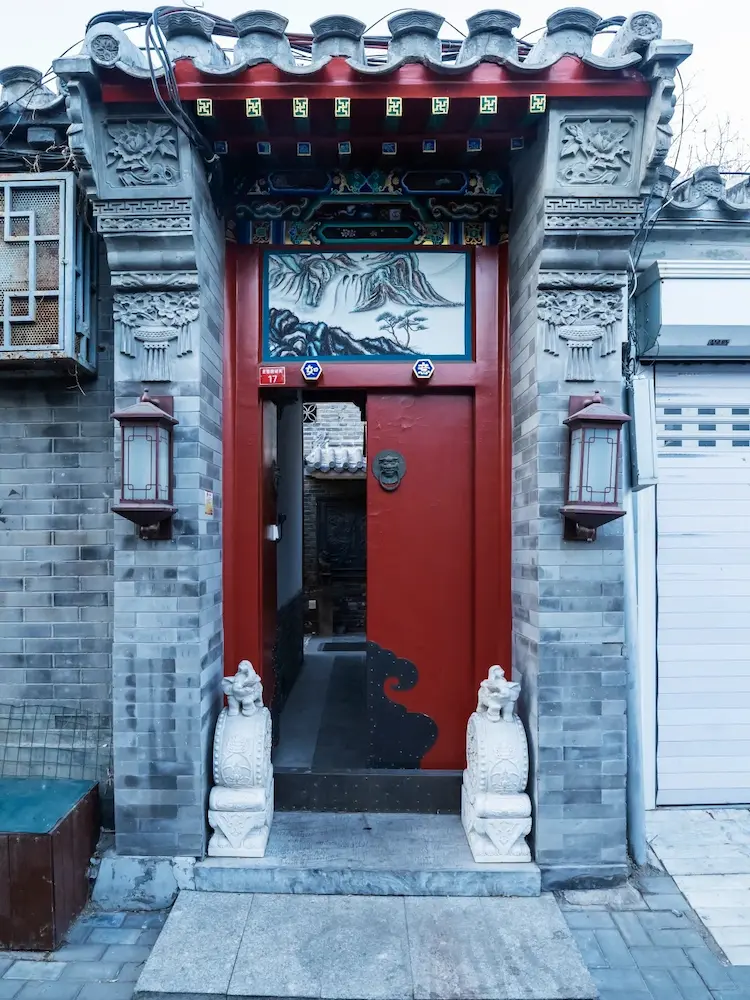
No. 17 Courtyard:
Guan Guangzhi, a first-generation Chinese watercolor painter, once lived here. He was particularly skilled in depicting ancient architecture and garden landscapes, with many of his works featuring Beijing’s famous sights, such as the Glazed Tile Pagoda of Fragrant Hills, the Five Dragon Pavilions in Beihai, and the Temple of Heaven.
His representative work, “The Hall of Prayer for Good Harvests at the Temple of Heaven,” uses a slightly upward-looking angle to vividly express the majestic grandeur of this magnificent building.
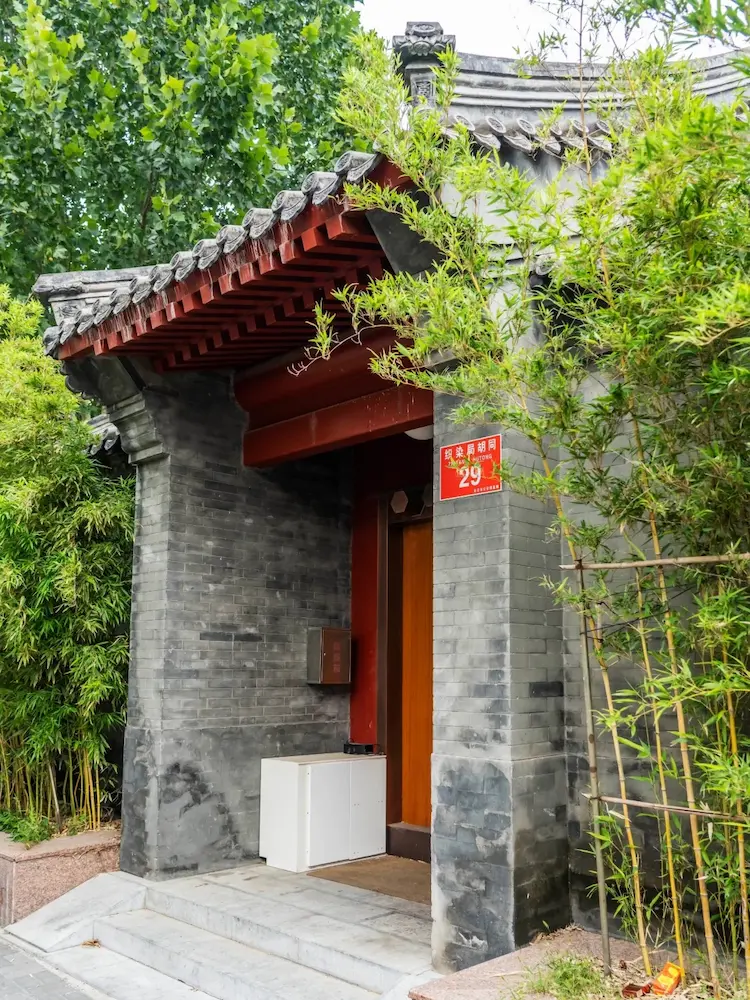
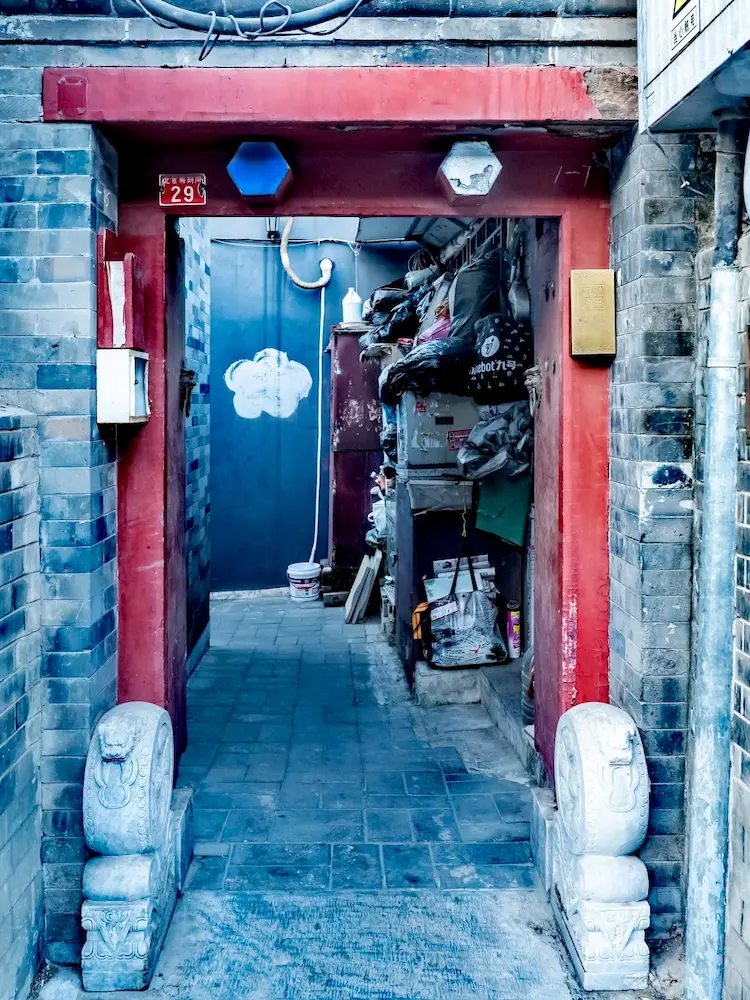
No. 29 Courtyard:
This was the residence of Zhang Boying, a master of stele rubbing studies and calligraphy. Even the great Chinese painting master Qi Baishi wrote poems praising his calligraphy as “marvelous as if divine.”
The famous calligrapher Qi Gong also recalled him affectionately in his writings, lamenting that he still hadn’t fully comprehended his teachings.
No. 28 Courtyard:
In the 1950s, this courtyard served as a dormitory for the China Artists Association. Famous artists like Jiang Feng and Cai Ruohong lived here after moving from Yan’an to Beijing.
The courtyard’s outer wall is long, and the area is large, though the interior appears somewhat cluttered today.
The Artistic Atmosphere of the Hutong Today
This artistic lineage continues today. No. 18 Courtyard in the hutong is now a luxuriously renovated new mansion, said to be a private platform for cultural and artistic exchange, regularly hosting various lectures, exhibitions, and performances.
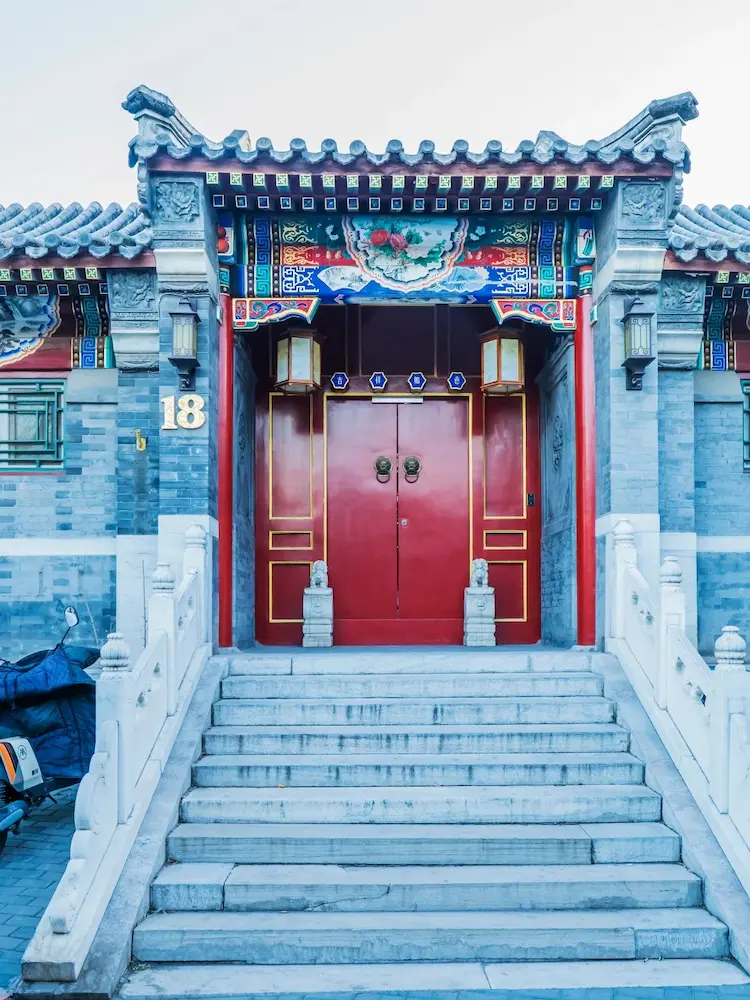
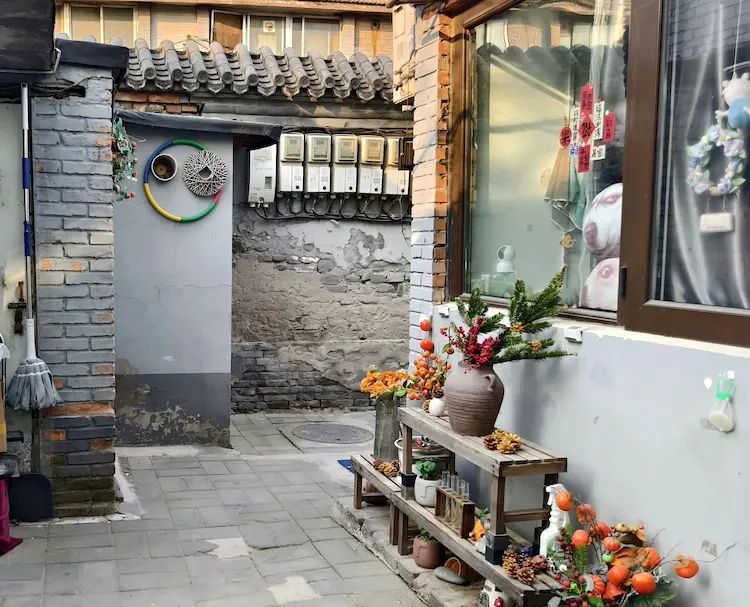
While strolling through the hutong, you might accidentally discover a courtyard wall with signs promoting calligraphy and seal carving. Peering curiously through the gate, you might see calligraphy works, their ink not yet fully dry, hanging from flower rack poles and swaying gently in the wind.
The courtyard is tidy and quiet, with refreshing greenery that is pleasant and creates a unique ambiance. The artistic atmosphere of the hutong is passed down just like this, almost unnoticed.
At a bend in the hutong, there is an old locust tree with a very unique shape. It stands like a natural gate, partially blocking and revealing the path ahead, making you wonder what scenery lies beyond.
Once, I even encountered a few young people sitting there sketching a small courtyard. This lively scene was delightful and instantly boosted my confidence in my own aesthetic taste.
Towards the end of the hutong, the courtyards become slightly smaller and older, but the flowers outside the walls bloom with exceptional vibrancy.
Standing at that intersection, I couldn’t help but think: No matter where we come from, holding onto a love for life is the most precious thing. We should warmly welcome each day and create a romantic life for ourselves.
Beiguanfang Hutong is just such an ancient lane that perfectly blends the accumulation of history with vibrant art. It is not as ostentatious as the neighboring bar street, yet with a quiet and profound strength, it narrates the moving artistic and literary stories of Beijing.
A Hidden Gem: The Old Locust Tree That Forms a“Natural Arch”
At the bend of the alley stands an old locust tree with a truly unique shape.
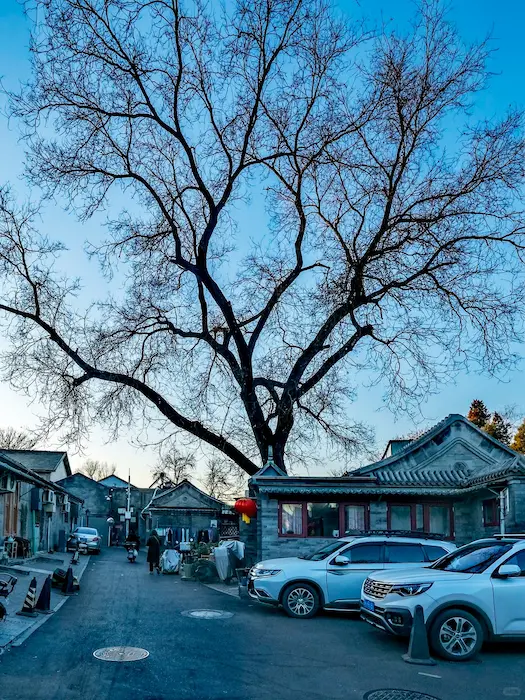
Its branches stretch out in all directions, forming a natural arch that partially frames the entrance to the alley.
Sunlight filters through the leaves, creating a cinematic effect in every photo.
This is Beiguanfang’s best-kept secret.