A Guide to Beijing’s Hutongs: Exploring 6 Unique Alleys, Including the Narrowest, Shortest, and Oldest
Beijing’s hutongs are far more than ordinary streets connecting the city; they are the beating heart of the ancient capital, a three-dimensional chronicle of history, culture, and social change. From the narrowest to the oldest, from the most winding to the widest, these hutongs, with their unique forms and the stories they carry, collectively form the distinctive urban fabric of Beijing.
This guide will take you deep into six representative hutongs, revealing why they are called the “most” of Beijing’s hutongs and helping you understand the living history they preserve.
Table of Contents
01 Shortest Hutong: Yichi Street (One-Foot Street), A Tiny World of Twenty-Five Meters
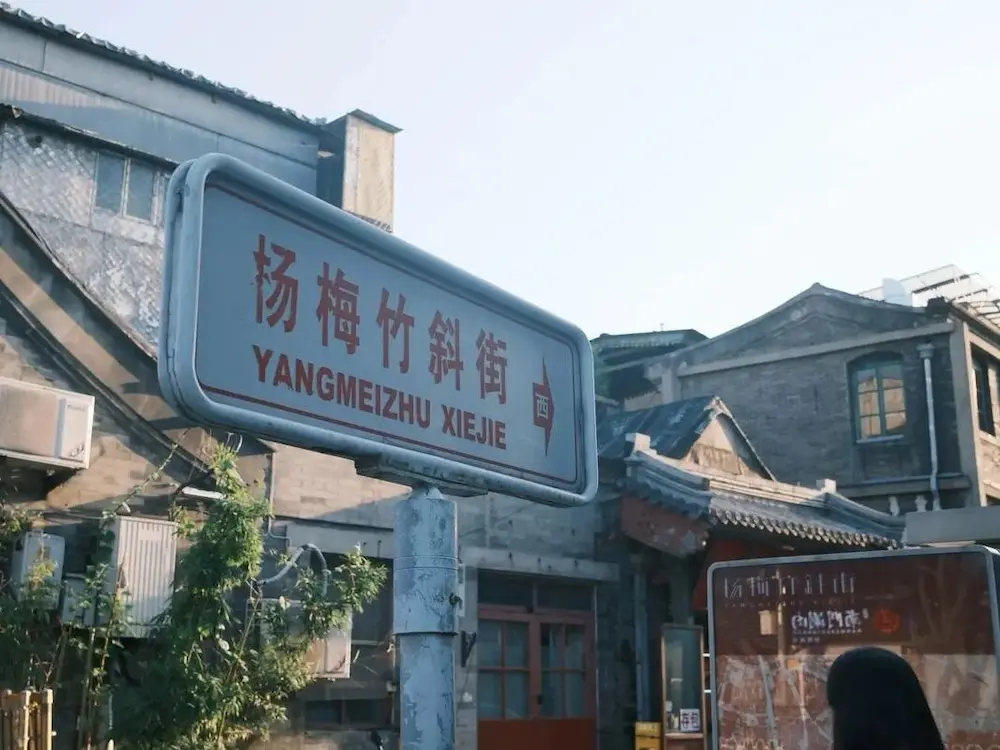
Yichi Street is located in the western section of Yangmeizhu Xiejie, connecting Tongzi Hutong to the northern entrance of Yingtao Hutong. It runs east-west. Its name is amusing—”One Foot” is an exaggeration. Its actual length is just over 30 meters, measured at 25 meters, officially recognized as Beijing’s shortest hutong.
In the past, although this alley was short, it had complete living functions: there were three engraving shops on the north side, and six shops, including a wine tavern, a blacksmith’s shop, and a barbershop on the south side. Today, walking along this hutong, although the old shops are hard to find, it remains a microcosm of old Beijing hutong culture, still allowing people to sense the lively atmosphere of former street life.
02 Longest Hutong: Dongjiaominxiang, A 1600-Meter Historical Corridor
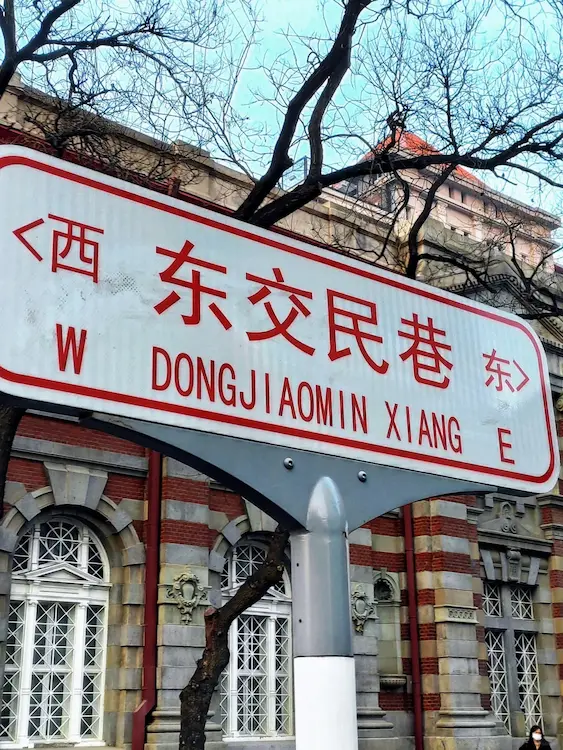
Dongjiaominxiang stretches approximately 1,600 meters from Dongchang’an Avenue in the west to the eastern end at Chongwenmennei Street. It is undoubtedly Beijing’s longest hutong.
Its history can be traced back to the Yuan Dynasty. It was named “Jiangmi Xiang” (Glutinous Rice Lane) because it was an important route for transporting grain from the south to the north. During the Ming and Qing dynasties, it became a gathering place for central government offices. From the late Qing Dynasty to the Republican era, it transformed into a foreign Legation Quarter, witnessing the turmoil of modern Chinese history.
Strolling through Dongjiaominxiang today, the Western-style buildings on both sides form a unique contrast with the traditional Chinese hutong layout. These well-preserved historical buildings make this area Beijing’s distinctive landscape of East-West cultural convergence.
03 Widest Hutong: Lingjing Hutong, A 32-Meter Wide Urban Passage
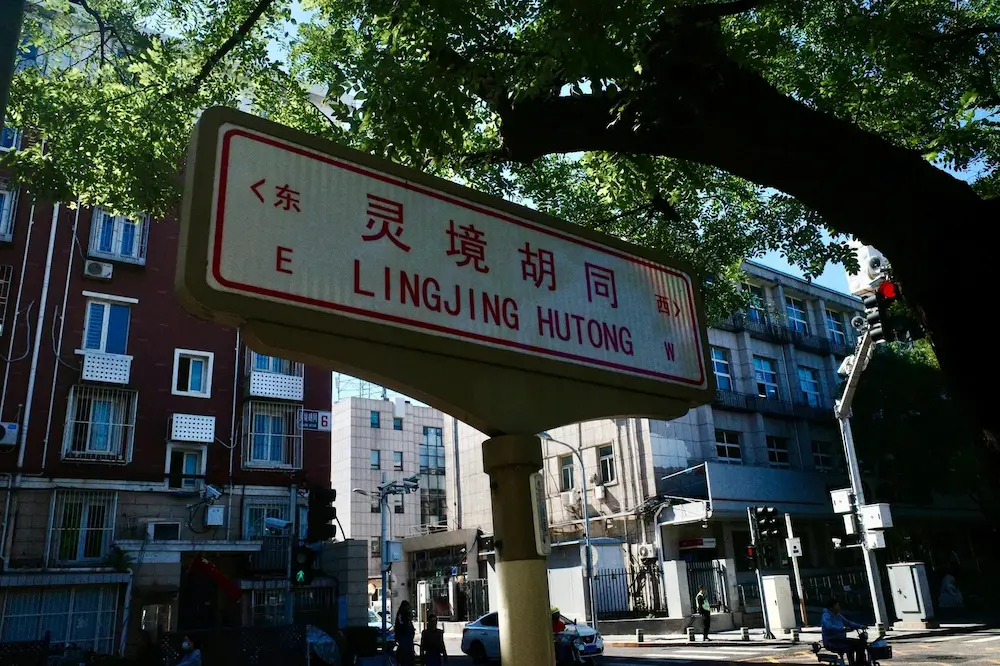
Lingjing Hutong is located in Xicheng District. It is 664 meters long, with its widest point reaching 32.18 meters, making it Beijing’s widest hutong. Its name originates from the Lingji Palace, a Taoist temple once located here.
Unlike many hutongs hidden deep within neighborhoods, Lingjing Hutong has an excellent location, intersecting from east to west with three major north-south thoroughfares: Fuyou Street, Xihuangchenggen Street, and Xidan Street. Today, it has become part of the bustling modern city. Surrounding the hutong are both traditional old shops and modern malls from the Xidan commercial district.
This hutong witnesses Beijing’s transformation from a traditional city to a modern metropolis and is an excellent place to experience the blend of hutong culture and urban life.
04 Narrowest Hutong: Qianshi Hutong, The Memory of a 0.4-Meter Alley
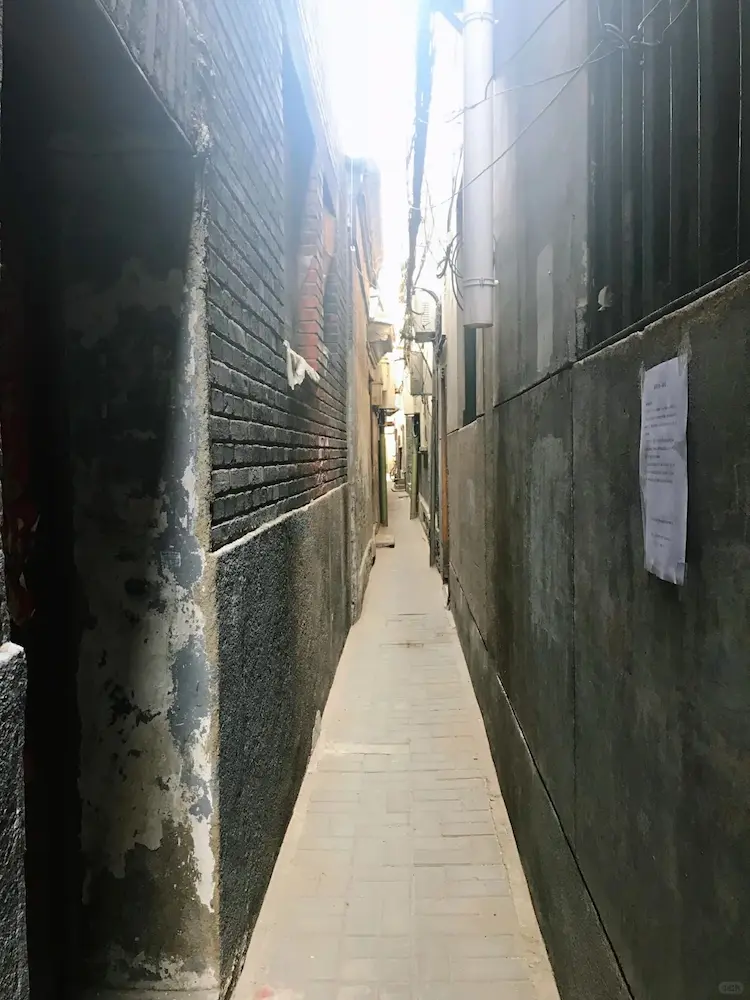
Qianshi Hutong is located west of ZhuBaoshi Street, near the Dashilan commercial area. This hutong is 55 meters long, with an average width of only 0.7 meters, and the narrowest pointis just 0.4 meters—Two people meeting face-to-face must turn sideways to pass.
This narrow alley was once the official silver and coin exchange market during the Qing Dynasty, considered the prototype of China’s early financial market. During the Republican period, it was converted into bank buildings, featuring compact and diverse architecture, including several courtyard houses and Sino-Western hybrid buildings.
Currently, Qianshi Hutong is undergoing renovation and redevelopment, with plans to convert it into a Museum of Silver and Banking in the future. This tiny hutong carries important memories of Beijing’s financial industry development and is an indispensable part of the city’s history.
05 Most Winding Hutong: Jiuwan Hutong, A Maze of Thirteen Turns
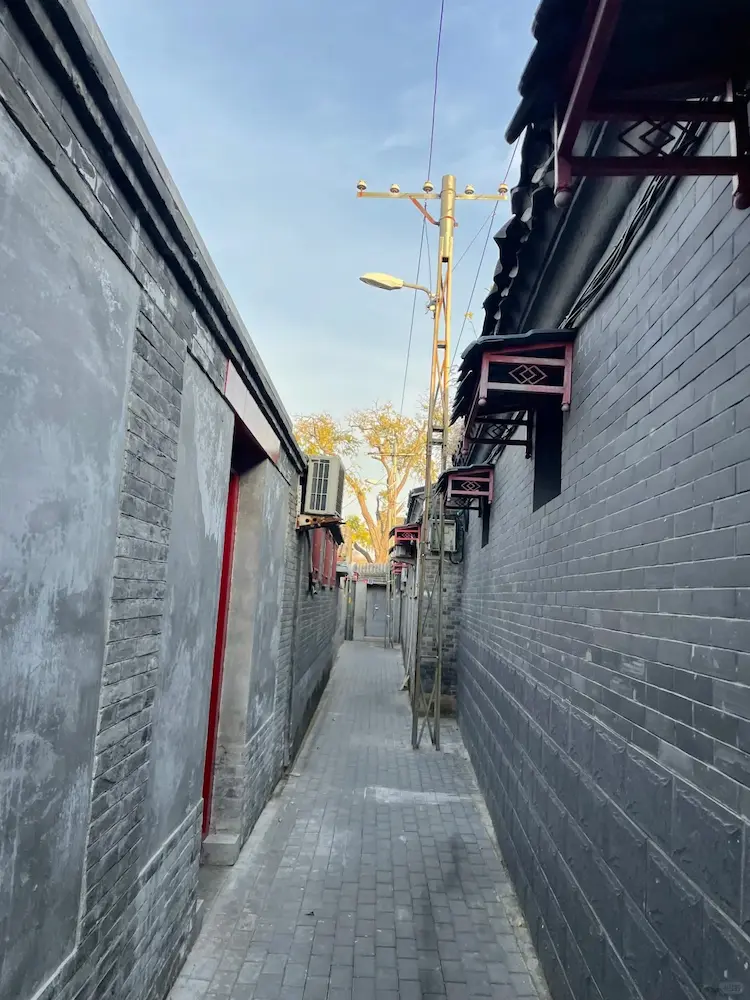
Jiuwan Hutong is located in the eastern part of the former Xuanwu District. It is about 390 meters long and famous for having as many as 13 turns, nine of which are 90-degree right-angle bends, with the rest being oblique or gentle curves. This hutong was originally derived from a river course, which is why the character “wan” (meaning bend) retains its water radical.
From its Ming Dynasty name “Bore Si Hutong” (derived from a temple) to its late Qing name “Jiuqu Wan” (Nine-Curve Bend), and finally its official 1965 name “Jiuwan Hutong”, its name evolution also reflects historical changes. The hutong gradually narrows from east to west, with the narrowest point allowing only one person to pass.
Walking through Jiuwan Hutong, the experience of turn after turn, bends within bends, is unique. Visitors often joke that “it’s easy to get dizzy even walking here in the daytime.” This spatial interest is something straight hutongs cannot provide.
06 Oldest Hutong: Zhuanta Hutong, Witness to Seven Centuries of History
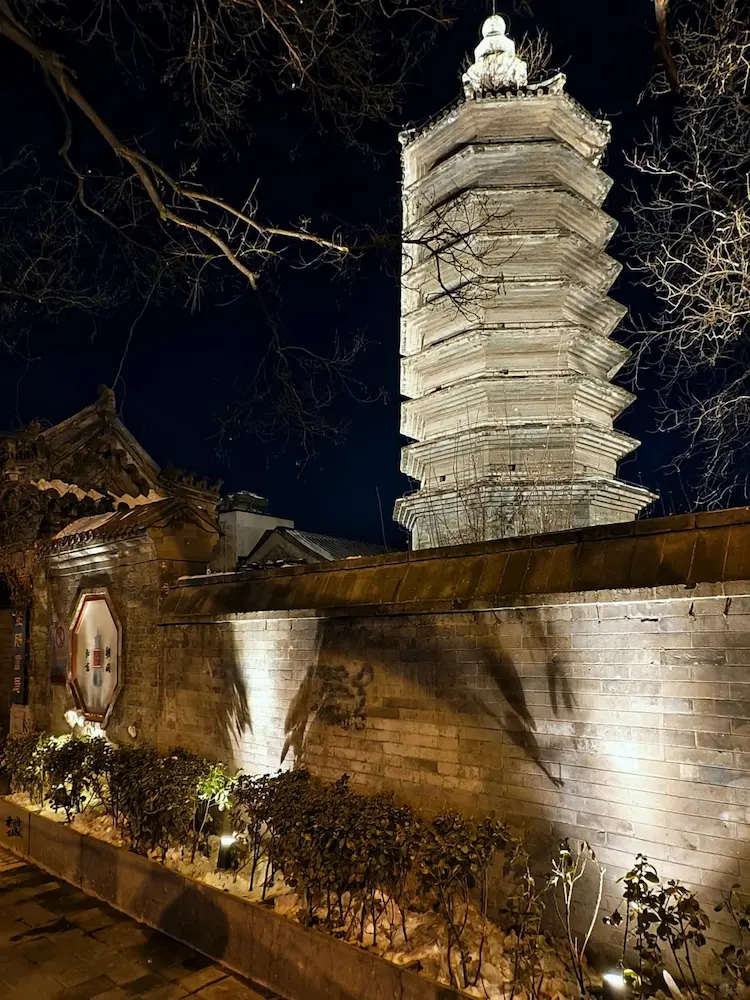
Zhuanta Hutong has a history of over 700 years and is one of Beijing’s oldest hutongs with written records. It is named after the Wansong Laoren Pagoda at its eastern entrance, built in memory of the Chan Buddhist master Wansong Xingxiu, who was the teacher of the Yuan Dynasty senior official Yelü Chucai.
This hutong, located near Xisi, is 805 meters long and was once a center of theatrical activities during the Yuan, Ming, and Qing dynasties. In modern times, several cultural figures like Lu Xun and Lao She lived and created works here, their writings deeply connected to this hutong.
Zhuanta Hutong preserves not only the ancient urban fabric but also carries rich cultural memories and the footprints of famous individuals. It is an unmissable stop for exploring Beijing’s cultural heritage.
From Yichi Street, only 25 meters long, to Zhuanta Hutong, which has witnessed seven centuries, these distinctive hutongs constitute Beijing’s multifaceted and three-dimensional historical scroll.
When you step into these hutongs, each footstep falls upon memories from different eras—seeing the architectural dialogue between East and West in Dongjiaominxiang, feeling the traces of early finance in Qianshi Hutong, experiencing the interest of spatial twists in Jiuwan Hutong, and observing the blend of tradition and modernity in Lingjing Hutong.
These hutongs are not just passages for traffic; they are living history museums, preserving the most authentic and abundant layers of memory of Beijing. Exploring them is the most direct way to read the heavy historical book that is Beijing.