Beijing Ditan Park Complete Guide: History, Ginkgo Trees & Practical Tips
If your Beijing itinerary only includes the Forbidden City and the Great Wall, you might be missing a place equally captivating and closer to the historical and modern pulse of the city—Beijing Ditan Park.
Unlike the grand and famous Temple of Heaven, Ditan is more like a low-key wise elder. It has undergone a remarkable transformation: from the most solemn imperial altar to a bustling public stadium in the Republican era, to the tranquil park enjoyed by citizens and visitors today. It has witnessed centuries of Chinese history, transitioning from purely imperial rituals to the vibrant daily life of ordinary people.
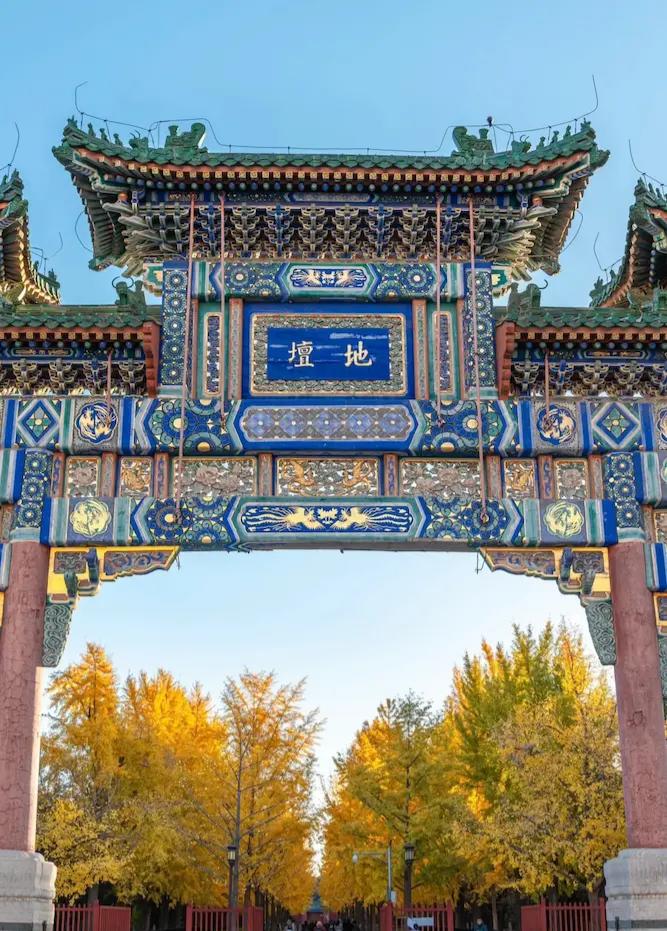
What is Ditan? It’s More Than Just a “Park”
Many, hearing the name “Ditan” for the first time, mistake it for a temple. In fact, this is a beautiful misunderstanding. Ditan was never a religious site. It was the highest-level state ceremonial architecture used by emperors of the Ming and Qing dynasties to worship “Huang Di Qi”—the “God of the Earth.”
Imagine, in that era, the emperor, as the representative of the state, would select a specific day each year to hold a grand ceremony here. It wasn’t to ask for blessings, but to express the most sincere gratitude to the land he ruled. This reverence and gratitude towards the earth make Ditan itself resemble “a love letter from the ancients to the earth.”
The Heart of Ditan: The “Numerical Code” of Fangze Altar
The soul of Ditan lies in its core structure—the Fangze Altar (Square Moat Altar). Every design element here is full of symbolism, embodying the ancient Chinese cosmological view of “the round heaven and the square earth” and the philosophy of Yin and Yang.
Why is it square? The core structure of the Temple of Heaven, used for worshipping heaven, is circular, symbolising “the round heaven.” In contrast, the core structure of Ditan, used for worshipping earth, is square, symbolising “the square earth.” Therefore, Ditan’s main areas and altars are perfectly square.
- The Secret of the Stones: The Fangze Altar consists of a two-tiered white marble platform. The upper tier is paved with 36 large stones, and the lower tier with 100 square stones. These numbers were not chosen randomly. In ancient Chinese thought, odd numbers are Yang (symbolising heaven), and even numbers are Yin (symbolising earth). Thus, Ditan, used for worshipping the earth, consistently uses even numbers representing “Yin.” Records indicate the entire altar surface is paved with 1572 bluestones, also hiding ancient numerical philosophy.
- The True Meaning of “Getting Down to Earth”: Standing here, you can truly touch history. These cold stones have borne centuries of wind, rain, and ceremony. The ancients performed rituals here to connect with the earth most instantly—perhaps the most original experience of what “getting down to earth” means.
A Legendary History of “Transformation”
The most fascinating story of Ditan occurred in modern times. In 1925, the government of the time made a bold decision: to open this imperial forbidden ground to the public and transform it into a public activity space. This transformation was dramatic:
The Shenku (Divine Repository), originally housing tablets of mountain and river deities, was fitted with horizontal and parallel bars, becoming a gymnasium.
The Zaisheng Ting (Slaughter Pavilion), where sacrificial animals were slaughtered, became a public library.
Even the open space west of the solemn altar was paved into tennis courts.
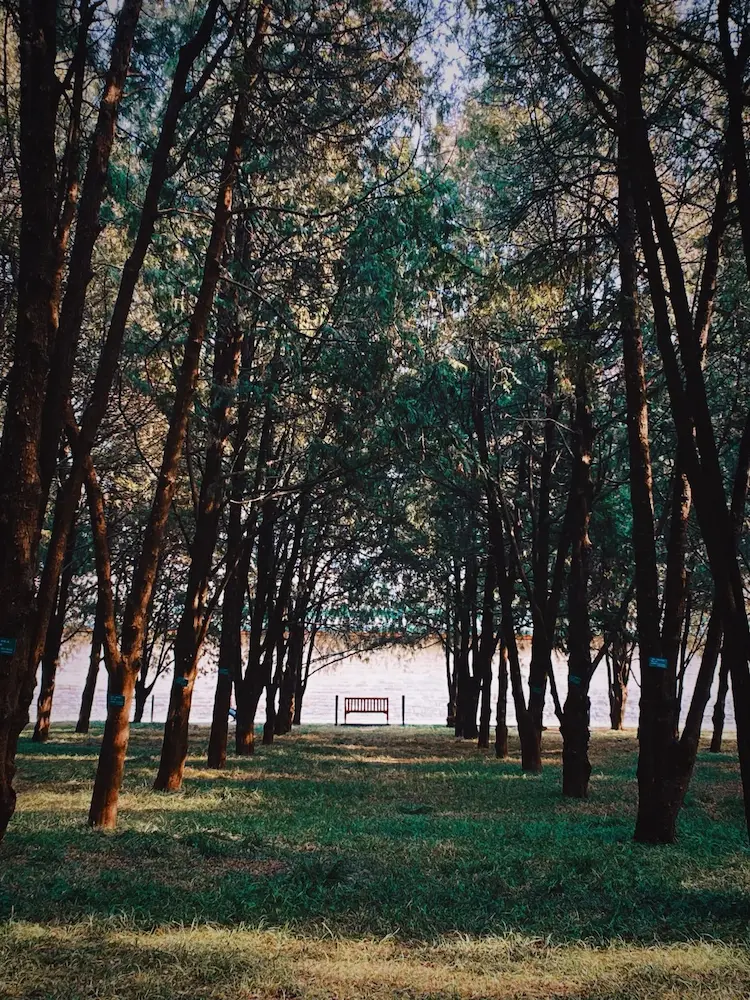
Imagine this scene: young students in uniforms playing tennis beside ancient cypress trees, the sound of recitation mingling with the ping of tennis balls. This period of history unexpectedly turned Ditan from a sacred space symbolizing imperial power into a birthplace for modern Chinese public culture and sports life, filled with an absurd yet inspiring spirit of the times.
The Modern Experience: How to Enjoy Ditan Today?
Today’s Ditan has long shed its mysterious imperial aura, becoming a park full of life, suitable for all seasons. Here is a practical guide for you:
1. Best Season to Visit: The Golden Autumn
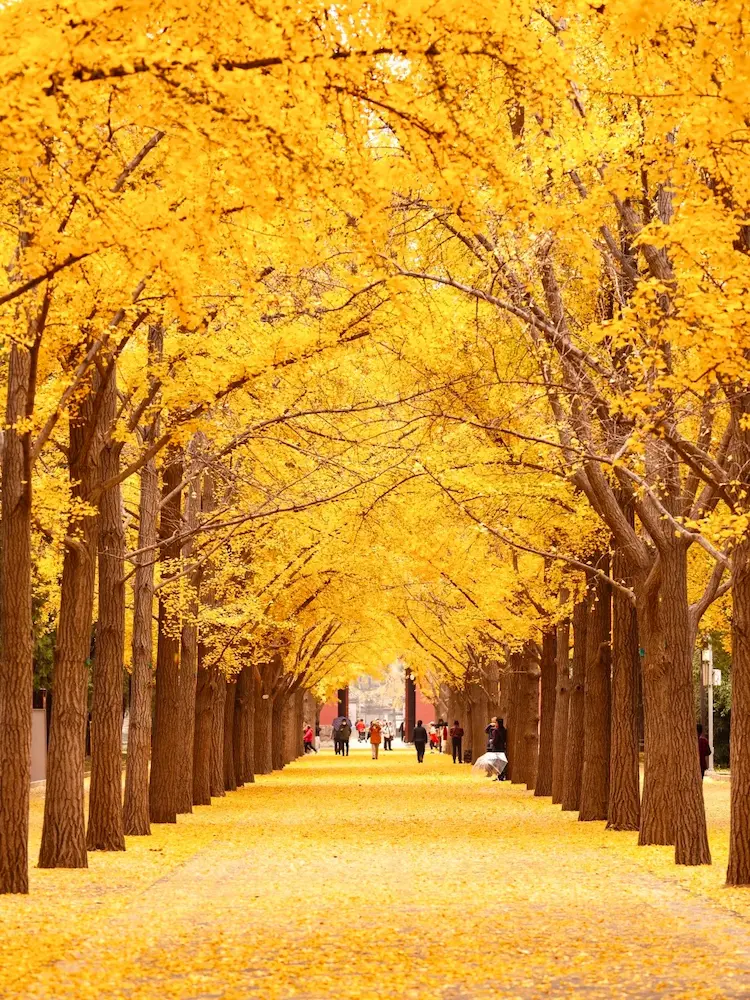
From late October to mid-November is Ditan’s most beautiful time. There is a famous Ginkgo Biloba Avenue within the park, lined with ginkgo trees over 30 years old. In late autumn, the trees turn completely golden, and fallen leaves carpet the ground like a golden river. The ancient red altar walls contrast with the golden ginkgo leaves, making it a perfect spot for photography.
2. A Unique Sight Not to Be Missed: “The Sea of Ditan”
This is an interesting visual phenomenon. Near the East Gate of Ditan Park, there is a special wall. On clear afternoons, sunlight refracts and creates a shimmering, wave-like visual effect on the wall’s surface, resembling a tranquil “sea.” Many visitors come specifically to find and photograph this unique “seascape.”
3. Practical Information at a Glance
- Address: Andingmenwai Street, Dongcheng District, Beijing (near Yonghegong Lama Temple).
- How to Get There: Taking the subway is most convenient. Take Subway Line 2 or 5 to【Yonghegong Station】, exit from Exit G, and walk about 3 minutes to the South Gate.
- Ticket: The entrance fee is very affordable, only 2 yuan. No reservation is needed; tickets can be purchased on-site.
Visiting Tips:
To see the ginkgo trees, it’s recommended to enter from the North Gate; you’ll quickly reach the Ginkgo Biloba Avenue.
To find “The Sea of Ditan,” enter from the East Gate and turn left.
Visiting in the early morning or on weekdays helps avoid crowds and enjoy the tranquillity.
Special Events: During the Chinese New Year, Ditan hosts a lively temple fair. With red lanterns hung high and various traditional snacks and handicrafts gathered, it’s a great place to experience Beijing’s traditional New Year atmosphere.
Conclusion: Why is Ditan Worth a Visit?
The charm of Ditan lies in its multi-layered “eclectic feel.” Within the same space, you can:
Touch the white marble of the Fangze Altar from the Ming and Qing dynasties, where emperors worshipped the earth.
It is not just a historical site but a living history book. Come here without a pilgrim’s heart; simply slow down and feel the layers of time left here—from the ultimate imperial rituals to vibrant folk life. This dialogue across time and space is perhaps the most precious gift Ditan offers every visitor.
Trip to Beijing, consider setting aside half a day for a walk in Ditan.