Beijing Travel Communication Guide: 10 Essential Chinese Phrases to Instantly Blend In Like a Local
When traveling in Beijing, knowing a few authentic Chinese phrases is the perfect key to unlocking amazing experiences and connecting with locals.
When you make the effort to speak their language, you’ll often be rewarded with warmer smiles and more enthusiastic assistance.
Remember, the key is to just go for it. Most Chinese people are incredibly friendly and genuinely appreciate the effort foreigners make to speak their language. Even if your pronunciation isn’t perfect, your attempt itself builds the strongest bridge of communication.
1. Polite Opening: Excuse me! / Sorry!
Pronunciation: Láojià! / Bù hǎo yìsi!
When to use: When you need someone to move out of the way, get a server’s attention, or make a minor interruption.
Why it works: More natural and polite than a simple “hello,” it’s an ideal way to start a conversation.
2. The universal directions phrase: Qǐngwèn, zhège / dìfang zěnme zǒu?
Pronunciation: Qǐngwèn, zhège / dìfang zěnme zǒu?
When to use: Your lifesaver when lost. Point to a map, address on your phone, or any specific location.
Why it works: Starting with “Qǐngwèn” shows politeness, while “zěnme zǒu” is a natural way to ask for directions.
3. Quickly locating something: Where is… ?
Pronunciation: … zài nǎr ne?
When to use: When looking for restrooms, subway stations, exits, or specific shops. (e.g., “Where is the restroom?”)
Why it works: The ending particle “ne” makes the question sound more natural and conversational, less stiff.
4. Ordering with ease: This one / One portion, please.
Pronunciation: Zhège / lái yí fèn, xièxie.
When to use: Ordering at restaurants or street food stalls. Point directly to the dish you want.
Why it works: “Lái yí fèn” is the most common ordering phrase, and ‘fèn’ is a versatile unit word.
5. Directly Asking the Price: Duō shao qián?
Pronunciation: Duōshao qián?
When to use: At markets, small shops, or anytime you need to ask the price or pay.
Why it works: This is the most direct and commonly used way to ask the price—everyone understands it.
6. Attempting to bargain: Can you make it cheaper? / Would a discount be possible?
Pronunciation: Néng piányi diǎn ma? / Piányi diǎn xíng ma?
Usage: When shopping at night markets, souvenir stalls, or other places where bargaining is common.
Why it works: Using the phrasing “…would be possible?” makes the request sound negotiable and more polite.
7. Requesting takeout or packing: Pack it up / Take it away.
Pronunciation: Dǎbāo / Dàizǒu.
When to use: When you can’t finish your meal at a restaurant or want to take food away.
Why it works: “Pack it up” is very authentic and commonly used; “Take it away” is equally clear and straightforward.
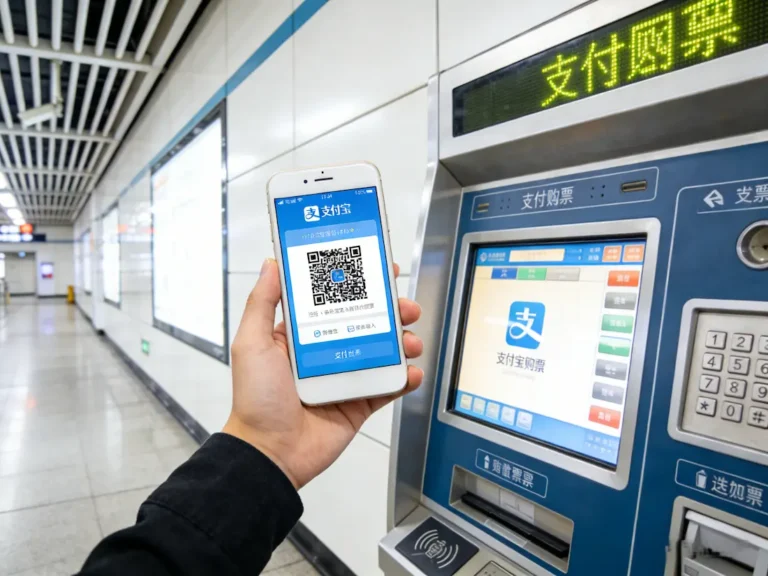
8. Using mobile payment: Scan the code (to pay).
Pronunciation: Sǎomǎ (zhīfù).
When to use: At checkout, to indicate your preference for paying via WeChat Pay or Alipay.
Why it works: Mobile payments are ubiquitous in China. Saying “scan the code” is the most efficient way to pay, understood instantly by staff.
9. Connecting to Wi-Fi: Is there Wi-Fi? What’s the password?
Pronunciation: Yǒu Wi-Fi ma? Mìmǎ shì duōshao?
Use: Asking for wireless network access in cafes, restaurants, or hotels.
Why it works: This natural, direct question helps you connect quickly.
10. Expressing strong admiration: (This is) so…!
Pronunciation: (Zhège) Tài … le!
Usage Scenario: Expressing praise for food, scenery, or anything else. (e.g., “This is so delicious!” Tài hǎochī le! / “This is so beautiful!” Tài piàoliang le!)
Why It Works: A versatile phrase for conveying strong emotion. Paired with a sincere expression, it makes the listener genuinely happy.
Important Tips: Make Your Chinese More Effective
Pay Attention to Tones: Chinese is a tonal language, where different tones change word meanings (e.g., “mā” means “mother,” while “mà” means “scold”). Listen and imitate native speakers often.
Use Body Language Wisely: When words fail you, gestures and a genuine smile speak a universal language.
Technology as Your Backup: Pre-install apps like Google Translate, Baidu Translate, or Youdao Translator on your phone. Their real-time conversation translation and photo translation features are your ultimate communication safety net.