Exploring the History of Beijing’s East and West Meichang Hutongs
Among Beijing’s labyrinth of hutongs, East Meichang Hutong and West Meichang Hutong are two lanes steeped in stories. Their names date back to the early Qing Dynasty, when coal yards were established in this area. Historical records show the coal yards were situated south of Guangfu Guan, west of Xiangzha, north of Yueqiao, and east of Haichao Temple.
After the hutongs took shape, the street east of the coal yards was named East Meichang, while the one to the west was called Meichang West Hutong, which was later renamed West Meichang during the Xuantong Reign. Their current names were officially finalized in 1965.
East Meichang Hutong: Old Courtyards and Cherished Memories
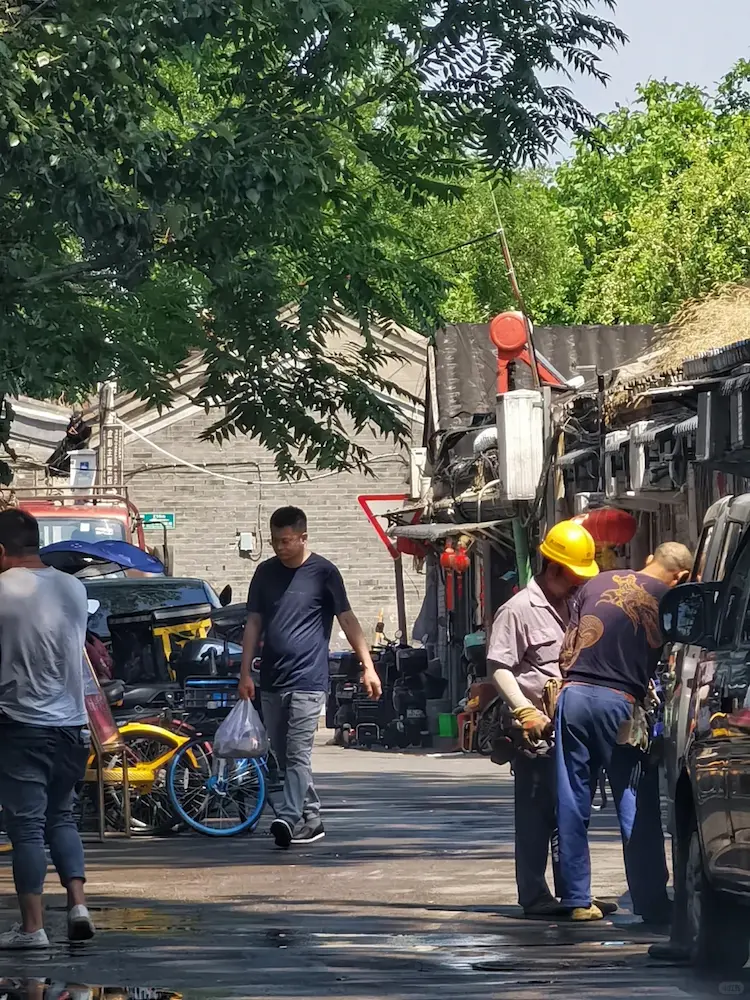
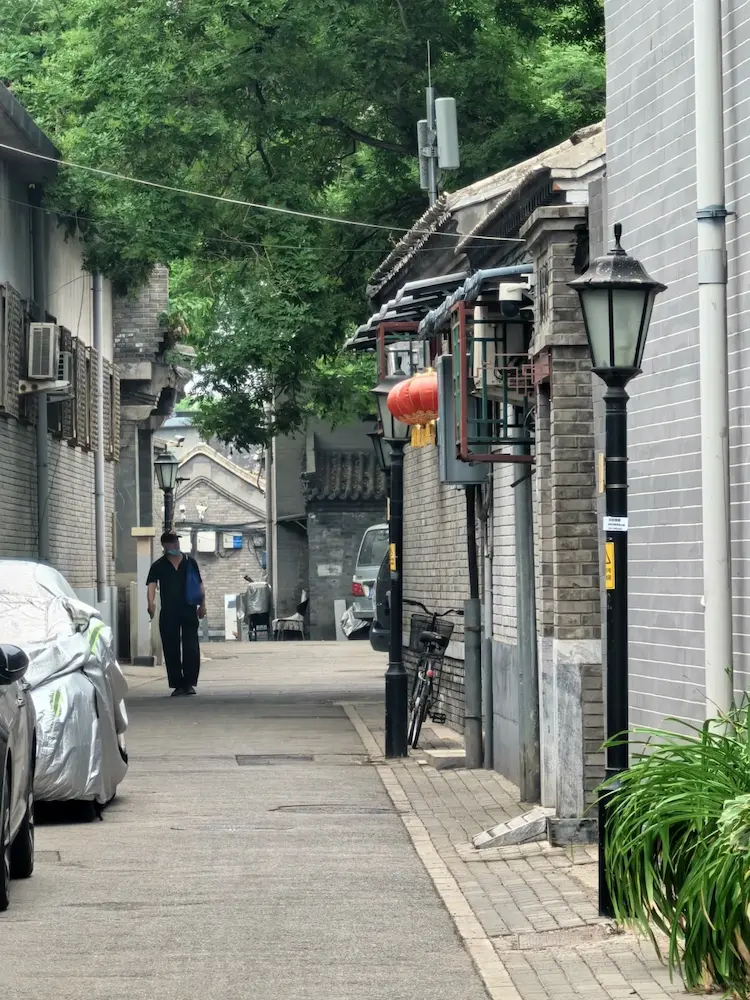
East Meichang Hutong runs mainly north to south, with its eastern entrance connecting to Qianjing Hutong and two western entrances opening onto Zhanzi Hutong. Winding and twisting, the hutong holds unexpected views for those who wander in.
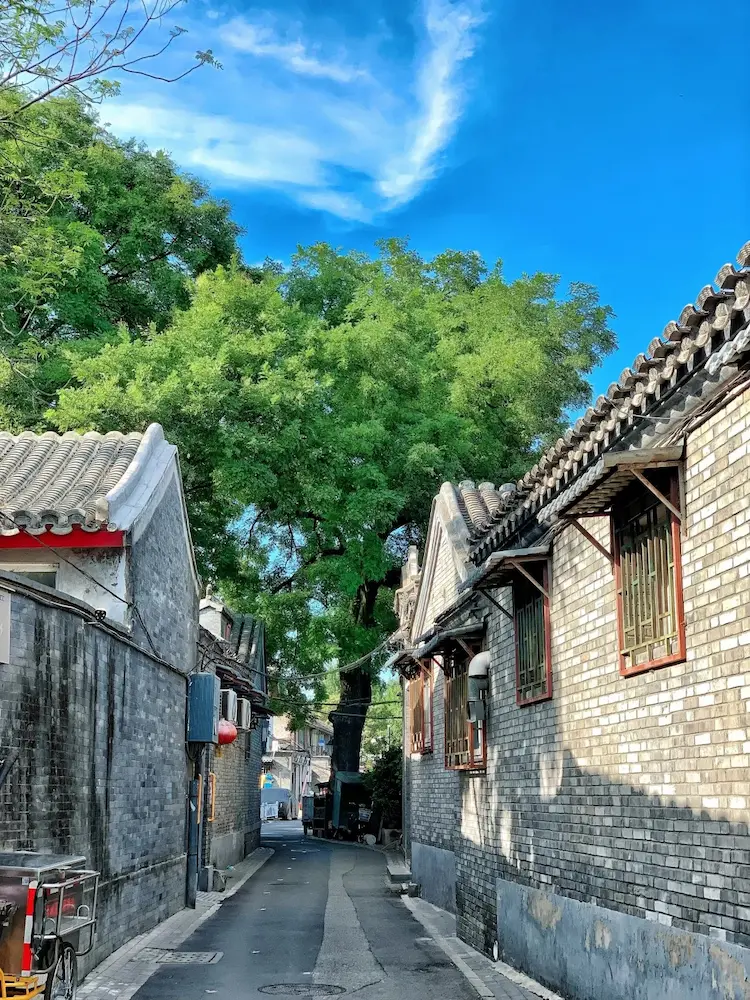
There is a T-junction in the hutong, and at its corner stands Courtyard No.7. The gate of this courtyard looks simple and weathered, with lush walnut tree branches stretching over the wall, heavy with round walnuts. The courtyard was later bought by a native of Shandong Province, but now lies unoccupied. Because the owner’s descendants insist on only making necessary repairs instead of renovating it, the courtyard’s architecture has retained its original form, making it a rare well-preserved original siheyuan in the hutong.
The most striking sight in the hutong is the Chinese trumpet creepers swaying gently in the wind. Beneath the sunlight, their orange-red blooms contrast against the gray bricks and tiles, creating an indescribable beauty. I stopped in my tracks, drawn by the trumpet creepers climbing the outer wall of Courtyard No.35, and saw a stylish elderly lady telling the hutong’s stories to two young people. I walked over to listen.
She said she knew every plant and tree here like the back of her hand, and memories would come flooding back like scenes from a movie. A TV station once invited her to appear on an intangible cultural heritage program, but she declined. Much like the trumpet creepers in her yard, she said she barely tends to them, letting them grow freely—and yet they always burst into beautiful blooms.
West Meichang Hutong: Simple Modern Life
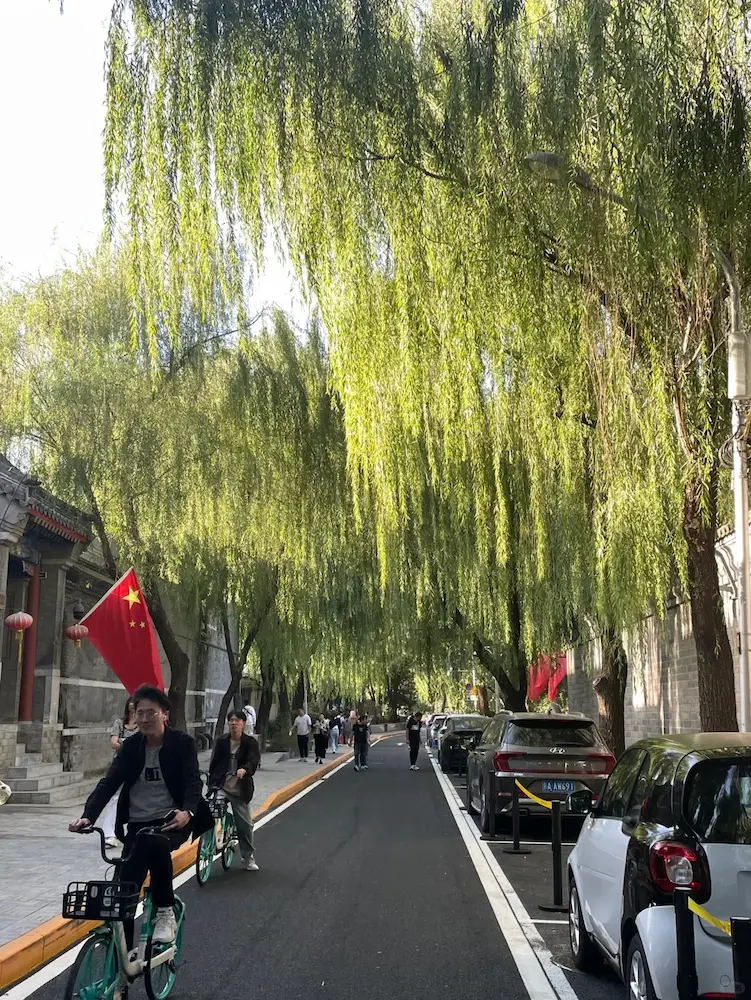
West Meichang Hutong runs east to west, with its eastern entrance linking to Xiaoxiangfeng Hutong and its western entrance to Liuyin Street.
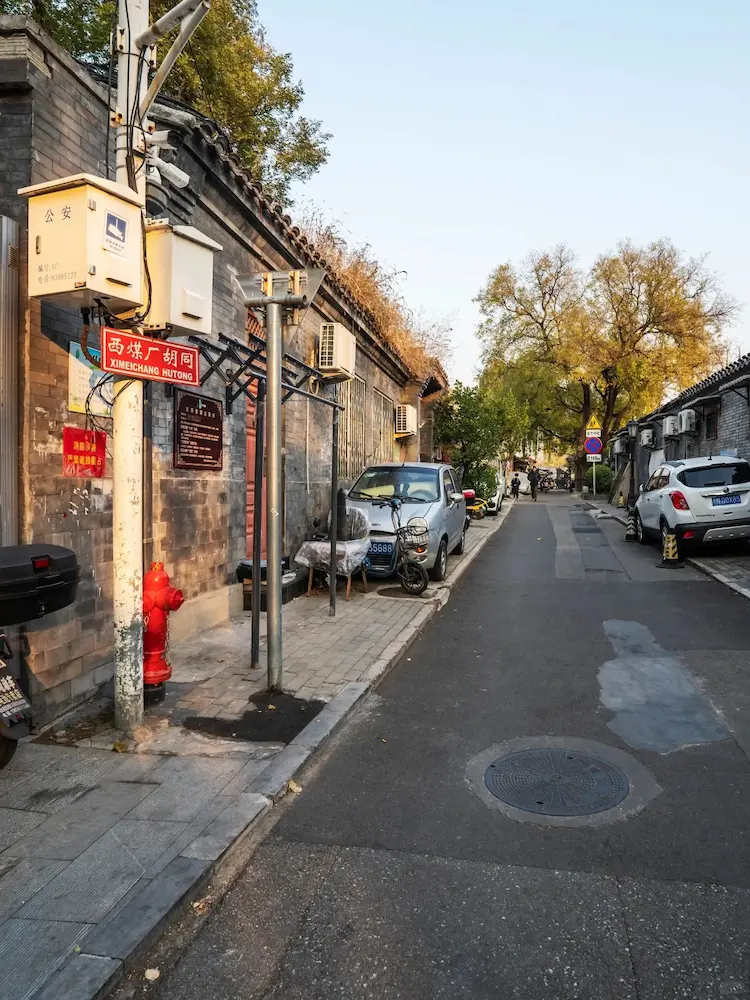
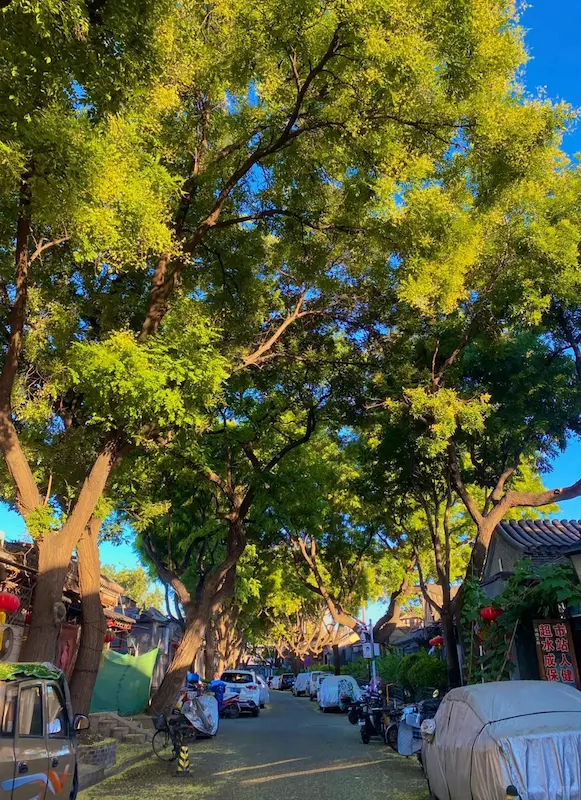
Courtyard No.10 of West Meichang Hutong is a simple apartment building with retaining walls and a green leisure area. The several ancient pagoda trees here must be over a hundred years old. I stood there for a long time, yet a distinct sense of the old hutong charm eluded me. Perhaps it is because a primary school is located here, along with a long row of simple apartment buildings, leaving the lane feeling a little devoid of the original hutong spirit.
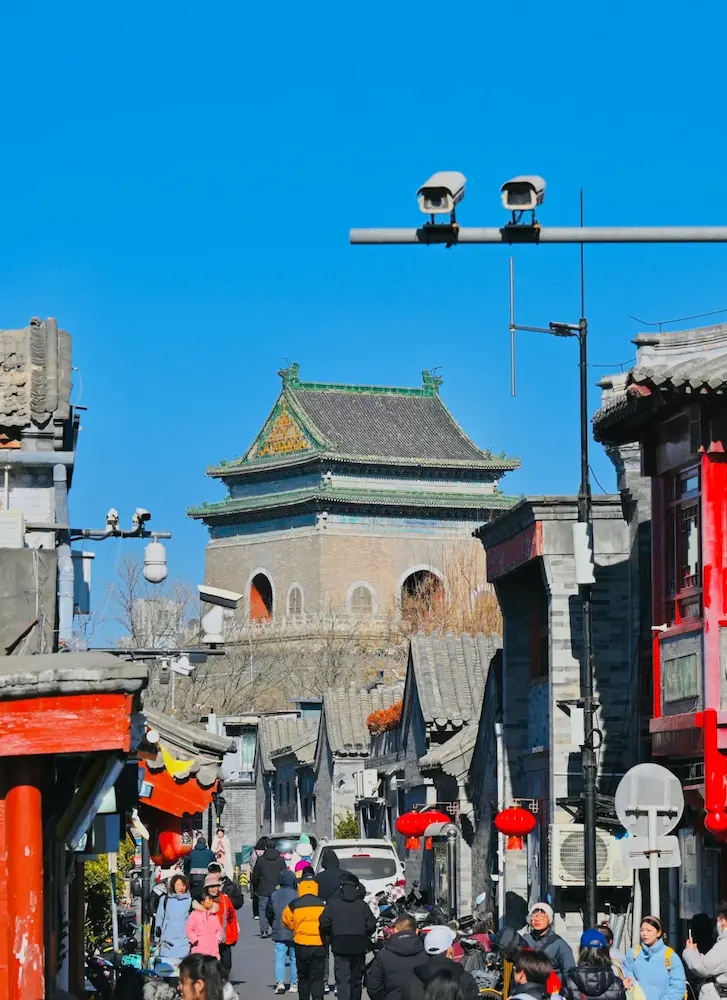
Hutongs in Beijing are more than just streets; they are living history. East and West Meichang Hutong are like an open book, where every old courtyard, every story, and every resident forms a unique chapter. Here, history and the present interweave, and memories and daily life coexist, shaping a cultural landscape that is uniquely Beijing.