Beijing’s Xiaotongjing Hutong: The Former Residence of Liang Shuming and His Father, and a Lost Yuan Dynasty Ancient Well
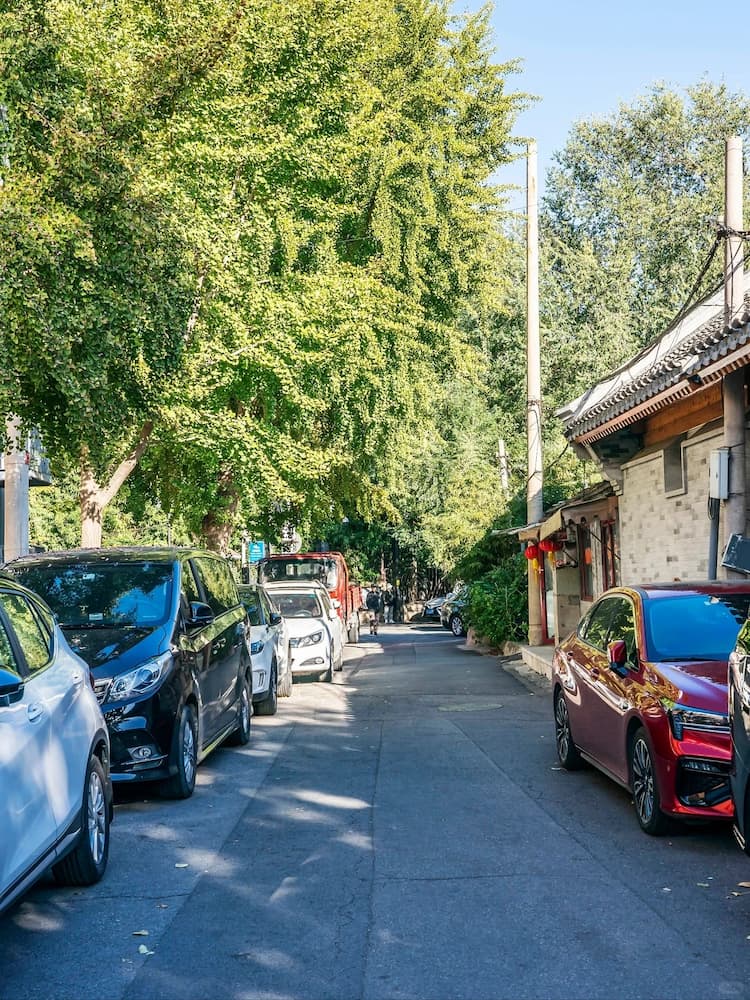
On the western bank of Beijing’s Xihai (Jishuitan) lies a tiny short lane—Xiaotongjing Hutong. It stretches east to the western bank of Xihai and west to North Xinhua Street.
Today, a few vestiges of antiquity can be found as you walk down this hutong. Yet just a few decades ago, it held two invaluable pieces of historical memory: an ancient well dating back to the Yuan Dynasty, and the tragic story of a renowned scholar’s father who drowned himself in the nearby lake.
Table of Contents
Quick Guide
- Highlights: Ruins of the Imperial Bronze Well from the Yuan Dynasty, Liang Shuming’s Former Residence, Site of Liang Juchuan’s Martyrdom
- Location: West Bank of Xihai (Jishuitan), connecting the West Bank of Xihai with Xinjiekou North Street
- Recommended Visit Duration: 15–20 minutes
- Keywords: The spirit of the last generation of literati, the final questions of Confucianism, vanished historical sites, the hidden gem of Xihai
- Best Itinerary: Xihai Wetland Park → Xiaotongjing Hutong → West Bank of Xihai—quiet yet profound
Easiest Way to Get There | Copy the Walking Route
- Subway: Take Line 2 to Jishuitan Station, Exit B, then walk 6 minutes to the western edge of Xihai
- Recommended Route: Xihai Wetland Park → Xiaotongjing Hutong → Liang Juchuan Martyrdom Site → Western Edge of Xihai
- Quick Tip: The hutong is short and quiet, perfect for a leisurely solo stroll, but not suited for noisy photo ops
The Origin of Xiaotongjing Hutong’s Name: A 700-Year-Old Bronze Well Bestowed by an Emperor
The hutong owes its name to a well—a most extraordinary bronze well. Its wellhead, cast in bronze, is square on the outside and round on the inside, with a thickness of eight cun (approximately 26.64 centimeters).
Carved onto the bronze well curb is an inscription: “Bestowed to Yeketemuer for his personal use in the seventh month of the autumn of the Xinwei year of the Zhishun reign of the Great Yuan Dynasty”.
This testifies that the well was cast in 1331 AD, a private sweet-water well gifted by Emperor Wenzong of the Yuan Dynasty to Yeketemuer, a prominent court minister.
As it stood to the east of another larger bronze well, the area has been known as “Xiaotongjing (Small Bronze Well)” since the Qing Dynasty, and was officially named Xiaotongjing Hutong in 1965.
This bronze well is a precious physical relic for the study of urban administration in Beijing during the Yuan Dynasty. Regrettably, it is no longer to be found in the hutong today.
A Father’s Death by Drowning Here: Liang Juchuan’s Profound Question
Another figure has etched this hutong into history—Liang Juchuan, father of the celebrated scholar Liang Shuming, and a scholar and thinker of the late Qing Dynasty himself.
In 1918, overwhelmed by profound despondency and grief at the social turmoil of his time, Liang Juchuan drowned himself in the nearby Jishuitan (Xihai). In his suicide note, he left a thunderous question that reverberated across the nation: “Will the world get better?”
This single sentence sent shockwaves through society back then and went on to become the lifelong proposition that guided his son Liang Shuming’s thinking and life practice.
A couplet once hung in Liang Juchuan’s study, encapsulating his state of mind: “Loyal to the Qing, thus loyal to the world; I cherish my ideals far more than my own life.”
The Disappearance of the Former Residence and the Memorial Stele
The former residence of Liang Juchuan and Liang Shuming was located at No.2 Xiaotongjing Hutong. After 1952, Liang Shuming resided here for a long time until 1966.
Following Liang Juchuan’s death, his friends erected a stele in his memory on the southern bank of Xihai, inscribed with the words: “The Place Where Mr. Liang Juchuan of Guilin Martyrized for His Beliefs”. The front of the stele faced the lake, and its back was carved with his life story.
Yet all these carriers of memory are now gone:
- In 2002, the former residence at No.2 Xiaotongjing Hutong was demolished. All that remains there today is a section of gray wall on the south side and a large poplar tree.
- The memorial stele was smashed into pieces in the 1960s.
- And the Yuan Dynasty bronze well, the very namesake of the hutong, has long vanished without a trace.
Xiaotongjing Hutong Today: A Void of Memory
Today, the original spatial scale of Xiaotongjing Hutong has also been damaged by the expansion of an institution on its north side. As you walk through the hutong, beyond that single section of gray wall and the old poplar tree, it is nearly impossible to find any traces linked to the Yuan Dynasty bronze well or the father and son Liang.
A Hutong Story Without “Physical Evidence”
The story of Xiaotongjing Hutong is one of disappearance. It once held a precious physical relic of Yuan Dynasty municipal administration, and bore witness to a father’s grief-stricken inquiry to his era, as well as the residential memories of a scholarly clan.
Today, however, the tangible carriers of these memories—the ancient well, the former residence, the memorial stele—have all ceased to exist. This hutong serves as a poignant reminder that amid the rapid urban transformation, many traces of history fade away without a trace.
Yet the stories that unfolded here, and that timeless question—”Will the world get better?”—still live on in written records and the quiet reflections of people.
My Hidden Details: History You Can’t See, But Can Feel
The alley is narrow, the walls unremarkable, yet the moment you step inside, your heart grows still and calm.
The old poplar tree at the site of Courtyard No. 2 rustles in the wind, as if someone were speaking in a whisper.
Just a few steps away lies the glistening waters of West Lake. On one side, profound questions of life and death; on the other, the hustle and bustle of daily life—the contrast is particularly poignant.
No signs, no information plaques—history seems hidden in the wind, reserved only for those who understand.
Frequently Asked Questions
Q: Why is Xiaotongjing Hutong called “Tongjing”?
A: It takes its name from a bronze well bestowed by an emperor of the Yuan Dynasty nearly 700 years ago.
Q: Did Liang Shuming really live here?
A: Yes, No. 2 Xiaotongjing Hutong is Liang Shuming’s former residence; he lived here until 1966.
Q: Where does the phrase “Will this world be a better place?” come from?
A: It comes from Liang Shuming’s father, Liang Juchuan, who left this final, haunting question before drowning himself in Jishuitan Lake in 1918.
Q: Can we still see the ancient well and its former residence today?
A: Most of the historical sites no longer exist; one can only sense the stories of the past through their historical locations.