Beijing Nanluoguxiang Guide: 16 Hutongs, Famous People’s Former Residences, and In-Depth City Walk Routes
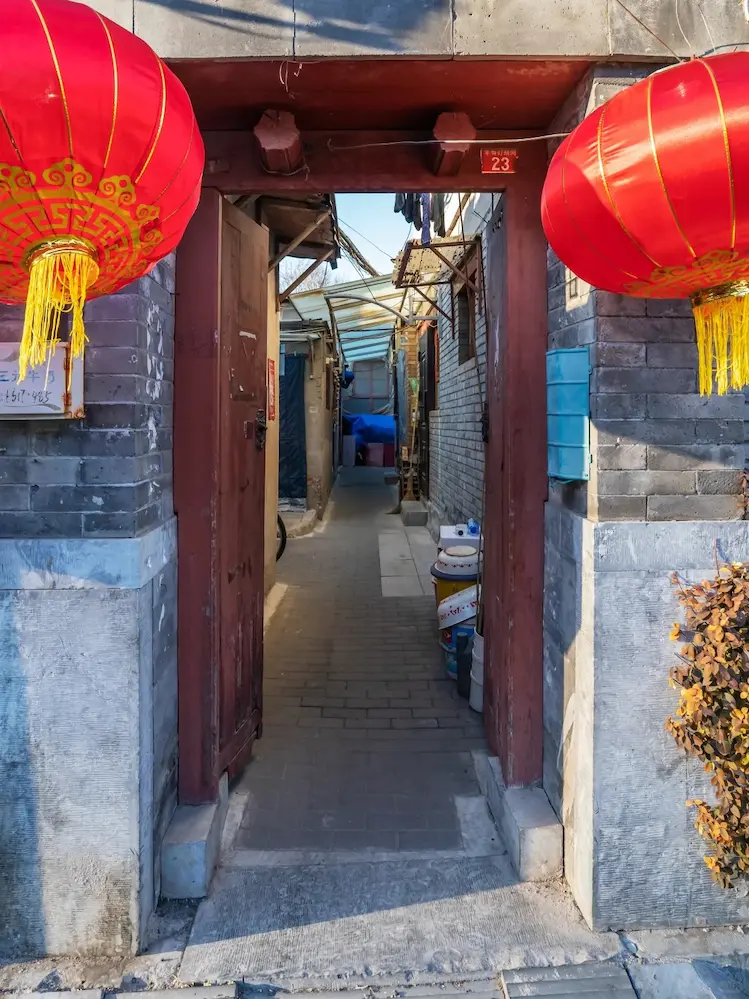
Nanluoguxiang is more than just a 780-meter-long commercial street. The real draw is the 16 hutongs that radiate like fish bones east and west, with the main street as their central axis. This area is home to numerous traditional siheyuan courtyards, historic residences, and former homes of famous figures, and remains an old Beijing neighborhood where residents still live today.
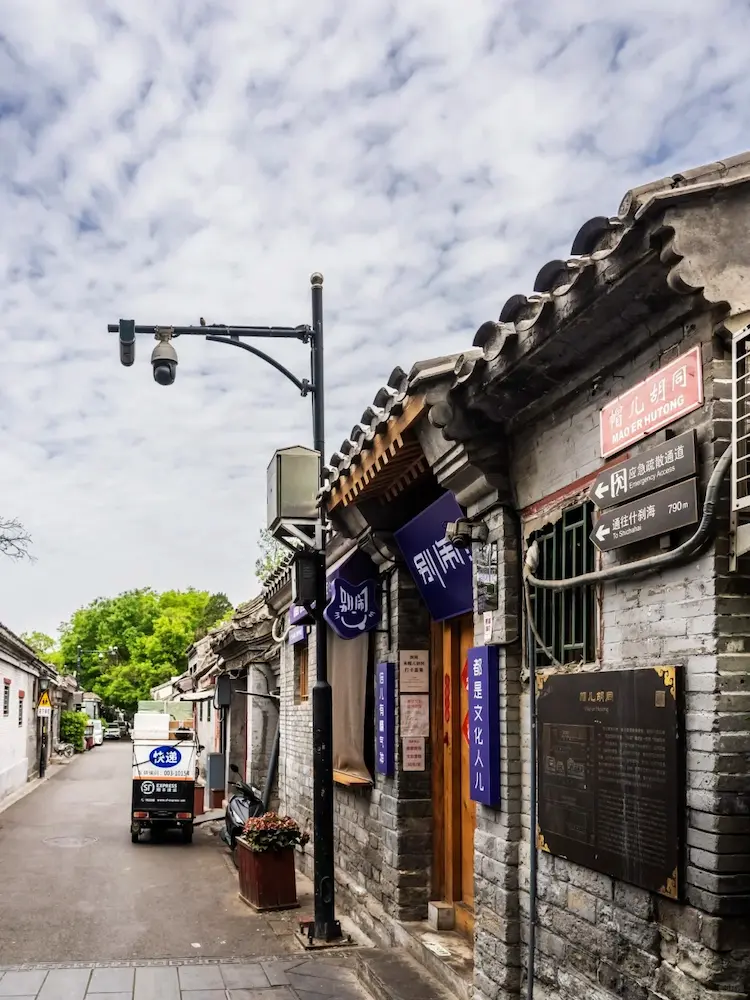
If this is your first visit, we don’t recommend simply walking the length of Nanluoguxiang’s main street, buying some snacks, and calling it a day. A better approach is to use the commercialized main street as your thoroughfare, then pick a few alleys to explore and link up spots like Yu’er Hutong, Mao’er Hutong, and Houyuanensi Hutong. Then, connect these to Yuhe, Wanning Bridge, and the Shichahai waterfront to complete a full urban stroll.
Table of Contents
What Makes Nanluoguxiang So Special?
Nanluogu Xiang itself is about 780 meters long. Its uniqueness lies in its layout. A total of 16 hutongs are neatly arranged on the east and west sides of the lane. Looking down from above, the entire block resembles a centipede; hence it’s also nicknamed “Centipede Street.”
Since its establishment in the Yuan Dynasty, this has been a place where high-ranking officials, nobles, and cultural luminaries gathered. Many historical figures, such as Chiang Kai-shek, Qi Baishi, Mao Dun, and Empress Wanrong(the last empress), once lived here.
Visiting Nanluoguxiang for the First Time? Keep These 5 Things in Mind
1. Nanluoguxiang isn’t just the commercial main street—the 16 hutongs on either side are the key to understanding this historic district.
2. On your first visit, there’s no need to check off all 16 hutongs; just pick 3–5 to focus on.
3. Many historic residences and former homes of famous figures can only be viewed from the outside and are not open to the public—don’t assume they’re all museums you can enter.
4. Nanluoguxiang isn’t an isolated attraction; it’s perfect for combining with Yuer Hutong, Mao’er Hutong, Drum Tower, Wanning Bridge, Shichahai, and Yandai Xiejie for a walking tour.
5. The formula for an ideal experience: strolling along the main street + exploring the hutongs in depth + enjoying the waterfront scenery.
Quick Reference Guide to the 16 Key Hutongs in Nanluoguxiang (Quick Filter, Screenshot to Save)
| Hutong | Location | Main Attractions | Recommended Visit Duration | Visitor Tips |
| Yuer Hutong | West Side | Qi Baishi Former Residence Memorial Hall, Old Yuhe River Course, Traditional Siheyuan Courtyards | 30–45 minutes | ✅Qi Baishi’s Former Residence is open to the public; most other courtyards are private residences and can only be viewed from the outside |
| Mao’er Hutong | West Side | Wan Rong’s Former Residence, Feng Guozhang’s Former Residence, traditional hutong layout | 20–30 minutes | ⚠Wan Rong’s and Feng Guozhang’s residences are not open to the public; only exterior viewing is permitted |
| Ju’er Hutong | East Side | Traditional hutong layout, siheyuan courtyards, and contemporary renovated compounds | 20 minutes | Focuses primarily on the neighborhood’s atmosphere; no large exhibition halls |
| Hou Yuanshi Hutong | East Side | Mao Dun’s Former Residence (open to the public), former site of Chiang Kai-shek’s headquarters | 20–30 minutes | ✅Tickets available for a tour of Mao Dun’s Former Residence; Chiang Kai-shek’s headquarters is viewable from the outside only |
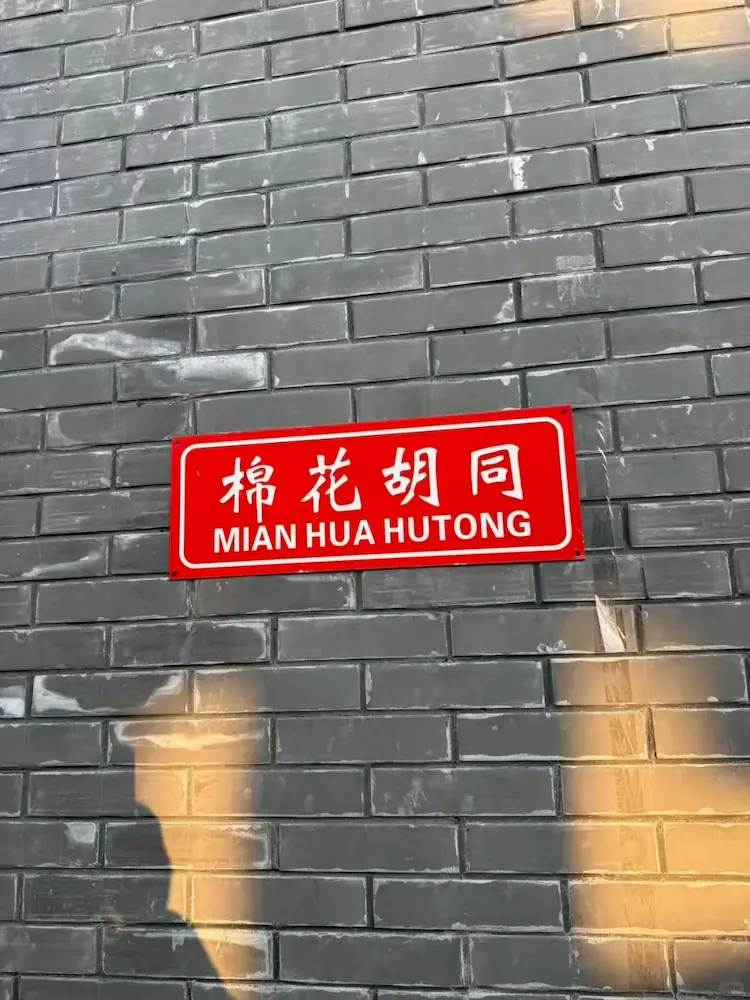
| Dong Mianhua Hutong | East Side | Central Academy of Drama, everyday hutong life | 15–20 minutes | The academy campus is not open to the public; view only the exterior of the hutong |
| Chaodou Hutong | East Side | Remains of the Senggelinqin Prince’s Mansion | 15–20 minutes | Architectural remains converted into residential homes; exterior view only |
| Banchang Hutong | East Side | Remains of an Old Siheyuan Courtyard | 10–15 minutes | Residential area; ideal for a quiet stroll |
| Beibingmasi Hutong | East Side | Remains of a Former Mansion of the Powerful and Prominent | 10–15 minutes | Residential area; exterior view only |
The other hutongs (such as Qinlao Hutong, Heizhima Hutong, and Shajing Hutong) are primarily residential neighborhoods for residents. If you have plenty of time, feel free to wander through them at your leisure; there’s no need to make a special trip just to visit them.
A Brief 750-Year Timeline of Nanluoguxiang
Yuan Dynasty|The neighborhood’s overall layout took shape, serving as a key residential area of the Yuan capital, Dadu
↓
Ming and Qing Dynasties|Numerous princely mansions and siheyuan courtyards for officials and nobles were built
↓
Republic of China era|Political figures and cultural scholars settled here, giving rise to many residences of famous figures
↓
Late 20th century|The traditional residential area gradually underwent changes
↓
Present day|A coexistence of a commercial main street, historic hutongs, and the daily lives of residents
Choose a walking itinerary based on the time you have available
①Only 1 hour (Tight schedule, quick tour)
Walk along the main street of Nanluoguxiang→Select 1–2 key hutongs for a brief visit→Wanning Bridge
Ideal for those on a tight schedule who just want to quickly soak up the hutong atmosphere without delving deeply into historic residences.
②2 hours (the preferred choice for most visitors)
Main Street of Nanluoguxiang→Yu’er Hutong→Houyuan’ensi Hutong→Mao’er Hutong→Wanning Bridge
Covers historic sites of famous figures, siheyuan architecture, and the banks of the Yu River—ideal for those with ample time.
③3–4 Hours | In-Depth Historical City Walk in Nanluoguxiang (Complete itinerary as per the original text)
Itinerary Overview: Exit E of Nanluoguxiang Station on Metro Line 8➔Dongbuyaqu Hutong (historic site)➔Yu’er Hutong (Qi Baishi’s Former Residence)➔Dongmianhua Hutong (Central Academy of Drama)➔Houyuan’ensi Hutong (Mao Dun’s Former Residence, Chiang Kai-shek’s Headquarters)➔Mao’er Hutong (Wanrong’s Former Residence)➔Wanning Bridge➔Shichahai (to watch the sunset)
Route Logic: After exiting the subway station, first visit the Yuhe Canal ruins, then head west into Yu’er Hutong; next, cross the main street of Nanluoguxiang to explore several hutongs on the east side; after walking through Mao’er Hutong, head west to reach Wanning Bridge, and finally arrive at Shichahai. The entire route is designed to minimize backtracking.
A Curated Tour Route: Traveling Through 750 Years of History
Below, we’ll take you away from the bustling main street and deep into the alleys, connecting the most important historical sites.
Stop 1: Starting at a Canal Site—Dongbuyaqiao Hutong
After exiting the subway station, don’t rush into the main street. First, walk east for a few minutes to find the starting point of your journey: the Dongbuyaqiao Bridge Site.
- What to see on site: Remains of a Yuan Dynasty bridge foundation and riverbed; the Yuhe An monastery next to the bridge, now converted into a café.
- Recommended visit duration: 10–15 minutes.
- Historical Significance: This bridge was first built in the Yuan Dynasty and was an important sluice gate on the Beijing section of the Grand Canal (Jing-Hang Grand Canal). Grain-transport boats passed through here to reach the final terminal dock, Shichahai. You can see the preserved parts of the bridge and canal site, imagining the busy scene of boats coming and going in ancient times.
- Modern Interest: Beside the bridge, there is a caféconverted from the ancient temple “Yuhe’an.” Buying a coffee here and sitting in the small courtyard allows you to enjoy both the warm sunshine and a strong sense of history.
Stop 2: Meeting an Art Master—Yu’er Hutong (Qi Baishi Former Residence)
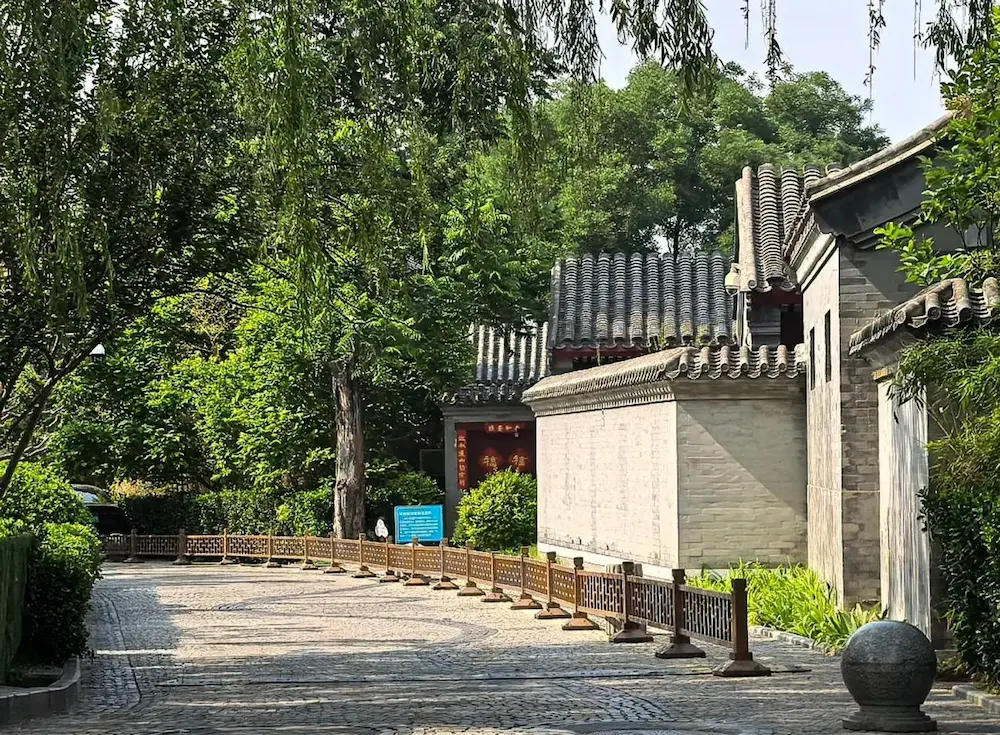
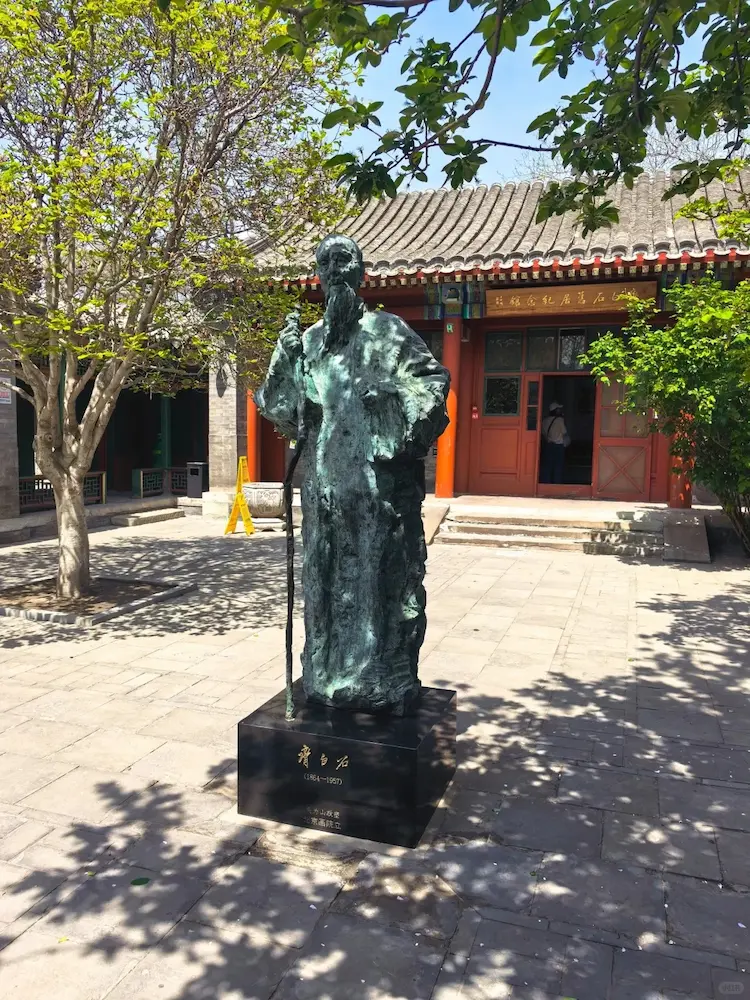
Walking north along the nearby Yu River (Jade River), you enter Yu’er Hutong. Courtyard No. 13in this hutong is the former residence of the great painting master Qi Baishi.
- What to See: The layout of a Qing Dynasty siheyuan courtyard, a reconstructed studio and bedroom, and an exhibition on the artist’s life and work.
- Recommended Visit Duration: 20–30 minutes.
- Tip for Those Short on Time: If you enjoy fine art or modern and contemporary art, we recommend visiting the museum; if you have only a passing interest in painting, simply learn about the background at the entrance to the hutong—there’s no need to go inside.
- For a comprehensive guide to this hutong, read the [In-Depth Guide to Yuer Hutong].
- About Qi Baishi: He is one of the most famous painters in modern and contemporary China, specializing particularly in paintings of flowers, birds, fish, and insects, as well as landscapes and calligraphy. He was one of the most influential masters of traditional Chinese painting in the 20th century.
- What to See: This courtyard is a Qing Dynasty siheyuan. After 1955, Qi Baishi lived and created here in his later years. It is now open as the “Qi Baishi Former Residence Memorial Museum,” where you can see the restored studio and bedroom of the master and learn about his life and artistic achievements.
Stop 3: The Cradle of Stars—Dongmianhua Hutong (Central Academy of Drama)
Crossing the main street of Nanluogu Xiang brings you to Dongmianhua Hutong. Here stands one of China’s top art institutions—the Central Academy of Drama (CAD).
- Fun Fact: The Central Academy of Drama, located on Dongmianhua Hutong, adds a touch of modern culture to this historic alley. Renowned actors such as Gong Li, Chen Daoming, and Jiang Wen are alumni of the academy. The campus buildings are distinctive, but the campus is not open to the public; visitors can only view the exteriors from outside the alley.
Stop 4: Convergence of Literature and History—Houyuan’ensi Hutong
Continuing north and turning into Houyuan’ensi Hutong, you’ll find two important courtyard houses here.
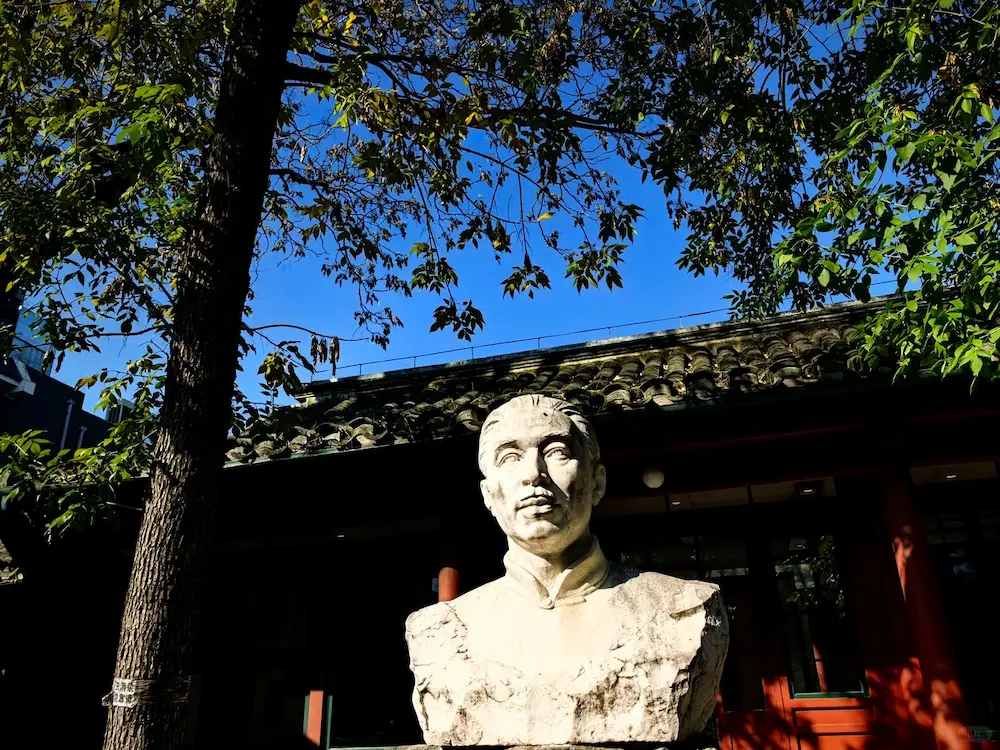
1. Mao Dun Former Residence (Courtyard No. 13):
- What to See: A two-courtyard siheyuan from the Republic of China era, featuring a recreated display of manuscripts, rare books, and personal belongings from his lifetime.
- Recommended Visit Time: 20 minutes.
- Tip: The memorial hall is open to the public; if you have enough time, we recommend going inside.
- About Mao Dun: Mao Dun (original name Shen Dehong) is a very important writer in modern Chinese literary history.
2. Chiang Kai-shek Provisional Headquarters (Courtyard No. 7):
- What to see on site: The exterior of a Western-style mansion.
- Recommended visit duration: 5–8 minutes; stop by to take a photo.
- Important note: The building is not open to the public. This is not a museum where you can purchase tickets for a tour; it is only suitable for viewing the architectural style from outside the hutong.
- Historical Background: This beautiful Western-style building served twice as temporary accommodation for Chiang Kai-shek during his visits to Beijing in 1945 and 1948. It later became the embassy of the former Yugoslavia. The building is currently not open to the public, but its unique style can be admired from the outside.
Stop 5: The Last Empress’s Childhood Home—Mao’er Hutong
Returning to the main street and heading further south, turn into Mao’er Hutong. This is one of Beijing’s best-preserved hutongs, concealing an illustrious history.
Empress Wanrong’s Former Residence (Courtyard No. 35):
- What to see on site: The gatehouse outside the courtyard and the layout of the hutong neighborhood.
- Recommended visit duration: 5–10 minutes.
- Important note: The courtyard is currently closed to the public. Please do not treat it as a museum attraction; simply experience the historic site from the street outside.
This was the home of the last empress, Empress Wanrong, before her marriage. She was born and raised here. Her father was open-minded and hired foreign tutors for her, so she was proficient in English and could play the piano. In 1922, the 16-year-old Wanrong was carried from this courtyard into the Forbidden City to become empress. The courtyard is currently not open to the public.
- Other Points of Interest: Courtyard No. 13 in this hutong was once the residence of Feng Guozhang(a president during the Republic of China period). His great-grandson is Feng Gong, a household-name comedian in China.
Final Stop: Scenery Connecting Past and Present—Wanning Bridge and Shichahai
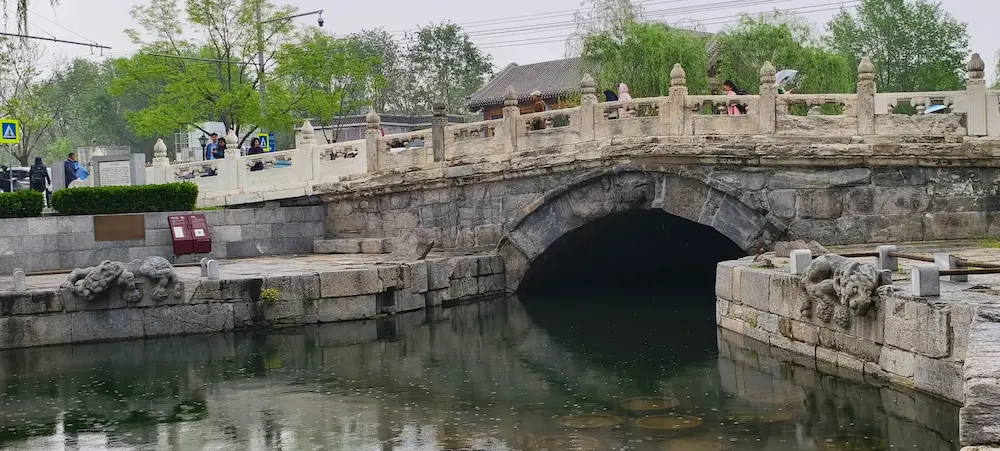
Walking to the end of Mao’er Hutong, you’ll see the Yu River(Jade River) and a pavilion. Walking west along the river for a short while brings you to Wanning Bridge.
- Wanning Bridge: This bridge is extraordinary—it sits exactly at the intersection point of Beijing’s Central Axis and the Grand Canal site, making it a “dual landmark.”
- Shichahai Sunset: Across the bridge lies the picturesque Shichahai. I highly recommend visiting a café called “Sugarhouse Café (Tangfang Coffee)” at dusk. Head straight to its third-floor rooftop terrace—this is a premier spot for watching the sunset. You can see golden sunlight sparkling on the lake, with the ancient Drum Tower and the modern skyscraper China Zun framed together in a
qímiào (marvelous) “past and present in one frame.
Nanluoguxiang: What Else Is There to See Besides the Former Residences of Famous Figures?
Many tourists come here just to visit the former residences of famous figures, but the details of the hutongs themselves are equally worth a closer look.
1. Hutong Layout and Orientation: Experience the remnants of the Yuan Dynasty’s “fishbone” street layout, a legacy of the ancient capital, Dadu;
2. Details of Siheyuan Gatehouses: Door sills, door pins, gray brick walls, eaves, and main gates—the design of the gatehouse reflects the social status of the residence in days gone by;
3. A Blend of Old and New: Centuries-old courtyards coexist with cafés and cultural and creative shops, as historic buildings accommodate modern life;
4. Authentic Everyday Life: The old trees, laundry hanging out to dry, residents’ bicycles, and courtyard gates—the daily lives of locals are the hutongs’ most vibrant scenery.
8 Photo-Worthy Details in Nanluoguxiang (Don’t Just Stick to the Instagram-Famous Shops)
1. The fishbone-patterned entrance sign of Nanluoguxiang
2. Various gate towers and thresholds of siheyuan courtyards
3. The combination of gray brick walls and old trees within the courtyards
4. Scenes of everyday life in the hutongs (please do not photograph inside residents’ homes)
5. Stone-carved house numbers at the former residences of famous figures
6. Scenes where old hutongs and modern shops coexist in the same frame
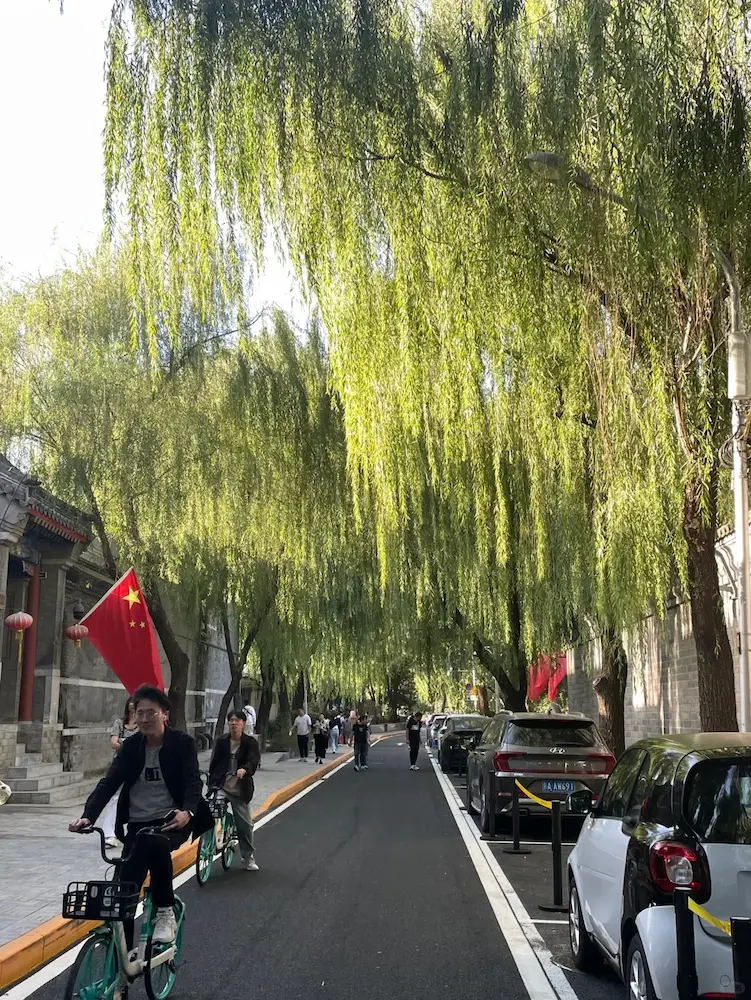
7. Weeping willows along the banks of the Old Yu River
8. Panoramic view of the Drum Tower from Wanning Bridge
️Photography Tip: Do not take photos inside residential courtyards; please respect residents’privacy.
If You Have More Time…
This main route covers the highlights. If you have extra time, you can also explore:
- Wen Chengxiang Temple (Wen Tianxiang Memorial Temple): Located in nearby Fuxue Hutong, this temple was built to commemorate the Southern Song national hero Wen Tianxiang.
- Drum Tower and Bell Tower: From Shichahai, it’s an easy walk to the ancient timekeeping center—the Bell and Drum Towers.
- Yandai Xie Jie: A small commercial street near Shichahai with strong old Beijing character.
Where to Eat While Exploring Nanluoguxiang?
This article won’t list a large number of restaurants to avoid turning it into a food feature; for detailed dining recommendations in the area, please check out the [Beixinqiao Food Guide].
- Old Beijing Snacks: We don’t recommend spending too much at the trendy shops clustered along Nanluoguxiang’s main street; instead, walk to Beixinqiao or Huguosi Street to find authentic local snacks.
- Full Meals and Light Bites: Cafés and small restaurants serving home-style dishes are scattered throughout the surrounding hutongs.
- Things to Avoid: The main street is filled with a large number of cookie-cutter cultural and creative snack shops; if you’re on a tight budget, it’s best to limit your purchases there.
Is Nanluoguxiang worth a special trip?
✅Ideal for visitors who:
- Enjoy old Beijing hutongs, siheyuan courtyards, and urban CityWalk-style strolls;
- Are interested in modern and contemporary history and the former residences of famous figures;
- Plan to visit Shichahai, Drum Tower, and the Yuhe area as part of their itinerary and can easily combine these stops.
❌Not worth a special trip for:
- If your schedule is extremely tight and you’re prioritizing national-level landmarks like the Forbidden City, the Great Wall, and the Temple of Heaven;
- If you just want to quickly try some viral street food and aren’t interested in the historical charm of the hutongs.
Objective Note: This is not a single-entry paid attraction but an open-access historic district; we recommend setting aside 2–3 hours to explore it fully. We do not recommend rushing through it in just half an hour.
Practical Tips for Foreign Visitors
- Transportation: The most convenient way is to take Subway Line 8and get off at either “Nanluogu Xiang Station” or “Shichahai Station.” They are not far apart, allowing you to start at one and end at the other, avoiding backtracking.
- Mindset for Exploration: Nanluogu Xiang’s main street is lively but commercialized. Please allocate more time and anticipation for the quiet hutongs, where real history and life reside.
- Respect Privacy: Many historical buildings are now private residences or institutions and are not open to the public. Please observe the exteriors quietly and do not disturb the residents.
- Best Time to Visit: Weekday mornings or afternoons are the best times to explore the hutongs when there are relatively fewer tourists. Save the dusk for Shichahai and the sunset.
Practical Tips: The neighborhood is open to the public free of charge; no admission tickets or reservations are required. There are few restrooms in the hutongs. Outside the mountainous areas, the streets are flat and suitable for walking. Do not enter private residences without permission.
FAQ
The charm of Nanluogu Xiang extends far beyond a single lane selling souvenirs. It is a living urban museum; each hutong is a chapter of a story, each old house seals away a period of time.
The next time you come to Beijing, why not slow down, follow this route, step into the folds of history yourself, and listen to the true heartbeat of this city?
If you enjoy strolling through quiet alleys like this, you might also want to check out the guides for Mianhua Hutong, the northern shore of Houhai, and Dongchang Hutong.