The Complete Guide to Beijing’s Beihai Park: A Leisurely Tour of the Imperial Garden
This guide introduces Beihai Park, an imperial garden located in the heart of Beijing. With over 900 years of history, it served as the royal garden for five dynasties: Liao, Jin, Yuan, Ming, and Qing.
Unlike the bustling Forbidden City, Beihai Park offers a tranquil atmosphere where you can row across its vast lake and admire exquisite ancient architecture up close.
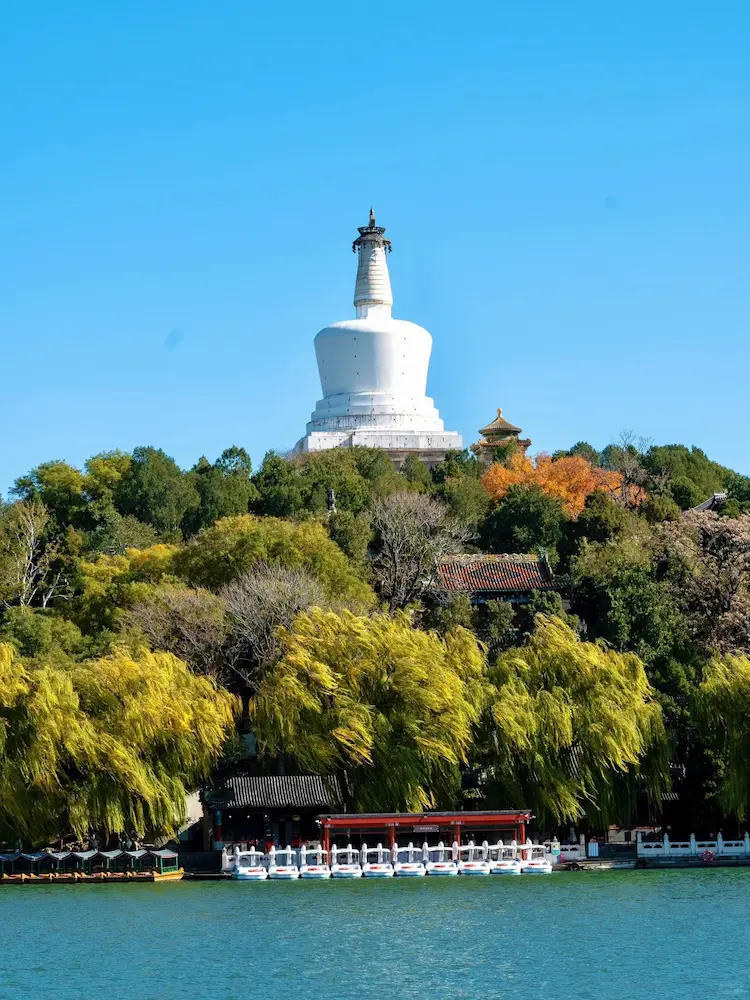
Table of Contents
Essential Pre-trip Info: Tickets, Hours, & Transportation
Before planning your visit, note these key details:
Ticket Prices:
- High Season (Apr 1–Oct 31): Single Ticket ¥10; Combo Ticket ¥20
- Low Season (Nov 1–Mar 31): Single Ticket ¥5; Combination Ticket: ¥15
- Tips: The combination ticket includes access to major attractions within the park. We recommend purchasing this ticket for better value.
Opening Hours:
- Park: Peak Season 6:00 AM–9:00 PM; Off-Season 6:30 AM–8:00 PM
- Park Attractions: Peak Season 8:00 AM–6:00 PM; Off-Season 8:30 AM–5:00 PM
- Tips: Minor attractions are closed on Mondays (except national holidays). Last entry is 30 minutes before closing time.
Main Entrances:
North Gate (recommended), South Gate, West Gate
Tips: Different entrances suit different tour routes.
Public Transportation:
- Subway: Line 6, Exit D at “Beihai North” Station, directly to the North Gate.
- Bus: Accessible to South Gate or nearby areas.
- Tips: North Gate offers the most convenient transportation and is the recommended starting point.
Two Classic Tour Routes Recommended
Choose a route based on your stamina and interests:
Route 1: Time-Saving Essentials Tour (approx. 3 hours)
This route uses shuttle boats to effortlessly connect core attractions.
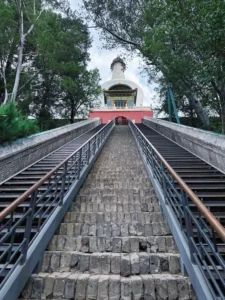
1. Enter via South Gate, visit Yong’an Temple, and ascend the White Pagoda.
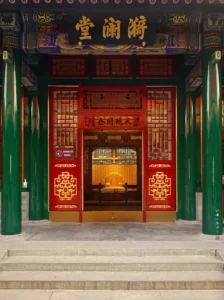
2. After descending, explore Yilan Hall.
3. Key step: At the pier near Yilan Hall, take the 20-yuan ferry directly to Wulong Pavilion on the opposite shore.
4. After disembarking, tour the north shore attractions: Xixitian, Nine-Dragon Wall, Western Paradise, and Jingxinzhai—renowned as the “garden within a garden.”
5. Finally, exit through the North Gate.
Route 2: “U-Shaped” In-Depth Hike (approx. 4 hours)
This route suits energetic visitors seeking to see all highlights. Multiple ticket checks are required
—keep your ticket safe.
1. Enter via the North Gate and first explore the north shore attractions: Jingxin Pavilion, Western Paradise, Nine-Dragon Wall, etc.
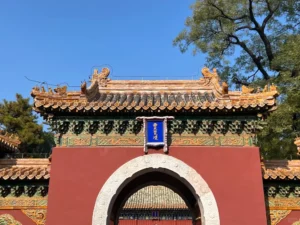
2. Exit the park through the West Gate and walk to visit the Tuancheng (ticket required).
3. Re-enter Beihai Park through the South Gate, ascend Qionghua Island, and tour Yong’an Temple, the White Pagoda, and the surrounding areas.
4. Descend from the east side of Qionghua Island and stroll along the eastern shore to explore exquisite miniature gardens like Haopu Garden and Huafang Pavilion.
5. Finally, exit the park through the North Gate.
Beihai Park Core Attractions and Cultural Highlights
Beihai Park is not only a scenic beauty spot but also an open-air historical museum.
- Qionghua Island and the White Pagoda: The visual heart of the park. The island’s rocks, many sourced from the imperial gardens of the Northern Song Dynasty, are ancient Taihu stones. The White Pagoda atop the hill, built during the Qing Dynasty, is one of Beijing’s landmarks. This Tibetan-style Buddhist pagoda exudes solemn grandeur.
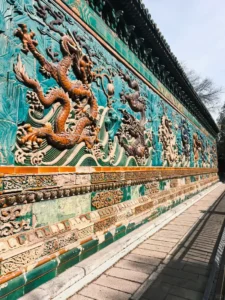
- Nine-Dragon Wall: The park’s crown jewel. This double-sided glazed screen wall is exceptionally rare, featuring vividly carved nine dragons on both sides using seven-colored glazed bricks that shimmer brilliantly under sunlight.
- Jingxin Pavilion: Known as the “Qianlong Emperor’s Miniature Garden ”or “ Beihai’s Premier Garden.” Modeled after gardens of southern China, its intricate design features small bridges over flowing water and surrounding rockeries, creating an exquisitely refined contrast to the grand northern gardens.
- Western Heavenly Realm: Its central hall, the Great Compassion and True Reality Hall, is entirely constructed from precious golden thread nanmu wood. Upon entering, visitors are greeted by the hall’s unique woody fragrance, enveloped in a solemn and serene atmosphere.
- Copper Immortal Dew-Catching Basin: Located on Qionghua Island, this is a highly distinctive historical artifact. A bronze immortal holds a tray aloft. Legend has it that Emperor Qianlong commissioned its construction, inspired by Emperor Wu of Han’s quest for immortality, imbuing it with ancient mystique.
Immersive Experiences and Practical Tips
- Boat Tour on the Lake: Rowing across Taiyechi Lake offers the most authentic way to experience the imperial garden’s ambiance. We recommend renting an antique-style electric boat to admire the reflections of the White Pagoda and red walls from the lake’s center—the views are breathtaking.
- Find the Best Photo Spots: The Five-Dragon Pavilion (a lake pavilion), Yilan Pavilion (a corridor of evening light and shadow), Zhishan Bridge (red walls and tree silhouettes at sunset), and any white wall along the lake make excellent photo locations.
- Connecting Nearby Attractions: Just across the road from the East Gate of Beihai Park lies Jingshan Park; the historic Shichahai district is a short walk from the North Gate. You can easily fit them into a single day’s itinerary.
Important Reminder
If you choose the in-depth tour route, which involves multiple entries and exits, please keep your paper ticket safe for verification.
Beihai Park is an underrated imperial treasure, its true grandeur belied by the simple name “park.” Through its lake and island, it masterfully blends the history of the five dynasties, the grandeur of northern landscapes, and the elegance of southern charm. Here, you’ll experience the authentic tranquility within the bustle of imperial gardens. May this guide help you plan a relaxed yet fulfilling visit.