Simatai Great Wall Guide: Authentic Ming Dynasty Architecture and Lantern-Lit Night Tours—The Best of China’s Great Wall(2026)
Simatai is the only section of the Great Wall that retains its original Ming Dynasty appearance, and it is also the only Great Wall site in the country open for night tours.
This article provides a detailed explanation of the history behind the “ inscribed bricks,” the Heavenly Ladder, Fairy Tower, and Watchtower, compares daytime and nighttime tour routes, and reveals the pitfalls of the Gubei Water Town combined ticket. Ideal for travelers seeking to experience authentic history.
Table of Contents
Why Is Simatai Considered the “Best of the Great Wall”?
For many people visiting the Great Wall for the first time, what they see are freshly restored walls, well-maintained walkways, and brand-new crenellations. To be honest, it looks more like a “retouched photo” of the Great Wall.
True Great Wall enthusiasts, however, want to see the vicissitudes of history and the traces of decay—the weathered cracks in the bricks, the wild grass growing inside the watchtowers, and the indentations worn into the steps by centuries of footsteps.
Simatai is made for exactly these people.
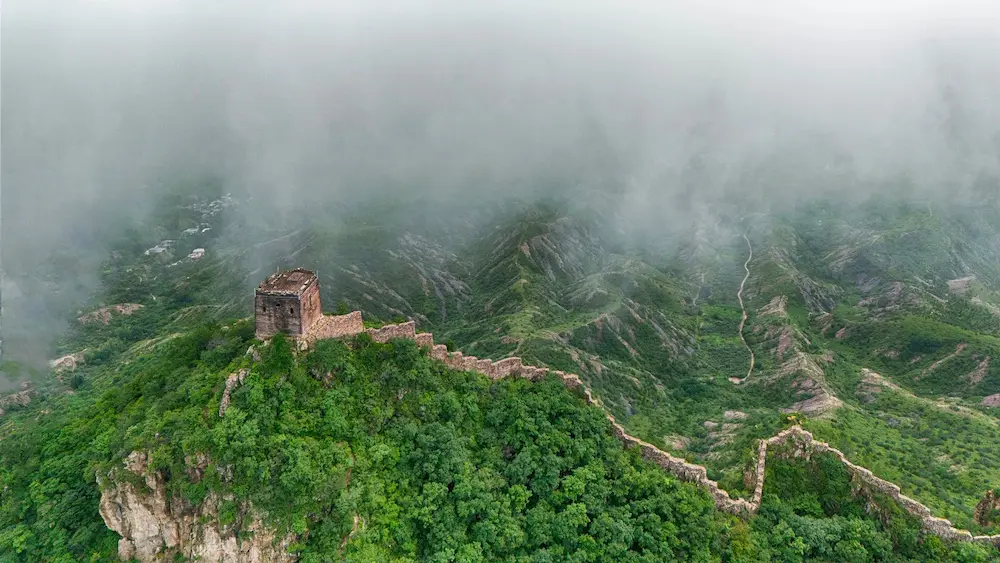
Located in Miyun District, right next to Gubei Water Town, it is the only section of the ancient Great Wall in China that has fully preserved its original Ming Dynasty appearance.
The bricks, walls, and watchtowers here have not undergone large-scale modern restoration. Every stone you step on may have been laid by hand 400 years ago by the soldiers of Qi Jiguang.
What’s even more remarkable is that Simatai is the only section of the Great Wall in the country open for night tours. You can carry a vintage oil lamp, ride the cable car through the darkness, and ascend to the walls bathed in golden light—with the water town of Gubei, reminiscent of a Jiangnan water village, spread out below you and a sky full of stars above.
If you prefer the “picturesque” sections of the Great Wall with well-developed facilities, lush vegetation, and the option to take a toboggan ride down the mountain, head over to my guide, “Mutianyu Great Wall Guide: How to Choose Between Cable Cars, Ropeways, and Toboggan Rides? Family Hiking Routes and Tips to Avoid Pitfalls (2026). If you want to quickly compare all sections based on your fitness level, you can return to the main directory: “Beijing’s 9 Great Wall Sections Guide: Badaling, Mutianyu, and More (2026)”.
In this article, I’ll help you understand the “rugged charm” of Simatai and tell you just how romantic a night tour can be. But first, I must warn you: the “danger” here has made many people’s knees go weak.
Unraveling History and Architecture: Understanding the “Raw Beauty and Structure” of Simatai
“Cosmetic Surgery” vs.“Natural Beauty”: What Was the Original Ming Dynasty Appearance?
When you visit Badaling or Mutianyu, the walls you see are bluish-gray, neat, and well-preserved. These have been restored in modern times, much like a complete renovation of an old house.
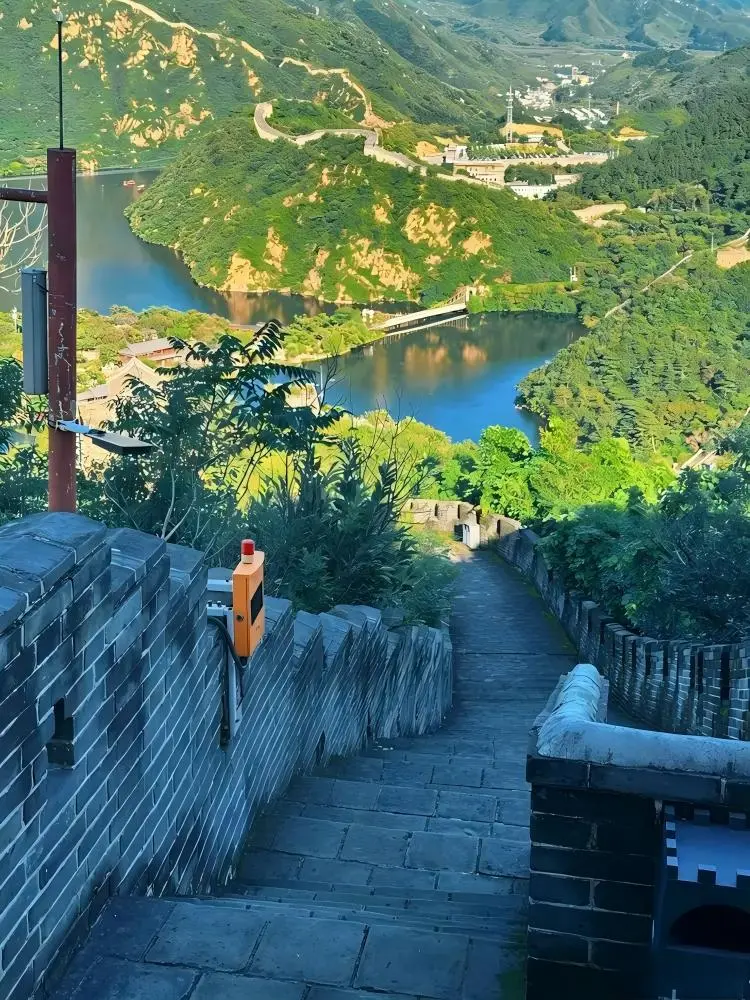
Simatai is different. It has not undergone large-scale reconstruction. The walls you see here have bricks falling off in places, exposing the rubble and rammed earth beneath; some watchtower roofs have collapsed halfway, with wild grass sprouting from the cracks; the steps are uneven, and in some spots, several steps are missing entirely, forcing you to take a big stride to get past.
This is its “original appearance”: unvarnished and unmasked, bearing the marks of 400 years of wind and rain, war and smoke.
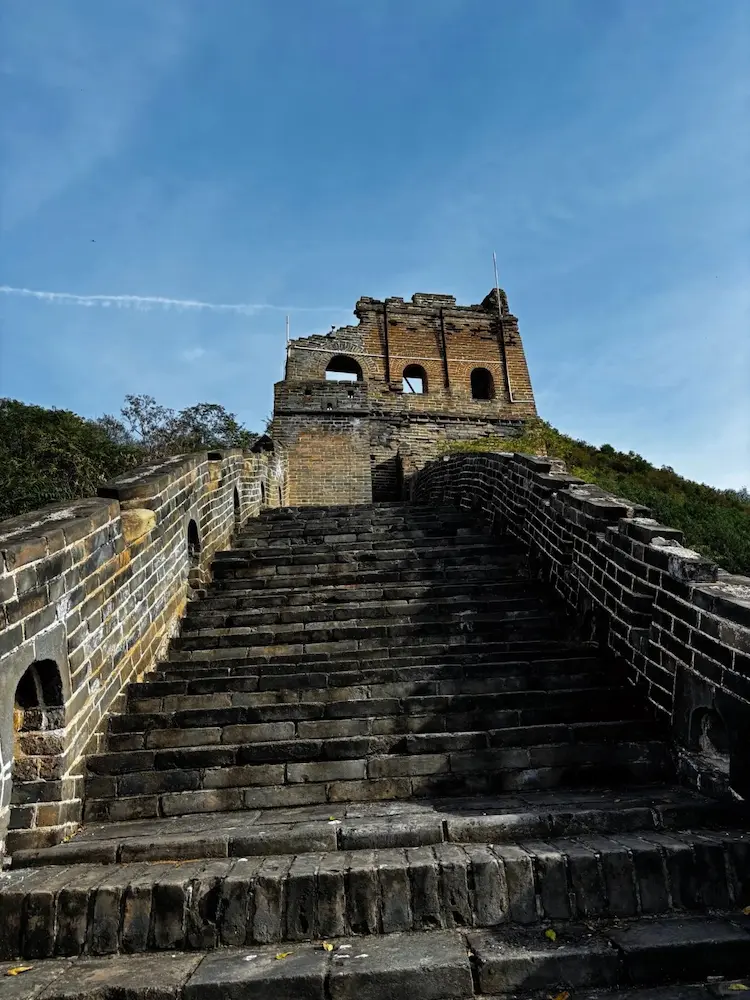
The renowned Chinese architectural scholar Luo Zhewen described Simatai as “the finest of China’s Great Walls.” Not because it is the highest or longest, but because it is the most authentic.
Inscribed Bricks: The Ming Dynasty’s“Lifetime Liability System for Construction Quality”
On some of the bricks at Simatai, you can see inscriptions carved into them. For example, phrases like “Constructed by the Wanquan Military Command in the fifth year of the Wanli reign” or “Constructed in the spring of the seventh year of the Chongzhen reign.”
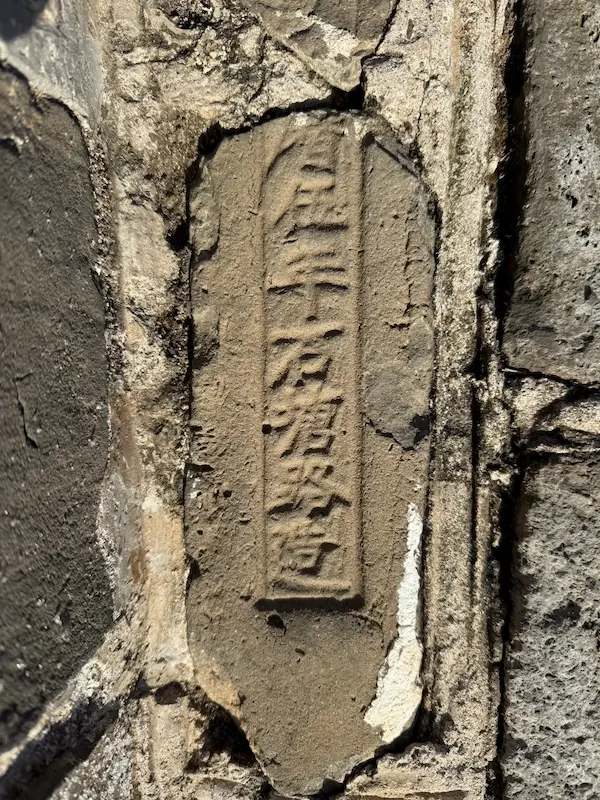
This isn’t graffiti; it’s a Ming Dynasty construction management system. Before each brick was fired, craftsmen had to engrave the unit number of their military unit or the name of the production unit on it.
If the wall collapsed during battle or if quality issues arose, the imperial court could trace the responsibility back to specific individuals.
This was “personal accountability” 400 years ago. Crouch down and touch those inscriptions—you can feel something very tangible there. It isn’t just cold stone; it’s rules and discipline.
Adaptive Defensive Strategies: Single-Faced Walls, Double-Faced Walls, and Hollow Watchtowers
The Simatai Great Wall stretches across an extremely steep mountain ridge. When Qi Jiguang rebuilt this section of the Great Wall, he did not insist on constructing tall, thick standard walls everywhere; instead, he designed them flexibly according to the terrain:
- Gentle slopes: Double-sided walls were built, with crenellations on both sides, allowing for defense from either direction.
- Cliff edges: Only single-sided walls were built, as the other side was a sheer abyss—enemies could not climb up, and building a wall there would have been a waste of manpower.
- High ground: Hollow watchtowers were built, with interior spaces for storing weapons and housing soldiers, while the exterior featured arrow slits and observation windows.
As you climb upward from the eastern section of Simatai, you’ll see these different types of walls and watchtowers alternating along the way.
This is not a cookie-cutter replica, but a military engineering project that Qi Jiguang and his craftsmen tailored to each specific location.
The Limits of Sight and Adrenaline: Those“Forbidden Zones” That Make Your Knees Weak
Note: The extremely dangerous sections mentioned below—such as“Heavenly Ladder,” “Fairy Tower,”and “Wangjing Tower ”—are currently closed to the general public for safety reasons (access is limited to professional outdoor expeditions with guides).
However, the stories behind these historic structures are an integral part of the Simatai Great Wall and are worth sharing, so you can appreciate just how “wild ”it once was.
The “Heavenly Ladder”: 85 Degrees, Cliffs on Both Sides, Just Wide Enough for One Person
At the eastern end of Simatai, there is a section of the Great Wall built on an almost vertical rock face. The slope is estimated to be 85 degrees, with no guardrails on either side and a cliff dozens of meters deep below. The wall is just wide enough for one person to pass through, and you have to use both hands and feet to climb up.
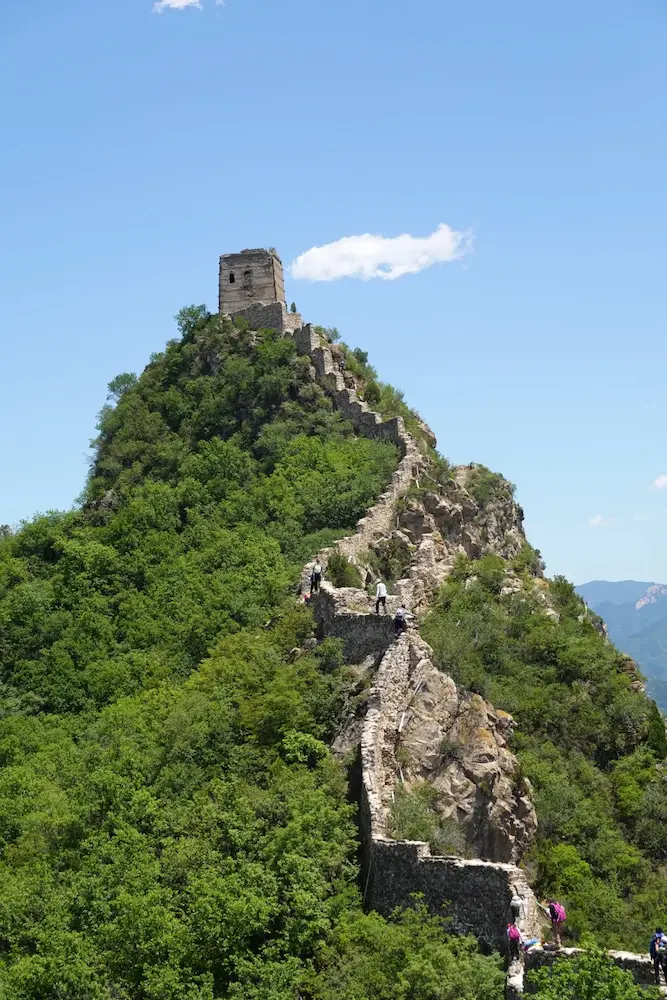
Locals and seasoned hikers call it the “Sky Ladder.” It’s no exaggeration—it really feels like climbing a ladder.
An outdoor enthusiast once took a photo of a person lying flat on the steps, their face almost pressed against the bricks, with their backpack scraping against the cliff walls on either side. That image went viral on forums, with comments like “My legs are shaking” and “I wouldn’t dare.”
Fairy Tower: The Most “Delicate” Watchtower on the Great Wall
At the top of the “Heavenly Ladder” stands a watchtower known as the “Fairy Tower.” Legend has it that a fairy once lived here, which is how it got its name.
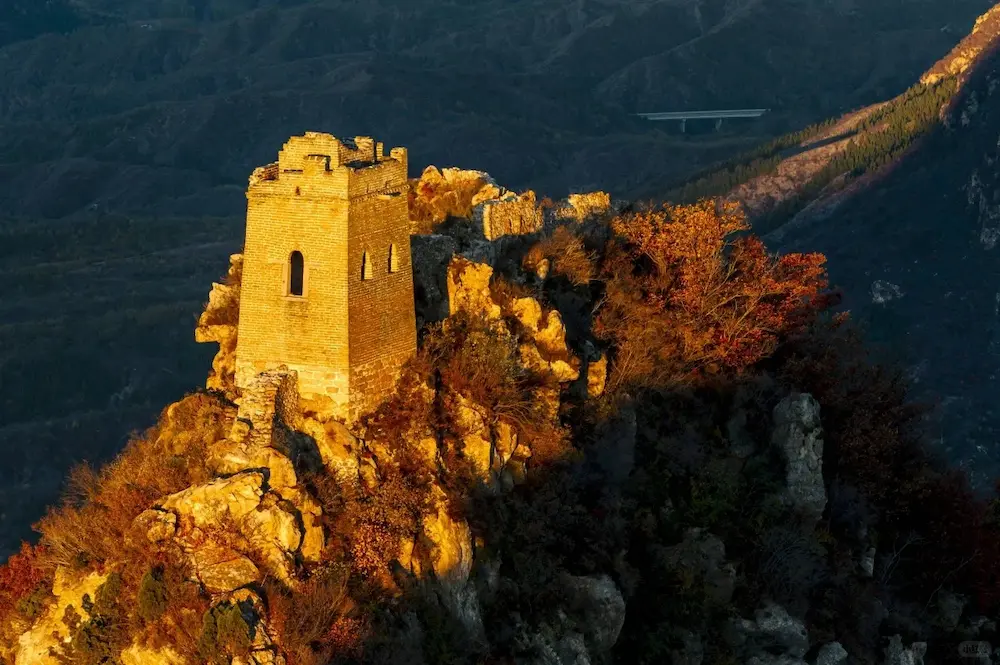
But what truly elevates it to iconic status among architecture enthusiasts is its design. While most watchtowers are square, rugged, and sturdy, the Fairy Tower appears slender and delicate, with arched doorways and windows featuring the intricate lines characteristic of Jiangnan gardens.
Some scholars speculate that the craftsmen who built this watchtower may have come from the south, Zhejiang soldiers brought by Qi Jiguang, who introduced the architectural aesthetics of their homeland to the northern frontier.
On a Great Wall renowned for its “ruggedness,” the sudden appearance of such an “artistic” watchtower creates a striking contrast.
Wangjing Tower: Elevation 986 meters; legend has it that one can see the lights of the capital from here
Beyond Xiannv Tower lies the highest point of Simatai—Wangjing Tower, standing at an elevation of 986 meters. It is almost like a solitary fortress built atop a solitary peak.
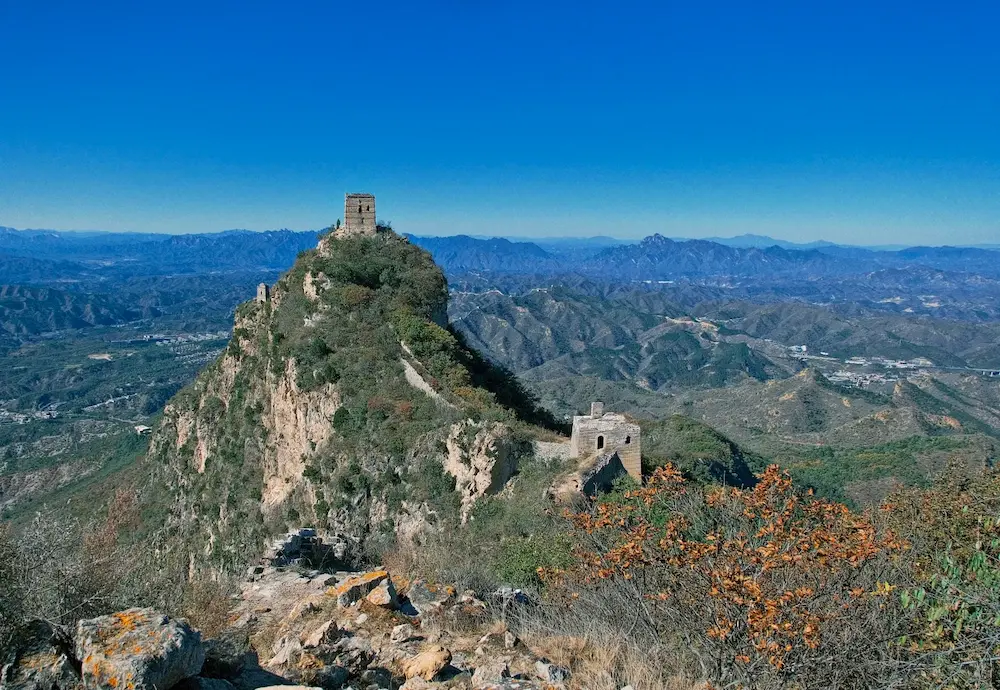
Legend has it that in days past, soldiers stationed beyond the Great Wall would stand guard here on clear, quiet nights. Gazing southward, they could faintly make out the twinkling lights of thousands of homes in the Ming capital (Beijing), over 100 kilometers away.
For countless garrison troops enduring extreme cold and solitude, this was their sole spiritual solace, a reminder of “home.”
I’m not sure if this legend is true. But standing at Wangjing Tower and looking south, Miyun Reservoir resembles a mirror, and Gubei Water Town looks like a miniature model.
In the fall, the mountains blanketed in crimson maple and yellow sumac leaves are so breathtakingly beautiful that they leave one speechless.
Even without the lights of the capital, the desolate feeling of “standing alone atop a solitary peak, with nothing but oneself” is enough to leave a lasting impression for a lifetime.
Core Experience: The Only “Lantern-Lit Night Tour” of Its Kind
If Samatai by day is a tough, no-nonsense warrior, then Samatai by night is a reserved poet.
Gubei Water Town: A “Jiangnan Water Village” at the Foot of the Great Wall
At the foot of the Samatai Great Wall lies a complex of traditional-style buildings known as Gubei Water Town. With its cobblestone paths, small bridges over flowing streams, and white walls with black-tiled roofs, you might be fooled into thinking you’re not in Beijing, but in Wuzhen.
By day, you can wander through dye shops, wine cellars, and escort agencies, and enjoy a bowl of traditional Old Beijing-style fried sauce noodles.
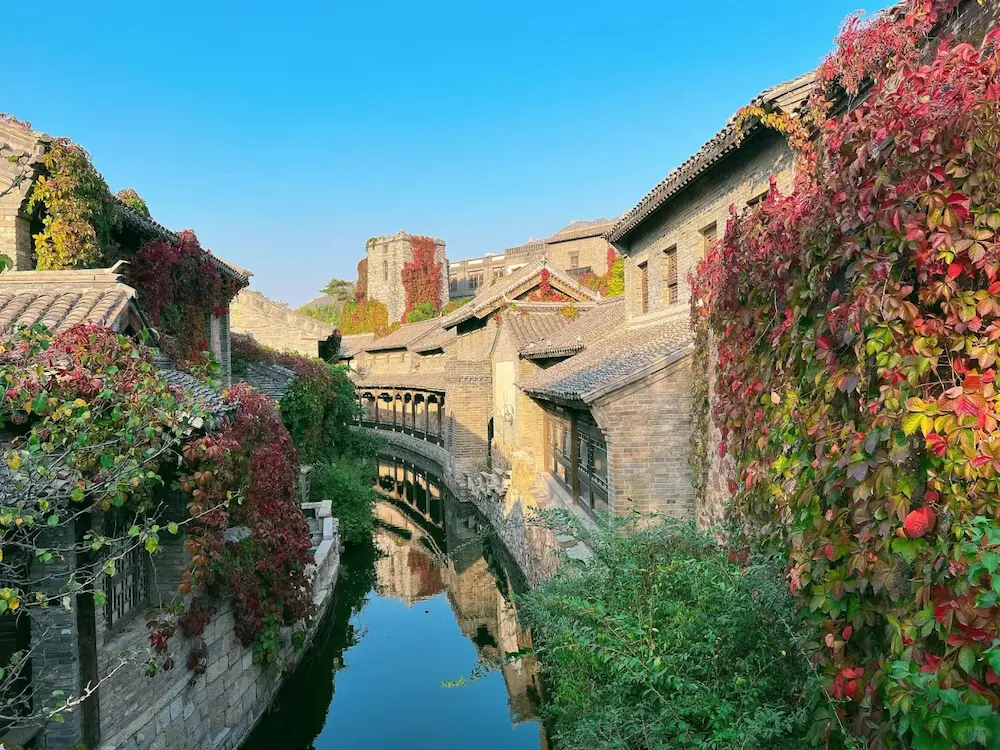
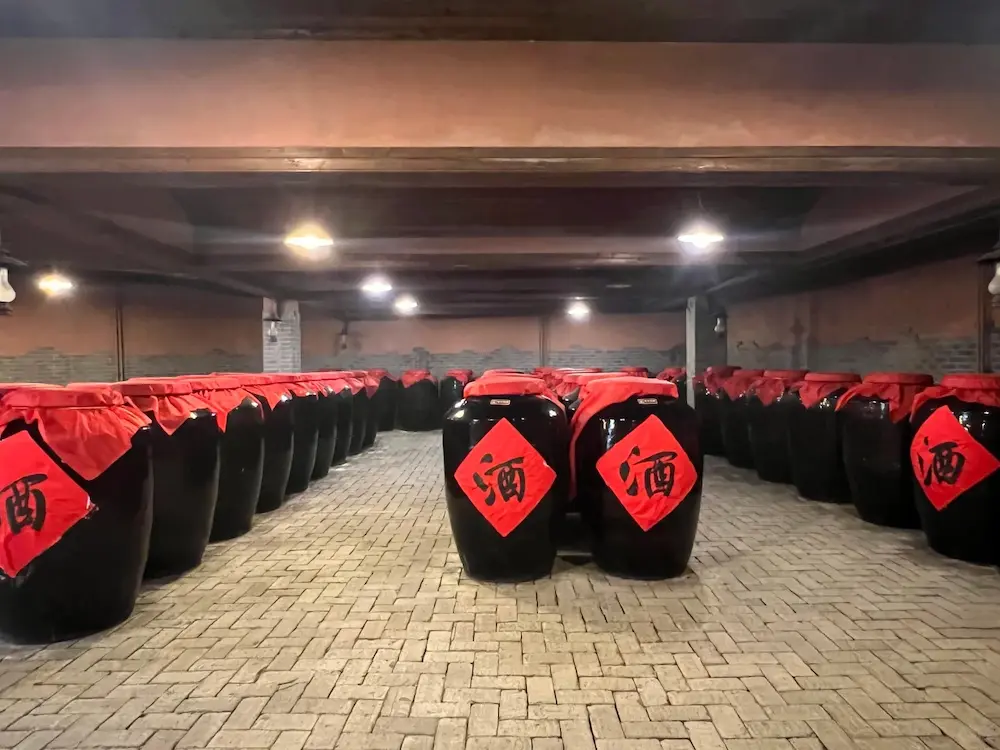
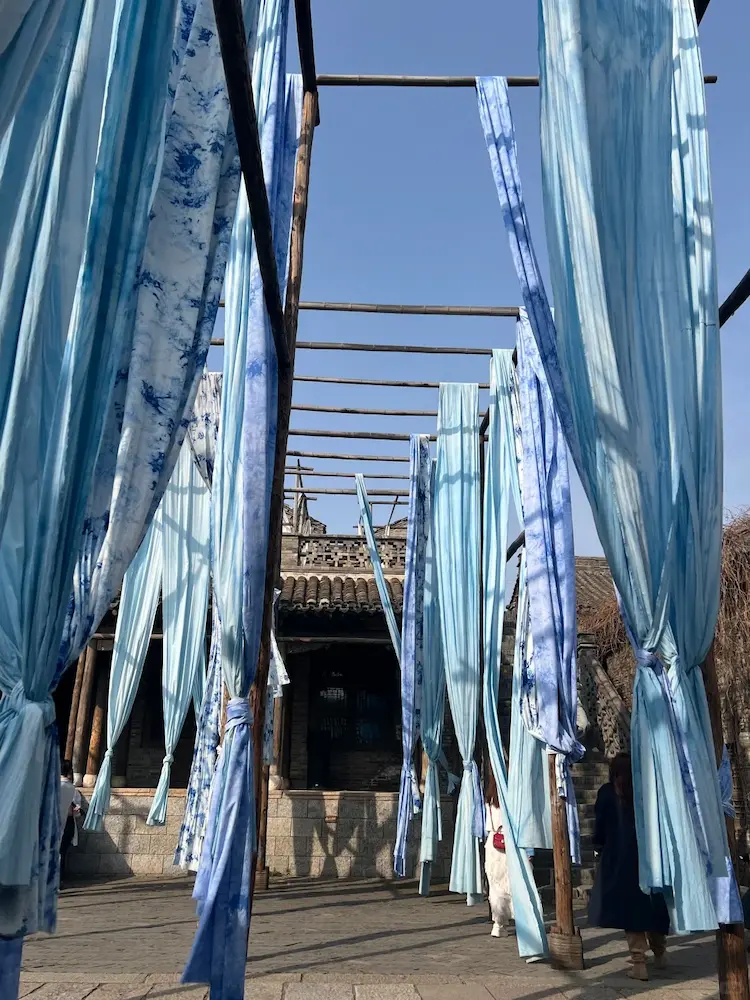
As evening falls, the town’s lights come on one by one, reflecting in the waterways, and the entire town seems bathed in a warm, golden glow.
Then, it’s time to climb the Great Wall.
Night Tour by Lantern Light: Half Rugged, Half Gentle
Simatai is the only section of the Great Wall in China open for night tours. Here’s how to enjoy it:
1. Head to Gubei Water Town in the evening for dinner and wait for nightfall.
2. Purchase round-trip tickets for the night tour cable car in advance (the night tour requires the cable car; hiking up the mountain is not permitted).
3. Pick up a vintage lantern at the cable car station (these are usually prop lanterns provided by the scenic area—they don’t actually burn kerosene, but they create a fantastic atmosphere).
4. Take the cable car through the night.
As the cable car ascends slowly, the surrounding mountains gradually fade into the pitch-black night. When your feet touch the bricks of the East Fifth Tower, the wind whistles past your ears, and the vintage lantern in your hand emits a warm, orange glow.
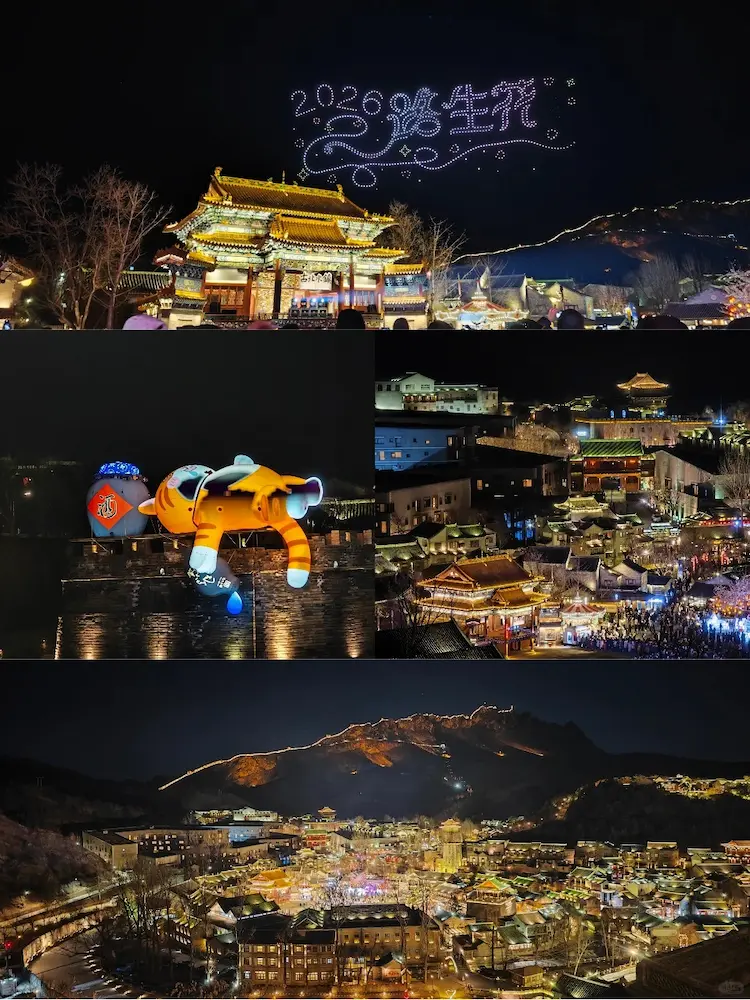
Looking down, you’ll see the entire Gubei Water Town illuminated below—with its small bridges, flowing streams, and thousands of lights—as gentle as a dream of Jiangnan. Look up, and beside you lies the Great Wall, a “golden dragon” racing along the mountain ridges, faintly lit by golden strips of light.
Half is the formidable Great Wall, half is a gentle water town. This striking contrast, coupled with the tranquil starry sky, is an experience you won’t find at any other section of the Great Wall.
Look up, and if the weather is clear, you’ll see a sky full of stars—a density you’ll never witness in the city.
Important reminder: It gets extremely windy at the summit at night, so even if you visit in the summer, be sure to bring a windbreaker. Planning a nighttime visit in winter? We recommend skipping it altogether—the wind chill can drop to well below freezing, and it’s simply too harsh to endure.
Practical Guide to Visiting
Daytime vs. Nighttime: Which Should You Choose?
The operating hours at Simatai are different from those at other sections of the Great Wall. First, let’s clarify the two options:
| Comparison | Day Tour | Night Tour |
| Open Areas | 2nd to 10th East Floors (currently open section; subject to park announcements) | 5th to 6th East Floors (prime viewing area) |
| Access | Hiking or cable car | Mandatory round-trip cable car; hiking not permitted |
| Physical Demand | High, steep steps in the eastern section | Low; primarily for photography and sightseeing |
| Best Time | Morning or evening to avoid the midday heat | After dark (approx. 7:30–9:00 PM in summer) |
| Highlights | Experience the authentic landscape, search for inscribed bricks, and feel the rugged terrain | Night tour with lanterns, overlook the town’s lights, and stargaze |
| Admission | Single Great Wall ticket (reservation required) | Great Wall night tour ticket (includes round-trip cable car) |
My recommendations:
- If it’s your first visit and you’re in good shape, choose the daytime tour. Hike from East Tower 2 to East Tower 10 to experience the “wild” and “treacherous” nature of Simatai.
- If you’re a couple, a family (with elderly relatives or children), or just want to take beautiful photos, choose the night tour for a truly unique experience.
- If you’re up for a real challenge, hike the daytime route on your own in the morning, head down for dinner in the evening, then buy a night tour ticket to go back up and see the night view. However, this will be an exhausting day, and the cost of admission will double, so please proceed at your own discretion.
The “Big Pitfall” of Booking Tickets
This is the most common pitfall at Simatai and the source of the most complaints.
The Simatai Great Wall and Gubei Water Town are two separate attractions, but they are right next to each other. There are two types of tickets available for booking:
1. Great Wall only (no Water Town): You must book in advance via the official website or mini-program one day prior (daily quotas are limited). The ticket price is approximately 40 yuan. This ticket is not sold on-site.
2. Great Wall + Water Town Combo Ticket: Available for purchase at any time (if spots are still available), but it’s much more expensive, starting at around 170 yuan.
If you plan to hike only the Great Wall and don’t want to visit the Water Town, you must book a “Great Wall Only” ticket at least 1 day in advance using your real name on the official website or through designated channels (quotas are strictly enforced).
If you arrive on-site and try to buy a Great Wall-only ticket, sorry—they usually only sell the “Water Town + Great Wall” combo ticket there, and the price is double! This rule has caught countless last-minute visitors off guard, so remember to book in advance.
The right way to do it:
- If you’re sure you’re only climbing the Great Wall and not visiting the Water Town → Book a Great Wall-only ticket at least one day in advance via the “Simatai Great Wall” official mini-program or the “Gubei Water Town Tourism” WeChat official account.
- If you want to visit the Water Town as well, → Buy the combined ticket; you don’t need to book in advance, but it’s still recommended to purchase it early to avoid sold-out situations.
Foreign Visitors: You can book using your passport number on the mini-program. However, if you encounter technical issues with WeChat or cannot complete the registration, you can easily reserve your admission online via an English Portal for Simatai & Gubei Water Town Tickets to secure your spot with instant voucher confirmation.
Transportation and Accommodations
- By Car & Private Transfer: Set your GPS to “Gubei Water Town” or “Simatai Great Wall.” The drive from downtown takes about 2 hours (without traffic). Large parking lots are available. Since Simatai is over 120 km from central Beijing, hailing a return taxi or ride-share can be unreliable. For a comfortable, hassle-free day trip with hotel pick-up and fixed pricing, consider booking a Private Car Transfer to Simatai & Gubei Water Town.
- Tourist Shuttle: A direct shuttle bus to Gubei Water Town departs from the Dongzhimenwai bus stop. The trip takes about 2.5 hours, and the fare is approximately 50 yuan.
- High-Speed Rail: Take the high-speed rail from Beijing Chaoyang Station to “Miyun Station” (about 30 minutes), then take a taxi or bus to Gubei Water Town (about 20 minutes).
- Accommodations: The most convenient option is to stay at a hotel within the Gubei Water Town scenic area, allowing you to return directly for rest after an evening tour, though prices tend to be higher. Alternatively, you can stay at farmhouses or guesthouses in the surrounding areas outside the water town, which are significantly cheaper but require you to arrange your own transportation.
Payment and Language
- Most shops within the scenic area (in the water town) accept Visa and Mastercard (via POS machines).
- However, the cable car ticket office, food stalls within the scenic area, and some guesthouses still primarily accept WeChat Pay and Alipay. I recommend linking your international credit card to WeChat Pay or Alipay in advance, or bringing a small amount of cash (around 200 yuan).
- The mini-program booking interface is available in Chinese and basic English. Foreign visitors are asked to be patient while navigating the system; if you encounter difficulties, please ask the hotel front desk for assistance.
Packing List
- Day Trip: Hiking boots (non-slip! The ancient steps at Simatai are uneven), water (at least 2 bottles), a sun hat, long pants (to prevent scratches from wild grass).
- Night Tour: Windbreaker (it gets very windy at the summit, and even summer nights can be chilly), long-sleeved shirt and pants, smartphone/camera (with a good night mode).
- General: Power bank, ID card/passport, screenshot of your reservation code.
Conclusion and Building a Network of Internal Links
If Badaling is the Great Wall’s face and Juyongguan its skeleton, then Simatai is its indomitable soul.
It is fragmented, weathered, rugged, and even somewhat “dilapidated.” Yet it is precisely this imperfection that gives it more power than any section that has been completely restored.
Standing there, you don’t need an information sign to feel that soldiers from four hundred years ago once stood on the very same bricks, breathing the same wind, and gazing at the same moon.
The Simatai Great Wall stretches westward beyond the Yuanyanghu Reservoir, crossing that invisible provincial border to connect with another section of the Great Wall that equally astonishes the world—a section renowned as a photographer’s paradise for its “Three Architectural Wonders.”
In the next post, I will take you across the Beijing-Hebei border to explore the pinnacle of Great Wall architecture—Jinshanling Great Wall: A Visual Feast of Barrier Walls, Inscription Bricks, and the Great Wall Sunset.
Simatai isn’t for everyone. If you just want to snap a quick photo and post it on social media, Mutianyu is a better choice. But if you want to see the Great Wall in its truest form and are willing to break a sweat and take a few risks, Simatai won’t let you down.