Jinshanling Great Wall Guide: Parapets, Inscription Bricks, and the Great Wall Sunset—A Photographer’s Paradise(2026)
The Jinshanling Great Wall, rebuilt under the supervision of Qi Jiguang, features the “Three Architectural Wonders”—inscription bricks, parapets, and horse-stopping walls—making it a favorite section of the Great Wall among photographers.
This article provides a detailed guide to the three iconic photo spots, hiking routes, transportation tips to avoid pitfalls, and the truth behind the lack of direct access between Jinshanling and Simatai.
Table of Contents
Why Is Jinshanling Considered the “Pinnacle” of Great Wall Architecture?
Many people assume that the most beautiful sections of the Great Wall around Beijing are all located within the city limits. Badaling is famous, Mutianyu is picturesque, and Simatai is rugged.
But what you may not know is that the section of the Great Wall most favored by the world’s top photographers is largely located in Luanping, Hebei—right next to Beijing’s Miyun District. In fact, the two sections of the Great Wall on the mountains are connected.
Administratively, the Jinshanling Great Wall belongs to Luanping County, Chengde City, Hebei Province, but it is only about 130 kilometers from downtown Beijing, roughly a two-hour drive. If you head west from Simatai and pass a few watchtowers, you’ll find yourself on Jinshanling territory.
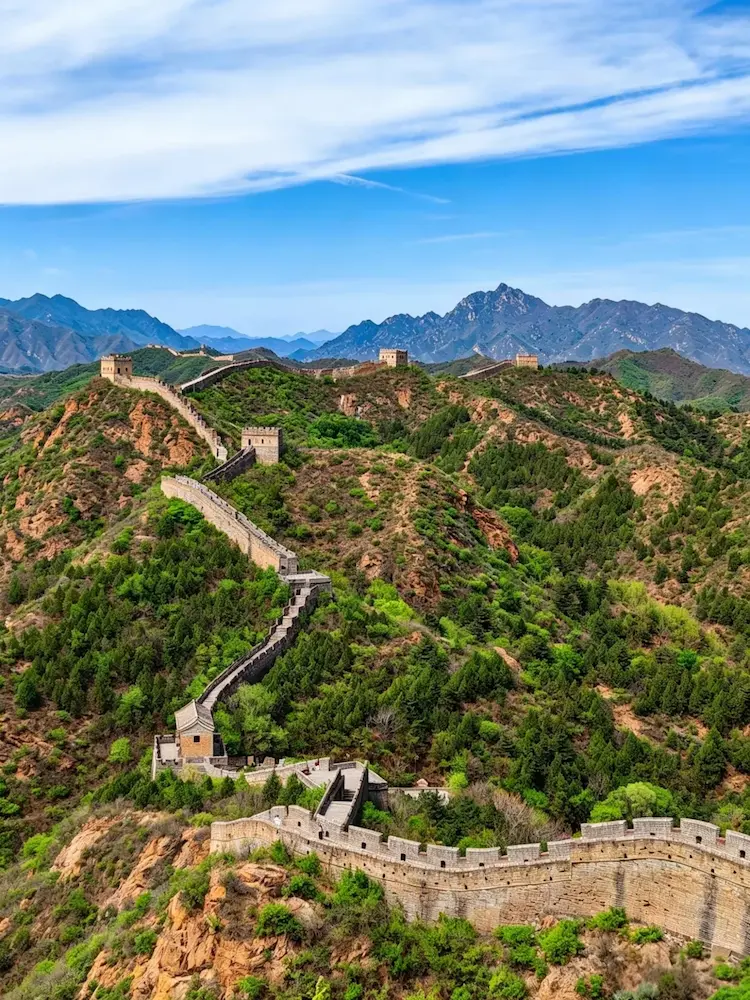
Personally overseen by Qi Jiguang during its reconstruction, this section is the best-preserved, architecturally most diverse, and militarily most fortified stretch of the Ming Great Wall. Experts from the China Great Wall Society agree: Jinshanling represents the pinnacle of Ming-era Great Wall architectural art.
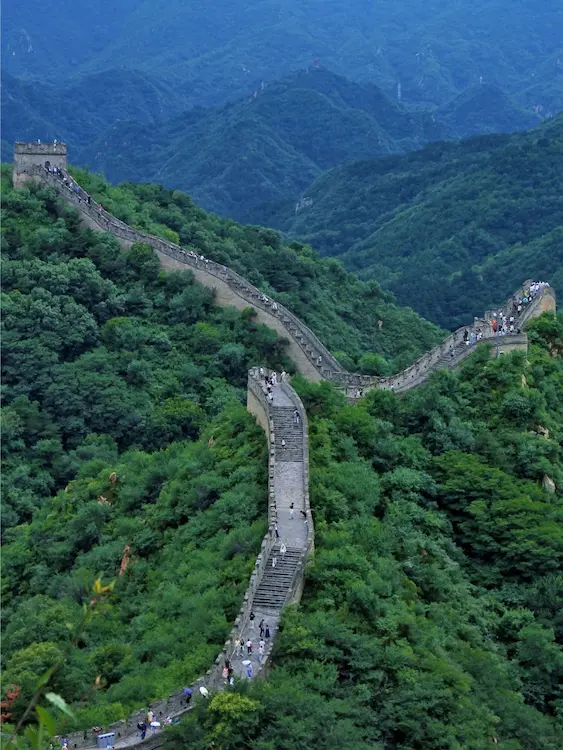
My own impression is even more direct: if I could only photograph a sunset over the Great Wall once in my lifetime, I would choose Jinshanling without hesitation. The ridgelines here undulate dramatically, with the Great Wall winding up and down like a giant dragon.
The view is incredibly expansive, with absolutely nothing to obstruct it. When the setting sun bathes the walls in golden-red hues, you’ll feel that the camera in your hand simply isn’t enough—your eyes are the best memory card.
In this article, I’ll guide you through Jinshanling’s “Three Architectural Wonders,” reveal two legendary photo spots, and clear up a common point of confusion: Does it belong to Beijing or Hebei? And, can you actually walk directly from Jinshanling to Simatai?
Unveiling History and Architecture: Jinshanling’s“Three Architectural Masterpieces”
The Jinshanling Great Wall is considered the“gold standard” not because of its fame, but because it represents the pinnacle of architectural craftsmanship. The following three features are rarely seen at Badaling or Mutianyu—or, even if they are present, they are not as concentrated or as well-preserved as they are at Jinshanling.
First Highlight: Inscribed Bricks—”Fingerprints” from Four Hundred Years Ago
Along many sections of the Great Wall, you might occasionally spot a brick engraved with characters, but such finds are rare. Jinshanling is different: here, inscribed bricks are so numerous that if you keep an eye out, you’ll find one every few steps.
The inscriptions I’ve seen with my own eyes include:
- “Constructed by the Left Construction Bureau of Shandong in the fifth year of the Wanli reign.”
- “Constructed by Xuanhua Prefecture in the sixth year of the Wanli reign.”
- “Built by Zhengding Prefecture”
- “Constructed by Hejian Prefecture”
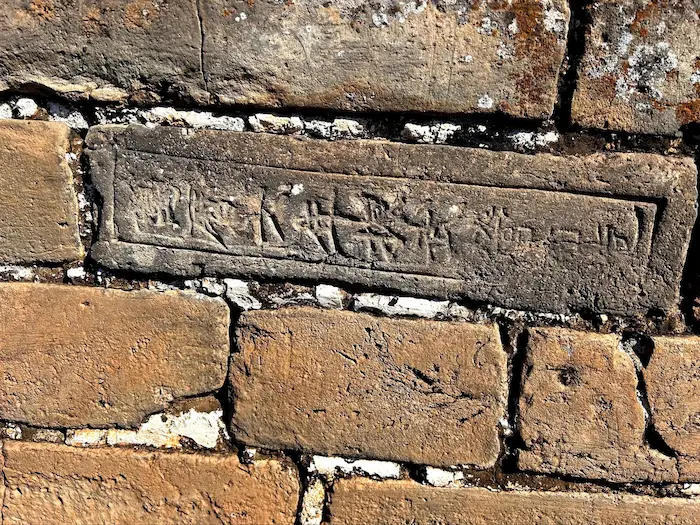
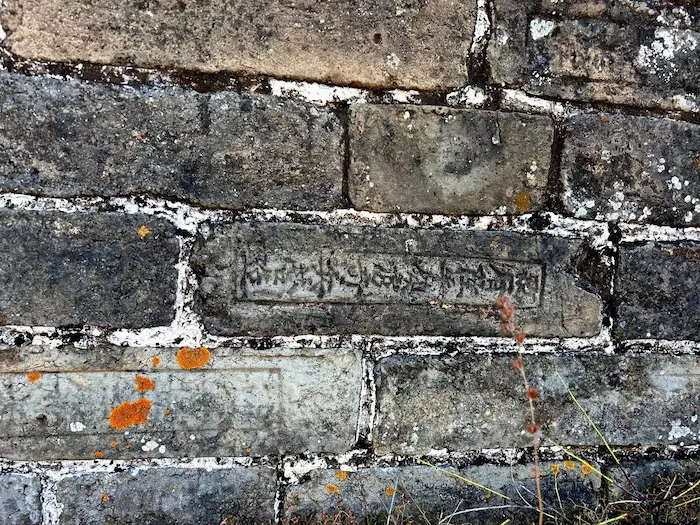
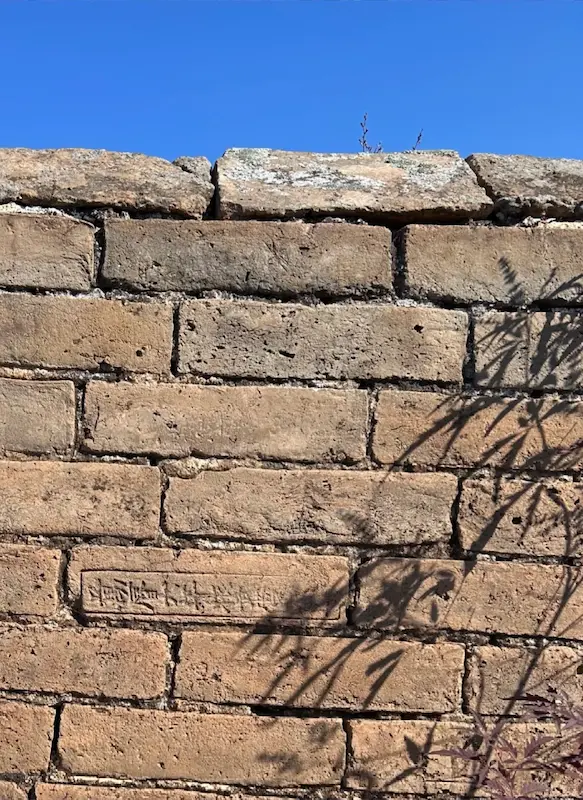
This is more than just a simple “construction quality accountability system.” These inscriptions reveal a startling fact: the soldiers and craftsmen who built Jinshanling back then came from multiple provinces, including Shandong, Hebei, and Henan. The imperial court mobilized manpower and resources from across half of China, gathering them on this ridge of the Yanshan Mountains to construct this impregnable fortress.
When you bend down and run your fingers over the uneven, raised characters in the Wei Stele style, you can feel a connection that transcends time and space—four hundred years ago, when some nameless craftsman pressed these characters forcefully into the brick, he likely had no idea he was making history. He was simply fulfilling his duty, then moving on to lay the next brick.
The Second Masterpiece: The Barrier Walls—A “Street Fighting” Maze on the City Walls
This is the most astonishing invention at Jinshanling.
On the steep steps of the city walls, you’ll see a series of short walls, each about 2 meters high and running perpendicular to the main wall, spaced at regular intervals. These are the barrier walls.
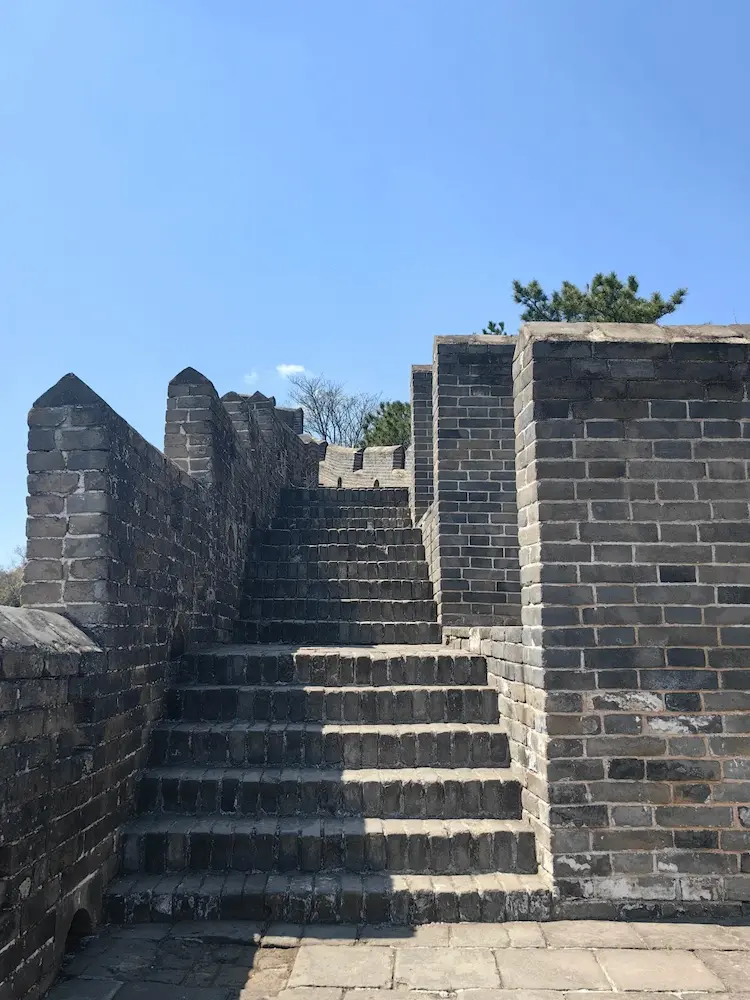
What is the military logic behind them?
Suppose enemy forces manage to storm the Great Wall at all costs. Under normal circumstances, the defenders would have no choice but to retreat along the wall or engage in hand-to-hand combat where they stood. But with the barrier walls, the defenders could retreat in stages, with a group of archers or musketeers concealed behind each one.
Every time the enemy scaled a barrier wall, they would be exposed to the firing slits of the next one. One, two, three… by the time they reach the top, they’ve already been riddled with arrows.
Simply put, the barrier walls transform the broad ramparts into a deadly “corridor of urban warfare.” As you climb up and down the steep slopes of Jinshanling, be sure not to miss these low walls—run your hand over the ancient bricks and stones, and imagine the rain of arrows that once fell here.
The Third Masterpiece: Horse-Blocking Walls—The “Tank Traps” of the Age of Cold Weapons
In addition to the ingenious designs on the city walls, Qi Jiguang did not overlook the area outside the walls. On the outer slopes of Jinshanling, where the terrain is relatively gentle and enemy cavalry might launch a charge, you can still see short, horizontal stone walls built along the contours of the hills. These are known as horse-blocking walls (also called horse-blocking stones).
In the age of cold weapons, the speed of the Mongol cavalry was their most formidable weapon. When cavalry charged, the impact was immense; if they were allowed to charge directly to the foot of the Great Wall, the pressure on the defenders would be immense.
These horse-stopping walls functioned much like anti-tank trenches in modern warfare: as cavalry charged forward, they were halted by the first wall, forcing them to slow down, detour, or dismount.
During this process, the archers and musketeers on the ramparts had ample time to take aim and fire. The ability to instantly slow the charge of the warhorses allowed the defenders to calmly and systematically eliminate the enemy from a distance using bows, crossbows, and muskets.
Brick walls, parapets, and horse-stopping walls—combined, these three elements form an impenetrable, multi-layered defensive system designed by Qi Jiguang. Standing at the highest point of Jinshanling and looking down, you will gain a whole new understanding of the term “military genius.”
A Photographer’s Paradise: How to Capture That “Divine Light”
Jinshanling enjoys an exceptionally high reputation among photographers. Every year, large numbers of photographers make the trip specifically to stake out the best spots with their gear—some even visit seven or eight times a year. Why? Because the sense of line and the lighting conditions here are difficult to replicate in other sections of the Great Wall.
Best Viewing Spots for the Sunset at Jinshan: [Xiaojinshan Tower] or [Jiangjun Tower]
Both of these locations are perched high above the landscape, offering completely unobstructed views. As the sun sinks into the foothills of the Yanshan Mountains, the entire Great Wall is bathed in a blood-red glow, creating stunning silhouettes. The blue-gray bricks of the wall take on a golden-red hue, while the silhouettes of the watchtowers become long and sharp.
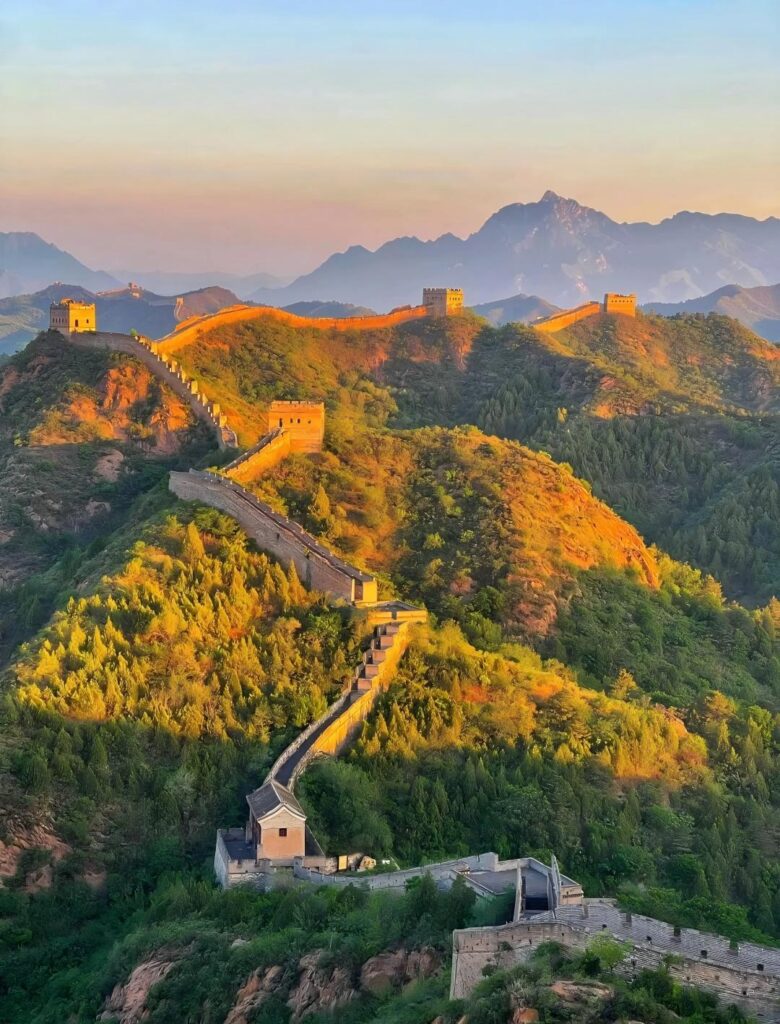
Distant mountain ranges rise in layered peaks, while the nearby Great Wall winds down along the undulating ridgeline, resembling the back of a giant drawing a bow.
Practical Tip: Shooting the sunset means it will be dark by the time you head back down. Be sure to bring a flashlight or headlamp—the steps at Jinshanling are uneven, and descending in the dark makes it easy to twist an ankle. Also, a tripod is essential—once it gets dark, you won’t be able to capture sharp long exposures by hand.
Best Spot for Photographing the Sea of Clouds at the Great Wall: [East Five-Eyed Watchtower]
Located at the easternmost end of the open section, this spot offers the most expansive view. If you visit here on a clear morning after rain during the summer and fall (June–September), you can capture white mist weaving through the watchtowers, with the Great Wall resembling a giant dragon winding through a fairyland.
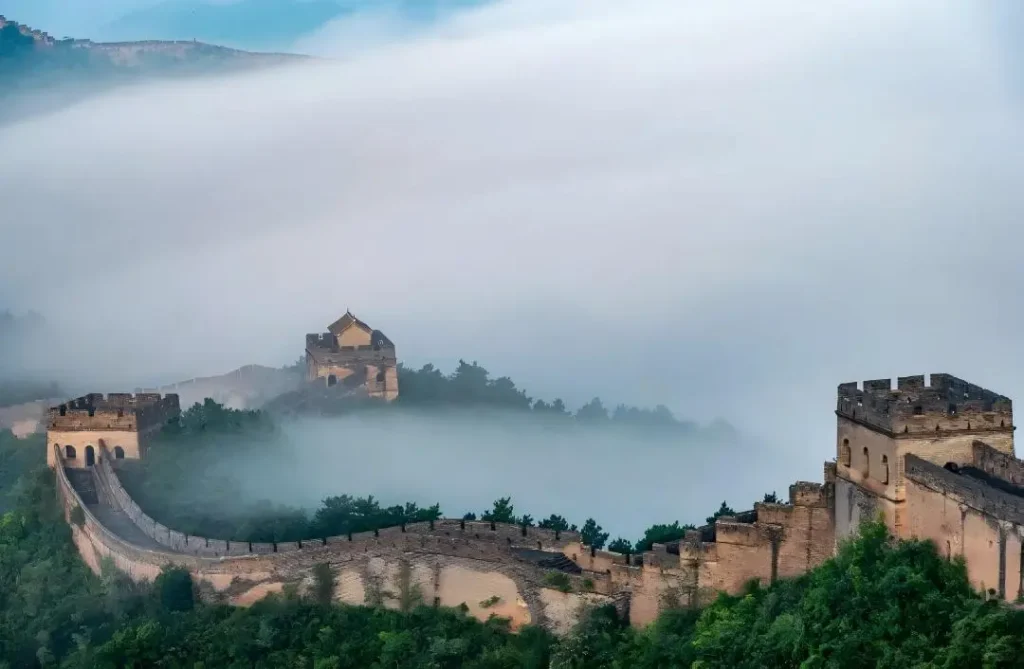
Best Time: The highest probability of a sea of clouds occurs the morning after rain, when humidity is high, and there is no wind. The sea of clouds is usually densest around sunrise and dissipates as the sun rises. We recommend staying at a local farmhouse near the scenic area the night before and setting out for the mountain around 4:00 a.m. the next morning.
What to shoot: When the mist rises to halfway up the wall, the watchtowers appear like isolated islands floating on a sea of white. Due to its elevated position, the East Five-Eyed Tower offers a superb vantage point to capture the Great Wall emerging from the mist and stretching into the distance.
Practical Guide to Sightseeing
Boundaries and Hiking Facts
1. Administratively part of Hebei, but transportation-wise, head to Beijing
Administratively, Jinshanling belongs to Luanping County, Chengde, Hebei Province, but it is only 130 kilometers from Beijing—about a 2-hour drive—making it much closer than the city of Chengde. So don’t worry about the hassle of “crossing provincial borders”—the vast majority of visitors depart from Beijing and can easily make a day trip.
2. There is currently no direct trail connecting Jinshanling and Simatai!
This is the question most hardcore hikers are concerned about. I’ll give you the straight answer: No.
Although the two sections of the Great Wall are physically connected—if you look east from the Dongwuyan Tower at Jinshanling, you can see the Wangjing Tower at Simatai directly across a valley—the boundary between the two scenic areas is currently completely sealed off by barbed wire and guarded by staff for cultural heritage preservation and safety reasons.
If you’re hoping to hike both sections in a single day, you’ll have to give up on that idea. You’ll need to purchase separate tickets and enter through their respective gates, which requires a detour via the highway (about a 30–40-minute drive).
So don’t even think about “climbing over the wall from Jinshanling to Simatai”—that’s the “wild Great Wall,” and it’s not only dangerous but also illegal.
Transportation Options
- By Car (Highly Recommended): Set your GPS to “Jinshanling Great Wall Scenic Area.” From downtown Beijing, take the Jingcheng Expressway (G45) and exit at “Pianqiao,” then follow the signs for about 10 kilometers. The total distance is approximately 130 kilometers, taking about 2 hours (without traffic). The scenic area has a large parking lot.
- Tourist Shuttle: A tourist shuttle to Jinshanling occasionally departs from the Dongzhimenwai bus stop (typically during peak season; service may be suspended during off-peak season). We recommend checking travel platforms or calling the scenic area in advance to confirm.
- Public Transportation (Not Recommended): Taking a bus from Beijing to Luangping County and then transferring to another bus is a very tedious process and is not recommended.
Classic Hiking Routes
The beauty of Jinshanling lies in the fact that it offers the best of both worlds: you can easily take in the highlights via the cable car, as described in the “Mutianyu Great Wall Guide“, or you can conquer the loop trail on foot—just like the hardcore hikers in the “Juyongguan Great Wall Guide“. If you’re still undecided, feel free to return to my master guide, “9 Great Wall Sections in Beijing”, and use the comprehensive comparison chart to help you make your final decision.
Below are two of the most classic routes:
Route 1: Easy Cable Car Tour (Suitable for families, those with limited time, or those with average fitness levels)
- Main entrance of the scenic area → Take the cable car up the mountain (approx. 20 minutes) → After getting off the cable car, you’ll arrive near the Small Golden Mountain Tower
- Walk east to the Large Golden Mountain Tower and Houkawaguchi (the highlight section, where you can see dense defensive walls and bricks inscribed with characters)
- Return the same way or continue to Houkouchuan before turning back, then take the cable car down
- Total duration: approx. 2–3 hours; low physical exertion; offers a view of Jinshanling’s most iconic features
Route 2: Grand Loop–The Ultimate Photography Trail (Ideal for photographers, hiking enthusiasts, and sunrise/sunset lovers)
- Zhuandoukou (enter through the main gate) → Head west to Xiliang Zhuandou Tower (less crowded, perfect for shooting empty scenes)
- Turn back and head east: Shalingkou → Yaogou Tower → Houchuan Kou → Dongwuyan Tower
- Dongwuyan Tower marks the easternmost point of the open section. Just beyond that invisible provincial border lies the section that retains its original Ming Dynasty structure—the Simatai Great Wall. If you want to experience the raw, unrenovated sense of age and ruin, as well as the only lantern-lit night tour available online, check out my “Simatai Great Wall Guide: Original Ming-Dynasty Architecture & Lantern-Lit Night Tour, The Best of China’s Great Wall (2026)“.
- After turning back at Dongwuyanlou, you can walk back to Houchuan Kou and take the cable car down, or complete the entire loop (about 5–6 hours)
My recommendations:
- If you’re visiting just once and want to capture stunning photos, choose Route 2, but be sure to allow plenty of time (at least 5 hours) and bring plenty of water and snacks.
- If you’re traveling with elderly family members or children, or if you’re short on time, choose Route 1. Taking the cable car up and down makes for an easy and enjoyable trip while still covering the highlights.
Best Time to Shoot
| Subject | Best Season | Best Time of Day | Shooting Location |
| Sunset | All seasons; air quality is better in fall and winter | 1 hour before sunset | Xiaojinshan Tower, General’s Tower |
| Sea of Clouds | Summer and fall (June–September) | Around sunrise (4–6 a.m.) | East Five-Eyed Tower |
| Spring Flowers | Mid-April to early May | All day | Along the route |
| Autumn Colors | Mid- to late October | Afternoon (soft light) | Near General’s Tower |
Gear Checklist
- Essentials: Hiking boots (the steps at Jinshanling are rougher and more uneven than those at Badaling), plenty of water (at least 2 bottles per person), and snacks (energy bars, bread).
- For photographers: Telephoto lens (70-200mm or longer for capturing lines and close-ups of watchtowers), wide-angle lens (for wide-angle shots), tripod (essential for sunset/sea of clouds), spare batteries (no charging available on the mountain), headlamp (for the descent after sunset).
- General: Sunscreen (summer), windbreaker (spring, fall, and winter—it’s windy at the summit), rain jacket (summer showers are common), power bank, ID card/passport, screenshot of your reservation code.
Reservations and Ticket Purchases
- Jinshanling is a 5A-rated scenic area that requires real-name reservations. Search for “Jinshanling Great Wall” or “Changyou Great Wall” on the WeChat Mini Program.
- Foreign visitors must use their passport number to make a reservation and present their reservation code and passport upon entry.
- Admission Price: 65 RMB per adult (slightly more expensive than Badaling and Mutianyu in the Beijing section, but definitely worth the price). Discounts available for students and seniors.
- Cable Car Fares: 40 RMB one-way, 60 RMB round-trip.
- Note: During peak season (especially National Day and the autumn foliage season), it is recommended to book 3–5 days in advance. Early morning slots during the sea-of-clouds season are in high demand.
At Jinshanling, what you see is not just a section of the Great Wall, but an open-air museum of Ming Dynasty military architecture.
Every inscribed brick here tells a story: four hundred years ago, craftsmen and soldiers from across half of China toiled here under the scorching sun. Every defensive wall demonstrates how Qi Jiguang, a military genius, transformed the mountain ridges into impregnable killing fields.
Every horse-barrier wall tells the story of how warfare in the age of cold weapons was a dual contest of intellect and physical strength. And that streak of sunset is a desolate beauty forged through blood and fire.