A Tour of Beijing’s Da Jinsi Hutong and Xiao Jinsi Hutong & the Cultural Legacy of Yang Xianyi
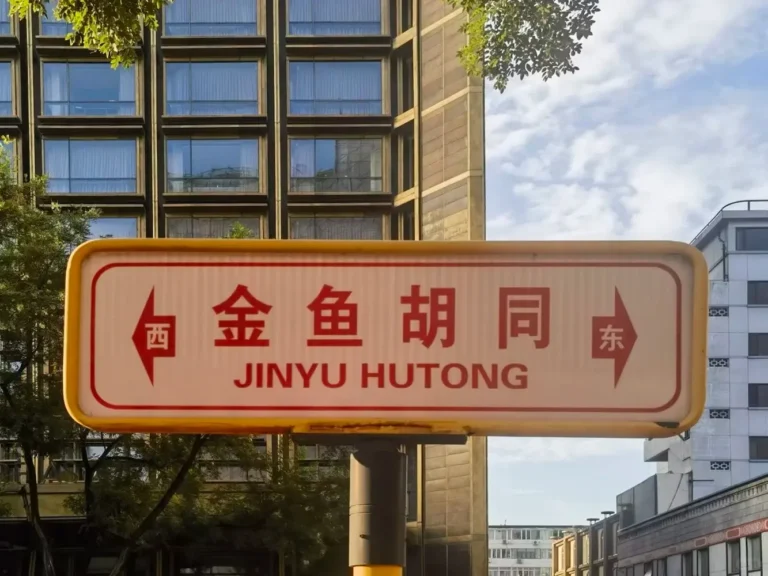
Nestled near Beijing’s Shichahai Lake lie two quiet, history-rich hutongs–Da Jinsi Hutong and Xiao Jinsi Hutong.
Beyond the tales of their ancient architecture, these lanes were once home to a legendary couple hailed as the “Golden Couple” of China’s translation circle: Mr. Yang Xianyi and his British wife, Gladys Yang. Their story weaves together love, culture, and unyielding perseverance.
Table of Contents
Quick Guide
- Highlights: Former residences of translation luminaries Yang Xianyi and David Nadeau; ruins of a Ming Dynasty textile dyeing workshop; former site of Jinghai Temple; the distinctive zigzag layout of the old hutongs
- Location: Core area of Shichahai, south of Yinding Bridge, between Qianhai and Houhai
- Recommended visit duration: 20–30 minutes
- Keywords: Literary Hutong, Sino-Western Romance, Cultural Bridge, Zero Commercialization
- Best Itinerary: Yinding Bridge → Xiaojinsi Hutong → Dajinsi Hutong → Huoshen Temple—a cultural route that avoids the crowds
Easiest Way to Get There | Walking Route (Just Follow Along)
- Subway: Exit A2 at Shichahai Station (Line 8), walk 6 minutes to Yinding Bridge, then head south into Jinsi Hutong
- Recommended Route: Yinding Bridge → Xiao Jinsihutong → Da Jinsihutong → Huoshen Temple → Qianhai
- Highlights: Quiet throughout with a strong cultural atmosphere; completely avoids the crowds at popular Instagram spots
Quick Tips
- This is a purely residential area with almost no shops; bring water and snacks if you plan to rest
- The historic residences are private homes; only view them from the outside—do not knock on doors or disturb the residents
The Origin and Historical Traces of the Hutongs
The names of Da Jinsi Hutong and Xiao Jinsi Hutong have a long history. One account holds that during the Ming Dynasty, a weaving and dyeing workshop once stood here, tasked with dyeing silk for the imperial court.
On Qing Dynasty maps, the area was marked as Golden Silk Ribbon Hutong, and the character for “ribbon” later morphed into a homophone meaning “loop”.
In 1965, the names were simplified to the Da Jinsi Hutong andXiao Jinsi Hutong we know today.
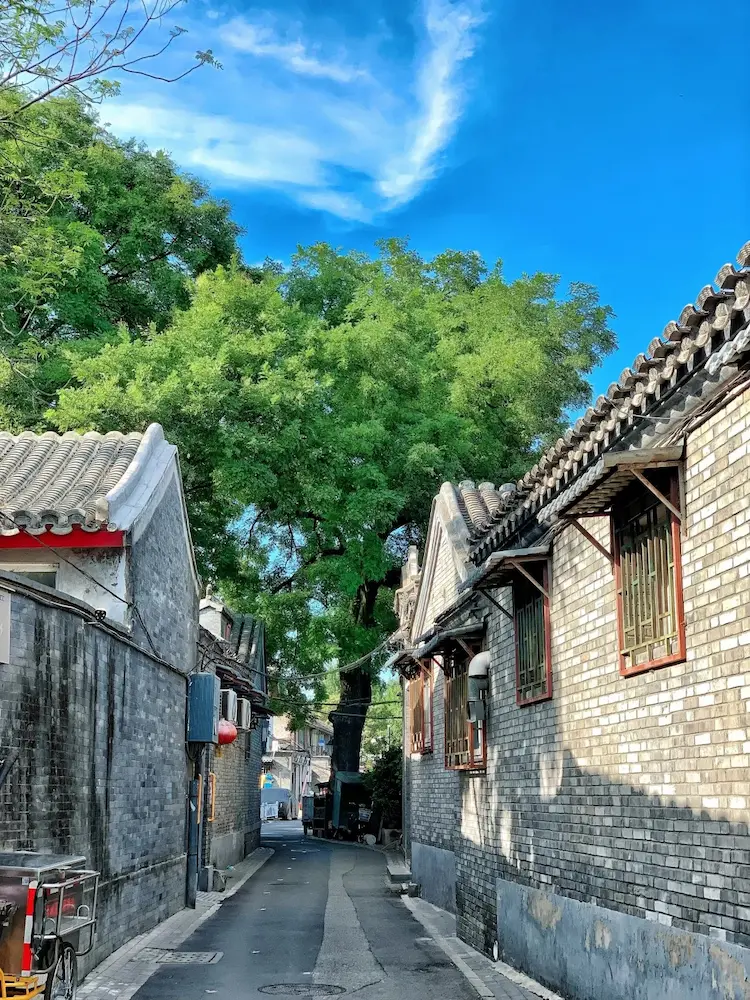
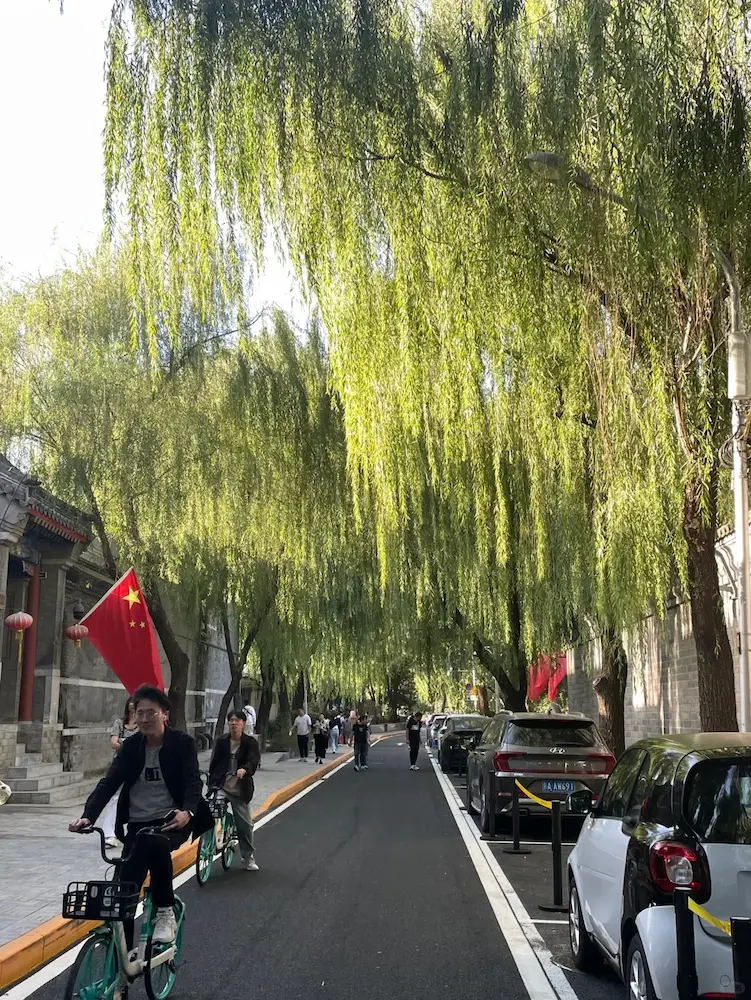
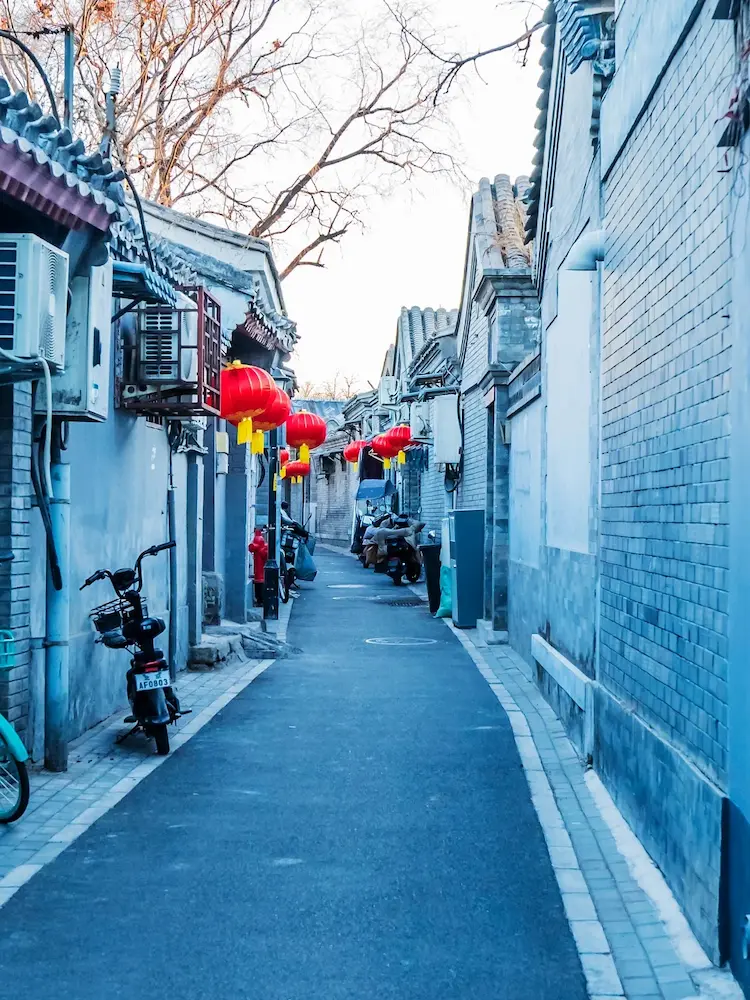
Stepping into Da Jinsi Hutong, you’ll find it winds and turns, with some sections shaped like a zigzag. On a quiet afternoon, the only sound you’ll hear is the wind rustling through leaves.
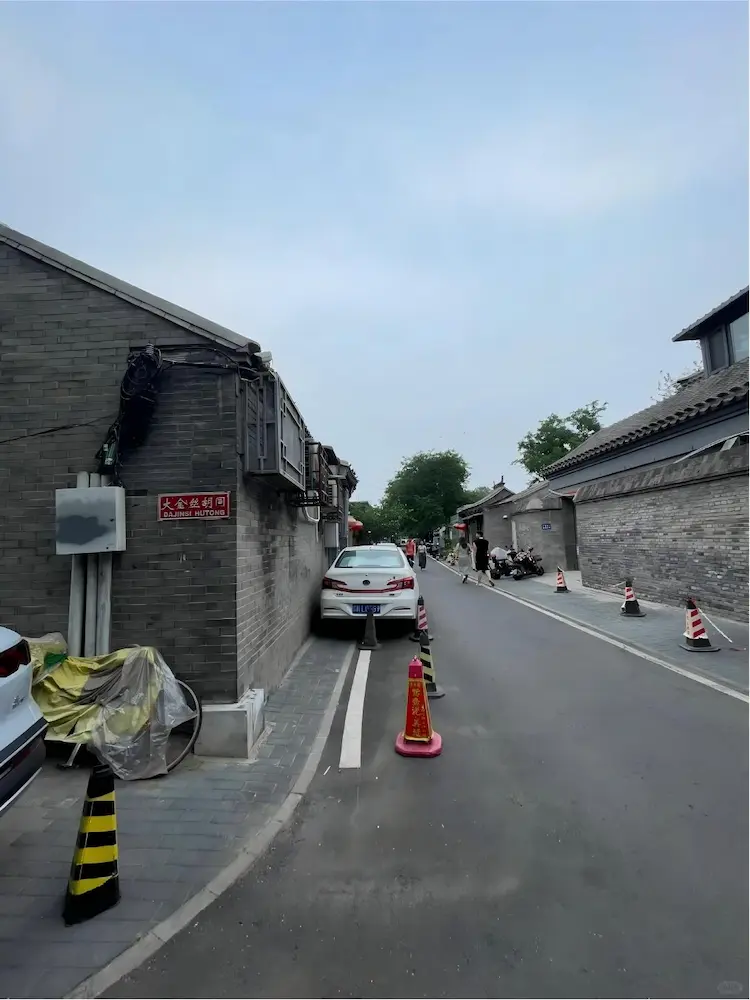
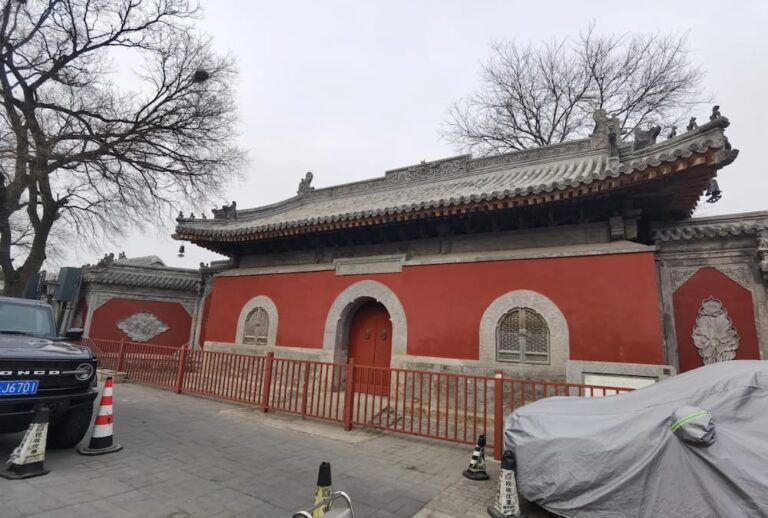
Here lies the site of Jinghai Temple, also known as Huaibao Nunnery, first built during the Tianqi Reign of the Ming Dynasty (c.1621-1627).
Historically, a monk named Datian practiced Buddhism here. Legend has it that there was an ancient pagoda tree in the temple courtyard with an extraordinary shape, so much so that it was said to need iron chains to hold it in place.
Sadly, the temple is now a residential compound, and the ancient pagoda tree, iron chains, and old well have all vanished without a trace.
Tall, ancient pagoda trees still line the hutong, their lush branches and leaves standing like large umbrellas sheltering the siheyuan courtyards around them.
In old Beijing, there were strict customs about what trees to plant in courtyards, captured in a classic folk saying: “Canopies, fish tanks, pomegranate trees; a scholar, a plump dog, a chubby maid.” These trees, together with the hutongs and siheyuan, have witnessed the passage of time.
The “Golden Couple” in Xiao Jinsi Hutong
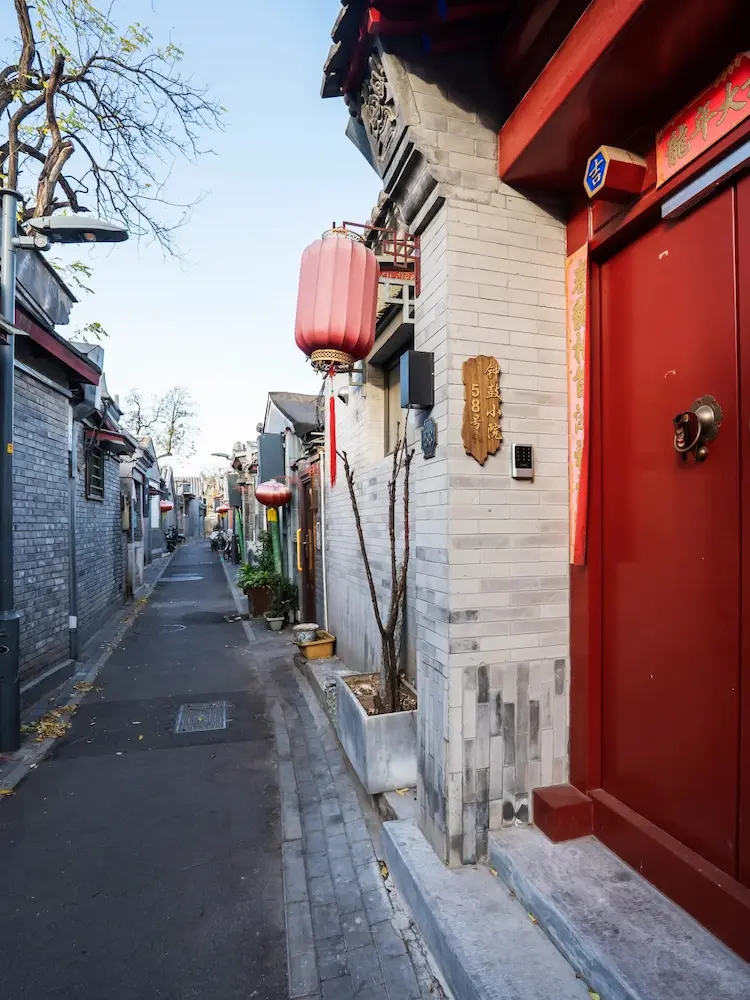
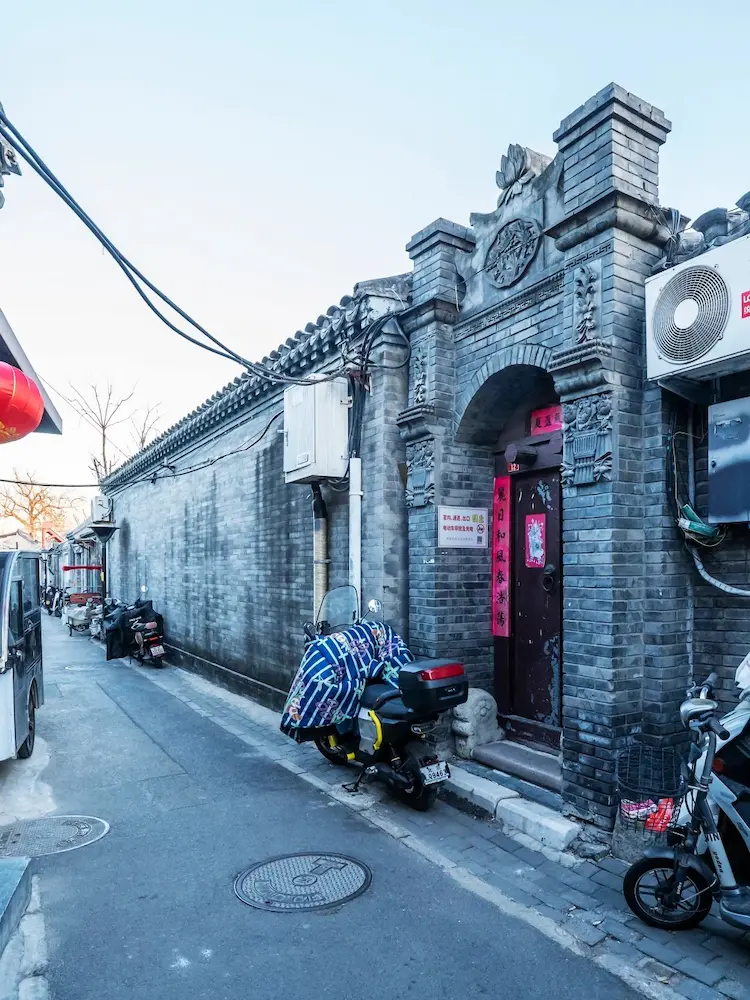
Turning into Xiao Jinsi Hutong, you enter an even quieter, more secluded lane – home to No. 6 Xiao Jinsi Hutong, once the residence of the renowned translator Yang Xianyi. Like the man himself, the courtyard is serene and distinctive.
Yang Xianyi was born into a wealthy family in Tianjin, and later studied at Merton College, Oxford University in the UK. It was there he met the love of his life: a young British woman named Gladys Margaret Taylor. Yang Xianyi gave her a beautiful Chinese name: Dai Naidie (Gladys Yang).
Their love story began on the university campus. For Gladys, Yang Xianyi switched his major to English Literature; meanwhile, Gladys, who had originally studied French Literature, delved into Chinese Literature because of Yang, becoming the first student at Oxford to receive an honorary degree in Sinology.
In 1940, the couple came to live in China together. In Chongqing, Yang Xianyi met the famous scholar Liang Shiqiu, which led him to a position at the National Compilation and Translation Institute – marking the start of their lifelong career in translation.
Bridging Chinese and Western Cultures Through Translation
Over the next half-century, Yang Xianyi and Gladys Yang worked hand in hand to translate a vast array of Chinese literary works into English. Their translations spanned an extraordinary range:
- Ancient classics such as The Book of Songs, Chu Ci, poetry of the Tang and Song dynasties, and opera of the Yuan Dynasty
- Canonical works, including Records of the Grand Historian and Strange Tales from a Chinese Studio
- Works by modern writers like Lu Xun and Shen Congwen
- Contemporary literary works such as Hibiscus Town and The Heavy Wings
Together, they produced more than 100 translated works, totalling tens of millions of words, covering nearly all the important literary works from every period of Chinese literature.
Their English translation of A Dream of Red Mansions stands as their magnum opus – accurate and exquisitely written, it is still regarded as an unsurpassable classic to this day.
For these immense contributions, they were revered as grand masters of China’s translation circle, and many likened them to a “Golden Couple” – much like the legendary, highly skilled and deeply devoted pair in martial arts novels.
Standing by Each Other Through a Turbulent Life
Yet their life was far from smooth sailing. During the difficult years of the Cultural Revolution (1966-1976), the couple suffered unjust treatment and were even imprisoned.
More heart-wrenchingly, their son passed away due to mental health issues. In her later years, Gladys Yang developed Alzheimer’s disease and died in 1999.
After Gladys’ death, a vital part of Yang Xianyi’s life seemed to fade away. The great translator rarely picked up his pen to translate again.
For nearly 60 years, they had stood by each other through countless hardships, supporting and facing everything together – a profound love that moves all who hear of it.
The Hutongs Today and a Tribute to the Couple
Today, No. 6 Xiao Jinsi Hutong is home to their youngest daughter, and the courtyard has been renovated to blend Chinese and Western architectural styles. If you visit the small square beside the Fire God Temple on the Front Lake around 3 p.m.
On Wednesdays or Sundays, you may spot a group of people playing African drums. The elderly woman playing in the center is none other than Yang Xianyi and Gladys Yang’s youngest daughter.
Music has become a beautiful way for her to express her emotions and honor the past. To love life is perhaps the greatest tribute to her parents.
Da Jinsi Hutong and Xiao Jinsi Hutong still lie quietly in the heart of Beijing, just like the story of Yang Xianyi and Gladys Yang – unassuming yet full of strength. They spent their entire lives building a bridge between two cultures, helping the world to better understand China.
You walk through these hutongs, and you may just feel the timeless power of cultural inheritance and love that transcends the ages.
Jinsi Hutong: A Hidden Gem
- The zigzagging curves of Dajinshi Hutong make for particularly photogenic scenes—gray tiles, locust trees, and play of light and shadow create a truly cinematic atmosphere.
- Most of the old courtyard gates are understated, yet the gateposts, door pins, and brick carvings are exquisitely crafted, reflecting the refined taste of wealthy Old Beijing families.
- Turn off Yinding Bridge, and the noise vanishes instantly—it’s so quiet you can hear nothing but birdsong and the rustling of the wind.
- No commercial activity, no tourist hotspots, yet it instantly calms the mind.
- This is the most precious aspect of Shichahai: steeped in history and culture, brimming with life, and undisturbed.