Altar of Land and Grain (Zhongshan Park): The Imperial Altar of Five-Colored Earth on Beijing’s Central Axis (2026)
Next to the Forbidden City, west of Tiananmen Square, stands a red wall that conceals an imperial altar dating back over 600 years—the Altar of Land and Grain.
During the Ming and Qing dynasties, emperors performed rituals here to honor the gods of the earth and the five grains, praying for the empire’s eternal stability and bountiful harvests. The five-colored earth on the altar—blue, red, white, black, and yellow—represents the land in all four directions of the realm.
For just a 3-yuan admission fee, you can enter a World Heritage-level imperial architectural complex. It’s directly accessible via Subway Line 1, and after your visit, you can head straight to the Meridian Gate of the Forbidden City from the East Gate.
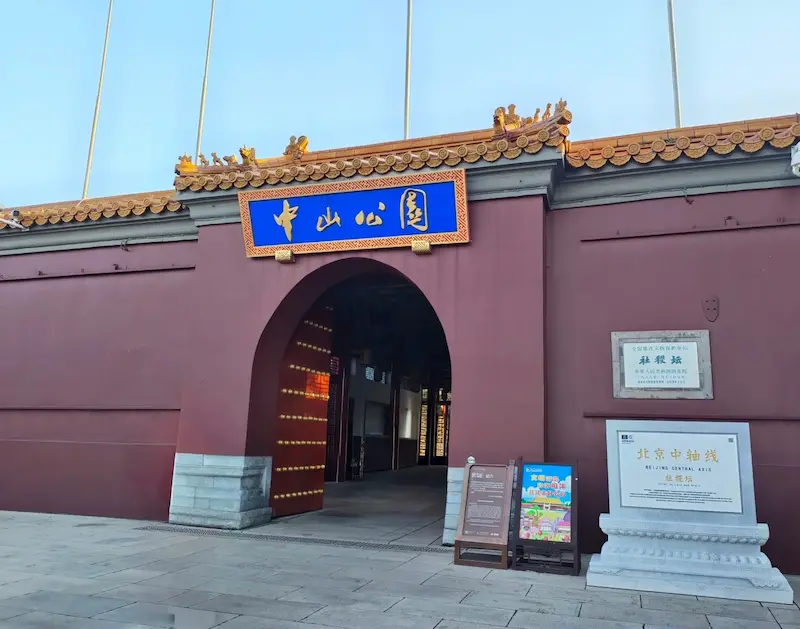
Table of Contents
Practical Information (Must-Read Before You Go)
| Item | Details |
| Name | Altar of Land and Grain / Zhongshan Park (English: `Shejitan` / `Zhongshan Park`) |
| Location | No. 4 Zhonghua Road, Dongcheng District, Beijing (west of Tiananmen Square) |
| How to Visit | Purchase a ticket for entry; self-guided tour |
| Subway (Recommended) | Line 1, Tian’anmen West Station (`Tian’anmen West Station`), Exit B; about a 5-minute walk from there. For information on how to use transit cards, ride the subway, and make electronic payments in Beijing, please refer to my [2026 Step-by-Step Guide to Beijing Subway and Transit Payments] |
| Bus | Take Buses 1, 5, 52, Sightseeing Bus 1, etc., and get off at the “Tian’anmen West” or “Zhongshan Park” stop |
| Driving and Taxis | Absolutely not recommended. The area around Tian’anmen Square is one of the most strictly regulated in Beijing. If taking a taxi, set the destination to “Zhongshan Park West Gate (Nanchang Street)” or “Zhongshan Park South Gate.” Map Tip: Google Maps may provide inaccurate directions in Beijing; we recommend using Apple Maps or Amap for navigation |
| Admission | 3 yuan. Free admission for park annual pass holders. No reservation required; tickets can be purchased on-site. Combined ticket for Tanghua Wu and Huifang Garden: 5 yuan |
| Hours | Peak Season (April 1–May 31, September 1–October 31): 6:00 a.m.–9:00 p.m.; Summer (June 1–August 31): 6:00 a.m.–10:00 p.m.; Off-Season (November 1–March 31 of the following year): 6:30 a.m.–8:00 p.m. Last admission: 1 hour before closing |
| Best Times to Visit | Early morning from 6:00–8:00, when the ancient cypress trees and the multicolored earth are at their most beautiful in the morning light; or after 3:00 p.m., when the slanting sunlight illuminates the Altar of Land and Grain, offering excellent photo opportunities |
| Recommended Duration | 1.5–2 hours (stroll through the park + tour of historic buildings) |
| Dress Code | Wear comfortable flat shoes. The park is large, and the ground is mostly paved with stone slabs |
| Budget Guide | Admission: 3 yuan (about $0.40)—less than the price of a cup of coffee to explore a World Heritage Site. Dining in the surrounding area costs about 30–80 yuan per person |
| Photography | Absolutely. The Five-Colored Earth, the Hall of Worship, ancient cypress trees, and red walls—everywhere is a photo opportunity |
| Language Support | The park features bilingual (Chinese-English) signage |
⚠Important Reminder: The Altar of Land and Grain has two main entrances—the South Gate and the West Gate. The South Gate faces the western side of Tiananmen Square, so visitors must go through security screening at the square; the West Gate (on South Chang Street) does not require security screening at Tiananmen Square. If you wish to avoid lines, we recommend using the West Gate.
World Heritage Status: On July 27, 2024, “The Beijing Central Axis—A Masterpiece of the Ideal Capital City Order in China” was officially inscribed on the UNESCO World Heritage List.
As one of the 15 heritage components of the Beijing Central Axis, the Altar of Land and Grain, together with the Forbidden City, the Imperial Ancestral Temple, and the Temple of Heaven, forms part of this World Heritage site.
Is This Attraction Right for You? (A 3-Second Quick Check)
It’s worth a visit if you:
- Are interested in ancient ritual culture, the “Five-Colored Earth,” and Beijing’s Central Axis
- Want to find a quiet spot near the Forbidden City or Tiananmen Square where you won’t have to wait in long lines
- Enjoy photographing ancient cypress trees, red walls, historic architecture, and reflections
- You’re visiting Beijing with children and want a spacious, safe place with historical stories
You can skip it if:
- You’re not very interested in historical architecture or traditional culture
- You’re hoping to climb to a high vantage point or see a large-scale exhibition (the Altar of Land and Grain is a ground-level altar with no elevated viewing points)
- You’re on a very tight schedule and can only choose between the Forbidden City and the Altar of Land and Grain (in that case, go to the Forbidden City)
If you’re on a tight schedule:
You can visit the Altar of Land and Grain and the Forbidden City on the same day—it’s right next to the Forbidden City. It takes 1–1.5 hours to explore the core area, and then you can exit through the East Gate and head straight to the Meridian Gate of the Forbidden City. Just buy separate tickets for each site.
In short: The Forbidden City is where you “see the spectacle, ”while the Altar of Land and Grain is where you “see the substance.” At 3 yuan, no lines, fewer crowds, and 600 years of history—if you’re interested in the “substance,” spending 1.5 hours popping in for a look won’t be a waste of time.
What Is the Altar of Land and Grain?
The Altar of Land and Grain was first built in the 18th year of the Yongle reign of the Ming Dynasty (1420), the same year the Forbidden City was constructed, and has stood here for more than 600 years.
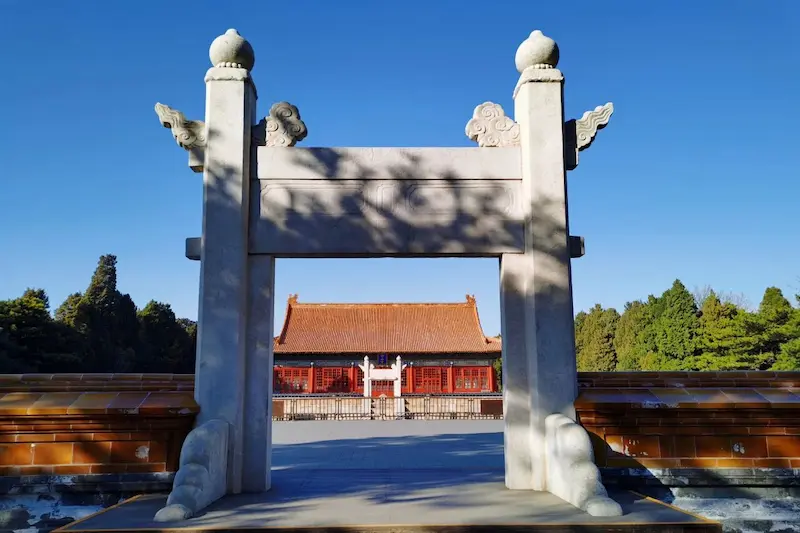
It was the site where emperors of the Ming and Qing dynasties offered sacrifices to the God of the Earth (the deity of the land) and the God of Grain (the deity of the five grains)—“She” refers to the land, and “Ji” refers to grain; together, they form the phrase “Jiangshan Sheji,” which serves as a synonym for the nation.
Ancient Chinese tradition emphasized the principle of “ancestors on the left, the Earth and Grain Altar on the right”—to the left (east) of Tiananmen Square stood the Imperial Ancestral Temple (for ancestral rites), while to the right (west) stood the Altar of Earth and Grain (for rites to the deities of the land and grain).
The Altar of Earth and Grain occupied the honored “right side” position, flanking the Imperial Ancestral Temple on either side to jointly safeguard the Imperial City.
Cross-cultural interpretation: You can think of the Altar of Land and Grain as “the Chinese version of a ‘national altar’ and the center for national agricultural prayers.” Just as the ancient Romans prayed for bountiful harvests at the Temple of Saturn, the Altar of Land and Grain was where the emperor, on behalf of the common people of the realm, paid homage to the earth and grain.
Why Is It Called “Zhongshan Park”?
In 1914, the Altar of Land and Grain was converted into Beijing’s first urban park and opened to the public; at that time, it was known as “Central Park.”
In 1925, Dr. Sun Yat-sen passed away in Beijing, and his coffin was temporarily placed in the Hall of Worship at the Altar of Land and Grain.
In 1928, to commemorate Dr. Sun Yat-sen, the park was renamed “Zhongshan Park,” a name that has been in use ever since.
In 1988, the Beijing Altar of Land and Grain was designated a National Key Cultural Relic Protection Unit. In 2024, as one of the 15 constituent elements of Beijing’s Central Axis, it was inscribed on the World Heritage List.
Which Gate Is Best for Entering the Altar of Land and Grain?
Many first-time visitors find themselves hesitating at the entrance—which gate should they take?
The Altar of Land and Grain has two main entrances: the South Gate and the West Gate. Which one you choose depends on your itinerary for the day.
South Gate (on the Tiananmen Square side)
- Location: Directly facing the west side of Tiananmen Square
- Best for: Visitors who have already planned to visit Tiananmen Square
- Note: You’ll need to go through security screening at Tiananmen Square; wait times may be long during peak season
West Gate (on Nanchang Street)
- Location: On Nanchang Street, about a 500-meter walk from Exit B of the Tiananmen West subway station
- Best for: Visitors who want to avoid security screening at Tiananmen Square or plan to visit the west side of the Forbidden City afterward
- Advantage: No need to go through security screening at Tiananmen Square; usually faster
East Gate
- Location: On the east side of the park
- Best for: Visitors coming from the Meridian Gate of the Forbidden City
- Note: The security checkpoint for the Forbidden City’s Meridian Gate is right outside the East Gate
Blogger’s Tip: If you don’t plan to visit Tiananmen Square, we recommend using the West Gate to save time waiting in line for security checks.
The “Heart” of the Altar of Land and Grain: Five-Colored Soil—The Secret of the Four Directions of the World
The most central and unique feature of the Altar of Land and Grain lies on the altar itself.
The altar is a square, three-tiered platform built of white marble, standing 1.24 meters high. The top tier measures five zhang (approximately 16 meters) on each side and is paved with five-colored altar soil arranged according to the cardinal directions.
The altar is covered with five different colors of soil—blue in the east, red in the south, white in the west, black in the north, and yellow in the center. These five types of soil are distributed according to their cardinal directions, corresponding to the traditional Chinese theories of the “Five Elements” and the “Five Directions”:
| Direction | Color | Five Elements | Meaning |
| East | Blue | Wood | Eastern Earth |
| South | Red | Fire | Southern Earth |
| West | White | Metal | Western Earth |
| North | Black | Water | Northern Earth |
| Center | Yellow | Earth | Central Earth |
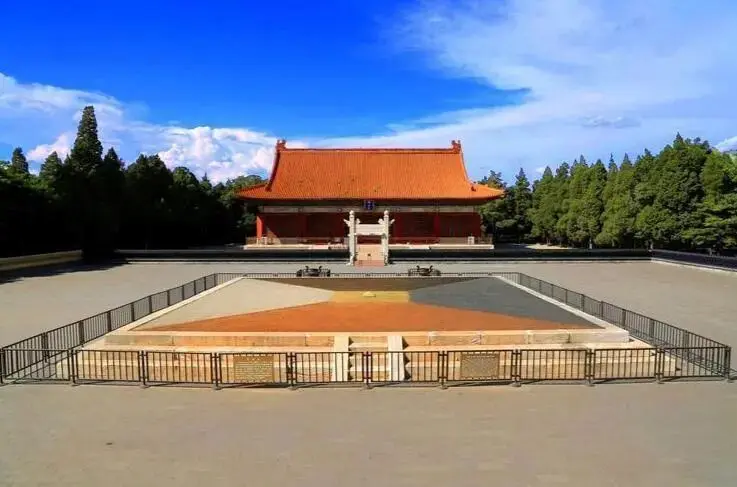
Soil of these five colors was historically collected from all over the country—during the Ming Dynasty, soil of various colors was transported from Zhili, Henan, Zhejiang, Fujian, Jiangxi, Huguang, Shandong, and other regions; during the Qing Dynasty, soil was sourced from Fangshan, Dong’an, Zhuozhou, Bazhou, and other locations.
The earth from the four corners of the realm is gathered on this small altar, symbolizing that “Under heaven, all land belongs to the sovereign.”
Cross-cultural interpretation: You can think of the Five-Colored Earth as “an ancient Chinese ‘map of the world’”—not drawn on paper, but arranged using multicolored clods of earth on an altar. Yellow is in the center (representing the center), surrounded by other colors (representing the four directions); the emperor stood here, symbolizing his rule over all the lands and people under heaven.
It is worth noting that the five-colored earth you see today was preserved from a sacrificial ceremony conducted in 1909 (the first year of the Xuantong era of the Qing Dynasty) by officials sent by Emperor Xuantong, the last emperor of the Qing Dynasty. More than 110 years have passed since then, yet the five colors remain clearly distinguishable.
In the center of the altar stands a “Society Master Stone” (also known as the “River and Mountain Stone”), with its upper half protruding above ground, symbolizing “eternal stability of the river and mountains.” This stone is the “soul” of the altar, representing the foundation of the nation.
The altar is surrounded by a retaining wall (the altar enclosure), whose surface is covered with glazed tiles in four colors—blue, red, white, and black—corresponding one-to-one with the five-colored earth within the altar.
How Did the Emperor Conduct Sacrifices?
During the Ming and Qing dynasties, sacrifices were held at the Altar of Land and Grain every spring and fall. The emperor either presided over the ceremonies in person or sent an official to act on his behalf. The rituals included complex ceremonies such as welcoming the deities, performing bows, and offering sacrifices.
From the 19th year of the Yongle reign of the Ming Dynasty (1421) to the 3rd year of the Xuantong reign of the Qing Dynasty (1911), a total of 24 emperors performed more than 1,000 sacrifices here.
“Hidden Highlights” of the Altar of Land and Grain
After entering the park through the South Gate or West Gate, you will pass the following highlights along the way. They are listed below in the order visitors typically walk from south to north:
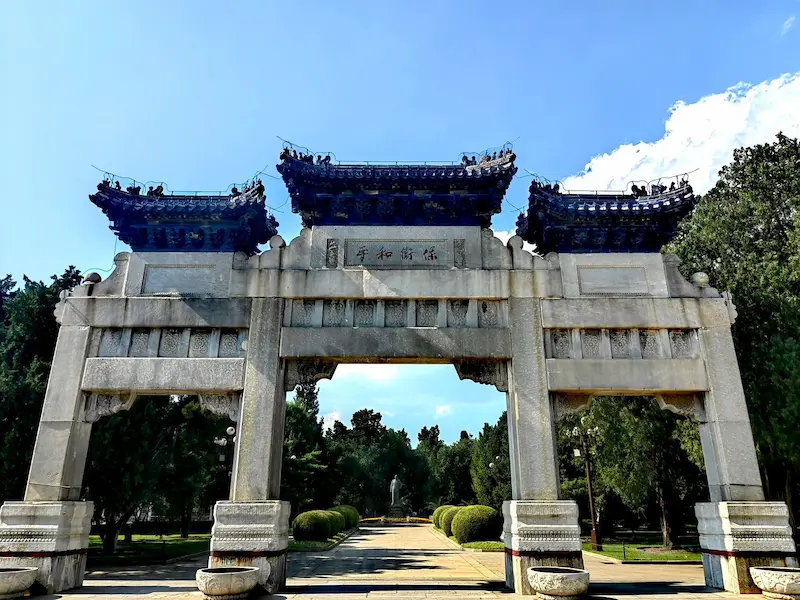
1. Arch of the Defense of Peace (Inside the South Gate)
Inside the South Gate stands a white marble archway originally named the “Klindt Monument,” erected by the Qing government in 1901 following the Boxer Protocol in memory of the slain German Minister Klindt.
In 1918, after the end of World War I, the archway was moved to Zhongshan Park and renamed the “Arch of the Triumph of Justice.”
In 1952, the Asia-Pacific Peace Conference was held in Beijing, and the conference decided to rename it the “Arch of the Defense of Peace”—with Guo Moruo inscribing the arch’s plaque.
This single stone arch, renamed three times, chronicles China’s century-long journey from humiliation to self-strengthening.
2. Inner Golden Water River (Inside the South Gate)
As you pass through the South Gate, you are stepping over the Inner Golden Water River, which shares the same source as the Forbidden City. The water flows quietly, reflecting the red walls and ancient cypress trees—many people, preoccupied with hurrying along, miss this fleeting photo opportunity.
3. Ceremony Pavilion (South of the Audience Hall)
A hexagonal pavilion with a yellow glazed tile roof, originally built in the 18th year of the Yongle reign of the Ming Dynasty (1420), it was originally located within the Honglu Temple administrative compound on Bingbu Street, inside Zhengyang Gate.
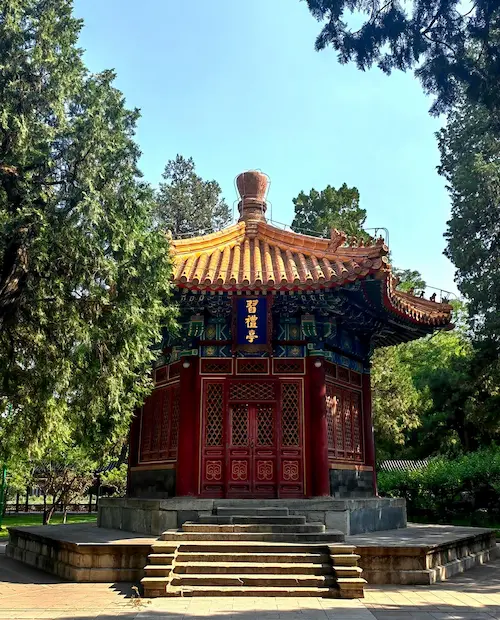
During the Ming and Qing dynasties, civil and military officials visiting Beijing for the first time, as well as ethnic minority leaders and foreign envoys, were required to study and practice the rituals of audience here before presenting themselves to the emperor. In 1915, the Rituals Pavilion was relocated to Zhongshan Park.
4. Altar of Land and Grain (The Heart of the Park!)
The heart of the entire park. As you ascend the three-tiered square platform of white marble, look down at the five-colored soil—soil in five colors—blue, red, white, black, and yellow—spread out beneath your feet. No matter the weather, the colors of this soil have never faded.
5. 600-Year-Old Ancient Cypresses + 1,000-Year-Old Liao Dynasty Cypresses
Surrounding the altar are hundreds of towering ancient cypresses, most of which are over 600 years old. They were planted when the altar was constructed during the Yongle era of the Ming Dynasty. For over 600 years, these ancient cypresses have witnessed countless grand ceremonies, yet they still stand in their original places, forming a serene circle around the altar.
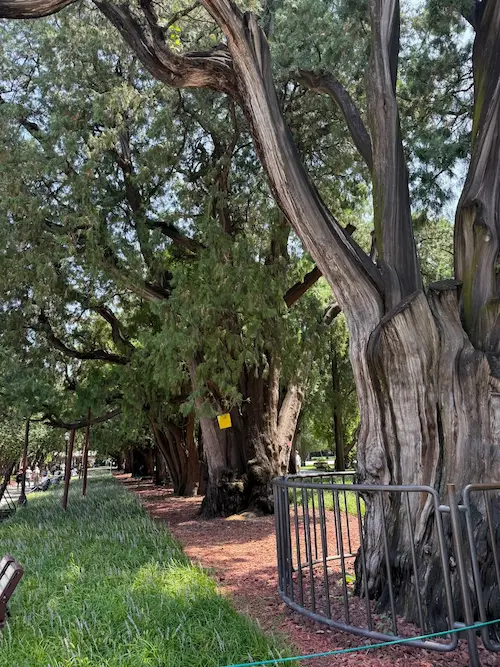
Outside the south gate of the Altar of Land and Grain, seven towering ancient cypresses also stand majestically. Their age predates the Ming Dynasty—they are remnants of the Xingguo Temple from the Liao Dynasty and are now over 1,000 years old.
These Liao-dynasty cypresses have green canopies reaching over 20 meters in height, and the thickest trunk has a circumference exceeding 6 meters. These seven thousand-year-old cypresses are the oldest “living cultural relics” in Zhongshan Park.
6. The Entwined Locust and Cypress (West Side of the Altar)
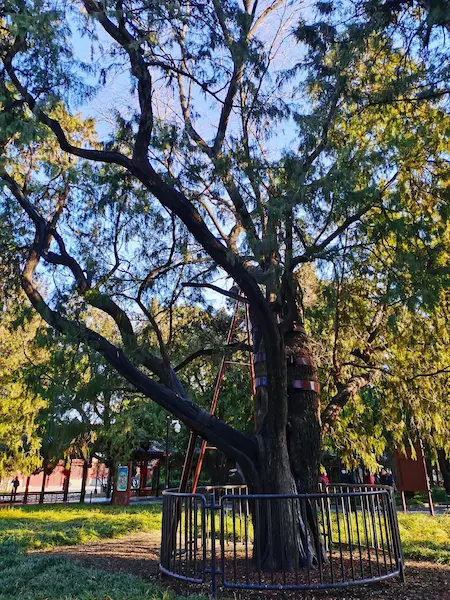
On the west side of the altar stands a unique ancient tree—a cypress that has grown for over 500 years, with a locust tree that has taken root in a crack in the ancient cypress trunk for over 200 years. This natural symbiosis is known as the “Entwined Locust and Cypress” and is one of Beijing’s famous “wonders of ancient cypresses.”
7. Hall of Worship / Zhongshan Hall (North of the Altar)
The Hall of Worship is a key structure on the central axis of the Altar of Land and Grain. Originally built in the 18th year of the Yongle reign of the Ming Dynasty (1420), it measures five bays wide and three bays deep, with a single-eave hipped-and-gabled roof covered in yellow glazed tiles.
This was the place where the emperor would perform ritual gestures in the event of wind or rain during sacrificial ceremonies.
Originally, there was a Halberd Gate on the south side of the Worship Hall, which was an important part of the Altar of Land and Grain complex. Inside the Halberd Gate, 72 gilded and silver-plated halberds were once displayed; it served as the main ceremonial gate through which the emperor passed during sacrificial rites.
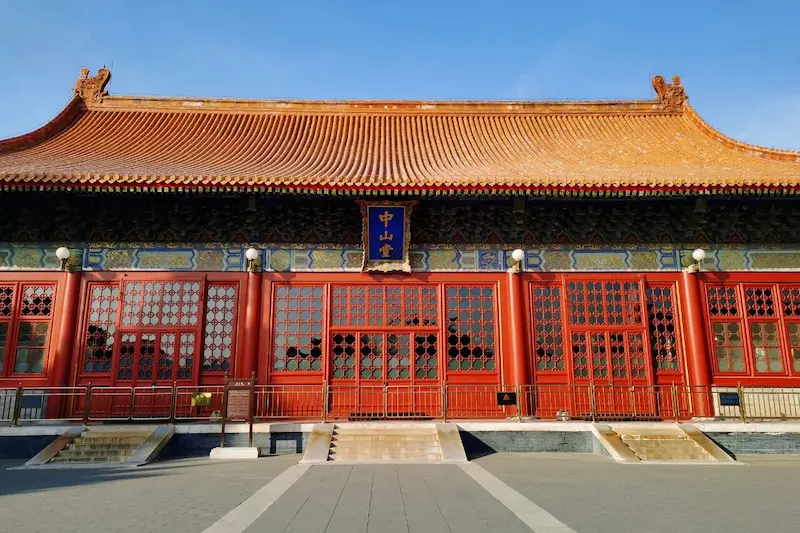
After Dr. Sun Yat-sen’s passing in 1925, his coffin was temporarily laid to rest here. In 1928, the Worship Hall was renamed “Zhongshan Hall” to serve as a permanent memorial to Dr. Sun Yat-sen.
The hall currently hosts a special exhibition titled “Sun Yat-sen and Beijing,” featuring historical photographs, manuscripts, and other precious artifacts from Dr. Sun Yat-sen’s time in Beijing.
8. Aphorism Pavilion (Outside the North Gate of the Altar of Land and Grain)
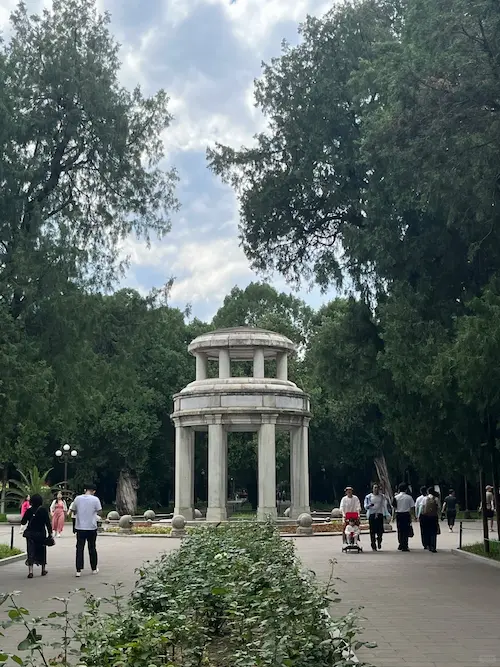
A stone pavilion supported by eight stone pillars, built in 1915. The pillars are inscribed with famous aphorisms such as “Respect others, and they will respect you” and “Do not impose on others what you yourself do not desire,” reflecting the social reform movements of the late Qing Dynasty and early Republican era.
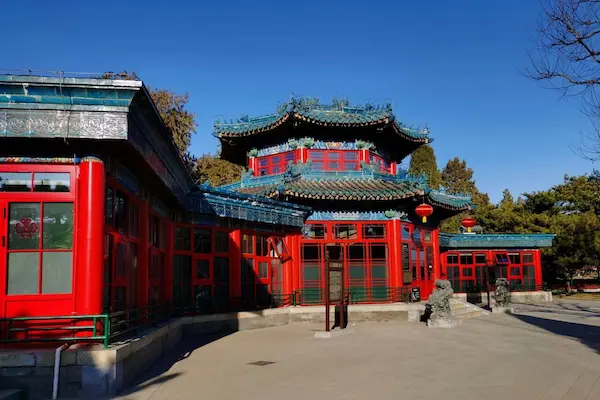
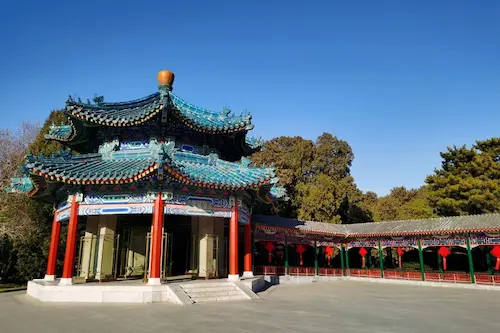
9. Tanghua Wu and the Eight Pillars of the Orchid Pavilion (south side)
On the south side of the Altar of Land and Grain stand Tanghua Wu (a greenhouse) and the Eight Pillars of the Orchid Pavilion (a Qing Dynasty replica of calligraphic stone steles, featuring rubbings of famous manuscripts such as Wang Xizhi’s “Preface to the Orchid Pavilion Collection,” which were relocated from the ruins of the Old Summer Palace in 1917). Although these were added during the Republic of China era, they complement the ancient altar beautifully.
10. Sun Yat-sen Bronze Statue (Southern Part of the Park)
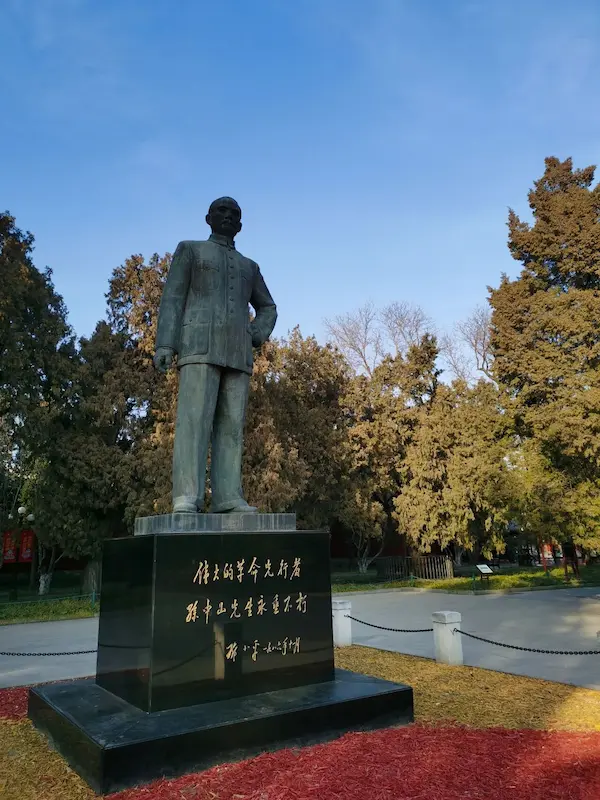
A bronze statue of Dr. Sun Yat-sen stands within the park, serving as an important landmark commemorating this great pioneer of the revolution.
Recommended Tour Routes
1-Hour Express Route (Suitable for Visitors with Limited Time)
Enter through the West Gate → Altar of Land and Grain (Five-Colored Earth) → Ancient Cypress Trees → Hall of Worship/Zhongshan Hall → Exit through the East Gate
One hour is sufficient to see just these key highlights.
1.5–2-Hour Comprehensive Itinerary (Recommended)
Enter through the South Gate or West Gate → Archway for the Defense of Peace → Inner Jinshui River (photo spot) → Ritual Pavilion → Altar of Land and Grain (Five-Colored Earth + Altar Stone + Earthen Wall) → Ancient Cypress Grove (including the seven thousand-year-old Liao cypresses outside the South Gate) → Entwined Locust and Cypress Trees → Hall of Worship/Zhongshan Hall → Aphorism Pavilion → Tanghuawu/Lanting Eight Pillars → Sun Yat-sen Bronze Statue → Exit via East Gate
This route covers all the highlights of the Altar of Land and Grain, allowing you to explore at a leisurely pace.
Combined Itinerary with the Forbidden City
Exit at Exit B of Tiananmen West Subway Station → Enter Zhongshan Park through the West Gate (3 yuan admission fee) → Follow the full route to tour the Altar of Land and Grain (1.5 hours) → Exit through the East Gate → Walk about 5 minutes to the security checkpoint at the Meridian Gate of the Forbidden City → Enter the Forbidden City (separate ticket reservation required)
⚠️ Important Reminder: The Altar of Land and Grain and the Forbidden City are two separate attractions; tickets must be purchased and reservations made separately.
After exiting the East Gate of the Altar of Land and Grain, you cannot enter the Forbidden City directly; you must still go through security and ticket inspection at the Meridian Gate.
Photography Guide
| Shooting Angle | Location | Best Time to Shoot | Tips |
| Aerial View of the Five-Colored Earth | On top of the Altar of Land and Grain | When there is ample morning light | Stand at the edge of the altar and shoot from above; the five colors are clearly visible. Do not step on the earthen surface |
| Glazed Tiles on the Enclosure Wall | Around the altar | Afternoon | Blue, red, white, and black glazed tiles complement the five-colored earth |
| Silhouettes of Ancient Cypresses | Around the altar | Early morning or evening | The 600-year-old cypresses stand tall and vigorous; their silhouettes overlap with the red walls and yellow tiles |
| Millennium-Old Liao Cypresses | Outside the South Gate of the Altar of Land and Grain | Any time of day | Seven ancient cypresses over a thousand years old, with massive trunks, are Beijing’s oldest “living cultural relics” |
| Cypress and Locust Trees Entwined | West side of the altar | Any time of day | Cypress and locust trees grow naturally together, forming Beijing’s famous “Spectacle of Ancient Cypresses” |
| Reflections on the Inner Golden Water River | Stone Bridge Inside the South Gate | All Day | Calm waters reflect the red walls, ancient cypresses, and blue sky |
| Zhongshan Hall Plaque | Under the Eaves of the Worship Hall | Morning | Plaque inscribed with “Zhongshan Hall” in Sun Yat-sen’s own handwriting |
FAQ
Outside the South Gate stand seven ancient cypress trees from the Liao Dynasty, each over 1,000 years old—older even than the city of Beijing itself.
Yet this is the only place in all of Beijing where one can see the “Five-Colored Earth.” These five colors of soil, gathered from the four cardinal directions of the country, come together to form China’s earliest “map of the land.”
Standing here, the emperor represented all the people under heaven—praying for a bountiful harvest and a peaceful realm.
Six hundred years of wind and rain have polished the Five-Colored Earth to a deeper hue. Blue, red, white, black, and yellow—these five colors have never faded.
The 600-year-old cypress trees stand around the altar like a silent full stop. People have come and gone, dynasties have risen and fallen, yet only they remain in their original place, gazing at the same sky.