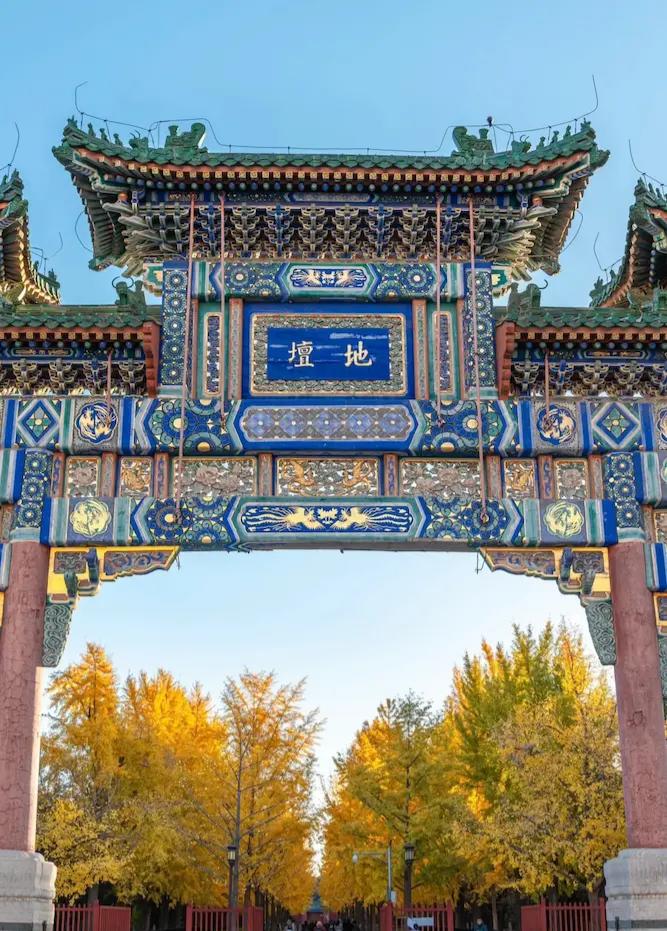
Beijing Qianmen Street Guide: Must-See Attractions, Food Recommendations, Itineraries, and Practical Tips (2026)
Qianmen Street is one of Beijing’s most famous historic streets, boasting over a century of history. Located south of Tiananmen Square, it is renowned for its charming traditional architecture, time-honored shops with deep cultural roots, and authentic Beijing cuisine, making it a classic must-visit landmark for first-time visitors to Beijing.
Having lived in Beijing for over a decade, I’ve strolled down Qianmen Street countless times and am familiar with every alleyway and every unique, time-honored shop here. This guide will cover all the must-see sights, must-try foods, exclusive itineraries, and super-useful travel tips for Qianmen Street, helping you easily plan an immersive journey through old Beijing.
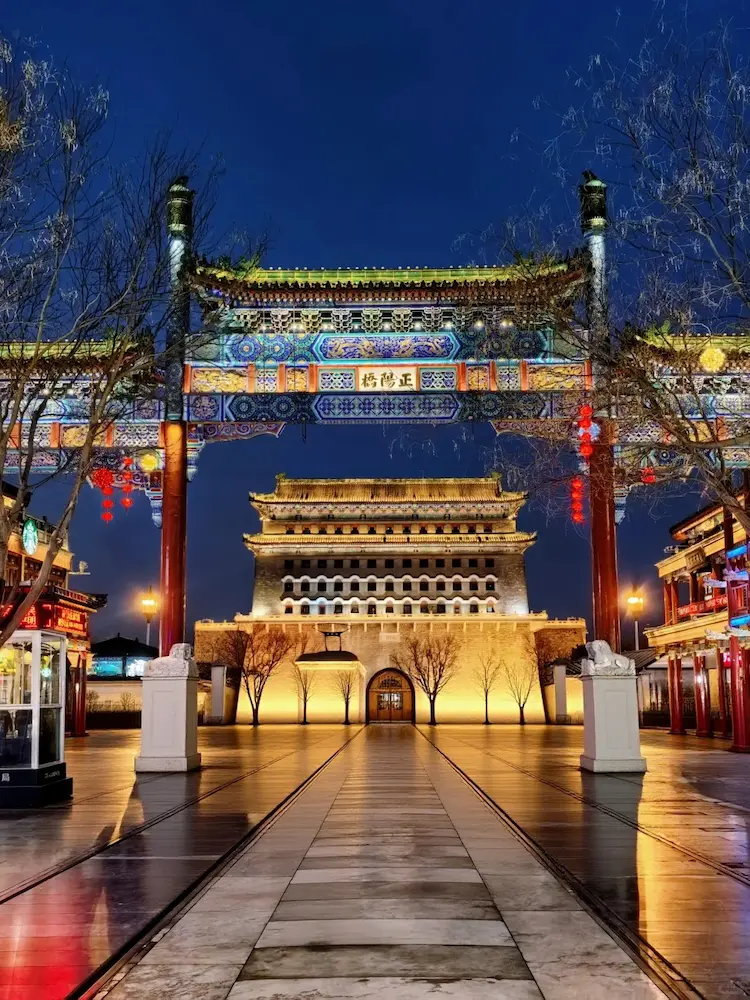
Table of Contents
Is Qianmen Street worth a visit?
The answer is a resounding yes. Especially for first-time visitors to Beijing, Qianmen Street is definitely worth exploring.
This area blends historic Old Beijing architecture, the heritage of century-old shops, and the authentic, bustling atmosphere of Beijing life, making it an excellent gateway to quickly understand traditional Beijing culture and experience the local way of life. However, as a popular tourist destination in Beijing, it tends to be quite crowded. We recommend avoiding peak hours and visiting in the early morning for a more comfortable experience.
How long does it take to explore Qianmen Street?
Most visitors spend about 2–4 hours exploring the core area of Qianmen Street, which is plenty of time to check out iconic landmarks, browse time-honored shops, and sample local snacks.
If you’re looking for a more in-depth tour, you can easily plan a half-day or even a full-day itinerary by connecting nearby attractions such as the surrounding hutongs, the Temple of Heaven, and Ji Xiaolan’s Former Residence, allowing you to immerse yourself in the history and vibrant atmosphere of southern Beijing.
What Can You Expect When Visiting Qianmen Street?
Qianmen Street is a pedestrian-only historic street. Both sides of the street preserve a wealth of traditional architecture from the Qing Dynasty and the Republic of China era, while also incorporating the vibrancy of modern shops—a perfect blend of old Beijing charm and modern life.
There is no excessive commercial renovation here; you can still see century-old brands holding their ground. Walking through the street, you can both touch the traces of history and feel the vibrant atmosphere of everyday life. It’s worth noting that as a popular tourist destination in Beijing, Qianmen Street can get quite crowded on weekends and holidays, with the main street and Dashilan Alley being particularly packed. We recommend visiting during off-peak hours.
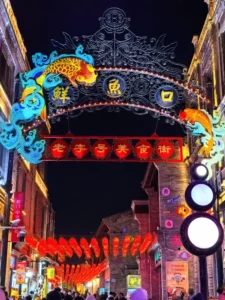
How to Get to Qianmen Street
Qianmen Street is located in the heart of Beijing and is easily accessible by public transportation. The subway is the best way to get there, and it is one of the most accessible classic tourist attractions in Beijing.
- Subway (Recommended): Take Subway Line 2 or 7 to Qianmen Station. Exit through Exit I (the southwest exit) and walk about 200 meters to reach the north entrance of Qianmen Street (below the Zhengyangmen Arrow Tower). Upon exiting the station, look up to see the Zhengyangmen City Gate and Arrow Tower; the starting point of Qianmen Street is located between these two structures.
- Ding-Ding Tram Experience: The street features vintage trams (known locally as “Ding-Ding ”trams), named for the“ ding-ding” sound made when the driver presses a bell underfoot. The one-way trip is about 800 meters long, making it ideal for taking photos, checking in on social media, or bringing children to experience the old-school Beijing travel vibe.
- Walking/Cycling: If you are in the vicinity of Tiananmen Square or Dazhalan, you can walk directly to Qianmen Street or take a shared bike. The short distance makes for a convenient trip, and you can enjoy the atmosphere of Beijing’s central urban streets and alleys along the way.
Ticket and Reservation Information
One of the greatest advantages of Qianmen Street is that the core area is free to enter. No reservation is required, and you can visit anytime, making it very convenient.
1. Free Areas: Qianmen Street. The main thoroughfare and surrounding hutongs (such as Dazhalan and Yangmeizhu Xiejie) are all open to the public free of charge, with no admission fees or reservation requirements.
2. Optional Paid Attractions:
- Zhengyangmen Tower: Climb the tower for a panoramic view of Qianmen Street and Tiananmen Square; admission is approximately 10 RMB.
- China Railway Museum (Zhengyangmen Branch): Located east of Qianmen, this museum is housed in the former site of the Zhengyangmen East Station of the Jing-Feng Railway (1906) and showcases the history of China’s railway development; admission is 20 RMB.
3. Reservations for Nearby Attractions: Nearby attractions such as the Temple of Heaven and the National Museum of China require separate tickets or reservations. Beijing municipal parks and some museums can be booked through the official platform“ Changyou Park”; the website features an English interface in the top-right corner for the convenience of international visitors.
Best Times to Visit Qianmen Street
The best times to visit Qianmen Street are early morning or late afternoon. Different times of day offer distinct scenery and unique experiences:
1. 9:00–11:00 AM (Recommended): During this time on weekdays, there are very few visitors, allowing you to take photos and browse shops at your leisure. The soft light makes for excellent photos of the archways and historic buildings; Traditional shops have just opened, and staff have plenty of time to explain the shop’s history, making for a truly immersive experience.
2. 5:00 PM–7:00 PM: Red lanterns along the street light up one by one, bathing the entire street in a warm red hue and creating a rich nighttime atmosphere; street performers begin their acts, creating a lively yet not chaotic atmosphere—perfect for soaking up the nighttime street life of old Beijing.
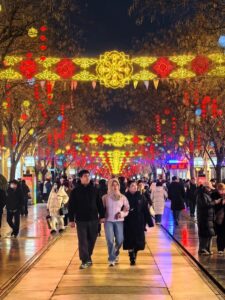

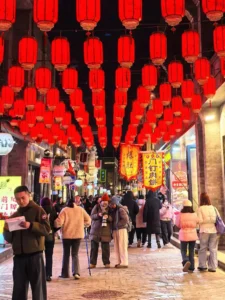
3. Tips to Avoid Crowds: Weekends and holidays from noon to afternoon see peak crowds, with the main street and Dazhalan Alley packed shoulder-to-shoulder; visiting during these hours is not recommended.
Budget Guide (Per Person, Excluding Shopping)
Spending on Qianmen Street varies depending on your budget, with options ranging from street food and activities to full meals. The following is a per-person budget guide based on real-time exchange rates, designed to meet the needs of different travelers:
| Item | RMB | USD (approx.) | EUR (approx.) |
| Dangdang Car Ride | 20 RMB | 2.8 USD | 2.6 EUR |
| Light Lunch (Beijing-style Snack Platter) | 50–80 RMB | 7–11 USD | 6.5–10.5 EUR |
| Full Meal (Quanjude Roast Duck Restaurant) | 150–250 RMB | $21–35 | €19–32 |
| Climb Zhengyangmen Tower | 10 RMB | $1.4 | €1.3 |
| China Railway Museum Admission | 20 RMB | $2.8 | €2.6 |
Recommended Itineraries (Two Options to Suit Different Needs)
Based on your available time and personal interests, we’ve curated two exclusive itineraries: one for a quick tour of the highlights and another for an in-depth cultural experience. Choose the one that best suits your needs:
Itinerary 1: Main Street Classic Route (2–3 hours, quick and efficient)
- Highlights: Key landmarks in the Qianmen area and century-old heritage shops—a quick taste of classic Old Beijing charm
- Itinerary: Exit from Exit I of Qianmen Subway Station → Take photos at the Zhengyangmen Arrow Tower → Walk south along Qianmen Street and visit the iconic Five-Arch Gate → Explore the century-old shops lining the street (Rui Fu Xiang Silk Store, Neilian Sheng Cloth Shoes Store, etc.) → Walk to the Dazhalan intersection, turn into Dazhalan to explore the cluster of historic shops → Sample Beijing-style snacks at Xianyukou Food Street to conclude the tour.
- Ideal for: Visitors with limited time who want to quickly explore the core area of Qianmen.
Route 2: In-Depth Hutong Tour (4–5 hours, Immersive Cultural Experience)
- Highlights: Qianmen Main Street + off-the-beaten-path hutongs, unlocking the history and arts of Old Beijing
- Itinerary: Turn onto Dashilan West Street from the middle of Qianmen Street → Enter Meishi Street → Turn onto Yangmeizhu Xiejie (a hub for artsy bookstores and specialty cafes) → Walk to Liulichang East Street (an antique and calligraphy street, where you can experience Old Beijing’s cultural artifacts) → Return the same way or detour via Yingtao Xiejie and Hanjia Hutong (home to former residences of famous Peking Opera performers, with historical information plaques on the walls) → Return to Dazhalan and catch a traditional Beijing-style crosstalk performance at Guangde Lou or Deyun Society to conclude the tour.
- Ideal for: Visitors interested in Old Beijing hutongs, Peking Opera, and traditional culture who want an in-depth experience.
Must-See Attractions and List of Time-Honored Shops on Qianmen Street
The essence of Qianmen Street lies in every historic building and every century-old shop. These landmarks and time-honored establishments are a microcosm of old Beijing culture, well worth exploring at a leisurely pace and savoring in detail:
| Name | Type | Highlights |
| Five-Arch Gate | Historic Building | The iconic archway of Qianmen Street, built during the Ming Dynasty and adorned with exquisite carvings of dragons, phoenixes, and auspicious clouds—a must-visit photo spot |
| Rui Fu Xiang | Time-Honored Brand (Silk) | Founded during the Qing Dynasty, it once supplied imperial fabrics to Empress Dowager Cixi; visitors can observe traditional silk craftsmanship and hear staff explain the shop’s history |
| Neilian Sheng | Time-honored Brand (Cloth Shoes) | Founded during the Qing Dynasty, an old Beijing saying goes, “Wear Ma Juyuan on your head and Neilian Sheng on your feet”; occasionally, you can watch master craftsmen sew shoe soles on-site and experience traditional craftsmanship |
| Quanjude | Time-honored brand (roast duck) | Originated at the Qianmen branch; a representative of Beijing’s hanging-oven roast duck, a century-old classic of Beijing cuisine |
| Du Yichu Shao Mai | Time-honored brand (snacks) | Named by Emperor Qianlong, known for its thin wrappers, generous fillings, and exquisite shapes, it is a signature Beijing snack |
| Liubiju | Time-honored brand (Pickles) | Founded in the Ming Dynasty, the historic signboard is said to have been inscribed by Ming Dynasty official Yan Song. The pickles boast a rich, mellow flavor and are a staple on Old Beijing dining tables |
| Guangdelou / Deyun Society | Performance Venues | A classic Beijing-style crosstalk theater featuring Chinese subtitle screens; some performances offer English subtitles, providing an immersive experience of Beijing-style humor |
| China Railway Museum | Museum | Located at the former site of the Zhengyangmen East Station on the Beijing-Fengtian Railway (1906), the museum boasts a rich collection that chronicles the development of China’s railways |
| Qian Shi Hutong | Hutong | Beijing’s narrowest alley, measuring just 0.4 meters at its narrowest point; it served as an official silver and currency trading hub during the Qing Dynasty and preserves the commercial history of old Beijing |
Must-Try Food Recommendations on Qianmen Street (Exact Locations, Guaranteed to Be Delicious)
Qianmen Street and its surrounding area are a hub for authentic Beijing cuisine, offering everything from time-honored restaurants to street snacks. You can’t go wrong with these local specialties—they’re sure to please:
1. Baodu Feng (Menkuang Hutong Branch): A signature Beijing snack featuring quickly blanched mutton tripe, served with sesame paste and chili oil. It’s crisp yet tender, bursting with fresh, savory flavor.
2. Tianxingju (Xianyukou Branch): A representative of Old Beijing-style stir-fried liver, featuring pork liver and intestines simmered in a thick, garlicky braising sauce. The texture is rich and velvety, and it’s traditionally served with a steamer basket of buns—a classic Old Beijing dining experience.
3. Bianyifang (Xianyukou Branch): On par with Quanjude, this restaurant specializes in “clay-oven roasted duck.” The duck skin is tender and succulent, and the meat is flavorful. Prices are slightly lower than at Quanjude, offering better value for money.
4. Street-side Specialty Snacks: Candied hawthorn (sugar-coated hawthorn berries, sweet and sour to whet your appetite), pea pudding (a light, sweet dessert made from peas that melts in your mouth), and “donkey roll” (glutinous rice balls rolled in bean flour, soft, chewy, and sweet). Authentic stalls can be found in both Xianyukou and Dazhalan alleys.
Nearby Attractions Around Qianmen Street (One-Stop All-Day Itinerary)
Located in the heart of Beijing, Qianmen Street is surrounded by a dense cluster of attractions. After exploring Qianmen, you can conveniently visit these nearby sites to plan a one-stop, all-day itinerary
—saving both time and hassle:
1. Head north (10-minute walk): Tiananmen Square and the National Museum of China (reservations required; the museum boasts extensive collections that offer a deep dive into Chinese history and culture);
2. South (15–20-minute walk): Ji Xiaolan’s Former Residence (Yuewei Cottage, a quaint, antique-style building preserving traces of a Qing Dynasty scholar’s life), and Temple of Heaven Park (enter through the West Gate; about a 20-minute walk to experience Ming and Qing imperial sacrificial rituals and visit the Hall of Prayer for Good Harvests);
3. Surrounding Hutongs: Yandai Xiejie and Nanluoguxiang—accessible by foot or bike—where you can experience the distinct styles of old Beijing hutong culture.
Practical Tips for Visiting Qianmen Street
✅ Avoid Peak Hours: Try to visit early in the morning on weekdays to avoid the crowds on weekends and holidays, ensuring a more comfortable experience.
✅ Payment Options: Some traditional small shops accept cash, while major stores and food stalls support WeChat Pay and Alipay. We recommend having mobile payment apps ready for convenience.
✅ Dress Recommendations: Qianmen Street is entirely on foot, and some hutong sections have uneven surfaces. We recommend wearing comfortable flat shoes to easily explore every street and alley.
✅ Combined Itinerary: Don’t limit your visit to Qianmen Street alone. We recommend combining it with nearby attractions like Tiananmen Square, the Temple of Heaven, and the hutongs to plan a half-day or full-day itinerary for maximum efficiency.
✅ Respect History: While exploring, please take care of the historical buildings and the displays in the time-honored shops. Do not scribble on or touch them. Be a civilized visitor and help preserve the historical charm of Old Beijing.
Qianmen Street Tour Overview
✅ The core area is free to enter and requires no reservation.
✅ Featuring century-old heritage shops, authentic Beijing cuisine, and traditional historic architecture, it serves as the gateway to experiencing Old Beijing culture.
✅ A standard tour of the core area takes 2–4 hours; plan for a half-day or full-day visit for a more in-depth exploration.
✅ Adjacent to Tiananmen Square, allowing for a seamless, one-stop tour of nearby attractions.
✅ The best time to visit is early morning or late afternoon on weekdays; visiting during off-peak hours offers a better experience.
Qianmen Street, a historic thoroughfare with over 600 years of history, is not only a symbol of Beijing but also a living relic of old Beijing culture. Every brick, every shop, and every bite of local cuisine here holds the history and vibrant spirit of Beijing.
It is not merely a commercial street, but a place where you can feel the warmth of old Beijing and experience the authentic local lifestyle. We hope this guide helps you discover the best way to explore Qianmen Street, so you can encounter the most genuine and vibrant Beijing amidst the alleys of this century-old street.