Beijing Xiangshan Park Travel Guide: Practical Routes and Scenic Views
Beijing’s Xiangshan Park is most famous to many visitors for its autumn, when the entire mountain forest is bathed in fall colors, resembling a magnificent oil painting. However, Xiangshan offers more than just red leaves.
It was once part of the imperial gardens, boasting ancient cultural history, and its scenery holds unique charm in all four seasons. Whether you want to hike and admire the foliage or seek a tranquil cultural journey, this guide will provide you with the latest practical information.
Table of Contents
Essential Information Before You Go: Tickets, Reservations, and Opening Hours
Before planning your trip to Xiangshan, it’s important to know some basic details.
- Very Affordable Tickets: Xiangshan Park ticket prices vary between peak and off-peak seasons. The peak season (April 1 to November 15) ticket is 10 RMB, while the off-peak season (November 16 to March 31 of the following year) ticket is only 5 RMB. Biyun Temple within the park requires a separate ticket (10 RMB). You can also purchase a combination ticket that includes both the park and Biyun Temple, which is more economical.
- Reservations are Mandatory: Visiting Xiangshan Park requires an advance real-name reservation. You can make a reservation on the WeChat official account ” Xiangshan Park Service “, up to 7 days in advance. Group visitors should prepare relevant materials ahead of time. Annual pass holders have designated entry time slots to avoid crowds.
- Important Note: Historical sites within the park, such as Shuangqing Villa, require separate reservations. Don’t forget to book these on the official account as well.
- Opening Hours: The park generally opens at 6:00 AM and closes around 6:00 PM (slightly later during peak season). Typically, weekends from 9:00 AM to 3:00 PM are the busiest. For a less crowded experience, consider visiting earlier in the morning or later in the afternoon.
How to Get to Xiangshan: Transportation Guide
Xiangshan is located in the western suburbs of Beijing, with several convenient transportation options.
- Most Recommended Public Transport: Taking the subway is the most convenient and reliable way to avoid traffic. You can take Metro Line 10 to Bagou Station, then transfer to the Xijiao Line dedicated to Xiangshan. Get off at the terminal station, Xiangshan Station, and it’s about a 5-10 minute walk to the park’s East Gate.
- Bus Options: In addition to the subway, several bus lines (such as 318, 360, 563) go directly to “Xiangshan Station” or “Xiangshan Park East Gate Station”.
- Driving Tips: While driving is possible, roads to Xiangshan can become extremely congested, and parking lots often fill up quickly during the autumn foliage season. If you must drive, it’s advisable to park at commercial parking lots around Xiangshan and then transfer to the park’s shuttle bus to enter the area, saving both time and hassle.
Selected Tour Routes: Find the One That Suits You
Xiangshan Park is large. Planning a route that suits your interests in advance can greatly enhance your visit.
1. Classic Red Leaf Viewing Route
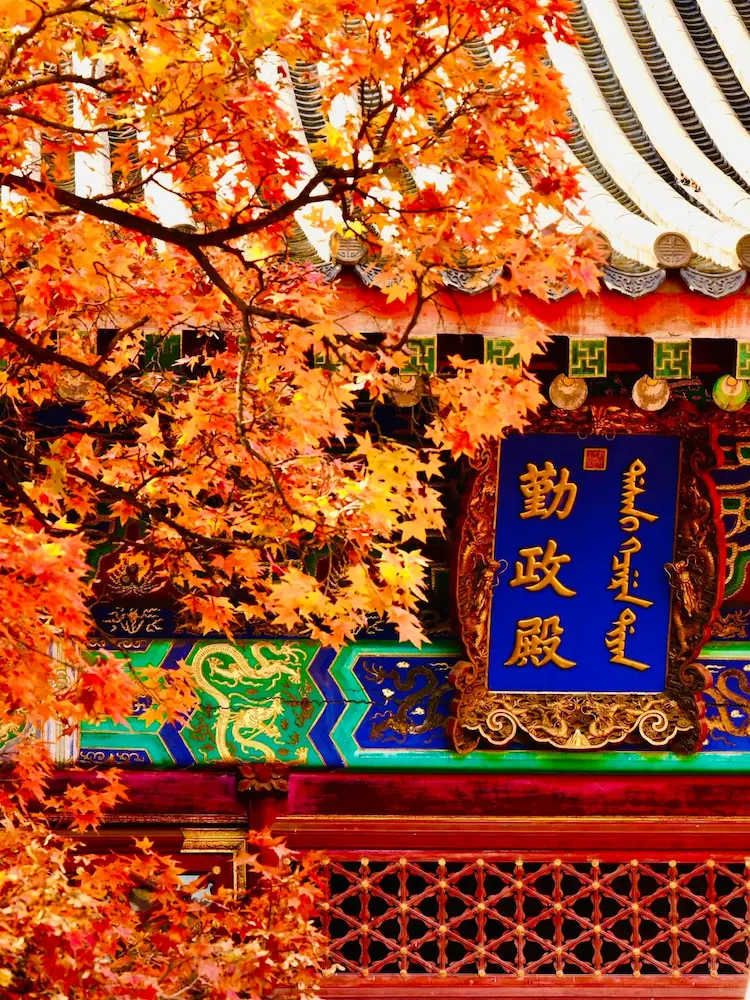
If your main goal is to see the autumn foliage, this is the classic choice. Starting from the East Gate, you’ll pass Qinzheng Hall and Jingcui Lake, continuing upward to Cuiwei Pavilion, Xiangwuku, and finally reaching Xianglu Peak (Incense Burner Peak). This route connects the park’s main leaf-viewing spots and takes about 3-4 hours. Standing atop Xianglu Peak, you can enjoy a panoramic view of Xiangshan blanketed in red leaves, and on clear days, even see the Beijing skyline in the distance.
2. Lesser-Known Leisure & Culture Route
If you want to avoid crowds and delve deeper into Xiangshan’s history and culture, try this route.
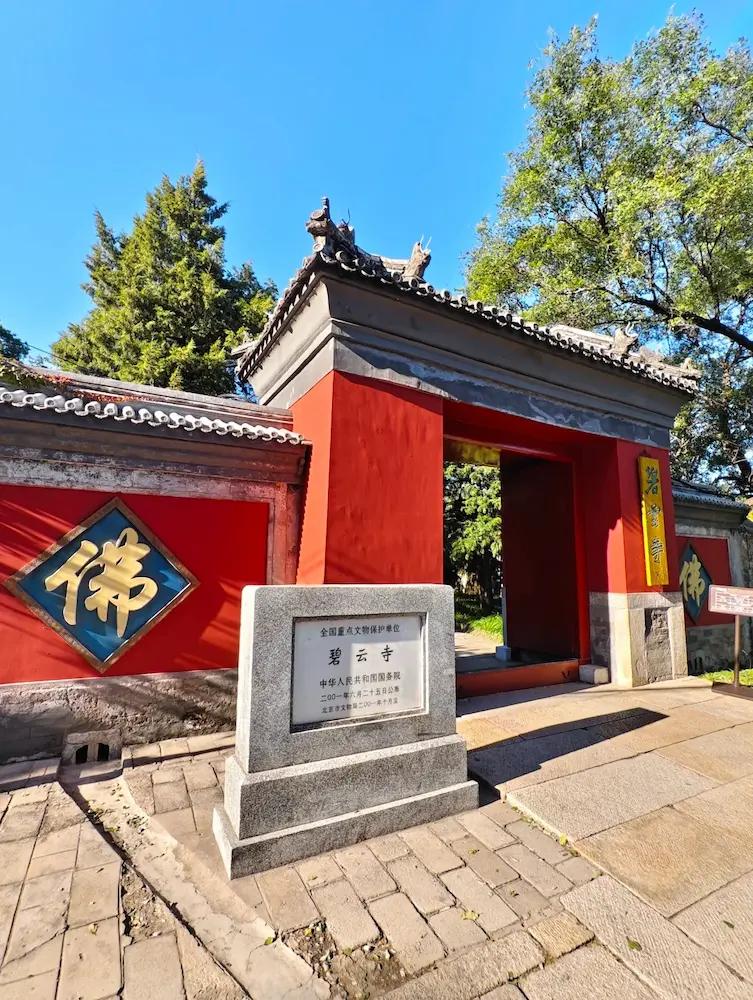
- Explore Ancient Temples: Enter from the East Gate and first visit Xiangshan Temple, built into the mountainside, to experience the temple atmosphere within the imperial gardens. Afterwards, head to Biyun Temple outside the North Gate. This temple is quieter, with exquisite architecture and stone carvings. Remember, Biyun Temple requires a separate ticket.
- Discover Quiet Corners: The park also has some relatively lesser-known but scenic spots, such as Yuxiang Pavilion and Xiyang’a. Yuxiang Pavilion was where the emperor enjoyed the fragrance of the forest after rain, featuring distinctive architecture. Xiyang’a concentrates many inscribed stone carvings with poems by Emperor Qianlong, perfect for visitors interested in history and calligraphy.
3. Easy Family-Friendly Route
Families with children or elders may prefer a more relaxed and interesting route. Enter from the East Gate, visit Qinzheng Hall and Jingcui Lake, where children can feed the fish. Then proceed to the Ancient Tree Demonstration Area to learn about plants, and later enjoy the garden scenery at Jianxin Studio. This route has gentle slopes with places to rest and replenish supplies along the way, making it ideal for family outings.
4. Effort-Saving Route to the Summit
If you want to easily reach Xianglu Peak for the panoramic view without too much exertion, you can enter from the North Gate, visit Spectacles Lake, and then take the cable car up the mountain. Xiangshan’s cable car features open chairlifts; the ride takes about 18 minutes and offers a unique aerial perspective of the red leaves. You can choose to walk back down or take the cable car for the return trip.
Tips for a Smoother Visit
1. Best Viewing Time: Xiangshan’s red leaf season usually peaks from late October to mid-November each year. Please note that the park enforces a fire prevention period from November 16 to March 31 of the following year. During this time, special attention must be paid to forest fire regulations.
2. Footwear is Key: The park paths are mainly mountain trails. It is highly recommended to wear comfortable anti-slip sports shoes, especially as paths can be slippery after rain.
3. Bring Water and Snacks: Hiking consumes energy. It’s advisable to carry 1-1.5 liters of drinking water per person and some energy snacks like chocolate or nuts.
4. Photography Tips: To capture beautiful photos, try these methods: Use a wide-angle lens at Xianglu Peak for panoramic shots; use a telephoto lens near Cuiwei Pavilion to capture close-ups of red leaves; have a companion stand in front of the red wall of Xiangshan Temple wearing light-colored clothing—the red wall and leaf backdrop make for excellent photos. The crowd is smallest, and the light is softest, between 6:00 AM and 8:00 AM.
5. Preparing for a Family Trip: If bringing children, consider a lightweight folding stroller (usable on the park’s main flat paths), sun hats, mosquito repellent, and a change of clothes. Parents can prepare interactive games in advance, like making a “red leaf collection card,” to add fun to the visit.
6. Dining in the Park: Songlin Restaurant near the East Gate offers home-style meals like Zhajiangmian (noodles with soybean paste). For more authentic local flavors, restaurants around the park, such as Lanxi Xiaoguan, are worth trying.
7. A Destination for All Seasons: Xiangshan is beautiful beyond autumn. Spring is great for flower viewing, summer offers a cool retreat from the heat, and the snowy landscape in winter presents the famous “Xishan Qingxue” (Clear Snow on the Western Hills), one of the Eight Great Sights of Yanjing.
In summary, Xiangshan Park is a treasure trove blending natural beauty with historical culture. With proper planning of your route and schedule, whether you seek an exhilarating hike or a peaceful cultural stroll, you can find a wonderful experience tailored just for you here.