Zhuzhong Hutong, Beijing | A 600-Year-Old Secret Hidden Next to the Bell and Drum Towers (2026 In-Depth Hutong Tour)
When exploring Beijing’s hutongs, I always have a soft spot for those narrow alleys whose very names tell a story. Zhuzhong Hutong is just such a place—not long, not wide, and not a social media sensation—yet it harbors a Ming Dynasty imperial bell foundry, the world’s heaviest ancient bell, a tragic yet beautiful legend of a son leaping into a furnace to save his father, and the years a great scholar spent devoted to his studies in a humble abode.
It’s just a few steps from the Bell and Drum Towers, yet it remains a true hidden gem that most tourists are completely unaware of. This article captures my genuine impressions as I slowly made my way along the cobblestone paths—it’s rich in history, full of warmth, packed with photo spots, and filled with details you’ll never hear on a guided tour.
Table of Contents
Quick Facts | Decide in 30 Seconds
- Key Highlights: Ruins of the Ming Dynasty Imperial Bell Foundry, birthplace of the Yongle Bell, the legend of the Bell-Casting Lady, and the former residence of Liang Shuming
- Location: North of the Bell and Drum Towers, 5–8 minutes on foot
- Visit Duration: 20–30 minutes (a stroll to soak up the history)
- Admission: Completely free; explore the public alleyways at your leisure
- Best Itinerary: Bell and Drum Towers → Bell-Casting Alley → Little Stone Bridge Alley → Yandai Xiejie—a deep dive along this route
- Best Time for Photos: Early morning or evening, when the light is soft, and the textures of the old walls make for stunning shots
Why Recommend This Hutong?
It’s so “understated yet rich in history.”
No hawkers, no shops—walking through it is peaceful and quiet, with only the sound of birds chirping and the wind rustling through the walls.
Yet every brick beneath your feet has witnessed the flames of the imperial bell foundry from 600 years ago.
This is—The official Ming Dynasty bell foundry
Where the world’s heaviest ancient bell was born
Where China’s bronze bell, inscribed with the most scriptures, was cast
Where the legend of a dutiful daughter who leaped into the furnace to save her father is passed down
Where a scholar known as “the last Confucian” wrote his works in a humble abode
In this short alley, industry, mythology, integrity, and culture all coexist.
In Beijing, places like this are truly rare.
Two “National Treasure”-level Bells Were Once Cast Here
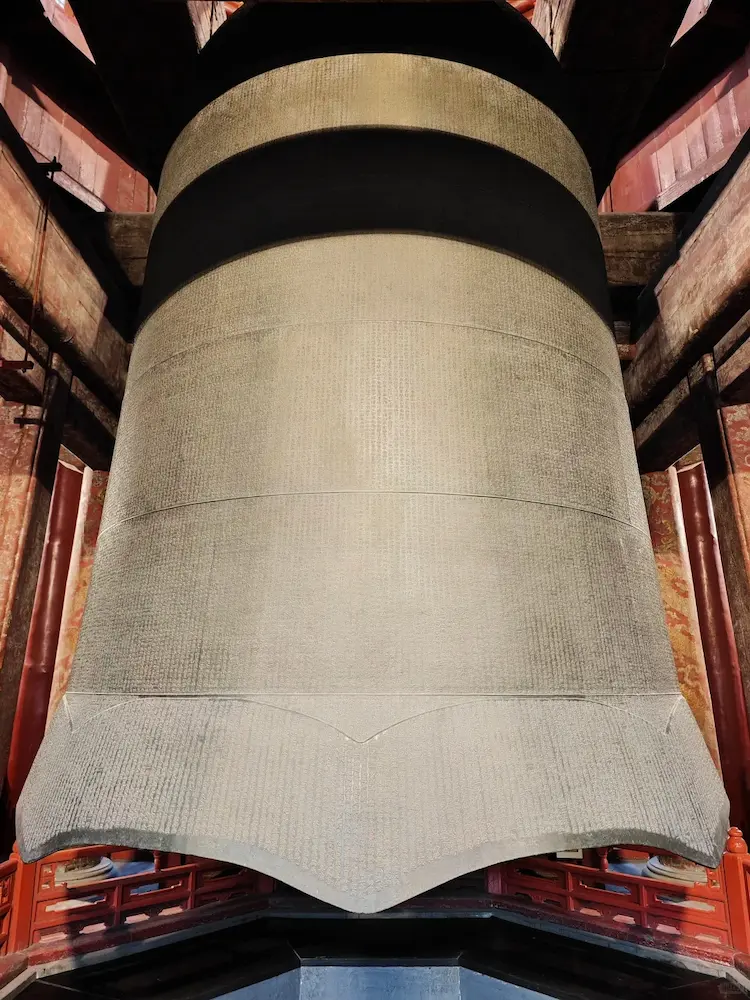
①The Yongle Bell (The Ancient Bell with the Most Inscriptions in the World)
6.75 meters tall, approximately two stories high
Weighs 46.5 tons
The bell’s surface is inscribed with 227,000 characters of Buddhist scriptures, not a single one missing
Now housed at the Great Bell Temple, it is a world-class national treasure.
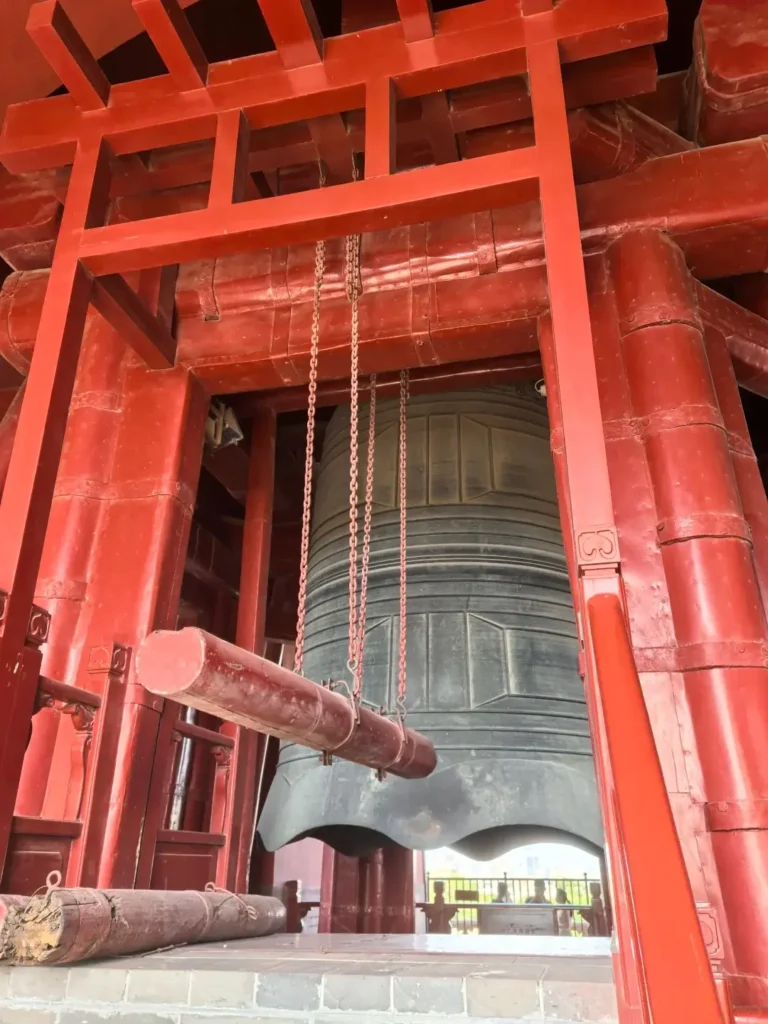
②The Bell Tower Time-Telling Bell (Beijing’s Heaviest Ancient Bell)
Height: 7.02 meters
Weight: 63 tons—roughly equivalent to a heavy tank!
It currently hangs in the Bell Tower of the Drum and Bell Towers and remains a Beijing landmark.
When I stand in the hutong, I truly feel a sense of disorientation:
Hundreds of years ago, this place must have been filled with blazing flames and the earth-shaking clang of hammers.
The Bell-Casting Lady: A Heart-Wrenching Old Beijing Legend
This is why I love this part of history the most—it’s full of human warmth.
Legend has it that during the Ming Dynasty, attempts to cast the bell failed repeatedly, and the emperor set a deadline, threatening punishment if it wasn’t completed.
To save her father, the artisan’s daughter, Hua Xian, threw herself into the searing molten copper furnace.
The great bell was finally cast.
Later, the people, moved by her filial piety and courage, revered her as the Bell-Casting Lady and built a temple to honor her.
The temple is no longer there, but the story remains in this alley; when the wind blows, it seems you can still hear it.
For foreign friends, this is a story that best captures the essence of Chinese sentiment:
filial piety, sacrifice, faith, and folk veneration.
This was also the home of“The Last Confucian”: Liang Shuming
Courtyard 41 on Zhuzhong Hutong was once the residence of the philosopher Liang Shuming.
Foreigners may not be familiar with him, but you can understand him this way:
He was one of the most principled scholars of modern China, known as “the Last Confucian.”
He lived here for seven years. The house was humble—cold in winter and hot in summer—
Yet he used an old wooden chest as a desk to complete On the Similarities and Differences Between Confucianism and Buddhism and The Human Heart and Life.
When I reached the gate of Courtyard 41, I truly stood there for a long time.
A great scholar of his generation preserved the roots of culture in the most humble of alleys.
Important Reminder
This is now a private residence; entry is not permitted, so you can only admire it from the outside.
My Secret Photo Spots | How to Photograph Zhongzhong Hutong?
Although there are no viral Instagram spots here, this place is a photographer’s dream:
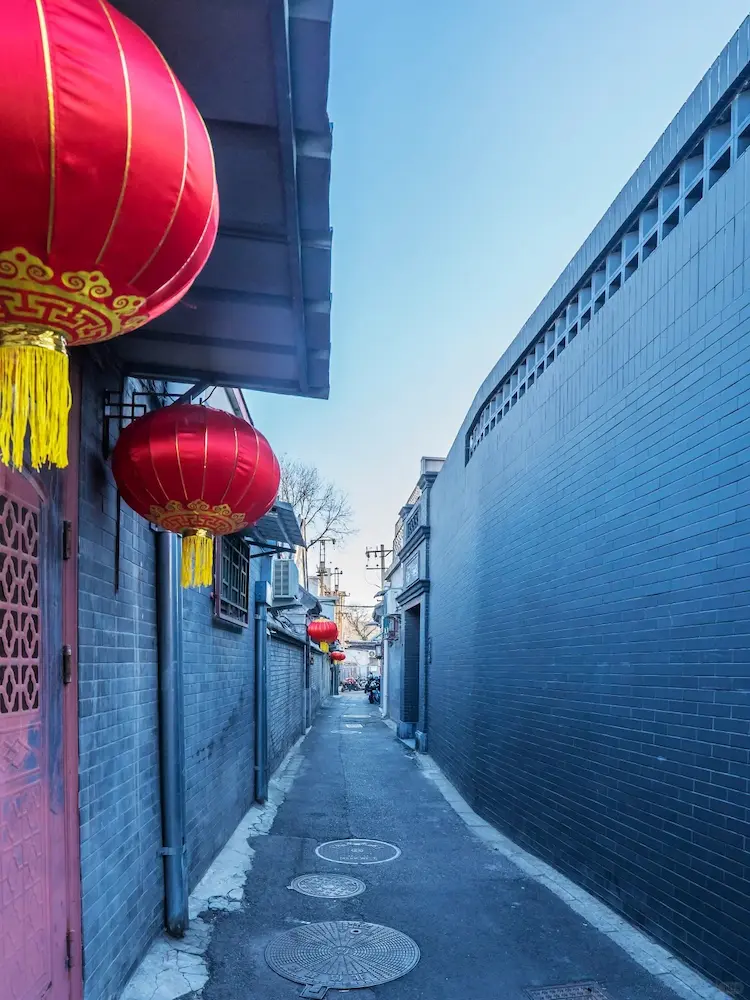
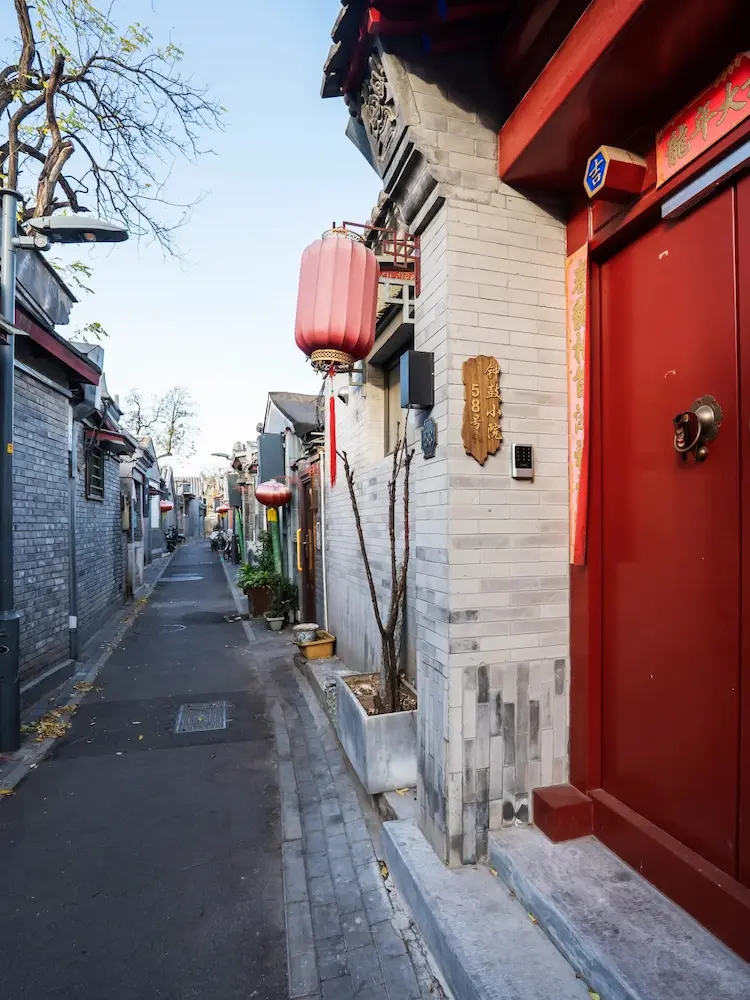
1. Old gray brick walls from the Ming Dynasty: With their weathered texture, they exude a strong sense of history.
2. Deep within the hutong: The strong sense of linear depth creates minimalist, cinematic shots.
3. View of the bell tower from afar: From the northern section of the hutong, you can capture the bell tower’s roof, framing the past and present in a single shot.
4. Door sills + old gates + blue-glazed tiles: Packed with details, the most authentic Beijing vibe
Style: Serene, cultural, vintage, minimalist.
Super Practical Guide for International Visitors
How to Get There?
- Subway Line 8: Shichahai Station / Gulou Dajie Station
- 5–8-minute walk from the Bell and Drum Towers
- Direct connection: Xiaoshiqiao Hutong → Zhuzhong Hutong—explore both hidden gems in one go
Is it difficult to navigate?
Not at all!
The paths are flat, short, and easy to walk—no detours required. Take your time and enjoy the leisurely stroll.
What’s nearby to eat?
The area around Drum Tower is packed with street food, cafes, and home-style restaurants—enjoy a meal right after your walk.
FAQ | Questions You’re Most Likely to Ask
What moves me most about Zhuzhong Hutong is not the sightseeing spots, but the palpable sense of time—so profound it feels tangible.
600 years ago, flames forged the bell;
In legend, a filial daughter gave her life;
In modern times, scholars upheld their principles;
Today, it lies quietly beside the Bell and Drum Towers, making no noise.
It is like a hidden history book of Beijing,
opened only to those willing to slow down.
If you love authentic Old Beijing, hidden gems, secluded alleys, history, and stories, you must come here for a stroll.