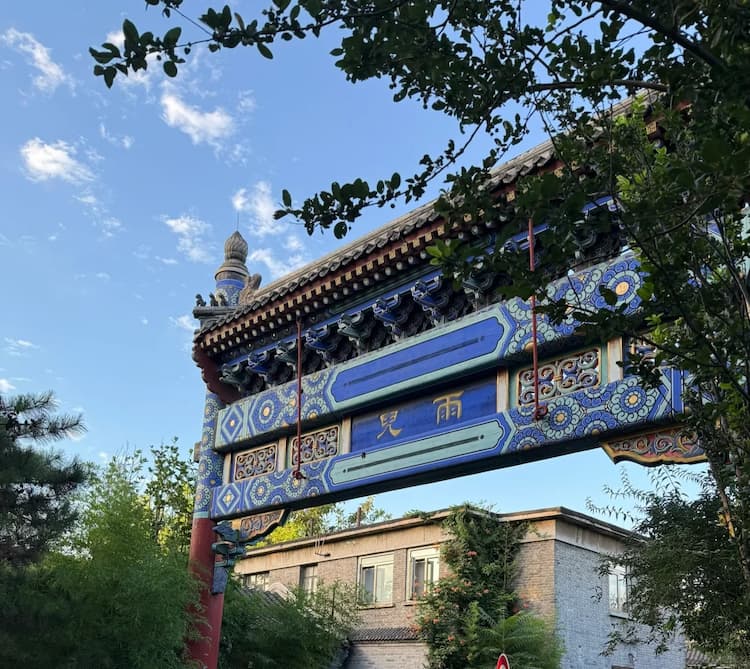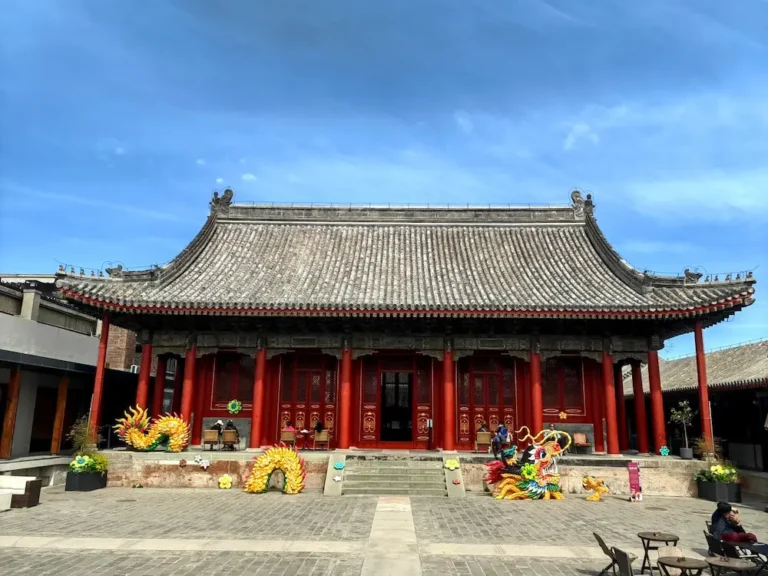
Gongmenkou Toutiao: 4 Hidden, Free Historical Spots Near White Pagoda Temple (2026 Hidden Gem Guide)
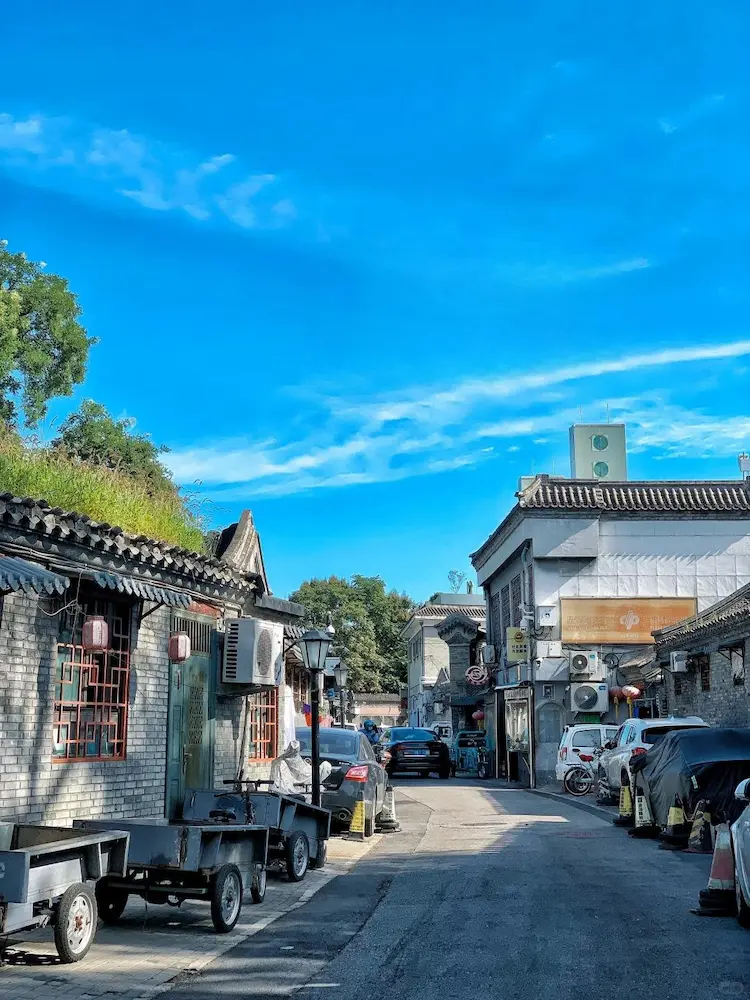
The first time I walked into Gongmenkou Toutiao, I was drawn in by the narrow side streets east of White Pagoda Temple. The alley is quite short, running east to west, stretching from near Fuchengmen Bridge all the way to the western fork of Gongmenkou.
With its gray walls and tiles, at first glance, it looks no different from any other alley. But as you walk through it, you’ll find the backyard of a Prince’s mansion, a small temple built during the Wanli era, the former residence of a founding-era major general, and a bowl of tea soup passed down through four generations—all crammed into this alley less than 300 meters long.
Later, I learned that every step you take in this alley is on the ashes of a great fire that occurred 400 years ago.
[⚠️ Exclusive Note] The courtyards mentioned in this article (Ciyin Temple, the rear courtyard of the Prince’s Mansion, Xiao Wenjiu’s residence, and the former home of “Tea Soup Li”) are not open to the public. By consulting Xicheng District’s cultural heritage archives, local annals, and folk records, I have reconstructed the untold history hidden behind these closed gates for you.
When you stand before the closed wooden gate, gazing at the weathered door knocker, your mind will conjure grand scenes of the Sixth Prince convalescing here and the ancestral hall of Liu Jin, the powerful eunuch of the Wanli era. This is a hundred times more authentic than those “fake antiques” that charge admission.
Table of Contents
Where is Gongmenkou Toutiao? How do I get there?
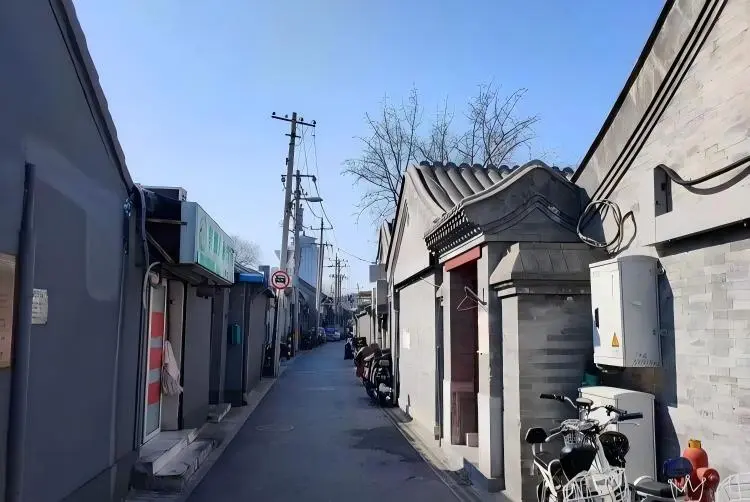
Gongmenkou Toutiao is located on the north side of Fuchengmennei Street. Running east-west, it starts at Gongmenkou Xicha (connecting to Baita Temple) in the east and ends at Fuchengmen Beidajie (Fuchengmen Bridge) on the West Second Ring Road in the west. It is 303 meters long and 4 meters wide throughout. The north end of the hutong connects to Gongmenkou Heng Hutong.
【⚠Transportation】
– Subway Line 2, Fuchengmen Station: Exit via Exit B (northeast exit). After exiting, head east (to your right) along Fuchengmen Nei Dajie for about 200 meters.
⚠️ Important Note: The western entrance to Gongmenkou Toutiao is very inconspicuous—it is a narrow passageway with no imposing gatehouse, making it easy to walk right past. At the intersection, there is an ordinary street-facing shop (or a residential wall); please look up for the green-background, white-lettered Chinese and English street sign reading “Gongmenkou Toutiao” hanging on the wall. Turn in once you see the sign; the entire walk takes about 3 minutes.
– Subway Line 4, Xisi Station: Exit at Exit D (southwest exit), walk west along Fuchengmennei Street for about 800 meters (approximately 10 minutes), and turn in at the “Gongmenkou Tiaotiao” street sign on the north side of the road.
– Bus: Take Buses 3, 13, 42, 101, 102, 103, 409, 612, etc., and get off at the “Fuchengmennei” stop. It’s a 2-minute walk from there.
> Best Itinerary: This alley is right next to [Miaoying Temple White Pagoda]. We recommend visiting both the White Pagoda Temple and Gongmenkou Toutiao on the same day—walk north for 3 minutes from the Gongmenkou Xicha on the east side of the White Pagoda Temple to reach the east entrance of Gongmenkou Toutiao. The two locations are only a 5-minute walk apart.
If you’re coming from the Fuchengmen subway station, enter through the west entrance, walk from west to east, and exit through the east entrance to reach the White Pagoda Temple directly.
Best time to visit: Weekdays from 10:00 AM to 12:00 PM. The sunlight streams diagonally into the alley from the south, making the brick joints on the gray walls and the details of the gatehouse most clearly visible. Avoid weekend afternoons, as the nearby White Pagoda Temple and the Temple of the Emperors of All Dynasties attract large crowds of tourists.
Budget: Entry to the entire alley is free. There are no paid attractions. Street vendors may occasionally sell traditional Beijing snacks (availability varies), and tea or soup costs around 10–20 yuan (US$1.50–3.00).
The Name of the Hutong: The Ashes of Chaotian Palace
The “Gongmenkou” in the name “GongmenkouToutiao” refers to Chaotian Palace, the largest Taoist temple in Beijing during the Ming Dynasty.
Ming emperors were deeply devoted to Taoism, a tradition likely established by Zhu Di (the Yongle Emperor). Zhu Di himself claimed to be the incarnation of the Great Emperor Zhenwu.
In the eighth year of the Xuande reign (1433), a temple modeled after the Chaotian Palace in Nanjing was constructed inside the Fucheng Gate. (A quick note: Nanjing was the Ming Dynasty’s “Former Capital” at the time, so many buildings in Beijing bear the influence of Nanjing.)
According to the GongmenkouToutiao Imperial Capital SceneryGongmenkou Toutiao (Gongmenkou ToutiaoDijing JingwulüeGongmenkou Toutiao), on the occasion of major court assemblies, all civil and military officials were required to first go to Chaotian Palace to practice ceremonial etiquette for two days—you can think of this as a “rehearsal for royal ceremonies.”
This Chaotian Palace was massive, comprising thirteen halls, including the Sanqing Hall and the Tongming Hall. Unfortunately, during the Tianqi era (around 1626), a massive fire reduced the entire complex to ashes.
Today, the alley is filled with residential homes, and not a single brick from Chaotian Palace remains. However, the name “Gongmenkou” (Palace Gate) has endured and is still used to this day.
During the Qing Dynasty, this area belonged to the Zhenghong Banner. Since it was the first alley north of Fuchengmen Inner Street, it was named Toutiao Hutong (First Alley).
In 1965, during a renaming campaign, the nearby Xiangbizi Hutong and Jiangan Hutong were merged into it, and the area was officially renamed Gongmenkou Toutiao.
> Cultural Insight: “Tou Tiao” does not mean “the headline of a newspaper,” but rather “the first one.” In the naming conventions of old Beijing hutongs, north-south streets are called “tiao,” while east-west streets are called “hutong.”
However, Gongmenkou Tou Tiao runs east-west yet is called “tiao”—this indicates that its name was directly inherited from the Qing Dynasty’s “Tou Tiao Hutong,” reflecting the naming conventions of the Manchu Eight Banners.
The Residence of Prince Lido: The Hidden Backyard at 243 Funei Street
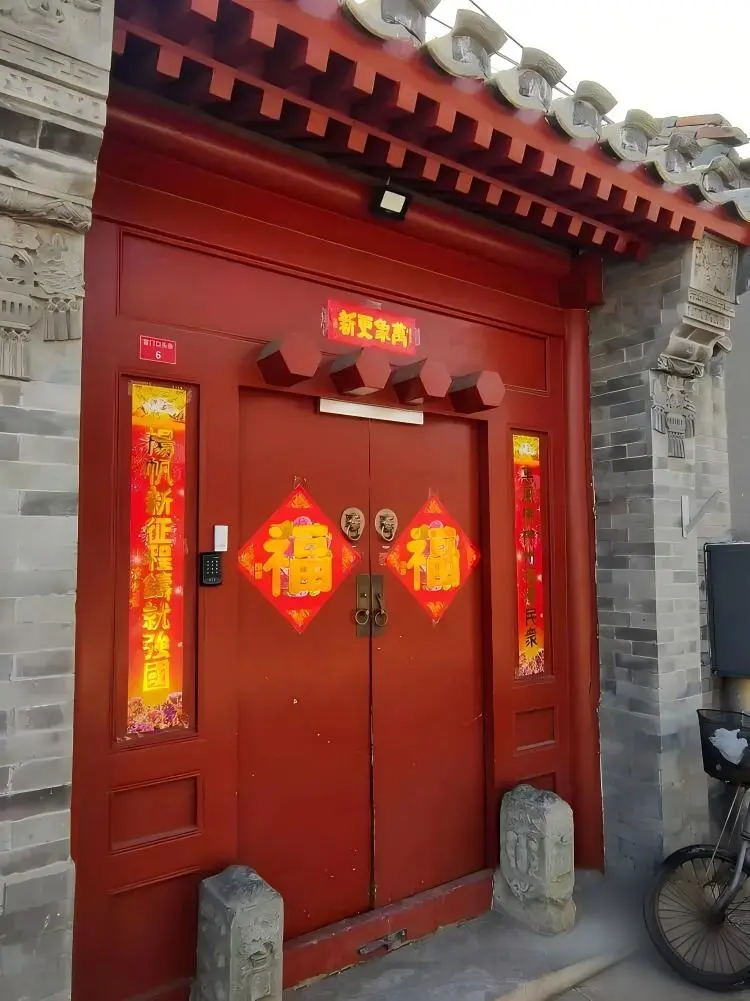
Walk to the south side of Gongmenkou Toutiao, and you’ll see Courtyard No. 6. This courtyard may look unremarkable, but it is actually the backyard of Prince Lido’s residence.
⚠Cultural Insight—“What is a‘Prince’?”
“Beile” is a Manchu term referring to a rank in the Qing imperial hierarchy, ranking below Prince and Duke. The Lido-ro Bele was a descendant of Dai Shan, the second son of Nurhaci, the founding emperor of the Qing Dynasty.
Dai Shan was one of the Eight Iron-Capped Princes of the early Qing Dynasty (“Iron-Capped” signified that the title was hereditary and could never be demoted). Among his descendants, some were enfeoffed as Princes, while others were enfeoffed as Beile.
According to Qing regulations, a Bole’s residence was significantly smaller than a Prince’s: the foundation was six feet high, consisting of one main hall and two side halls. The inner gate was built on the foundation and covered with ordinary cylindrical tiles, painted vermilion.
Although the Liduoluo Bole Mansion, located on the north side of the main street inside Fuchengmen, is small in scale, its courtyard is quite spacious. The mansion’s gate faces south, and the compound consists of three courtyards, measuring approximately 120 meters from east to west and 70 meters from north to south.
The current address on the main gate is 243 Fuchengmennei Street (located on the roadside south of the alley, not inside Gongmenkou Toutiao).
Interestingly, the ground level inside the courtyard is about one meter lower than the road surface on Fuchengmennei Street—this indicates that this Prince’s Mansion was built a long time ago, and the surrounding roads have been raised higher and higher over time.
The courtyard floor is paved with ordinary bricks, making it difficult for water to drain during rainy weather. When it rains heavily, rainwater from the street also flows back into the courtyard.
The street entrance consists of a simple gate with golden pillars and two red-lacquered doors. There are no door nails, no painted decorations, and no mounting or dismounting stones or horse-tethering posts in front of the gate. The only feature is a 3-meter-wide, V-shaped wall set back from the street.
The courtyard contains no arched gateways, moon gates, or covered walkways. The only distinguishing feature is that both the main hall and the side rooms have three to five steps leading up to them, designed to prevent rainwater from flowing into the buildings.
Today, this rear courtyard is occupied by the School of Landscape Architecture at Beijing Forestry University and is not open to the public. However, you can still see the exterior of the Prince’s Mansion’s main gate at the entrance of No. 243 Funei Street.
Xiao Wenjiu’s Residence: The Home of a Founding Major General
On the south side of Gongmenkou Toutiao, the gateposts of Compound No. 8 are marked with a house number and a “Protected Courtyard” sign. Peering through the gate, a screen wall adorned with a mosaic tile pattern stands directly opposite the entrance. To the left of the screen wall is a small side door.
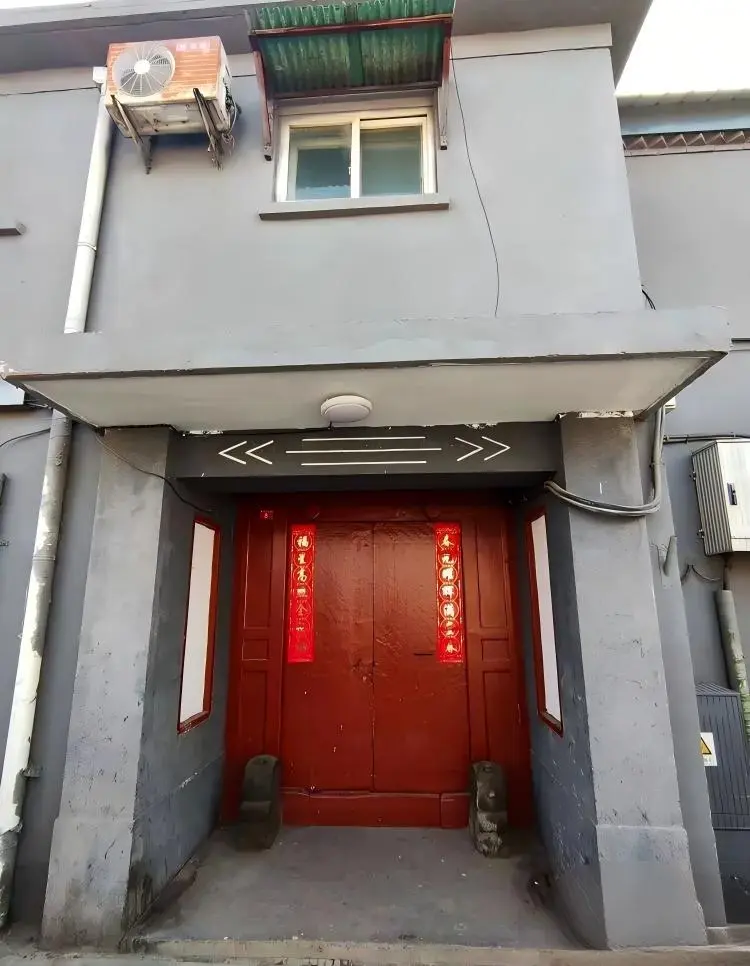
This was once the residence of Xiao Wenjiu (1915–2001). Xiao Wenjiu was a founding major general of the People’s Republic of China, nicknamed “Xiao Tank,” and was a formidable military commander renowned for his combat prowess. A native of Jishui, Jiangxi Province, he participated in the Agrarian Revolution, the War of Resistance Against Japan, the War of Liberation, and the War to Resist U.S. Aggression and Aid Korea.
In 1955, he was awarded the rank of major general. After the founding of the People’s Republic of China, he served as Deputy Commander and Acting Commander of the Shanxi Military District, Chief of Staff of a Corps, Army Commander, and Chief of Staff and Deputy Commander of the Beijing Military District.
This courtyard is actually part of the compound at 243 Funei Street (the Prince’s Mansion), separated from Huang Zuozhen’s residence by only a single wall; it serves as the rear courtyard of the Prince’s Mansion. It remains a private residence today, and visitors can only view the exterior from the entrance.
Ci Yin Temple: From Liu Jin’s Family Shrine to a Small Temple Where the Sixth Imperial Son Recovered
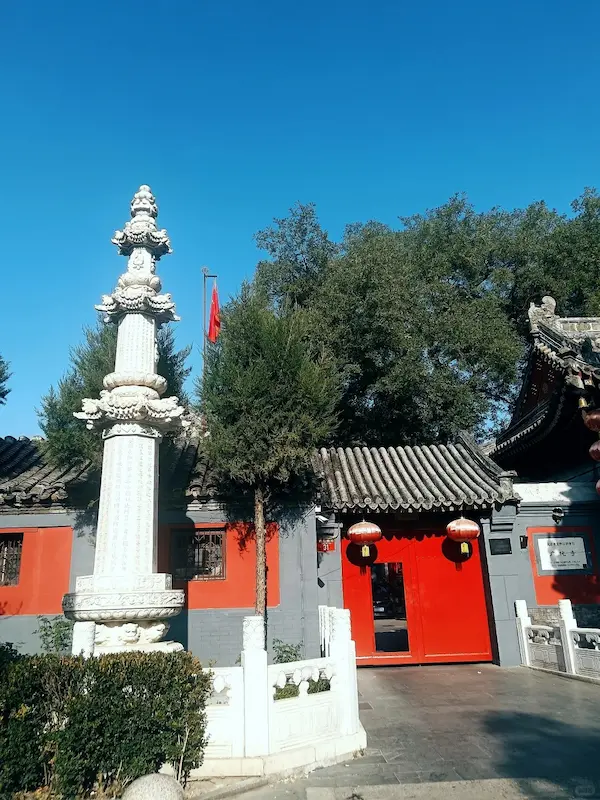
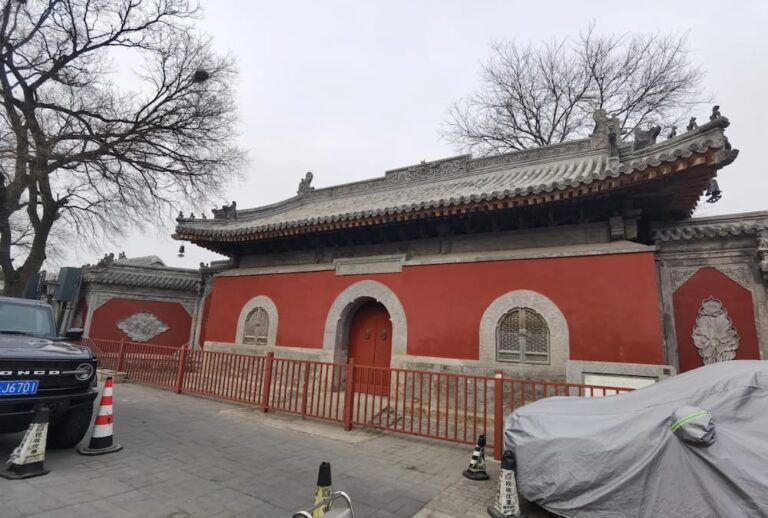
This was my biggest discovery on Gongmenkou Toutiao. Courtyard No. 21 is very unassuming—just an ordinary residential compound with a sign hanging at the entrance reading “Ci Yin Temple.” If you’re not paying attention, you’d easily miss it.
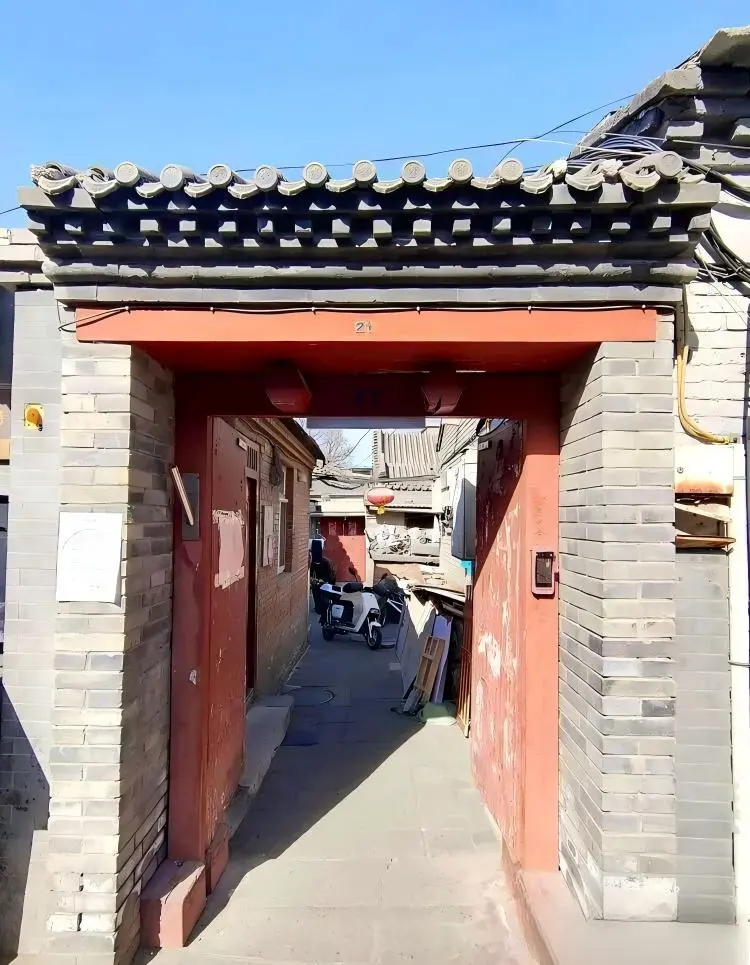
Although the main gate is always closed, by consulting Xicheng District’s cultural heritage records and local annals, we can reconstruct the history behind the gate:
- Originally, this was the family shrine of Liu Jin, a powerful eunuch during the Wanli era of the Ming Dynasty. After Liu Jin was executed, the site was converted into a temple.
- Later, the sixth son of Emperor Qianlong of the Qing Dynasty (named Yongrong, with the courtesy name Jiusi Zhu Ren) once convalesced here. Because a prince had visited, the temple’s roof was temporarily replaced with yellow glazed tiles (yellow glazed tiles were reserved for the imperial family and were forbidden for commoners).
- After the founding of the People’s Republic of China, the site became a private residence. It currently serves as a warehouse for the Beijing Special Arts and Crafts Company.
Today, a plaque reading “Xicheng District Cultural Heritage Survey and Registration (2013)” is displayed at the entrance. Upon entering, one arrives at the site of the southern courtyard of the former Ciyin Temple.
Lion-shaped carvings can be seen on the eaves of the western side hall. The other halls of Ciyin Temple—the front hall, main hall, rear hall, and the north and south side halls—are located within the compound at No. 7 Guankoumen Heng Hutong and are now also ordinary residential homes.
Ciyin Temple was first built during the Wanli era of the Ming Dynasty. It covers an area of approximately 6 mu and comprises 64 main halls and 36 auxiliary rooms. The entire temple complex faces east (unlike most temples, which face south; the orientation here is unusual).
The stone lintel above the mountain gate is inscribed with the words “Imperially Bestowed Ciyin Temple” (“Imperially Bestowed” means the temple was built by imperial decree). Under the eaves of the Hall of the Heavenly Kings hangs a plaque inscribed with “The Golden Fortress of the Dharma Garden,” while a wooden plaque bearing the words “Unceasing Sincerity” hangs from the crossbeam, signed by “The Sixth Imperial Son.”
A plaque inscribed with “Dragons Soaring, Clouds Rising” hangs from the crossbeam of the Great Hall of the Buddha, also signed by the Sixth Imperial Son.
Under the eaves of the Dharma Hall hang the plaques “Divine Wisdom and Profound Insight” and “Universal Protection of Glory,” both written in the hand of Emperor Xianfeng.
In front of the main hall stand two stone steles, one of which was inscribed by Yongrong, the Sixth Son of Emperor Qianlong.
In 1947, during the general registration of temples conducted by the Beiping Civil Affairs Bureau, the abbot of Ciyin Temple was named Huiming.
> Photography Tip: Currently, you can only see the exterior of Courtyard No. 21—a typical residential compound gate with a cultural relic plaque embedded in the adjacent wall. If you wish to get a sense of the temple’s former appearance, you can explore the area near Courtyard No. 7 on Guankoumen Heng Hutong, but please do not enter the residential compounds.
Cha Tang Li: A Time-Honored Brand Born from a Bowl of Tea
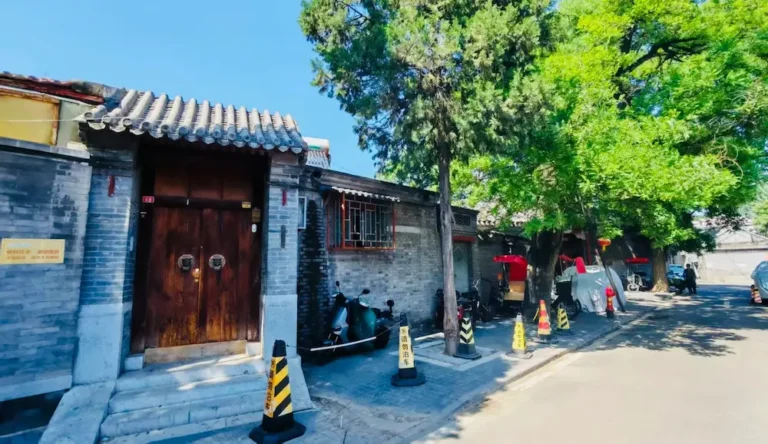
In a small alley off Gongmenkou Toutiao stands Courtyard No. 33. Its wooden door and door couplets exude a sense of history. This is the home of Master Li Lianbao, the third-generation heir of “Cha Tang Li.”
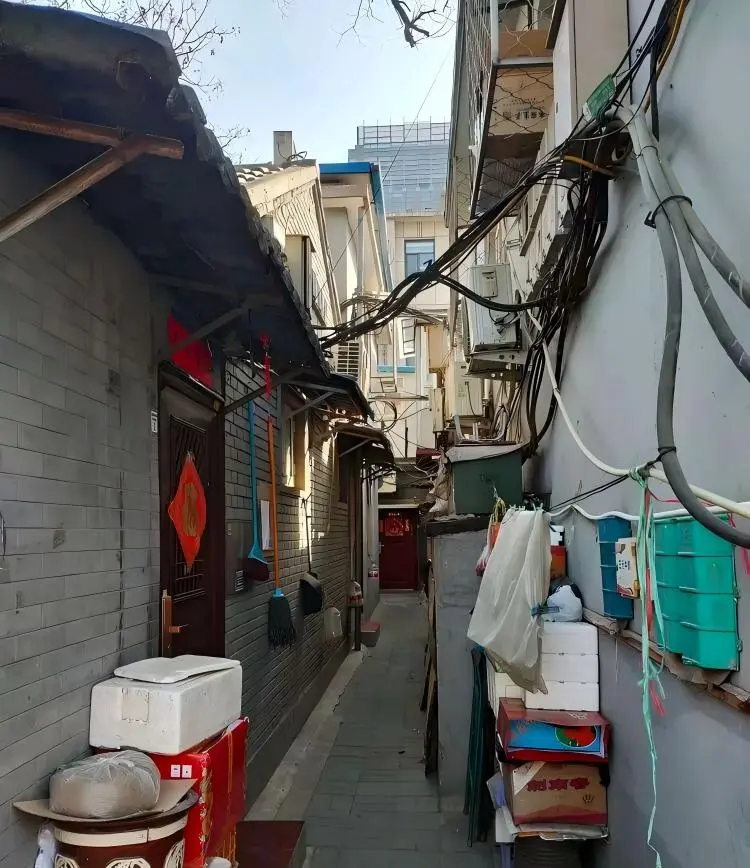
What Is“Cha Tang”?
“Cha Tang” is neither tea nor soup. It is made by pouring boiling water over millet flour (a type of grain) to cook it, then adding brown sugar, white sugar, rose petals, osmanthus flowers, and other seasonings, stirring until it forms a thick paste. Because the process of pouring hot water over the mixture resembles brewing tea, it is called “Cha Tang.”
Stalls selling Cha Tang are a common sight at old Beijing temple fairs and on street corners. The stalls feature a tall red copper kettle, standing over two feet high, with a hollow chamber in the middle where charcoal or coal is burned to boil water.
The vendor holds a bowl in one hand and tilts the large kettle with the other, pouring the scalding water directly into the flour mixture in the bowl. The bowl must not be too hot to hold, and not a drop of water can be spilled—this is a true feat of skill.
The History of Li’s Tea Soup:
- The first generation, Li Tonglin (during the Guangxu era), lived in the Chaoyangmen area with his son Li Shizhong, earning a living by making tea soup, steamed rice cakes, and cold jelly.
- The second generation, Li Shizhong (after the founding of the Republic of China), began participating in temple fairs: the banner for “Li’s Tea Soup” was a common sight at the fairs of Miaofeng Mountain, Pantao Palace, and Baiyun Temple. The lamas at White Pagoda Temple admired his reputation so much that they sent him a formal invitation, asking him to set up a stall in front of the temple’s main gate.
- The third generation, Li Lianbao, revived the business, and in 1998, it was recognized as a “Time-Honored Chinese Brand.”
Today, Courtyard No. 33 remains a private residence and is not open to the public. However, you can visit shops bearing the “Cha Tang Li” name near Baita Temple or Shichahai to enjoy a bowl of authentic Old Beijing cha tang, priced at approximately 15–20 yuan (US$2–3).
Courtyards No. 6 and No. 8 at Gongmenkou Toutiao: Another Side of the Prince’s Mansion’s Rear Compound
In addition to the locations mentioned above, the hutong also features Courtyard No. 6 (part of the rear compound of the Prince’s Mansion, now occupied by the School of Landscape Architecture at Beijing Forestry University) and Courtyard No. 8 (the residence of Xiao Wenjiu).
These courtyards are not open to the public; visitors can only view the gate towers, gate piers, and preservation plaques on the walls from the entrance.
Practical Information Summary
✅Best Itinerary
Recommended Route: Start at the White Pagoda Temple and head east through the Gongmenkou Hutong Cluster
1. In the morning, visit the [Miaoying Temple White Pagoda ] (approx. 1 hour).
2. From the east side of the White Pagoda Temple, take the western fork of Gongmenkou Toutiao and head north. After about 3 minutes, you’ll see the sign for Gongmenkou Toutiao (East Entrance).
3. Turn west onto Gongmenkou Toutiao and view Ciyin Temple (No. 21, exterior), the Former Residence of Cha Tang Li (No. 33, exterior), and Courtyards No. 8 and No. 6 along the way.
4. Walk to the West Exit (Fuchengmen Bridge). Turn left (south) onto Fuchengmen Inner Street, where you can also visit the Temple of the Emperors of All Dynasties (admission 20 RMB) and Guangji Temple (free).
If starting from Fuchengmen Subway Station: Exit at Exit B, first view the main gate of the Prince’s Mansion at No. 243 Fuchengmennei Street (exterior), then enter from the west entrance of Gongmenkou Toutiao (look for the street sign on the wall), walk from west to east, and finally exit at the east entrance to head to Baita Temple.
✅Time and Budget
| Item | Time | Cost (RMB) | Cost (approx. USD) |
| Walk along Gongmenkou Toutiao (exterior view only) | 30–40 minutes | Free | Free |
| White Pagoda Temple Admission | 1 hour | 20 RMB | $2.8 |
| Temple of the Emperors of All Dynasties Admission | 45 minutes | 20 RMB | $2.8 |
| Cha Tang Li Snacks (Store) | 15 minutes | 15–20 RMB | $2–3 |
✅Payment and Internet
- Payment: There are no shops in the hutongs, so payment isn’t necessary. Baita Temple and the Temple of the Emperors accept WeChat Pay/Alipay (foreign credit cards linked to these apps are accepted) and cash.
- ⚠️ Cash Backup Reminder: If you encounter non-permanent traditional food stalls at the entrance to a hutong (such as tea stalls or candied hawthorn vendors), the vendors are often elderly men. Their phones may sometimes have difficulty scanning WeChat/Alipay QR codes linked to certain international credit cards. Therefore, we recommend carrying small-denomination cash (10-yuan and 20-yuan notes)—this is the safest and most authentic way to explore the hutongs.
- Internet: Full 4G/5G coverage. We recommend purchasing an eSIM or a local Chinese SIM card in advance.
✅Photography and Etiquette
- Residential Compounds: All compounds marked with house numbers are private residences; do not push open the gates to enter. It is fine to take photos at the entrance, but do not linger for long periods or make loud noises.
- No. 21 Compound of Ciyin Temple: This area is currently used as a warehouse and residential space; please limit photography to the cultural relic plaque at the entrance. Do not attempt to enter the compound.
- Main Gate of the Prince’s Mansion: Located at 243 Funei Street on the roadside; please be mindful of traffic safety.
✅Restrooms
– The nearest public restroom is on Fuchengmen Nei Dajie (near Metro Exit B), or there is one inside the White Pagoda Temple (admission ticket required).
✅Other Recommendations Nearby
After exploring Gongmenkou Toutiao, you can walk to:
- Miaoying Temple White Pagoda (200 meters): A Yuan Dynasty white pagoda and Beijing’s oldest Tibetan-style stupa.
- Temple of the Emperors of All Dynasties (300 meters): A temple built during the Ming and Qing dynasties to honor past emperors.
- Guangji Temple (600 meters): Home to the Buddhist Association of China; free admission.
- Lu Xun Museum (800 meters): Lu Xun’s former residence in Beijing.
FAQ
Gongmenkou Toutiao is so short that if you walk briskly, you can get from the west end to the east end in just five minutes. Yet it is also incredibly rich—so rich that within this 300-meter-long alley lie the ashes of Beijing’s largest Daoist temple from the Ming Dynasty, the rear courtyard of a Qing Dynasty prince’s mansion, a small temple converted from a eunuch’s ancestral hall during the Wanli era, the former residence of a founding-era major general, and a bowl of tea brewed during the Guangxu era that has yet to cool.
None of these courtyards is open to tourists. You can only stand at the entrance, gaze at the door pins, the thresholds, and the cultural relic plaques on the walls, and then imagine the stories that once unfolded within.
But perhaps this is the charm of the hutong—it is not a museum, nor a tourist attraction; it is still breathing, still living its daily life. Beneath those gray walls and tiles lie the ashes of a fire from four hundred years ago, as well as bedsheets hung out to dry just this morning.
If you come to Beijing, why not start at the White Pagoda Temple and walk all the way to Gongmenkou Toutiao? Standing in that narrow passageway, try to imagine: the thirteen-story halls of the Chaotian Palace once burned to the ground right on the very ground beneath your feet.
That fire has long since been extinguished, but the three characters “Gongmenkou” remain. Upon the ashes, life goes on.