Shijia Hutong Travel Guide: Beijing’s 700-Year-Old Hutong + Transportation & Admission (Updated for 2026)
Shijia Hutong is directly accessible via Metro Line 5, and you can explore this 700-year-old hutong for free. Visit Beijing’s only “Sound Room” to travel back in time through the sounds of old Beijing, and explore the historic site where Ling Shuhua and Rabindranath Tagore once enjoyed afternoon tea. Includes information on transportation, museum hours, and insights into siheyuan culture.
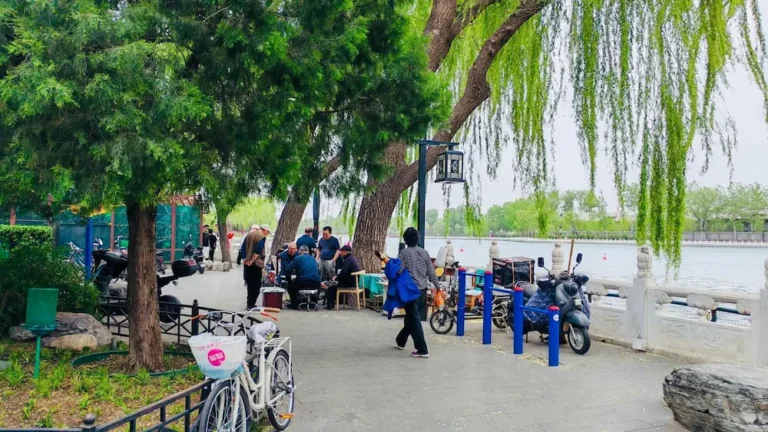
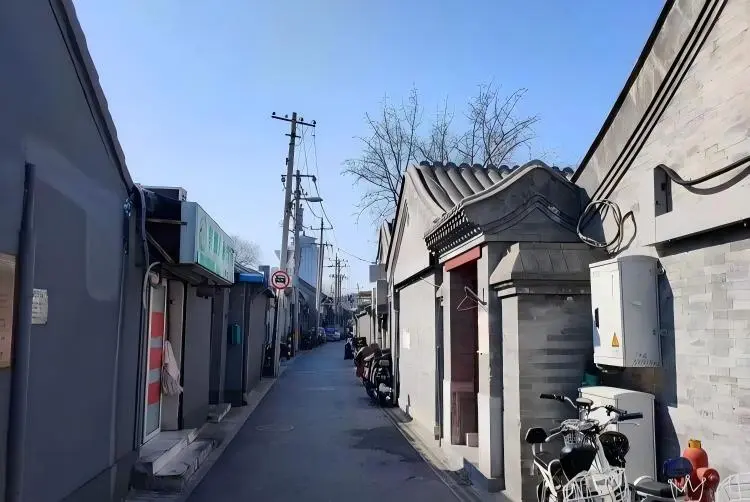
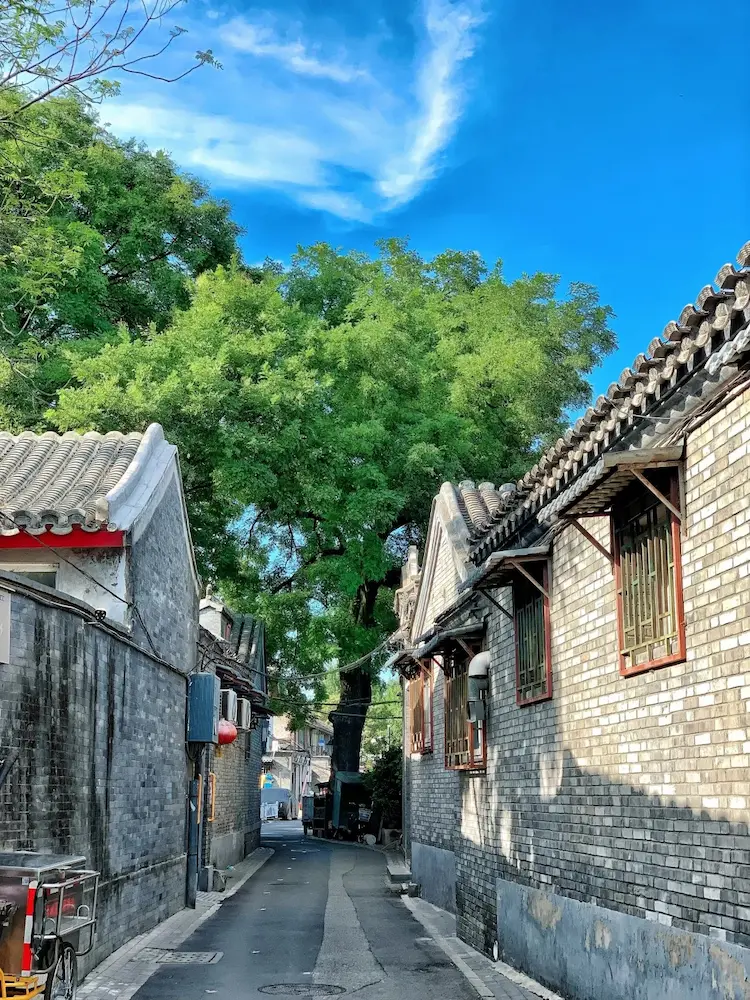
> Beijing’s most “understated” hutong—free from the hustle and bustle of commercial streets, it hides a century of history beneath its blue-gray bricks and tiles.
> Direct access via Metro Line 5, with no admission fee, yet behind every door lies a story that shaped China.
>Hidden Gem: The “Sound Room” in the museum lets you travel back in time to Old Beijing 50 years ago through your ears.
Table of Contents
Practical Information
| Item | Details |
| Address | Dongcheng District, Beijing; bounded by Chaoyangmen South Street to the east and Dongsi South Street to the west |
| Subway | Line 5, Dengshikou Station; take Exit D. Walk south for about 20 meters. Once you see “Juyin Theater,” the west entrance of Shijia Hutong is diagonally across the street. The entire walk takes less than 3 minutes. |
| Bus | Take Buses 106, 108, 110, 111, 116, 684, or 685 and get off at “Dengshikou East” Station |
| By Car | Not recommended. There is no parking within the hutong, and finding parking nearby is extremely difficult. If taking a taxi, use the destination “ West Entrance of Shijia Hutong ”or “Shijia Hutong Museum.” |
| Admission | The hutong is free. The Shijia Hutong Museum (Courtyard 24) is free; individual visitors do not need to make a reservation and may enter directly. Groups (10 or more people) must make a reservation in advance by phone (010-85175790). |
| Hours | Museum: Tuesday–Sunday 9:00 AM–4:30 PM (last entry at 4:00 PM); closed Mondays. The hutong itself is open 24 hours, but we recommend visiting during the day; please avoid disturbing residents at night. |
| Best Times to Visit | Weekdays from 9:00 AM to 10:30 AM, or after 3:00 PM. Weekends are busiest in the afternoon. In the morning, you can see local seniors walking their birds and buying breakfast—this is when the atmosphere is most vibrant. |
| Recommended Duration | Just for exterior photos: 1 hour. Including a detailed tour of the museum: 2.5 hours. |
| Dress Code | The hutongs have uneven bluestone cobblestone paths that can be slippery after rain. Wear sneakers or flat canvas shoes; avoid high heels. |
| Budget | 0 RMB (no admission fee). Dining options nearby range from budget-friendly to upscale; a bowl of zhajiangmian costs about 20–40 RMB (approx. $3–5). |
| Access to Courtyards | Except for the museum at No. 24, all other courtyards (Nos. 51, 53, 47, the elementary school at No. 59, etc.) are private residences or not open to the public. If you see signs reading“ Private Residence ”or “No Visitors,” please respect the residents by not knocking on doors, peering inside, or taking photos of the interiors. |
| English Support | There are a few English exhibition panels inside the museum, but no English-speaking guides. We recommend downloading a translation app on your phone. |
| Etiquette Reminder | Shijia Hutong is a living residential community. Please keep quiet, avoid loud noises, and do not disturb the residents’daily lives. |
>What if you get thirsty? Since this is a genuine residential area, there are no Starbucks or bubble tea shops in the hutong. We recommend buying a bottle of water or a cup of coffee near the Juyin Theater just outside the West Gate before exploring. There is also a small convenience store near the East Gate.
The Origins of Hutongs: From Turkic Nobility in the Yuan Dynasty to the Shi Family of the Ming Dynasty
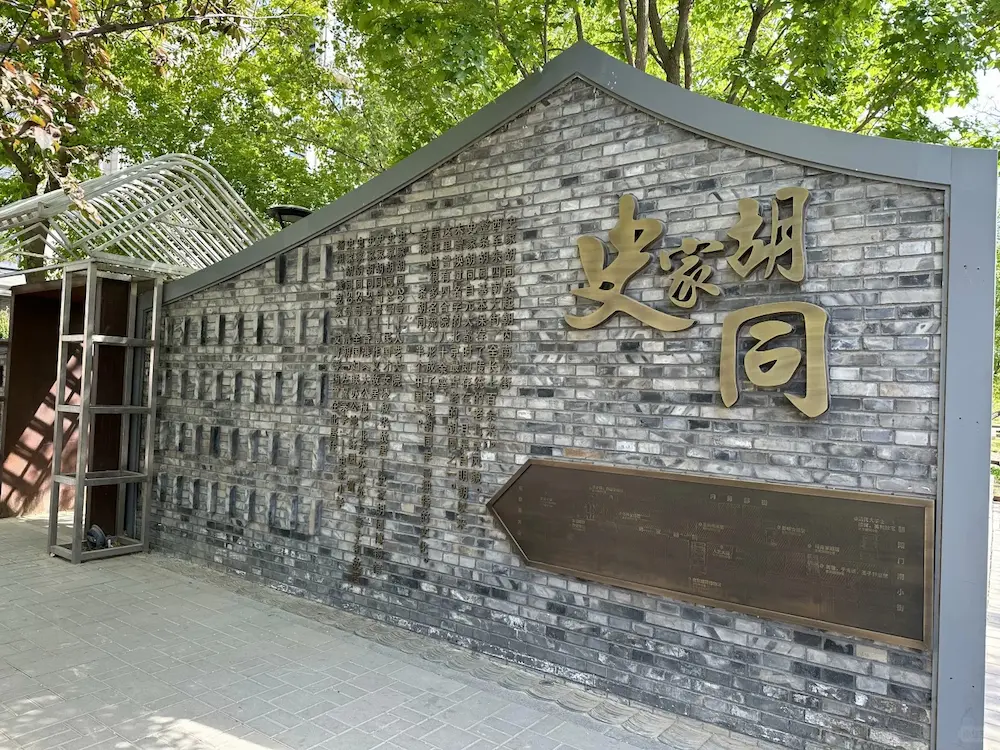
Why is Shijia Hutong called “Shijia Hutong”? There are actually two lines of evidence to answer this question: one points to Turkic nobility, and the other to the Shi family of the Ming Dynasty.
Traces Back to the Yuan Dynasty (Approximately 740 Years Ago)
When the Yuan capital (present-day Beijing) was founded, Liu Bingzhong planned the city’s entire street and alley system. At the site where Shijia Hutong stands today, the rudiments of an east-west alley already existed. According to historical records and scholarly research, this area was once a settlement of the Ashina clan during the Yuan Dynasty.
“Ashina” was the surname of the Turkic khans and the distant ancestor of the“Borjigin” clan, the ruling family of the later Mongol Empire. After the Yuan Dynasty established its capital at “Khanbaliq”(i.e., Dadu), this alley gradually became inhabited, though it was not yet called Shijia Hutong at that time.
Officially Named During the Ming Dynasty (Approximately 500 Years Ago)
During the Jiajing era of the Ming Dynasty, the name “Shijia Hutong” appeared for the first time in the officially compiled Collection of Lanes and Alleys in the Five Cities of the Capital. Why was it called “Shijia”?
The most widely accepted explanation is that a prominent family surnamed Shi lived there at the time, and following the old Beijing custom of naming alleys after surnames (such as Fangjia Hutong and Caijia Hutong), it came to be known as Shijia Hutong.
Another widely circulated theory suggests that a shrine dedicated to Shi Kefa once stood within the alley. Shi Kefa was a renowned general who resisted the Qing dynasty during the late Ming period; after falling in battle at Yangzhou, he was posthumously recognized as a loyal minister by the Qing Emperor Qianlong.
It is said that his family shrine or a memorial structure was once located here, hence the alley’s name. However, this theory lacks concrete evidence and is more likely a later fabrication.
From the Qing Dynasty to the Present: A Name That Has Never Changed
During the Qing Dynasty, Shijia Hutong came under the jurisdiction of the Xiangbai Banner and became a residential area for members of the Eight Banners and families of officials. It retained its original name during the Republic of China era; during a period of political upheaval, it was briefly renamed “Rui Jin Road No. 18,” but the original name was quickly restored. Since its naming in the Ming Dynasty, Shijia Hutong has not changed its name for over 700 years—a rarity in the heart of Beijing.
> In a nutshell: The “Shi” in Shijia Hutong most likely derives from a prominent family surnamed Shi during the Ming Dynasty, but the historical roots of this alley can be traced all the way back to the founding of the Yuan capital, Dadu.
A Tour of the Core Courtyards (West to East)
1. Courtyard No. 59–Shijia Primary School: The Qing Dynasty’s“Exam Site for Study in the U.S.”
Current Status: One of the most selective primary schools in Beijing; not open to the public, so only the exterior can be viewed.
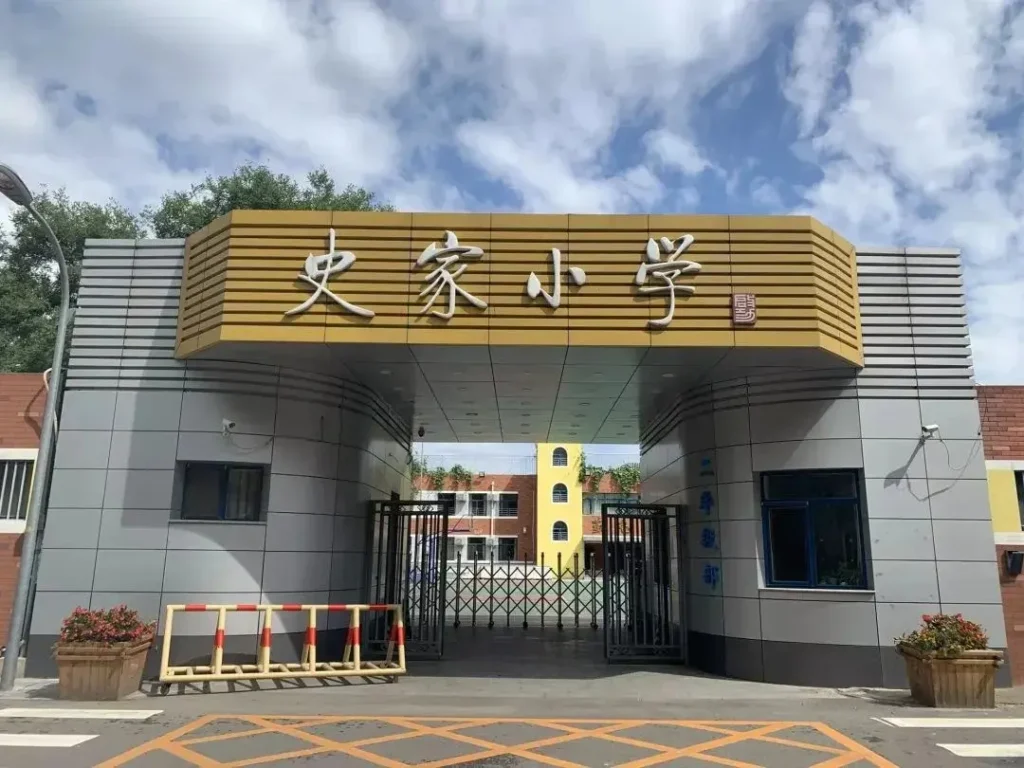
History:
– During the Ming Dynasty, it was said to be the former site of Shi Kefa’s ancestral hall.
– In the Qing Dynasty, this was the Left Wing Zongxue (Academy), where the children of nobles from the Bordered Yellow, Pure White, Bordered White, and Pure Blue Banners were educated.
– In the late Qing Dynasty, the Qing government established the Office of Education for Study in the United States here, responsible for selecting students to study in the U.S. From 1909 to 1911, the qualifying examinations for study in the United States were held here for three consecutive years.
Hu Shi, Zhu Kezhen, Zhao Yuanren, Mei Yichi, and others all passed their exams here before sailing to the United States to study. Upon their return, most of them became leading figures in the New Culture Movement and pioneers of modern science.
Significance: In a sense, Shijia Hutong was one of the starting points of China’s modern educational revolution and cultural renewal. Through its gates, students of the old era departed, and pioneers of the new era returned.
2. Compound No. 53–Haoyuan Hotel: One Compound, Five Owners
Current Status: Currently serves as the Haoyuan Hotel (a foreign-friendly hotel) and is not open to the public. At the entrance, visitors can view the plaque inscribed with the characters “Haoyuan” (Good Garden), written by Deng Yingchao.
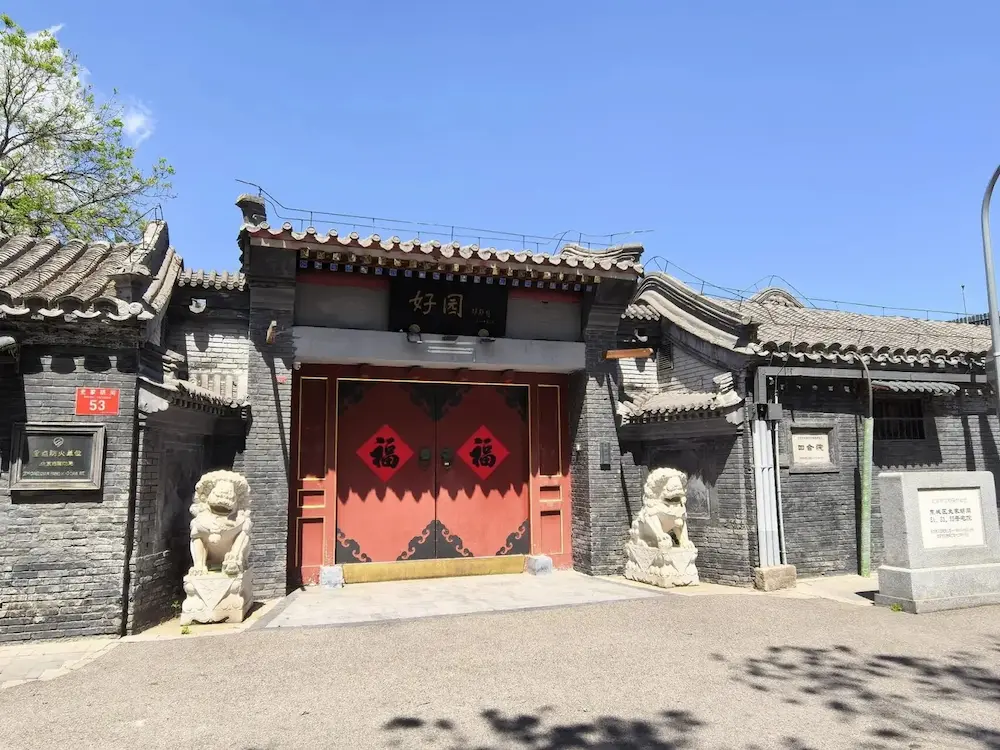
History (Five Owners):
| Era | Owner | Status |
| Late Ming Dynasty (Legend) | Shi Kefa | A famous general who resisted the Qing |
| Late Qing Dynasty | Li Lianying | Chief eunuch in Empress Dowager Cixi’s service; this was his secondary residence |
| Late Qing to Early Republican Era | Hong Jun + Sai Jinhua | Top Imperial Examination Scholar + Diplomat + Legendary Woman |
| After 1949 | All-China Women’s Federation | Deng Yingchao and Kang Keqing worked here |
| Post-Reform and Opening-Up | Haoyuan Hotel | Deng Yingchao inscribed “Haoyuan”(“好” is a homophone for“woman,”a subtle reference to the Women’s Federation) |
Key Figure: Sai Jinhua:
Born into poverty, she fell into a life of prostitution as a teenager. After being taken as a concubine by the top imperial examination scholar Hong Jun, she accompanied her husband on diplomatic missions to Russia, Germany, Austria, and the Netherlands as the ambassador’s wife. She learned German and met the German emperor.
Upon returning to China, she moved into Compound No. 53. After Hong Jun’s death from illness, she was expelled by his legal wife and returned to her former line of work.
In 1900, when the Eight-Nation Alliance entered Beijing, legend has it that she used her German connections to dissuade the allied forces from indiscriminate killing, thereby sparing the city’s residents. She was popularly known as “Second Master Sai.” Ups and downs marked her life, and it was highly controversial.
3. No. 51 Courtyard–Former Residence of Zhang Shizhao: Four Generations of Notable Figures Linking Modern History
Current Status: A cultural heritage site under the protection of Dongcheng District; not open to the public.
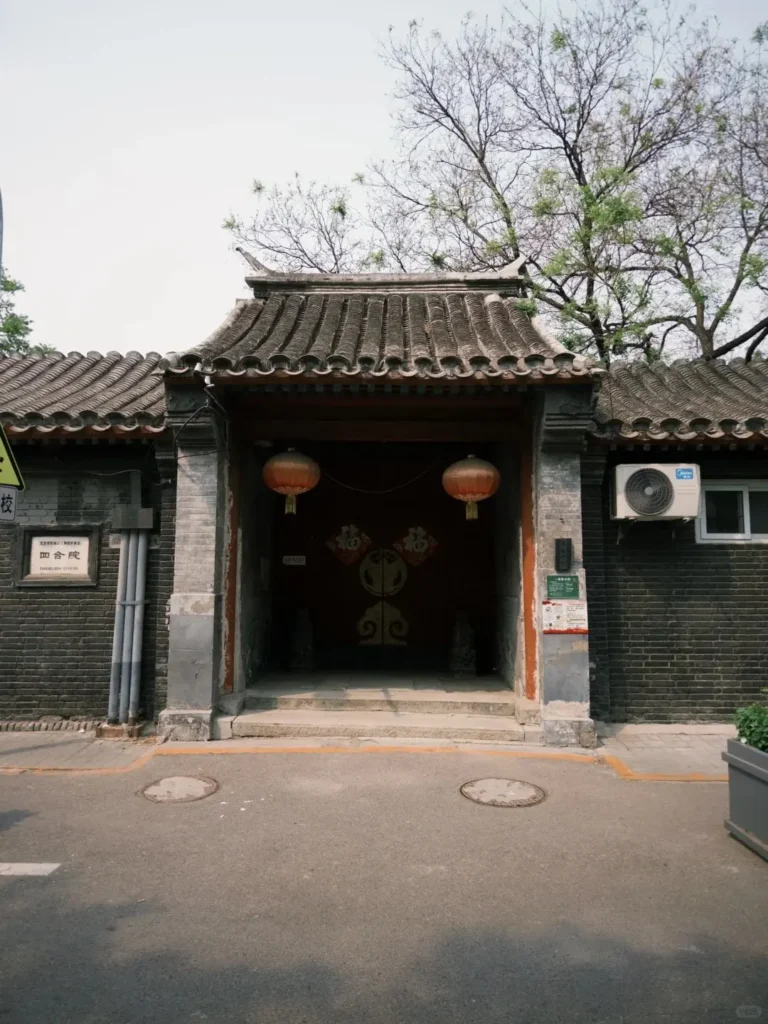
History:
– Before liberation, it served as the Beijing office of Hong Kong’s Ta Kung Pao newspaper. It was also the private residence of Li Shuchun, a general who fought against Japanese aggression.
– In 1960, Premier Zhou Enlai personally arranged for the compound to be gifted to Zhang Shizhao. Zhang Shizhao was a scholar and statesman who spanned three eras: the late Qing Dynasty, the Republic of China, and the People’s Republic of China.
He rescued Li Dazhao, defended Chen Duxiu, served as Minister of Justice and Minister of Education under the Beiyang Government, and acted as an advisor to Du Yuesheng. After the founding of the People’s Republic of China, he attended the First Session of the National Committee of the Chinese People’s Political Consultative Conference.
– Zhang Shizhao’s adopted daughter, Zhang Hanzhi (Mao Zedong’s English teacher and a renowned diplomat), and his son-in-law, Qiao Guanhua (Foreign Minister of the People’s Republic of China and the subject of the historic photograph of him laughing heartily at the 1971 United Nations General Assembly), once lived here.
– Zhang Hanzhi’s daughter, Hong Huang (a cultural figure and media personality), was born and raised here. In 2011, Hong Huang returned the compound to the Ministry of Foreign Affairs.
Significance: This residence connects four distinct threads—academic, political, diplomatic, and cultural—serving as a microcosm of China’s modern elite families.
4. No. 47 Compound–Fu Zuoyi’s Former Residence: The Place That Determined the Fate of Beiping
Current Status: Private residence; not open to the public.
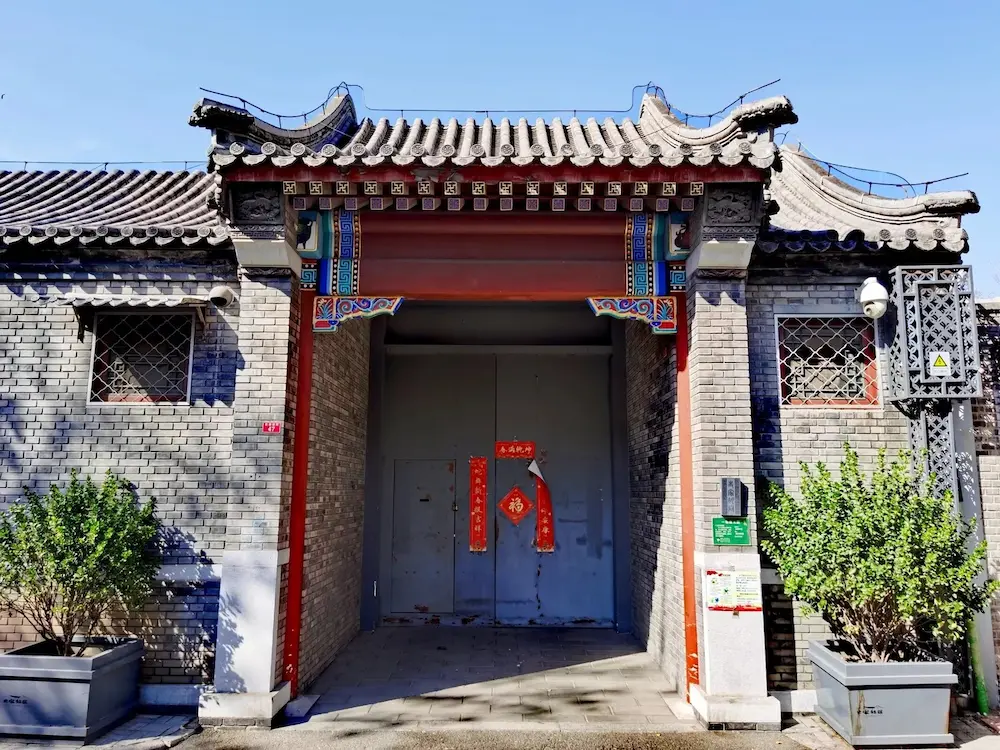
History:
Fu Zuoyi was a high-ranking Nationalist general and a renowned hero of the War of Resistance Against Japan. In early 1949, he was stationed in Beiping, commanding an army of 250,000 troops. With Communist forces surrounding the city, a direct assault would have destroyed historic sites such as the Forbidden City and the Temple of Heaven.
It was within these walls that Fu Zuoyi decided to surrender peacefully, opening the city gates and sparing Beiping from the ravages of war.
Mao Zedong remarked: “You are a great contributor to Beijing; you deserve a medal as large as the Temple of Heaven.” After the founding of the People’s Republic of China, Fu Zuoyi served as the first Minister of Water Resources.
Significance: The decision made behind this door preserved the integrity of Beijing, the ancient capital with a history spanning over a thousand years.
No. 24 Courtyard–Ling Shuhua’s Former Residence & Shijia Hutong Museum (The only one open to the public)
Current Status: Shijia Hutong Museum, free admission. Open Tuesday through Sunday, 9:00 AM–4:30 PM.
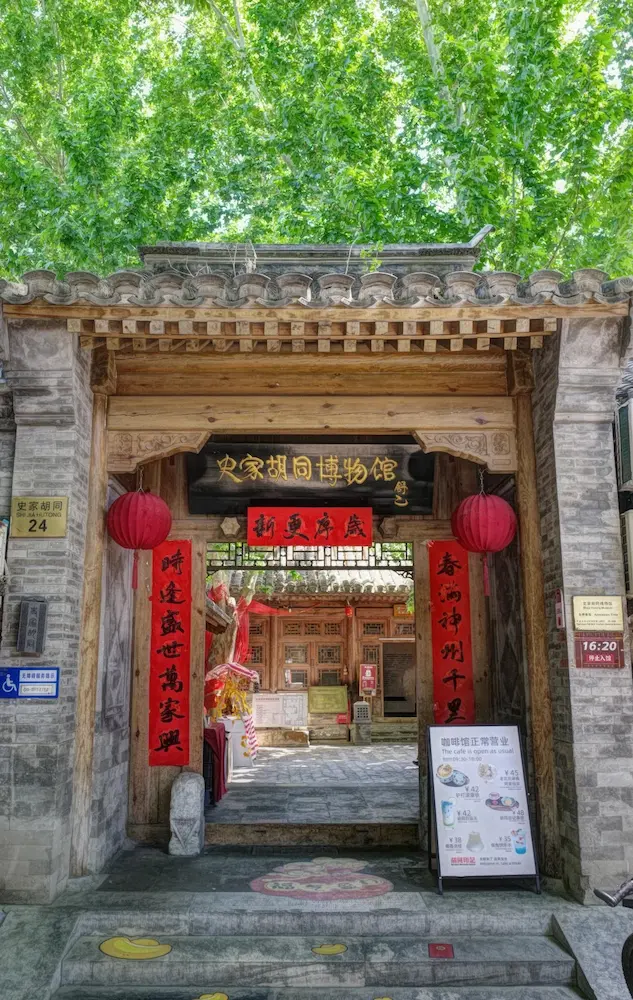
History:
The dowry residence of Ling Shuhua, a talented woman of the Republic of China era (writer and painter, renowned alongside Bing Xin and Lin Huiyin).
International Perspective: Ling Shuhua’s living room was the “literary salon” of 1920s Beijing.
You can think of it as the equivalent of London’s Bloomsbury Group—in the early 20th century, writers like Virginia Woolf and E.M. Forster gathered in London living rooms, transforming British literature. Ling Shuhua’s courtyard was that very place in Beijing.
In 1924, the great Indian poet Rabindranath Tagore (Asia’s first Nobel laureate in Literature) visited Beijing. Ling Shuhua hosted a tea party in this courtyard, inviting a host of China’s top intellectuals, including Xu Zhimo, Hu Shi, Liang Qichao, and Lin Huiyin. On the spot, Tagore painted lotus leaves and a Buddha figure on a piece of sandalwood.
This gathering predated Lin Huiyin’s “Ladies’ Salon” and stands as one of the most brilliant afternoons in the cultural history of the Republic of China.
In 1947, Ling Shuhua traveled to Europe. When she returned to China at the age of 89, her former residence had been converted into a kindergarten. She spent her final days surrounded by the singing of children.
In 2013, the Prince’s Foundation partnered with the Dongcheng District Government to transform the site into Beijing’s first Hutong Museum.
Hidden Museum Experience: Don’t Miss the “ Sound Room”
This is a one-of-a-kind hidden gem in all of Beijing! The museum features a special exhibition hall that preserves authentic sounds from the old Beijing hutongs of the 1950s through the 1980s.
How to explore:
– Step into the “Sound Gallery,” where you’ll find a row of buttons on the wall.
– Press different buttons to hear:
– The sound of morning pigeon whistles (Old Beijingers would tie bamboo whistles to pigeons’ tails, creating a melodious sound as the birds flew through the sky)
– “Sharpening scissors—sharpening kitchen knives—” The calls of street vendors wandering through the alleys (in authentic Beijing dialect)
– The chirping of cicadas in summer + the sound of an ice pop vendor tapping a wooden board
– The ringing of bicycle bells at dusk
– Excerpts of Peking Opera from an old radio
Why listen? These sounds have almost completely vanished from the streets of Beijing today. Put on your headphones, close your eyes, and you’ll feel as if you’ve stepped into a time machine, transported back to the daily lives of your grandparents’ generation 50 years ago.
Other must-sees in the museum:
– The Old Persimmon Tree: Planted by Ling Shuhua during his childhood, it is over a century old.
– 1:100 Scale Model: 130 models of siheyuan courtyards, with small red flags marking the former residences of famous figures. You can see the layout of the entire hutong at a glance.
6. No. 20 Courtyard–Birthplace of the Beijing People’s Art Theatre
Current Status: The original building has been renovated, and a bronze plaque marks the entrance.
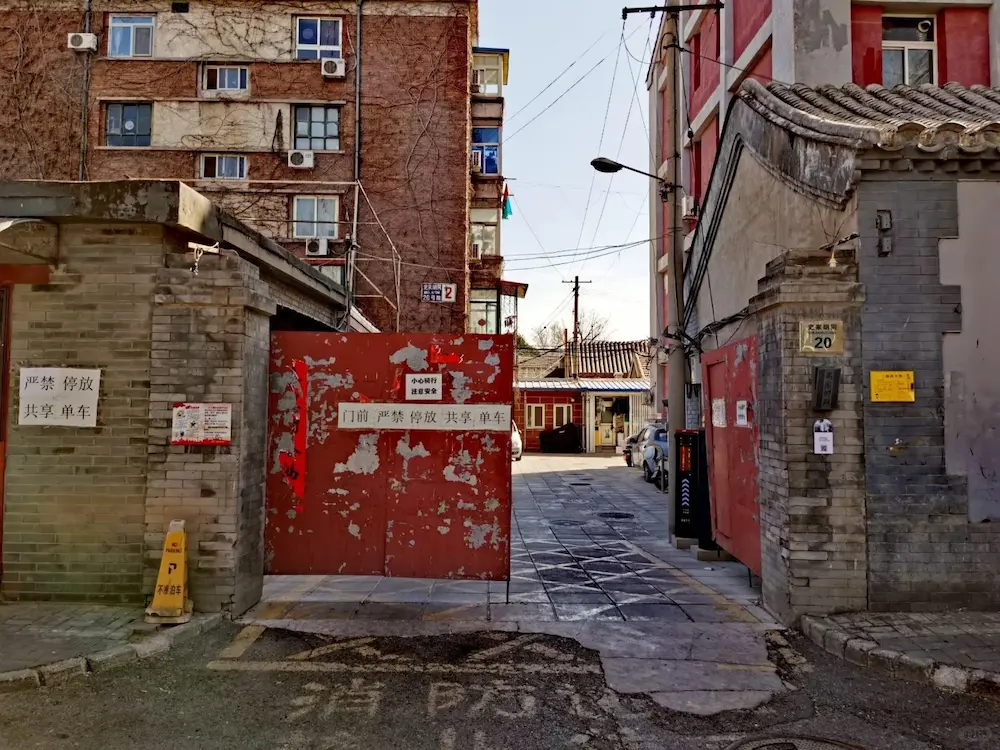
History:
In 1950, the Beijing People’s Art Theatre (China’s most renowned drama theatre) was established here. Wu Han, representing the Beijing Municipal Government, appointed Cao Yu as director and Jiao Juyin and Ouyang Shanzun as deputy directors.
Jiao Juyin staged Dragon’s Beard Gully here, ushering in the golden age of Chinese drama. Later, both Teahouse and Thunderstorm were produced by the People’s Art Theatre.
7. List of Other Famous People’s Former Residences
| House Number | Famous Person | Occupation | Notes |
| No. 1 | Zang Kejia | Poet | Wrote “Some People Are Alive, Yet They Are Already Dead” here |
| No. 18 | Ai Qing | Poet | “ Why are my eyes always filled with tears? Because I love this land so deeply.” |
| No. 31 | Hua Tianyou | Sculptor | Creator of the “May Fourth Movement ” relief on the Monument to the People’s Heroes |
| Former No. 23 | Hua Guofeng | Former Chinese leader | Resided here upon moving to Beijing in 1974; planned the campaign to crush the “Gang of Four” from this location |
| Multiple locations | Rong Yiren | Entrepreneur, Vice President of the State | Founder of the China International Trust and Investment Corporation |
| No. 55 | Qi Gong (Connection) | Master of Chinese Classics, Calligrapher | Ninth-generation descendant of Emperor Yongzheng; though not a long-term resident, he had deep ties to the hutong |
After exploring Shijia Hutong, where else can you visit nearby?
Recommended Stop: Wangfujing Pedestrian Street (10-minute walk)
> ✅ Route: Exit the west end of Shijia Hutong, walk north along Dongsi South Street to Jinyu Hutong, then head west to reach the northern section of Wangfujing Pedestrian Street (Yintai in88, Wangfujing Department Store). The entire walk takes no more than 10 minutes.
After exploring the quiet historic alley, looking for places to eat, shop, or soak up the lively atmosphere? Wangfujing Pedestrian Street is the perfect next stop. There you’ll find:
- Quanjude Roast Duck Restaurant (Flagship Store)
- Wangfujing Snack Street (though touristy, it has a lively atmosphere)
- Large shopping malls like APM and Yintai in88
- Wangfujing Catholic Church (a popular Instagrammable spot)
In-Depth Guide: Check out my [“Ultimate Survival Guide to Wangfujing Pedestrian Street”], which details: which roast duck spots are worth the wait, where to find affordable souvenirs, and how to avoid overpriced street food.
Other Recommendations
| Location | Distance | Highlights | Admission |
| Lumi Cang Hutong | 10-minute walk | Authentic Old Beijing residential life, no tourists | Free |
| Zhihua Temple | 15-minute walk | A Ming Dynasty temple dedicated to eunuchs, featuring daily “Jing Music” performances (a living relic of Tang and Song dynasty court music) | 20 yuan |
| Dongsi Hutong Museum | 10-minute walk | History and folklore of the Dongsi area’s hutongs | Free |
Dining Recommendations (5–15 minutes’walk)
| Name | Location | Features | Price per person |
| Old Beijing Zha Jiang Mian King | Entrance to Lumi Cang Hutong | Popular with locals: Zha Jiang Mian, braised tripe, and soybean milk | 30–50 RMB (approx. $4–7) |
| Xian Lao Man | North Dongsi Street | Dumplings, Beijing cuisine | 40–60 RMB (approx. $6–8) |
| Da Dong Peking Duck (Dongshisiti Branch) | No. 22A Dongshisiti | High-end Peking duck, reservations required | 300+ RMB (approx. $40+) |
| Da Xiao Coffee | Dongsi Jiutiao | Specialty coffee, perfect for a break | 30–50 RMB |
>☕Tip: Since Shijia Hutong is a genuine residential neighborhood, there are no commercial cafes inside. Before exploring, you can buy a cup of coffee or a bottle of water near the Juyin Theater just outside the west entrance. There’s a small convenience store near the east exit.
Why Is It Worth a Special Trip?
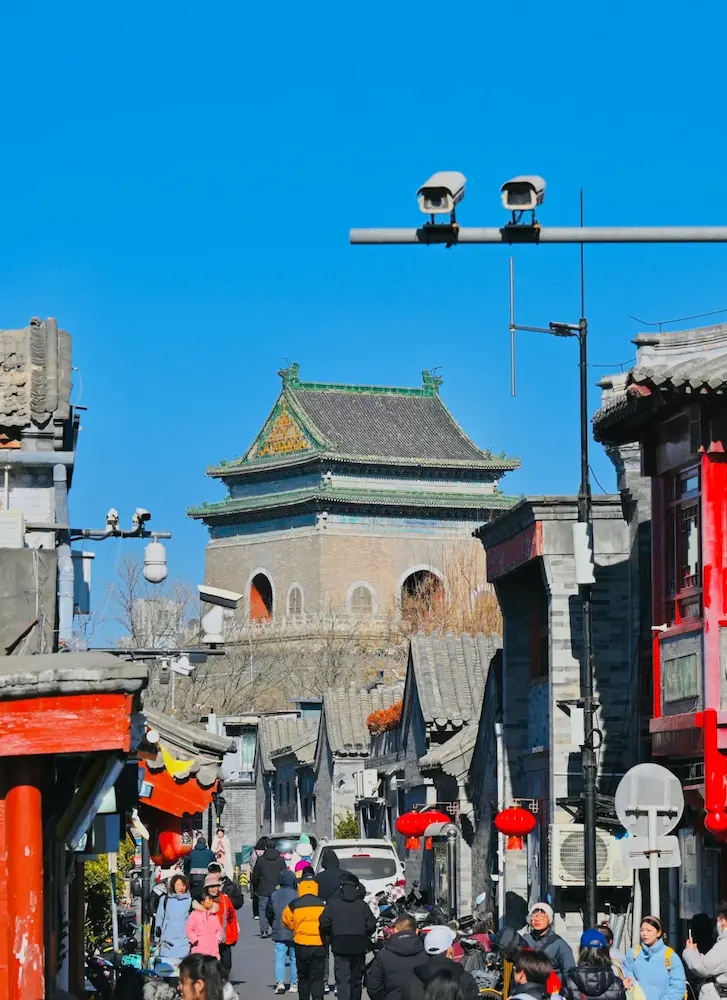
Shijia Hutong lacks the commercial hustle and bustle of Nanluoguxiang and the teeming crowds of Yandai Xiejie. It lies quietly in the heart of Beijing, drawing its charm from its authentic historical depth.
Behind every closed door you see here lies a true story:
- Courtyard No. 59 was home to Hu Shih and Zhu Kezhen.
- Courtyard No. 53 witnessed the rise and fall of Sai Jinhua.
- Courtyard No. 51 housed four generations of prominent figures: Zhang Shizhao, Zhang Hanzhi, Qiao Guanhua, and Hong Huang.
- Courtyard 47 determined the very survival of Beijing;
- Courtyard 24 preserves the elegance of Republican-era literati—along with the “Sound Room,” where voices travel through time and space, a one-of-a-kind experience in all of Beijing.
Seven hundred meters, seven hundred years.
This is no ordinary alley. With every step you take, you tread upon the authentic pavement of history.
> A final reminder: Respect the residents and keep quiet. Except for the museum, none of the courtyards is open to the public. Do not knock on doors, do not peer inside, and do not point cameras at people’s windows. Be a welcome guest to the residents, not a disruptive tourist.