A Travel Guide and Historical Exploration of Qianhai West Street in Beijing(2026: An In-Depth Tour of Off-the-Beaten-Path Alleys)
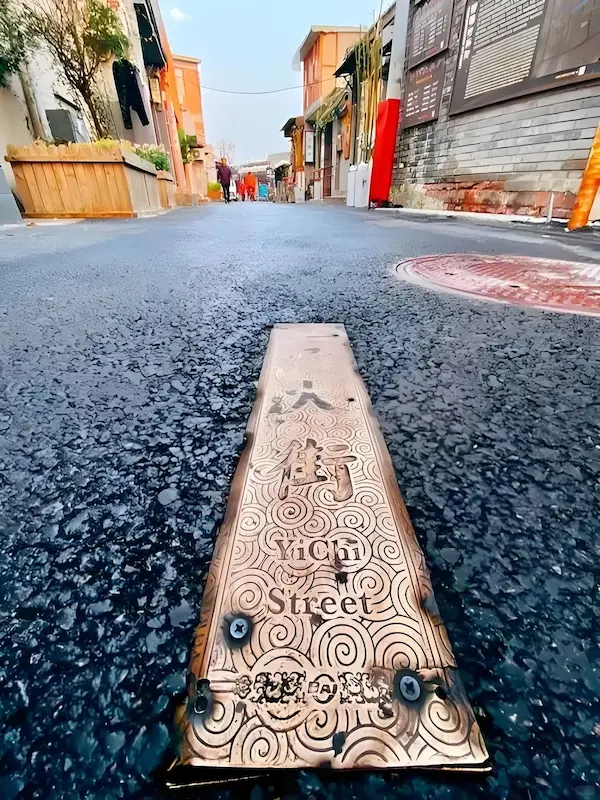
Qianhai West Street lies near Beijing’s Shichahai Scenic Area. Starting from Di’anmen West Street in the south, it leads east to the North Bank of Qianhai and west to the northern entrances of Liuyin Street and Longtoujing Street.
In the middle, it connects with many hutongs, including Sanzuoqiao Hutong, Zhanzi Hutong, and Qiangan Hutong.
Though it may seem like just another street in Beijing, it harbors a wealth of history. From Qing Dynasty royal mansions and celebrity residences to modern cultural attractions, the passage of time has left distinct traces here.
Table of Contents
Quick Guide
- Key Highlights: The main gate of the Prince Gong’s Mansion, Guo Moruo’s Former Residence, the Qianhai gateway of Shichahai, and the main walking route connecting Liuyin Street and Sanzuoqiao Hutong
- Location: West side of Qianhai, Shichahai; borders Ji’anmen West Street to the south
- Recommended duration: 20–30 minutes (1.5 hours if exploring surrounding areas)
- Ideal for: History buffs, photography enthusiasts, and travelers seeking an in-depth experience away from the crowds
- Transportation: Exit A2 at Shichahai Station on Metro Line 8; approximately a 10-minute walk
The Easiest Way to Get There | Transportation + Tips (Follow These Steps)
Subway (Highly Recommended)
- Take Subway Line 8 → Exit A2 at Shichahai Station
- Walk west for about 10 minutes to reach the main street of Qianhai West Street
- Follow the signs along the way; no need to take a detour
Bus
- Stops: Beihai North Gate / Dianmen West Street
- Routes: No. 13, 42, 107, 111, 118, 701, etc.
- Get off and walk 200 meters north to enter the street
Walking Itinerary (Ultimate Route)
Qianhai West Street→Prince Gong’s Mansion→Liuyin Street→Sanqiaoqiao Hutong—cover the entire route in one go without backtracking
Tips (Sincere Advice to Avoid Pitfalls)
- There are tons of tricycles on the street; walk on the side and stay safe
- If you want to take a hutong tricycle: Choose an official stop, ask for the price first, then get on to avoid being taken on a detour
- Crowds are massive: Go before 9:00 AM or after 5:00 PM for fewer people, better lighting, and cleaner photo backgrounds
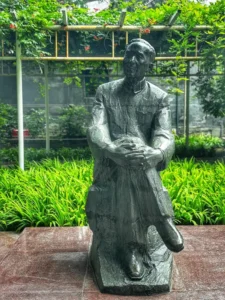
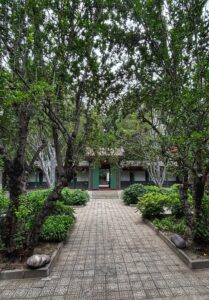
No.18 Qianhai West Street: The Former Residence of Guo Moruo, a Place of Many Transformations
What you see today at No.18 Qianhai West Street is the Former Residence of Guo Moruo, but this land has a far more complex past.
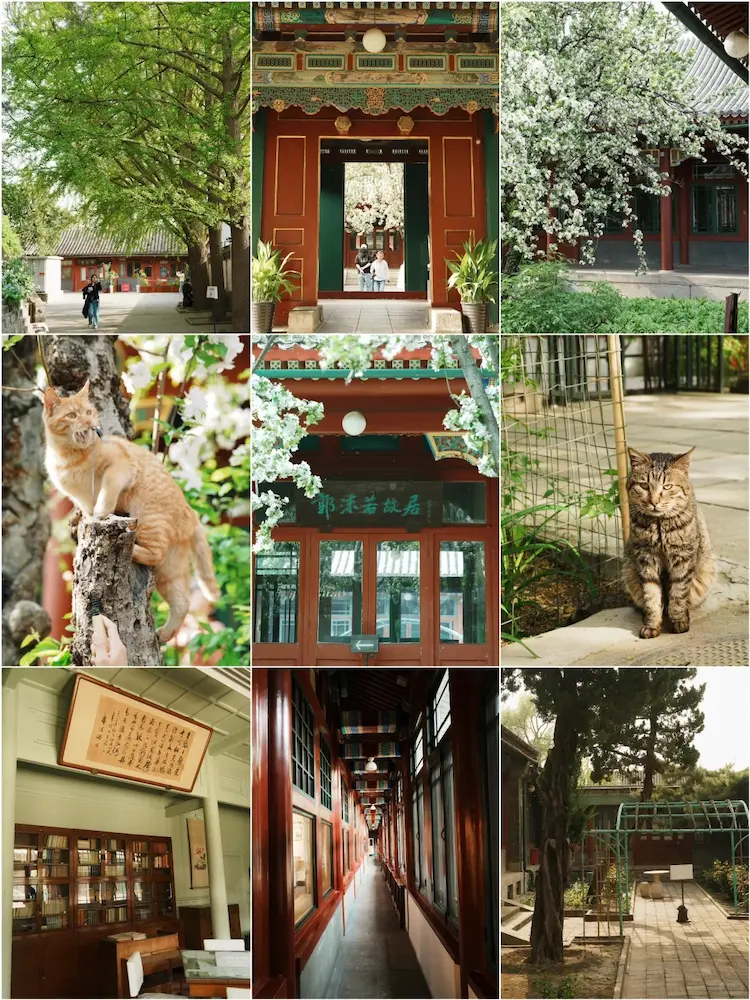
Initially, it was the front yard of Prince Gong’s Mansion, serving as a forage yard and stable where the mansion raised horses and stored forage.
During the Republican period, the descendants of Prince Gong sold this part of the property to the renowned Le family, a family that founded both the well-known Tongrentang and Darentang pharmacies. Though both belong to the Le clan, they are under different family branches and date back to different eras.
After the founding of the People’s Republic of China, the site once housed the Mongolian Embassy in China. It was not until October 1963 that Guo Moruo, a great modern Chinese literary giant and historian, moved here and lived until his passing in 1978.
Due to Guo Moruo’s important status in Chinese cultural history, the courtyard was listed as a Major Historical and Cultural Site Protected at the National Level in August 1982, ensuring its proper preservation and opening to the public.
No.17 Qianhai West Street: The Magnificent Prince Gong’s Mansion
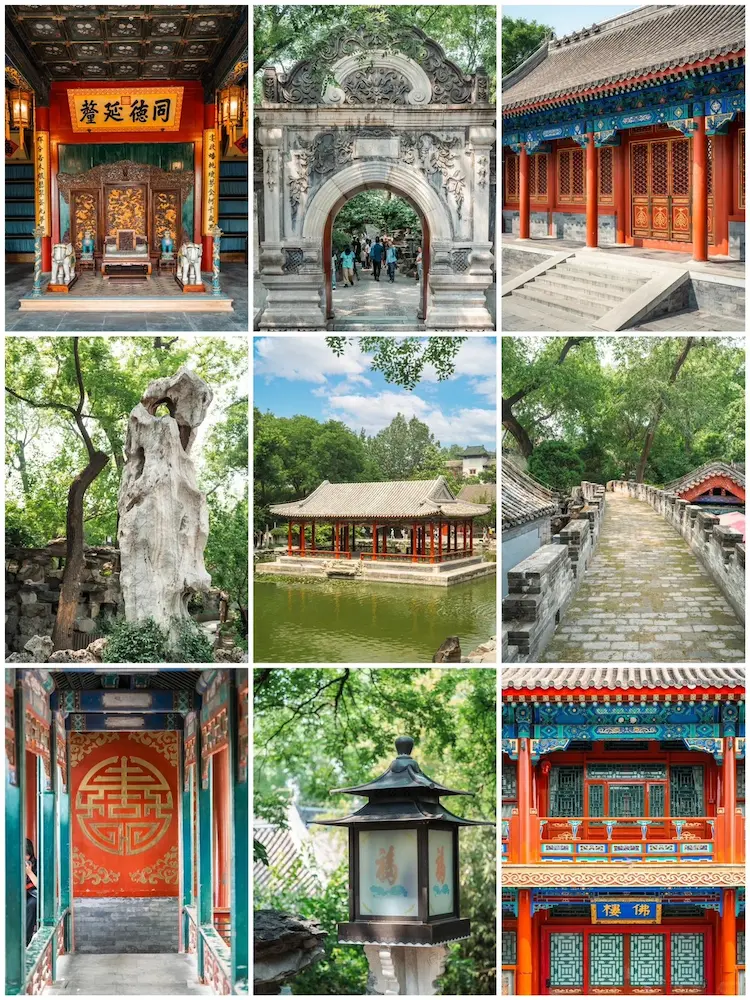
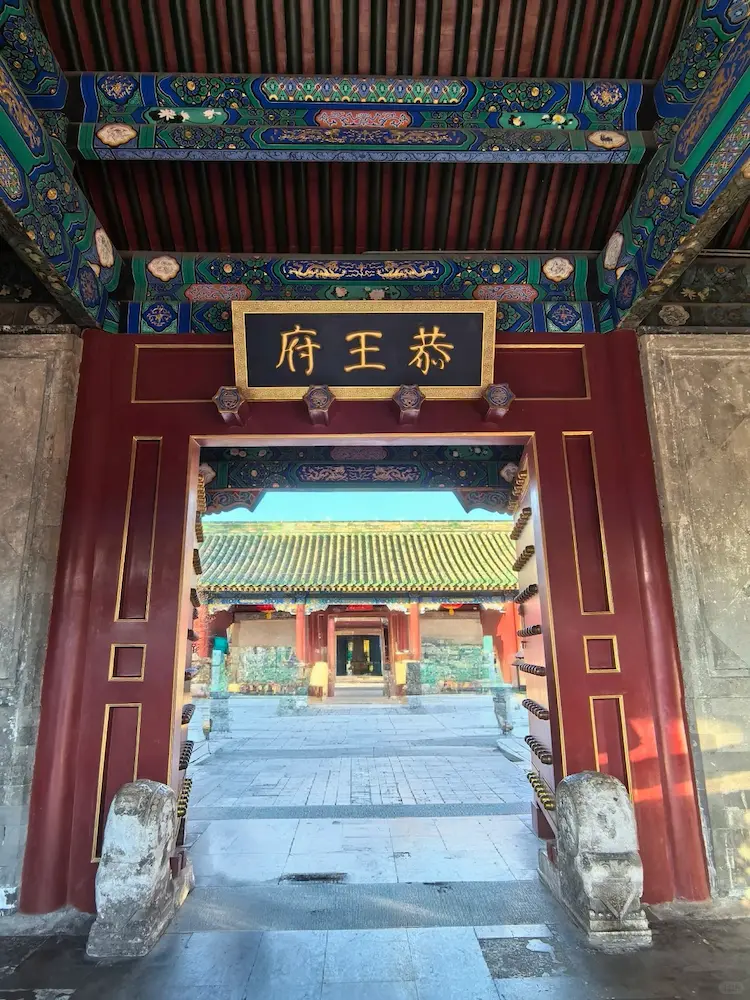
Adjoining No.18 is the world-famous Prince Gong’s Mansion at No.17 Qianhai West Street. The historical scope of the mansion and its garden is roughly defined as follows: bounded by the former Crescent River (now Liuyin Street and Qianhai West Street) to the west and south; by Zhanzifang north of Sanqiaqiao (called Changmenkou during the Qianlong Reign) and Mansion Alley to the east; and by Daxiangfeng Hutong outside the mansion garden wall to the north.
Prince Gong Yixin was bestowed the title of Prince Gong in the first year of the Xianfeng Reign (1851) and moved into this mansion the following year. Yet the mansion has a history predating Prince Gong himself.
According to the Records of Shuntian Prefecture, it was originally Prince Qing’s Mansion, whose predecessor was the former residence of Heshen, a powerful minister of the Qing Dynasty.
Later, in the Xianfeng Reign, the original Prince Qing’s Mansion was granted to Prince Gong, hence its name “Prince Gong’s Mansion”.
The architecture of Prince Gong’s Mansion is mainly divided into two parts: the mansion proper and the garden.
The mansion proper covers an area of about 33,800 square meters, with a meticulously neat layout arranged along three axes—central, eastern, and western—each consisting of multiple siheyuan courtyards strictly aligned along the axis. At the rear of the mansion stands a 160-meter-long two-story back cover building, behind which lies the beautiful garden.
Named Cuijin Garden, the garden spans about 27,000 square meters. Its pavilions, terraces, towers, rockeries, and lakes are also ingeniously laid out along the central, eastern, and western routes.
Renowned for its exquisite architecture, gorgeous decorations, winding and secluded courtyards, and elegant scenery, Prince Gong’s Mansion and its garden have long been rumored to be the prototype of Rongguo Mansion and the Grand View Garden depicted in A Dream of Red Mansions, a great classic of Chinese literature.
When visitors stand in Cuijin Garden, climb high and look around, they truly get a wonderful feeling of stepping into the world of A Dream of Red Mansions.
Regarding the preservation of Prince Gong’s Mansion, documents from the Beijing Cultural Relics and Archaeology Team record that before Prince Gong moved in, the mansion was renovated on its original foundation, but many parts still retained the original appearance of Heshen’s time in the late Qianlong Reign.
For example, the lotus drum pier-style plinths and internal nanmu decorations in Xijin Study, as well as some brick carvings and flower carvings, all feature the typical architectural techniques of the Qianlong Reign.
My Hidden Gems: The Most Charming Parts of This Street Lie in the Unassuming Details
I never come to Qianhai West Street just to check it off my list; I come for the gentle charm that can only be discovered by strolling:
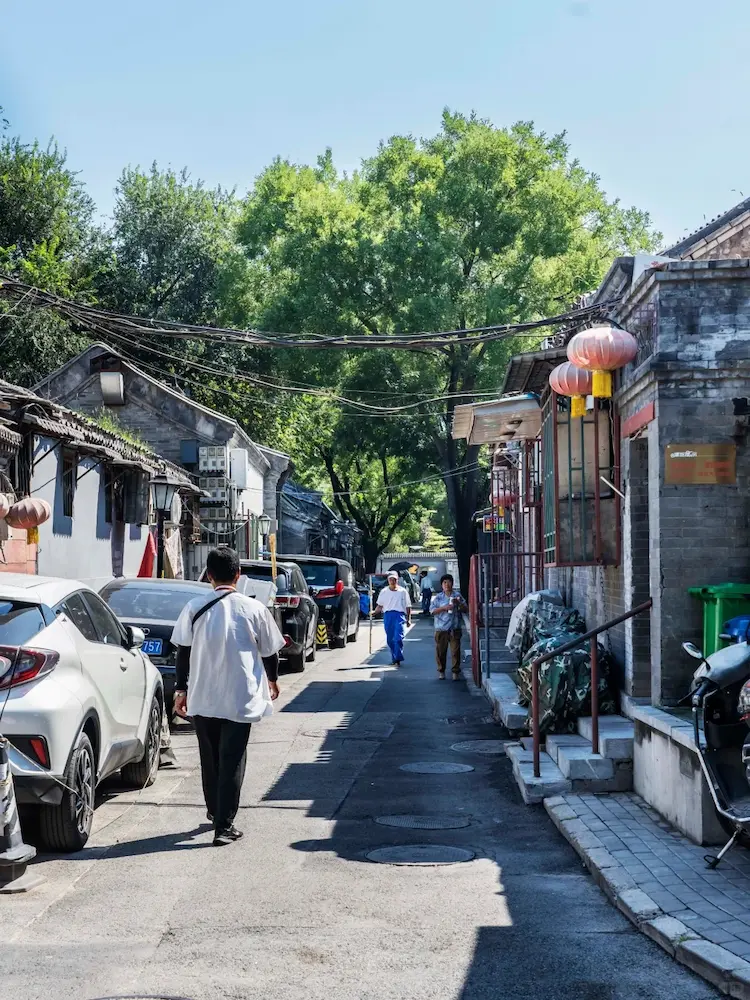
- On one side of the street, you catch glimpses of Qianhai’s waters; willow branches hang low over the sidewalk, and the breeze carries the dampness of the lake
- Grass sprouts from the cracks in the old courtyard walls; when the sun slants in, the shadows stretch out long, evoking the authentic flavor of old Beijing
- In the early morning, local elders take their strolls and buy groceries; in the evening, children running home from school pass by—the everyday life here is more captivating than any tourist attraction
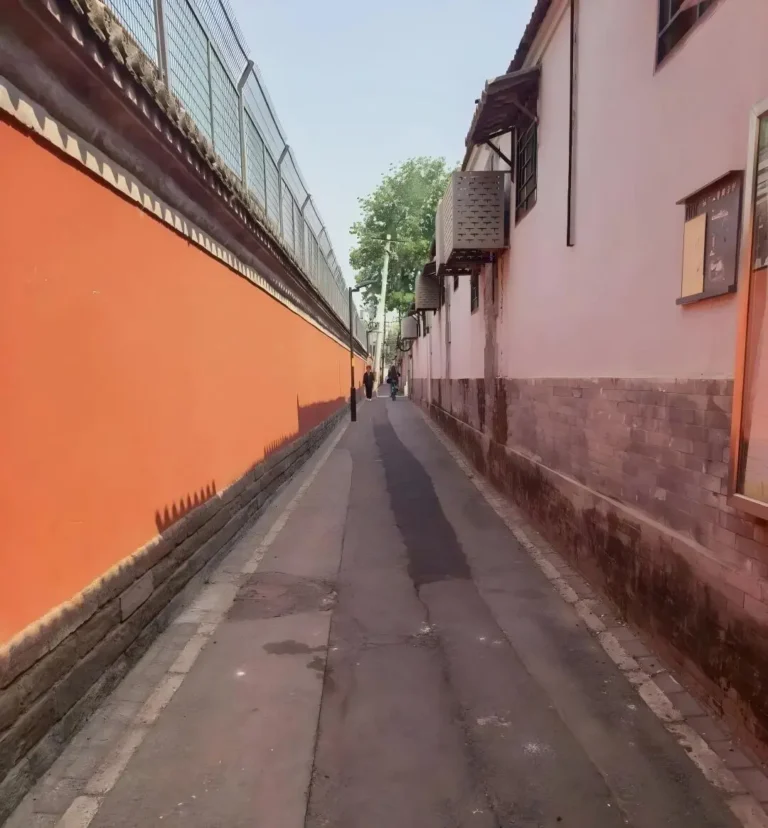
- Looking down the street, one end features a modern intersection while the other leads to the vermilion gates of a princely mansion; the clash of past and present creates a sense of history
It’s neither trendy nor bustling, yet it blends“imperial grandeur”and“everyday life” in just the right balance.
The Changes of the Times: From Royal Mansion to Campus
After Prince Gong Yixin passed away in the 24th year of the Guangxu Reign (1898), his descendants continued to live in the mansion. However, in the Republican period, many descendants of the Qing imperial family, plagued by financial difficulties, had to sell their family property.
In 1932, Furen University acquired the property rights of Prince Gong’s Mansion.
In 1937, to expand its campus, the university converted the mansion and its garden into a girls’school campus and a Theological Seminary.
During this period, to meet teaching needs, Furen University carried out renovations on the original buildings: it demolished the reversed houses in the mansion, the wooden rockery-style stairs of the back cover building, as well as the greenhouse and Flower God Temple in the northeast corner of the garden, and erected new buildings in their place.
After the founding of the People’s Republic of China, Prince Gong’s Mansion was successively used by the Art Normal College and the China Conservatory of Music.
In 1952, the siheyuan courtyards in the front yard were demolished and rebuilt into a canteen; in 1959, the houses in front of the mansion were pulled down to erect the Qin Building (Music Building) and Hua Building (Painting Building).
Qianhai West Street Today: A Cultural Landmark Blending the Ancient and the Modern
Today, Qianhai West Street is no longer an exclusive domain of princes and nobles. Every day, it attracts a large number of tourists from all over the world.
People flock to Prince Gong’s Mansion to explore the grandeur and luxury of a Qing imperial mansion, and imagine the scenes of the Grand View Garden in A Dream of Red Mansions in Cuijin Garden; they also visit the Former Residence of Guo Moruo to cherish the memory of the life and contributions of this literary giant.
This street carries the profound history of the past eras and fosters the commercial and cultural vitality of the new era, presenting a unique look that blends the ancient and the modern.
As an ancient Chinese poem depicts: Swallows that once nested under the eaves of princes and nobles now fly into the homes of ordinary people to build their nests.
The magnificent buildings and historical stories that once belonged to a select few have now become a public cultural asset that everyone can approach, understand, and appreciate.