Liuyin Street: The Quietest Street Along Beijing’s Shichahai, Home to a 600-Year-Old Waterway and Stories of a Marshal (2026 Off-the-Beaten-Path Hutong Tour)
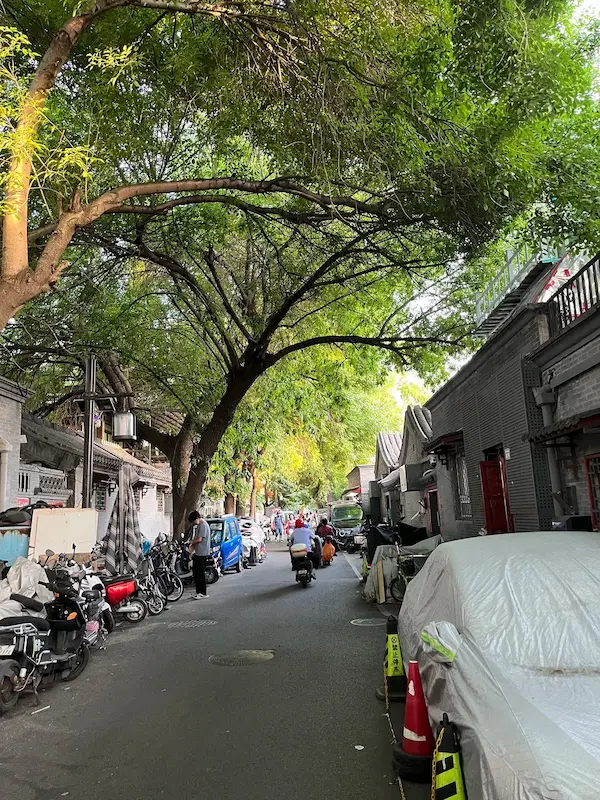
Nestled near Beijing’s Shichahai Lake lies Liuyin Street, a tranquil hutong brimming with stories. Stretching north to south and lined with lush green trees, this street sits atop what was once a real flowing river.
From a waterway in the Ming Dynasty to royal mansions in the Qing Dynasty, and now the “Marshal Street” of modern times, Liuyin Street is like a three-dimensional history book that chronicles over 600 years of Beijing’s changes.
Table of Contents
Quick Guide
- Highlights: Former residences of seven founding marshals; Ming Dynasty Yueya River ruins; tree-lined walking path next to the Prince Gong’s Mansion; He Shen’s Family Temple; former site of Prince Tao’s Mansion
- Location: West of the Prince Gong’s Mansion, stretching from Xiaoshiqiao Hutong in the north to Qianhai West Street in the south
- Recommended walking time: 20–30 minutes
- Recommendation Rating: ⭐⭐⭐⭐⭐ (Top choice for avoiding crowds and finding peace and tranquility)
- Transportation: Exit B at Beihai North Station on Metro Line 6; 3-minute walk
Bus
- Stop: Beihai North Gate
- Routes: 13, 42, 107, 111, 118, 701, etc.
- Walk about 400 meters after getting off, cross Qianhai West Street, and you’ll arrive
Walking Itinerary (Highly Recommended)
Prince Gong’s Mansion → Liuyin Street →Yangjiao Deng Hutong → Sanzuoqiao Hutong—explore this entire route in one go; it’s less crowded and offers a deeper experience
The Easiest Way to Get There | Transportation Info (A Step-by-Step Guide for Visitors)
Metro (Recommended, No Detours)
- Take Metro Line 6 to Beihai North Station, Exit B (Northeast Exit)
- Walk 3 minutes from the station to reach the south entrance of Liuyin Street
- No turns along the way—just follow the tree-lined path
From the “Crescent River” to Liuyin Street: The Birth of a Street
The story of Liuyin Street began in the Ming Dynasty. Back then, to stabilize the water levels of Qianhai, Houhai, and Xihai (collectively known as the Three Seas) inside the imperial city, a watercourse was dug east of Deshengmen Bridge leading to the lower reaches.
Curved in shape, it was named the Crescent River, and Liuyin Street stands where a section of this watercourse once flowed.
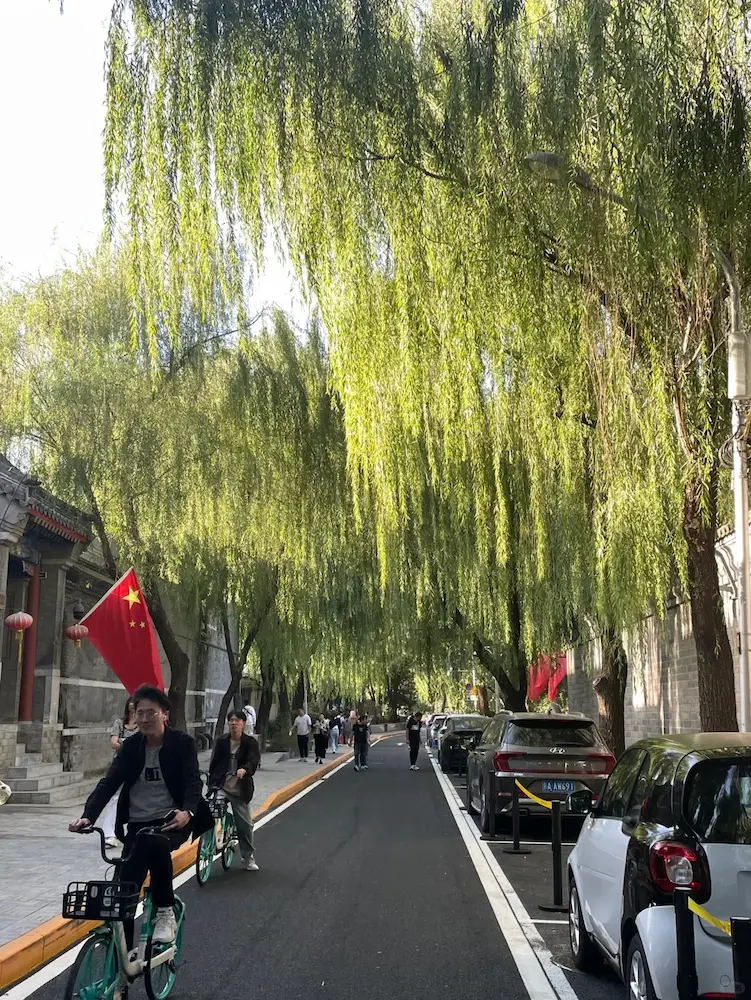
Willows and poplars lined both banks of the river, creating a picturesque scene, which earned the area the poetic name Willow Bay. Li Dongyang, a renowned poet of the Ming Dynasty, once lived nearby and wrote poems praising its beauty.
In the Qing Dynasty, the area around the Crescent River gradually became a residential neighborhood. The dirt road west of the watercourse was called West Street of Liguangqiao, and the one to the east was South Street of Liguangqiao.
The pivotal transformation came after 1950, when the Crescent River was converted into an underground sewer, and an even asphalt road was paved over it.
This road inherited the name “South Street of Liguangqiao” until 1965, when it was given its current poetic moniker: Liuyin Street (Willow Shade Street).
Walking Through History Along the Street: Royal Mansions, Family Temples, and Celebrity Former Residences
Though Liuyin Street is quiet today, the courtyards lining it hold a glorious past, making a stroll here feel like a journey through time.
Prince Yu’s Mansion and Prince Tao’s Mansion (Today’s Beijing No.13 High School)
What you see as Beijing No.13 High School at Courtyard No.27 on the west side of Liuyin Street was originally Prince Yu’s Mansion of the Qing Dynasty. After the fall of the Qing Dynasty, it became Prince Tao’s Mansion, the residence of Zai Tao, the uncle of the last emperor, Puyi.
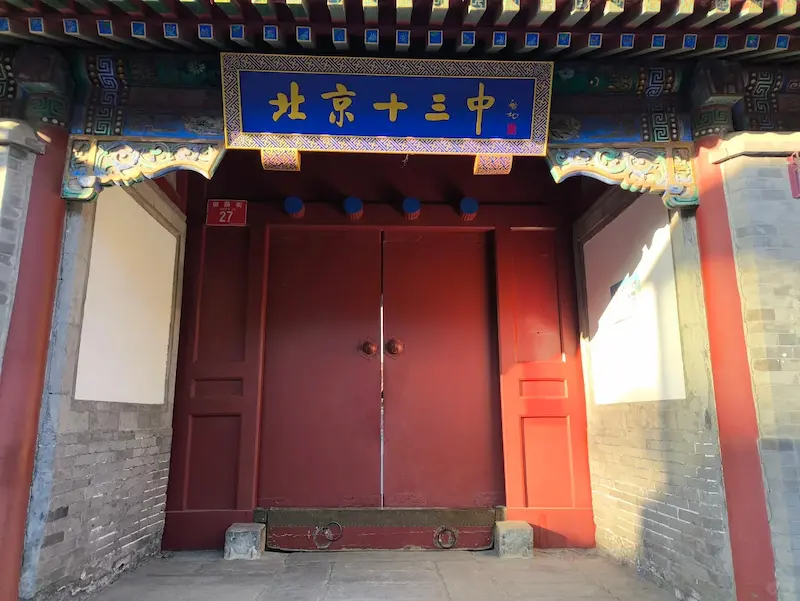
In the Republican period, it was converted into Furen Middle School, the predecessor of today’s No.13 High School. The campus is remarkably large, spanning Liuyin Street and the adjacent Songshu Street, a scale that often surprises those who learn about it for the first time.
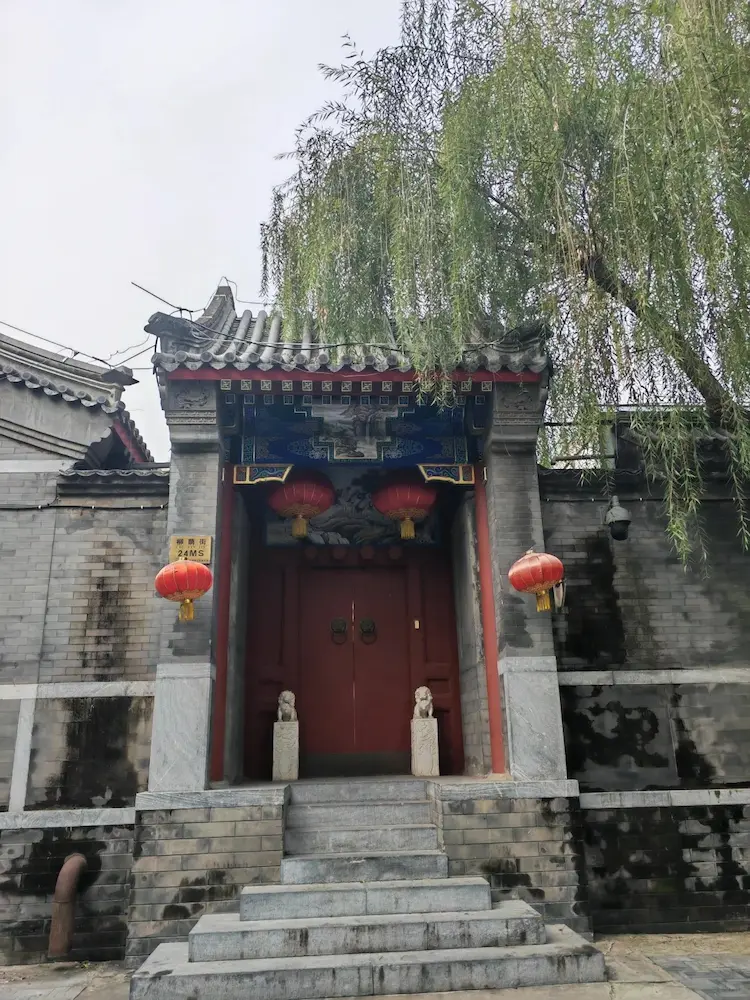
Heshen’s Family Temple (Courtyard No.24 Liuyin Street)
Courtyard No.24 is said to be the family temple (a temple for clan worship) of Heshen, the infamous and corrupt, powerful minister of the Qing Dynasty.
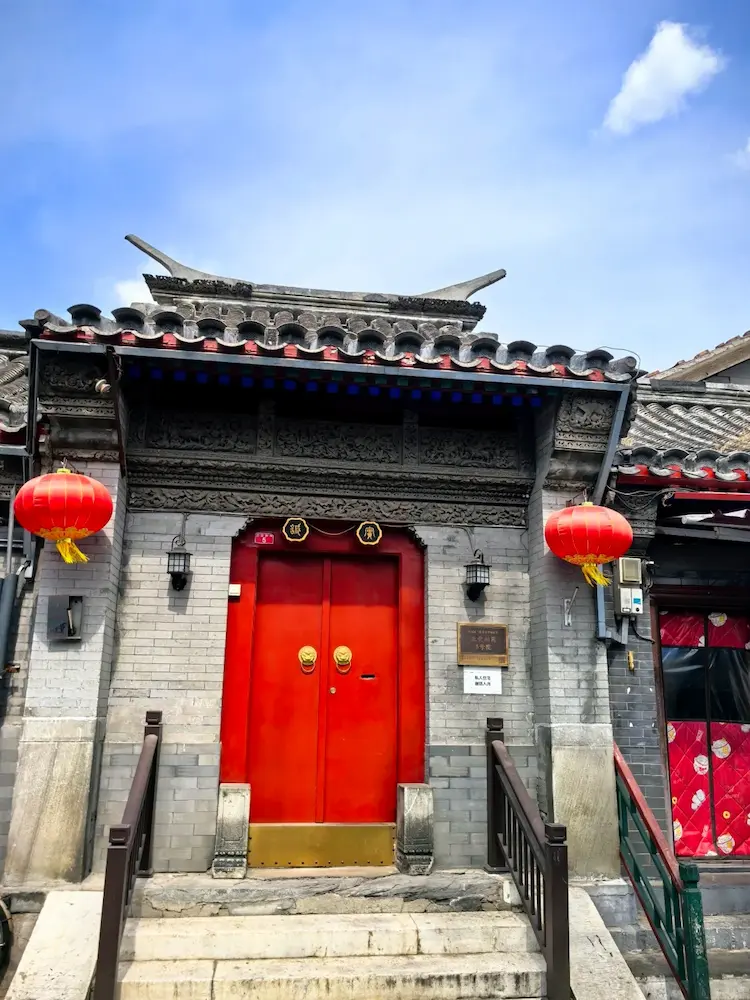
It was once a stunning five-courtyard siheyuan, consisting of both above-ground and underground sections. Its main gate was a Guangliang Gate—the highest grade of traditional Chinese gateways—adorned with white marble drum-bearing stone steles and exquisite painted brick carvings.
The legends surrounding its underground chambers are even more fascinating: one part was an “underground treasure vault” for storing gold, silver, and precious jewels, and the other an “underground palace” for leisure and pleasure.
After Heshen’s downfall, the courtyard changed hands several times. After the founding of the People’s Republic of China, it was once the residence of General Yang Chengwu, and now it houses the offices of an enterprise and is not open to the public.
Former Residence of Writer Yang Mo (No.29 Liuyin Street)
At the west branch of Liuyin Street, near Beijing No.13 High School, stands Courtyard No.29, the former residence of the famous Chinese writer Yang Mo. She is best known for novels such as The Song of Youth, a work that has influenced generations of Chinese people.
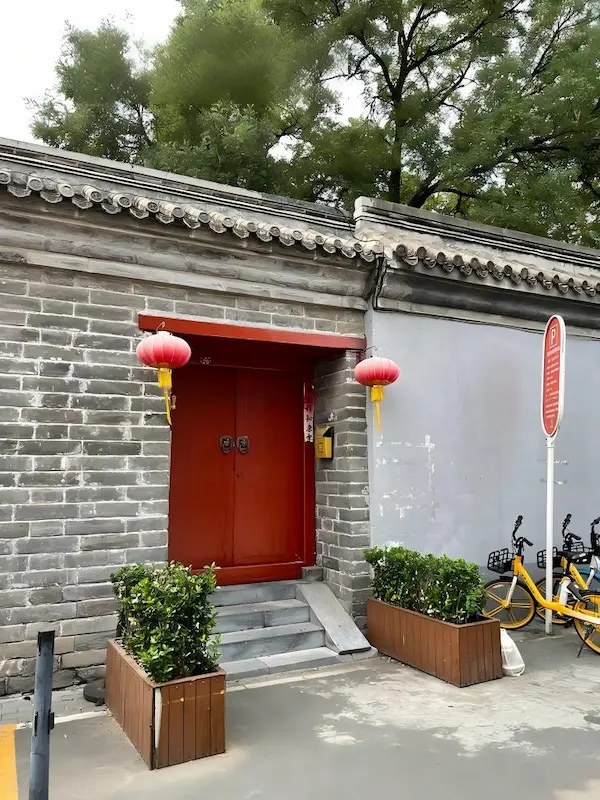
This small courtyard adds a touch of literary charm to this street steeped in stories of power and glory.
“Marshal Street” and Army-Civilian Bond: The Pride of Modern Liuyin Street
In modern and contemporary times, Liuyin Street has earned another resounding name: Marshal Street. It was once home to many founding fathers of the nation and senior military officers of the People’s Republic of China, including Xu Xiangqian and Ye Jianying. The inscriptions written by Marshal Xu Xiangqian can still be seen in the hutong to this day.
Moreover, Liuyin Street is a nationally renowned Model Street for Army-Civilian Mutual Support (the term “mutual support” refers to supporting the military and honoring the families of servicemen, and supporting the government and cherishing the people).
This honor is rooted in a touching story: in 1982, Yuan Mantun, a PLA soldier, sacrificed his life while rescuing a drowning student. To commemorate him, a statue was erected in his honor in the central street park of Liuyin Street, and his spirit has become a symbol of unity and dedication for the street.
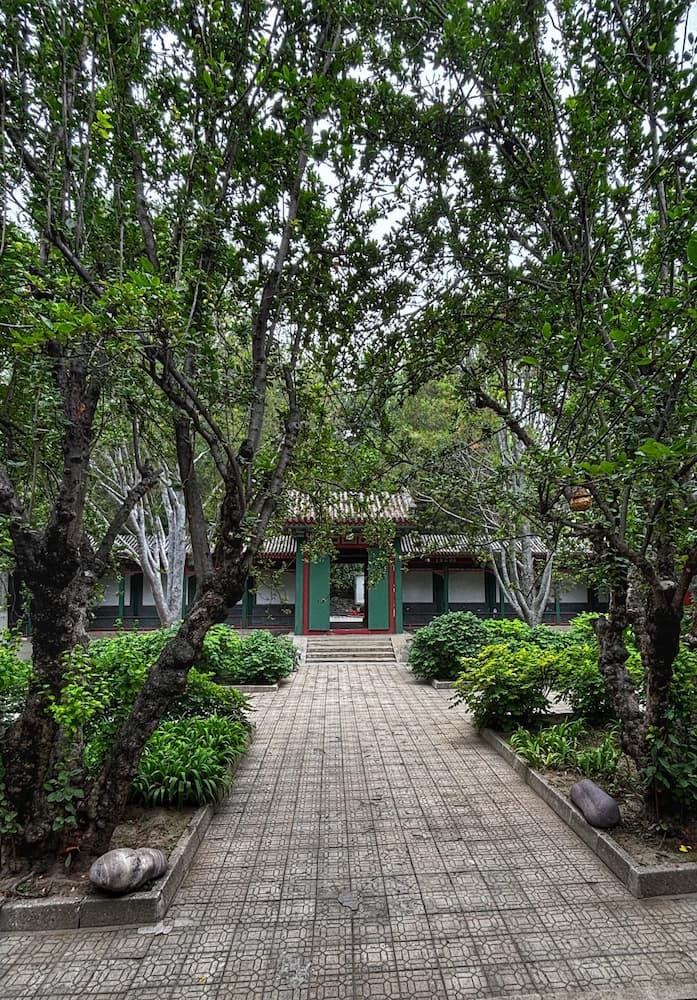
Wandering along today’s Liuyin Street, beneath the tall green pagoda trees and willows lie quiet residential compounds and schools.
Yet if you take a moment to notice the ancient Guangliang Gateways and cultural relic protection markers, the layered history of this street unfolds—from the willow-lined Crescent River of the Ming Dynasty, to the royal mansions and family temples of the Qing Dynasty, and then to the “Marshal Street” once home to numerous military leaders.
It condenses centuries of history, witnessing the ebb and flow of power and culture, and has finally evolved into a unique hutong that connects the past and the present, filled with stories and warmth.