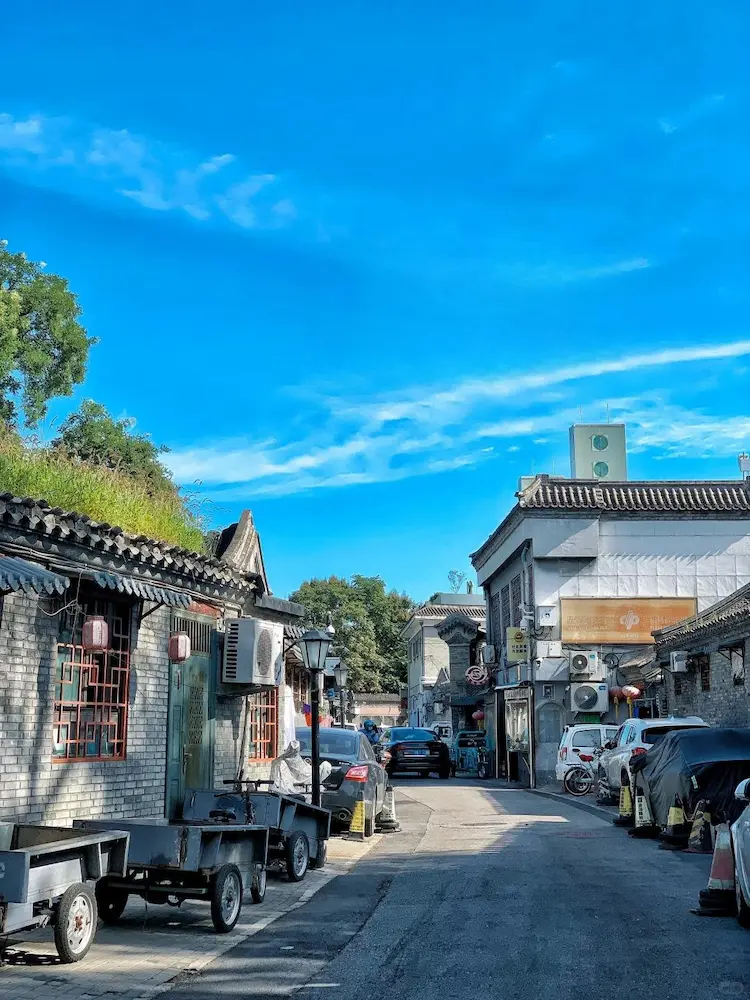
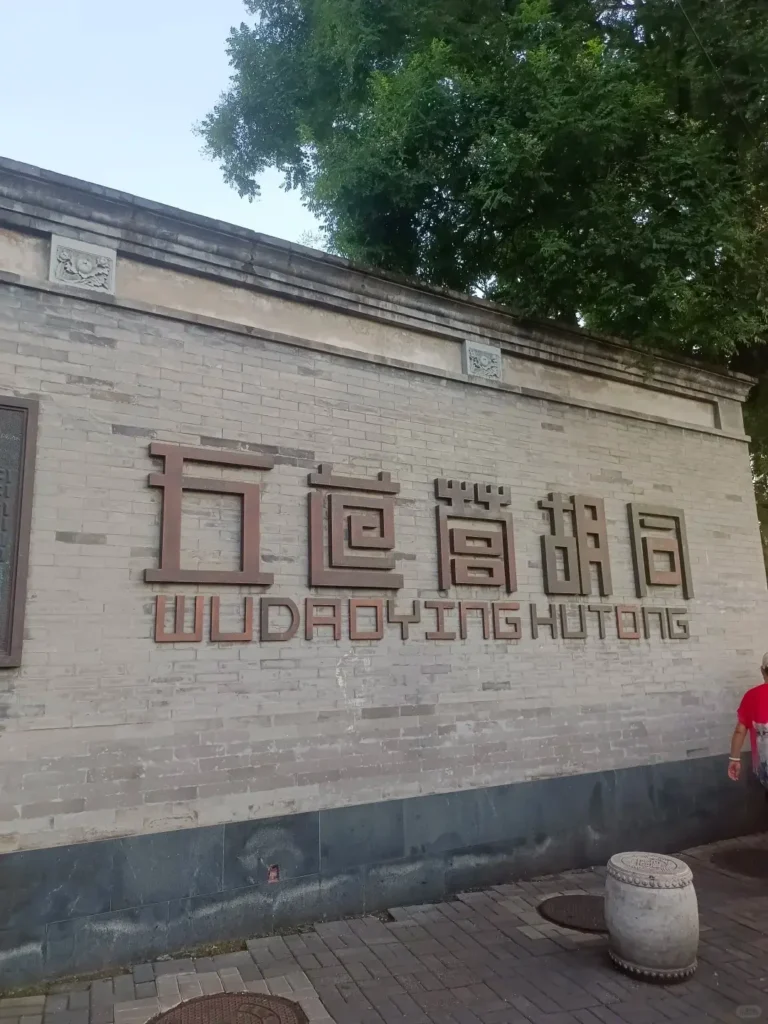
Exploring Beijing’s Houhai Beiyan: A Waterfront Street of Concentrated History
Pre-trip Considerations: If you’ve explored Yinding Bridge and Houhai Bar Street, are tired of the hustle and bustle, and are looking for a historical walking route along the water, the Houhai Beiyan is the perfect choice.
Here, you won’t have to navigate narrow alleys; simply follow the lake’s edge to visit Prince Chun’s Mansion, Song Qingling’s Former Residence, an ancient Ming Dynasty temple, and the former homes of foreign celebrities all in one go. In just 1–1.5 hours, you can experience the quiet, historical side of Houhai.
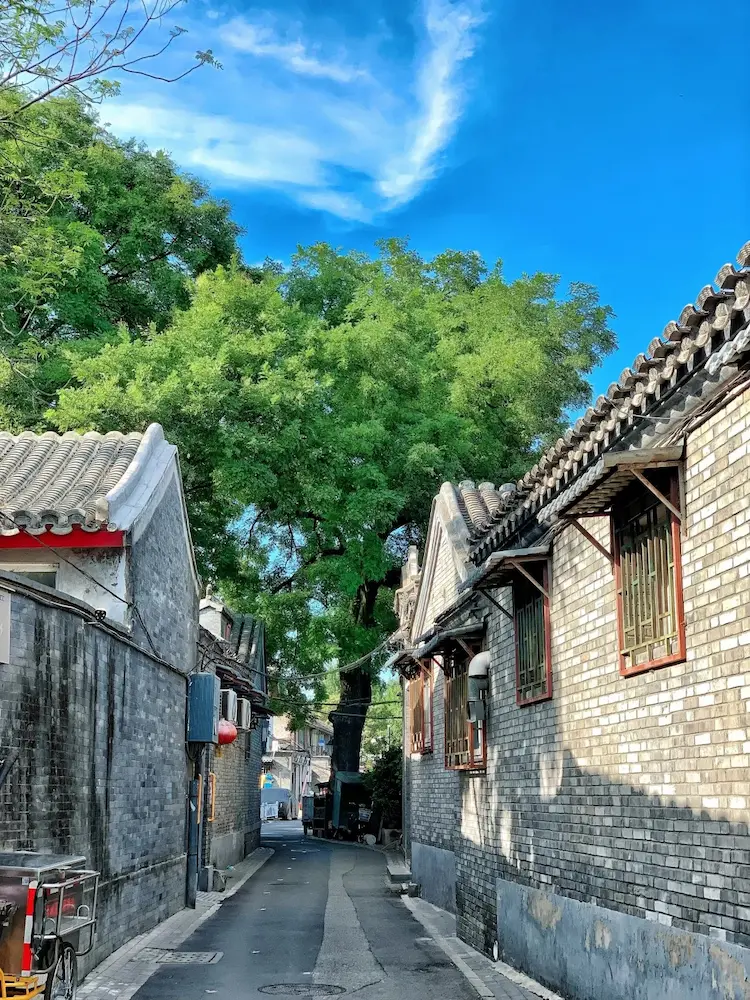
We walked through Ya’er Hutong. Today, let’s explore its immediate neighbor: Houhai Beiyan. These two lanes are back-to-back neighbors.
Emerging from the narrow passageways of Ya’er Hutong, you’ll see the waterfront with willows brushing the shore—That’s Houhai Beiyan.
It’s not a standard hutong alley nor a broad avenue, but more like an extension of Ya’er Hutong towards the water, historically shaped by the expansion of Prince Chun’s Mansion.
Shichahai consists of three water bodies: Qianhai (Front Sea), Houhai (Back Sea), and Xihai (West Sea). Houhai Beiyan, as the name suggests, is the road running along the northern shore of Houhai. It’s a scenic and historically rich path with many stories from west to east.
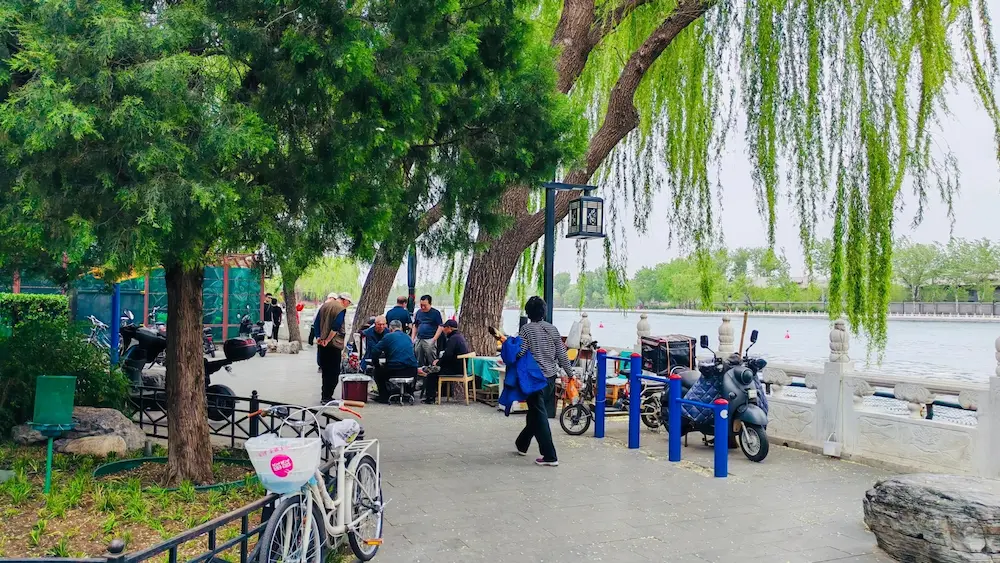
Table of Contents
Quick Guide
- Key Attractions: Song Qingling’s Former Residence (Phoenix and Chinese Schinus Tree), Prince Chun’s Mansion (birthplace of Emperor Guangxu and Emperor Puyi), Longhua Temple, and Ma Haide’s Former Residence
- Location: North bank of Houhai, bordered by Ya’er Hutong to the west and Yinding Bridge to the east
- Recommended Visit Duration: 1–1.5 hours
- Admission information: The waterfront trail is free; admission to the Song Qingling Former Residence requires a ticket and reservation; the interior of Prince Chun’s Mansion and Longhua Temple is not open to the public—only exterior viewing is permitted
- Keywords: Waterfront Old Street, Birthplaces of Two Emperors, Republican Era History, Tranquility Amidst the Hustle
- Best Itinerary: Ya’er Hutong → Houhai Beiyan → Song Qingling’s Former Residence → Yinding Bridge—staying by the water to avoid the sun
If you only have 1 hour, here’s how to explore
Head west from Yinding Bridge onto Houhai North Embankment→View the high walls and main gate of Prince Chun’s Mansion from the outside→Visit or view the Song Qingling Former Residence→View the Dazang Longhua Temple from the outside→Take a photo in front of the Ma Haide Former Residence, then return the same way or head west to connect with Ya’er Hutong
Tip: Houhai North Embankment is best enjoyed as part of a CityWalk through the larger Shichahai area—there’s no need to make a special trip just for this section. You can easily combine it with Yinding Bridge, Yandai Xiejie, and Ya’er Hutong.
⭐Visiting Houhai Beiyan for the First Time? Don’t Miss These 4 Highlights
①Prince Chun’s Mansion (Exterior)
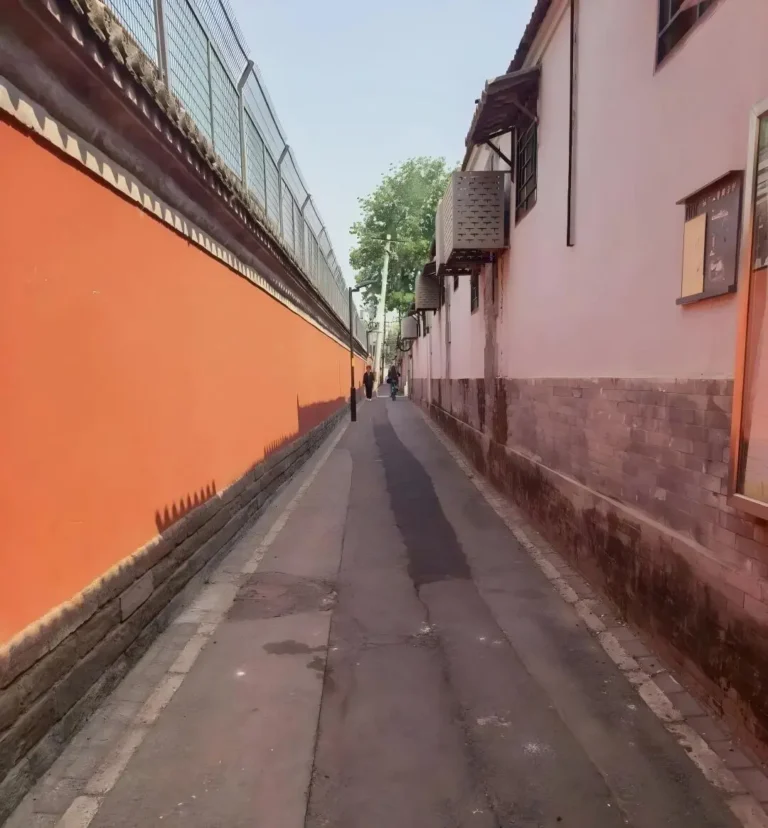
A major historical landmark along the entire route. The interior is currently used as office space and is not open to the public, so don’t expect to go inside; instead, stand by the roadside to admire the stretching high walls and the imposing mansion gate, and experience the grandeur of a princely residence that produced “two emperors.”
②Song Qingling’s Former Residence (Courtyard No. 46)
This is the only courtyard along the entire route where you can purchase a ticket for an interior tour. Originally the rear garden of Prince Chun’s Mansion, it features a 500-year-old “Phoenix” Chinese scholar tree as its iconic landmark. The garden’s serene waterside setting makes it a peaceful retreat; if you have enough time, we recommend taking a tour inside.
③Dazang Longhua Temple (No. 23, exterior view)
An ancient temple from the Ming Dynasty, it now serves as the Beihai Kindergarten and is not open to the public. From outside the gate, admire the vermilion-painted ancient architectural features—doors, windows, and weathered beams and columns—and experience the unique historical transformation of an ancient temple into a school.
④Former Residence of Ma Haide (No. 24, exterior view)
This is the former home of the first foreign doctor to obtain Chinese citizenship. Visitors can only take photos from outside the gate to learn about the story of this foreign physician who lived in Houhai for nearly 40 years.
The entire waterfront promenade is worth a stroll in itself—take in the lake, the weeping willows, and the daily lives of the long-time residents; the walk itself is part of the experience.
Is Houhai Beiyan Worth a Visit?
If you’ve already planned a trip to Shichahai, Yinding Bridge, and the Houhai area, I highly recommend adding the Houhai Beiyan to your walking route.
It’s not a large, standalone paid attraction; its main draw is a 1–1.5-hour lakeside stroll, with the lake on one side and a string of historic mansions on the other, offering a peaceful escape from the bar district’s hustle and bustle.
✅ Ideal for: Visitors who enjoy city strolls, are interested in late Qing and modern history, or want to quietly take in the views of Houhai Lake.
❌ Skip if: You have a very tight schedule, plan only to visit Houhai’s Instagram-famous bars, or want to enter and tour every single attraction.
Who Should Visit the Houhai Beiyan?
✅Ideal for:
- Visitors exploring the Shichahai–Houhai area who want to avoid the crowds and noise of the bar district
- Those who enjoy waterfront CityWalk-style strolls and appreciate historic Old Beijing architecture
- Those interested in late Qing dynasty princely mansions and the history of modern and contemporary celebrities
- Those hoping to enjoy both lake views and historical sites without navigating narrow, crowded hutongs
❌Best skipped by:
- Travelers on a very tight schedule who only want to check off Beijing’s top landmarks
- Those hoping to enter the inner courtyards of every site for a tour
Easiest Way to Get There | Copy This Walking Route
Subway: Exit A2 at Shichahai Station (Line 8), then walk 5 minutes to Yindin Bridge; head west along the water
On-site Tip: If you are already at Yinding Bridge or Houhai Bar Street, there’s no need to go back to the subway station. Just turn west at Yinding Bridge and head straight to the Houhai North Waterfront Walkway.
Recommended Route: Ya’er Hutong → Houhai Beiyan→ Song Qingling’s Former Residence → Yinding Bridge
Two route options are available:
- Route A (East to West): Start at Yinding Bridge and walk westward to Ya’er Hutong;
- Route B (West to East): Exit Ya’er Hutong and walk eastward to Yinding Bridge; from there, the route connects directly to Yandai Xiejie.
Tip: The eastern side near the bars is livelier, while the western section near the princely mansions is quieter and better suited for a stroll
1–1.5-Hour Itinerary Guide (Convenient for Screenshots and Saving)
0–10 minutes | Head west from Yinding Bridge along the northern shore of Houhai to reach Prince Chun’s Mansion; view the high walls and main gate from the outside
10–45 minutes | Song Qingling’s Former Residence: You can go inside to tour the garden and historic buildings; if short on time, simply enjoy the surroundings of the courtyard from the waterfront outside
45–60 minutes | Visit Dazang Longhua Temple and the Former Residence of Ma Haide in succession; take photos of the exteriors at the entrances
60–90 minutes | Stroll along the lake, enjoying the views of weeping willows and the lake; head west to connect to Ya’er Hutong, or head east back to Yinding Bridge to begin the next leg of your journey
From Princely Gardens to Former Residences
Walking from west to east along Houhai Beiyan, you first encounter a very significant site—Soong Ching Ling’s Former Residence (No. 46Houhai Beiyan ). Originally the garden of Prince Chun’s Mansion, Soong Ching Ling lived and worked here from 1963 until her passing in 1981. It is now open to the public.
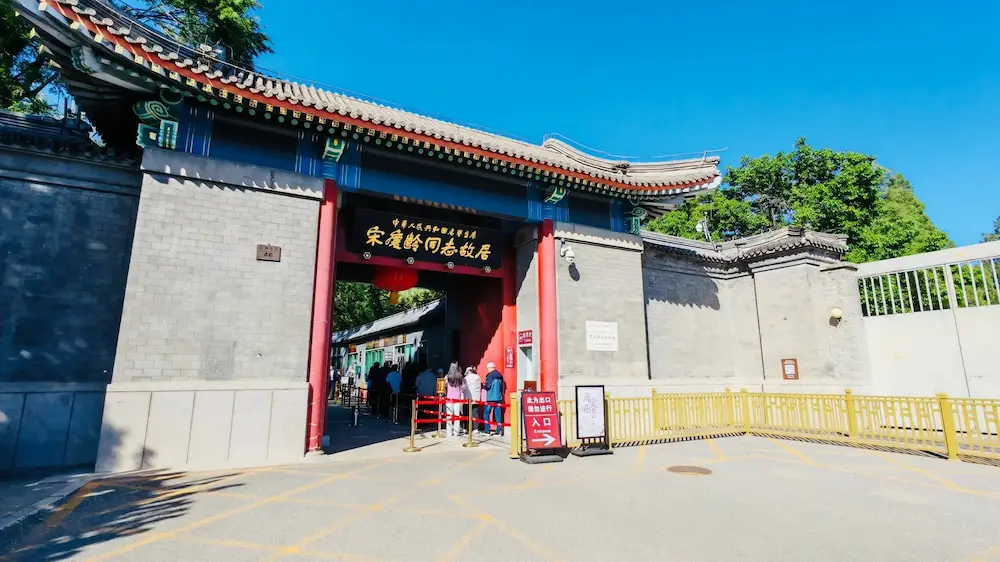
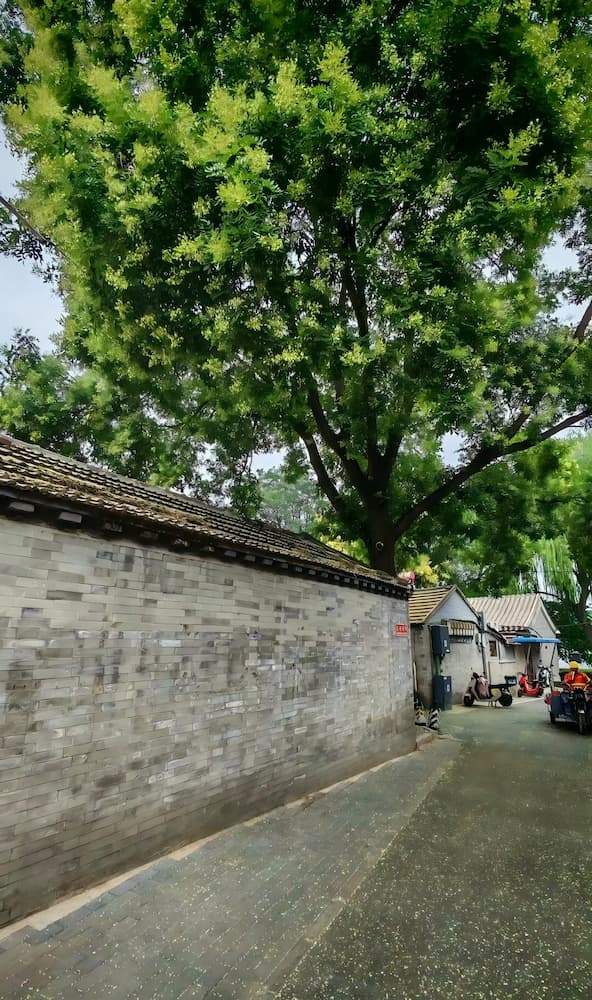
The courtyard is vast with ancient trees. There is said to be a 500-year-old pagoda tree (Sophora japonica), which Soong Ching Ling named the “Phoenix Pagoda Tree” because its shape resembles a phoenix spreading its wings. The garden features living water channeled from Houhai, creating a very elegant environment.
ℹVisitor Tip: Admission to the Song Qingling Former Residence requires a ticket and advance reservation; if you’re short on time, you can still get a feel for the atmosphere of this waterfront estate by standing along the riverbank outside the walls.
The story of Prince Chun’s Mansion is even more complex. This estate has had many identities throughout history: it was first the residence of Mingzhu, later became the villa of the infamous corrupt official Heshen, then served as Prince Cheng’s Mansion, before finally being converted into Prince Chun’s Mansion during the Guangxu reign of the Qing Dynasty.
Prince Chun Yixuan was a crucial Qing prince—his son was the Emperor Guangxu, and his grandson was the last emperor, Puyi. Today, the former princely mansion houses the State Administration for Religious Affairs.
Incidentally, Ganlu Hutong, which connects to Ya’er Hutong, also has its history: Wang Jingwei once plotted to assassinate the Qing Dynasty’s regent prince there.
Ancient Temples, Doctors, and Modern Mansions
Continuing along, at No. 23 Houhai Beiyan, you’ll find Dazang Longhua Temple. This temple was first built during the Ming Dynasty and later served as the family temple of the Regent Prince Zaifeng during the Qing Dynasty.
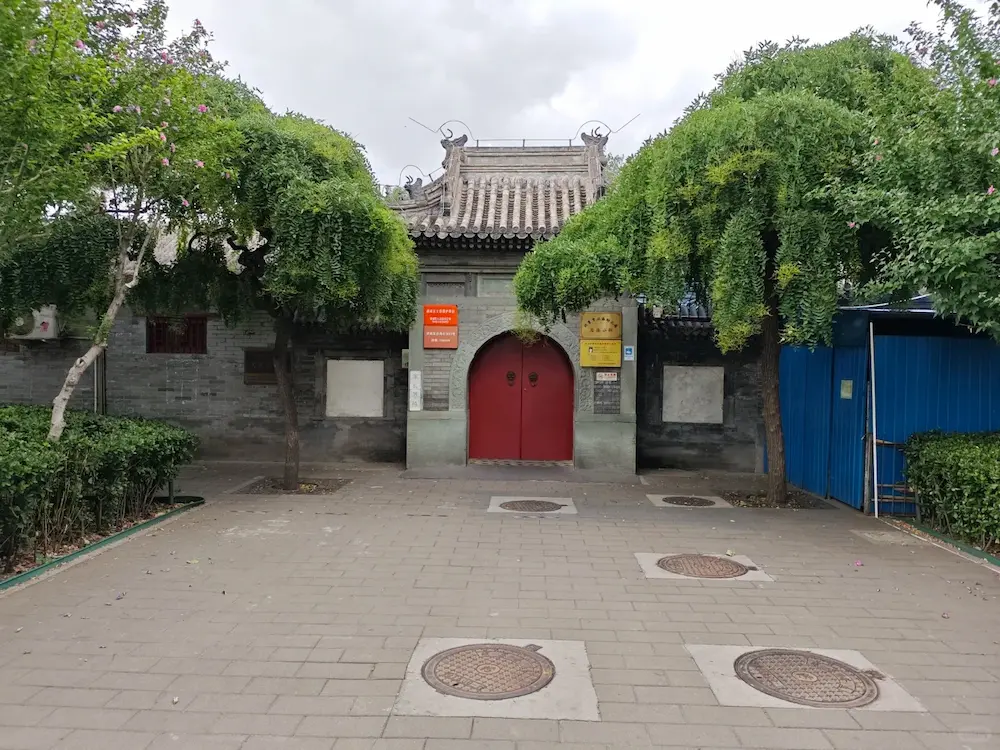
Today, it has an unexpected identity—it is now the Beihai Kindergarten. The uses of historical buildings have interestingly transformed with the times.
Next door at No. 24, once the housing for the stewards of Prince Chun’s Mansion, was purchased in 1950 and allocated to the renowned medical expert Dr. George Hatem (Ma Haide).
Dr. Hatem was a Lebanese-born American who, introduced by Edgar Snow, went to Yan’an and later made significant contributions to China’s public health, particularly in eradicating venereal diseases and combating leprosy.
He lived in China for over half a century, including nearly 40 years on Houhai Beiyan, becoming a true “old Beijing resident.” It’s said he often visited his friend Soong Ching Ling, who lived nearby.
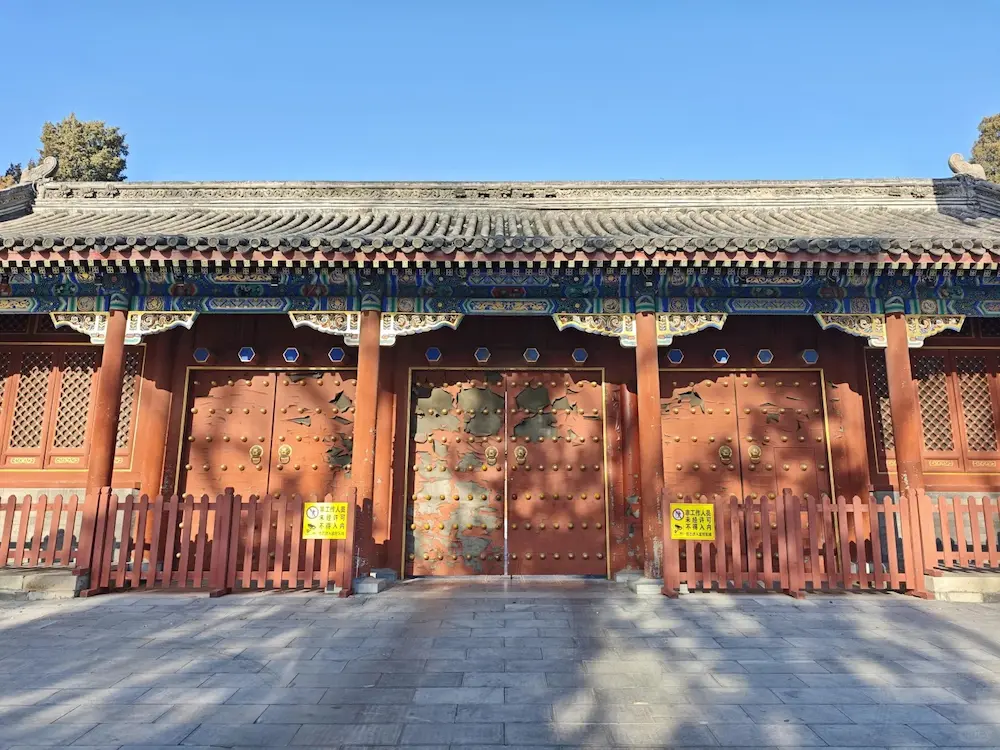
Adjacent to the modern bar area stands a newly built luxurious mansion gate (No. A17 Houhai Beiyan), reportedly owned by a world aluminum magnate.
Next to it is Nanshu Fang (No. 15 Houhai Beiyan), whose name differs by only one character from the “South Study” (Nanshufang) in the Forbidden City, which is quite interesting.
From Princely Enclave to Fashionable Leisure District
Moving past these profound historical courtyards, the atmosphere gradually becomes livelier. East from Nanshu Fang, you enter the famous bar and cafe district of Houhai, stretching all the way to the Yinding Bridge.
Imagine this area once clustered with princely mansions—high walls, deep courtyards, inaccessible to ordinary people. Today, it’s lined with fashionable bars and cafes bustling with young people and tourists. The progression of time has left clear marks on this road.
Interestingly, despite the dramatic visual changes, a certain intrinsic spirit seems to persist. I observed a scene at a new community exercise area on Houhai Beiyan: an elderly person was completely focused and exercising leisurely, undisturbed by the surrounding bustle.
This perhaps embodies an aspect of old Beijing’s hutong culture: maintaining one’s own pace and peace of mind regardless of external changes.
Houhai Beiyan is like an open-air historical corridor. Along this short riverside road, you can see:
- The grand shadow of an ancient princely mansion (Prince Chun’s Mansion)
- The tranquil homes of modern notable figures (Soong Ching Ling’s and George Hatem’s former residences)
- The changing roles of religious architecture (Dacang Longhua Temple becoming a kindergarten)
- And the vibrant contemporary urban life (the bar and cafe district)
It perfectly illustrates the layered history of Beijing: the new overlays the old, but the old stories never truly disappear. They simply continue to exist in different ways, residing within the bricks and mortar and in people’s memories.
When you visit Houhai, slow down and take a walk along the north bank to feel this unique charm of intertwined time and space.
Hidden Gems: The Houhai Beiyan That Others Miss
- Neon lights flicker along the east bank, while ancient trees and high walls stand quietly on the west—two worlds in one street
- Elderly residents exercise leisurely in the fitness area, completely undisturbed by the outside world; they embody the calm resilience of old Beijing
- The light along the waterfront is softest at dusk; willows hang over the water, making for stunning back and side-profile shots
- Through the cracks in the high walls, you can glimpse the old eaves of the princely mansion; history is hidden in these unassuming corners
Tips for Extending Your Walk: Once your tour is over, head west to enter Ya’er Hutong, which connects to Mianhua Hutong; head east back to Yinding Bridge to reach Yandai Xiejie and Nanluoguxiang, expanding your exploration of the Shichahai CityWalk area.