2026 Shangqin Hutong: The renaming story of Beijing’s imperial relative hutong, nearby locations and how to get there
Tucked away on the east side of North Deshengmen Street in Beijing lies a small alley named Shangqin Hutong. It is only 246 meters in length and may seem ordinary at first glance, yet behind its name lies an interesting piece of wordplay and a story of the rise and fall of a royal clan of the Ming Dynasty.
It has no Instagram-worthy hotspots or bustling shops; it’s so quiet it feels as if time has forgotten it. But if you crouch down to decipher its name and touch the old doorstep, you’ll discover that this is Beijing’s most clever “wordplay” hutong, hiding a harrowing tale of a Ming dynasty imperial in-law’s fall from the pinnacle of power to the dust.
When you visit Beijing’s hutongs in 2026, don’t just crowd the popular spots—this off-the-beaten-path, deeply evocative alley is well worth a stroll.
Table of Contents
Quick Facts: Shangqin Hutong—At a Glance
- Location: East side of Deshengmennei Street, Xicheng District—a quiet residential neighborhood nestled in the heart of the city
- Highlights: Ruins of the family residence of Empress Zhang, wife of Emperor Xiaozong of the Ming Dynasty; the story behind the hutong’s name change during the Republic of China era; the former site of Jixiang An Monastery
- Key Figures: Empress Zhang of the Ming Dynasty (wife of Emperor Xiaozong), Marquis of Jianchang Zhang Yanling
- Ideal For: History buffs, enthusiasts of hutong details, and those who prefer quiet strolls
The Most Convenient Way to Get There | Blogger-Tested Shortest Route
① Best Subway Option
Line 2: Exit at Jishuitan Station, Exit B
Walk south for about 6–8 minutes to reach Deshengmennei Street. The alley on the east side is Shangqin Hutong, lined with old Beijing street scenes that are particularly charming.
Line 19: Deshengmen Station
Walk 5 minutes directly from the station—even easier.
② Direct Bus
Deshengmennei Station: Routes 22, 38, 47, 55, 88, and 409. Get off right at the entrance to the hutong.
③ Suggested Itinerary
Start at Deshengmen and head south. Begin by exploring Shangqin Hutong, then connect to the nearby Xiaotongjing Hutong and Xihai. Follow this quiet, cultural route to completely avoid the crowds.
The Evolution of the Hutong’s Name: From “Royal Relative” to “Shangqin”
In the Ming Dynasty, this alley was known as “Zhang Imperial Relative Street” or simply “Royal Relative Hutong”. The origin of this name dates back to 1487 AD, when the daughter of a man named Zhang Luan was chosen to be the crown princess.
Later, the crown prince ascended the throne as Emperor Xiaozong of the Ming Dynasty, and Lady Zhang naturally became the empress. The mansion of Zhang Yanling, the Empress Zhang’s younger brother, was situated right in this alley, which is how it came to be called “Royal Relative Street”.
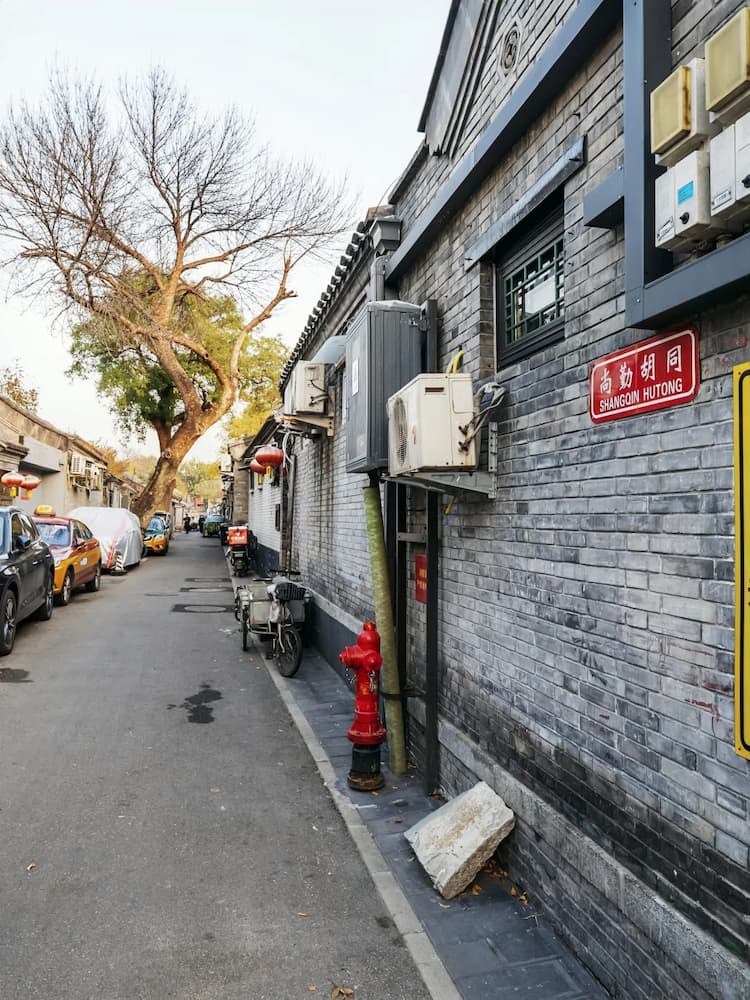
In the Republican period, the hutong was renamed “Shangqin Hutong”. This new name is quite ingenious: it is a homophone for “Shang Qin” (literally meaning “imperial relative”), and the two characters “Shangqin” not only sound elegant but also quietly bid farewell to the implication of privilege from the old era. This is a clever piece of wordplay indeed.
The Royal Clan’s Sudden Rise and Rapid Fall
The story of Empress Zhang’s family is a dramatic tale of an overnight rise to glory. Zhang Luan was posthumously conferred the title of Duke, and her two younger brothers, Zhang Heling and Zhang Yanling, were granted the titles of Marquis and Duke, respectively, enjoying immense prestige for a time.
However, power came too quickly, and the two brothers failed to fulfill their duty. Relying on their status as imperial relatives, they acted recklessly and arbitrarily in the capital, committing numerous illegal acts.
In the end, Zhang Heling died in prison, and Zhang Yanling was even publicly executed at Xisi (known as Xishi, the West Market, at that time) in Beijing. The once prominent royal clan fell into decline just like that.
Traces of History in the Hutong
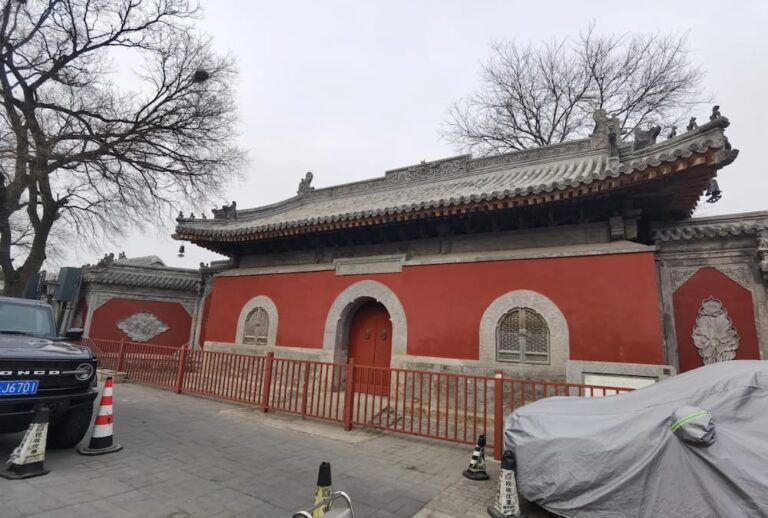
Even today, walking into Shangqin Hutong, one can still find traces of its history. For example, No. 11 in the hutong is the former site of Jixiang Nunnery, also known as the Little Thousand Buddha Temple, which was built in the sixth year of the Kangxi reign of the Qing Dynasty (1667 AD) and now serves as a company compound.
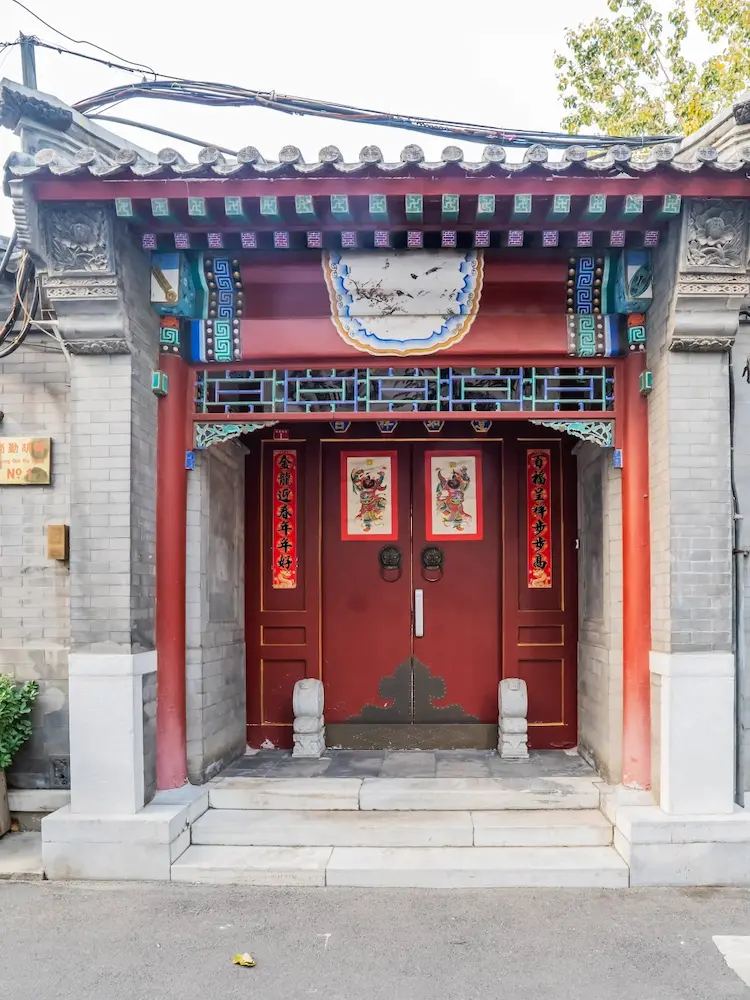
The gate of No. 19 is also distinctive, with carved patterns still visible on the roof tiles. Some speculate that the former mansion of the “Zhang Imperial Relative” was most likely located near this spot.
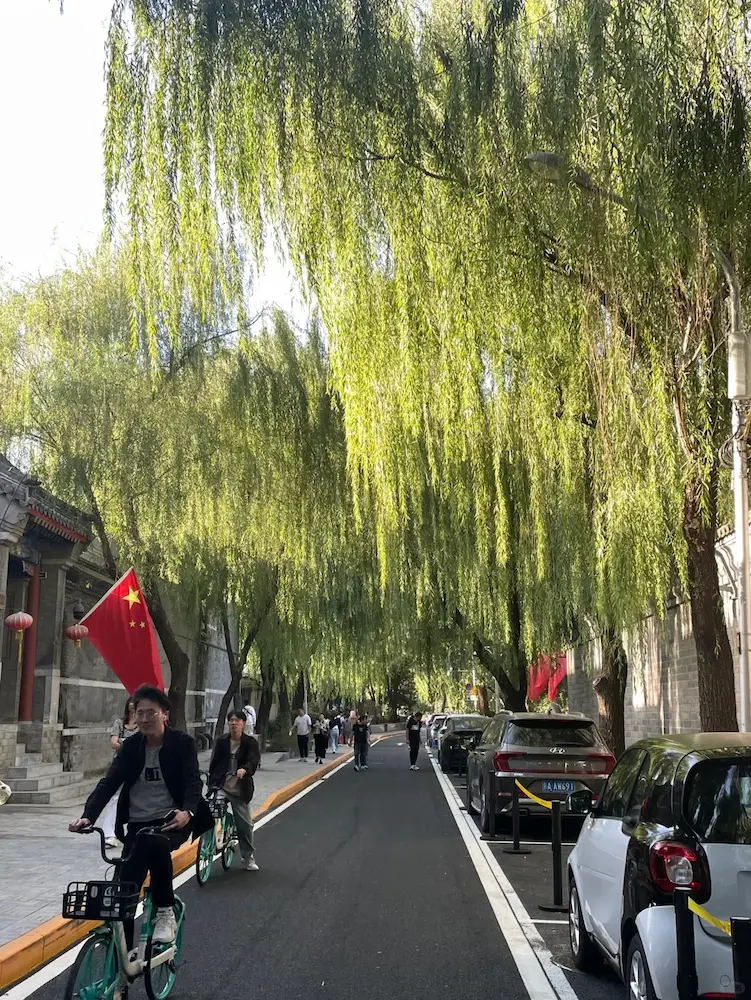
There are also two ancient, leafy, and towering old trees standing quietly in the hutong, like silent witnesses to history.
The renaming of this hutong from “Royal Relative” to “Shangqin” is merely a small homophonic game, yet it also reflects the changes of the times—the glorious stories of noble clans have faded away, and the life narratives of ordinary people have unfolded here.
As you walk through the alley, every brick and tile is silent, yet they seem to whisper of the vicissitudes of human life over the centuries.
Why I Love This Off-the-Beaten-Path Alley
It’s not a social media sensation, nor is it commercialized; in fact, many locals don’t even know its story.
But what touches me most is that gentle sense of “peace and tranquility.”
Once a neighborhood where imperial relatives ruled with arrogance and invincibility;
Today, it’s a quiet, unassuming alley where every household hangs laundry to dry, and elderly neighbors sit chatting.
The name changed from “Imperial Relatives” to “Shangqin”—not just a play on words, but a silent truth:
No matter how great the power, it will fade; only through diligence and hard work can one build a lasting life.
A Quick Reminder
This is a residential area, so please explore quietly, avoid disturbing residents, and don’t knock on doors.
Take your time—a leisurely 15-minute stroll is all it takes to absorb a piece of profound history.
Combine this with a visit to Xihai and Deshengmen—this off-the-beaten-path route is far more relaxing than the crowded tourist spots.
Beijing has thousands of hutongs, but few, like Shangqin Hutong, blend literary wisdom, the rise and fall of imperial power, and the everyday life of ordinary people.
In 2026, take a stroll here, and you’ll discover the most understated yet profound side of old Beijing.