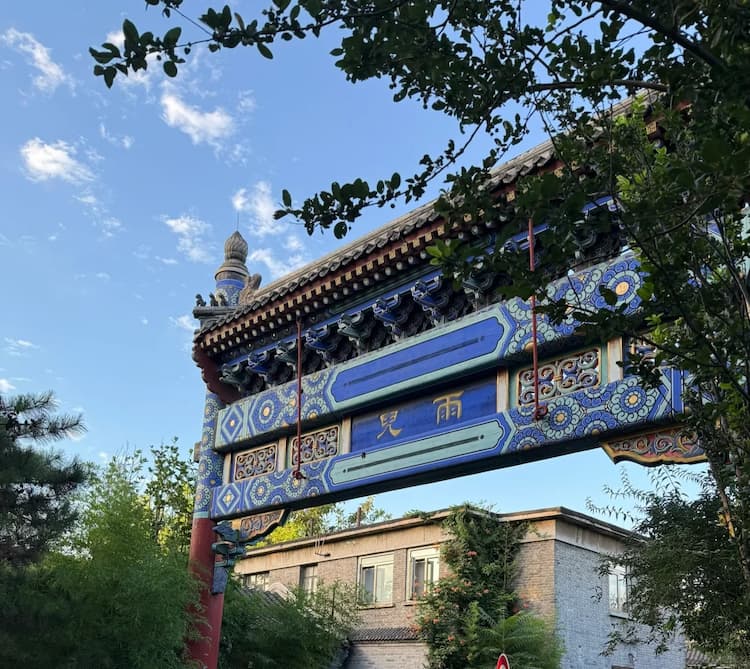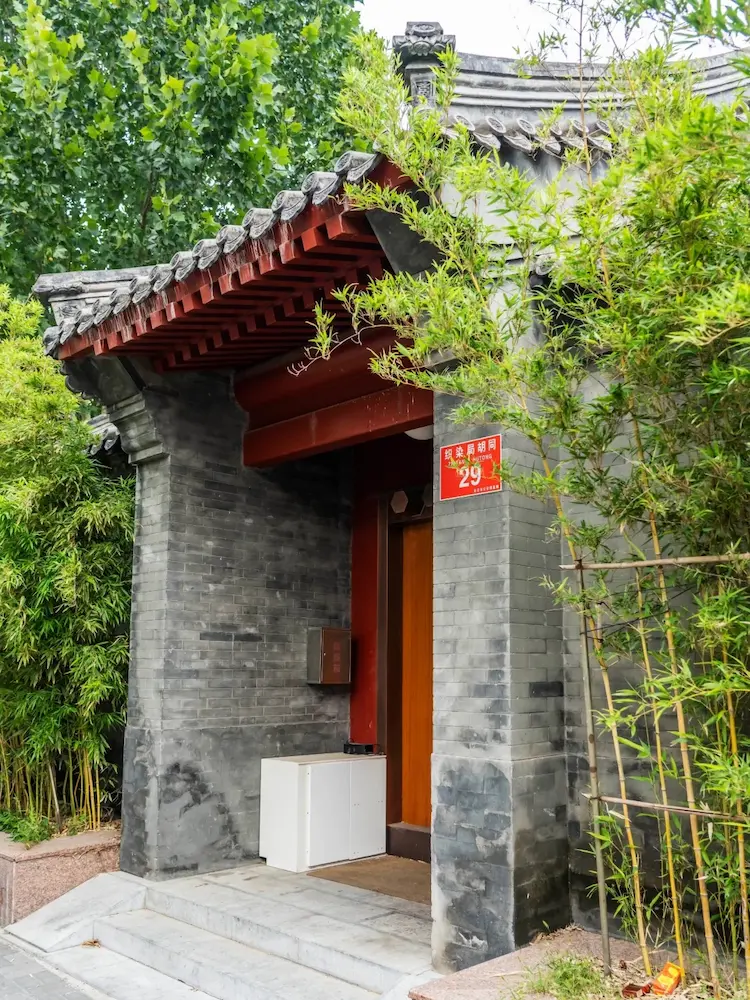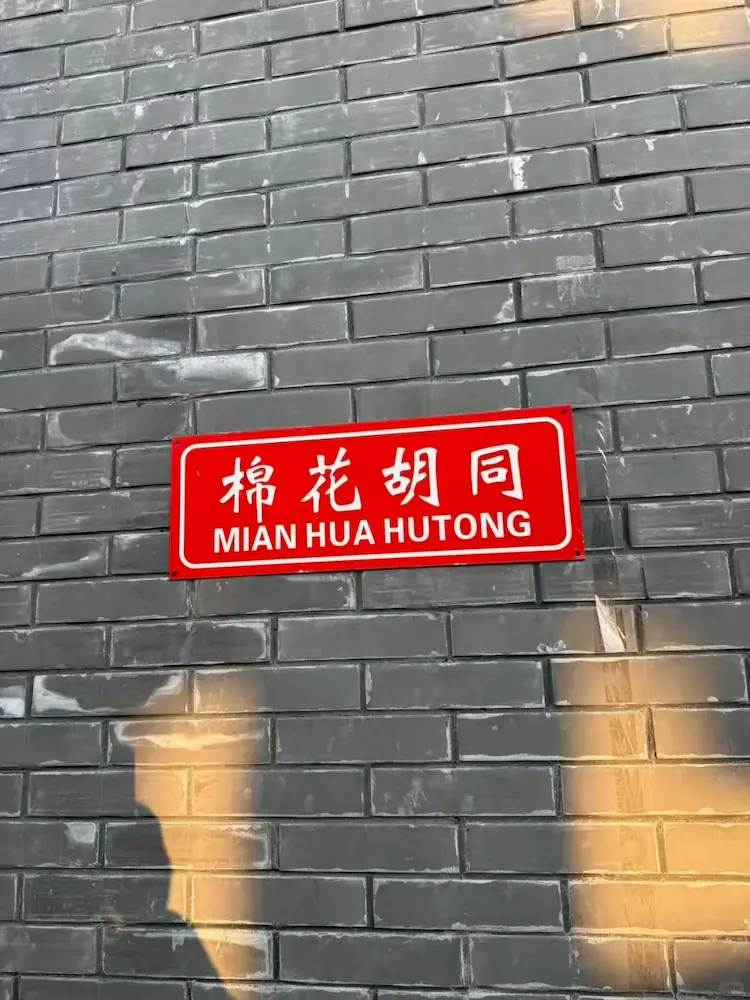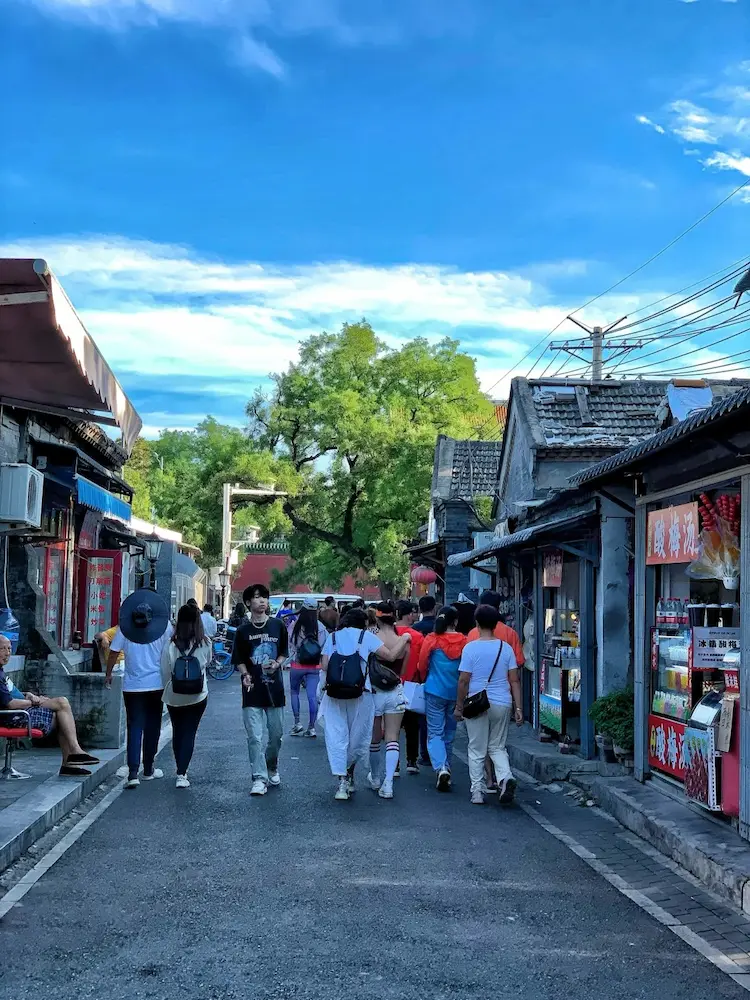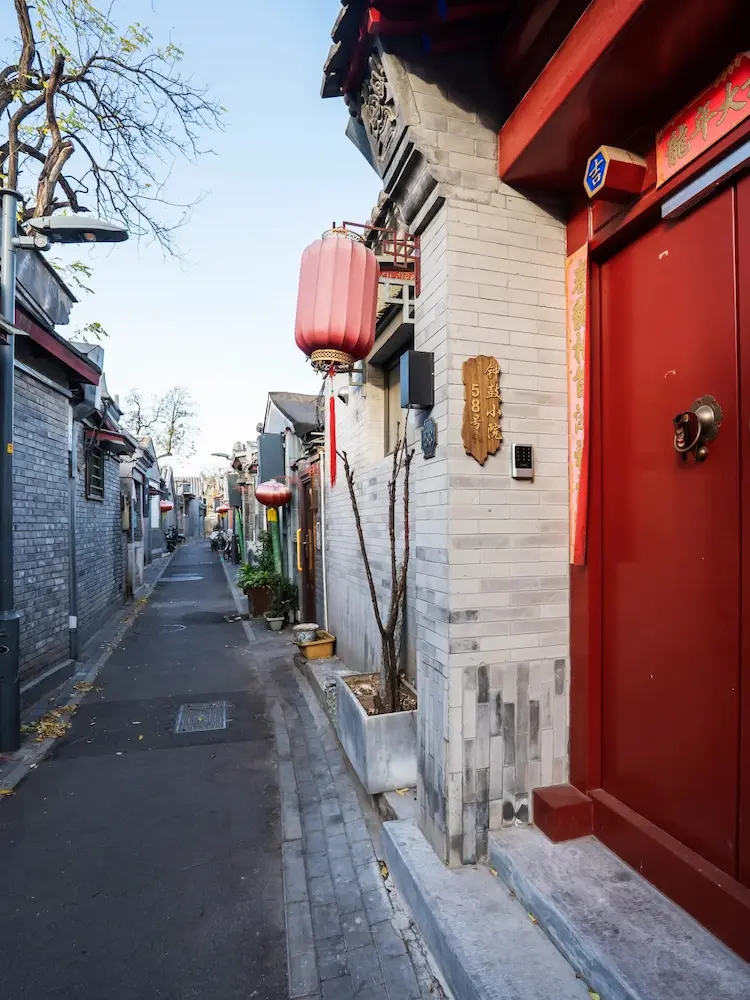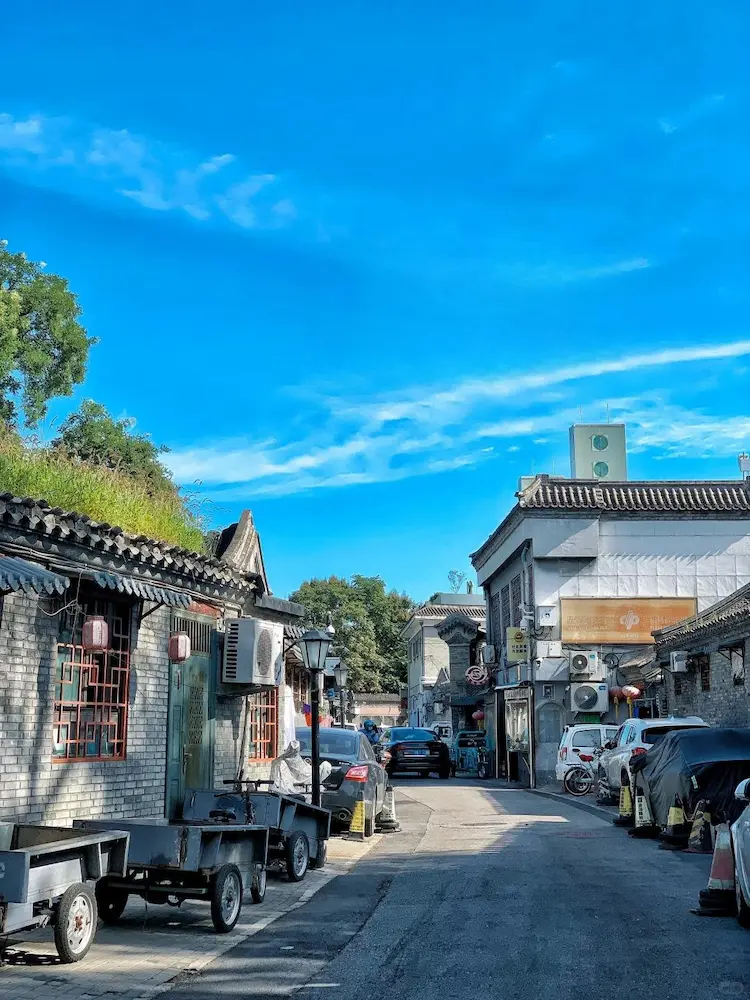
Beijing Lingjing Hutong Travel Guide: The Widest Free Hutong, Right Next to Xidan(2026)
The first time I stood in the middle of Lingjing Hutong, I was truly amazed—it completely shattered my preconceived notion of Beijing hutongs as “narrow, cramped, and low-ceilinged.”
It’s not the kind of old alley where you have to walk sideways; instead, it’s a unique hutong wide enough for cars to drive in both directions and park eight cars side by side.
At its widest point, it reaches 32 meters (about 105 feet—7 meters wider than a standard Olympic swimming lane), with a total length of 664 meters (about 2,178 feet).
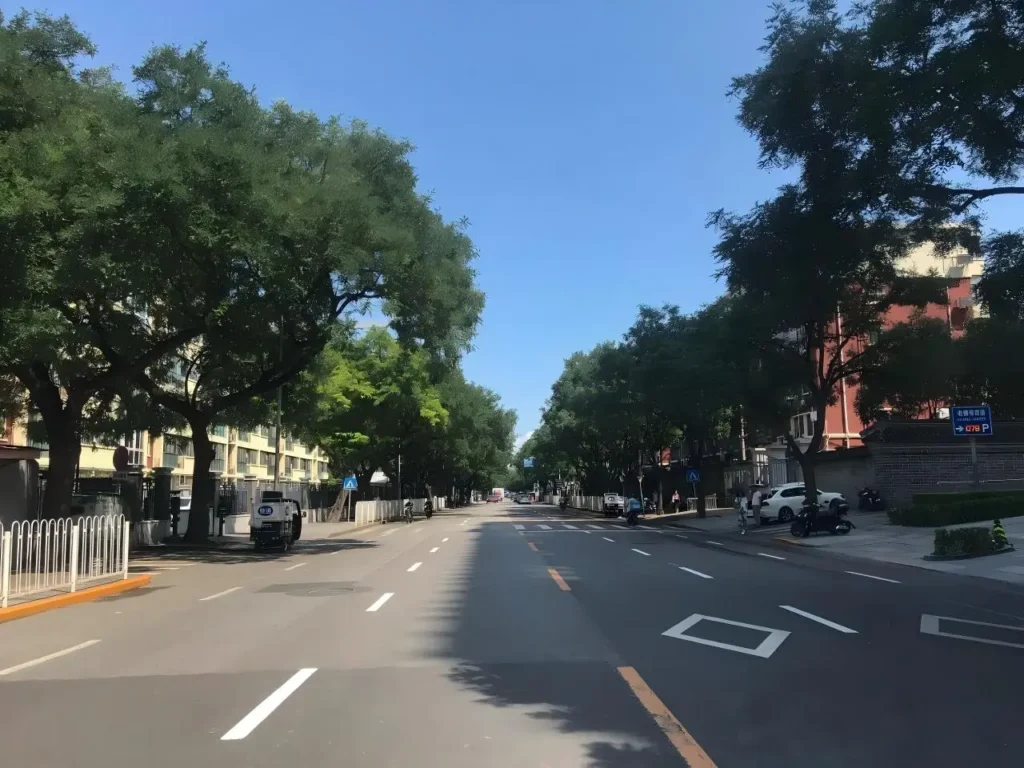
But the surprise lasted only 10 seconds—because I soon realized that both sides were lined with six-story apartment buildings, with no gray walls or black-tiled roofs, and no stone door sills or drum-shaped pillars.
It resembled an ordinary city street, save for the word “hutong” in its name. Its western end connects to the bustling Xidan North Street, while its eastern end borders the quiet Fuyou Street (right next to Zhongnanhai).
You can stroll all the way from a shopping paradise to a tranquil old Beijing alley—free of charge, accessible by subway, and no reservation required. But let’s be clear: if you’re expecting the authentic, bustling atmosphere of old Beijing, you might be disappointed.
On-site Insight: Standing in Lingjing Hutong, you’ll find that it offers a completely different spatial experience from traditional hutongs like Nanluoguxiang and Zhuanta Hutong. What’s truly worth noting here isn’t “what historic buildings are in the hutong,” but rather why this particular hutong is so wide; by examining its transformation, you can gain insight into the city’s evolution.
Table of Contents
Key Highlights at a Glance
Important Note Before Visiting: The area is mostly lined with modern residential buildings, with few traditional structures remaining; the former residences of famous figures are now private courtyards and cannot be entered—you can only take photos at the entrance; streetlights are dim at night, so we recommend visiting during the day.
✅ Beijing’s Widest Hutong: 32 meters wide at its widest point, with two-way traffic, creating a striking visual impact (though it resembles an urban street more than a traditional hutong, with very few historic buildings)
✅ Completely Free Access: No admission fee, no gates, open all day—unbeatable value
✅ Super Convenient Direct Metro Access: Just exit at Exit D of “Lingjing Hutong Station” on Line 4—no traffic jams
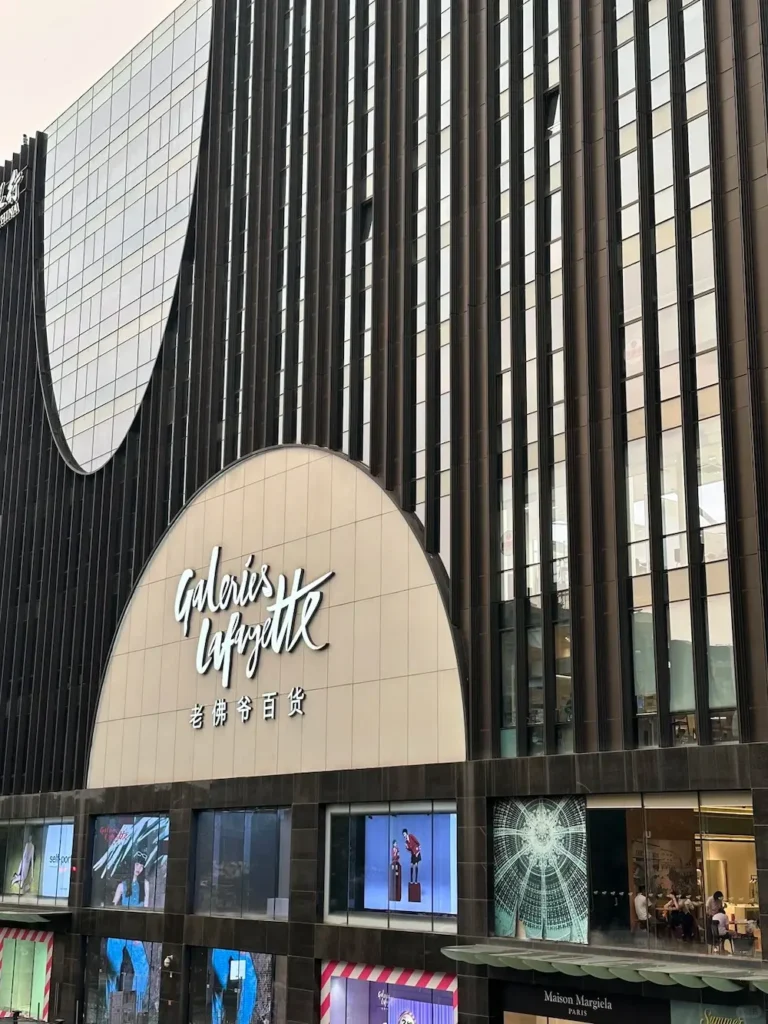
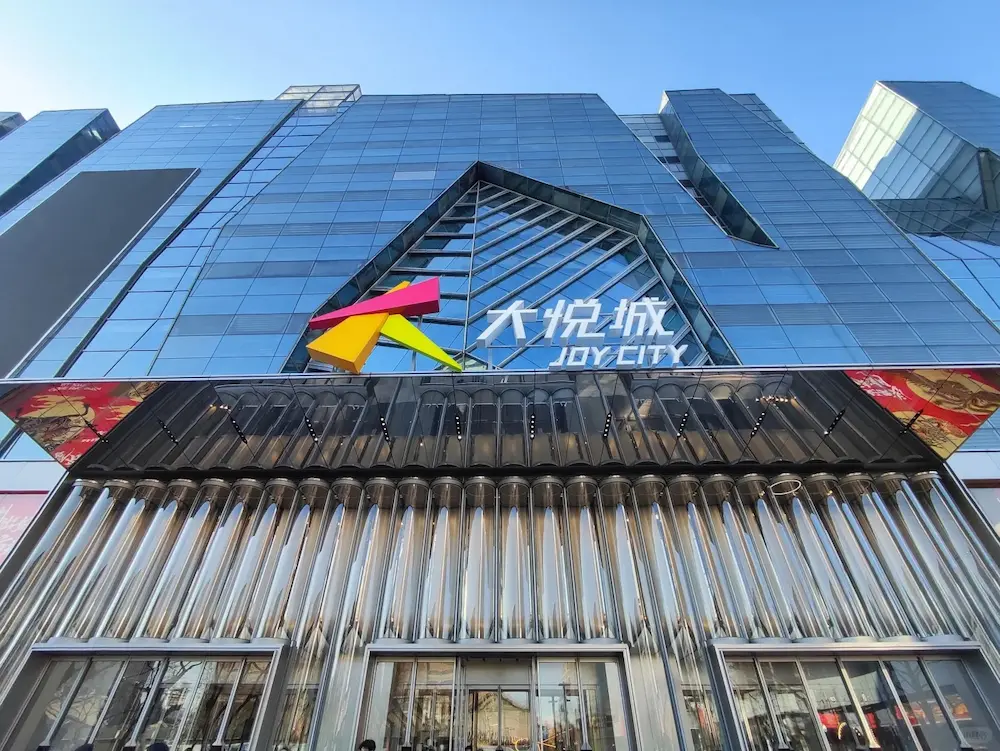
✅ Right Next to the Xidan Shopping District: The west exit leads directly to Xidan North Street (Galeries Lafayette, Joy City), offering seamless shopping and dining
✅ Street and alley names dating back hundreds of years
✅ Former Residences of Two Notable Figures: Chen Geng, a Marshal of the People’s Republic of China, and Chen Baochen, tutor to the last emperor Puyi, once lived here
Visiting Lingjing Hutong for the First Time: First, Determine If This Place Is Right for You
You’ll love Lingjing Hutong if:
- You’re interested in Beijing’s urban transformation and the history of its streets and alleys
- You want to experience a unique type of hutong space
- You’d like to visit the former residences of historical figures (exterior photos only)
- You enjoy urban contrasts: switching from bustling commercial districts to quiet, old-town alleys
- You’re looking for a stroll
- Are looking for off-the-beaten-path walking routes around Xidan
This might not quite meet your expectations if:
- You’re looking for clusters of well-preserved traditional Beijing siheyuan courtyards
- You’re expecting narrow, quaint traditional hutong alleys
- You want to see a large number of authentic old residential buildings
- You’re seeking a bustling commercial atmosphere in the hutongs
- You hope to visit multiple historic homes of famous figures that are open to the public
Practical Information
- Admission: Free; no reservation required; open at all times
- Hours: Open all day (recommended during daylight hours from 9:30 AM to 5:00 PM; Lighting is limited on some sections of the route at night, so it is recommended to visit during the day.)
- Address: Xicheng District, Beijing; east of Fuyou Street to Xidan North Street
- Duration: 30 minutes to 1 hour for just exploring the hutongs; allow half a day if combining with shopping and dining in Xidan
- Best Time to Visit:
- Seasons: April–May (spring) and September–October (fall), when the weather is pleasant—neither too cold nor too hot
- Times: Weekdays from 9:30 AM to 11:00 AM, when there are fewer people and cars, making for a quiet and enjoyable stroll; Weekend afternoons are crowded in Xidan, but the hutongs remain relatively quiet
- Budget: 0 RMB (excluding food and shopping)
Tips: There are no public restrooms in the hutongs; the nearest free restroom is on the 2nd floor of Xidan Joy City, with no purchase required; restrooms at Beijing subway stations are typically located in paid areas, requiring a card to enter; public safety is excellent during the day, and it is safe for women to explore alone.
3 Things You Might Overlook on Your First Visit to Lingjing Hutong
1. There are no public restrooms inside the hutong; the nearest one is on the 2nd floor of Xidan Joy City, and you don’t need to purchase to use it. Most restrooms at subway stations are located in the paid area and can only be accessed after entering the station.
2. The two former residences of famous figures are private residential compounds; you may only take photos from the outside—do not knock on doors or enter the compounds.
3. The hutong is a public road, so be mindful of passing vehicles when taking photos.
Helpful Tip: Public safety is excellent during the day, and it’s safe for women to explore on their own.
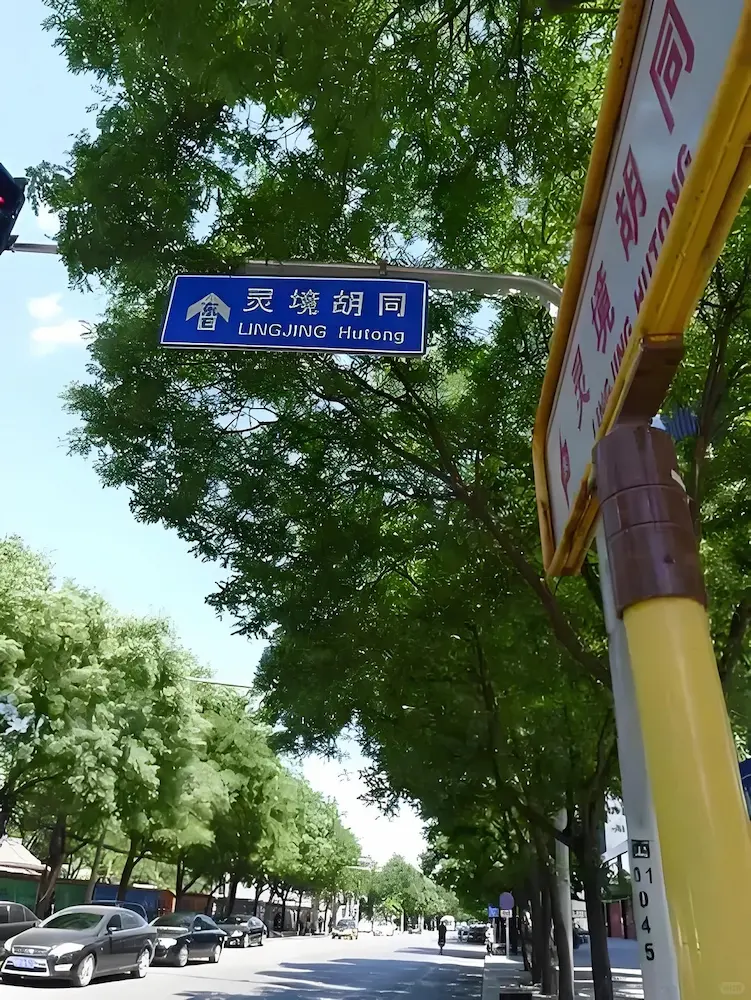
How to get there? (Subway is the best option to avoid traffic)
Subway (Highly recommended; no traffic)
- Take Line 4 to “Lingjing Hutong Station”:
- Exit D (southwest exit): Walk 10 meters south (to your left) to reach the west entrance of the hutong (most convenient)
- Exit C (southeast exit): You’ll see the hutong right outside; ideal for wheelchairs or strollers (more accessible pathways)
- The station features bilingual (Chinese-English) announcements and signage (Lingjing Hutong), so you won’t have trouble finding it
Travel Tip: If it’s your first visit, start your tour at the West Gate. Enter the hutongs from the Xidan modern commercial district and walk eastward to Fuyou Street to fully experience the transition from “modern commercial district to hutongs to the tranquil old city.”
Bus
Take Bus No. 1, 52, or 70 to “Xidan Road East Station,” then walk 500 meters north to the west entrance of the hutong.
Taxi/Ride-Hailing
- Destination: “Lingjing Hutong West Entrance” or “Lingjing Hutong Subway Station”
- Estimated time & cost: From the Forbidden City, the ride takes about 15 minutes with no traffic and costs 20 yuan; during holidays or between 3:00 PM and 6:00 PM, traffic is guaranteed to be heavy, so it may take 40 minutes, an extra 20–30 minutes. We strongly recommend taking the subway.
Ready-Made Itineraries for Different Time Frames
①30 Minutes | Quick Tour (Explore Lingjing Hutong Only)
Exit D at Lingjing Hutong Subway Station→Enter at the west end of the hutong→Walk from west to east→Take a photo of the exterior of Chen Geng’s Former Residence (No. 41)→Take a photo of the remains of Chen Baochen’s Former Residence (No. 33)→East end of the hutong
Tip: You don’t have to walk the entire length of the alley; just focus on observing the alley’s width, the changes in the buildings on either side, and the differences in the urban environment at the east and west ends.
②60 Minutes | Standard Version (Hutong + Short Stroll on Fuyou Street)
Complete the 30-minute route, then exit at the east end and take a quiet stroll along Fuyou Street for a short while. Afterward, you may choose to return to the west end via the same route.
③Half Day | In-Depth Version (Original half-day Xidan route, retained)
Recommended Itinerary: Xidan + Lingjing Hutong Half-Day Tour (4 hours, relaxed and unhurried)
Perfect for those who enjoy “shopping + strolling + history.” I’ve tried it myself—the pace is comfortable, there’s no rushing from place to place, and it’s a great self-guided walking tour of Beijing:
1. 10:00 AM: Exit D at Lingjing Hutong Station on Subway Line 4 → Explore Lingjing Hutong (40 minutes): Walk from the west end to the east end, visit the former residences of famous figures, snap a panoramic shot of Kuan Hutong, and experience the uniqueness of “Beijing’s widest hutong”;
2. 10:40 Stroll along Fuyou Street (20 minutes): Walk north from the east end to admire the red walls and soak in the tranquility. When approaching restricted areas, please pay attention to on-site notices and follow staff instructions, and refrain from taking photos in sensitive areas.
3. 11:00 Return to the West Exit via the same route (approx. 10 minutes) → Lunch at Joy City or Galeries Lafayette on Xidan North Street (1 hour): Prices range from 40 to 150 RMB per person, with cuisines from around the world available; we recommend traditional Beijing snacks and hot pot;
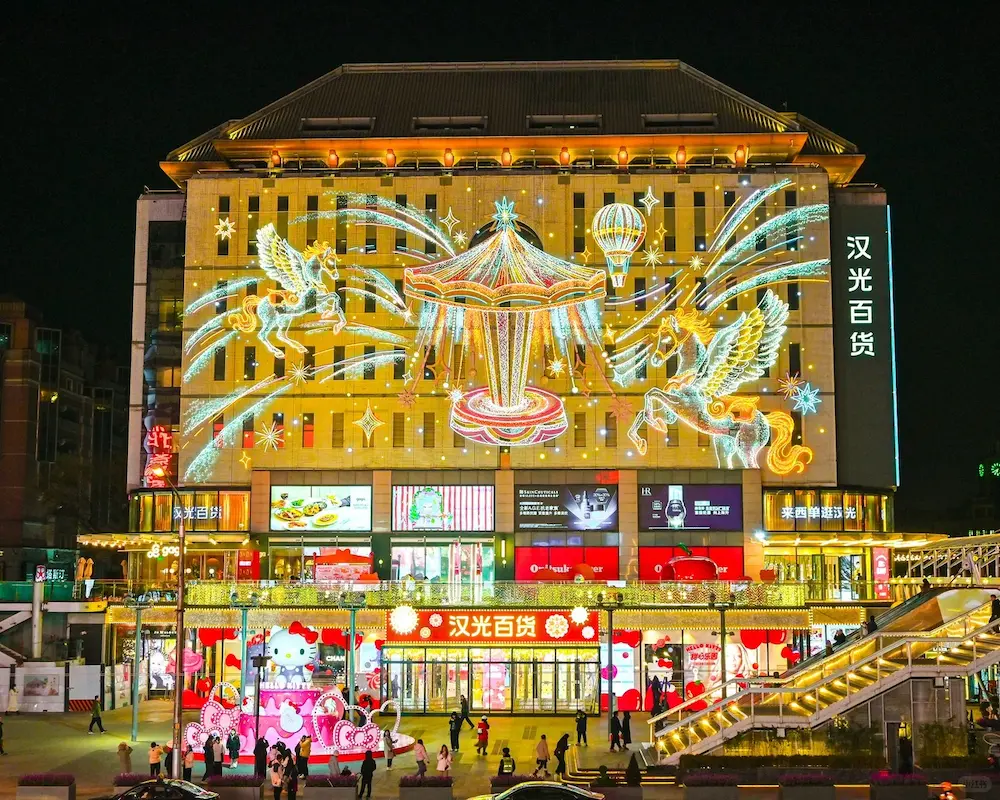
4. 12:00 Explore the Xidan shopping district (2 hours): Browse Joy City, Hanguang Department Store, and Galeries Lafayette; shop, sip bubble tea, and soak up the energy of Beijing’s bustling commercial hub;
5. 14:00 End of itinerary: Take Metro Line 4 back, or continue exploring nearby Yangmeizhu Xiejie and Zhuanta Hutong.
Where to go after exploring the hutongs? (All within walking distance, with seamless connections)
1. Xidan North Street (right outside the west exit)
Beijing’s premier shopping street is home to Galeries Lafayette, Joy City, and Hanguang Department Store. You’ll find everything here—dining, shopping, and bubble tea—with prices ranging from 40 to 150 yuan per person. You can easily spend 2–3 hours here.
2. Fuyou Street (Right outside the East Exit)
An incredibly quiet tree-lined avenue flanked by tall walls—behind which lies Zhongnanhai (the office complex for national leaders). Photography is prohibited (security guards will politely ask you to delete any photos), as this is a government office area. Taking a stroll here is incredibly relaxing, allowing you to experience the tranquility of central Beijing.
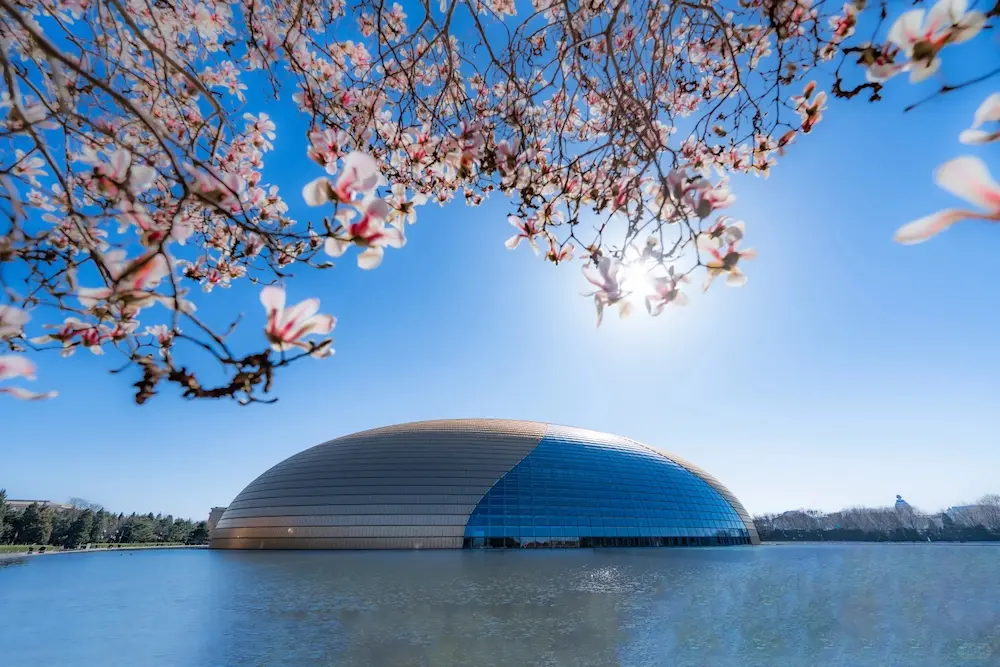
3. National Centre for the Performing Arts (10-minute taxi ride)
The architecture is incredibly stylish. Art lovers can catch an opera or explore the exhibition halls to soak up the modern artistic atmosphere. If you’d like to explore more of Old Beijing’s hutongs, you can also visit Yangmeizhu Xiejie (an artsy hutong) and Zhuanta Hutong (Beijing’s oldest hutong).
The Origin of Lingjing Hutong’s Name: The Legend of Zhu Di’s“Dream of Medicine and Temple Construction”
The name “Lingjing” hides a fascinating story from the Ming Dynasty—one so incredible that I was amazed the first time I heard it.
Zhu Di, the third emperor of the Ming Dynasty (the one who built the Forbidden City), once fell ill. In a dream, he saw two Taoist priests bringing him medicine. When he woke up, he felt completely healed (most likely a placebo effect), so he concluded that it was a divine manifestation.
According to A Brief Account of the Scenery of the Imperial Capital and the Veritable Records of the Ming Dynasty, Zhu Di immediately ordered the construction of an imperial Taoist temple—the Hong’en Lingji Palace—to honor these two Taoist priests.
This temple was built by imperial decree and was massive, occupying the entire area. Later, the street in front of the temple was named “Lingji Palace Street.” Over time, “Lingji” gradually evolved into “Lingjing,” which became the present-day Lingjing Hutong.
To be honest, no one can verify whether he actually had that dream, but the fact that an emperor built a grand temple based on a single dream is certainly in keeping with Zhu Di’s character—and quite intriguing.
Two Famous Figures in the Hutongs: A Firsthand Look at Their Former Residences
Tips for Visiting the Former Residences of Famous Figures
Neither of these courtyards is open to the public as a museum. Both are private residences; visitors may only view them from the outside. Please do not knock on doors or enter the courtyards.
1. Former Residence of Chen Geng, Marshal of the People’s Republic of China (No. 41 Lingjing Hutong)
Chen Geng was a Marshal of the People’s Republic of China and a key founder of the nation’s defense technology. He lived here from 1951 to 1961 and passed away here in 1961.
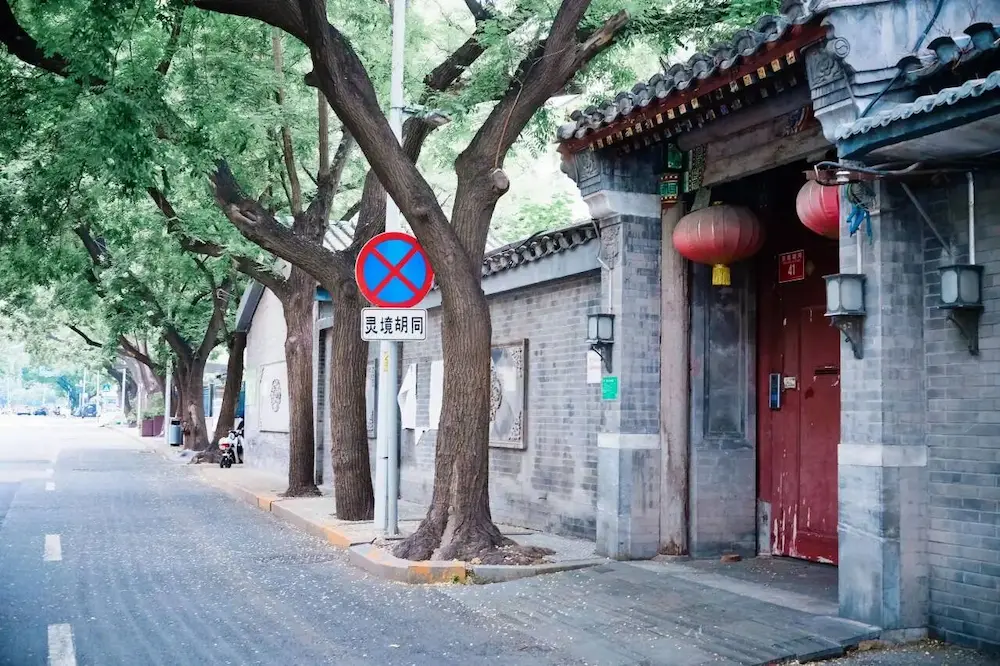
When I visited, the entrance was a standard iron gate typical of a residential compound, with a small bronze plaque reading “Former Residence of Chen Geng.” There was no grand entrance or exhibition hall—it looked very unassuming.
I met an elderly gentleman who lives nearby. He told me that Chen Geng was exceptionally affable back in the day, often chatting with neighbors and never putting on airs. It’s hard to imagine that this general, with his illustrious military career, once lived in this ordinary alley for ten years.
2. Former Residence of Chen Baochen, Tutor to the Last Emperor (No. 33 Lingjing Hutong)
Chen Baochen was a late Qing dynasty official and renowned calligrapher, as well as the tutor to the last emperor, Puyi. Every day, he would enter the palace from here to teach Puyi.
Today, most of the courtyard has been demolished, leaving only a few old buildings and weathered brick carvings. The entrance is cluttered with junk, and there is no prominent heritage preservation sign; you’d never notice it unless you looked closely.
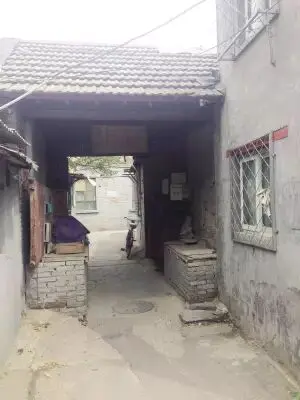
Standing before the remaining old walls and running your fingers over the faded brick carvings, you can picture the imperial tutor coming and going every day back then—it feels like a journey through time.
The Transformation of the Hutong: From Narrow Alley to City Boulevard
Stories of Change I Heard in Lingjing Hutong
Official Records of Changes:
- Before the 1980s: This was still a narrow alley;
- 1985: Old houses in the western section were demolished, and a six-story residential building was constructed; the alley began to be widened;
- 1992: Large-scale widening and renovation took place, transforming it into the two-way street it is today;
- 2022: It was included in the *List of Traditional Place Names for Protection in the Capital’s Core Functional Area*, and the alley’s name received official protection.
Memories of a Longtime Local Resident (as recounted by a resident in his 70s; for reference only):
“It used to be so narrow here—you didn’t even have to stand up to pass a cigarette to the person across the way.”
Walking here now, you won’t hear the traditional Beijing pigeon whistles or see vendors carrying vegetables on shoulder poles—only cars and pedestrians passing by. But when old Beijingers walk by, they still stop to take a look, recalling what the narrow alleys were like when they were children. In its own spacious way, this street has preserved a piece of old Beijing’s memory.
Recommended Photo Spots
1. East Entrance of the Hutong (Fuyou Street Side)
Tall red walls line the quiet streets, where there is little traffic. You can capture images of the old city’s red walls coexisting with modern streets and alleys.
2. West Entrance of the Hutong (Xidan North Street Side)
Stand at the entrance to the hutong, frame the Xidan Modern Shopping Center in the distance, and capture the contrast between the old hutong streets and the modern commercial district; the soft light around sunset is ideal for photography.
3. Entrance to Courtyard 41 (Chen Geng’s Former Residence)
The commemorative plaque at the entrance is a great spot for history buffs to take documentary-style photos. Please remain quiet and do not disturb the residents.
4. Old Walls Near Courtyard No. 33 (Former Residence of Chen Baochen)
Remnants of old brick carvings, ideal for documenting the vestiges of historic buildings.
Photo Tip: By setting the phone to 0.5x wide-angle mode, you can capture the spacious feel of this alley.
4 Types of Content Perfect for Photography in Lingjing Hutong
1. The stark contrast in urban environments between the eastern and western ends of the hutong
2. The spacious layout of the 32-meter-wide alley
3. The streetscape where historic residential buildings intertwine with modern apartment buildings
4. Commemorative plaques at the entrances of famous figures’ former residences and the remaining old walls
FAQ
Lingjing Hutong vs. Nanluoguxiang
| Lingjing Hutong | Nanluoguxiang | |
| Core Experience | Changes in urban alleys, contrast between old and new environments | Traditional hutong layout + commercial district |
| Hutong Characteristics | Spacious, with two-way traffic | Traditional narrow hutong alleys |
| Tourist Foot Traffic | Generally low | High volume of tourists |
| Historical Sites | Two former residences; exterior photo spots only | Numerous interconnected historic courtyard sites |
| Commercial | Atmosphere | Virtually no commercial shops within the hutongs Highly commercialized |
| Recommended Visit Duration | 30–60 minutes | 1–2 hours or more |
This was my second visit to Lingjing Hutong, and I deliberately chose a rainy day. With fewer people around and the wet pavement glistening, the 32-meter-wide alley suddenly felt a bit lonely. It lacks the bustling energy of Nanluoguxiang and the commercialization of Yandai Xiejie; instead, it quietly sits beside Xidan, with the hustle and bustle on one side and tranquility on the other.
To me, it’s not just another “must-visit Instagrammable spot,” but a place where you can experience Beijing’s contrasts and feel the blend of history and modernity. If you appreciate “a little quiet in the big city,” enjoy finding peace amidst the hustle and bustle, and love hearing stories of old Beijing, then you’ll understand why I recommend this place.
If you’ve already witnessed the splendor of the Forbidden City and navigated the crowds of Nanluoguxiang, why not take a stroll through Lingjing Hutong? From Beijing’s widest alleyway, you can experience a quiet authenticity that blends history with everyday life.
If you prefer the streets and alleys of bustling cities that retain traces of history, Lingjing Hutong will offer you a different experience of Beijing than Nanluoguxiang.
Author’s Note: This article is based on multiple on-site visits, publicly available historical records, and accounts from local residents; the accounts are provided for reference only. The neighborhood environment is subject to change; please check the actual conditions on-site before visiting.