Beijing Mianhua Hutong Guide: Cai E’s Former Residence, the Story of Xiao Fengxian, Must-See Attractions, and Walking Routes (2026)
Pre-trip Considerations: If you’re exploring the Huguosi area and looking for a hutong that doesn’t take too long to walk through but offers a glimpse into modern history and old Beijing life, Mianhua Hutong is a great addition to your itinerary.
What makes this place truly special isn’t a single fully open historic residence, but rather Courtyard No. 66, the two ancient locust trees, and the story of Cai E and Xiao Fengxian—all of which remain preserved in this ordinary residential hutong.
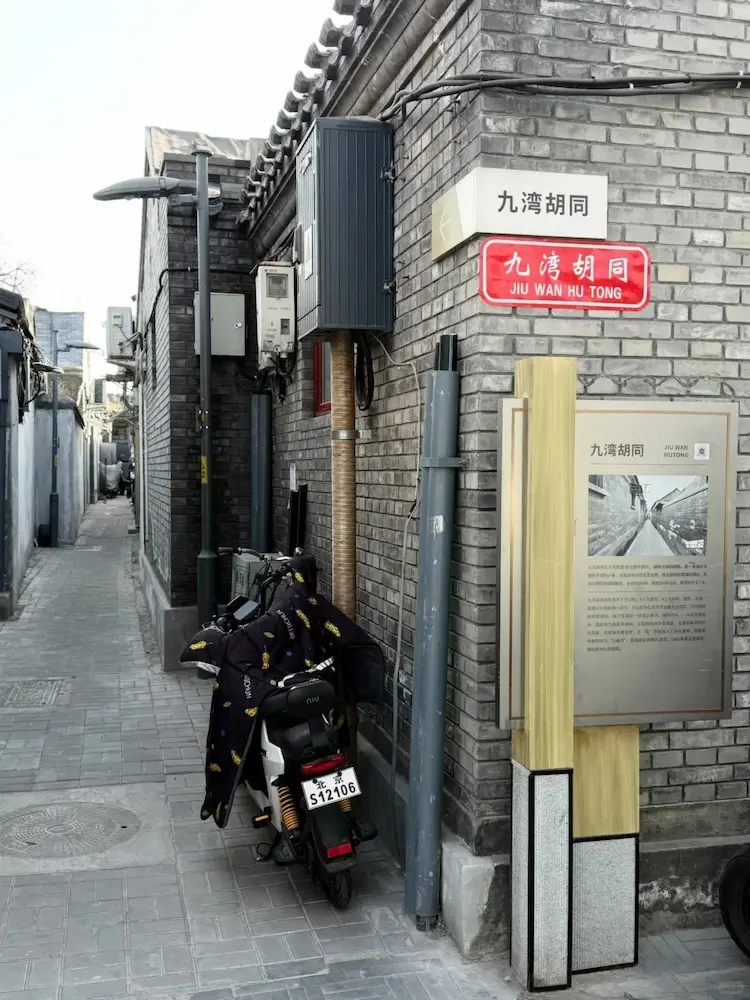
North of Beijing’s Huguo Temple Street lies a long north-south hutong named Mianhua Hutong. It stretches from Luo’er Hutong in the north to Huguo Temple Street in the south.
The name evolved from “Mianhua Hutong” (written with the character for “silk floss”) as recorded in the Ming Dynasty; in the Qianlong Reign of the Qing Dynasty, it was officially written as the current “Mianhua Hutong” (with the character for “cotton”) due to the similarity of the two characters’ forms.
There is also a legend behind the name: Qin Liangyu, a female general at the end of the Ming Dynasty, once wove cotton cloth here to raise military pay for the army, hence the name. Of course, this claim is unsubstantiated.
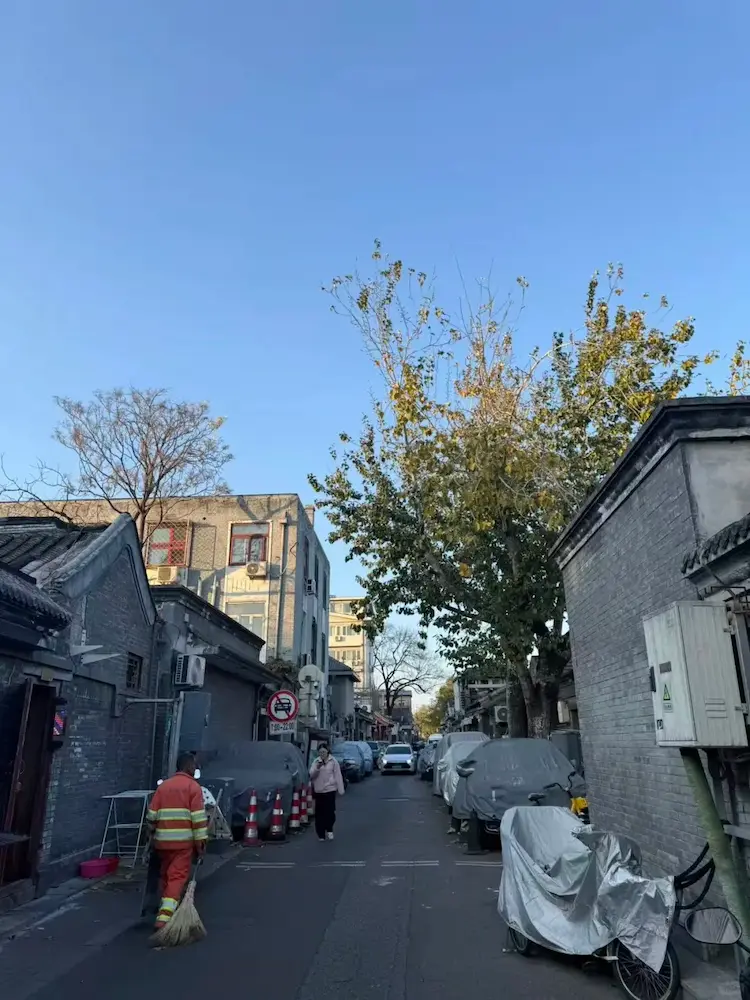
Table of Contents
Quick Guide
- Highlights: Cai E’s Former Residence (No. 66 Compound), the Centuries-Old Twin Locust Trees, the Legend of Xiao Fengxian’s Rescue Mission, the Ruins of Pilu Temple, and the Historic Sesame Oil Mill
- Location: North side of Huguosi Street, Xicheng District, connecting Luo’er Hutong and Huguosi Street
- Recommended Visit Duration: 20–30 minutes
- Admission: The hutong neighborhood is completely free.
- Note on Historic Residences: No. 66 Cai E Courtyard is a private residential compound and is not open to the public; visitors may only view it from the outside.
- Best for: Modern history enthusiasts, hutong CityWalk enthusiasts, and tourists passing through the Huguosi area.
- Keywords: Republican-era legends, General’s escape, ancient locust tree landmarks, traditional alleyways
- Best Itinerary: Huguosi Snack Street → Mianhua Hutong → Twin Ancient Locust Trees → Former Residence of Cai E—explore while listening to the stories
If you only have 30 minutes, try this route
Huguosi Street→Mianhua Hutong→Shuanggu Huai→Compound No. 66→Compound No. 16→Compound No. 53→Luo’er Hutong
Tip: You don’t need to set aside half a day specifically for this; Mianhua Hutong is better suited as a 20–30-minute historical detour during a city walk through the Huguosi and Shichahai areas.
⭐Visiting Mianhua Hutong for the First Time? Don’t Miss These 5 Spots
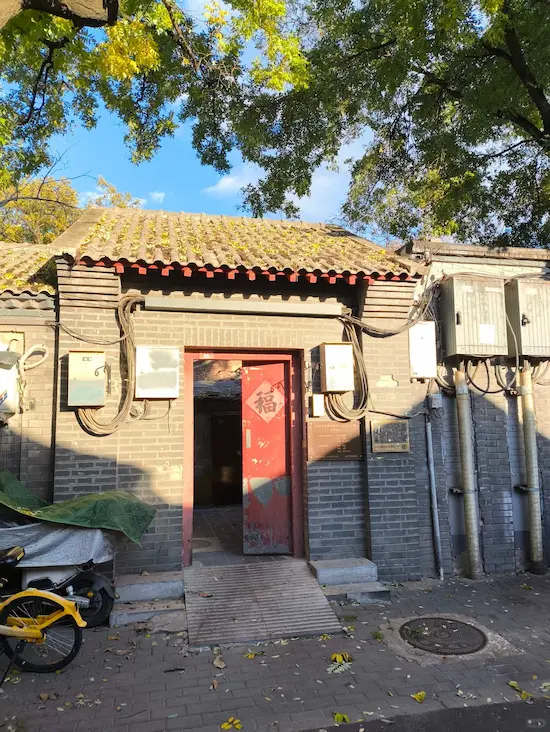
①Courtyard No. 66—Cai E’s Former Residence
The main attraction of the entire hutong. The focus isn’t on going inside; instead, stand by the side of the hutong and soak in the atmosphere of the place where Cai E was once placed under house arrest.
⚠The courtyard is a residential compound; entry is prohibited, and please do not disturb the residents.
②Two Ancient Locust Trees—Landmark
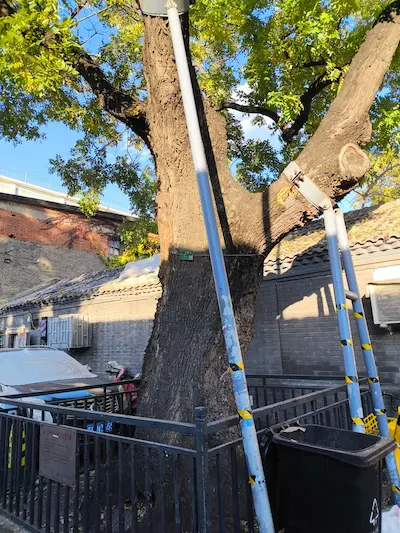
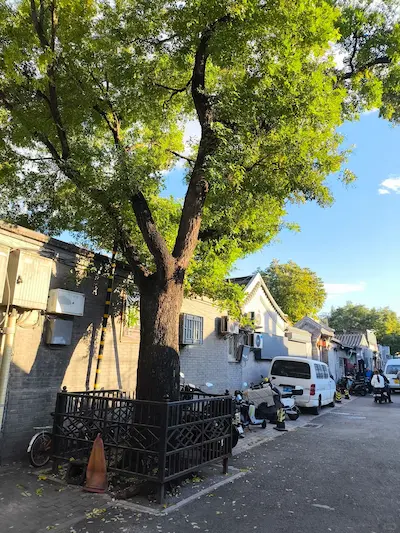
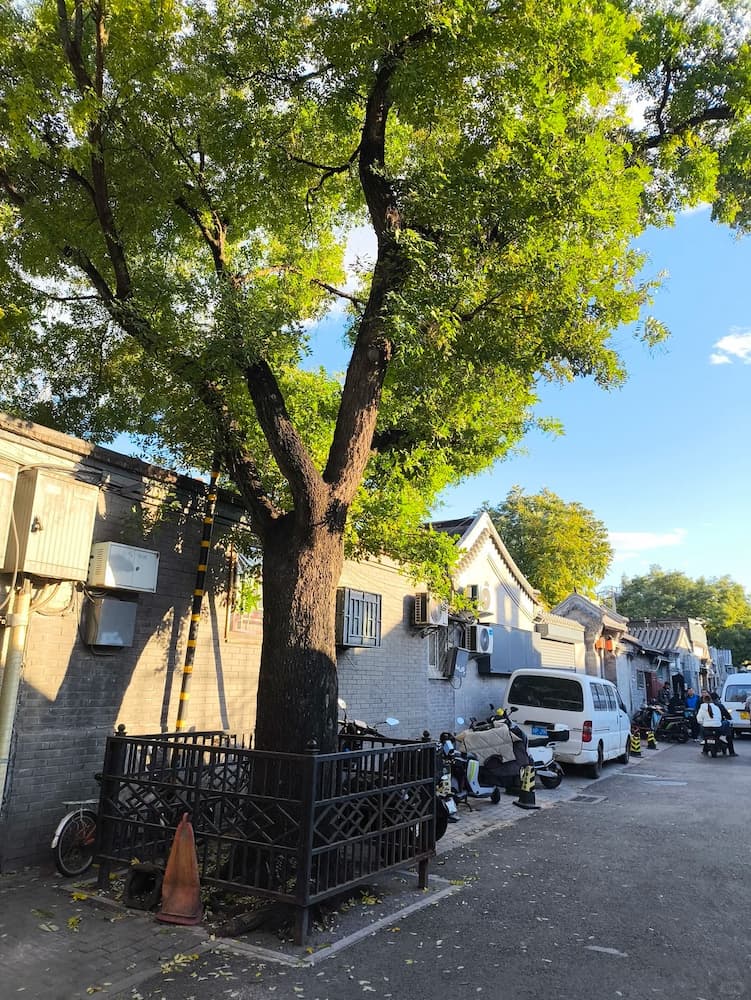
When you see these two towering ancient locust trees surrounded by iron railings, you know you’ve arrived near Courtyard No. 66. These ancient trees stand as silent guardians and are the hutong’s most recognizable feature.
③Courtyard No. 16—Remnants of the Longju Yong Heritage Brand
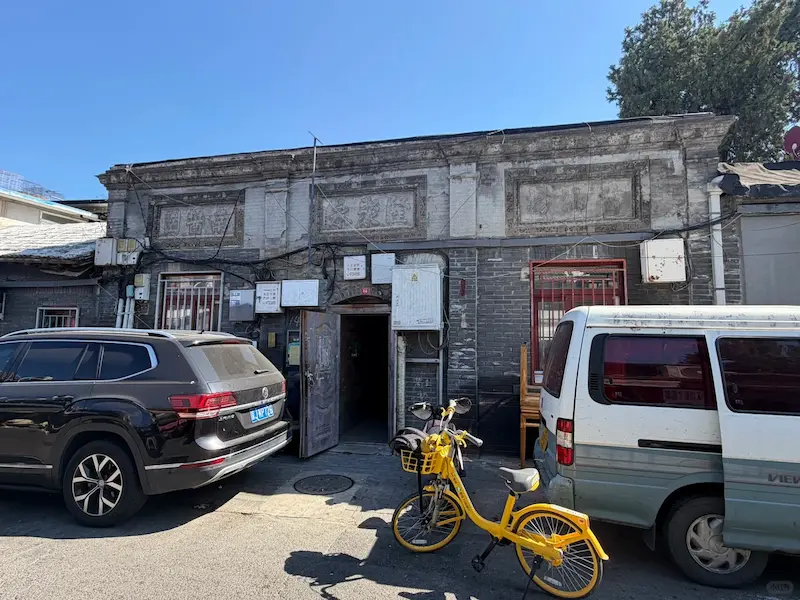
As you pass by, be sure to look up and admire the blue-brick plaques preserved on the gatehouse, inscribed with “Sesame Oil Workshop” and “Nan Jiangyuan,” to get a sense of these remnants of old Qing Dynasty shops.
④Courtyard No. 53—Former Site of Pilu Temple
Now transformed into an ordinary residential compound, don’t expect to see the complete ancient temple architecture; simply observe the ancient locust trees and architectural ruins within the compound.
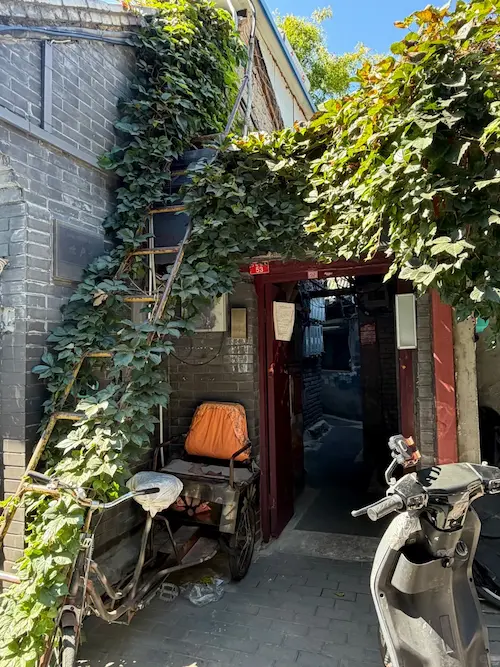
⑤The Hutong Itself
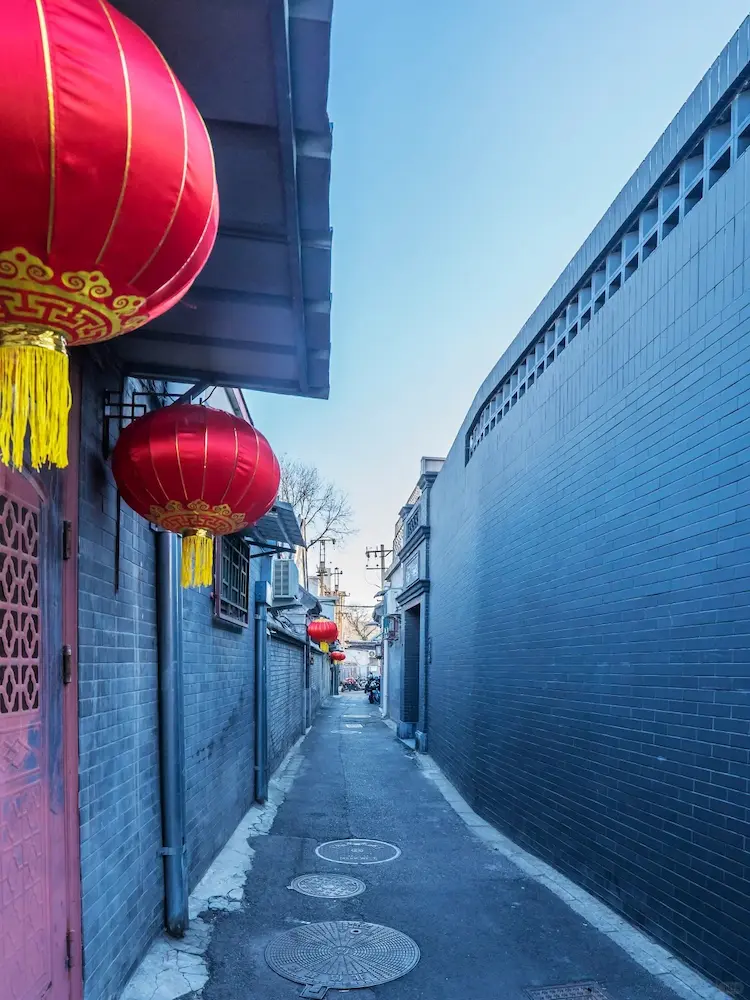
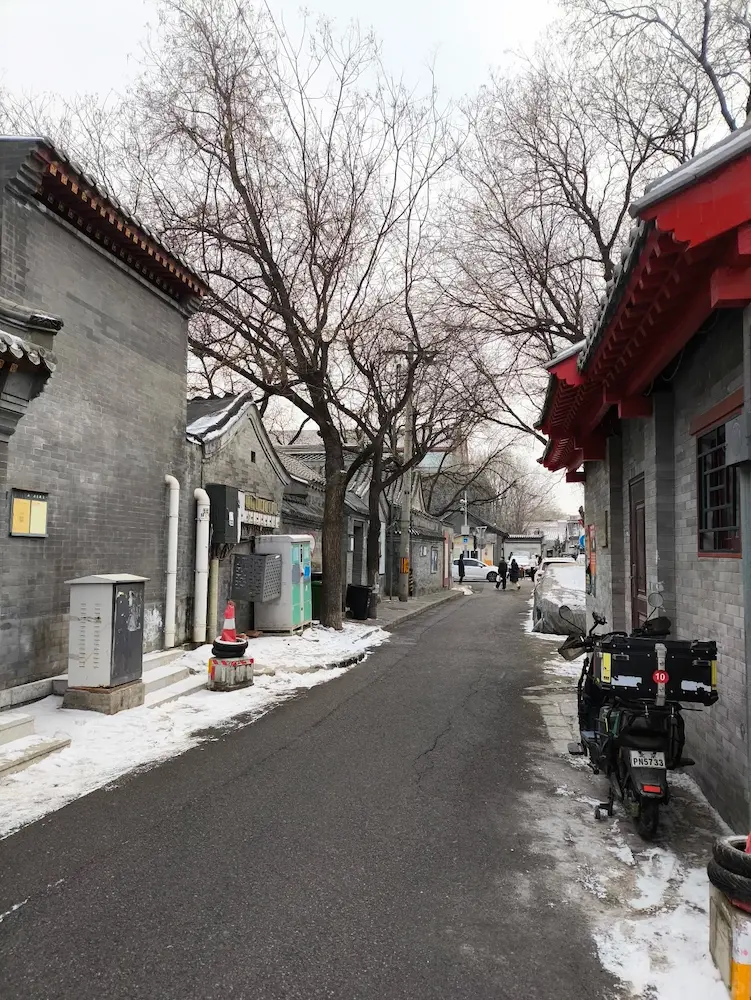
Don’t just keep your head down searching for photo spots. The greatest charm of Mianhua Hutong lies in the interweaving of historical relics and the daily lives of ordinary people. Take your time to admire the gate towers, old trees, and the layout of the streets and alleys—the stroll itself is part of the experience.
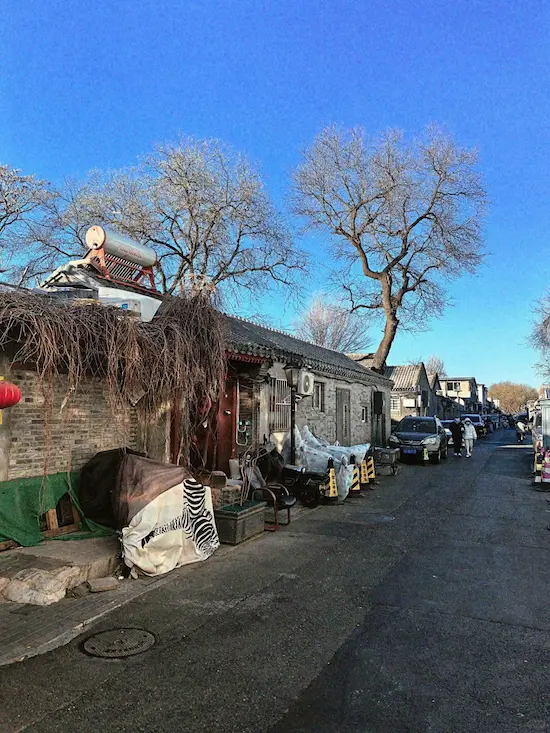
Is Mianhua Hutong Worth a Visit?
If you’re already in the Huguosi, Ping’anli, or Shichahai area, you can add Mianhua Hutong to your walking route.
It’s not a standalone attraction worth making a special half-day trip for, nor is it a large museum you can tour inside. Its appeal lies in spending 20–30 minutes experiencing modern history related to Cai E, century-old trees, and an authentic Old Beijing residential hutong all at once.
If you enjoy modern history and strolling through hutongs (CityWalk), you’ll find this place very rewarding;
If your Beijing itinerary is extremely tight and you’re prioritizing major attractions like the Forbidden City, the Temple of Heaven, and the Great Wall, then there’s no need to make a special detour here.
Who Should Visit Mianhua Hutong?
✅Ideal for:
- Visitors who have already planned to explore Huguosi Snack Street
- Travelers interested in modern and contemporary Chinese history
- Those who love old Beijing hutongs and CityWalk-style strolls
- Visitors seeking out historic sites associated with famous figures and historical details
❌You can skip this if:
- Your itinerary is extremely tight, and you’re prioritizing Beijing’s top must-see attractions
- Visitors hoping to tour the interiors of fully preserved, museum-like historic residences
Easiest Way to Get There | Copy the Walking Route
- Subway: Take Line 4 or 6 to Ping’anli Station, Exit B. Walk 3 minutes to Huguosi Street, then turn north, and you’ll arrive
- Recommended Route: Huguosi Snack Street → Mianhua Hutong → Cai E’s Former Residence (No. 66) → Ruins of Pilu Temple → Luo’er Hutong
- A Quick Reminder: The hutongs are quiet, and the former residence is a private home. Please admire the history from the outside only and do not disturb the residents.
On-site tip: If you’re at Huguosi Snack Street, after you’ve finished your snacks, just head north to enter Mianhua Hutong—no need to take the subway again.
30-Minute Walking Itinerary (Easy to Screenshot and Save)
0–5 minutes | Huguosi Street, enter the south entrance of Mianhua Hutong
5–15 minutes | Compound No. 66 + the Twin Ancient Locust Trees: Learn about the history of Cai E’s escape from house arrest; exterior view only
15–20 minutes | Courtyard No. 16: Look up to admire the historic blue-brick plaques of time-honored shops
20–25 minutes | Courtyard No. 53: Ruins of Pilu Temple—observe the remaining courtyard structures
25–30 minutes | Walk north to Luo’er Hutong to continue your urban stroll
A quick reminder: The hutongs are quiet, and the former residences are private homes. Please admire the history from the outside only and do not disturb the residents.
A Courtyard Guarded by Two Ancient Pagoda Trees
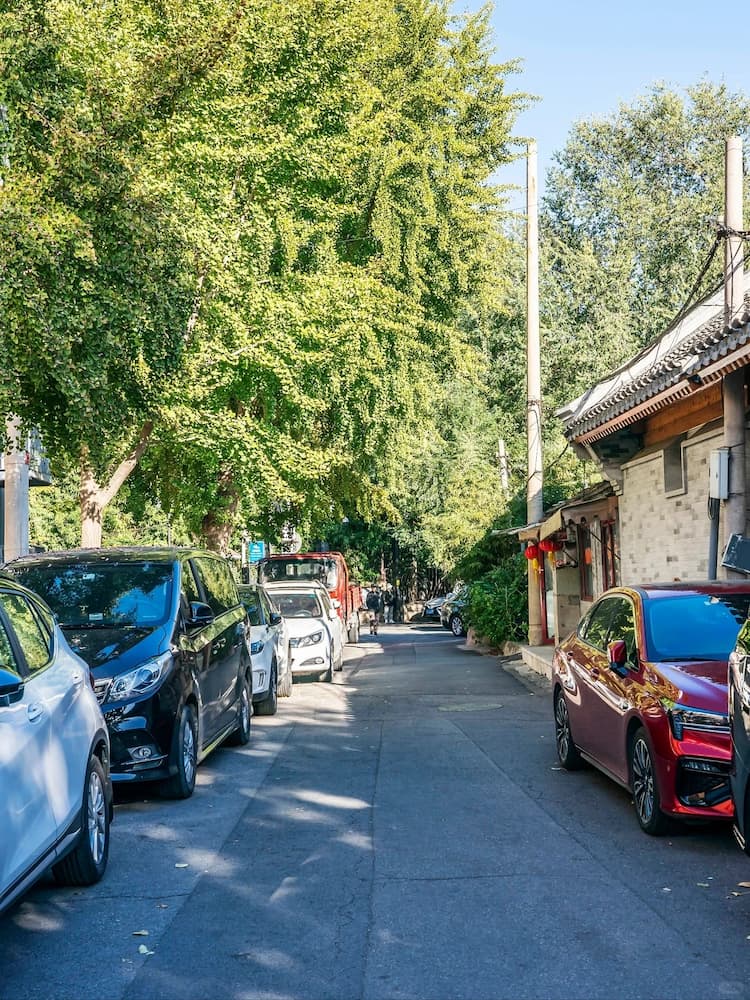
Mianhua Hutong is a long lane, and when you reach its middle section, two huge ancient trees come into view from afar. Enclosed by iron railings, they stand like two silent guardians in front of Courtyard No.66, their dense crowns almost shading the entire sky above the hutong.
This courtyard was the former residence of Cai E, a legendary general in modern Chinese history. The general has long passed away, but these two old pagoda trees still thrive.
⚠Important Notice: Compound No. 66 is currently a residential compound and is not a museum open to the public. Visitors may only view the compound gate and the ancient locust tree from the public road in the hutong. Please do not push open the gate to enter the compound, so as not to disturb the residents’daily lives.
General Cai E’s Confinement and Sensational Escape
From 1913 to 1915, Yuan Shikai, who held supreme power, confined Cai E in Beijing to prevent him from opposing his rule. At that time, Cai E lived in Courtyard No.66.
How Did Cai E Manage to Escape from Beijing?
In 1915, Yuan Shikai’s ambition swelled as he planned to restore the monarchy and proclaim himself emperor. On the surface, Cai E pretended to be indifferent to state affairs and even indulged in the opera house; secretly, however, he collaborated with a woman named Xiao Fengxian and elaborately plotted his escape.
ℹHistorical Analysis: It is an indisputable historical fact that Cai E successfully fled Beijing in secret; Xiaofengxian provided cover and assisted him in escaping. While numerous literary works and films have exaggerated their story, making it widely known, the specific details have not been fully corroborated by comprehensive primary historical sources.
In November of the same year, Cai E successfully left Beijing in secret, first heading to Tianjin, then taking a long detour, and finally arriving in Kunming, Yunnan, on December 19.
By this time, Yuan Shikai had officially proclaimed himself emperor, ordering the abolition of the Republic of China and the adoption of the “Hongxian” reign title.
Upon arriving in Kunming, Cai E immediately announced Yunnan’s independence with Tang Jiyao and other patriots on December 25, organizing the National Protection Army to launch an armed expedition against Yuan Shikai. Cai E served as the Commander-in-Chief of the First Army of the National Protection Army.
This just war garnered nationwide support. On March 22, 1916, under immense pressure, Yuan Shikai was forced to annul the monarchy. In June of the same year, Yuan Shikai died of illness. In July, Li Yuanhong, the succeeding President of the Republic of China, appointed Cai E as the Military Governor of Sichuan.
However, years of relentless warfare and toil had broken Cai E’s health. His condition deteriorated sharply by then, and throat cancer left him barely able to carry on.
In September 1916, he sailed to Japan for medical treatment, but ultimately succumbed to his illness in November of the same year in Fukuoka, Japan, at the young age of 34. A generation of military stars fell just like that.
Standing at the entrance to Compound No. 66 today, it’s hard to imagine that this was once the place where Cai E was kept under strict surveillance. For visitors, this is precisely what makes Mianhua Hutong so fascinating: what appears to be an ordinary residential compound today was, over a century ago, the site of events that changed the course of modern Chinese history.
Today, the exterior of Courtyard No.66 is quite dilapidated, housing about a dozen families, and bears no resemblance to its former appearance at all.
Other Stories in Mianhua Hutong
Mianhua Hutong holds more than just this piece of history.
- Courtyard No.16: It is the former site of Longjuyong, a time-honored brand of the Qing Dynasty. The gate tower still retains blue brick plaques engraved with “Sesame Oil Mill” and “Southern Pickle Garden”, a testament to its business back in the day. To this day, the surrounding area is still like a bustling small market, brimming with the vibrant flavor of ordinary people’s daily life.
- Courtyard No.53: It is the former site of Pilu Temple. First built in the Qianlong Reign of the Qing Dynasty, the temple enshrined Vairocana Buddha, one of the supreme deities in Esoteric Buddhism. Now, it has also become a multi-family courtyard, with makeshift color steel plate shanties covering part of the roof. Fortunately, however, two ancient pagoda trees are still well preserved in the courtyard.
A Hutong with Warmth
From the legend of the late Ming Dynasty, to the epic tale of a Republican general, and then to the enduring time-honored brands and the daily life of ordinary people, Mianhua Hutong, with its mere several hundred meters in length, bears stories and warmth spanning hundreds of years.
When you walk under those two ancient pagoda trees, you may still feel the lingering echo of that thrilling and stirring period of history in the wind.
Tips for Extending Your Walk: After your tour, head north to Luo’er Hutong to continue exploring the historic hutong district of Xicheng, and then make your way to the Shichahai and Houhai areas to continue your CityWalk.
FAQ
Q: Why is Mianhua Hutong called “Mianhua”?
During the Ming Dynasty, it was known as “Mianhua Hutong,” which later evolved into “Mianhua.” According to folklore, the female general Qin Liangyu spun cotton here to raise funds for her troops, hence the name.
Q: What is the address of Cai E’s former residence?
No. 66 Mianhua Hutong. The two massive ancient locust trees in front of the house are very distinctive and easy to spot at a glance.
Q: Is the story of Cai E and Xiao Fengxian true?
Historical records confirm that while Cai E was under house arrest, Xiao Fengxian helped cover for him and mislead secret agents, enabling him to escape and return to Yunnan to raise an army against Yuan Shikai.
Q: Can visitors tour the former residence today?
It is currently a residential compound and not open to the public. However, visitors can view the exterior from the entrance and soak in the historical atmosphere.
Q: Is there an admission fee for Mianhua Hutong?
The entire hutong area is free; there is no admission fee. However, the residential courtyards within the complex are not open to the public.
Q: How long does it take to explore Mianhua Hutong?
If you’re just taking photos from the outside, 20–30 minutes is plenty; you don’t need to set aside half a day.
Q: What’s the best place to enter Cotton Alley?
It’s best to enter from the southern end on Huguosi Street and head north, following the path all the way to Luo’er Alley without backtracking.
Q: Can I combine a visit to Cotton Alley with a trip to Huguosi Snack Street?
It’s a perfect combination. After eating at Huguosi Snack Street, simply turn north into Cotton Alley—it’s the most efficient way to see both.