2026 Ouya Hutong Beijing Travel Guide: A Hidden Free Hutong Next to Huguosi Temple – Best Visiting Time and Transportation Routes
If you enjoy exploring Beijing’s old neighborhoods, this narrow lane called Ouya Hutong is well worth a visit. Though absent from major tourist maps, it holds stories of ordinary life in old Beijing.
Table of Contents
Quick Guide
- Highlights: The exquisite brick-carved screen wall in Courtyard 7, the wood carvings on the Ruyi Gate, the former residence of a late Qing eunuch’s family, and the winding, lotus-bud-shaped alleys
- Location: Huguosi area, Xicheng District, adjacent to Mianhua Hutong and Zhengjue Hutong
- Recommended visit duration: 15–20 minutes
- Keywords: Hidden Gems of Huguosi, Architectural Carving Museum, Understated Courtyards of the Elite, Authentic Hutongs
- Best Itinerary: Huguosi Snacks → Mianhua Hutong → Ou Ya Hutong → Zhengjue Hutong—a quiet, uncrowded route
Easiest Way to Get There | Copy the Walking Route
- Subway: Take Line 4 or 6 to Ping’anli Station, Exit B; 4-minute walk
- Recommended Route: Huguosi Street → Mianhua Hutong → Ou’ya Hutong → Courtyard No. 7 → Zhengjue Hutong
- A Friendly Reminder: The hutongs are winding and narrow; please walk slowly, speak softly, and avoid disturbing the residents.
How Did Lotus Bud Alley Get Its Name?
Located in Beijing’s Xicheng District, Lotus Bud Alley stretches approximately 410 meters. Its winding path resembles not a straight road but the tender shoots (lotus buds) emerging from a lotus root—hence its name.
During the Republic of China era (1912-1949), the nearby Huguosi Temple hosted bustling temple fairs. Vendors selling fresh lotus roots and bean sprouts often gathered to trade in this alley. Combined with the alley’s winding shape, the name “Lotus Sprout” felt increasingly fitting.
In 1965, during Beijing’s citywide street name reorganization, the smaller “Twisted Doughnut Alley” to the north was merged into this lane.
Exquisite Courtyards Hidden Within the Alley
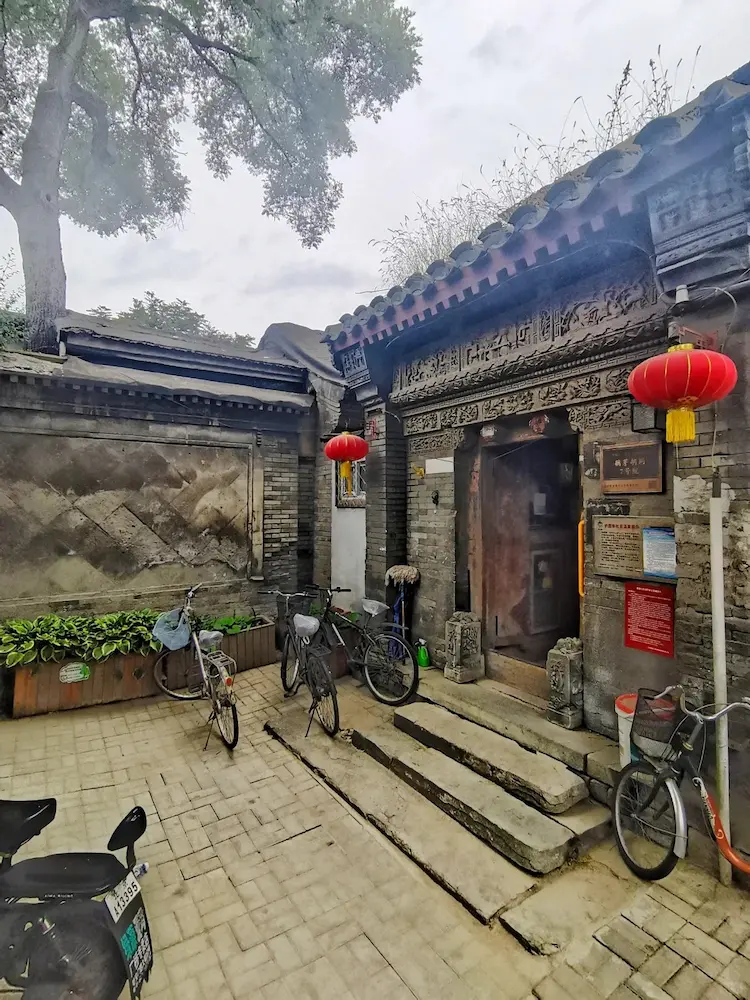
Deep within the alley lies Courtyard No. 7, distinguished by its exquisitely crafted entrance. It features a classic Old Beijing ruyi gate flanked by a screen wall.
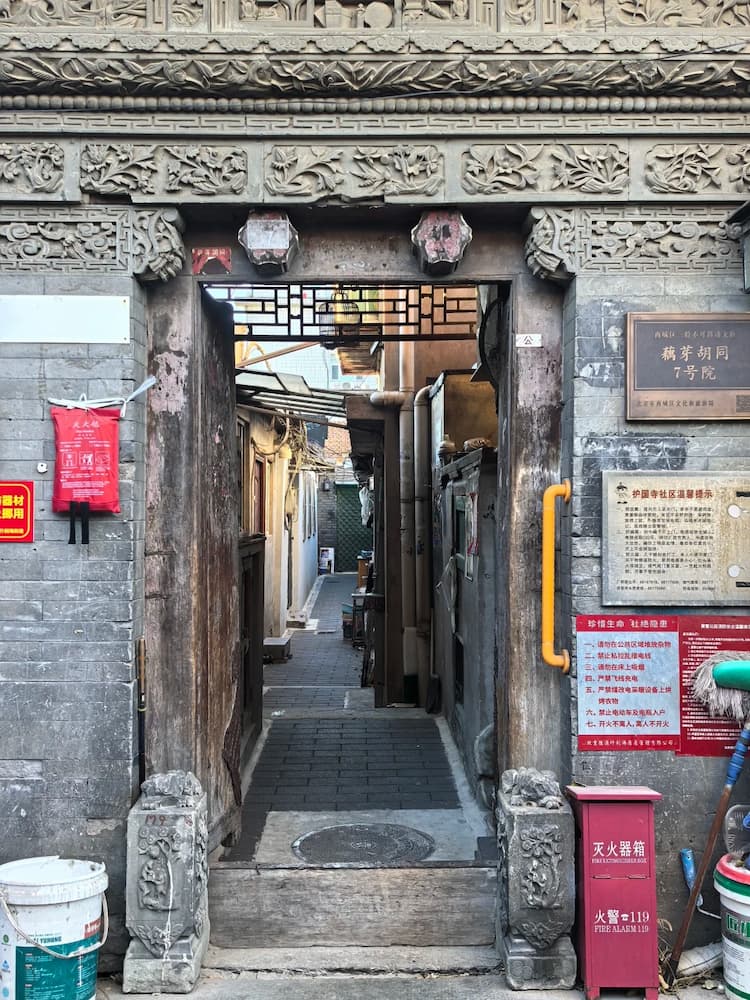
Upon closer inspection, the stones and bricks of the gate reveal intricate carvings. Motifs like the “White Ape Stealing Peaches” (symbolizing longevity) and auspicious patterns adorn the surface. The wooden lintel is equally ornate, carved with plum blossoms, orchids, bamboo, chrysanthemums, cranes, and deer—all representing noble aspirations.
Though now occupied by ordinary families, local elders recount that the courtyard’s original owner was the niece of Li Lianying, the powerful eunuch of the late Qing dynasty. Legend has it she won Empress Dowager Cixi’s favor with her embroidery skills and settled here after leaving the imperial palace. The courtyard’s location offers both urban proximity and serene tranquility.
People Encountered in Ouya Hutong
While photographing the alley, I met an elderly gentleman emerging from a courtyard. He jokingly asked, “What’s so photogenic about this rundown place?” I smiled and replied, “This is the real old Beijing.” The gentleman nodded in agreement, saying, “Yes, it’s just ordinary people’s lives.”
As I prepared to leave the alley, the old man rode by on his bicycle and paused to share some thoughts: “Life is about finding joy. Being healthy and alive is better than anything else. What good are billions if you lose your health?”
These words remind me that every time I walk through the alleys, encountering different people and having conversations with them, I gain new insights.
My Hidden Gems: The Side of Ou Ya Hutong That Others Miss
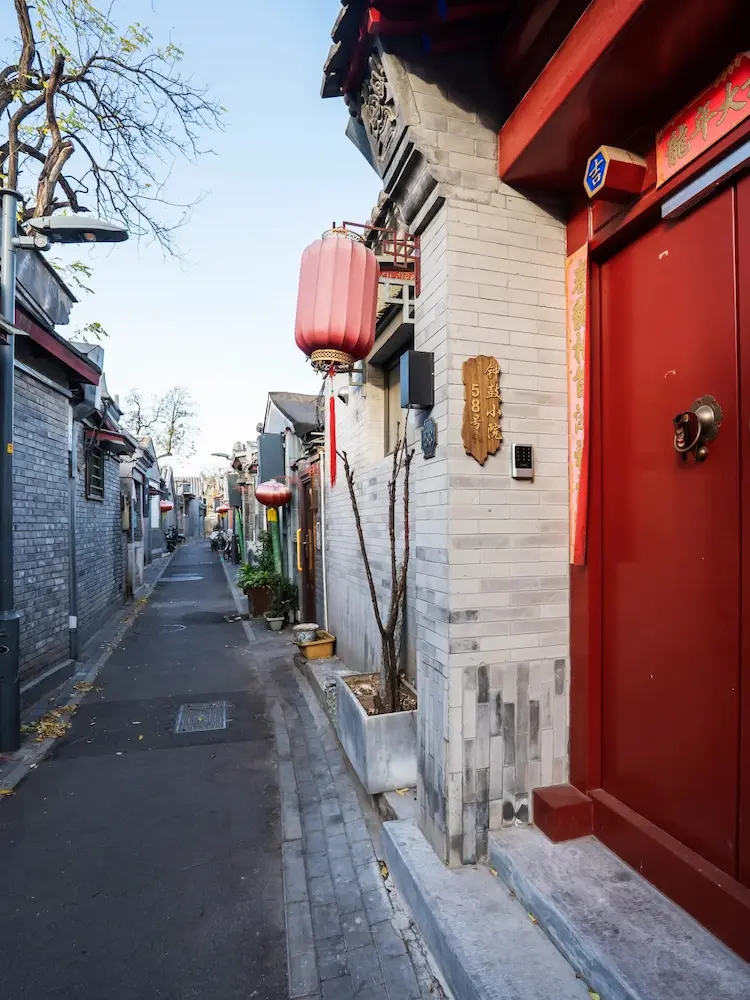
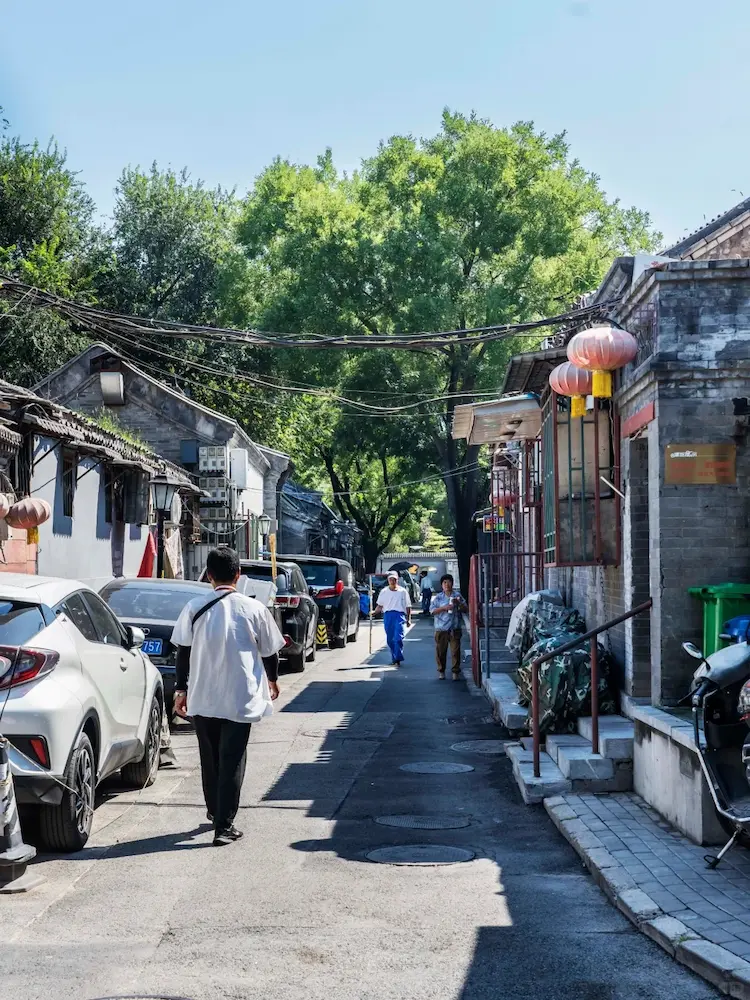
The hutong winds through the streets, offering the delight of “turning a corner to find a new world,” and makes for photos with a striking sense of depth
The brick carvings at Courtyard No. 7 are sharply defined in the sunlight; when you zoom in with your phone, every shot looks like a work of art.
The weathered walls and gently winding power lines, paired with the elegant gatehouse, create a striking contrast between old and new that’s truly charming.
I happened to strike up a conversation with an elderly man in the hutong. His authentic Beijing dialect was so down-to-earth and genuine—it was more captivating than any travel guide.
FAQ
Q: Why is Ou Ya Hutong called “Ou Ya”?
A: Because the alley winds in a way that resembles a lotus bud; during the Republican era, many vendors sold lotus buds here, and the name stuck.
Q: What makes Courtyard No. 7 special?
A: It preserves exquisitely detailed brick carvings, a screen wall, and a wooden “ruyi” gate. It is the highest-grade and most meticulously crafted courtyard in the alley.
Q: Is it true that the owner was Li Lianying’s niece?
A: This is a legend that has circulated in the alley for many years. It is said that she was favored by Empress Dowager Cixi for her embroidery skills and retired to this place after leaving the palace.
Q: Can visitors enter the courtyard?
A: It is currently a private residence and not open to the public. Visitors may only admire the architectural carvings from the entrance.
A Travel Tip for You
If you want to experience an authentic Old Beijing free from tourist crowds, take a stroll down Ouya Hutong. It’s close to the bustling Huguosi Street, so after exploring the alley, you can head over to Huguosi Temple to sample some Beijing street snacks.
When visiting Beijing, beyond touring the famous sights, why not veer into these small alleys? Take a peek into ordinary people’s courtyards and listen to their stories. You might just discover another side of this ancient city.