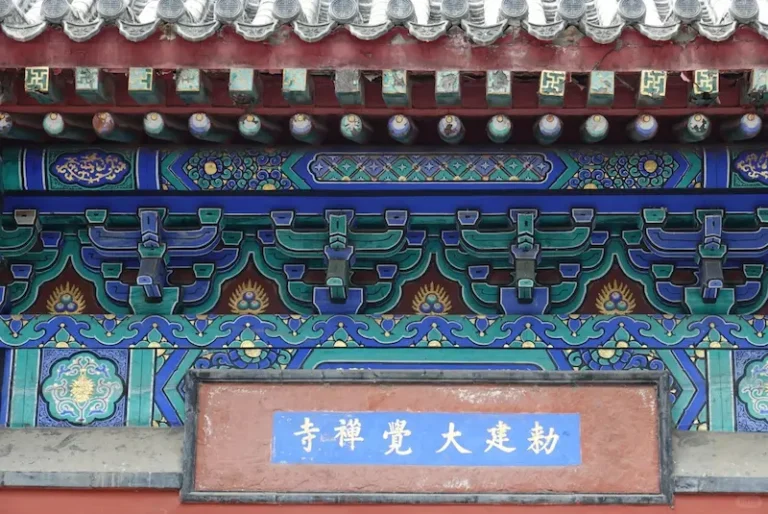
Tanzhe Temple Guide: Admission, Transportation, and Highlights (2026)
Tanzhe Temple is nestled among the mountains on the western outskirts of Beijing. A popular saying goes, “Tanzhe Temple came first, then Beijing.”
30-Second Quick Take: If you’ve already visited the Forbidden City and the Temple of Heaven and are looking to explore an ancient temple nestled in the mountains, it’s worth setting aside 3–4 hours here.
However, if this is your first time in Beijing and you’re on a tight schedule, it’s not a must-visit destination, as the site is quite far from the city center.
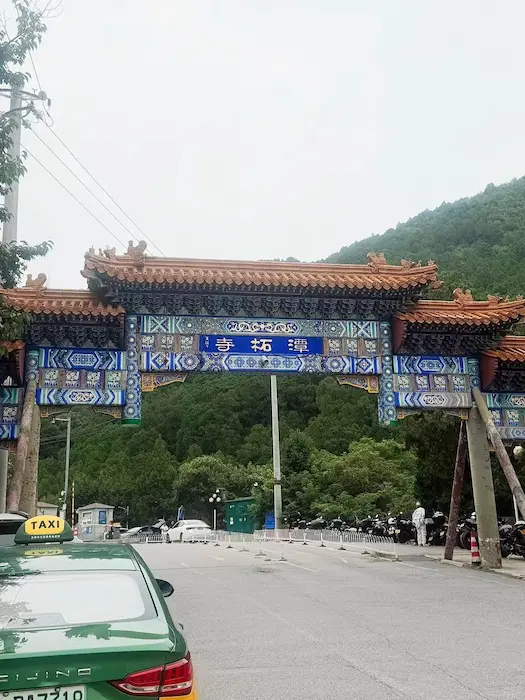
Table of Contents
Must-Read Before You Go: Practical Information
| Item | Details |
| Name | Tanzhe Temple (English: `Tanzhe Temple`) |
| Address | Tanzhe Temple Town, Mentougou District, Beijing |
| Year of Founding | The first year of the Yongjia era of the Western Jin Dynasty (307 AD); it has a history of over 1,700 years |
| Public Transportation | Exit at Shichang Station on Metro Line S1 and transfer to Bus No. 931 to reach the entrance of the scenic area; or transfer to Bus No. 931 at Pingguoyuan Station on Metro Line 1. Buses tend to have long lines on weekends, so it is recommended to check real-time bus status on a map app before traveling |
| Driving | Navigate to “Tanzhe Temple Parking Lot.” The drive from downtown takes about 1 hour. Parking costs 10 yuan per visit, and parking spaces are generally plentiful on weekdays |
| Admission | 50 yuan per person during peak season; half-price (25 yuan) for students and seniors aged 60 and over. Tickets can be purchased at the on-site ticket window or booked online via the official WeChat account or third-party platforms |
| Hours | 8:30 a.m.–4:30 p.m. (last entry at 4:00 p.m.); open year-round, including Mondays |
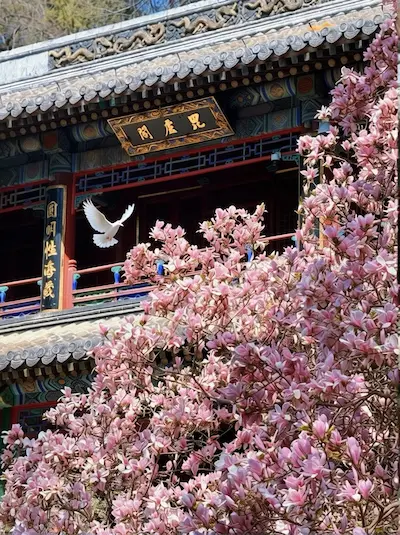
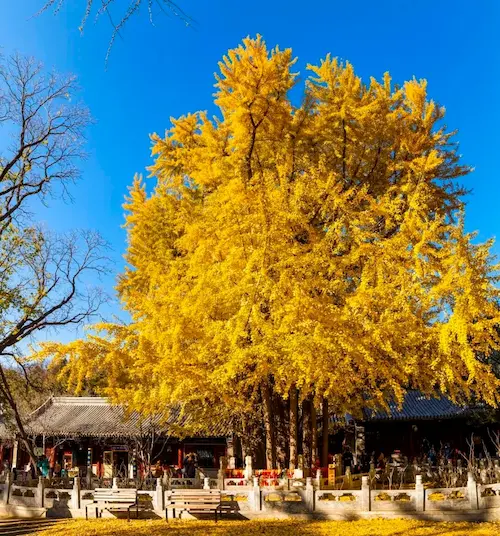
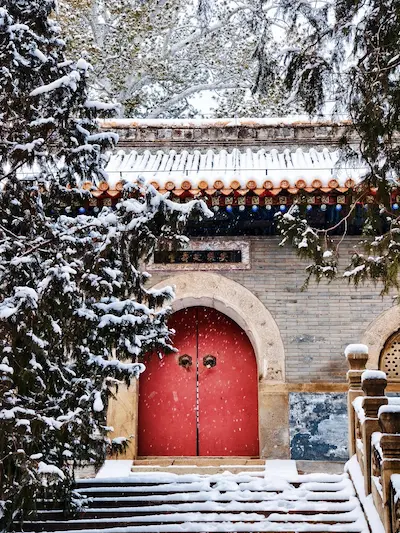
| Best Time to Visit | Spring⭐⭐⭐⭐⭐(March–April to view the “Two Qiao” magnolias); Fall⭐⭐⭐⭐⭐ (October–November to view the ancient ginkgo tree, known as the “Imperial Tree”); Summer⭐⭐⭐⭐ (cool mountain retreat); Winter⭐⭐⭐⭐ (fewer visitors; the ancient temple has a wonderful atmosphere after snowfall) |
| Recommended Visit Duration | Basic tour: 3–4 hours; In-depth tour: about 5 hours |
| Dress Recommendations | Comfortable, non-slip flat shoes; the temple is built on a mountainside with numerous steps and slopes throughout. Seniors and children are advised to take it slow and avoid overpacking their itinerary |
| Budget Guide | Admission: 50 yuan (approx. $7) + Parking: 10 yuan (approx. $1.4) + Light meal: 30–50 yuan (approx. $4–7) |
| Photography Rules | Feel free to take photos in outdoor areas; photography of Buddha statues inside the main hall is prohibited—please follow on-site signage |
| Language Note | There are no official English audio guides at the site; we recommend bringing a translation app |
Important Reminders
1. The temple provides three sticks of incense free of charge; visitors do not need to bring their own incense or candles;
2. Try to avoid weekends, the first and fifteenth days of the lunar month, and national holidays, as visitor numbers increase significantly during these times.
What Kind of Visitors Is Tanzhe Temple Suitable For?
Highly recommended for:
- Those who love ancient architecture and Buddhist history and culture;
- Those who long for a mountainous, forested setting and are seeking peace and relaxation;
- Those who enjoy photographing cultural landscapes;
- Those who want to see the thousand-year-old ginkgo trees in the fall or admire the ancient magnolias in the spring;
- Those who have already visited core downtown attractions like the Forbidden City and the Temple of Heaven and wish to explore destinations in western Beijing.
You may want to skip this if:
- It’s your first visit to Beijing, your overall itinerary is only 2–3 days long, and you’re short on time;
- You have limited stamina and are unwilling to walk up stairs and slopes for extended periods;
- You only want to visit the most central historic sites in downtown Beijing;
- You’re unwilling to spend a significant amount of time traveling to and from the suburbs.
The Origins and History of Tanzhe Temple
Tanzhe Temple was first built in the first year of the Yongjia era of the Western Jin Dynasty (307 AD) and was originally named Jiafu Temple.
During the Qing Dynasty, Emperor Kangxi bestowed the name “Xiuyun Temple” by imperial decree; however, because there is a Dragon Pond behind the temple and jujube trees grow in the mountains, the local people have always referred to it as Tanzhe Temple, and this name has become widely known.
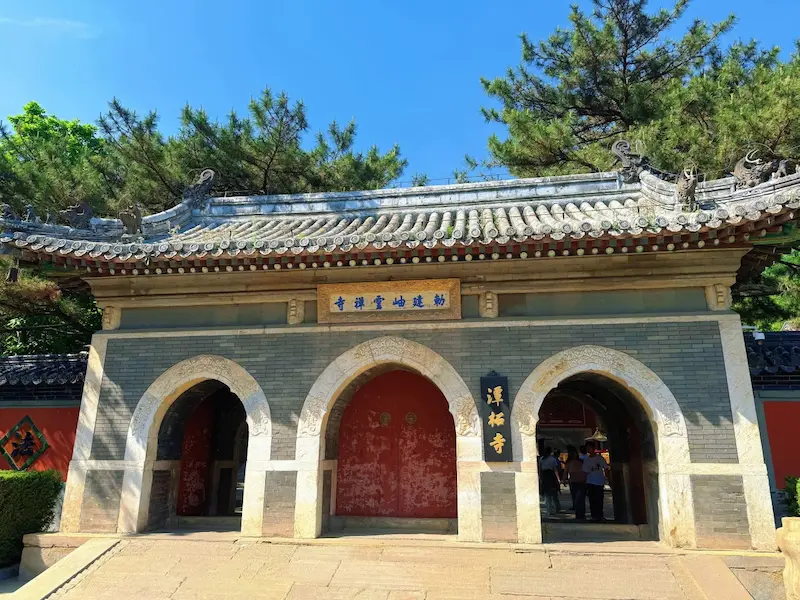
Cross-cultural interpretation: Tanzhe Temple can be compared to Canterbury Cathedral in England; it was already an important religious site long before the capital city took shape.
A popular saying goes: “Tanzhe Temple came first; Beijing came later.” A More Rigorous Interpretation: Tanzhe Temple was built before the construction of the Yuan Dynasty’s Dadu (Beijing as the capital of a unified dynasty); since Youzhou was the ancient name for the Beijing region, there is also the saying, “Tanzhe Temple came first, followed by Youzhou City.”
In 2001, Tanzhe Temple, along with its pagoda forest, was listed as a National Key Cultural Relic Protection Unit in the fifth batch.
First-Time Visit: 3-Hour Essential Tour Itinerary (Just follow this route—no need to visit every side hall)
No need to visit every hall; prioritize the core highlights. Route logic: Mountain Gate (imperial-style architecture) → Ancient Tree Garden → Elevated Halls → Sites of Cultural Legends → Pagoda Grove.
Mountain Gate → Hall of the Heavenly Kings → Great Hall of the Buddha → Imperial Tree → Floating Cup Pavilion → Vajra Longevity Pagoda → Yuantong Hall → Guanyin Hall → Dragon King Hall → Lower Pagoda Grove
✅6 Must-See Highlights
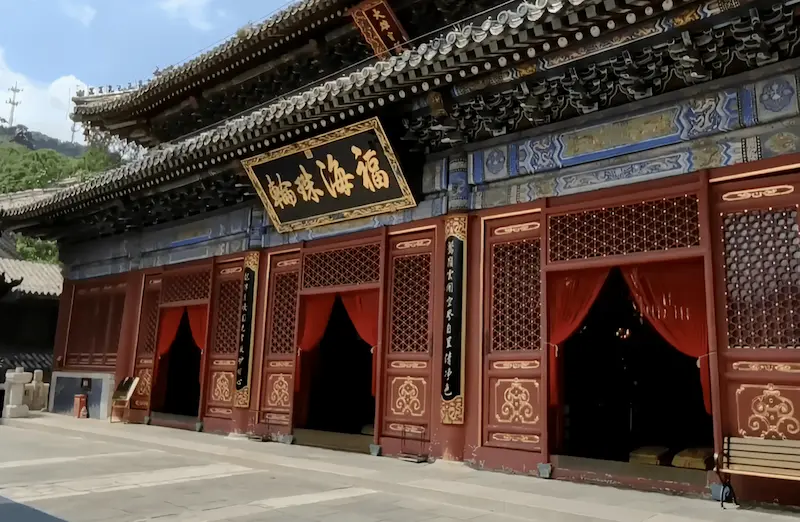
1. Great Buddha Hall | A Representative Structure of Imperial Temples
As the temple’s highest-ranking main hall, it is covered with yellow glazed tiles, and its plaque inscribed with “Sea of Blessings, Pearl Wheel” was personally written by Emperor Qianlong.
The chiwen ornaments at both ends of the roof ridge stand nearly 3 meters tall, showcasing the grand scale and imperial standards of the temple.
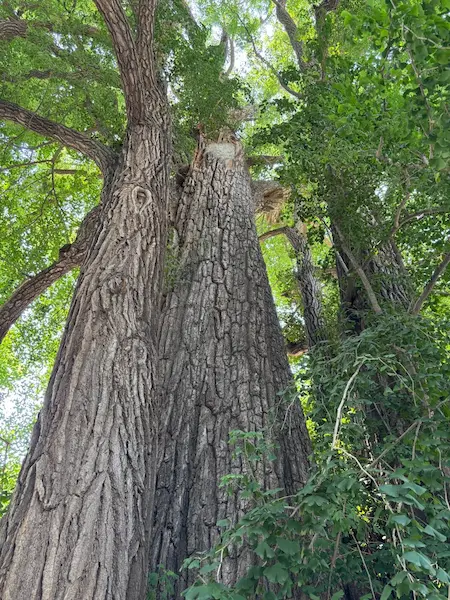
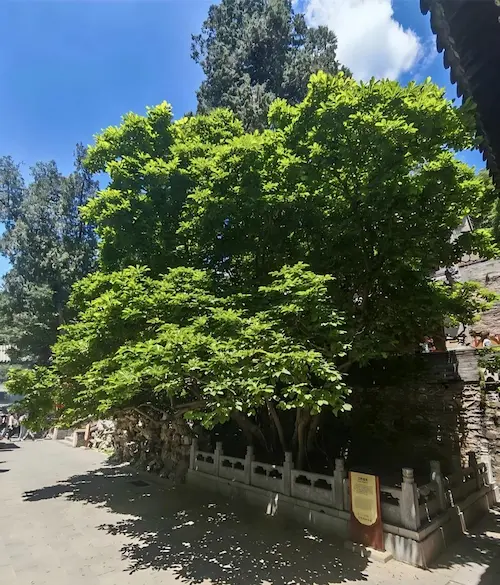
2. The Imperial Tree | A Millennium-Old Ginkgo (Autumn Highlight)
Behind the Great Hall of the Buddha stands an ancient ginkgo tree estimated to be over 1,400 years old and nearly 40 meters tall. Emperor Qianlong bestowed upon it the name “Imperial Tree,” and it is flanked by the “Prince Tree.”
Every late autumn, the tree is blanketed in golden hues, making it a signature landmark of Tanzhe Temple.
3. Liu Bei Pavilion | Remnant of the Imperial “Curving Stream Wine Tasting” Ritual
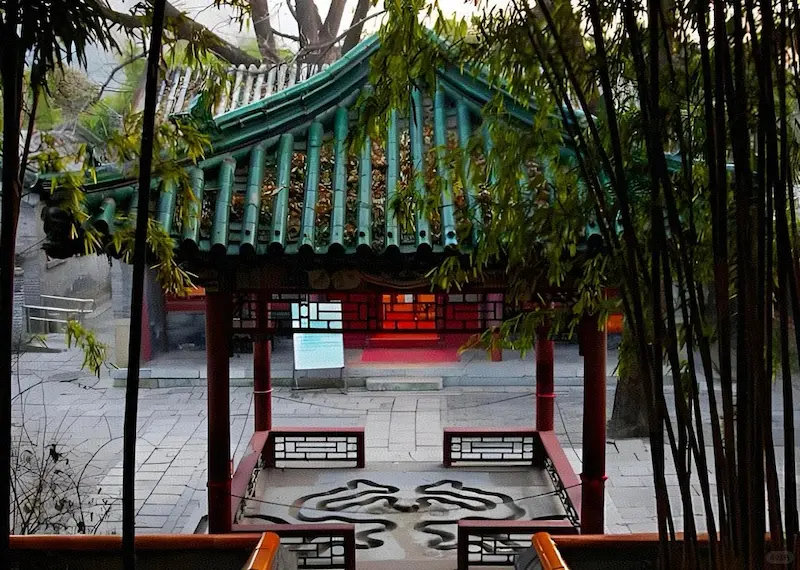
Located in the eastern courtyard, this was the site where the emperor and his ministers would drink wine and compose poetry during the Kangxi era. The white marble pedestal inside the pavilion is carved with a meandering waterway; when viewed from the south, the pattern resembles a dragon’s head, while from the north, it resembles a tiger’s head; hence it is also known as the Dragon-Tiger Pavilion.
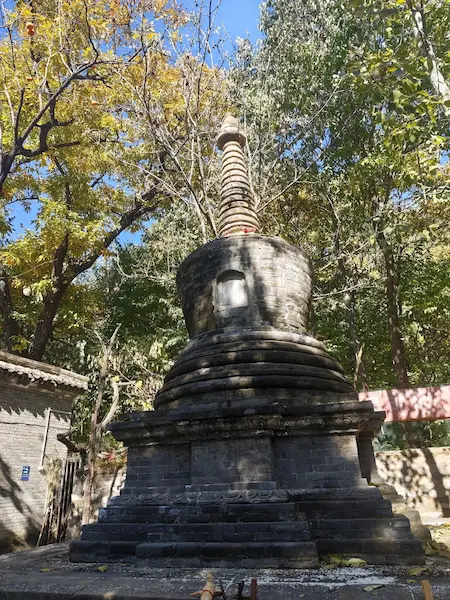
4. Vajra Longevity Pagoda | Ming Dynasty White Pagoda
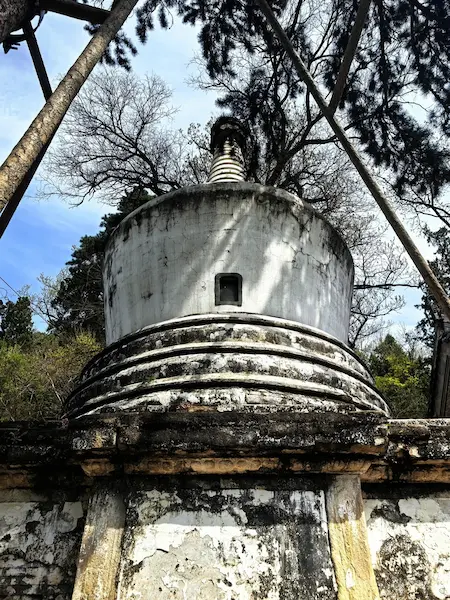
Built during the Ming Dynasty to pray for the well-being of the Empress Dowager, this inverted-bowl-shaped white pagoda stands pure and majestic, serving as one of the temple’s most recognizable structures.
5. Guanyin Hall | Relics Associated with Princess Miaoyan
⚠️ This is a story passed down through folk tradition and does not entirely correspond to verified historical records.
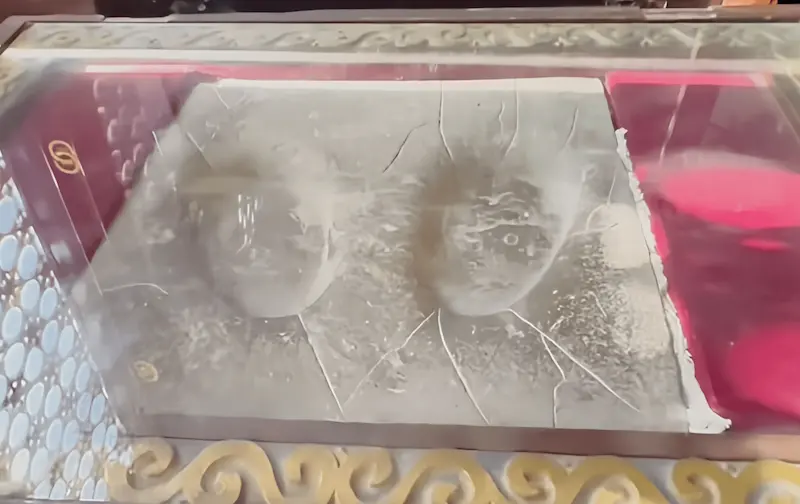
Inside the hall lies a blue brick. According to folk legend, Princess Miaoyan—daughter of Kublai Khan, the founder of the Yuan Dynasty—knelt in prayer before the Buddha here for many years, leaving marks on the brick from her prolonged kneeling. This story is widely circulated and can be regarded as a folk tale.
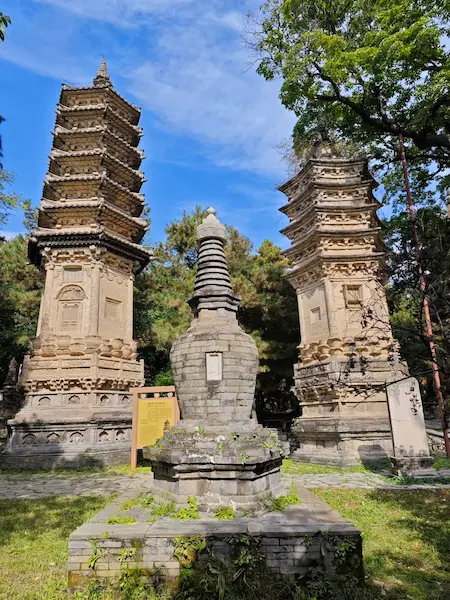
6. Lower Pagoda Grove | Cluster of Stupa Tombs of Eminent Monks from Various Dynasties
This grove contains stupa tombs of eminent monks from the Jin Dynasty through the Qing Dynasty. Currently, 75 brick pagodas of various styles remain, with each era’s pagodas featuring distinctive architectural characteristics. While parts of the pagoda grove are currently under renovation, most of the pagodas can be viewed from outside the surrounding wall.
Visit if You Have Extra Time (Optional)
- Pilu Pavilion: A large hall located on the upper part of the temple grounds, housing statues of the Three Bodies of the Buddha and Vajrayana deities;
- The Two Qiao Magnolias: Ancient Ming Dynasty magnolia trees in the East Courtyard that bloom profusely every year from March to April; the combination of white and purple flowers against the red walls is particularly beautiful;
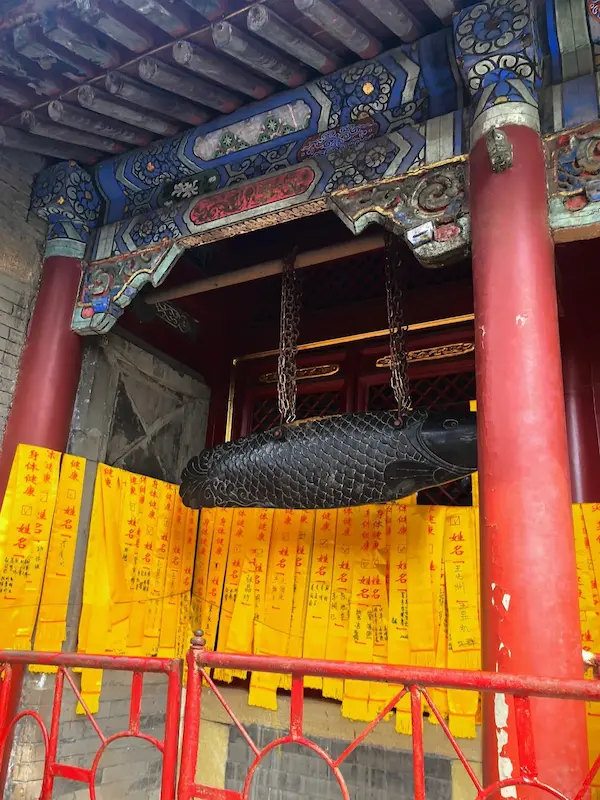
- The Stone Fish at the Dragon King Hall: >⚠️ This is part of a folk legend. Outside the hall stands a stone fish weighing 300 jin. According to folklore, striking different parts of it is said to bring peace and blessings; today, many visitors come here to experience this folk custom, though it has no actual efficacy;
- Tiger Pagoda: Located in the pagoda grove, folklore claims it was built to teach a tiger to do good—this is a folktale.
Tip: If you have extra time, you can also sit for a while in the “Gold-Inlaid Jade” bamboo grove to enjoy the tranquil atmosphere of the woods.
Temple Visiting Etiquette (Important Guidelines for Foreign Visitors)
1. Please remain quiet inside the main hall; do not speak loudly;
2. Photography of Buddha statues inside the hall is prohibited; strictly follow the on-site signs;
3. Please do not touch statues or cultural relics without permission;
4. Burning incense is a personal, voluntary practice; the temple provides incense free of charge, so there is no need to feel obligated;
5. Do not stand directly in front of worshippers taking photos, and do not disturb ongoing religious activities;
6. Try not to step directly on the threshold, as this is a common traditional custom in Chinese temples;
7. Respect local religious customs and traditions, and view various legends about blessings with a rational perspective—there is no need to be superstitious.
Recommendations for Visiting Tanzhe Temple Throughout the Seasons
- Spring (March–April): Focus on the “Two Qiao” magnolias, combined with a tour of the ancient architecture and courtyards;
- Fall (October–November): Focus on the “Imperial Tree” ginkgo; prioritize visits to the Great Hall of the Buddha and the Pagoda Grove;
- Summer: The mountain air is cooler than in the city, making it ideal for escaping the heat; after exploring the temple, you can relax in the bamboo grove courtyard;
- Winter: Fewer visitors; after a snowfall, the red walls, white snow, and ancient pagodas create a truly atmospheric scene.
Photography Spot Guide
| Spot | Location | Best Time | Tips |
| Ancient Ginkgo Tree | Behind the Great Buddha Hall | Late fall (October–November) | Shoot from a low angle to capture the entire canopy in the frame |
| Erqiao Magnolia | East Road of the Temple | Early spring (March–April) | Pair the flowers with the red walls for a clean composition |
| Great Buddha Hall | Center of the temple complex | Morning | Capture the overall grandeur of the imperial temple with its yellow glazed tiles |
| Vajra Longevity White Pagoda | High point on the East Road | Afternoon | Use the blue sky as a backdrop to highlight the pagoda’s silhouette |
| White Marble Pedestal of the Flow-Cup Pavilion | Flow-Cup Pavilion on the East Road | All day | Focus on capturing the intricate details of the meandering water channels carved into the pedestal |
| Lower Pagoda Grove | Next to the New Mountain Gate | Morning/Afternoon soft light | Ancient pagodas of varying heights paired with old trees, highlighting a sense of historical grandeur |
| Aerial View of the Yuantong Hall | Yuantong Hall, the highest point of the temple | Afternoon | Overlooking the entire temple complex and the distant layered mountain ranges |
Tip: Focus on capturing the historical atmosphere of the ancient temple; avoid overly pursuing Instagram-worthy shots.
Suggested Itineraries for Nearby Attractions
Categorized into half-day, full-day, and in-depth tours of Western Beijing to help visitors plan their trips
Half-Day Itinerary
Visit Tanzhe Temple only.
Full-Day Itinerary
Tanzhe Temple and Jietai Temple are about a 10-minute drive apart, so you can visit both ancient temples in a single day.
In-Depth Multi-Day Tour of Western Beijing
Tanzhe Temple + Cuandixia Ancient Village / Shuanglongxia Gorge; both are about a 1-hour drive from Tanzhe Temple. It is not recommended to cram these into a single day; they are best suited for a multi-day trip to Western Beijing.
| Attraction | Direction | Distance | Highlights |
| Jietai Temple | Nearby | About a 10-minute drive | Famous ancient temple with the remains of a large ordination platform |
| Cuandixia Village | West | About an hour’s drive | Ancient mountain village from the Ming and Qing dynasties |
| Shuanglongxia Gorge | West | About an hour’s drive | Scenic mountain gorge, ideal for summer retreats |
FAQ
Tanzhe Temple is located far from Beijing’s bustling city center, nestled among the mountains in the western suburbs. It is precisely this distance that has allowed the temple to preserve the serene atmosphere of a thousand-year-old monastery.
Once inside, you can gaze up at the “Emperor’s Tree,” which has weathered a thousand years of wind and rain, and stroll among the tombs and stupas of eminent monks spanning the Jin, Yuan, Ming, and Qing dynasties.
You can also listen to time-honored folk tales—such as those of Princess Miaoyan and the “Stone Fish”—and distinguish between historical records and folk legends.
Tip: We recommend setting aside half a day for your visit. If you’d like to explore more of Mentougou’s scenic spots, you can plan a separate day to visit the nearby ancient villages and gorges. There’s no need to rush through every hall—the best way to experience Tanzhe Temple is to take your time and savor the tranquility of the ancient temple nestled in the mountains and forests.