Da Jue Temple Guide: An Ancient Temple from the Liao Dynasty—Why Does the Mountain Gate Face East? (2026)
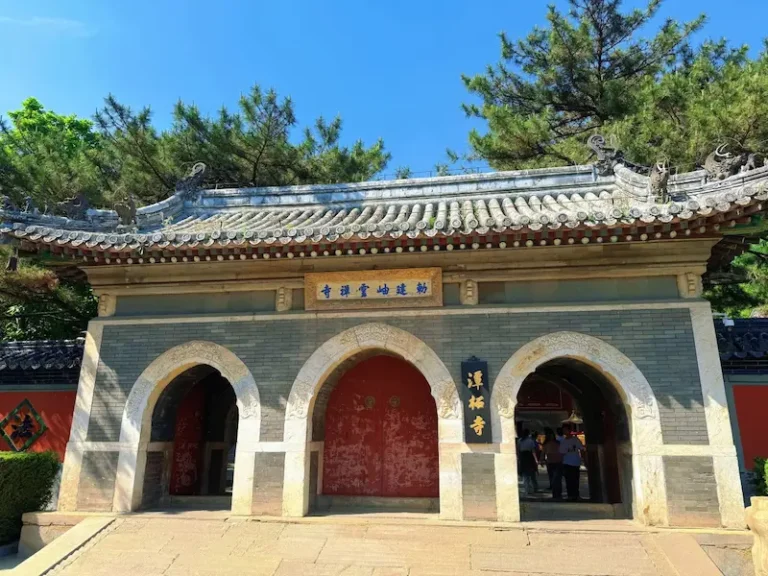
Da Jue Temple is situated at the foot of Yangtai Mountain in Beijing’s Western Hills. Founded during the Liao Dynasty, the temple predates the existing Forbidden City complex by several centuries. Its most distinctive feature is that, unlike most temples in China—which face south—this ancient temple faces east.
30-Second Quick Assessment: Ideal for visitors who enjoy ancient architecture, ancient trees, and forested mountains, as well as a quiet, Zen-like atmosphere; plan to spend 2–3 hours for a basic visit; first-time visitors to Beijing with tight schedules or those who prefer to avoid lengthy uphill walks and frequent transfers should prioritize attractions in the city center.
Table of Contents
Must-Read Before You Go: Practical Information
| Item | Details |
| Name | Dajue Temple / Imperially Commissioned Dajue Chan Temple (English: `Dajue Temple` / `Great Enlightenment Temple`) |
| Address | No. 9 Dajue Temple Road, Sujiatuo Town, Haidian District, Beijing (at the foot of Yangtai Mountain) |
| Year of Construction | The fourth year of the Xianyong era of the Liao Dynasty (1068 AD) |
| Public Transportation | Exit at Beianhe Station on Metro Line 16, transfer to Bus No. 633, and get off at the “Dajue Temple” stop. It’s about a 5-minute walk from there. Since a transfer is required and buses tend to have long lines on weekends, we recommend checking real-time schedules via a map app before traveling. |
| Driving | Navigate to “Dajue Temple Parking Lot”; the drive from downtown takes about 1 hour; the parking fee is 20 yuan per visit |
| Admission | 20 yuan per person (approx. $2.80); tickets purchased on-site; no reservation required |
| Hours | 9:00 a.m.–5:00 p.m. (last entry at 4:30 p.m.); open year-round, including Mondays |
| Best Time to Visit | Spring⭐⭐⭐⭐(March–April to view ancient magnolias); Fall⭐⭐⭐⭐⭐ (late October–mid-November to view ancient ginkgo trees); Summer ⭐⭐⭐⭐(a tranquil mountain retreat to escape the heat); Winter⭐⭐⭐⭐ (Fewer visitors; atmospheric after snowfall) |
| Recommended Visit Duration | 2 hours for highlights; 2–3 hours for a full tour; extend your visit with tea and a light meal |
| Dress Recommendations | Comfortable, non-slip flat shoes; the temple is built on a hillside with many slopes and steps; seniors and children should proceed at a slower pace |
| Budget Guide | Admission: 20 yuan (approx. $2.80) + Parking: 20 yuan (approx. $2.80) + Tea/Light Meal: 30–50 yuan (approx. $4–7) |
| Photography Rules | Feel free to take photos in outdoor areas; photography of Buddha statues inside the main hall is prohibited—please follow on-site signage |
| Language Note | There are no official English audio guides at the site; we recommend using a translation app to help read the inscriptions on steles and plaques |
Important Reminders
1. The site is crowded on weekends and public holidays; we recommend visiting on weekdays in the morning for a quieter experience;
2. The temple houses the Minghui Tea House and a Shaoxing restaurant, where you can enjoy tea and meals; expect lines during mealtimes.
What Kind of Visitors Is Da Jue Temple Best Suited For?
Highly recommended for:
- Those who love ancient architecture and stele inscriptions, and are interested in the history of Liao, Ming, and Qing dynasty temples;
- Those who seek the tranquil setting of mountains and forests and enjoy photographing ancient trees and cultural landscapes;
- Those who want to see ancient ginkgo trees in the fall or ancient magnolias in the spring;
- Those who have already visited core downtown attractions like the Forbidden City and the Temple of Heaven and plan to explore Beijing’s Western Hills;
- Those hoping to find a quiet, ancient temple to relax and enjoy a cup of tea.
You may want to skip this if:
- It’s your first visit to Beijing, your overall itinerary is tight, and you only have 2–3 days;
- You’re not very physically fit and are reluctant to climb many stairs or walk up steep slopes;
- You only want to visit well-known downtown attractions and are unwilling to spend a significant amount of time traveling to and from the western suburbs.
History of Da Jue Temple and a Brief Timeline
Da Jue Temple was first built in the fourth year of the Xianyong era of the Liao Dynasty (1068) and was originally named Qingshui Yuan, a name derived from the sacred spring within the temple grounds that never ran dry throughout the four seasons.
- 1068|Liao Dynasty: Founded and named Qingshui Yuan
- Jin Dynasty: Included among Emperor Zhangzong of Jin’s “Eight Temples of the Western Mountains” and renamed Lingquan Temple
- 1428|Third year of the Xuande era, Ming Dynasty: Emperor Xuanzong of the Ming Dynasty funded its restoration and bestowed the name “Dajue Temple,” a name that has been in use ever since
- Qing Dynasty: Underwent multiple restorations during the Kangxi, Yongzheng, and Qianlong reigns; before ascending the throne, Yongzheng funded repairs in his capacity as the Prince of Yong; Qianlong visited multiple times, leaving behind a large number of imperial plaques and poems
- Modern and Contemporary Periods: A well-preserved ancient imperial temple in the Western Hills, open to the public
Cross-Cultural Interpretation: It can be compared to a thousand-year-old country church in England; long before the capital’s bustling metropolis took shape, this site was already an important spiritual and religious center.
Why Does the Mountain Gate of Daojue Temple Face East?
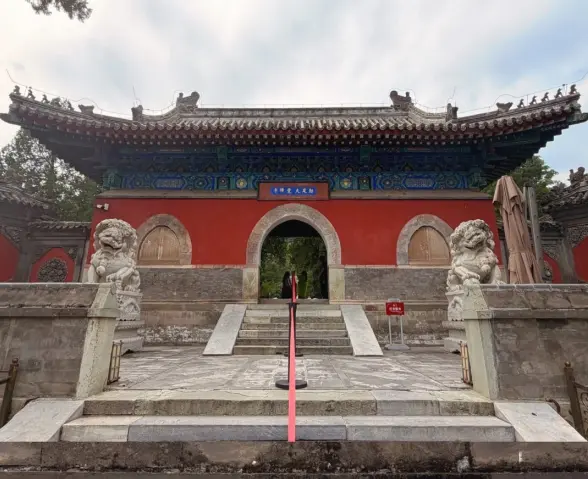
The vast majority of Han Buddhist temples in China are oriented north-south. Daojue Temple, however, faces east, with its mountain gate pointing toward the east.
Some scholars believe this layout may be linked to the Khitan people’s custom of worshiping the sun during the Liao Dynasty, but no definitive conclusion has been reached. Architectural scholars still hold differing perspectives on this matter, so it should not be taken as an established historical fact. Upon entering the mountain gate, you can experience the orientation and layout of this ancient temple as it was a thousand years ago.
6 Must-See Highlights for First-Time Visitors to Da Jue Temple (Priority Stops)
⭐Must-See (Prioritize these within 2 hours)
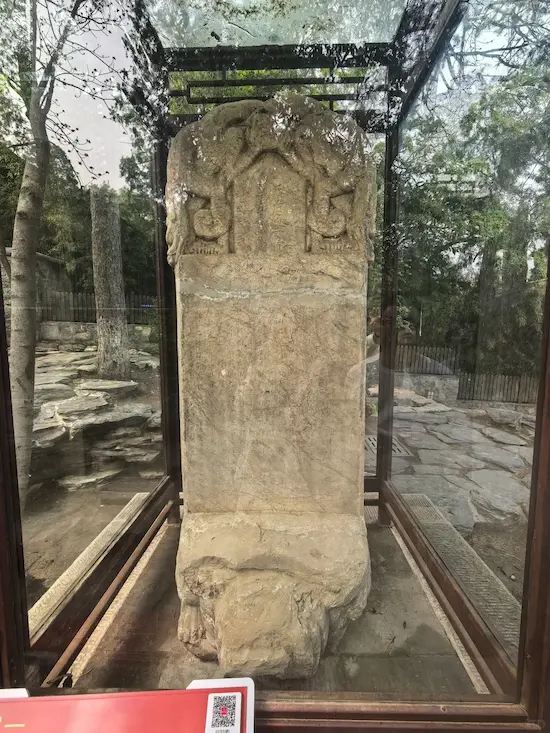
1. Liao Dynasty Stele Inscription “Record of the Creation of the Qing Shui Monastery on Yangtai Mountain and the Collection of Buddhist Scriptures”: One of the few original Liao Dynasty steles in Beijing, it confirms that the temple was originally named “Qing Shui Monastery” when it was first built during the Liao Dynasty, serving as historical evidence.
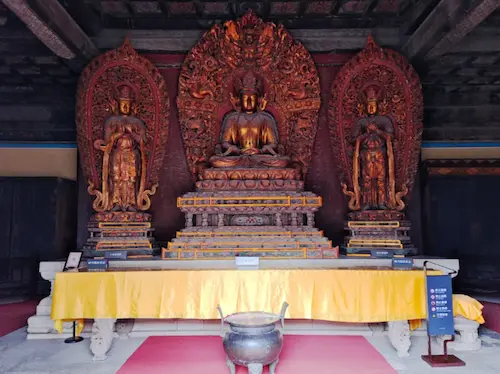
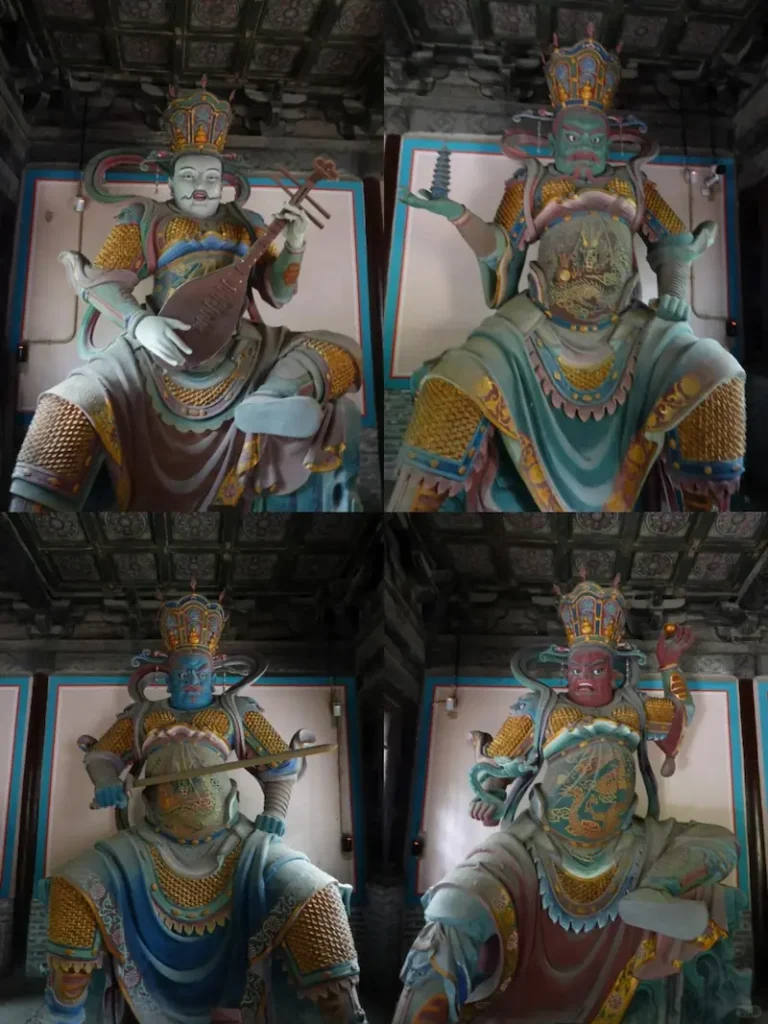
2. Great Hero Hall: A Ming Dynasty hall. Be sure to admire the plaque inscribed by Emperor Qianlong with the words “No Coming, No Going.” Inside the hall, the Ming Dynasty colored sculptures of the Twenty Heavenly Beings are precious works of religious art.
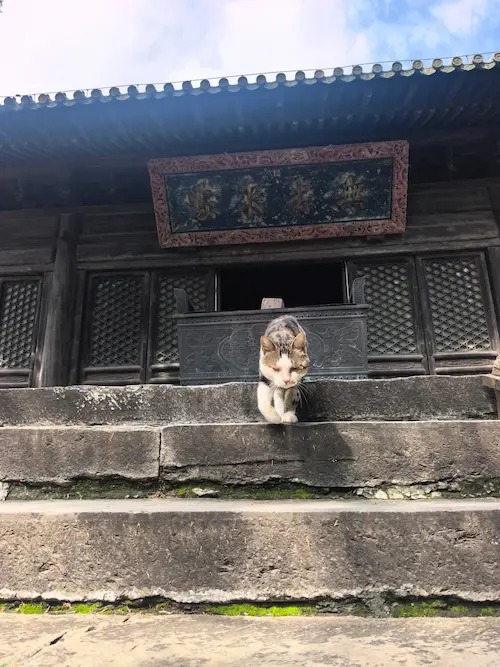
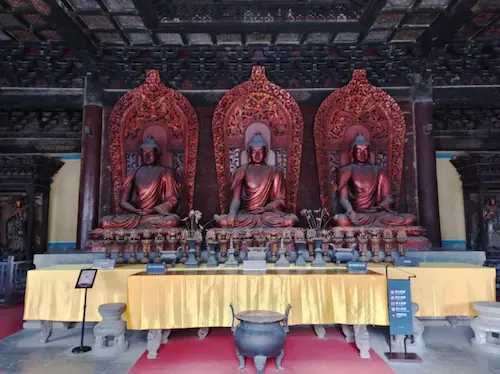
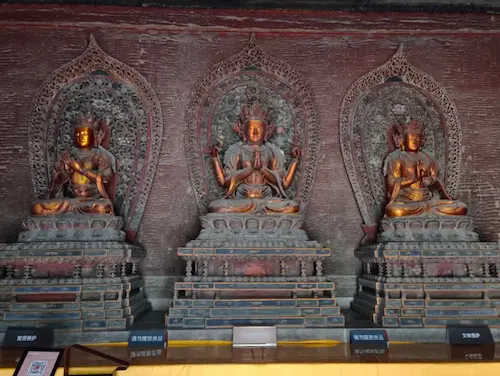
3. Hall of the Buddha of Infinite Life: Features a plaque inscribed by Emperor Qianlong with the words “Equanimity in Movement and Stillness.” Inside the hall is a Ming Dynasty suspended sculpture of the Island Guanyin; in front of the hall stands an ancient ginkgo tree, traditionally believed to have been planted during the Liao Dynasty.
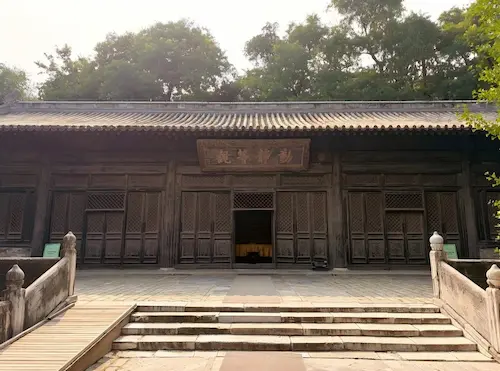
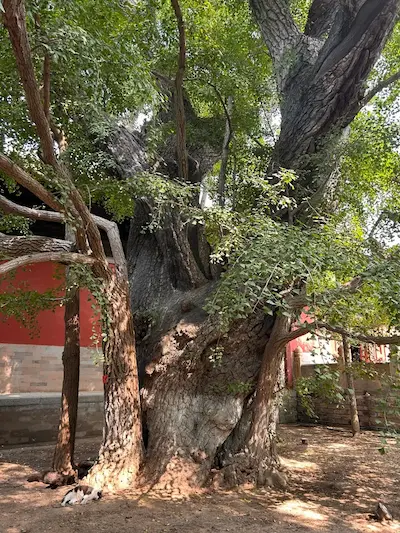
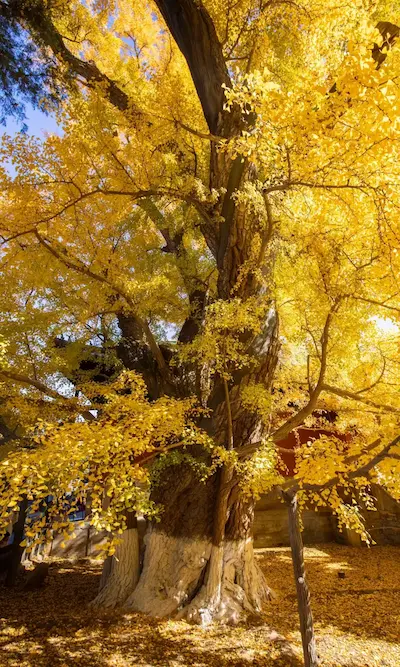
4. The Millennium-Old Ginkgo Tree: Legend has it that this tree was planted during the Liao Dynasty; over 900 years old, it is the iconic landmark of Da Jue Temple and turns entirely golden in the fall.
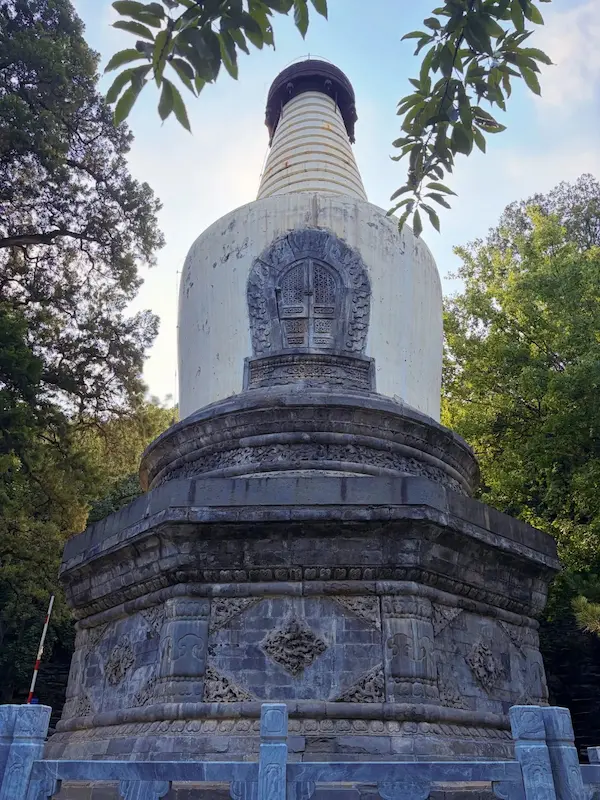
5. The Kalinga Relic Stupa (Pine and Cypress Encircling the Stupa): A Qing Dynasty white stupa in the inverted-bowl style, surrounded by a pine and a cypress tree, forming one of the temple’s most distinctive sights.
6. Sacred Spring of the Dragon King Hall: The source of the temple’s name, “Qingshui Yuan” (Clear Water Courtyard), this mountain spring flows year-round.
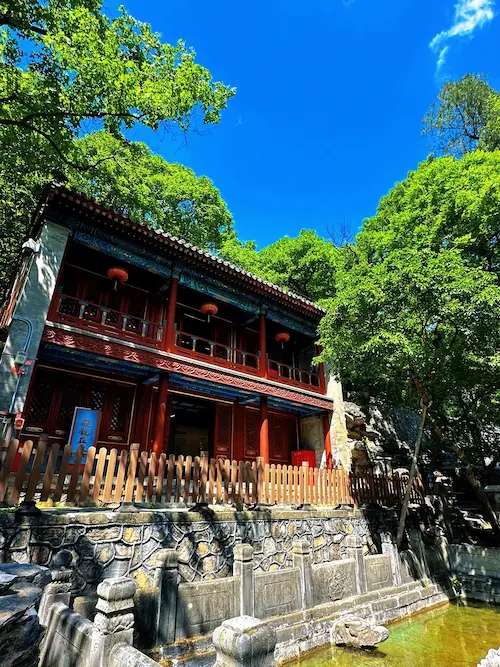
○Side Trips (Visit if Time Permits)
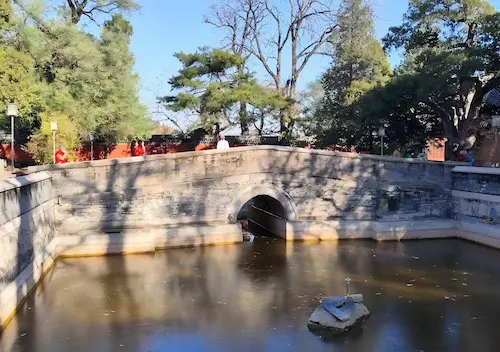
- Merit Pool and Stone Bridge: A pond near the entrance, ideal for photographing the reflections of the architecture;
- Hall of the Heavenly Kings: Features standard statues of the Heavenly Kings;
- Great Compassion Altar: A hall situated on higher ground within the temple grounds.
On-Site Tour Itineraries by Duration
2-Hour Express Tour (Highlights Only)
Mountain Gate→North and South Stele Pavilions (Liao Dynasty stone steles, Ming and Qing Dynasty imperial steles)→Great Hall of the Buddha→Hall of the Buddha of Infinite Life (ancient ginkgo tree)→Kalama Relic Pagoda→Dragon King Hall Sacred Spring→End
2–3-Hour Comprehensive Highlights Tour
Tour Logic: Historical Steles → Artifacts and Art in the Main Halls → Ancient Tree Landscapes → White Pagoda and Sacred Spring
Mountain Gate → North and South Stele Pavilions → Merit Pool and Stone Bridge → Hall of the Four Heavenly Kings → Great Hero Hall (Imperial Plaques, Colorful Sculptures of the Twenty Heavenly Kings) → Hall of the Buddha of Infinite Life (Imperial Plaques, Suspended Sculpture of Guanyin on an Island, Ancient Ginkgo Tree) → Great Compassion Altar → Kalama Relic Stupa (surrounded by pine and cypress trees) → Sacred Spring at the Dragon King Hall → End
🧳 Planning Your Trip to Beijing? Looking for one-day tours, day trips, private transfers, or show tickets in Beijing? Check out the full catalog of trusted local travel products on KKday.
👉 Explore All Beijing Travel Tours & Services on KKday
- ✔ English Support & Trusted Local Operators
- ✔ Easy Cancellation & Mobile Booking
Key Explanations for Further Reading:
1. “No Place of Coming or Going”: Taken from the *Diamond Sutra*, this is a Buddhist concept. In layman’s terms, it explores the philosophical reflections on “coming” and “going,” existence, and impermanence; it should not be interpreted as a worldly maxim for navigating life.
2. “Equal Contemplation of Movement and Stillness”: Taken from Sengzhao’s *Treatise on the Immutability of Things*, this concept centers on the dialectical relationship between movement and stillness. Modern visitors may interpret it simply as viewing things from both dynamic and static perspectives; however, this is a later, popular interpretation and not the original official explanation on the plaque.
Guide to Visiting Da Jue Temple Throughout the Seasons
- Spring (March–April ⭐⭐⭐⭐): Admire the 300-year-old magnolias. The ancient magnolias at Da Jue Temple, along with the lilacs at Fayuan Temple and the peonies at Chongxiao Temple, were historically known as the “Three Great Flower Temples” of Beijing.
- Fall (late October–mid-November ⭐⭐⭐⭐⭐): Highly recommended time of year—the ancient ginkgo trees are ablaze with golden foliage, marking the temple’s highlight season.
- Summer (⭐⭐⭐⭐): The dense shade of the mountains and forests keeps temperatures lower than in the city, making it ideal for escaping the heat and enjoying a cup of tea.
- Winter (⭐⭐⭐⭐): Fewer visitors; after a snowfall, the red walls and ancient trees contrast beautifully with the white snow, creating a rich, atmospheric scene.
Tip: If you can only visit once a year, prioritize the ginkgo season in the fall.
Photography Spot Guide
| Spot | Location | Best Time | Tips |
| Ancient Ginkgo Tree from the Liao Dynasty | In front of the Hall of the Buddha of Infinite Life | Late October–mid-November | Shoot from a low angle to capture the tall canopy and avoid crowds |
| Ancient Magnolia | Courtyard on the Temple’s East Road | Spring (March–April) | Frame the flowers against the red walls for a clean composition |
| Great Buddha Hall | Central part of the temple | Soft morning sunlight | Capture the overall appearance of the hall with its green glazed tiles |
| Kalinga Stupa (Pines and Cypresses Encircling the Stupa) | Elevated area at the rear of the temple | Afternoon | Ancient pines and cypresses surround the white stupa against a blue sky background |
| Reflection of the Stone Bridge Over the Merit Pond | Inside the Mountain Gate | Windless Day | Capturing reflections of the halls and trees on the water’s surface |
| Liao Dynasty Stele | North-South Stele Pavilions | Daytime | The stele inscriptions are ideal for detailed documentation; please do not touch the stone carvings |
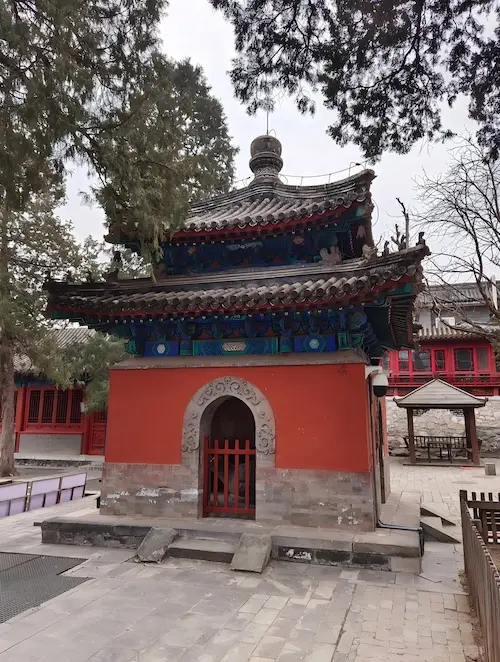
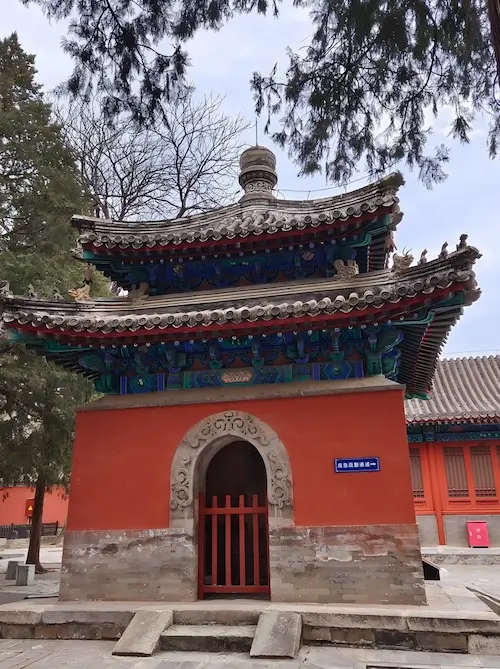
Note: Focus your photography on capturing the historical atmosphere of the ancient temple; there is no need to pursue “Instagram-worthy” shots deliberately.
Etiquette for Visiting Chinese Temples (Important Guidelines for Foreign Visitors)
1. Remain quiet inside the halls; do not speak loudly;
2. Photography of Buddha statues inside the halls is prohibited; strictly follow the on-site signage;
3. Please do not touch cultural relics such as statues, stone steles, or painted murals;
4. Burning incense to pray for blessings is a personal choice; temples do not require it;
5. Do not stand directly in front of worshippers taking photos, and do not disrupt ongoing religious activities;
6. Try not to step directly on the threshold of the main hall, as this is a traditional temple custom;
7. Approach various folk legends and the symbolism of blessings with a rational mindset; there is no need to be superstitious.
Tea and Light Meals
In addition to its historical sites, Da Jue Temple is also a great place to stop and relax:
- Minghui Tea House: Features several tea rooms where you can relax and brew tea using mountain spring water;
- Shaoxing Restaurant: Converted from a former precepts hall, it specializes in home-style Shaoxing cuisine. Lines form during mealtimes, so it’s best to visit off-peak hours.
Da Jue Temple vs. Tan Zhe Temple (Quick Comparison to Help Plan Your Itinerary)
| Da Jue Temple | Tan Zhe Temple | |
| Founded | Liao Dynasty, nearly 1,000 years ago | Western Jin Dynasty, over 1,700 years ago |
| Key Highlights | Liao Dynasty layout, ancient ginkgo trees, magnolias, sacred spring, pine and cypress trees encircling the pagoda | Long history of the temple, imperial ginkgo trees, vast pagoda forest |
| Overall Atmosphere | More serene and quiet | More famous, with relatively more visitors |
| Recommended Visit Time | 2–3 hours | 3–4 hours |
| Best Season | Autumn ginkgo, spring magnolias | Autumn ginkgo; suitable for all seasons |
Note: These two ancient temples offer completely different experiences. If you have plenty of time, both are worth visiting; if time is limited, choose one based on your interests.
[Tanzhe Temple Guide: Admission, Transportation, and Key Sightseeing Tips]
Suggested Itineraries for Nearby Attractions
Options for Different Durations
- Half-Day Itinerary: Visit only Da Jue Temple.
- One-Day Easy Hike in the Western Suburbs: Dajue Temple + Yangtai Mountain (hike up on foot)
- In-Depth Multi-Day Tour of Western Beijing: Dajue Temple + Jiu Feng Forest Park / Fenghuangling; these locations are relatively far apart, so it’s not recommended to cram them into a single day.
| Attraction | Direction | Distance | Highlights |
| Yangtai Mountain Natural Scenic Area | Adjacent | Within walking distance | Hiking, panoramic views of Beijing |
| Jiu Feng Forest Park | Nearby | About a 10-minute drive | Forest hiking and scenic overlooks |
| Fenghuangling Natural Scenic Area | North | About a 20-minute drive | Unique peaks, Buddhist grotto ruins |
FAQ
Dajue Temple is located far from the bustling urban areas of Beijing, nestled at the foot of Yangtai Mountain in the Western Hills.
Once inside, you can admire the stone steles from the Liao Dynasty that have survived to this day; stand beneath the ginkgo tree—said to have been planted during the Liao Dynasty—and feel the passage of time through this ancient tree; at the Jialing Relic Pagoda, observe how ancient pines and cypresses gently embrace the white pagoda; or seek out the sacred spring that has flowed unceasingly for a thousand years and discover the origin of the ancient name “Qingshui Yuan” (Clear Water Courtyard).
Tip: If you’re only visiting Dajue Temple, 2–3 hours should be sufficient; if you plan to explore Yangtaishan and Jiu Feng as well, set aside a full day for your trip to western Beijing.
There’s no need to rush through every hall—the best way to experience Dajue Temple is to take your time and savor the tranquility of this ancient temple nestled in the mountains and forests.
🧳 Planning Your Trip to Beijing? Looking for one-day tours, day trips, private transfers, or show tickets in Beijing? Check out the full catalog of trusted local travel products on KKday.
👉 Explore All Beijing Travel Tours & Services on KKday
- ✔ English Support & Trusted Local Operators
- ✔ Easy Cancellation & Mobile Booking