Longfu Temple Guide: Neighborhood, Rooftop, and Practical Tips (2026)
Longfu Temple boasts over 600 years of eventful history, evolving from an imperial temple during the Ming Dynasty to a bustling temple market in the Qing Dynasty. After a period of dormancy following a major fire, it has now been revitalized.
If you’ve already visited the Forbidden City and the Temple of Heaven and want to experience the blend of old and new in Beijing’s historic city center, this is the perfect place to spend half a day.
For first-time visitors, we recommend setting aside 2.5–3 hours: take photos at the archway → explore the East Courtyard → enjoy street food in the South Quarter → browse the cultural and creative shops in the North Quarter → wait for sunset on the 9th-floor rooftop of Longfu Tower.
Table of Contents
Must-Read Before You Go: Practical Information
| Item | Details |
| Name | Longfu Temple (English: `Longfu Temple` / `Longfu Temple Cultural District`) |
| Address | No. 95, Longfu Temple Street, Dongcheng District, Beijing (northwest corner of Dongsi, adjacent to the hutong cluster on the back street of the National Art Museum of China) |
| Subway | Line 5 or 6 to Dongsi Station, Exit E, about a 5-minute walk; or Line 8 to China Art Museum Station, about an 8-minute walk |
| Bus | Routes 101, 106, 128, etc.; get off at the “Dongsi Road Intersection West” stop |
| Hours | The Longfu District is open all day; the rooftop on the 9th floor of Longfu Tower requires a reservation |
| Admission | The district is free; the rooftop on the 9th floor of Longfu Tower is free and open by reservation (officially announced to be open until December 31, 2026; policies are subject to change—please refer to the latest announcements on the official WeChat account) |
| How to Book | Book via the WeChat official account “Longfusi”; Reservations are most competitive during sunset hours (5:00–6:30 PM); early booking is recommended |
| Best Time to Visit | 3:00–7:00 PM. Afternoon light is ideal for taking photos in the district; in the evening, the rooftop offers views of both the old city rooftops and the CBD skyline |
| Recommended Visit Duration | 2.5–3 hours for a basic tour; 4–5 hours if combined with a Citywalk through the surrounding hutongs |
| Dress Recommendations | Comfortable flat shoes; extensive walking is required in the neighborhood and surrounding hutongs |
| Budget Guide | Admission to the neighborhood is free. Snacks cost 20–50 yuan (approx. $3–$7) per person; full meals cost 50–100 yuan (approx. $7–$14) per person |
| Photography | Photography is permitted throughout the entire area; the rooftop offers one of Beijing’s few free vantage points for panoramic city views |
⚠Important Rooftop Reminder: Rooftop opening hours are subject to change; be sure to check the official WeChat account for the latest announcements before your visit. The rooftop is relatively small, so we recommend spending 20–40 minutes there. It gets quite crowded during sunset.
What Is Longfu Temple: From Prosperity to Decline to Rebirth
Longfu Temple was founded in the third year of the Jingtai era of the Ming Dynasty (1452) and served as the imperial Lamaist temple of the Ming Dynasty. At the time of its completion, the scale of its architecture was exceptional among the temples in the capital; together with Huguo Temple in Xicheng District, it was known as one of the “Two Great Temples of the East and West.”
The name “Longfu” carries the meaning of “exalting the blessings of the ancestors in heaven above and gathering the boundless joy of the nation, the world, and all living beings—both visible and invisible—below.”
During the Qing Dynasty, the site was no longer used solely for Buddhist worship. On the 9th and 10th of every lunar month, large-scale temple fairs were held here, featuring a gathering of antiques, books, folk arts, and general merchandise. It became a renowned “cultural temple fair” in the capital, and a popular saying among the people went: “In the south, there is the Confucius Temple; in the north, there is Longfu Temple.”
After the founding of the People’s Republic of China, the site was developed into the Dongsi People’s Market; in 1988, the Longfu Building opened, becoming a well-known commercial landmark in Beijing at the time.
In 1993, the Longfu Building suffered a severe fire that damaged the main structure, leading to a prolonged period of inactivity in the area; it officially closed in 2004.
Additional Note: After the fire, stone qilin architectural components were unearthed at the construction site. Folklore circulates regarding changes in feng shui; however, this content is a folk legend and not a historically verified fact.
Since 2019, the neighborhood has undergone gradual renovation and revitalization, with Beili, Nanfang, and Dongyuan opening to the public in succession. In September 2025, Dongyuan was officially unveiled, completing the neighborhood’s transformation, and regular markets have gradually resumed.
Fun Fact: Longfu Temple originally featured an exquisite Ming Dynasty starry-sky coffered ceiling, which is now preserved in the Taosui Hall of the Xiannongtan·Beijing Museum of Ancient Architecture.
If you’re interested in ancient architecture, you can plan a separate visit to see the original coffered ceiling—look up inside the main hall to view the 1,400 gilded constellations adorning it.
First-Time Visit to Longfu Temple: Follow This Itinerary (Recommended)
Exit at Exit E of Dongsi Subway Station→Take a photo at the Longfu Temple archway→Stroll around the East Courtyard and take photos→Enjoy snacks and light meals at Nanfang→Check out exhibitions and have coffee at the Beili Creative District→Wait for sunset on the 9th-floor rooftop of Longfu Tower→End the tour; you can then continue to nearby hutongs or the National Art Museum of China.
①Longfu Tower 9th-Floor Rooftop | Must-Visit (Recommended stay: 20–40 minutes)
My advice: Try to time your visit for just before sunset—this is the highlight of the entire Longfu Temple complex.
Looking west from the rooftop, you can see the Wanchun Pavilion on Jingshan Hill, the White Pagoda at Beihai Park, and the expanse of yellow glazed tile roofs of the Forbidden City; looking east, you’ll see modern CBD skyscrapers like the China Zun and the China World Trade Center.
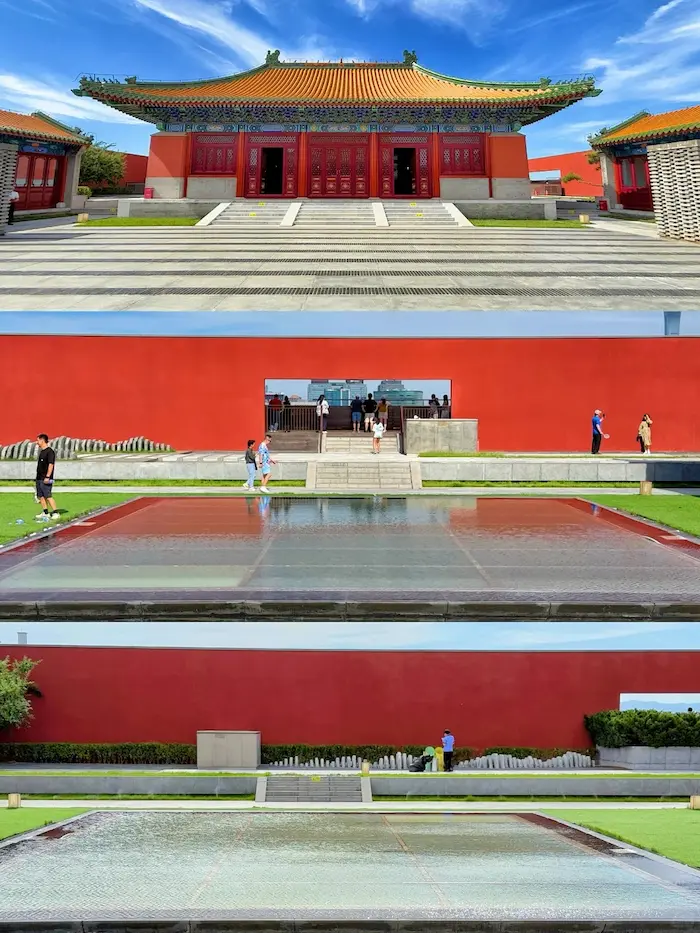
The gray-tiled roofs of old Beijing’s siheyuan courtyards spread out below, framing ancient imperial architecture alongside the modern urban skyline—a bird’s-eye view of the old city that’s hard to find anywhere else.
Photography Tip: Light-colored, New Chinese-style clothing looks best in photos; arrive early before sunset to avoid the peak crowds.
②Nanfang | A Hub for Time-Honored Culinary Brands (Recommended Stay: 40–60 minutes)
My Recommendation: If you want to try authentic Beijing street food, make this your first stop—no need to trek to popular spots like Drum Tower just to wait in line.
The neighborhood is home to several local heritage brands: Daoxiangcun No. 0 Treasure Hunt Hall, where you can buy limited-edition cultural and creative pastries and collect stamps—perfect for selecting souvenirs; a branch of Yaoji Chao Gan, which has fewer crowds than the original Drum Tower location; Fengnian Guanchang and Ziguangyuan, offering authentic Beijing snacks and affordable home-style Beijing dishes; and Meitan Village, which specializes in Chinese pastries and features a ceiling design inspired by the coffered ceilings of ancient architecture.
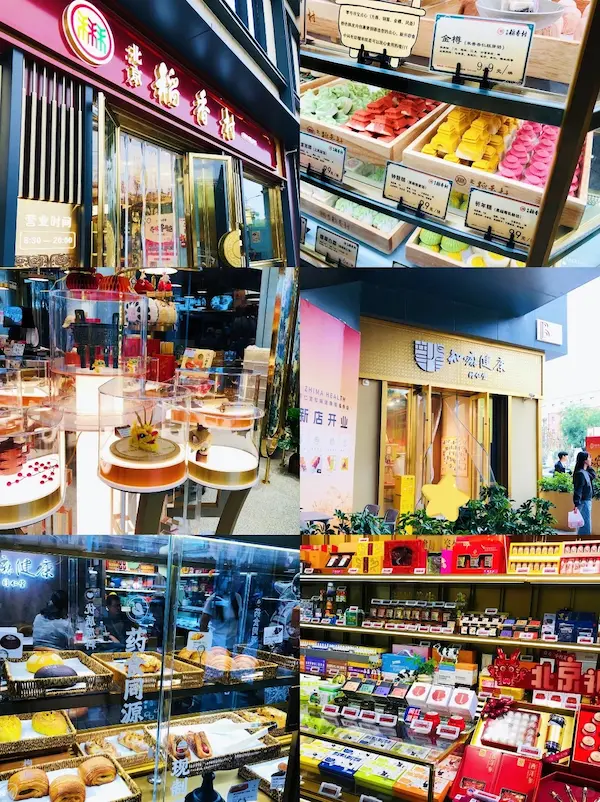
③East Courtyard | Trendy New Area (Recommended Stay: 30 Minutes)
This area, newly opened in 2025, blends traditional gray-tiled roof ridges with modern glass curtain walls. At Red Star Qianjin Bread & Milk Company—with its pure white, cream-style storefront—you can experience making fresh milk yourself and printing custom receipts; the small terrace on the third floor offers a bird’s-eye view of the gray-tiled roofs of the surrounding siheyuan courtyards, making it a great spot for photos.

④Beili Cultural and Creative Park | Art, Exhibitions, and Socializing (Recommended stay: 30–50 minutes)
The Mumu Art Community and Longfu Art Museum host rotating exhibitions of contemporary art and photography. The area features unique restaurants, independent coffee shops, and craft beer bars.
As the streetlights come on in the evening, the hutong exudes a strong sense of atmosphere, making it perfect for a leisurely sit-down.
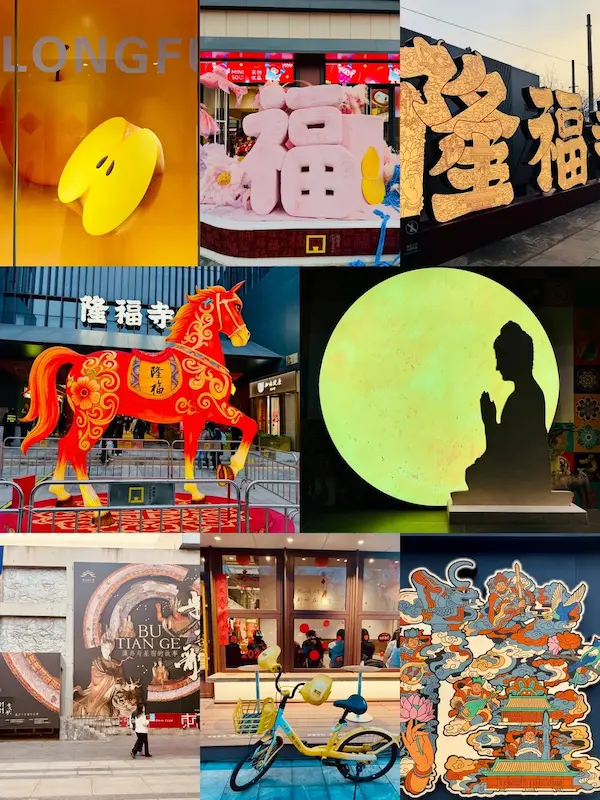
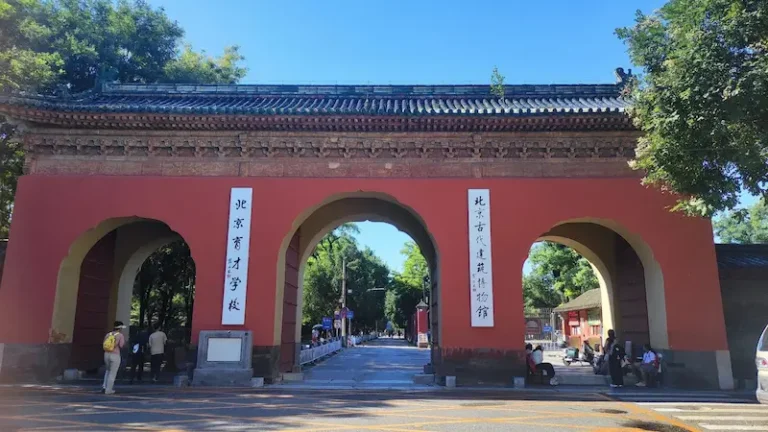
⑤Archway and Fubao Mascot (Recommended stay: 5–10 minutes)
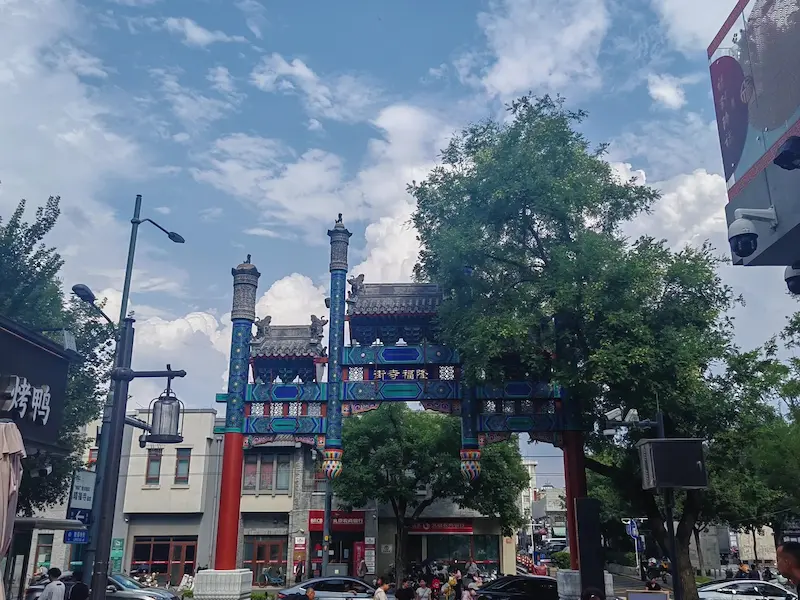
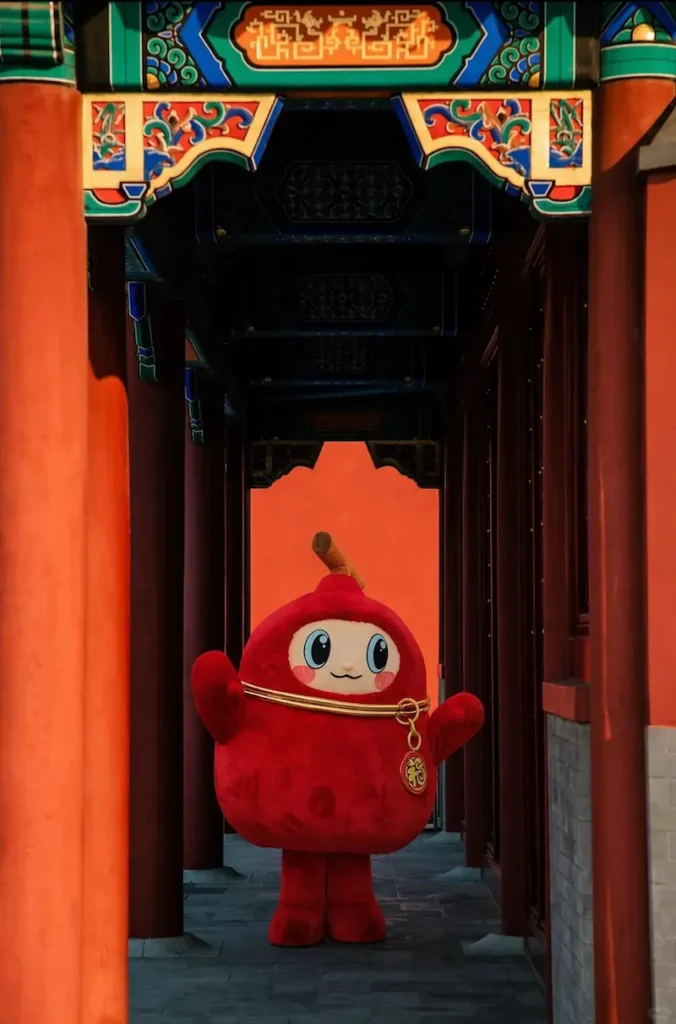
The antique-style archway at the entrance to the district is an iconic photo spot; decorations featuring the character “Fu” (福) in gold on a red background can be seen throughout the area; the mascot, Fubao—a plump, reddish-brown gourd wearing a gold plaque with the character “Fu” —is a great subject for a quick photo along the way.
What Are the Must-Try Foods at Longfu Temple?
A Guide for International Visitors
✅ If you want to try traditional Beijing snacks: Give priority to fried sausage and tea soup; if you don’t eat animal offal, please avoid stir-fried liver.
✅ If you want a full-course home-style meal: Ziguangyuan
✅ Souvenirs: Daoxiangcun No. 0 Treasure Hunt Hall
✅ Desserts and Beverages: Meitan Village pastries, Hongxing Qianjin fresh milk, Zhima healthy specialty wellness drinks
Traditional Beijing Flavors
1. Stir-fried liver (⚠️ Contains offal; choose with caution) served with pork buns
2. Fengnian Fried Sausage | Old Beijing-style fried sausage
3. Cha Tang Li | Old Beijing-style tea soup
Main Meals & Snacks
4. Ziguangyuan | Affordable Beijing home-style dishes
5. Meitan Village | Almond tofu, Chinese pastries
Trendy Experiences & Souvenirs
6. Hongxing Qianjin Bread & Milk Company | Freshly drawn milk—perfect for Instagram
7. Daoxiangcun No. 0 Treasure Hunt | Creative pastries, stamp collection—top choice for souvenirs
8. Zhima Health|Goji Berry Coffee, Wellness Specialties—Modern Beverages Inspired by Traditional Chinese Medicine
Tip: You don’t need to try everything—just pick 2–3 experiences to enjoy.
Combined Sightseeing Itinerary
Longfu Temple is located right next to the National Art Museum of China and the Dongsi Hutong district, so you can easily plan a combined itinerary.
| Attraction | Direction | Walking Time | Highlights | Admission |
| National Art Museum of China | West | 8 minutes | National-level art museum | Free, reservation required |
| Dongsi Hutong Cluster | Nearby | 0 minutes | Authentic Old Beijing hutong atmosphere | Free |
| Qianliang Hutong | South | 5 minutes | Artistic boutiques and cafés | Free |
| Wangfujing Street | South | 15 minutes | Famous commercial pedestrian street | Free |
Extended Itinerary (4–5 hours, ideal for Citywalk enthusiasts)
National Art Museum of China→Liangguochang Hutong→Back Street of the Art Museum→Huangmi Hutong, Shijin Garden Hutong→Qianliang Hutong→Longfu Temple (dining + exploring the neighborhood + watching the sunset from the rooftop)
Photography Spot Guide
| Spot | Location | Best Time to Shoot | Tips |
| Panorama of Past and Present | 9th-floor rooftop of Longfu Building | Around sunset | Face west to capture the Forbidden City and Jingshan Hill; face east to capture the CBD; use the colonnade as the foreground |
| Bird’s-Eye View of Gray-Tiled Siheyuan | Third-floor terrace of the East Courtyard | Afternoon | Capture an aerial view of the rooftops of the clustered old residential buildings |
| Longfu Temple Archway | Entrance to Longfu Temple Street | All day | Iconic photo spot at the neighborhood entrance |
| Red Star Qianjin Store | East Courtyard | All day | Pure white, “cream-style” storefront—perfect for portrait photos |
| Fubao Mascot | Throughout the neighborhood | All day | Look for close-ups of the gourd-shaped mascot |
What Kind of Visitors Is Longfu Temple Best Suited For?
Highly recommended for:
1. Those who have already visited the Forbidden City and the Temple of Heaven and want to experience the blend of old and new in Beijing’s historic city center;
2. Those who enjoy hutong city walks and architectural photography;
3. Those who want to sample Beijing street food but prefer to avoid trendy, old-school spots packed with tourists;
4. Those who enjoy cultural and creative products and small-scale art exhibitions.
You can skip it if:
1. This is your first time in Beijing, your schedule is very tight, and you want to prioritize visiting classic imperial sites;
2. You’re not interested in commercial districts, street food, or taking photos of the city.
FAQ
What makes Longfu Temple so captivating isn’t any single, isolated historic site. It fully embodies the fate of an old city district: from a royal temple in the Ming Dynasty to a bustling temple market in the Qing Dynasty, through the silence that followed a devastating fire, and on to today’s neighborhood where old and new blend together.
My on-site recommendation: If you visit Longfu Temple, try to plan your visit for the afternoon. Start by strolling through the neighborhood and sampling some street food, then head up to the 9th-floor rooftop before sunset.
From there, you’ll see the golden roofs of ancient buildings in the direction of the Forbidden City on one side and the modern glass skyscrapers of the China World Trade Center on the other, offering a vivid sense of how this city has transformed over hundreds of years.
Through 600 years of history, it continues to grow and evolve. There’s no need to rush to check off every spot—strolling leisurely is the best way to experience this place.