Baocháo Hutong Guide: A Historical and Walking Tour of Beijing’s Yuan Dynasty “Money Alley” (Updated 2026)
Last Updated: Aug. 2026
If you’re looking for a hutong in Beijing whose very name evokes “money”—one that’s home to princely mansions, prestigious universities, and centuries of monetary history—Baocháo Hutong is a truly unique choice.
Unlike the crowded Nanluoguxiang, it boasts authentic history dating back to the Yuan Dynasty—it once served as the official exchange point for “old-for-new” currency during the Yuan Dynasty, and later housed a Mongol prince, the son of Yuan Shikai, and a secondary school with a history of nearly 400 years.
Below is a practical guide tailored for international visitors, covering transportation, highlights, cultural insights, and budget estimates, so you can explore with confidence and never get lost.
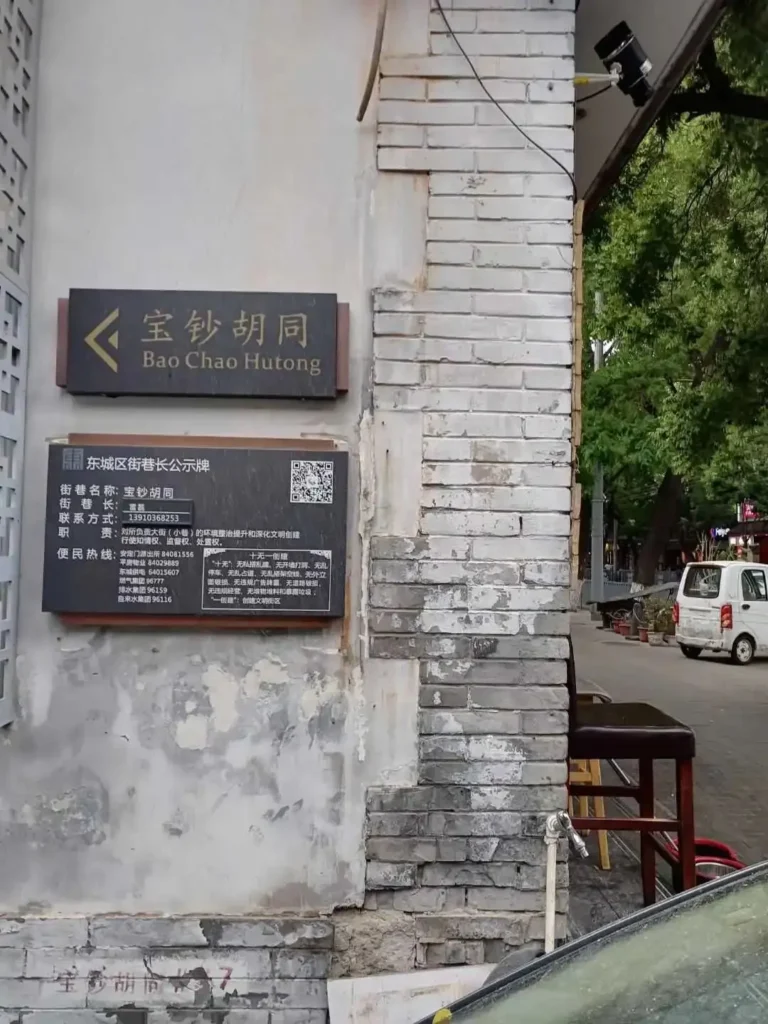
Table of Contents
Practical Information and Transportation
- Location: Dongcheng District, Beijing. Baochao Hutong runs north-south, starting at Gulou Dongdajie in the south and ending at Dongtao Hutong in the north. It is located west of Beiluoguxiang, separated from Nanluoguxiang only by Gulou Dongdajie.
- Best Subway Exit (Recommended for a South-to-North Walk): Exit A2 of Shichahai Station (Line 8). After exiting, walk east for about 10–12 minutes, cross Zhonggulou Square, and follow Gulou Dongdajie to the intersection with Baochao Hutong, where you can enter from the south entrance. Walking north from there, the order of the attractions you’ll see will match the sequence in Part 3 of this article.
- Alternative Subway: Line 2, “Andingmen Station,” Exit A. After exiting, walk south along Andingmen Neidajie to Dongtao Hutong, then turn west. It takes about 15 minutes to reach the north entrance of Baochao Hutong. Alternatively, take Line 6 or 8 to “Nanluoguxiang Station” and exit via Exit E. After exiting, cross the main street of Nanluoguxiang to Gulou East Street, then walk west for about 5 minutes to reach the south entrance of Baochao Hutong.
- Best time to visit:
- The area is open year-round, but the weather is most pleasant in spring (April–May) and fall (September–October).
- Recommended times: Weekdays from 9:00 AM to 11:00 AM, when there are fewer visitors and the lighting is ideal for photography. In the evening (5:00 PM–7:00 PM), the hutongs are illuminated by warm lights, and cafes and small bars open, creating a lively atmosphere.
- Budget guide (2026 prices):
- The hutongs themselves are free; no admission fee is required.
- Coffee/drinks: approx. 25–45 yuan (approx. $3.50–$6.50)
- Light meals (noodles/rice bowls): approx. 30–50 yuan (approx. $4–$7)
- Craft beer/pubs: approx. 40–70 yuan per glass (approx. $6–$10)
- Beijing No. 1 High School is not open to the public; you can only view it from the entrance.
> Tip: There are no attractions in Baochao Hutong that require reservations. However, if you see the gates of an old courtyard house open while walking through the hutong, please do not enter without permission to take photos—these are residents’homes. Respect their privacy; just take photos of the walls and flowers outside the gate.
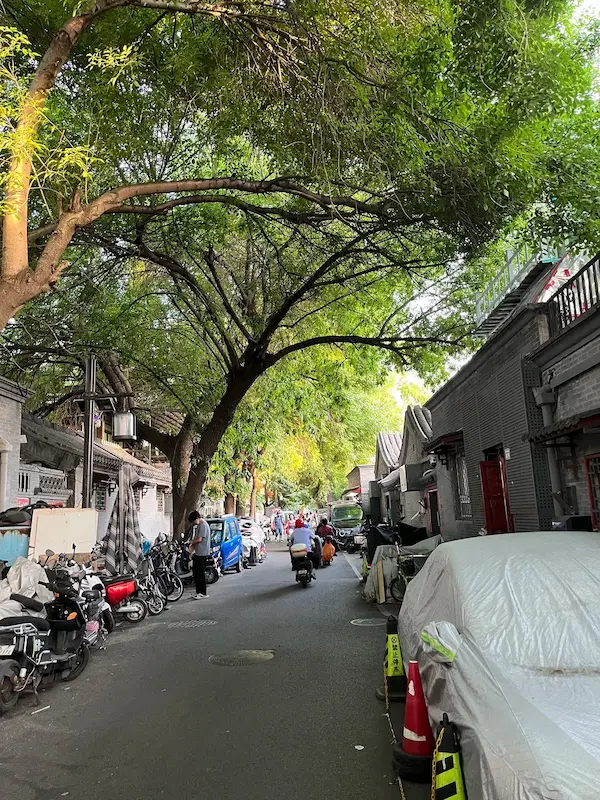
How Did Baochao Hutong Get Its Name?—A Story About “Money”
In Chinese, the term “Baochao” directly refers to ancient paper money. In fact, China was the first country in the world to invent paper money—as early as the Song Dynasty (960–1279), there was the “Jiaozi.”
By the Yuan Dynasty (1271–1368), the government had fully adopted paper currency, establishing the world’s first comprehensive paper currency circulation system.
However, paper money would eventually wear out and need to be replaced. The Yuan Dynasty established a “Dàochāo Kù” (Paper Money Exchange) at the site of today’s Baochao Hutong—essentially a bank branch where “old money was exchanged for new.”
People would bring in worn-out paper money or worn copper coins, pay a small processing fee (known at the time as “gongmo fee”), and receive brand-new currency in exchange. Since this institution was called “Daochāo,” the alley was originally named Daochāo Hutong.
During the Qing Dynasty, the government issued paper currency known as “Guanpiao” and “Baochiao,” so the alley was renamed Baochiao Hutong, a name it has retained to this day.
> A little cultural trivia for our international friends: Just as the English word “buck” originates from the early days of American trade using deer hides, or “quid” represents the pound in British slang, the Chinese still refer to “money” as “chāo piào” (banknotes). The origin of this term—Baochāo Hutong from the Yuan Dynasty—lies right at your feet. Isn’t that fascinating?
Three Highlights in the Hutong
The following three highlights are listed in the order you’ll encounter them on foot after entering from the south entrance. Turn into Baochao Hutong from Gulou East Street and head north; you’ll come across them one after another.
1. Former Residence of Yuan Keding (Yuán Kèdìng Jiùjū)
Location: No. 63 Baochao Hutong (Appears as an ordinary residential building; viewable only from the entrance)
Yuan Keding was the eldest son of Yuan Shikai, the first official President of the Republic of China. In 1915, Yuan Shikai attempted to restore the monarchy and become emperor, and Yuan Keding actively supported this effort. After Yuan Shikai’s failure and subsequent death, Yuan Keding retired to Tianjin.
In 1935, he moved to No. 63 Baochao Hutong. During the War of Resistance Against Japan, he refused the Japanese invaders’ attempts to co-opt him and refused to become a collaborator, resulting in a life of poverty in his later years.
In 1948, he sought refuge with his cousin Zhang Boju (a renowned collector who donated many national treasures to the Palace Museum) and moved to Qinghua Garden. Yuan Keding’s former residence remains a private home and is not open to the public, but you can take a look at that quiet stretch of the alley as you pass by.
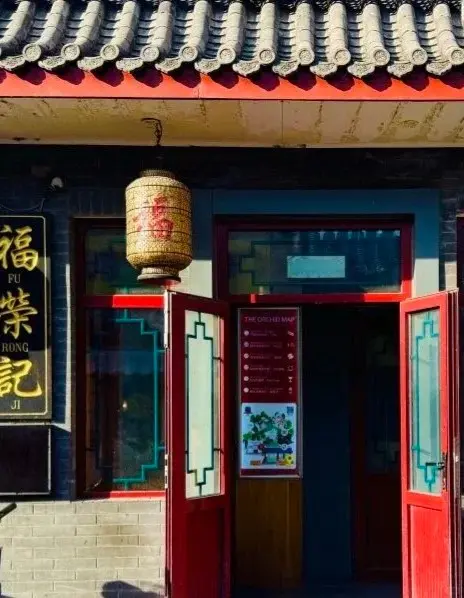
> A little story for foreign friends: Yuan Shikai’s reign as emperor lasted only 83 days before he was forced to step down. Although his son, Yuan Keding, lived in poverty in his later years, he never betrayed his country—a fact that leads many Chinese people to regard him as “somewhat principled.”
2. Beijing No. 1 High School
Location: No. 12 Baochao Hutong
The history of this school is truly remarkable: it was founded in 1644, the very year the Qing Dynasty entered the Pass. Originally, it was an Eight Banners Official School—an institution dedicated to educating the children of the Eight Banners (the emperor’s personal guards and descendants of the nobility)—and was administered by the Imperial Academy.
In 1894, it was expanded into the Jingzheng Academy to cultivate talents who could “apply classical learning to practical use.”
In 1902, it was converted into a secondary school, and in 1912, it became the First Public Middle School of the Capital, opening its doors to students from all walks of life. After 1949, it was renamed Beijing No. 1 High School.
Today, the campus still preserves two steles (massive stone monuments covered in inscriptions) commemorating the founding of Jingzheng Academy. The school is not open to the public, but you can see the old school buildings with their blue-brick facades at the entrance and imagine the countless students who have studied here over the centuries.
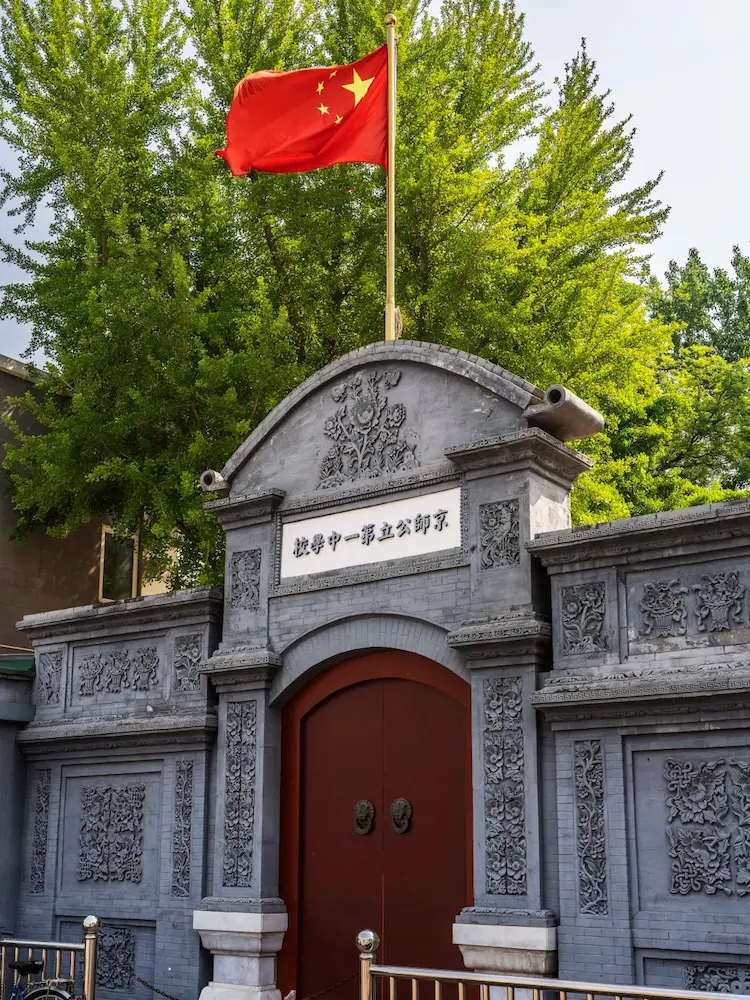
> Cultural Insight: The Eight Banners system was a military and social organisation unique to the Qing Dynasty. Children of the Eight Banners enjoyed privileges from a young age, but they were also required to study horsemanship, archery, and both Manchu and Han cultures. This school serves as a microcosm of elite education during the Qing Dynasty.
3. Prince Na’s Mansion (Nà Wáng Fǔ)
Location: No. 19A Baochao Hutong (A cultural heritage site sign is posted at the entrance)
Prince Na’s Mansion was the residence of a Mongolian prince during the Qing Dynasty. The prince, named Cèléng, was a descendant of Genghis Khan and married Princess Gulen Chunqie, a daughter of Emperor Kangxi.
Due to his outstanding military achievements, he was bestowed the title of “Prince of Extraordinary Valour,” a hereditary title that could be passed down through the generations (similar to the British peerage). By the time it passed to the seventh generation, Nà Yàntú, the residence had come to be commonly known as “Na Wangfu.”
How large was this prince’s mansion? At its peak, it had over 320 rooms, covered an area of 25,000 square meters, and spanned several of today’s hutongs (with courtyards located in Guoxing Hutong, Guoxiang Hutong, and Wangzuo Hutong). Later, due to gambling debts, Nà Yàntú mortgaged the mansion to a Catholic church and eventually moved out.
Today, the main building of the Nà Mansion is used by the Industrial and Commercial Bank of China as a museum of the bank’s history and is not open to the public. However, you can still see its towering gray walls and old gates from the alleyways, offering a glimpse of the grandeur of the former prince’s residence.
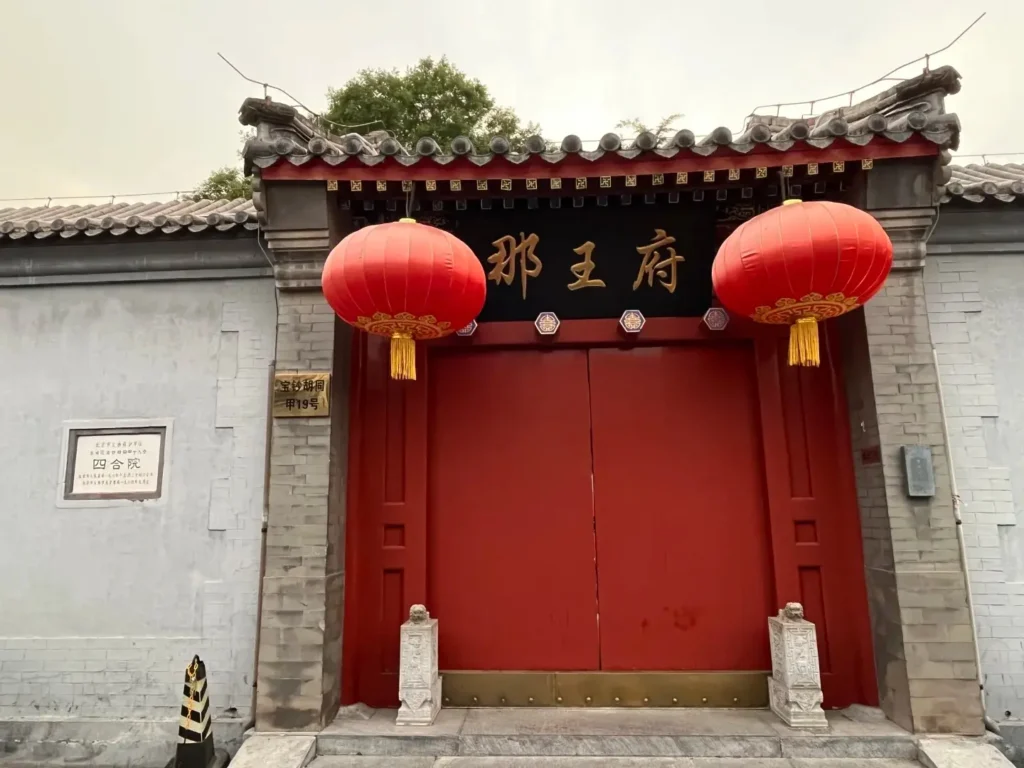
> Cultural Insight: The hierarchy of princely mansions during the Qing Dynasty was extremely strict. A Prince’s Mansion was permitted to use green glazed tiles and feature stone lions at its entrance. As the residence of an “Iron-Crowned Prince” (a title that could never be demoted), the Na Mansion held a status second only to the imperial family. You can explain to your friends that it was comparable to a British duke’s mansion.
If You Have Time: Nearby Hutongs (Within Walking Distance)
Baochiao Hutong is flanked on both sides by many small hutongs; feel free to wander down any of them. Special recommendations:
– Doufuchi Hutong: On the west side. It’s home to Hong’en Temple—a 700-year-old Taoist temple from the Yuan Dynasty. After a meticulous renovation in 2026, it has transformed into Beijing’s trendiest and most buzzworthy historical and cultural complex!
Inside, you’ll find trendy coffee shops, independent bookstores, and frequent art exhibitions and markets. If you’re feeling tired from walking, we highly recommend making this your final stop, ordering a cup of coffee, and relaxing here for the rest of the day.
– Wangzuo Hutong: Part of the Na Wangfu compound extends into this area.
– Guoxiang Hutong: This is where the “back gate” of the Na Wangfu is located, offering a view of the old mansion’s walls.
Additionally, in the evening, Baochao Hutong is illuminated by warm lights, and hidden craft beer bars and live music venues tucked away in the courtyards open for business. The area exudes a nightlife atmosphere where retro and modern vibes intertwine, making it perfect for young backpackers to explore.
Frequently Asked Questions (FAQ)
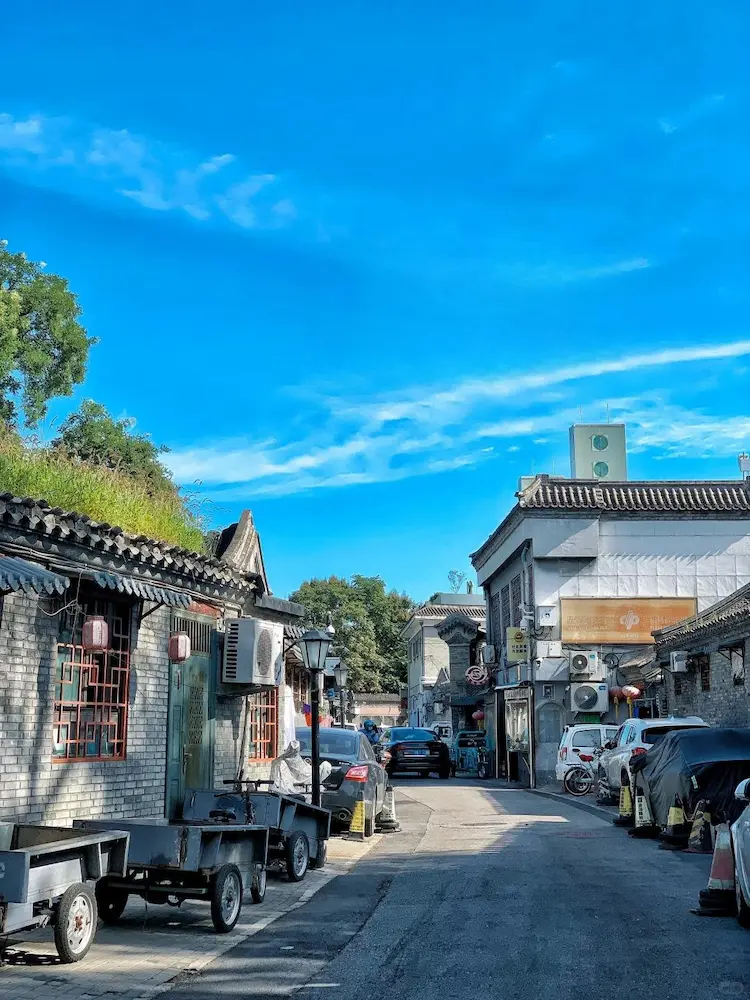
Baochao Hutong lacks the bustling commercial streets of Nanluoguxiang and the colorful souvenir shops. It is a living hutong where ordinary people still reside.
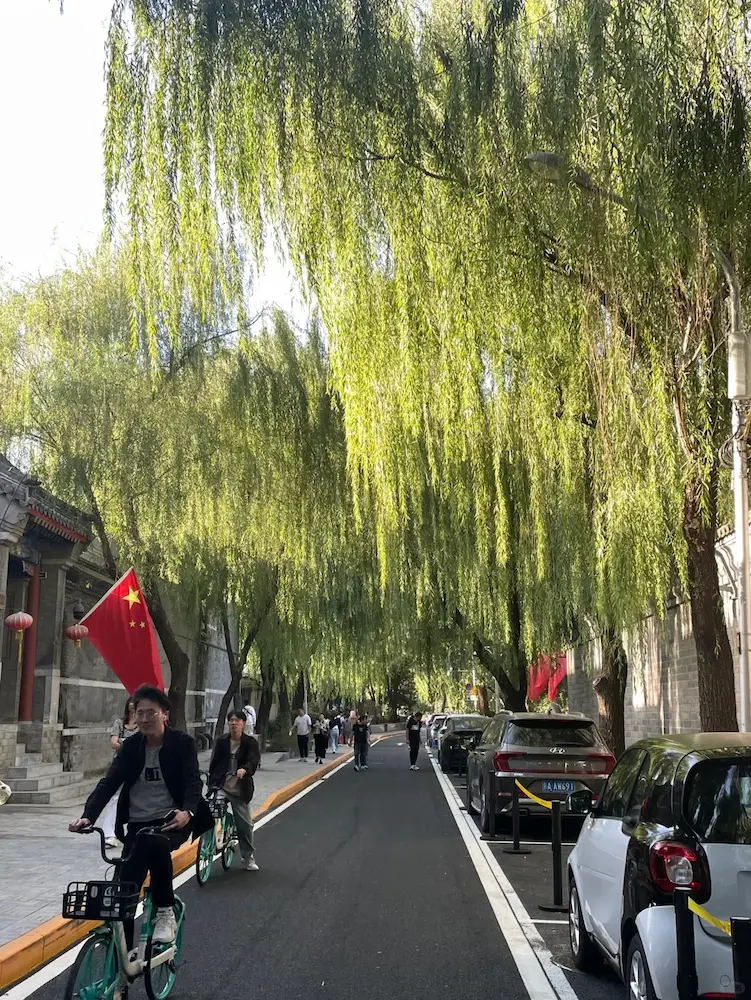
Here, you’ll see old doorsteps, weathered brick walls, and clothes and sheets hanging overhead, and you’ll occasionally hear the ringing of bicycle bells.
If you’re interested in “the history of money” and “the lives of the aristocracy of yesteryear,” take your time and look closely—you’ll discover that behind every door lies a story.
We hope you find your own special moment in Beijing here in Baochao Hutong.