Dashilan: Beijing’s 500-Year-Old Historic Shopping Street (2026 Guide to Avoiding Pitfalls)
Dashilan (pronounced “dà shí lànr”—don’t worry if you get it wrong; even Beijingers mispronounce it all the time) is unquestionably Beijing’s oldest commercial street. It has been around since the Ming Dynasty and is over 500 years old.
Legendary brands like Rui Fu Xiang, Nei Lian Sheng, and Tong Ren Tang are still open for business—they’re not just fake antiques with locked doors that make you peer through the windows. It’s just a 5-minute walk from Tiananmen Square.
This guide tells you which shops are worth visiting, where to take great photos, and how to pretend you’re a connoisseur at the pickle stalls.
Table of Contents
Practical Information
| Item | Information |
| Admission | Free. You can stroll along the entire street at no charge |
| Hours | Open all day. Shops are generally open from 9:00 AM to 9:00 PM; restaurants stay open until around 10:00 PM |
| Transportation | Take Metro Line 2 or 8 to Qianmen Station, Exit C. Walk south for 2 minutes to the east entrance of Dashilan. Alternatively, take Metro Line 7 to Zhushikou Station, Exit A, and walk north for 5 minutes |
| Best Time | Weekdays before 10:00 AM or after 3:00 PM. Weekends? Good luck |
| Budget | Just browsing: 0 yuan. Buy a pair of Neilian Sheng cloth shoes: 200–500 yuan (US$28–70). Have a bowl of zhajiang noodles: 30–50 yuan (US$4–7) |
| Recommended Duration | Main street: 1.5–2 hours. Including alleys and a crosstalk performance: 3–4 hours |
Where is Dashilan? How did it get its name?
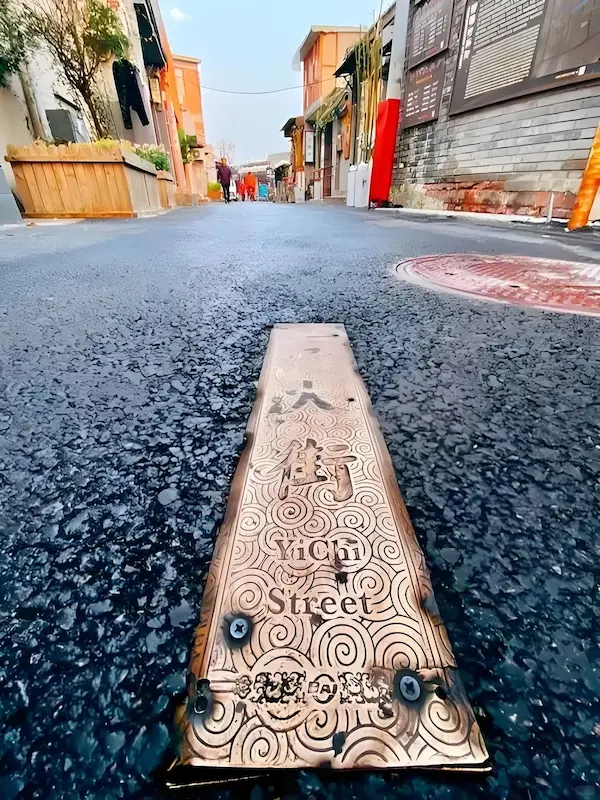
Location: West side of Qianmen Street. Head south from Zhengyangmen (that drab, gray building), and it’s the first east-west street you come to.
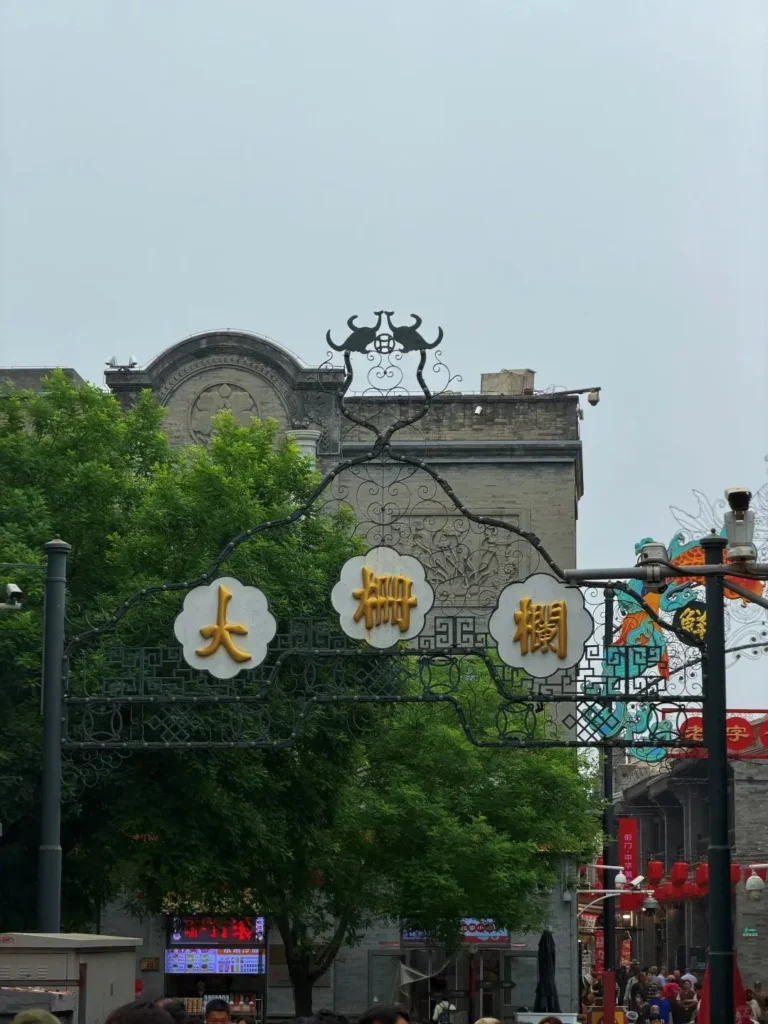
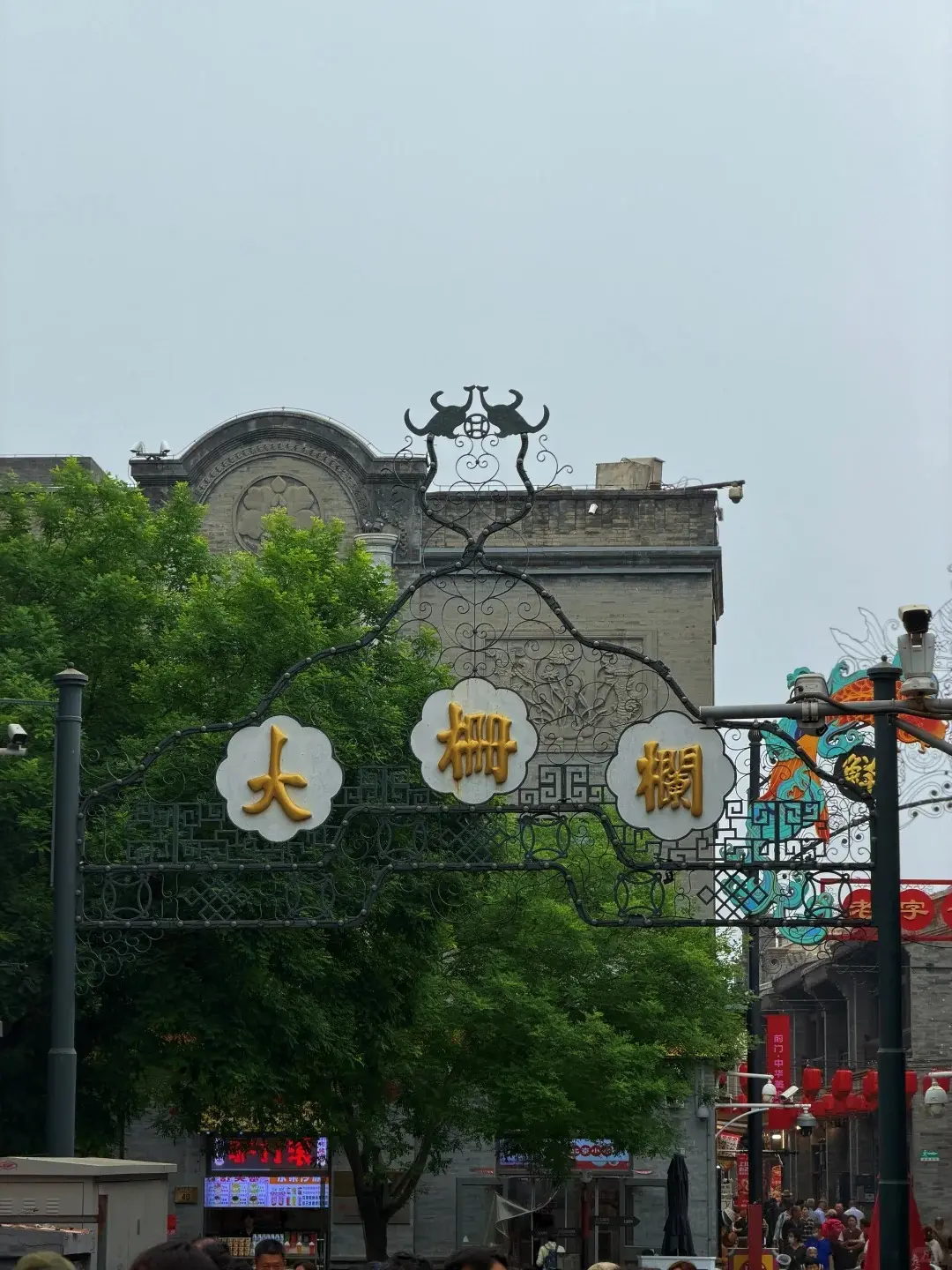
Pronunciation: Beijingers pronounce it “dà shí lànr”—“Da Shi Lan’er.” If you say “Da Zha Lan,” no one will hit you, but the locals will chuckle to themselves.
The Story Behind the Name: In 1488 (during the Ming Dynasty), Beijing was plagued by thieves. The authorities installed wooden fences at the entrances of every alleyway, locking them at night to keep out thieves.
The fence on this street—Langfang 4th Alley—was funded by local merchants and was larger than those in other alleys, hence the name “Dashilan” (Big Fence). Put simply: The wealthy district of the Ming Dynasty installed a massive iron gate, and that’s how the name came about.
Its history is even more convoluted than you might think:
- 1420: Emperor Zhu Di moved the capital to Beijing; this area was called “Langfang Si Tiao,” and street vendors began setting up shop
- 1488: The large gate was installed, and the name spread
- Qing Dynasty: The Manchus lived in the Inner City, while the Han Chinese were all driven to the Outer City (this very area). Wealthy merchants, actors, and artisans flocked here, making Dashilan the liveliest place in all of Beijing
- 1900: The Boxers burned down Western-style shops; the fire reduced the entire Dashilan area to ashes
- After 1900: Reconstruction began; most of the beautiful storefronts you see today were built during that time
- 2017: Beijing Fang opened, bringing cafes and art exhibitions to the historic district
Why Has Dashilar Remained a Hotspot for 500 Years?
1. Adjacent to the Imperial City: Han Chinese were barred from entering the Inner City during the Qing Dynasty, but Qianmen was a city gate, so high-ranking officials and nobles would stroll here when leaving the city
2. Transportation Hub: In the past, the Grand Canal wharf and the train station were both near Qianmen, so people traveling north and south all passed through here.
3. Cluster of Guild Halls: During the Qing Dynasty, Beijing had over 400 guild halls (inns for people from other regions), and more than 300 of them were located around Dashilar. With so many people, business flourished.
4. Plenty of Theaters: Theater performances were prohibited within the inner city during the Qing Dynasty, so they all clustered outside Qianmen. Even Mei Lanfang performed here. With so many theatergoers, there was plenty of spending power.
5. Wide Streets: Wider than the adjacent Langfang First and Second Streets, making it a preferred location for large shops.
In a nutshell: Dashilan = Old Beijing’s commercial hub + Broadway.
Which time-honored shops should you visit?
All of the following are located on the main street of Dashilan; just walk along in order.
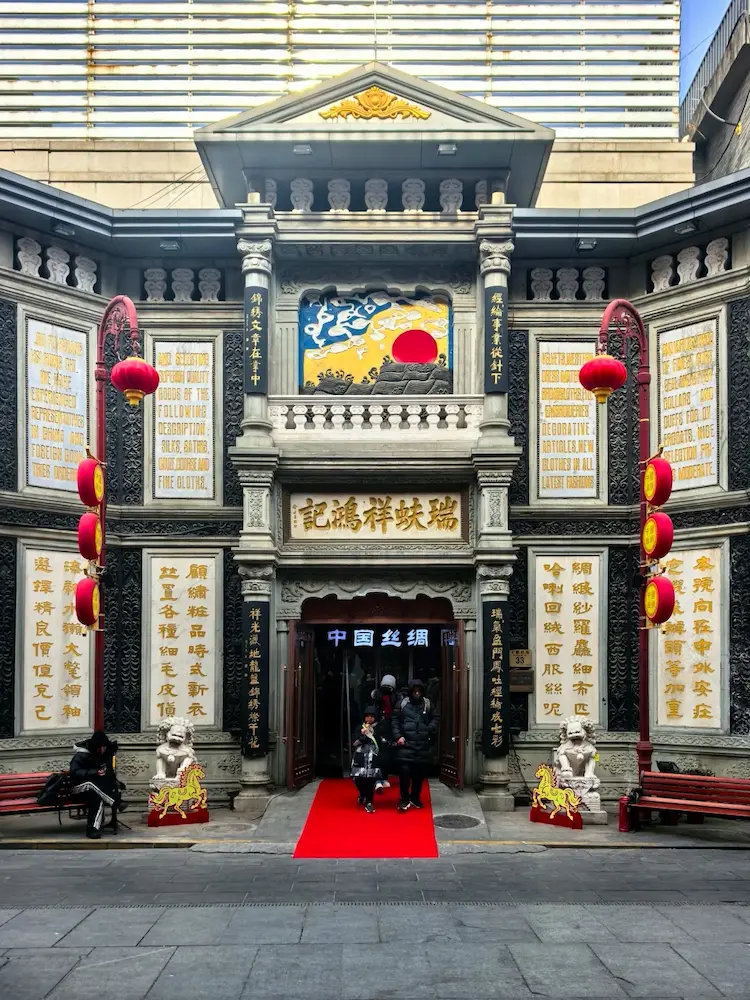
Rui Fu Xiang (Silk and Fabric Store)
- Address: No. 5 Dashilan Street
- History: Opened in 1893. The Five-Star Red Flag raised at Tiananmen Square in 1949 was made from Ruifuxiang’s silk.
- What to see: A two-story Western-style building with Baroque ironwork on the tin roof. Step inside to feel the silk—the staff won’t pressure you to buy.
- What to buy: Silk scarves (200–500 RMB / $28–$70)
- Photo Spot: Stand across the street and shoot the entire building with your wide-angle lens at full zoom. Use a 2x zoom to capture the intricate ironwork details on the facade
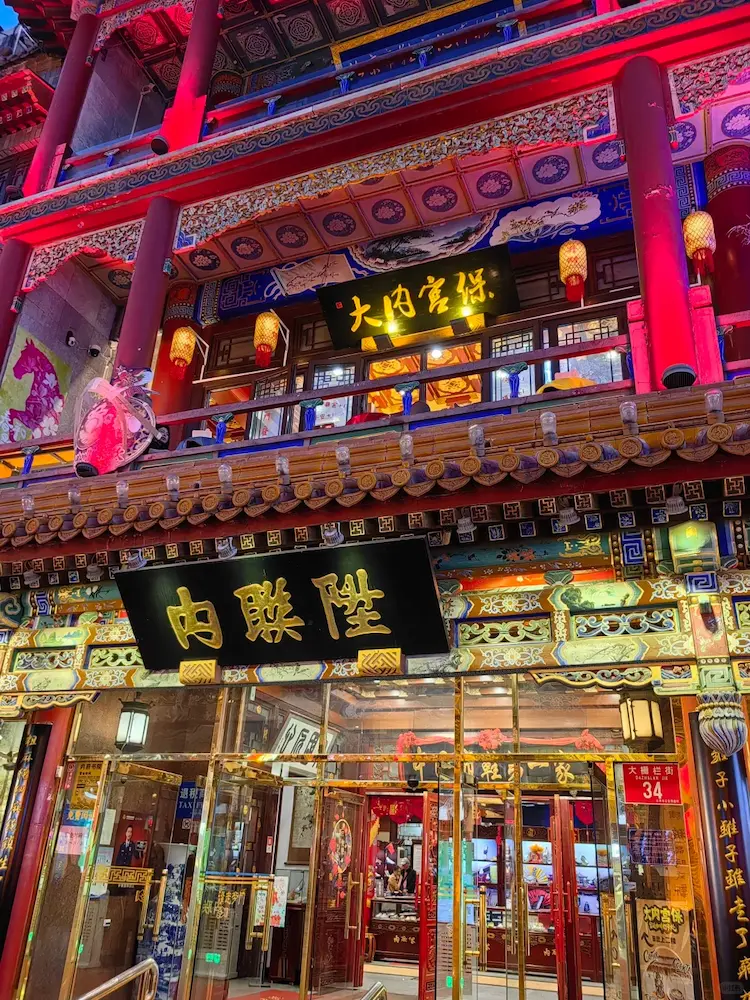
Neilian Sheng (Cloth Shoe Shop)
- History: Opened in 1853. Qing Dynasty officials would make this their first stop upon arriving in Beijing to have their official boots custom-made—“Neilian Sheng” means “Rising Within the Imperial Court,” symbolizing a rise in official fortune
- What to See: Master craftsmen stitching soles. A pair of multi-layered soles requires over a thousand stitches—it’ll make your knees ache just watching
- What to Buy: Traditional cloth shoes (200–400 RMB / $28–$56), comfortable enough to wear all day without getting tired
- Photo Spot: Take close-ups of the master stitching the soles; slow-motion videos of his hands and the needle and thread make for soothing Instagram posts
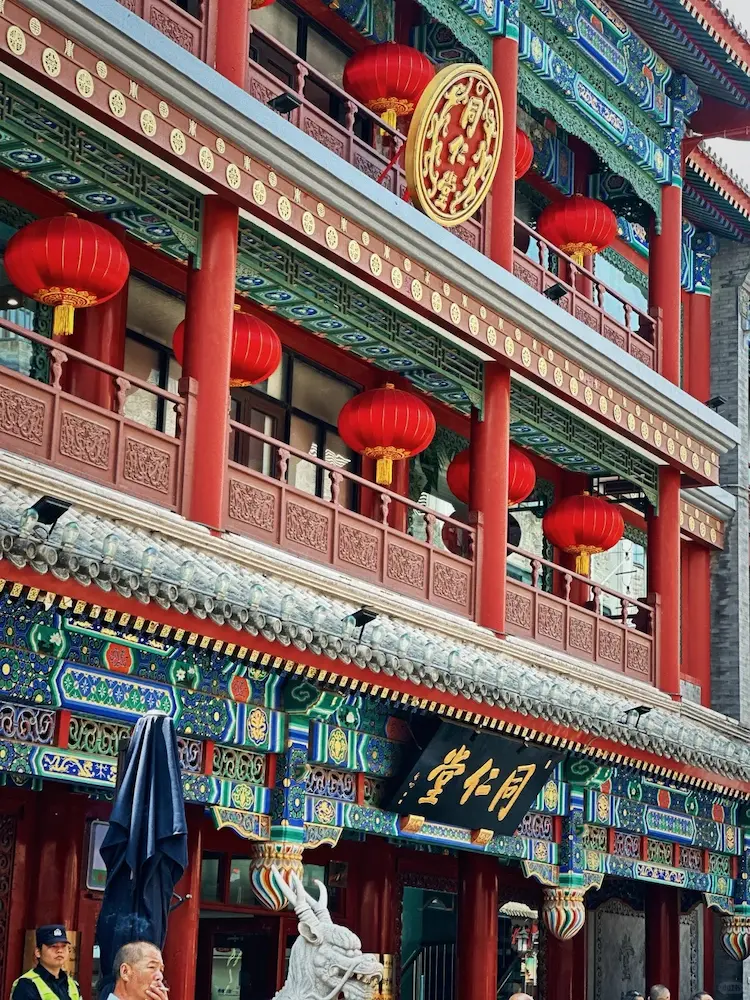
Tong Ren Tang (Traditional Chinese Medicine Store)
- History: Opened in 1669; over 300 years old
- What to see: The scent of traditional Chinese medicine hits you as soon as you walk in. Behind the counter are rows of small drawers, each containing different types of tree bark and herbal roots
- What to buy: Dashi Zha Wan (about 10 yuan / $1.50), a snack that aids digestion with a sweet-and-sour taste
- No need to buy: No one will hassle you to buy, so feel free to browse
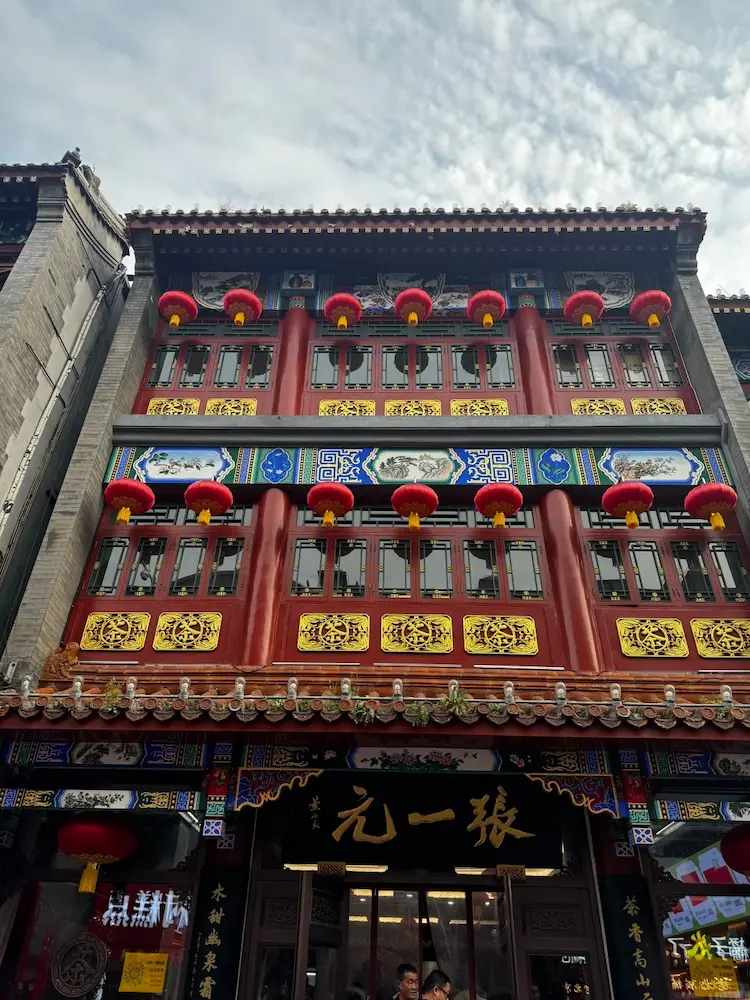
Zhang Yiyuan (Tea Shop)
- History: Opened in 1900
- What to see: A must-see highlight—watch the staff pack the tea. With a sheet of paper and a piece of string, they lift, shake, and tie it up in seconds—clean and efficient. This is the intangible cultural heritage-level craftsmanship of a time-honored Beijing brand
- What to Buy: Jasmine tea (50–100 yuan / $7–14 per small packet)—a great, presentable souvenir to bring back home
- Photo/Video Tip: Set your phone to 0.5x wide-angle or slow-motion mode and film the staff packing tea at the counter. Their movements are both precise and rhythmic—perfect for going viral on TikTok or Reels
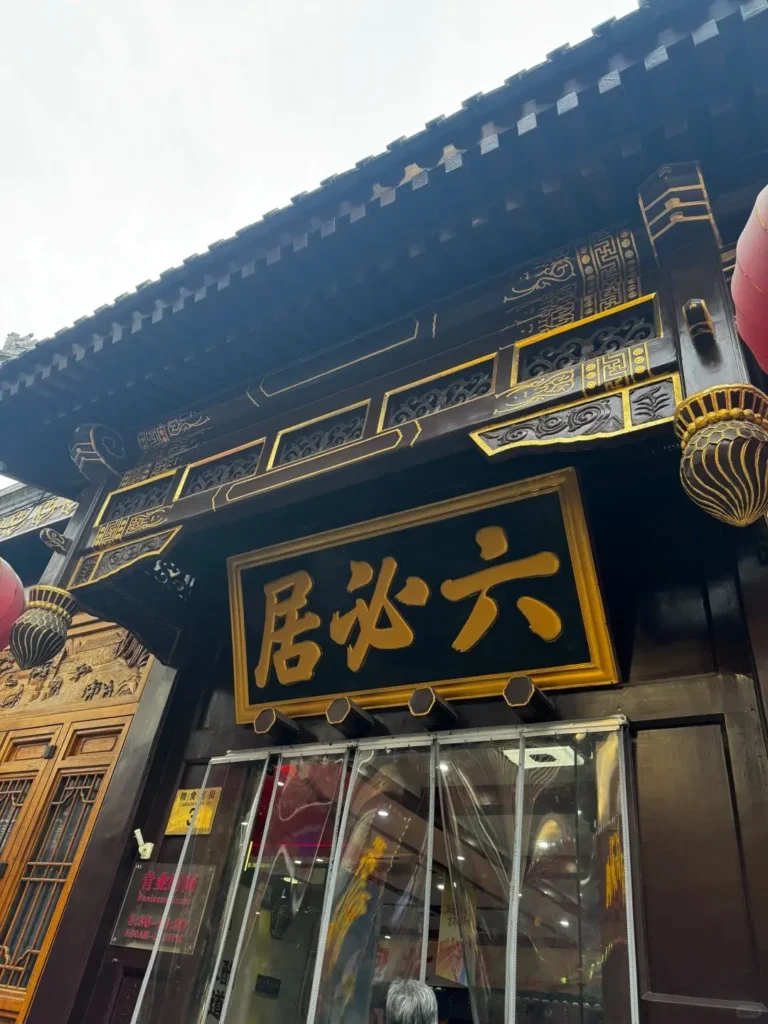
Liubiju (Pickle Garden)
- History: 1530 (Ming Dynasty)—almost 500 years old
- What to see: The giant soy sauce vats at the entrance. The shop sells all kinds of dark-colored pickled cucumbers, pickled radishes, and sweet soy sauce candies
- What to buy: A small bag of pickles (15 yuan / $2)
- Honest advice for foreigners: These pickles look dark and mysterious, like something your grandma kept in the basement for 10 years. But it’s the ultimate umami bomb for Beijingers. Don’t be shy, grab a small bag and throw it into your instant noodles. You’ll thank me later.
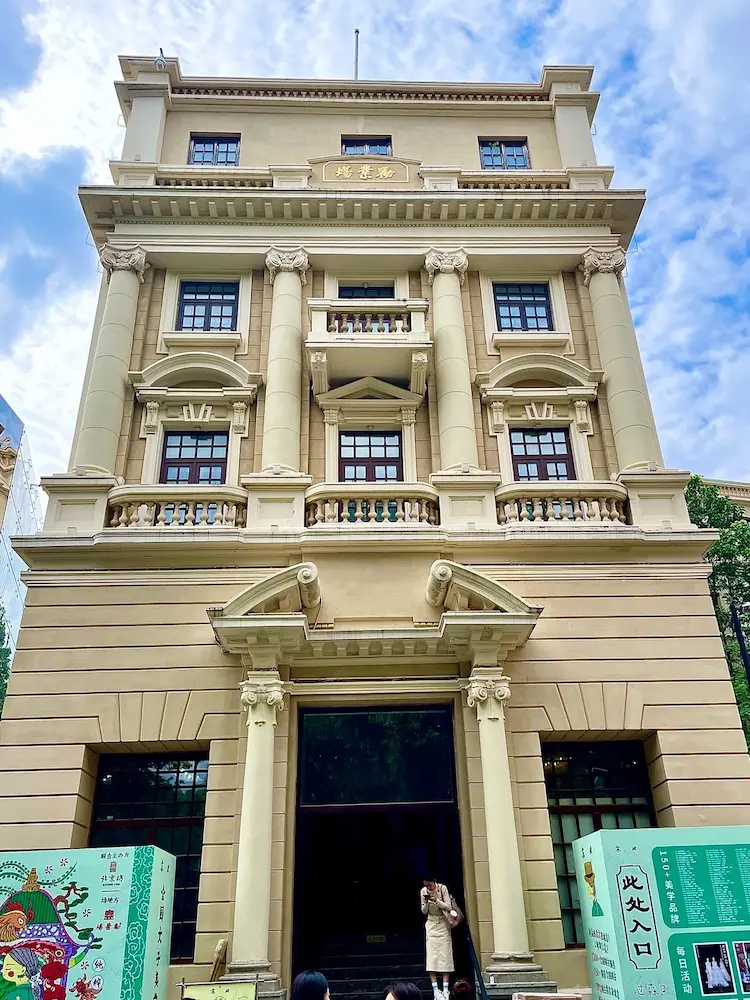
Quanye Chang (No. 17 Langfang Tiaotou)
- Location: Turn north at the east entrance of Dashilar; 3-minute walk
- History: Rebuilt in 1918, it was Beijing’s first department store and housed the city’s first elevator
- Today: A cultural and arts center that frequently hosts free exhibitions
- Best Photo Spot: Step into the atrium and look up at the European-style glass skylight. When the sunlight streams down, use a wide-angle lens to shoot upward—it looks like a scene from an old European film, completely unlike anything you’d expect in Beijing.
Theater Halls and Cross-Talk (It’s Okay If You Don’t Understand)
During the Qing Dynasty, theaters were not allowed within the inner city walls, so all performance venues were located outside Qianmen. There were once five major theater halls in the Dashilan area, where performers such as Mei Lanfang and Tan Xinpei once took the stage.
The ones still open today:
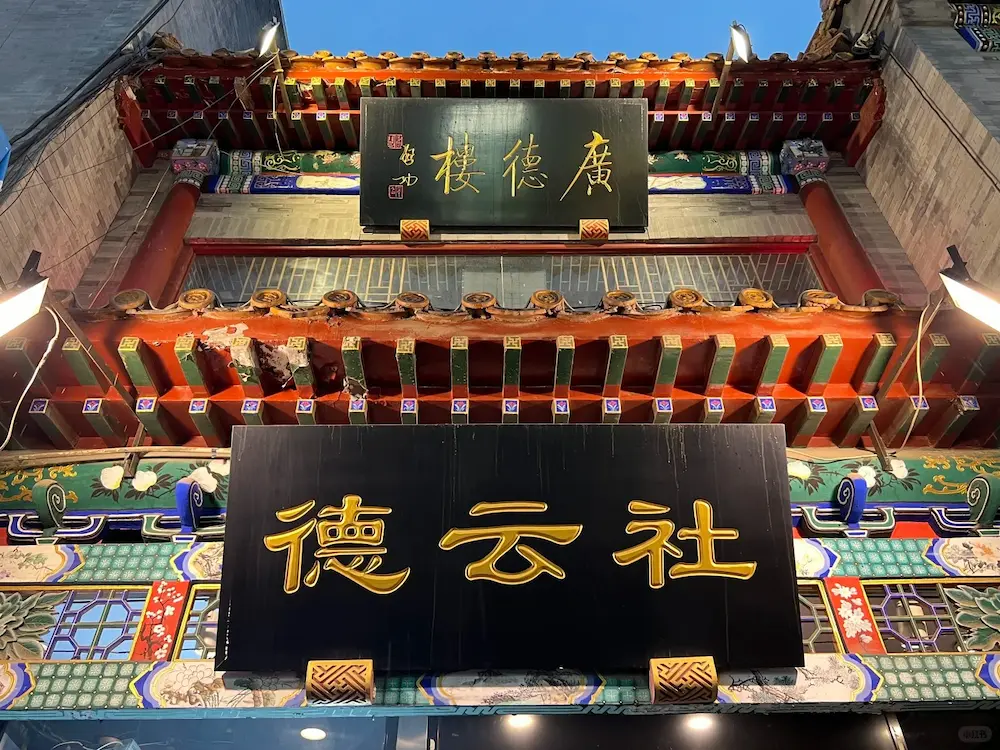
- Guangde Lou (north of the western entrance to Dashilan): Now serves as a venue for the Deyun Society’s crosstalk performances. Tickets cost 80–200 yuan (US$11–28), available on Damai or at the box office.
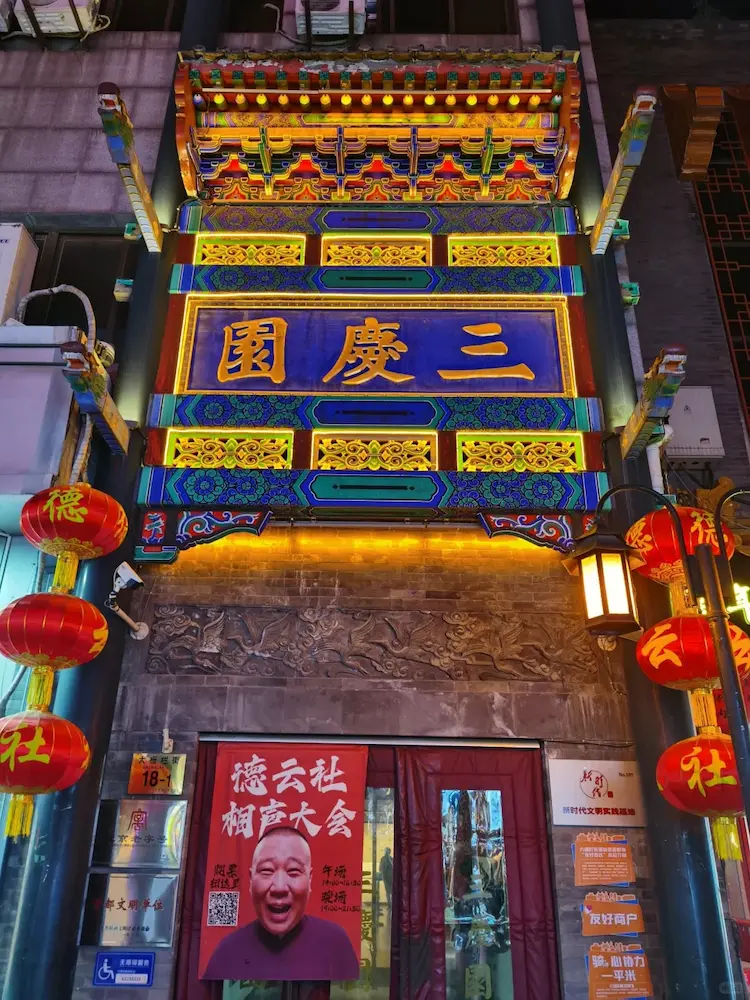
- Sanqingyuan (mid-section of Dashilan): Also hosts Peking Opera and crosstalk, though with fewer performances.
For those who don’t understand Chinese: Think of it as a live Chinese stand-up comedy. Even if you don’t understand a single word, laugh along with the crowd when everyone else does—it’s a great social experiment! Plus, Peking Opera has acrobatic flips, crazy face paint, and live drums that’ll wake you up better than espresso.
The Alleys Next Door (All with Interesting Names)
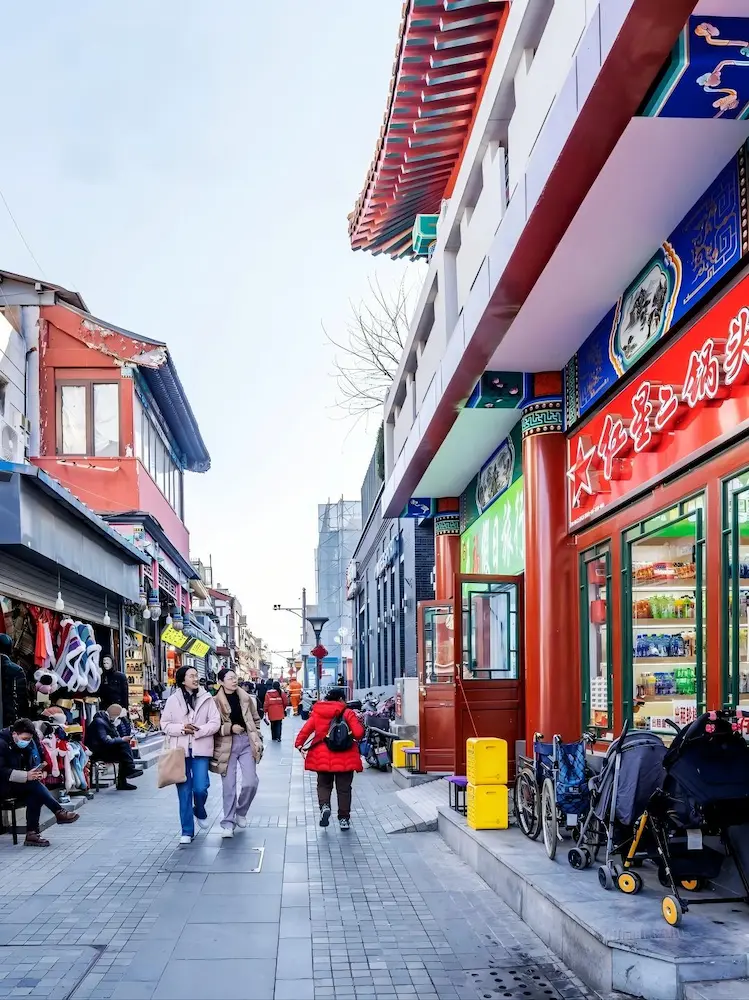
After exploring the main street of Dashilan, venture into the alleys on either side. These names weren’t chosen at random:
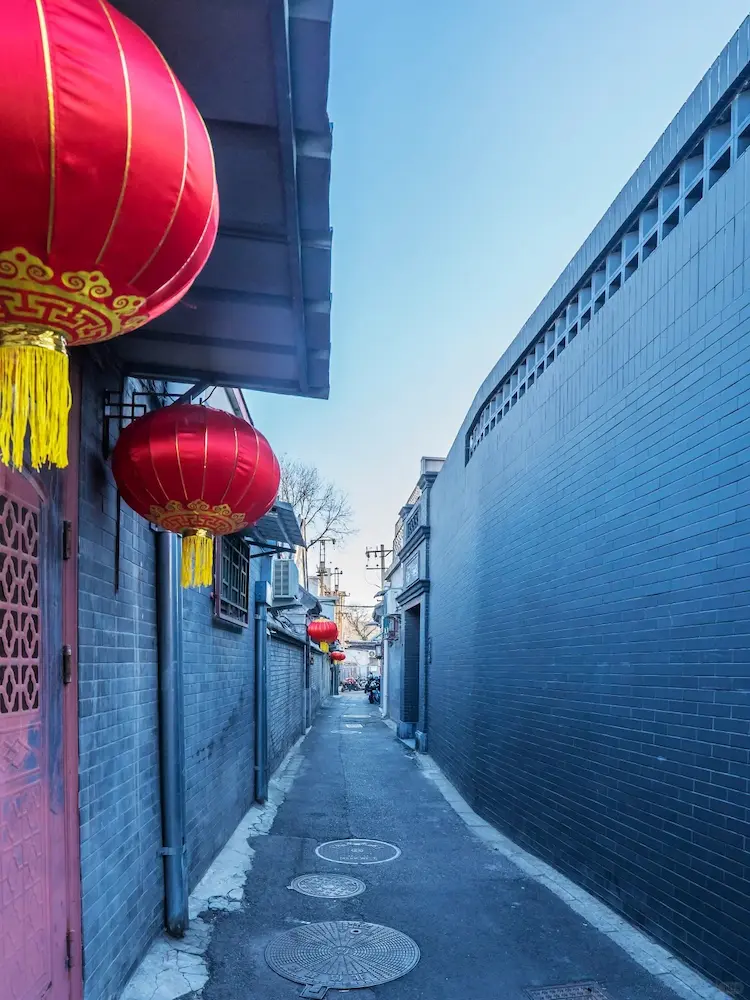
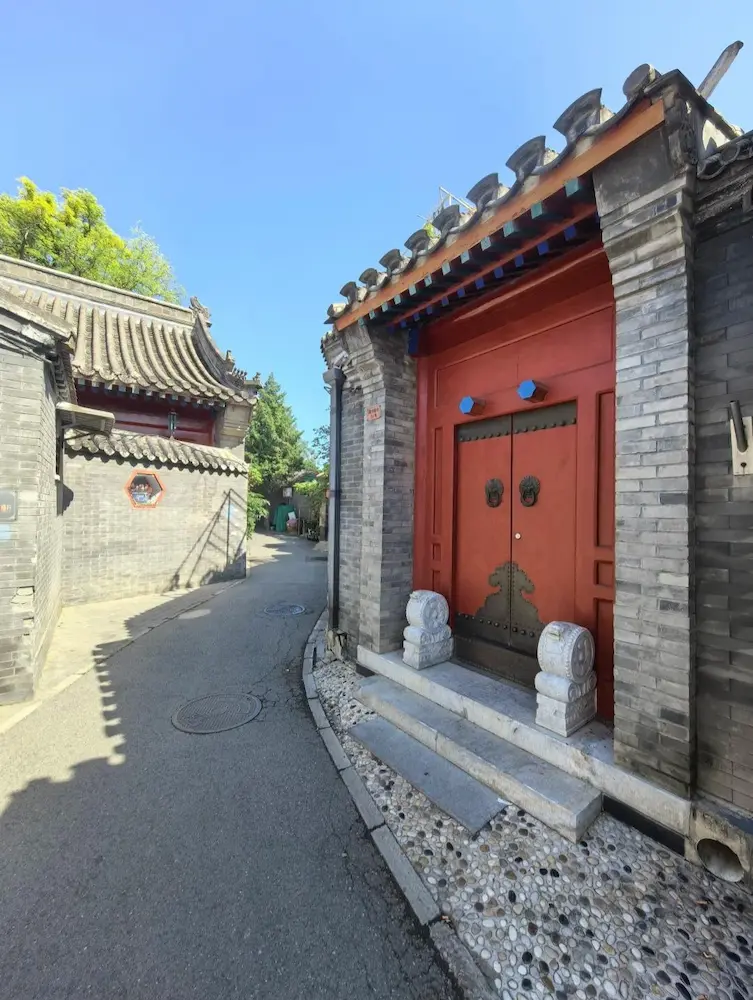
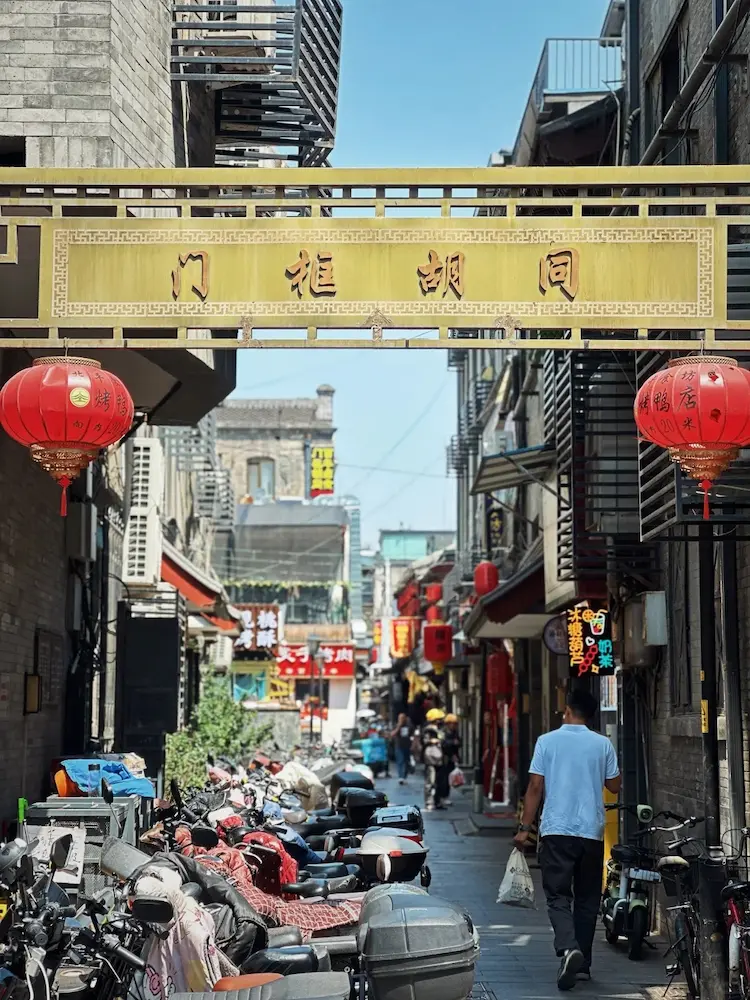
- Menkuang Hutong: So narrow that only two people can walk side by side. It got its name from a large wooden doorframe that once stood here. Now it’s a street lined with snack stalls—you’ll find braised offal, tripe stew, and fried sauce noodles here.
- Langfang First, Second, and Third Lanes: The Second Lane used to be an antique and jade market.
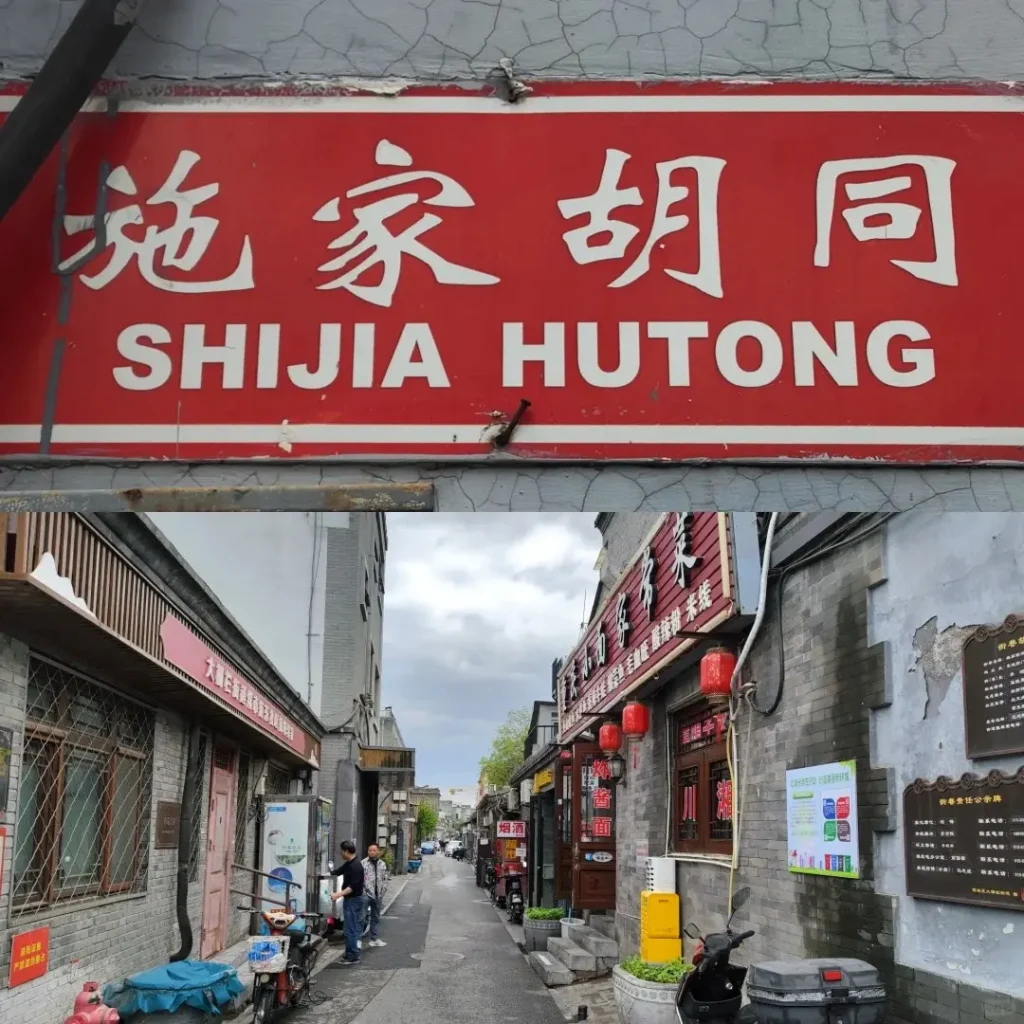
- Shijia Hutong: Formerly known as “Bank Street” (think Wall Street, but much smaller).
- Jewelry Street: Once home to private mints, it now sells tourist souvenirs.
- Yangmeizhu Xiejie: During the Republic of China era, seven publishing houses were located here, and Lu Xun once visited. It has since become a cultural hub—featuring cafes, craft shops, and independent bookstores.
Best Times to Visit
- Weekdays: Before 10 a.m. The shops have just opened, and the crowds haven’t arrived yet.
- Weekends: After 3 p.m. From morning through noon, it’s so crowded you’ll question your sanity.
- Holidays: May Day or National Day? Don’t go. Seriously, don’t go.
- Seasons: Spring and fall are best. It’s hot in summer, but the historic shops have air conditioning; it’s cold in winter, but browsing indoors is no problem.
Budget (per person, no impulse buys)
| Item | RMB | USD |
| Round-trip subway | 6–10 | 0.8–1.5 |
| Lunch (Zha Jiang Mian) | 30 RMB | 4 |
| Pickles + Hawthorn Candy | 25 RMB | 3.5 |
| Crosstalk Show (Optional) | 80–200 RMB | 11–28 |
| Total (without crosstalk) | Approx. 70 RMB | Approx. 10 USD |
About Money: Don’t worry about carrying thousands in cash. In 2026, all these centuries-old shops seamlessly support WeChat Pay and Alipay with your international credit cards. Forgot to bring cash? No problem.
But if you’re buying candied hawthorn on a stick from a street vendor, it’s safer to have 50 yuan in change on hand. For detailed instructions, check out my [2026 Beijing Payment Guide].
A Word of Advice
1. Wear comfortable shoes. The cobblestone streets are hard, and walking too much will make your feet hurt.
2. Beware of scams: If someone tries to lure you into a “cheap day tour” or “gift giveaway,” ignore them. Just head straight to the time-honored shops.
3. Taking photos: Feel free to snap photos of the storefronts. But don’t point your camera right in the face of the staff—it’s rude.
4. Mondays: Most shops are open, but exhibitions at the Puyue Market may be closed.
5. Bring water: Bottled water costs 5 yuan on the street, so you might want to bring your own.
Suggested Itinerary (Just follow along)
Exit at Exit C of Qianmen Station → Take a photo of Zhengyang Tower → Enter the east entrance of Dashilan
Rui Fu Xiang (check out the storefront) → Nei Lian Sheng (watch the shoe soles being sewn) → Tong Ren Tang (smell the aroma) → Zhang Yi Yuan (snap a photo of the staff packing orders) → Liu Bi Ju (try the black pickles)
Turn into Menkuang Hutong for a bowl of braised offal or fried sauce noodles
Walk to the West Entrance to see the facade of Guangde Tower; buy a ticket if you want to watch a crosstalk performance
Exit at the West Entrance and turn north to Quanyechang to take a photo of the glass skylight
Finish up and head home from Zhushikou Station or Qianmen Station
Total duration: about 2 hours (if you don’t eat, shop, or watch a crosstalk performance).
Frequently Asked Questions (FAQ)
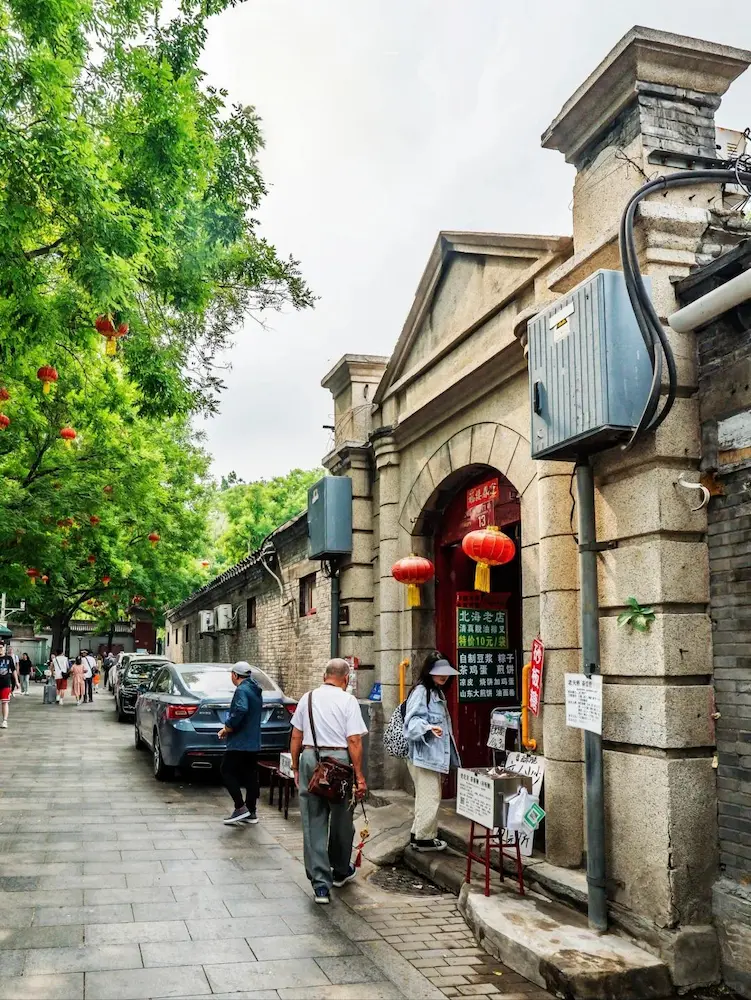
Dashilar isn’t the kind of “Instagram-worthy spot” with filters cranked all the way up. It’s a bit chaotic, a bit run-down, and even a bit old-fashioned.
But it’s been around for over 500 years, having weathered fires, wars, and reconstruction, and it remains the place where Beijingers buy tea and cloth shoes to this day. When you come here, you’re not just visiting a tourist attraction—you’re experiencing an old Beijing that’s still very much alive.