Beijing Jianchang Hutong Walking Route: A 2026 Guide to This Artsy, Off-the-Beaten-Path Hutong
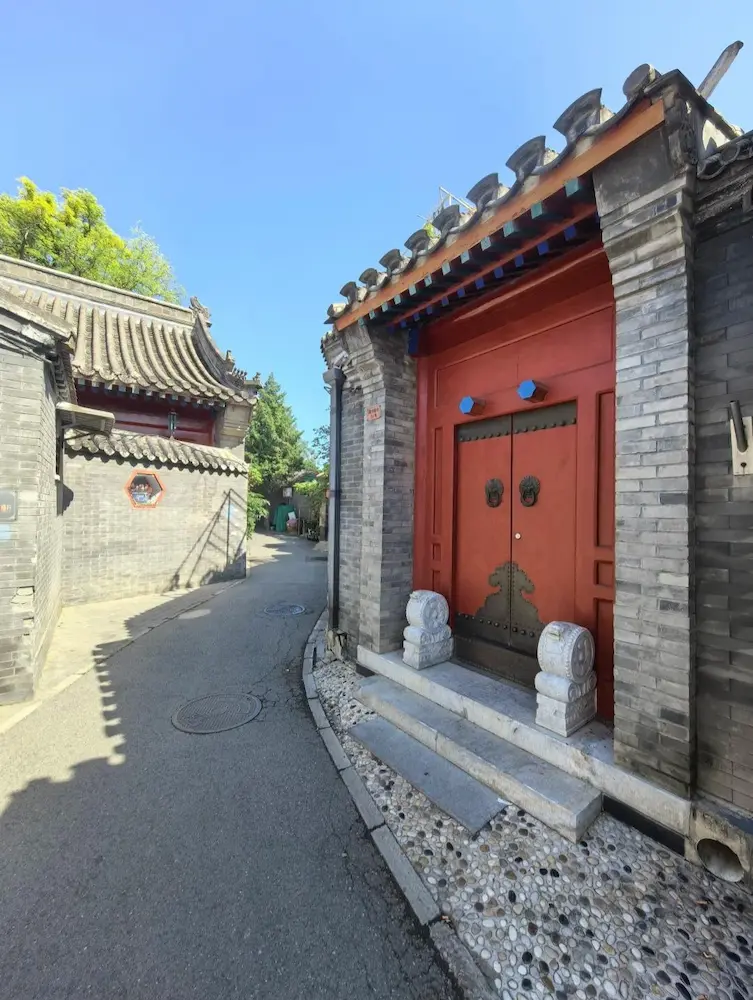
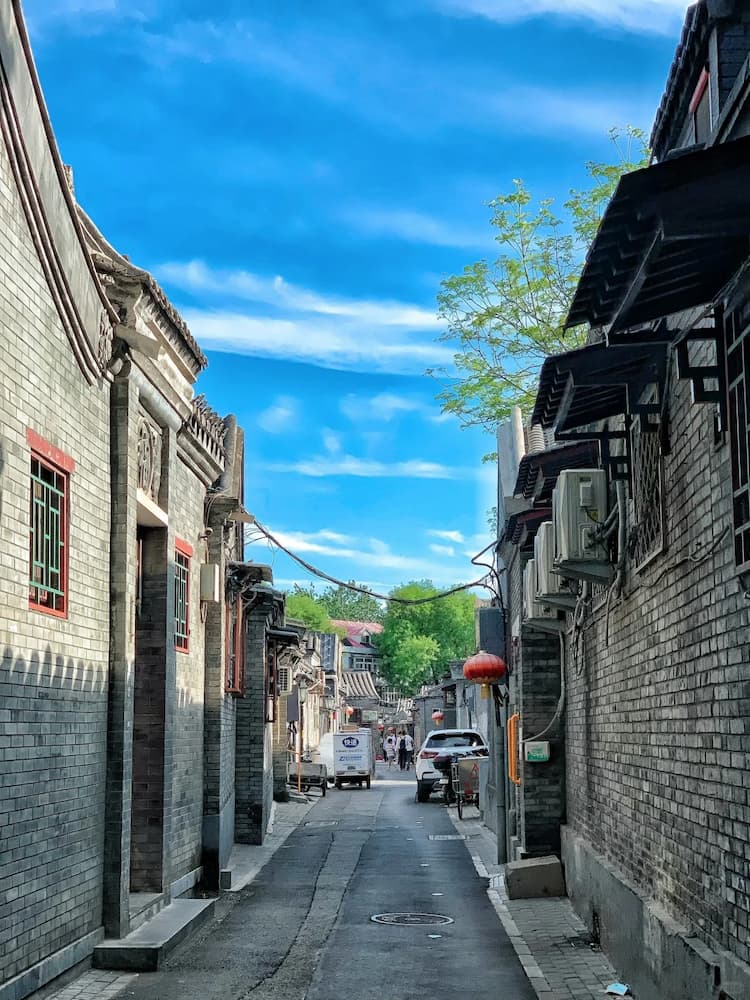
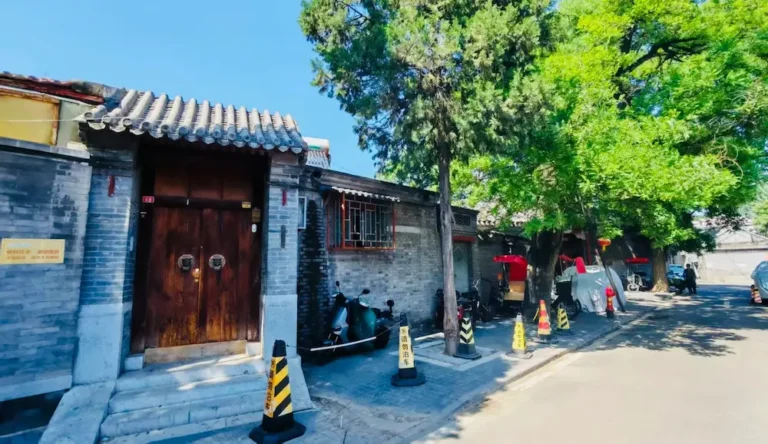
When Wudaoying Hutong gets crowded, just turn down the side street into Jianchang Hutong. It instantly becomes quiet. This hutong has a rather interesting history—over 200 years ago, students from the Imperial Academy practiced archery here.
Yes, you heard that right—back in the day, academic stars didn’t just memorize the Four Books and Five Classics; they also had to master archery.
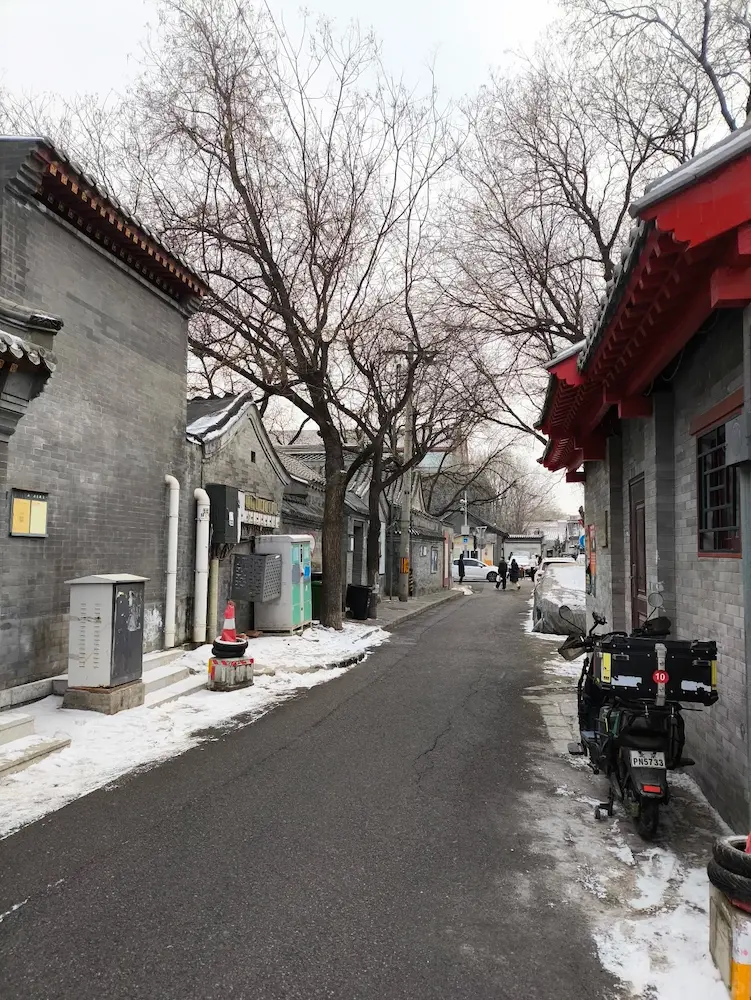
Today, it has transformed into a quiet, off-the-beaten-path neighborhood, where dessert shops, aromatherapy boutiques, and vegetarian restaurants are tucked away in old courtyards. There are no loudspeakers hawking goods here—just the aroma of coffee and the cooing of pigeons deep within the alley.
Table of Contents
Quick Reference Chart: A Quick Guide to Planning Your Visit to Jianchang Hutong
| What You Want to Do | Additional Fees Required | Notes |
| Stroll, take photos, explore the hutongs | No | Public streets and alleys, open all day |
| Visit the Guanxia Siheyuan to enjoy the fragrance | No | Free admission; payment required only for purchases |
| Enjoy desserts and tea at Yuangu / Vegetarian meals at Wo Ye oii | Yes | Food and beverage purchases are at your own expense; Wo Ye has limited seating —reservations recommended |
| View the century-old ginkgo tree at No. 25 Courtyard | No | The courtyard is still inhabited; please remain quiet and do not enter private residences without permission |
| Visit the Confucius Temple and the Imperial Academy Museum on the Way | Required | Admission: 30 yuan; closed on Mondays; online reservation required |
| Public Restrooms in the Area | Not Required | Public restrooms in the hutong are free but basic |
Important Note:
Entry to Jianchang Hutong itself is free, but purchases at shops within the hutong and admission to nearby museums require separate payment; some courtyards are still inhabited by residents. Please respect their daily lives while visiting and refrain from peering into or trespassing on private properties.
How Did Jianchang Hutong Get Its Name?
Jianchang Hutong took shape during the Qianlong era of the Qing Dynasty. At that time, students at the Imperial Academy (the highest institution of learning in ancient times) were required not only to study but also to learn archery—the “art of archery” was a compulsory subject among the “Six Arts.”
Outside the western wall of the Imperial Academy lay an open area specifically designated for students to practice archery, with a small pavilion built nearby to store bows and arrows. People came to call this place “Jianchang.” Here, the character “chang” does not mean “factory,” but rather “practice ground.”
By the late Qing Dynasty, archery classes had been abolished, and residential buildings gradually sprang up on the open ground, forming a small alley.
In the late Qing Dynasty, this area was known as Cibi Hutong; in 1965, as part of Beijing’s effort to standardize street and alley names, the authorities restored the historical name “Jianchang Hutong,” which has been in use ever since.
In short: Jianchang = the place where ancient academic elites practiced archery.
What to Do: Must-Visit Shops
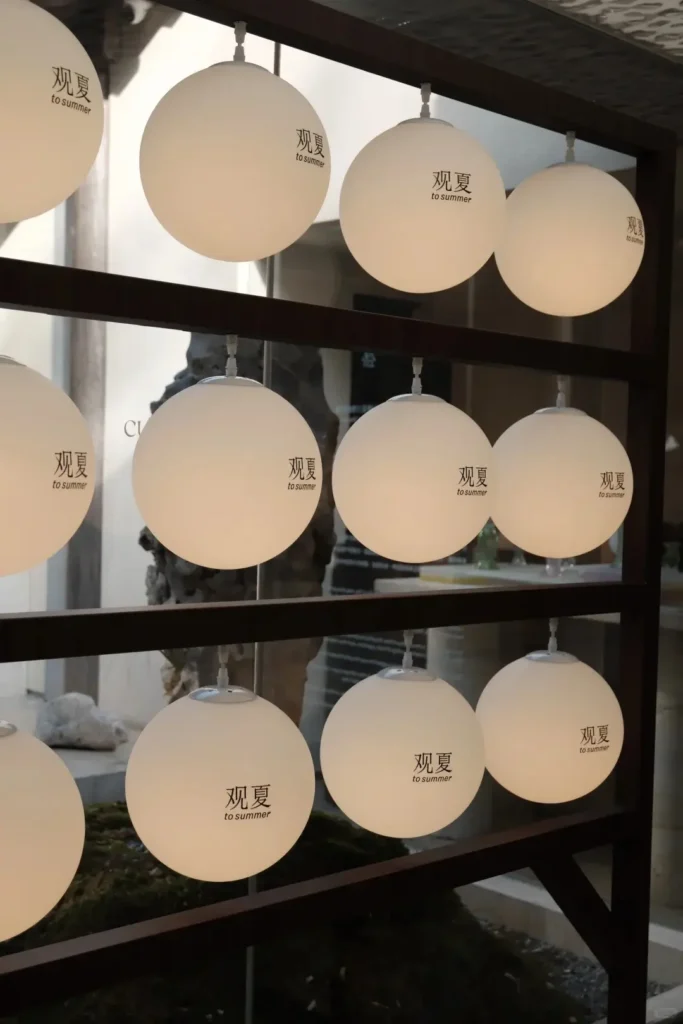
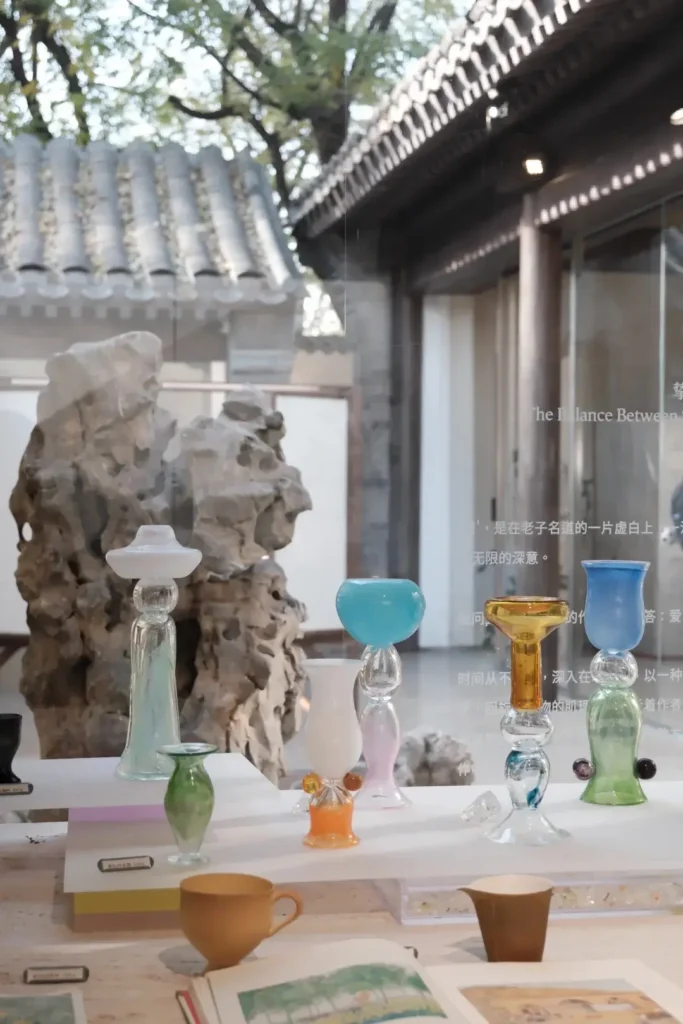
To Summer: An Aromatherapy Shop Hidden in a Three-Courtyard Siheyuan
Location: Intersection of Guozijian Street and Jianchang Hutong
This courtyard dates back to the Qing Dynasty, featuring three courtyards and over a century of history. After taking over the property, To Summer hired a professional architectural restoration team that spent a year restoring it, preserving the original structure while infusing it with a modern design aesthetic.
You can enter for free to browse and sample their fragrances. “Yihe Golden Osmanthus” captures the scent of Beijing’s autumn osmanthus blossoms. You’re welcome to visit even if you don’t plan to make a purchase.
A quick tip: Store hours may vary slightly depending on the season, so we recommend avoiding visits right before closing time. Please do not take photos of staff or products on the premises for commercial purposes.
Yuangu Main Store: New Chinese-Style Desserts
Location: 34 Jianchang Hutong
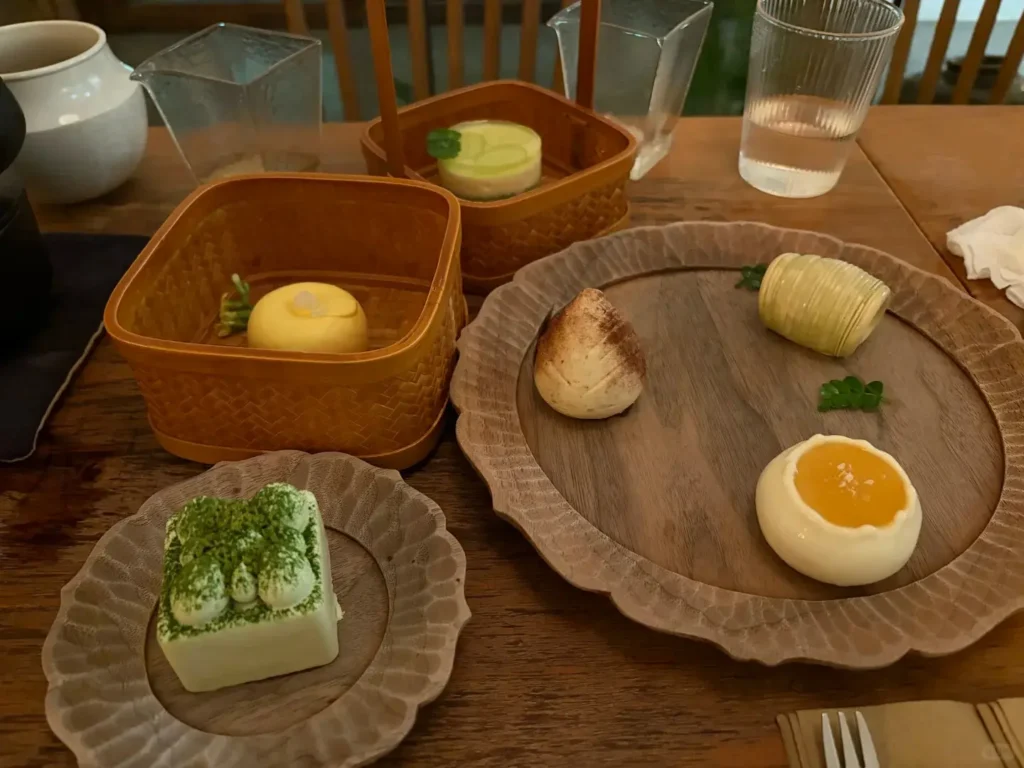
Yuangu is well-known for its new Chinese-style desserts. The main store is less crowded than the Sanlitun branch, with a quiet, well-lit interior.
Here’s a fun fact—right across from Yuan Gu is a public restroom, and first-time visitors often have trouble finding the shop. If you see the restroom while passing by, you’re in the right spot; the shop is diagonally across the street. It’s air-conditioned inside, so if you’re tired from walking in the summer, pop in for a cup of tea and a slice of jasmine green tea pudding—it’s a great way to beat the heat.
A quick tip: On weekends and holidays, the restaurant gets busier, so you may have to wait a short while for a table. There are no restrooms on the premises; please use the public restrooms in the alley.
Wo Ye oii: A Vegetarian Courtyard Restaurant with Just 6 Tables
Location: 13 Yongkang Hutong (at the intersection with Jianchang Hutong; turn west and you’ll find it)
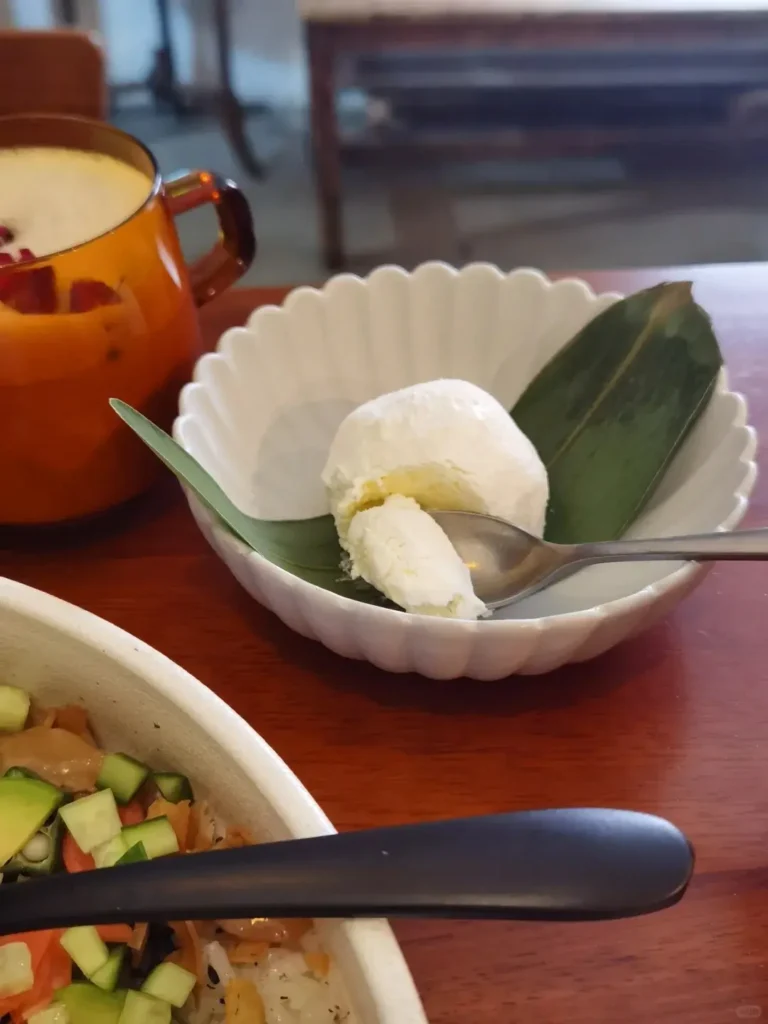
Tucked away in a small courtyard, this place has very limited seating and often has a line out the door. The menu blends Korean, Thai, and French elements with bold, creative twists.
We strongly recommend making a reservation by phone in advance. If you don’t have a reservation, please arrive as early as possible, as you’ll likely have to wait a long time—or may not even get a seat—during later hours.
What Else Is There to See in the Hutong
The Centuries-Old Ginkgo Trees in Courtyard 25
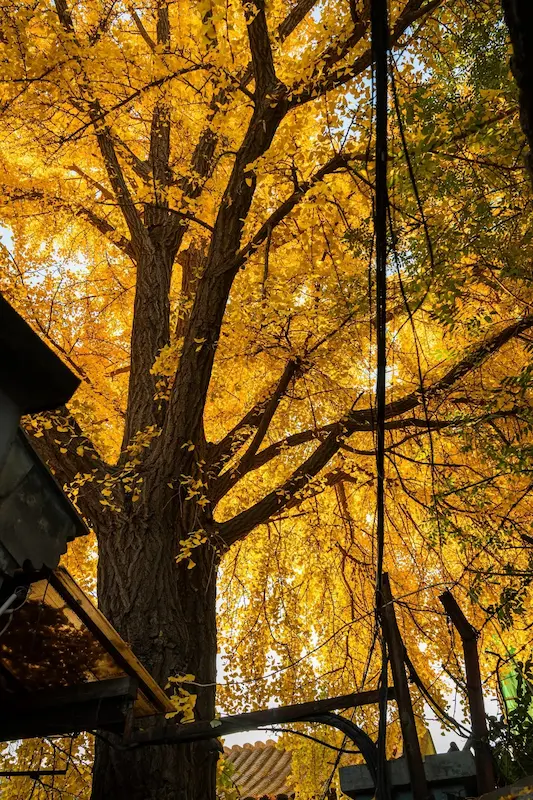
There are two ginkgo trees over 300 years old in Courtyard 25 of Jianchang Hutong. It is said that this site was once a nunnery, and the trees are remnants from that time. Longtime residents who have lived in the courtyard for decades say that come autumn, the leaves turn a particularly beautiful shade of yellow.
⚠This is a private residence and not a public attraction. If the gate happens to be open, please only take a brief look from the entrance. Be sure to keep your voice down and do not walk directly into the courtyard to avoid disturbing the residents’daily lives.
Delivery Rider Apartments
At No. 44 Jianchang Hutong, there is a delivery rider apartment complex called “Anyijia.” The area used to be home to long-time residents, but now it’s filled with many delivery riders.
They deliver meals in this area, weaving through the streets and alleys of Guozijian, Yonghegong(Temple), and Wudaoying during the day, then returning to the depths of the hutong at night.
Longtime residents feed birds and play chess at the entrance, while the riders pass by on their electric scooters, nodding and exchanging greetings.
Compared to the days when students from Guozijian practiced archery here during the Qianlong era, the bustle has taken on a different form, but this hutong has always been full of life.
What’s most captivating about Jianchang Hutong isn’t the trendy shops, but rather the scenes of daily life where the old and the new coexist. The two most common pitfalls for tourists are: first, accidentally wandering into residential courtyards; and second, mistakenly assuming that all the small shops in the hutong are open all day—many independent shops may close temporarily for rest and maintenance.
Travel Checklist for Jianchang Hutong and Surrounding Areas
Before You Go
☐ Choose a pair of comfortable flat shoes; the stone-paved paths in the hutongs are not suitable for high heels.
☐ Bring a small amount of cash in RMB (some street vendors only accept cash).
☐ If you plan to visit the Confucius Temple and the Imperial Academy Museum: Make a reservation in advance via the WeChat official account to avoid Mondays, when the museums are closed.
☐ If planning to dine at Wo Ye oii: Call ahead to reserve a table
☐ When taking photos with a camera or phone: Remember the rule—do not photograph residents’ private windows or interiors
Upon Arrival
☐ Take a quick look around the hutong first; don’t rush straight to the “Instagram-famous” shops
☐ When admiring the ancient trees at Courtyard No. 25, stop only at the entrance—do not enter private courtyards
☐ Before entering a shop to make a purchase, briefly check to see if it is open
☐ For public restrooms, prioritize those in the middle section of Wudaoying or at the entrance to Guozijian Street for a better experience
☐ When taking photos, always be mindful of nearby residents and respect their privacy
Directions
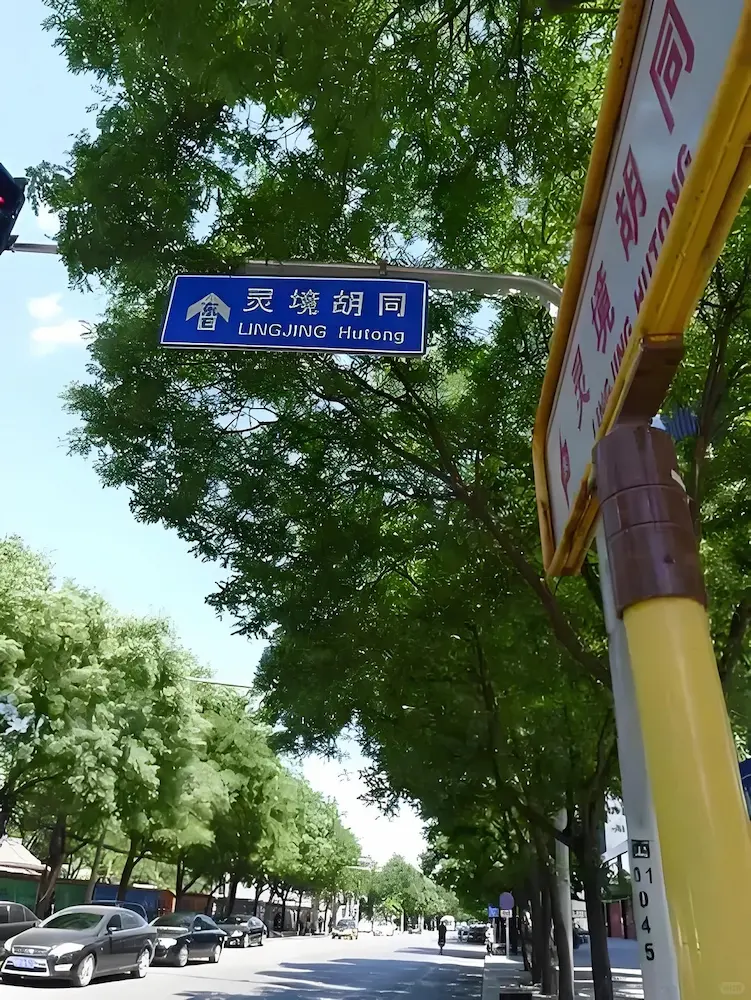
Subway: Take Line 2 or Line 5 to “Yonghegong” Station and exit via Exit G. Walk about 3 minutes to the entrance of Wudaoying Hutong. Walk toward the end of the alley; you’ll see the sign for Jianchang Hutong on your left.
Recommended one-way walking route: Wudaoying Hutong→Jianchang Hutong→Guozijian Street→Yonghegong Street. The entire route is a one-way walk with no backtracking. Completing the entire route, including brief stops at shops, takes approximately 2–3 hours; if you plan to explore shops in depth or visit museums, the time required will increase accordingly.
Best Times to Visit
- Early morning (8:00–9:30): Before the crowds arrive, you can see locals buying breakfast, taking a stroll, and chatting in the hutongs.
- Afternoon (14:00–16:00): Sunlight filters through the leaves, casting shadows on the gray walls—this is a great time to capture the depth of the hutongs and the play of light and shadow.
- Spring and Fall: In the fall, the ginkgo leaves turn yellow, and the two ancient trees at Courtyard 25 are particularly beautiful.
- Avoid Mondays: The Confucius Temple and Imperial Academy are closed on Mondays, so keep this in mind if you plan to visit them as well.
Budget Guide (2026)
| Item | Price | Approx. USD |
| Round-trip subway fare | 6–10 yuan | 0.8–1.5 |
| Confucius Temple + Imperial Academy admission | 30 yuan | 4 |
| Yuan Gu Desserts | Approx. 38 yuan | 5 |
| Wo Ye Vegetarian | 80–100 yuan | 11–14 |
| Coffee Shop | 30–40 yuan | 4–6 |
A Few Reminders
1. Wear comfortable shoes. The streets in the hutongs are paved with stone slabs and asphalt, so your feet may get tired after walking for a while.
2. Payment: Most stores accept mobile payments via WeChat Pay and Alipay. Foreign tourists can link their international Visa or Mastercard credit cards in advance to use mobile payments, but some small shops and street vendors may not accept international cards and may only accept cash in RMB. It’s a good idea to carry 50–100 yuan in small bills just in case.
3. Restrooms: There are public restrooms in the hutongs, but the Yuan Gu restaurant does not have restrooms on-site.
4. Respect the residents: Many courtyards are still home to long-term residents; do not peer through windows or doors, do not enter private courtyards without permission, and when taking photos, avoid residents’ windows and interiors.
5. No reservations are needed for To Summer and Yuan Gu—just show up. For dining at Wo Ye, we recommend making a reservation in advance.
FAQ
Jianchang Hutong isn’t a major tourist attraction in the traditional sense—the kind of place you “must visit.” There are no mass-produced cultural and creative ice creams here, nor are there any Instagram-worthy walls designed specifically to draw crowds and create long lines.
It has its own rhythm of life: in the early morning, elderly residents head out to walk their birds and chat; in the afternoon, food delivery riders weave through the alleys; and by dusk, as the streetlights come on, the entire alley gradually settles into tranquility.
The students of the Imperial Academy who practiced archery here more than two hundred years ago would likely have found it hard to imagine that this former archery range is now filled with the everyday scents of incense and desserts wafting from the courtyards.
You don’t need to set aside an entire day for this; if you happen to be exploring the Yonghegong, Wudaoying, or Imperial Academy area, feel free to turn in here for a stroll. There’s no need to rush from one sight to the next—set aside a little time to soak in the authentic, everyday atmosphere of an old Beijing hutong.