2026 Jinyu Hutong Beijing Travel Guide: The former site of Xianliang Temple next to Wangfujing, visiting hours and transportation routes
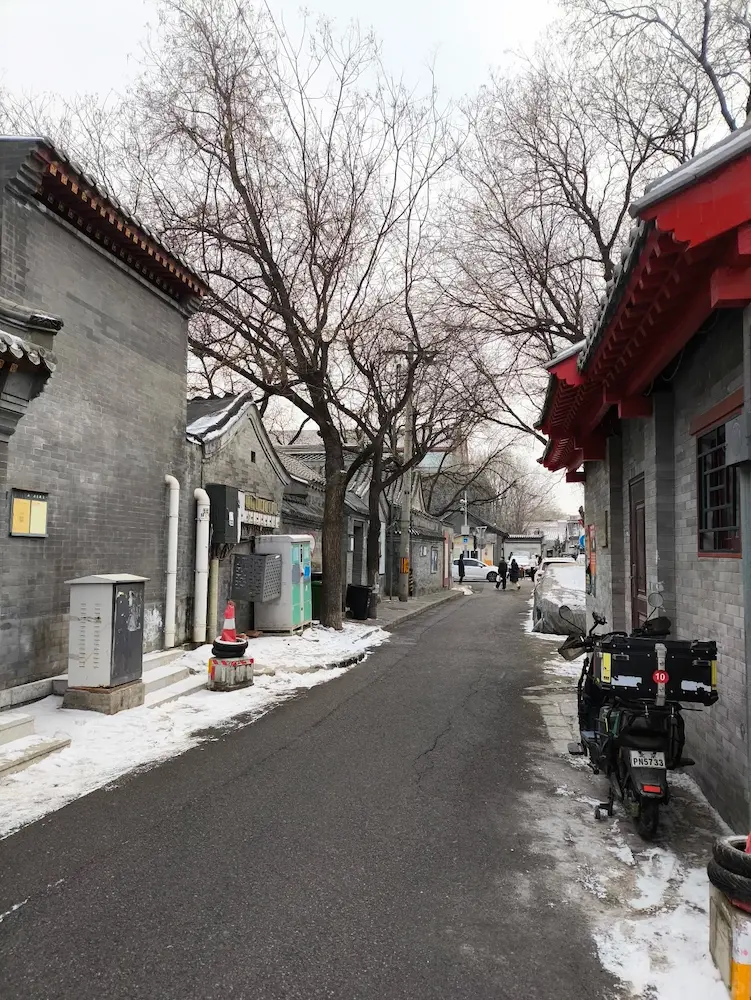
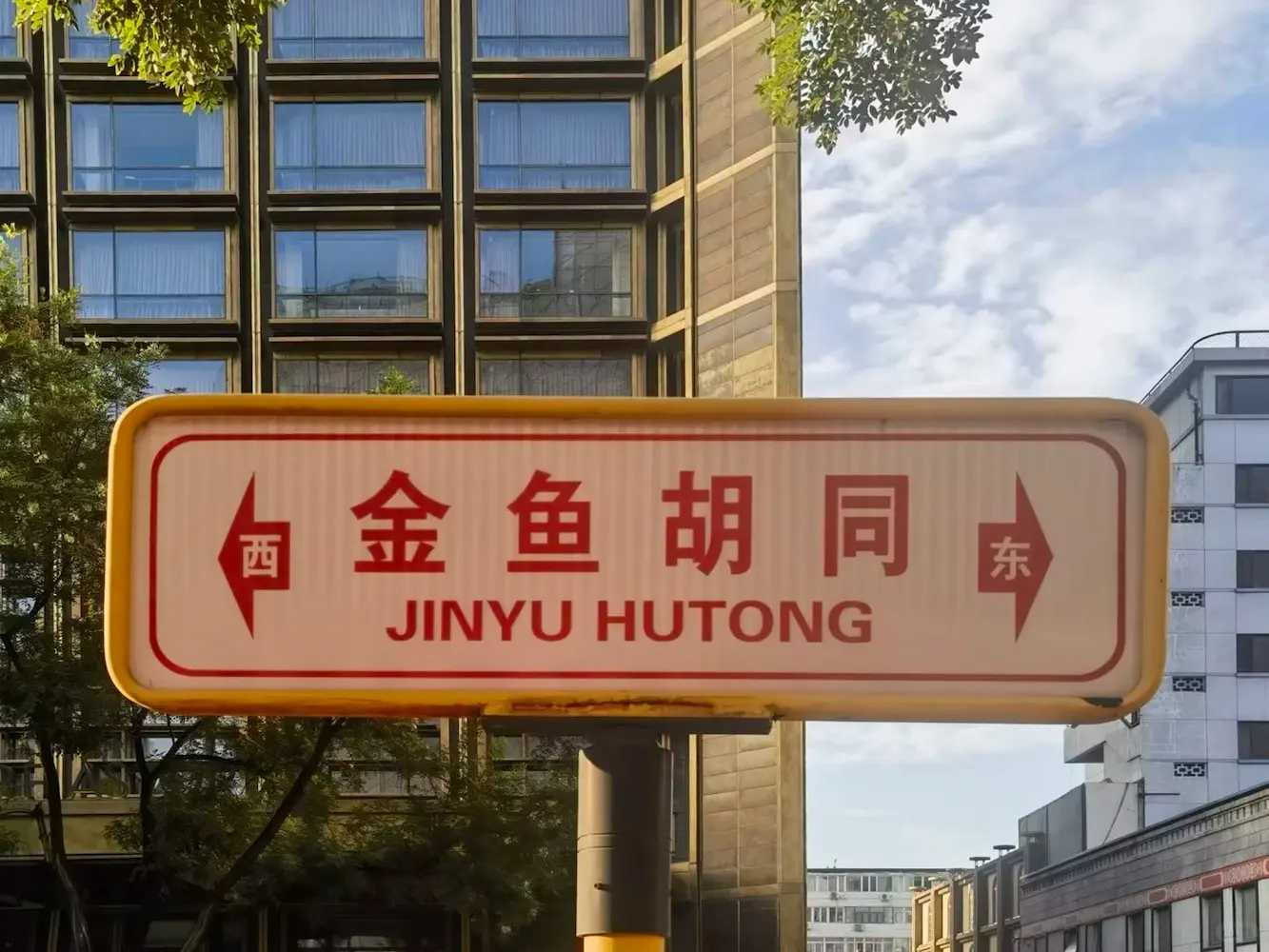
In Beijing, there is a hutong with a delightful-sounding name: Jinyu Hutong (Goldfish Hutong). You might wonder if there are goldfish in this hutong, and the answer is no. But it holds many stories far more interesting than the goldfish itself.
But there are many stories here that are even more fascinating than the goldfish—600 years of name changes, the lavish gardens of high-ranking officials in the late Qing Dynasty, and a temple that altered the course of modern Chinese history.
Today, Jinyu Hutong—which connects to Wangfujing in the west and Jinbao Street in the east—has become one of Beijing’s busiest commercial districts.
It is 567 meters long, with a width of 12 meters at the western end and 44 meters at the eastern end (June 12).
Want to experience how “Old Beijing” and “New Beijing” coexist on the same street? Take a stroll down Jinyu Hutong.
Table of Contents
Quick Facts: Jin Yu Hutong at a Glance
- Location: Dongcheng District; runs east-west, bordering Wangfujing Pedestrian Street to the west and Dongdan North Street to the east
- Key Attractions: Ruins of Xianliang Temple (former residence of Li Hongzhang), former site of Na Jia Garden, Peninsula Hotel, and Peace Hotel
- Historical Transformation: From a Ming Dynasty street specializing in gold and silver jewelry to Beijing’s premier commercial and diplomatic historic district
- Visitor Tips: Explore alongside Wangfujing; take your time to savor the atmosphere and feel the lingering warmth of history amidst the bustling city
Where is Jinyu Hutong?
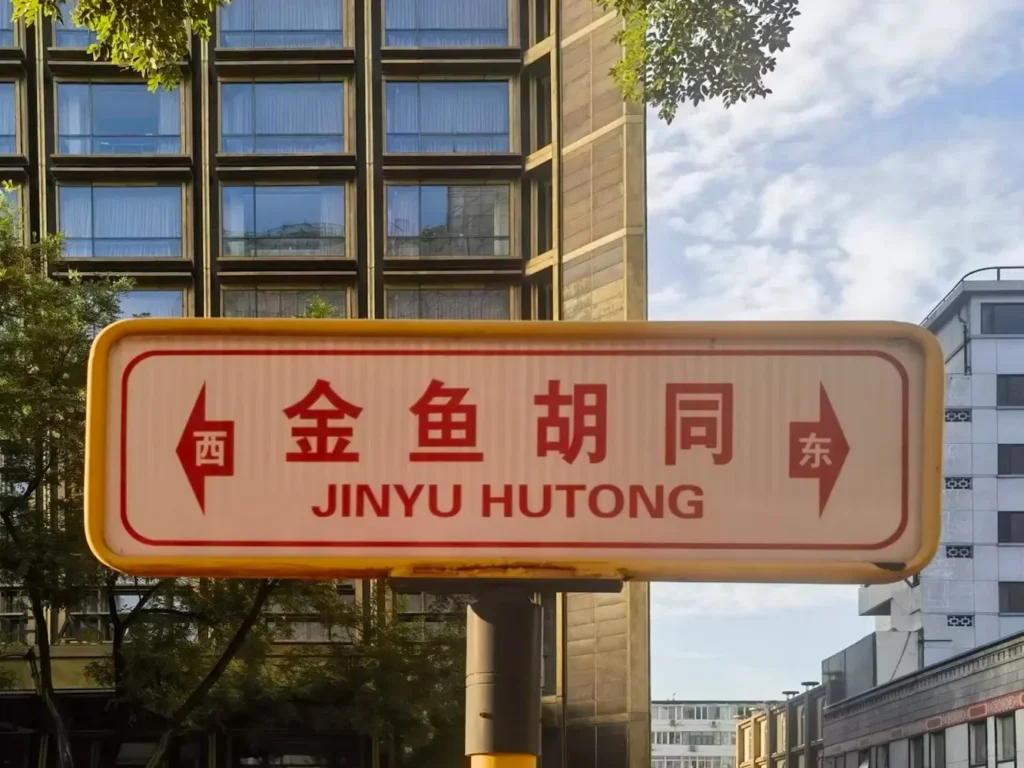
Jinyu Hutong is located in the Dongcheng District, the heart of Beijing. Running east to west, it connects North Dongdan Street in the east and the renowned Wangfujing Street in the west. Stretching 567 meters in total, it is 44 meters at its widest and 12 meters at its narrowest—quite a spacious one among Beijing’s hutongs.
The Origin of the Name: From “Jinyin (Gold and Silver)” to “Jinyu (Goldfish)”
In the Ming Dynasty, about 600 years ago, there were numerous gold- and silver-jewelry shops near this hutong, so it was originally named Jinyin Hutong.
Later, due to a similar pronunciation, it was gradually known as Jinyu Hutong among locals. Thus, this hutong has had nothing to do with goldfish from the very start.
From a Humble Lane to a Bustling Hub
Jinyu Hutong was not always as wide as it is today. Back in the day, it was only about 6 meters wide, with a road surface paved with gravel mixed with asphalt—one’s feet would hurt if wearing thin-soled shoes while walking on it.
Despite its simple and crude appearance, it was once one of the most famous and bustling places in Beijing.
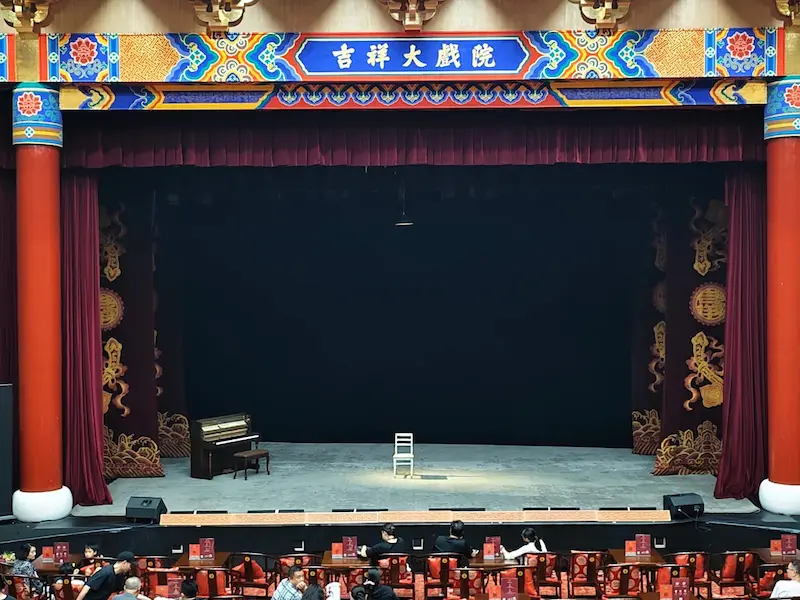
Its western entrance leads straight to Wangfujing Street, home to the prosperous Dong’an Market and the well-known Jixiang Theatre, where crowds of people bustled about all day long.
The hutong itself was lined with many time-honored establishments: Donglaishun Restaurant, famous for its instant-boiled mutton; Wufangzhai Pastry Shop, renowned for Jiangnan-style dim sum; and the iconic Jixiang Opera House, where many Peking Opera masters such as Mei Lanfang once graced the stage with their performances.
Great Figures and Their Stories in the Hutong
Jinyu Hutong was once home to many prominent figures in history.
Na’s Garden: A Luxurious Mansion Occupying a Quarter of Jin Yu Hutong
On the eastern side of Jin Yu Hutong once stood the residence of Na Tong, a Grand Secretary during the late Qing Dynasty, commonly known as “Na’s Garden.”
Who was Na Tong? A member of the Yehe Nara clan, he was one of the “Three Literary Geniuses of the Banner” in the late Qing Dynasty and served as Minister of Foreign Affairs and Minister of the Imperial Household, among other posts.
His residence consisted of seven interconnected courtyards stretching side by side, covering an area of 25 mu and comprising more than 300 rooms.
Among these, “Na’s Garden” was renowned throughout the capital for its “magnificent pavilions and terraces, complemented by the charm of water and rock.”
What happened here? Na Jia Garden was a gathering place for the ruling elite and political figures of the late Qing Dynasty. In the 34th year of the Guangxu reign, Yuan Shikai, Zhang Zhidong, and others attended a banquet here.
In 1912, when Dr. Sun Yat-sen visited Beijing, he attended welcome receptions at Na Jia Garden on three occasions.
In the early years of the Republic of China, the Beiyang Government frequently used “Na Jia Garden” to host private gatherings and entertain Chinese and foreign dignitaries.
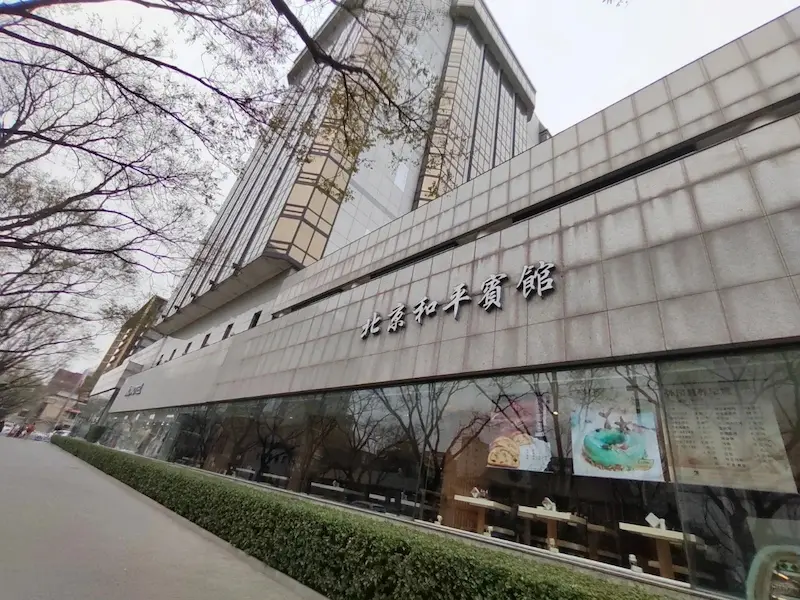
What can still be seen today? In 1988, during the expansion of the Peace Hotel, “Na Jia Garden” was demolished. Today’s Peace Hotel stands on the very site where “Na Jia Garden” once stood.
Standing at the entrance of the Peace Hotel, you can imagine that more than 100 years ago, this was the capital’s most exclusive social venue.
Xianliang Temple: The Place That Changed Modern Chinese History
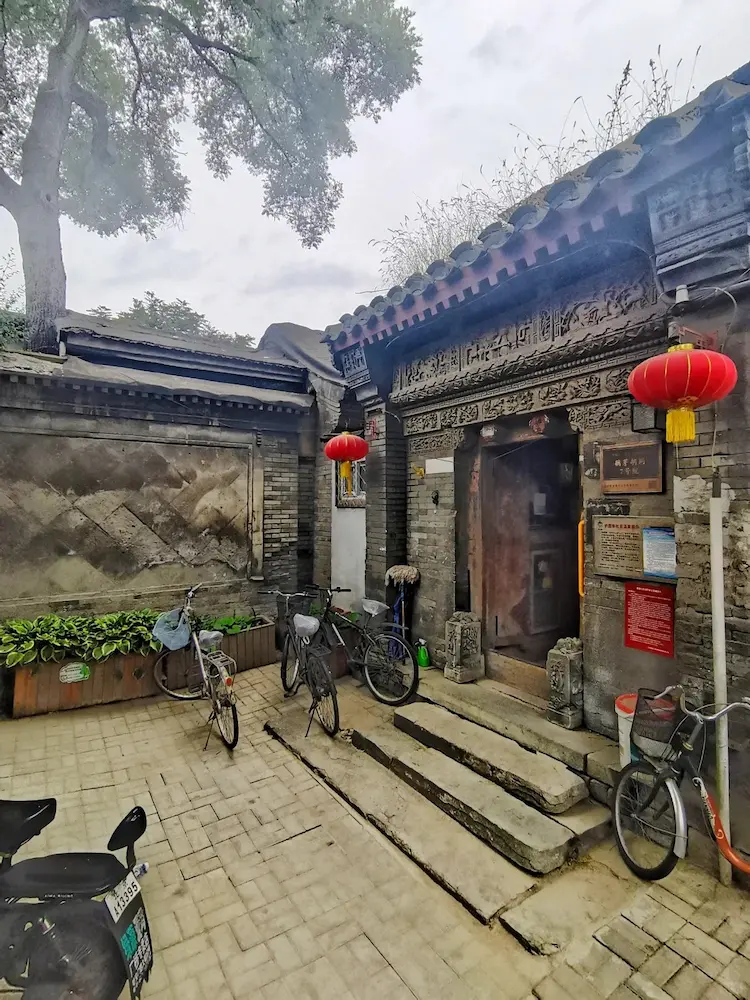
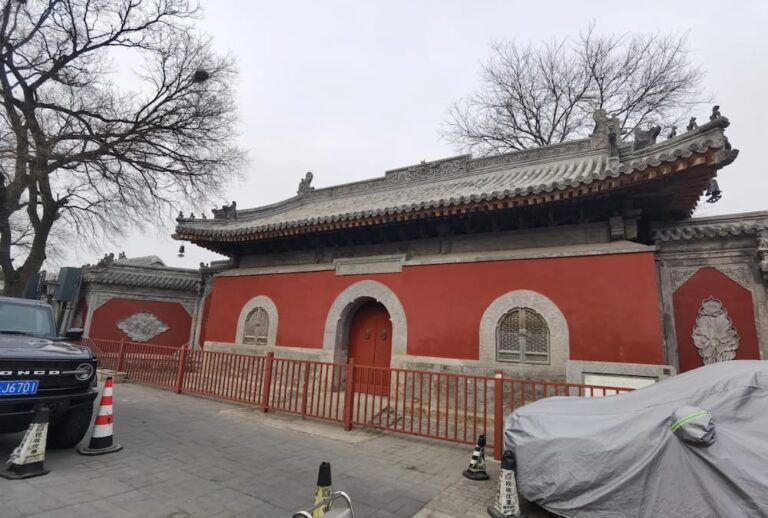
Turning off Jin Yu Hutong into the adjacent Jiao Wei Hutong, you’ll find an unassuming wall—behind which once stood Xianliang Temple, one of the eight Buddhist temples within the walls of Beijing during the Qing Dynasty.
Its history is quite remarkable: Xianliang Temple was originally one of the “Ten Princes’ Mansions” during the Ming Dynasty, and after the Manchus entered the Pass, it became the residence of Prince Yi, Yunxiang.
In the 12th year of Emperor Yongzheng’s reign (1734), Emperor Yongzheng honored Yunxiang’s final wish by converting the mansion into a temple and, drawing on his posthumous title “Xian” (Virtuous), bestowed upon it the name “Xianliang Temple.”
In the 20th year of the Qianlong reign (1755), it was relocated to the north side of Bingzha Hutong (now Bingzhan Hutong), covering an area of approximately 6,000 square meters.
Why is it significant? Because of its proximity to the Forbidden City, Xianliang Temple became the preferred residence for officials from other provinces visiting Beijing to pay their respects to the emperor.
Prominent late Qing officials such as Zeng Guofan, Zuo Zongtang, and Zhang Zhidong all stayed here at one time or another.
The most pivotal figure was Li Hongzhang. On each of his visits to Beijing, he stayed at Xianliang Temple.
It was here that he endured his darkest hour—being dismissed from office following the defeat in the First Sino-Japanese War; it was also here that he presided over the Boxer Protocol negotiations and signed the Boxer Protocol.
In 1901, Li Hongzhang passed away from illness at Xianliang Temple.
What can still be seen today? After 1949, Xianliang Temple was converted into Xiaowei Hutong Elementary School.
Later, as part of urban development, the temple buildings were largely demolished. The good news is that Xianliang Temple has now been vacated and is currently undergoing restoration. It may reopen in the future.
Jinyu Hutong of Yesteryear: Time-Honored Establishments and the Vibrant Life of the Streets
Donglaishun: A Century-Long Legend That Began with a Handcart
Donglaishun Restaurant was founded in 1903 (the 29th year of the Guangxu reign of the Qing Dynasty), originally located in Jinyu Hutong, at the north gate of the Old Dong’an Market.
The founder, Ding Deshan, was a Hui Muslim from Cangzhou, Hebei. He started with just a bench and a handcart, setting up a small food stall inside the Dong’an Market where he sold only cooked mixed-grain noodles and buckwheat pancakes.
No one could have imagined that this roadside stall would later become synonymous with Beijing-style hot pot.
The One-of-a-Kind Pickle Shop and Its “Patio”
Nestled in Jinyu Hutong is an extraordinary pickle shop—Tianyuan Pickle Shop- which boasts a one-of-a-kind architectural design in Beijing. As you step through its door, you will see a rectangular patio.
In the prime location of Wangfujing, where every inch of land is precious, other shops would have long put up multi-storey buildings on such a space, yet Tianyuan Pickle Shop has kept it open, with just a green awning overhead.
This patio is more than just an aesthetic feature. On rainy days, people can take shelter from the rain here; more importantly, the fumes and smells generated during pickle making rise upward and drift away through the patio, so the shop is free of the mixed, unpleasant odors typical of other pickle shops.
The Nostalgic “Big Wine Vats” and Snack Area
In the old days, Jinyu Hutong also had unique “big wine vats”—a type of casual wine tavern with no tables, only several large vats half-buried in the ground, whose lids served as drinking tables. Customers would stand around the vats to sip wine, a quaint and interesting scene.
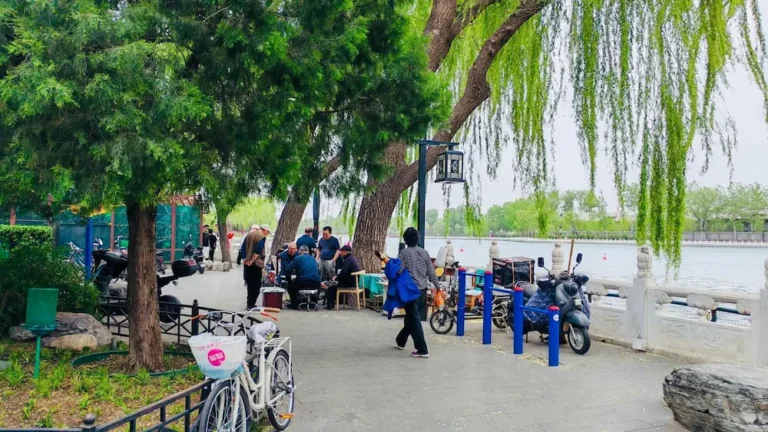
The hutong also had a bustling snack area, brimming with the vibrant flavor of mundane life. Barbers, street food vendors, shadow show performers, and all kinds of peddlers wandered about here.
On chilly winter nights, groups of friends would huddle around a brazier, drink cheap tea, crack open “ban kong” (small, underdeveloped peanuts), and chat away. What they ate was never the point; it was all about the warm and lively atmosphere.
Jixiang Theater: Where Mei Lanfang Performed
Jixiang Theater is also located at the western end of Jinyu Hutong. Many Peking Opera masters, such as Mei Lanfang, have performed here.
Jinyu Hutong Today
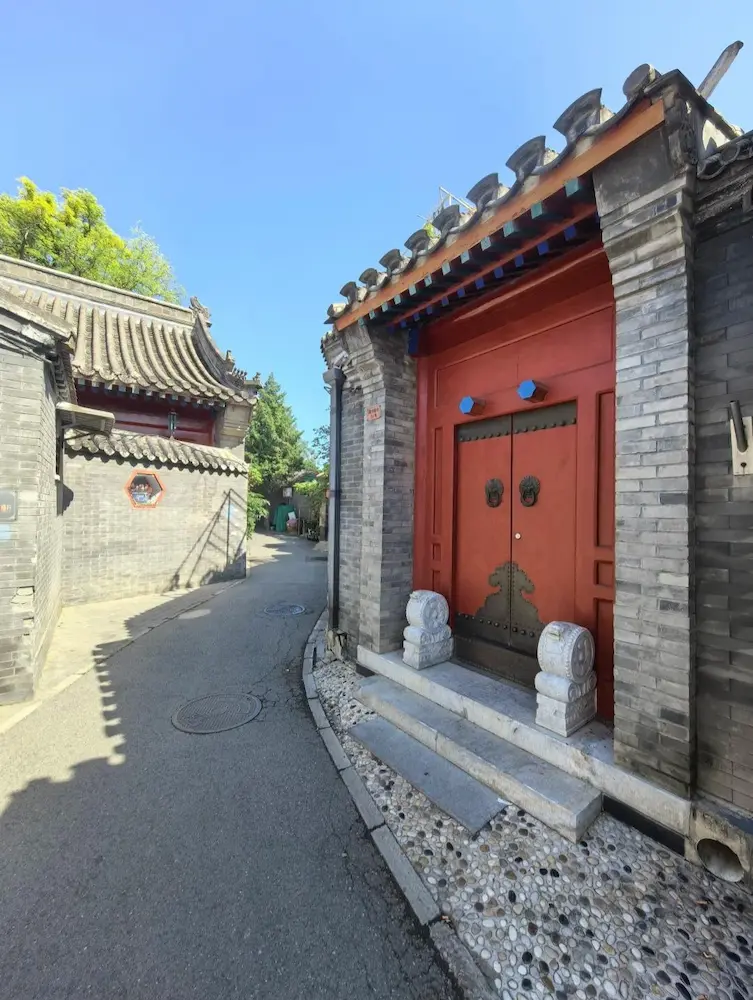
Today, modern high-rises such as the Taiwan Hotel, Peace Hotel, and Wangfu Hotel line both sides of Jinyu Hutong. The traditional siheyuan courtyards and ancient buildings in the hutong coexist in harmony with modern commerce.
When ginkgo leaves fall in autumn, the ancient hutong and modern art blend in a wonderful way here. You can almost hear the strains of Peking Opera arias coming from an old gramophone, and witness the convergence of hundreds of years of historical stories with the prosperity of the present day.
The Easiest Way to Get There | Direct Route Without Detours
①Subway (Fastest and Most Convenient)
Line 1 / Line 8: Exit at Wangfujing Station (Exits A or E)
Walk north for a few minutes after exiting the station to reach the west entrance of Jinyu Hutong, which connects seamlessly to Wangfujing Main Street.
Line 5: Exit at Dengshikou Station (Exit C)
If you prefer to enter from the east and stroll westward, this route is quieter and avoids the crowds at the west entrance.
②Direct Bus Routes
Jinyu Hutong Station: Buses 103, 104, 111, 127, and Special Line 11. Get off, and you’re right in the heart of the hutong.
Wangfujing Pedestrian Street North Station: A 2–3-minute walk takes you into the hutong, and you can check out the street scenery along the way.
③Driving Not Recommended
Parking is scarce around the hutong, and the core area has traffic restrictions. Taking the subway and walking is the most comfortable option.
My Secret Guide to Exploring
Enter Jinyu Hutong from the north entrance of Wangfujing, and take a stroll to admire the old gate towers and intricate details of the traditional inns.
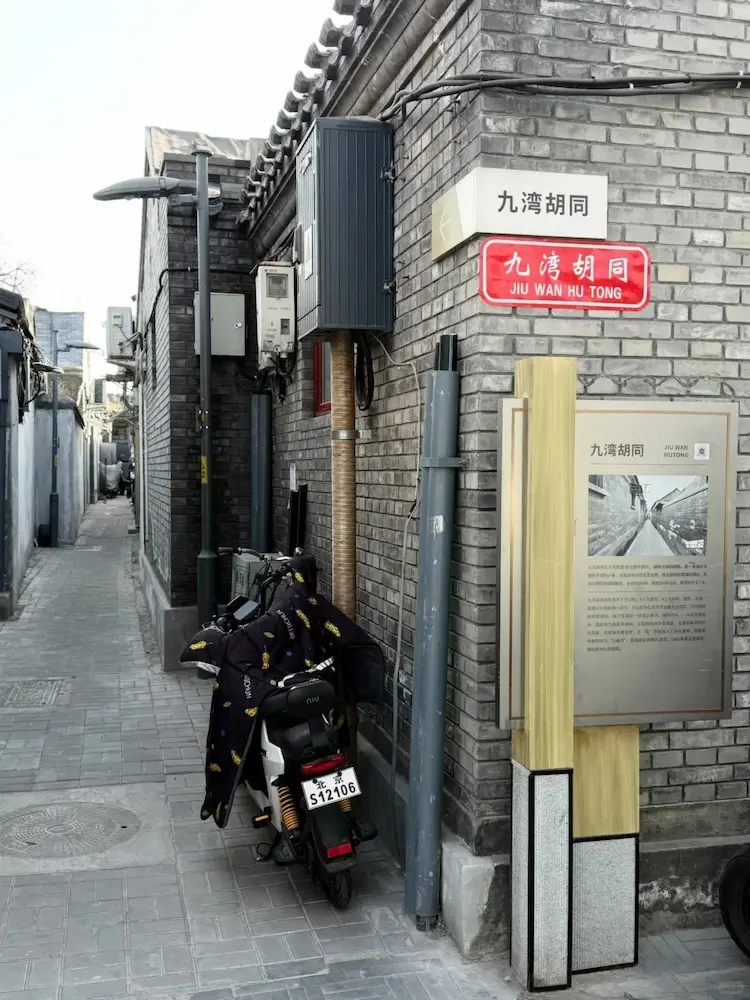
Turn into Xiaowei Hutong to find the ruins of Xianliang Temple and soak in the quiet atmosphere of history.
Stop by Tianyuan Soy Sauce Factory to check out its unique old-Beijing-style courtyard.
Pick up a bite to eat at Donglaishun or Wufangzhai along the way to sample the flavors of these time-honored brands.
Come in the evening for the best photo opportunities—the combination of lighting and old walls creates an atmosphere that’s absolutely magical.
So if you visit Beijing, be sure to take a walk through Jinyu Hutong. Though there are no goldfish here, it is filled with time-honored delicacies, fascinating historical tales, and the most authentic memories of Beijing.