Beijing Shichahai Fire God Temple Visitor’s Guide: Worship the Fire Deity, Explore Ancient Architecture
A Thousand-Year Tale of Fire
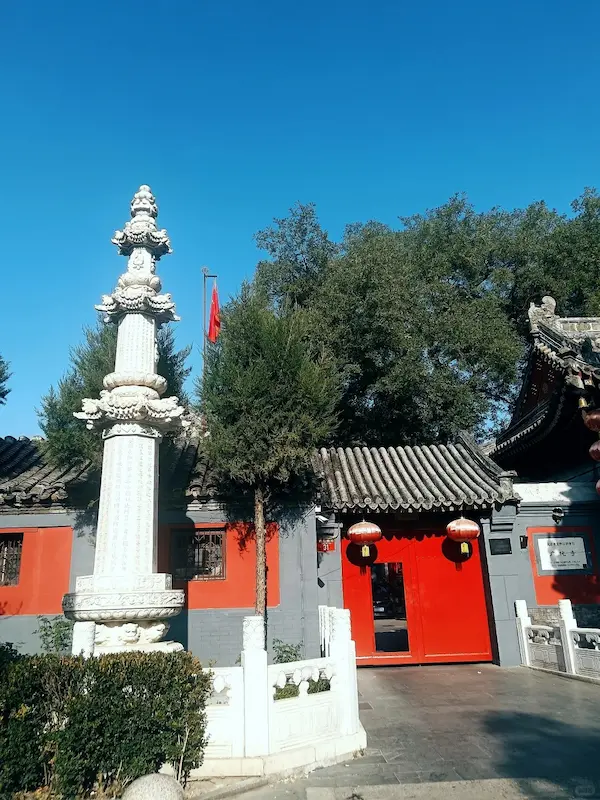
By the picturesque lakeside of Beijing’s Shichahai, stands a uniquely colored ancient architectural complex with a long history—the Imperially Built Fire Virtue True Lord Temple.
Commonly known as the Shichahai Fire God Temple, it is not only the oldest and highest-ranking Fire God Temple surviving in Beijing but also has a story that, like the flame it venerates, spans millennia. It has witnessed rises and falls, continuing to attract countless visitors today.
This temple was first built in the 6th year of the Zhenguan era of the Tang Dynasty, equivalent to 632 AD. To put this into perspective, it was constructed three years earlier than Beijing’s famous Fayuan Temple and over a hundred years earlier than the White Cloud Temple. Initially, it was a temple for worshiping the Fire God and praying for protection from fire disasters. However, what truly set it apart was its close connection to the fate of Beijing city, particularly the Forbidden City.
During the Wanli era of the Ming Dynasty, several fires broke out in the imperial palace consecutively, causing great concern for the emperor. Consequently, in the 38th year of Wanli (1610 AD), the emperor ordered a large-scale reconstruction of this Fire God Temple and bestowed blue-glazed tiles for its roofs. In ancient Chinese architectural philosophy, blue and green symbolize water, used here to symbolically “suppress” fire and pray for safety. During the Qing Dynasty, the emperors continued to honor this temple. Emperors Shunzhi and Qianlong both ordered renovations and granted permission for parts of the building to use yellow-glazed tiles—a color reserved for imperial architecture, signifying its lofty status as an Imperial Taoist Temple.
Interestingly, historical records suggest that whenever fires occurred in the imperial palace, the emperors seemed to think of this place. It is documented that after the fire at the Wuying Hall during the Tongzhi era and the fire at the Gate of Supreme Harmony before Emperor Guangxu’s wedding, the emperor or empress dowager either came in person or sent important ministers to offer sacrifices here. Thus, this temple became the royal center for “fire prevention prayers.”
However, its story was not always glorious. In modern times, the temple was repurposed for other uses, and its structures fell into disrepair. Fortunately, after meticulous “restoration to its old state” repair work, this thousand-year-old Taoist temple reopened to the public in 2010, regaining its former solemnity and vitality.
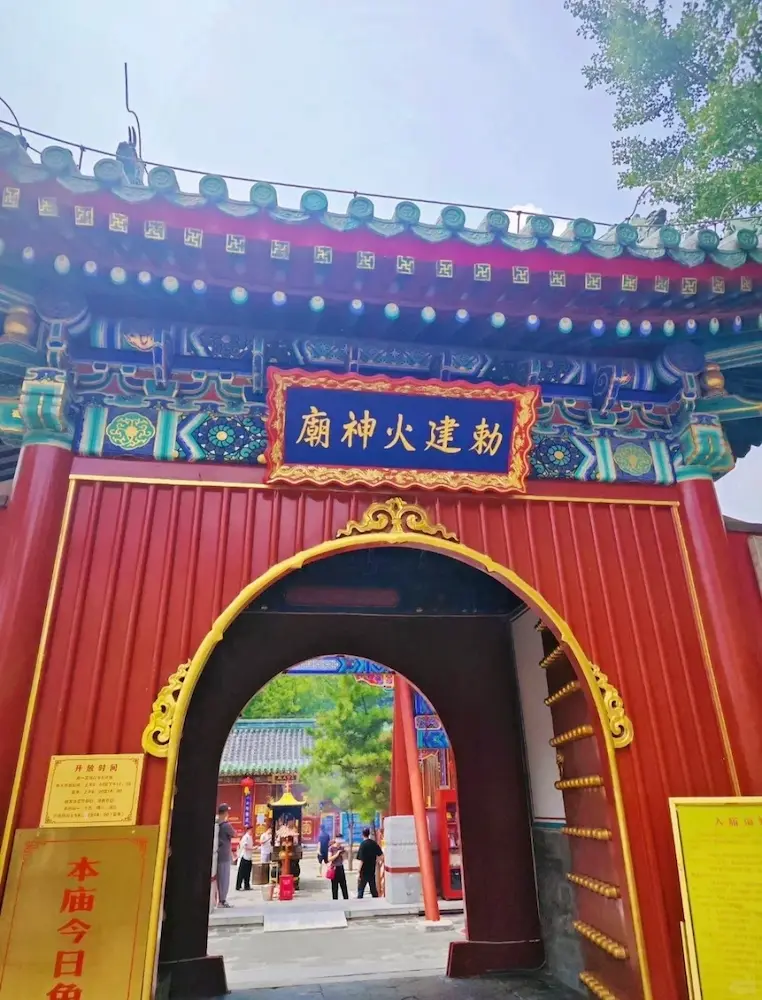
Table of Contents
Key Highlights: Architecture, Deities & Unique Culture
Today, the Fire God Temple is an elegant Taoist temple with three courtyards. When visiting, you can admire its main buildings along the north-south central axis, but the first thing that catches your eye is its east-facing main gate, a distinctive design in itself.
Inside the temple, several key spots are not to be missed:
- The Mountain Gate and Lingguan Hall: There are exquisite decorative archways both inside and outside the mountain gate. The Lingguan Hall enshrines Wang Lingguan, a divine general who guards the temple gate and wards off evil.
- The Main Hall—Fire Ancestor Hall (Yinghuo Treasure Hall): This is the core of the entire temple complex. It enshrines the Fire Virtue True Lord, also known as the Southern Fire Virtue Star Lord or Zhurong, the highest-ranking fire deity in Chinese mythology. Interestingly, “Yinghuo” was the ancient Chinese name for the planet Mars, showcasing the ancient Chinese practice of linking celestial phenomena with earthly beliefs. Emperor Qianlong personally inscribed the plaque “Yinghuo Treasure Hall” for this main hall. Be sure to look up at the octagonal coiled dragon caisson ceiling in the hall—the gold-lacquered, carved wooden dragon is exquisitely detailed, fully embodying imperial grandeur.
- The Rear Pavilion—Jade Emperor Pavilion: Located in the innermost courtyard, this is a two-story pavilion. The lower level enshrines the True Martial Emperor (Zhenwu), while the upper level enshrines the highest Taoist deity—the Jade Emperor. A plaque inscribed “Wanshou Jingming Baoge” (Pavilion of Longevity and Eminent Destiny) hangs here.
Beyond the solemn ancient architecture, the folk religious culture of the Fire God Temple is remarkably vibrant. People come here not only to visit but also to pray for blessings:
- The most famous belief is “Worship the Fire God, Pass the Imperial Exams”: Legend has it that the Fire Virtue True Lord blesses individuals of upright character and outstanding talent, helping them achieve scholarly honors and career success. Therefore, many who wish for academic improvement or career advancement come specifically to pay their respects.
- “Worship the Moon Old Man, Find Good Fate”: The Moon Old Man Hall within the temple also enjoys vibrant incense offerings. The Moon Old Man deity here is said to govern various types of “fate”—not just romantic love but also harmonious marriage, precious friendship, and encounters with helpful people.
- Diverse Spaces for Prayers: The temple also houses a God of Wealth Hall, a Cihang Hall (Guanyin Hall), a Fox Immortal Hall, and others, catering to different wishes for peace, health, wealth, and other blessings.
Beautiful in All Seasons, Especially After Snow
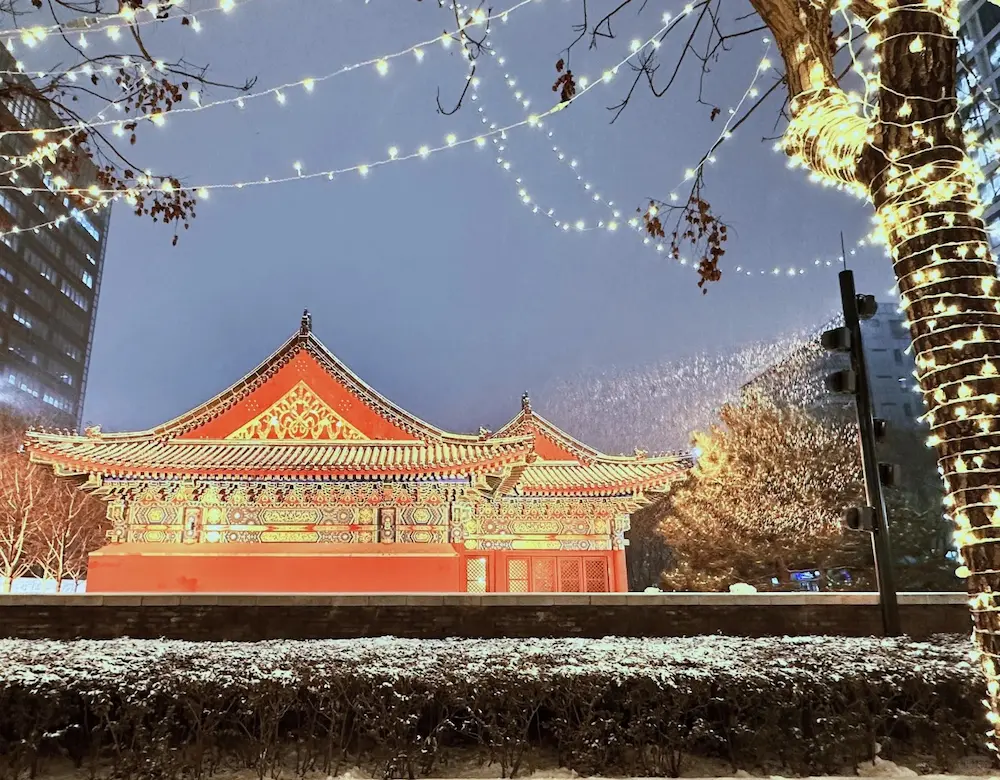
The Fire God Temple is situated right next to Shichahai, offering different scenery in each season. However, many visitors and photographers believe the temple is at its most beautiful after a snowfall. Imagine this scene: red temple walls, green-glazed tile roofs dusted with white snow, red lanterns adorned with snowflakes, all set against golden-colored paintings. The snow accentuates the lines of the ancient architecture, making it appear exceptionally tranquil, solemn, and exquisite, like a classical painting.
Practical Visitor Information
- Address: No. 77, Di’anmenwai Street, Xicheng District, Beijing.
- How to Get There: The most convenient way is to take Subway Line 8 to the “Shichahai” station. The temple is just a few minutes’ walk from the exit.
- Admission & Hours: Currently open for free, no reservation required. A visit typically takes between 30 minutes and 1 hour.
Visiting Tips
The temple itself is rich in content but moderate in scale, making it an ideal stop as part of exploring the Shichahai area.
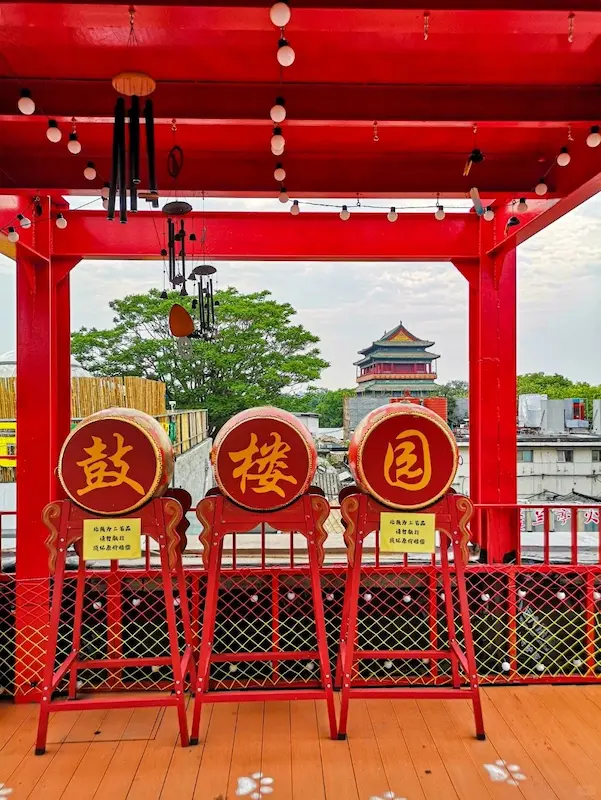
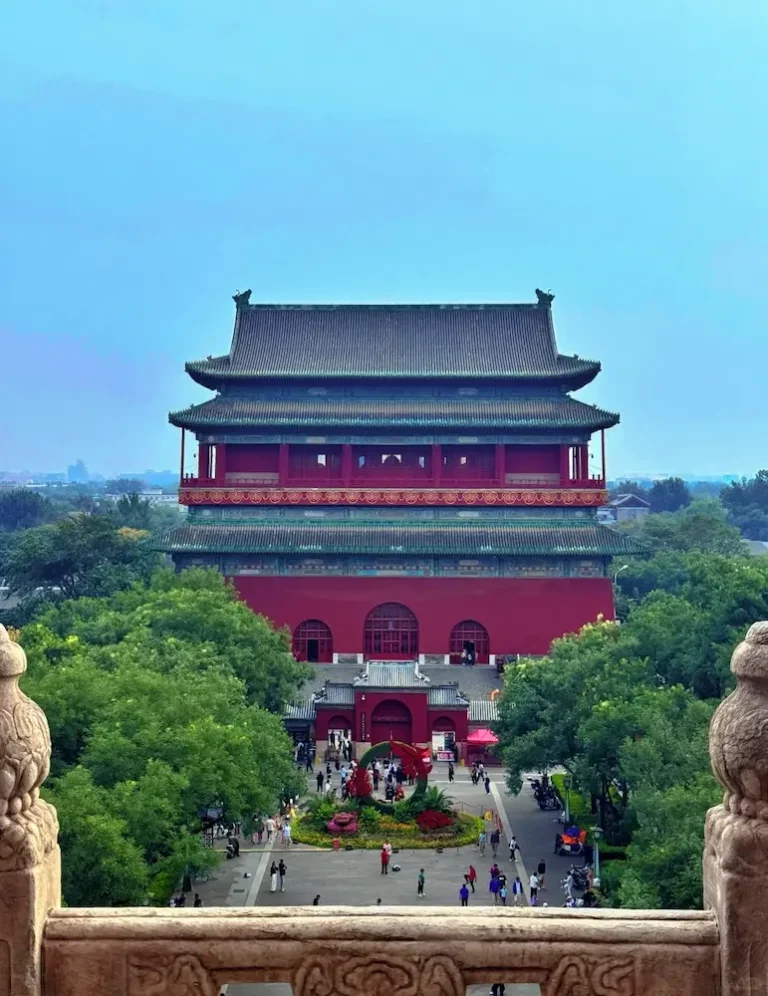
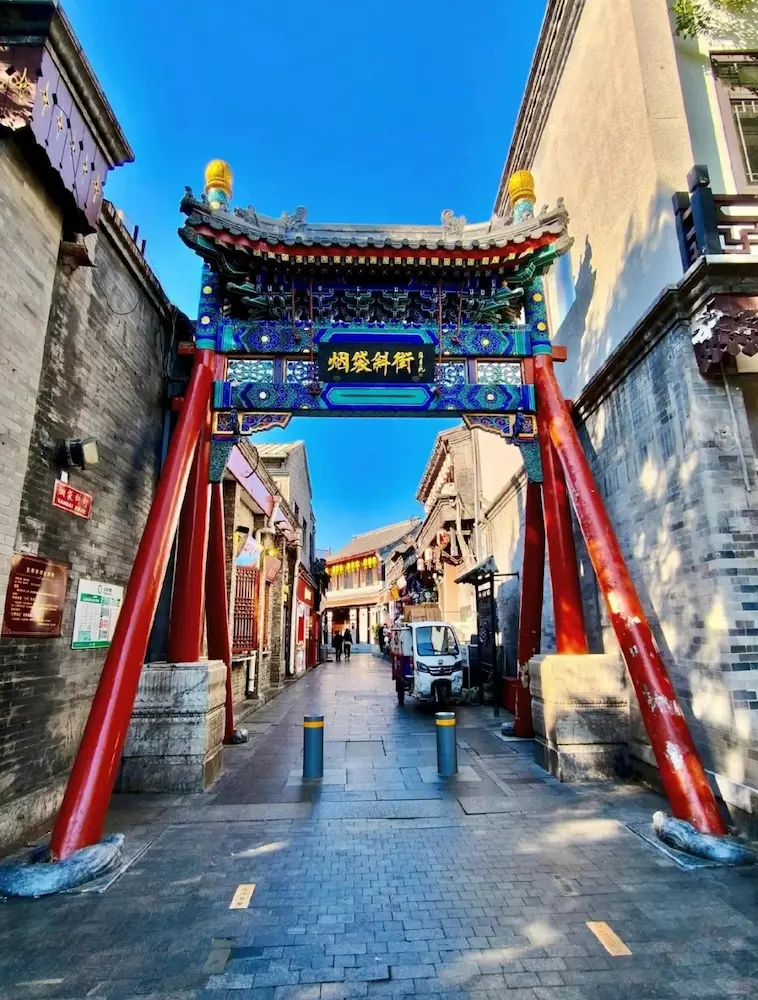
It is adjacent to sites like the Wanning Bridge (an important ancient bridge on Beijing’s central axis), Yandai Xiejie (Tobacco Pouch Skewed Street), the Bell and Drum Towers, and Nanluogu Xiang. You can easily plan a walking route connecting these attractions.
If interested in history and culture, you can also visit nearby sites like Prince Gong’s Mansion and Guo Moruo’s Former Residence.
Special Note: As an active religious site, please maintain a quiet and respectful demeanor during your visit, honoring religious customs.
In summary, the Shichahai Fire God Temple is a unique cultural site that blends a thousand years of history, imperial architecture, folk beliefs, and lakeside scenery. It may not be as grand as the Forbidden City or the Great Wall, but within its compact space, it allows you to feel the profound historical layers and the lively human atmosphere of Beijing. Next time you stroll around Shichahai, consider stepping into this courtyard with its red walls and green tiles to personally touch this thousand-year memory centered around “fire.”