Beijing Opera Museum: Explore the History of Peking Opera and Visit an Ancient Opera House for Free (Updated 2026)
Information verified as of: Sep. 2026
Want to visit the Beijing Opera Museum to see Peking Opera? Check out this 2026 field-tested guide first, which includes directions for taking Metro Line 7, the WeChat reservation process, and practical tips to avoid pitfalls. It’s a good spot to check out if you’re passing by, but we don’t recommend making a special trip just for this.
Table of Contents
Is the Beijing Opera Museum Worth a Visit? Decide Based on Your Situation
| If you are… | Travel Recommendations |
| Visiting Beijing for the first time and curious about Peking Opera | You can plan a visit while you’re in the area |
| Currently exploring the Qianmen / Dashilan / Liulichang area | It’s a great spot to check out on your way |
| A fan of old Qing Dynasty guild halls and traditional wooden architecture | It’s worth stopping by |
| Looking for a simple introduction to Peking Opera culture | It’s suitable for a casual experience |
| Planning a special trip involving a one-hour or longer commute just to visit | Not recommended if you’re making a special trip |
| Expecting a large, comprehensive opera museum with extensive content | This place may not meet your expectations |
| Want to see a live Peking Opera performance | Focus on the performance schedule at the Grand Opera House |
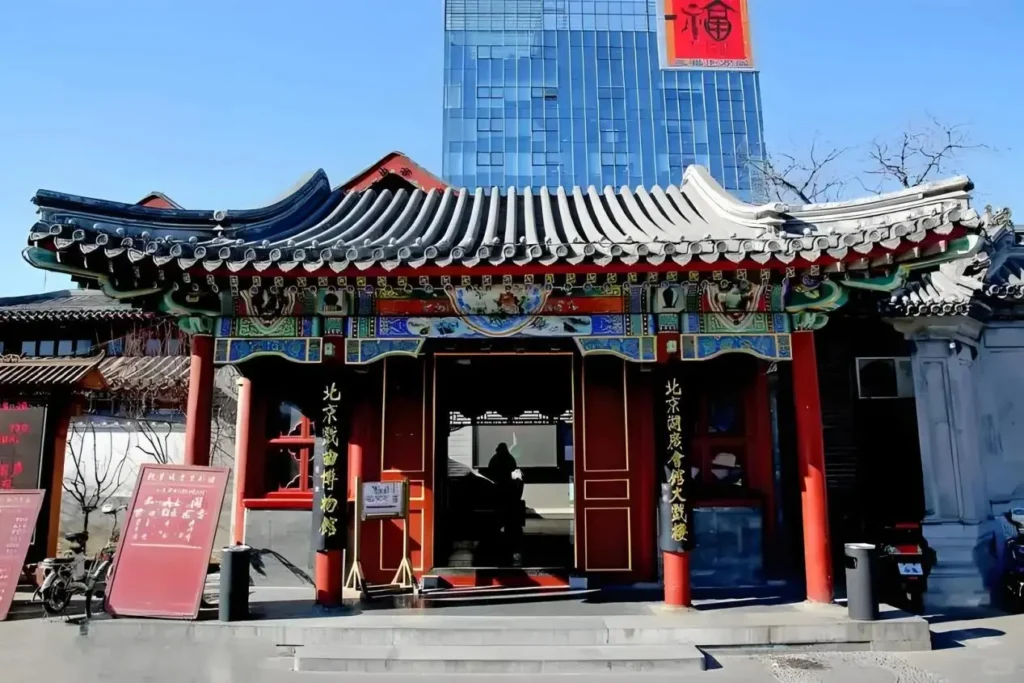
Visiting the Beijing Opera Museum for the First Time? Here Are 5 Things You Should Know
1. Admission is free, but you must make a reservation in advance; there are no walk-in slots available.
2. A standard museum tour takes about 20–30 minutes; the museum is compact.
3. The main highlight here is the ancient Qing Dynasty opera stage at the Huguang Guild Hall—the experience goes beyond the artifacts in the exhibition halls.
4. If you happen to catch a live Peking Opera performance, your overall experience will be completely different.
5. It’s best to incorporate this into a CityWalk itinerary that includes Qianmen, Dashilan, Liulichang, and the old hutongs.
Pros & Cons: The Good and the Bad (Based on Real Experience)
| Pros (Reasons to Visit) | Cons (Reasons to Skip) |
| Exquisite ancient architecture; the Grand Theater at the Huguang Guild Hall has a historic feel | The open area is extremely small; only two rooms are accessible |
| Direct subway access; super convenient transportation | The entire second floor is closed off; you can only explore the first floor |
| The museum is completely free; great value for money | Focuses solely on Peking Opera; does not cover other forms of Chinese opera |
| Few visitors and a peaceful atmosphere; no need to wait in line to take photos | Simple exhibits with limited content; no interactive experiences |
2026 Practical Information: Tickets, Reservations, and Transportation
1. Tickets and Reservations
- Tickets: Admission is free, but reservations are required
- How to make a reservation:
- Search for the official WeChat account “Beijing Opera Museum” → Click “Visit Reservation.”
- ⚠️ Important Note:
- The official account does not have an English interface; foreign visitors are advised to ask their hotel front desk or a Chinese friend for assistance with reservations. You can scan a QR code on-site, but slots tend to fill up quickly on weekends
- Opening Hours: Tuesday–Sunday 9:30 AM–5:00 PM (last admission at 4:30 PM); Closed on Mondays (except national holidays)
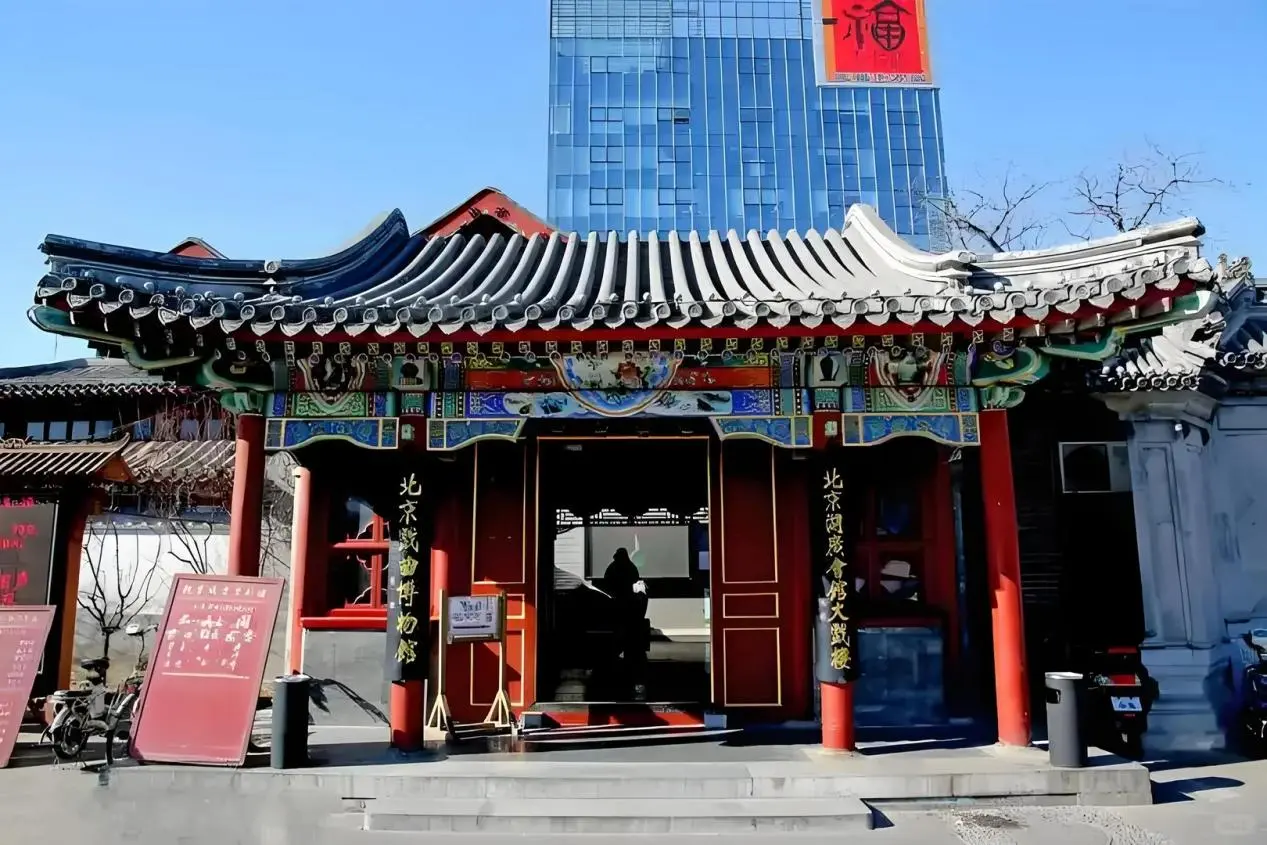
- Address: Inside the Huguang Guild Hall, No. 3 Hufang Road, Xicheng District, Beijing
2. How to Get There? (Easiest Route)
- Subway: Exit D (southwest exit) of Hufangqiao Station on Line 7; approximately a 3-minute walk
- Walk straight for 50 meters → Turn right at the intersection → Walk another 100 meters to reach the main gate of the Huguang Guild Hall
- Bus: Take Buses 6, 57, 102, or 105 to the “Hufangqiao Road West” stop
- Taxi: Approximately a 10-minute ride from Qianmen Street; fare is about 15 yuan
⏱How to Plan Your Visit Based on Time Available
- 20–30 minutes only (a quick stop along the way): Huguang Guild Hall entrance → Wenchang Pavilion exhibition hall → Grand Theater → Ziwu Well; take a quick tour of the courtyards, then leave
- About 1 hour: A complete tour of the museum + taking your time photographing the historic courtyards; you can also take a brief stroll around the nearby area
- Half-day itinerary: Opera Museum + a connected tour of nearby hutongs and historic sites
What’s There to See Inside? Follow This Order on Your First Visit
Recommended Tour Order: Huguang Guild Hall Entrance→Wenchang Pavilion Exhibition Hall→Grand Theater→Ziwu Well→Courtyard Complex→Exit
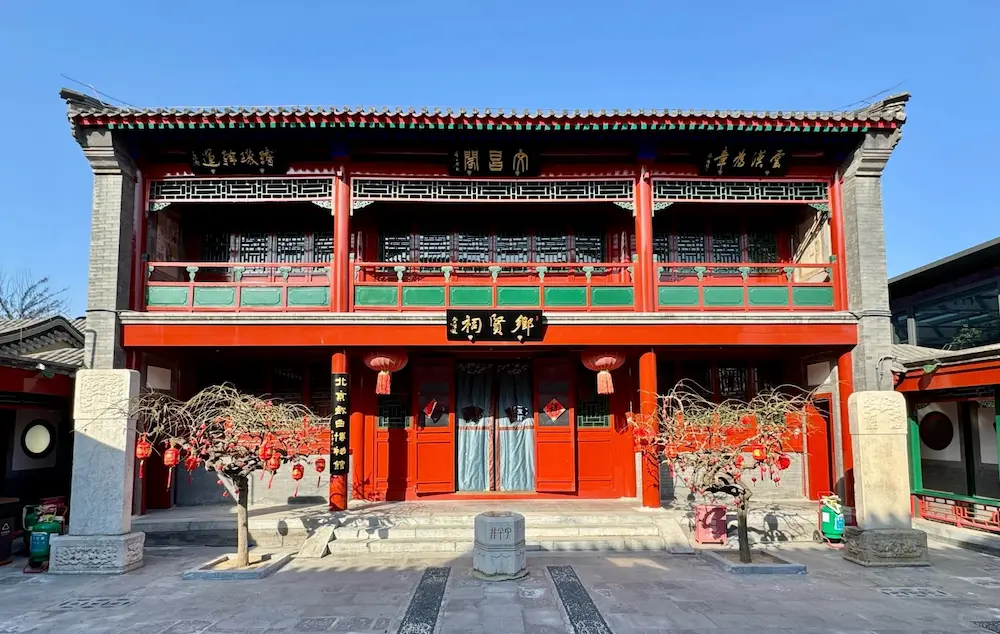
Wenchang Pavilion: Exhibition Hall Area
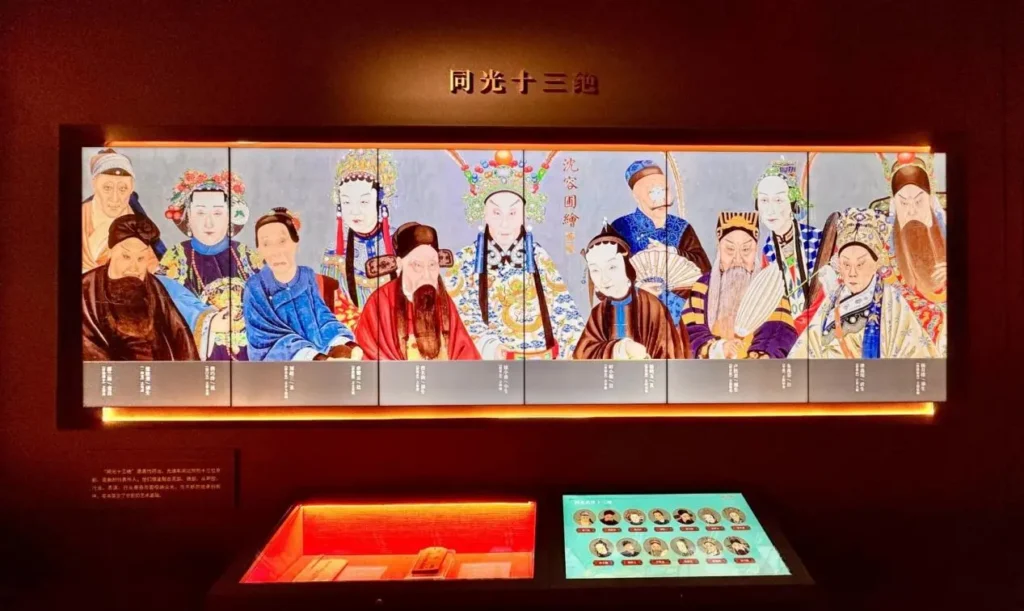
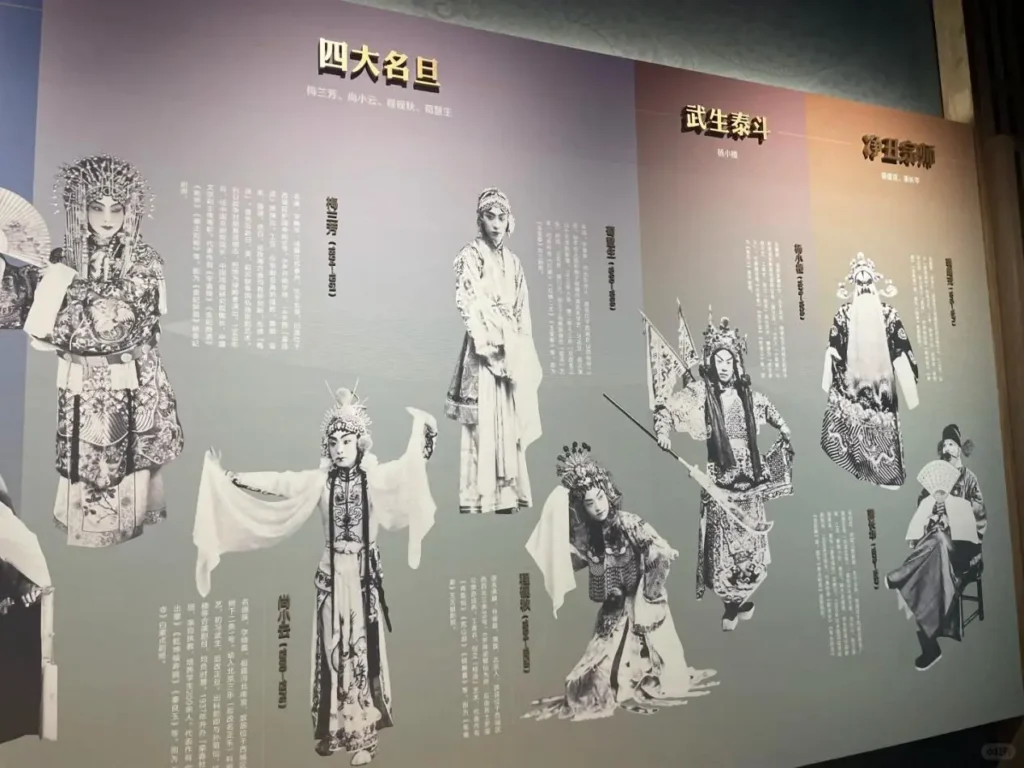
- What to See: Peking Opera-related artifacts and informational panels featuring figures such as the “Thirteen Masters of the Tongzhi and Guangxu Eras” and the “Four Great Dan Actresses,” presented through text and images.
- Why it’s worth seeing: A quick introduction to the basics of Peking Opera’s development; the exhibition hall is compact.
- Recommended time: 5–8 minutes
- Wenchang Pavilion: A small, single-story exhibition hall; the second floor is locked and inaccessible.
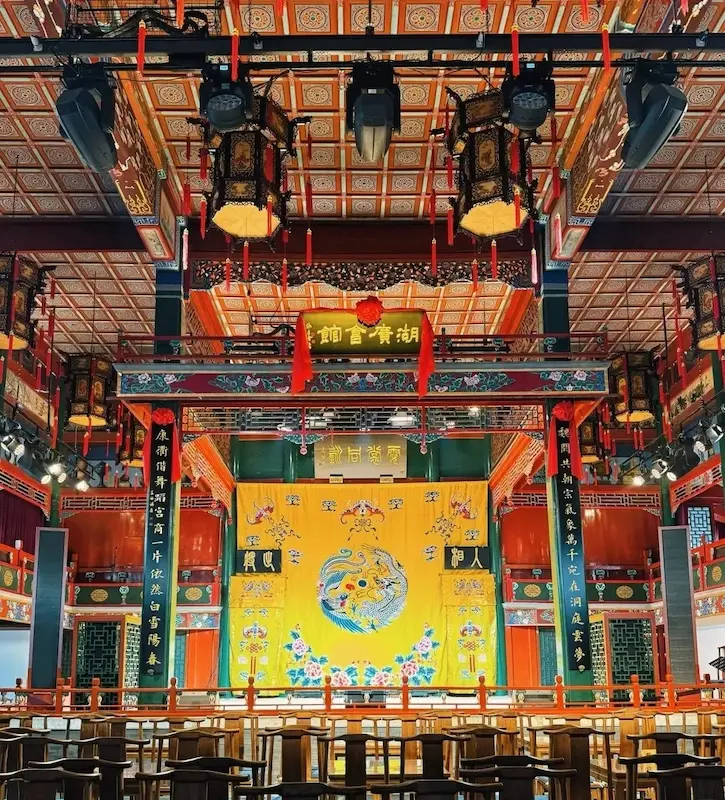
Grand Opera House (The highlight of the entire visit)
- What to see: An authentic, original Qing Dynasty wooden opera house, featuring the stage, carved beams, and intricate ceiling details.
- Why it’s worth seeing: The most memorable part of the entire museum—make this your top priority even if you’re short on time; only the first floor is open to the public, but you can go up to the second floor during performances.
- Recommended visit time: 8–12 minutes
- Grand Opera House: A historic Qing Dynasty opera house; the second floor is closed to the public, and only the first floor is open for viewing; Peking Opera performances are held here from time to time, and you can go upstairs during a performance
Other buildings (such as Chuwan Hall) are closed and off-limits.
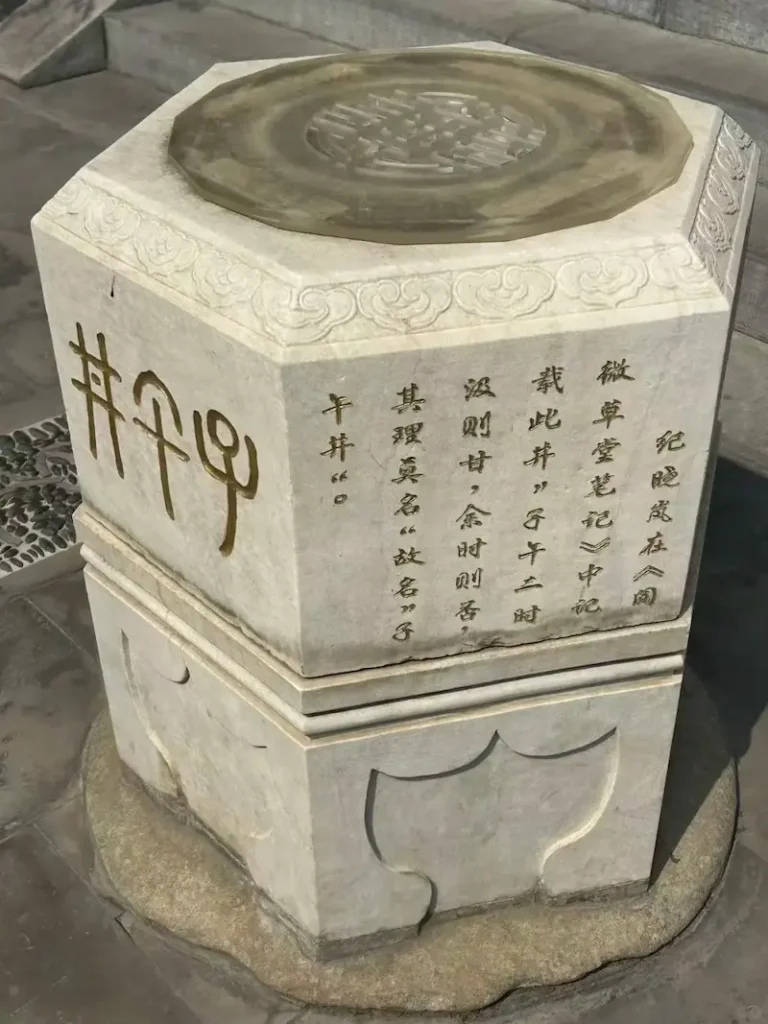
Ziwu Well
Visitor Tip: As your tour nears its end, don’t leave right away—the Ziwu Well in the courtyard is worth a quick stop on your way out.
The courtyard features the “Ziwu Well,” an ancient Qing Dynasty well marked by a stone stele; it is one of the few original artifacts remaining at the guild hall.
Quick Facts About Peking Opera (A Quick Preview Before Your Visit)
If this is your first time learning about Peking Opera, just keep this background in mind: Peking Opera didn’t emerge overnight; rather, it gradually took shape in Beijing during the Qing Dynasty through the fusion of various regional opera styles.
- 1790, during the Qianlong era: The Four Great Huiban troupes arrived in Beijing, where they merged with Hantiao, Kunqu, and Bangzi to form Peking Opera
- Notable Masters:
- The Thirteen Masters of the Tongzhi and Guangxu Eras: Established Peking Opera’s vocal styles and roles
- The Four Great Dan Actors: Mei Lanfang, Cheng Yanqiu, Xun Huisheng, and Shang Xiaoyun
- The Four Great Shu Actors and the Grandmaster of Wusheng, Yang Xiaolou
- The museum features a Wall of Fame and audio equipment where visitors can listen to classic arias
If you want to experience Peking Opera: What’s the difference between a museum visit and a live performance?
Museum visit only (no performance)
- Duration: About 20–30 minutes
- Experience: View exhibits on traditional architecture and display panels featuring cultural relics to learn about the history of Peking Opera; no live singing
Watch a paid Peking Opera performance
- Tickets: Follow the WeChat official account “Beijing Opera Museum” → “Buy Tickets.”
- Time: Performances are usually held on weekend afternoons and last 1.5–2 hours each
- Ticket Prices: Approximately 100–300 yuan
- Seating Recommendation: Choose seats in the center of the first floor for the best view
- Note: Performances are not held daily; we recommend checking the schedule one week in advance
Tip: If you’re only mildly interested in Peking Opera, a casual visit is sufficient; if you’d like an immersive experience of a live Peking Opera performance, be sure to check the performance schedule in advance.
Best Photo Spots & Tips
You don’t have to wear Hanfu to take photos—just focus on capturing the details of the ancient wooden architecture, red walls, and the spaces within the opera stages.
- Best time: Before 10:00 AM on weekdays, when crowds are lightest and the light is soft
- Photo spots:
- 1. Main entrance on the first floor of the Grand Opera House (for a panoramic view of the historic opera house)
- 2. Red wall at the entrance to Wenchang Pavilion (for a traditional Chinese architectural vibe)
- 3. Stone stele at the Ziwu Well (for a historic photo op)
How to Incorporate the Opera Museum into a One-Day Itinerary in Beijing?
Option 1 | Qianmen Historical Landmarks Route (Ideal for First-Time Visitors to Beijing)
Opera Museum→ Dashilan →Qianmen Street→Yangmeizhu Xiejie
Option 2 | Old Beijing Hutong Stroll Route (For Those Who Love the Vibrant Atmosphere of Local Streets)
Opera Museum→Tieshu Xiejie→Yangmeizhu Xiejie→ Dashilan
Option 3 | Traditional Culture and Heritage Route (For lovers of historic architecture and literature/history)
Opera Museum→Ji Xiaolan’s Former Residence→Liulichang Cultural Street
Attraction Highlights:
1. Ji Xiaolan’s Former Residence (approx. 3-minute walk): Yuewei Cangtang, the former residence of a Qing Dynasty scholar
2. Jinghua Printing House (Chuanlou): A retro triangular building and popular photo spot
3. Tieshu Xiejie / Yangmeizhu Xiejie: Stroll through old hutongs, featuring shops selling intangible cultural heritage items and cafes
4. Qianmen Street / Dashilan: Time-honored culinary delights + vibrant local atmosphere
5. Liulichang Cultural Street: The Four Treasures of the Study, historic street scenery
FAQ
The Beijing Opera Museum is small, compact, and not particularly modern, making it ideal for a quick 20-minute stop to get a basic understanding of Peking Opera.
If you’re visiting the Qianmen, Liulichang, or Temple of Heaven areas, you can stop by the Huguang Guild Hall’s historic opera house and the Ziwu Well.
If you’re interested in architecture and the history of opera, it’s worth coming back when there’s a performance and taking the opportunity to visit the museum as well.